

SUBSCRIBE TO OUR FREE NEWSLETTER
Daily news & progressive opinion—funded by the people, not the corporations—delivered straight to your inbox.
5
#000000
#FFFFFF
To donate by check, phone, or other method, see our More Ways to Give page.
Daily news & progressive opinion—funded by the people, not the corporations—delivered straight to your inbox.
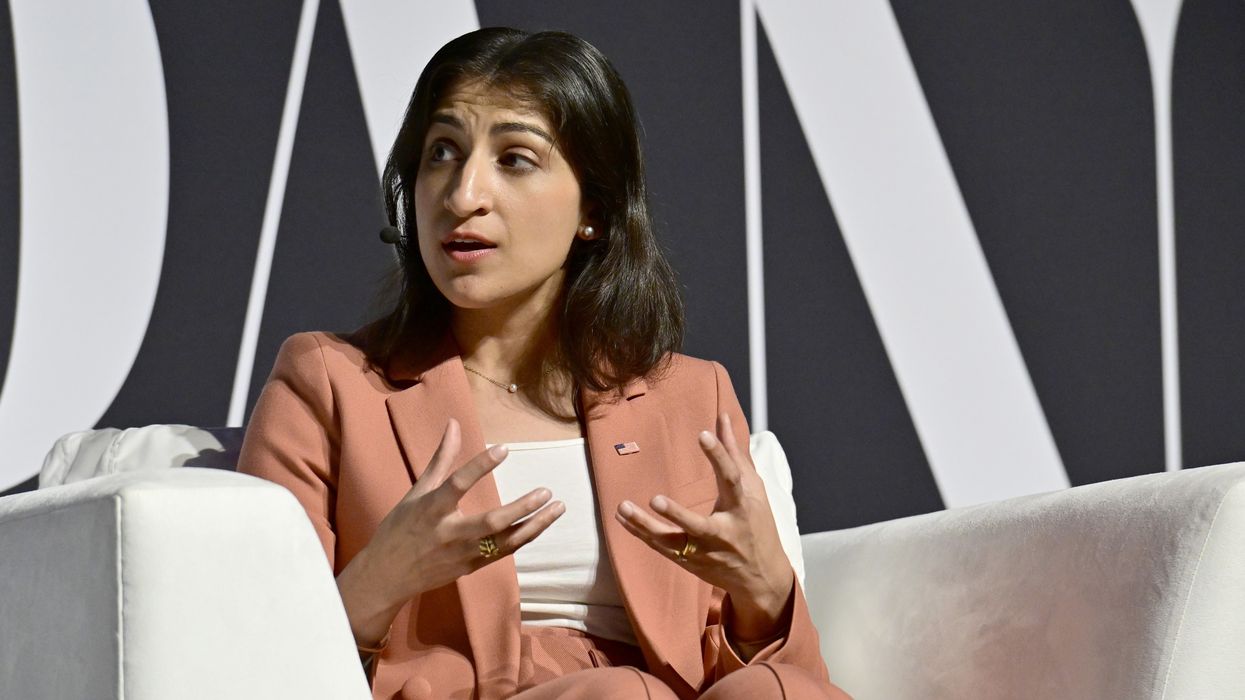
"This meritless dismissal is a win for monopolists and billionaires," said the senior legal counsel for the American Economic Liberties Project.
The U.S. Federal Trade Commission on Thursday dismissed a price discrimination lawsuit against the drink and food giant PepsiCo, a move that former FTC Chair Lina Khan, who served under former President Joe Biden, called "disturbing behavior."
The lawsuit, filed only a few days before U.S. President Donald Trump returned to the White House, accused PepsiCo of providing a big box retailer customer, Walmart, with pricing advantages, while increasing prices for competing customers and retailers.
"This lawsuit would've protected families from paying higher prices at the grocery store and stopped conduct that squeezes small businesses and communities across America," Khan wrote on X on Thursday. "Dismissing it is a gift to giant retailers as they gear up to hike prices."
The three members of the FTC, all Republicans, voted 3-0 to drop the suit. Current FTC Chair Andrew Ferguson, who was named chairman by Trump, cast the lawsuit as a "nakedly political effort to commit this administration to pursuing little more than a hunch that Pepsi had violated the law." He also said that the FTC under Biden "rushed to authorize the case." Ferguson also opposed the lawsuit when the FTC first voted to pursue it.
Antimonopoly groups were quick to criticize Thursday's move.
"This meritless dismissal is a win for monopolists and billionaires," said Lee Hepner, senior legal counsel at the American Economic Liberties Project, in a statement on Thursday. "Adding insult to injury, the agency dropped the case just one day before the parties were due to justify extensive redactions in the complaint, denying the public the ability to review the facts and judge the merits for themselves. This is a corporate pardon for Walmart and PepsiCo."
Open Markets legal director Sandeep Vaheesan said the move illustrates that despite their rhetoric, the current FTC commissioners are "not willing to faithfully apply the law enacted by Congress."
Stacy Mitchell, co-director at the Institute for Local Self-Reliance, which is an advocate for independent businesses, called it "effectively an endorsement of the predatory tactics Walmart uses to crush local grocery sores, create food deserts, and drive up prices."
The agency had sued PepsiCo under the Robinson-Patman Act, a 1936 law intended to prevent price discrimination but has been little used in recent decades.
The announcement of the dropped lawsuit came the same day it was reported that the FTC is investigating the progressive watchdog group Media Matters for America over potential coordination with other groups, including the Global Alliance for Responsible Media, which was a World Federation of Advertiser initiative. Media Matters president Angelo Carusone confirmed in a statement to Axios that the investigation is over claims Media Matters and other groups coordinated advertising boycotts of the social media site X.
X's owner, billionaire Elon Musk, who has played a core role in the Trump administration, has ongoing lawsuits against both the World Federation of Advertisers and Media Matters.
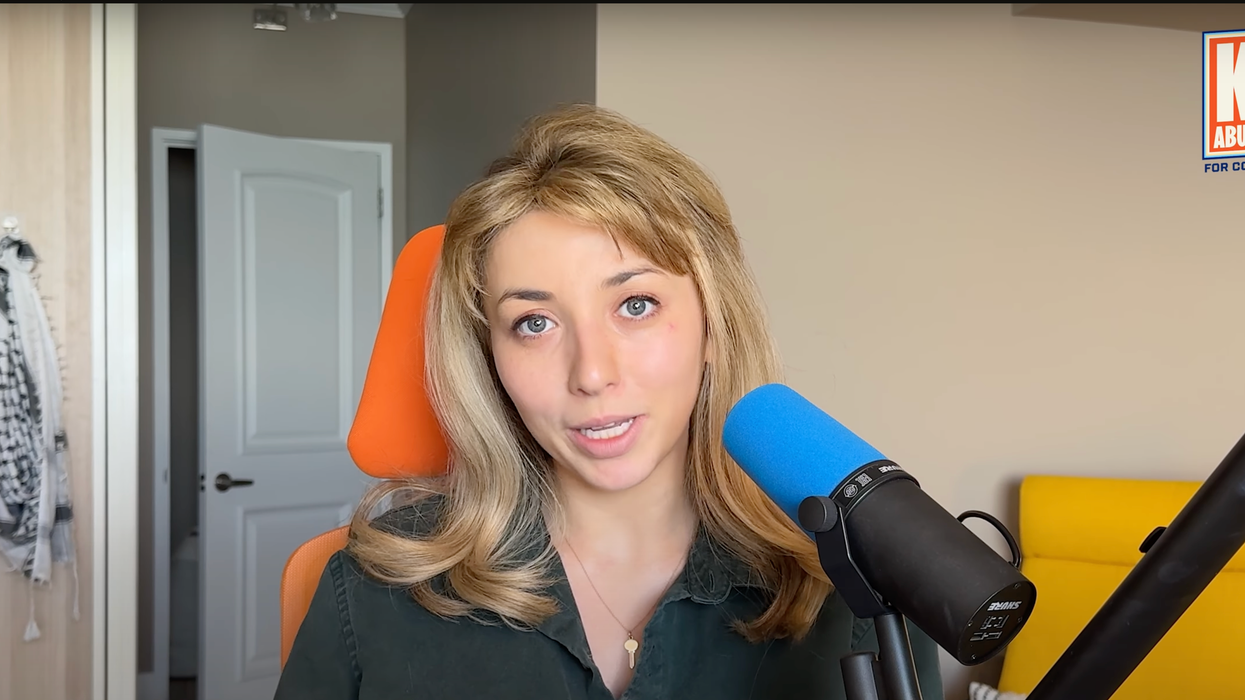
Kat Abughazaleh said that her campaign had raised $200,000 in its first 24 hours because "people believe in our 'far-left' ideas like Existence Shouldn't Be So Difficult."
Progressive influencer Kat Abughazaleh on Monday launched a bid to run for Illinois' safely blue 9th Congressional District, a seat that is currently held by Democratic Rep. Jan Schakowsky.
U.S. President Donald Trump and his billionaire adviser Elon Musk "are dismantling our country piece by piece, and so many Democrats seem content to just sit back and let them, so I say it's time to drop the excuses and grow a fucking spine," Abughazaleh said in her campaign launch video.
Schakowsky, who is 80 and has held the seat since 1998, "has had a pretty great track record on her voting," Abughazaleh told Rolling Stone. "She's been a good congresswoman, but I want to be better."
A reporter with the local paper Evanston Now posted a statement from Schakowsky responding to Abughazaleh's campaign. "I have always encouraged more participation in the democratic process, and I'm glad to see new faces getting involved as we stand up against the Trump administration," Schakowsky wrote. Schakowsky has not said officially whether she plans on running for reelection, according to the reporter.
On Tuesday, Abughazaleh announced that her campaign had raised $200,000 in its first 24 hours because "people believe in our 'far-left' ideas like Existence Shouldn't Be So Difficult."
In her campaign launch video, Abughazaleh also foregrounded economic concerns, saying there's "no reason" Americans shouldn't be able to afford housing, groceries, and healthcare.
Abughazaleh, a 26-year-old, who was raised a Republican, previously worked for the left-leaning media monitoring organization Media Matters for America. In 2024, she and 11 other employees were laid off after Musk sued the organization.
Abughazaleh has risen to prominence on TikTok, amassing over 220,000 followers, by posting videos about the right-wing—for example, a multipart series on the white Christian nationalism and commentary on Fox News' coverage. She also covered the 2024 Democratic National Convention as a social media influencer.
Rolling Stone also noted that Abughazaleh is "a wildly successful, incisive communicator who is stepping up at a time when it is clear that the party is in desperate need of new messengers."
Her announcement comes as Democrats in Congress have gotten an earful at town halls, with many constituents showing up to demand Democrats do more to counter U.S. President Donald Trump and Elon Musk.
Illinois' 9th Congressional District includes parts of Chicago, Evanston, and Glenview. Abughazaleh moved to the Chicago area in July, according to Politico.
"This is how free speech is actually chilled—vengeful dipshit billionaires," said one media executive, after more than a dozen staffers let go from nonprofit watchdog whose mission is to combat right-wing disinformation and propaganda.
Just months after mega-billionaire Elon Musk launched what he termed a "thermonuclear lawsuit" against Media Matters for America, the nonprofit media watchdog outfit announced a round of punishing layoffs Thursday which it in part attributed to the financial strain imposed by the legal battle it now faces.
What triggered Musk's initial outrage in November was MMFA reporting about "pro-Nazi content" on the social media platform X, owned by Musk, appearing alongside ads by prominent corporations in the content stream shown to users.
In his post threatening the lawsuit, which was later filed in Texas, Musk vowed to target "Media Matters and ALL those who colluded in this fraudulent attack on our company." Noting the scope of his retribution, Musk then added: "Their board, their donors, their network of dark money, all of them…" would be included in the suit's scope.
"However you feel about our work, it should worry you that any billionaire could do this to any outlet at any time for any reason. It's a sad day for free speech."
In the organization's Thursday announcement of layoffs, Media Matters' president Angelo Carusone said: "We're confronting a legal assault on multiple fronts and given how rapidly the media landscape is shifting, we need to be extremely intentional about how we allocate resources in order to stay effective. Nobody does what Media Matters does."
Due to the pressures, Carusone explained, the group was "taking this action now to ensure that we are sustainable, sturdy and successful for whatever lies ahead." More than a dozen staffers, including researchers and digital producers, were among those terminated.
"Many of my best colleagues at Media Matters lost their jobs today," Ari Drennen, the LGBTQ program director for Media Matters, said Thursday on X alongside individual posts from many of those laid off. "However you feel about our work, it should worry you that any billionaire could do this to any outlet at any time for any reason. It's a sad day for free speech."
Media Matters for America (MMFA) is a 501(c)3 registered nonprofit—which describes itself as a "progressive research and information center dedicated to comprehensively monitoring, analyzing, and correcting conservative misinformation in the U.S. media"—founded in 2004 at the height of the George W. Bush administration.
Ever since it has targeted the right-wing media echo chamber, including Fox News and other prominent cable, newspaper, and radio broadcasters who coordinate the messaging of pro-corporate and reactionary forces within the Republican Party and beyond.
In a post on X shared Thursday afternoon, laid-off Media Matters journalist Kat Abughazaleh lamented the firing of her talented colleagues (and encouraged outlets that are hiring to consider them) as she also directed her ire at Musk for his possible role in the downsizing decision.
"There's a reason far-right billionaires attack Media Matters with armies of lawyers," said Abughazaleh. "They know how effective our work is, and it terrifies them (him)," with the parenthetical a seeming reference to Musk.
Responding to her message on the social media platform now owned by Musk, media executive Ben Collins, current CEO of the satirical website The Onion, doubled-down on the charge against the Tesla founder and on-again-off-again world's richest man.
"Fuck Elon Musk," Collins said.
"This is why right-wing billionaires sue people reporting on them," continued Collins, who previously worked as a reporter for NBC News covering, among other thing, right-wing disinformation. "They know they can't win these lawsuits. But they also know legal fees will cripple the little guy reporting on their lies and crimes. This is how free speech is actually chilled—vengeful dipshit billionaires."
Musk has championed himself as a devote "free speech absolutist," but his time at the helm of X, which was Twitter when he purchased it, has repeatedly exposed the limits of his commitment.
"This is the latest example of billionaires and pandering politicians abusing the legal system to retaliate against their critics and harm the public's right to know," said Seth Stern, director of advocacy for the Freedom of the Press Foundation, in result to the layoffs at MMFA. "The result is that the American public loses access to information in a critical election year."
Stern identified Musk's use of a what's called a SLAPP lawsuit, which stands for strategic lawsuits against public participation, as increasingly commonplace by powerful figures and corporations who go after groups they don't like in court knowing full well that the financial resources required to fight the lawsuits can force their opponent into submission, regardless of the veracity of the allegations, or even force it into bankruptcy.
"States that don't have laws in place to combat SLAPPs should pass them," argued Stern. "Those that do should strengthen them. And Congress needs to pass a strong anti-SLAPP bill at the federal level right away. This isn't a partisan issue. While this time it's a right-leaning billionaire going after a left-leaning organization, the shoe could easily be on the other foot next time."
In 2007, in one of the most famous cases of its kind, the Gawker media group—which controlled a number of online outlets—was sued by professional wrestler Hulk Hogan, a lawsuit later discovered to be bankrolled by right-wing billionaire Peter Thiel due to a preexisting grudge he had against the site's reporting, which ultimately led to its bankruptcy.
In March of this year, a federal judge in California threw out a similar lawsuit brought by X under Elon Musk against the Center for Countering Digital Hate, a nonprofit group that had publicly accused the platform of profiting off hateful content published on the platform.
In tossing the case, U.S. District Court Judge Charles R. Breyer cited the transparent motivation behind the suit as part of the reason it lacked legitimacy.
It was "evident," said Breyer in his ruling that "X Corp. has brought this case in order to punish CCDH for CCDH publications that criticized X Corp.—and perhaps in order to dissuade others who might wish to engage in such criticism."
As Tim Karr, senior director at the media advocacy group Free Press, wrote in an op-ed for Common Dreams last year, Musk's "attempts to silence his critics are not surprising to anyone who has followed Musk's erratic behavior" over recent years.
"The magnate positions himself as a champion of free and open debate," wrote Karr, "while taking extraordinary efforts to silence any honest criticism and independent research that might negatively impact Musk and his many businesses."
Citing the specific attack on CCDH at the time, Karr concluded that the "only thing absolute about Elon is his refusal to give a fair hearing to any of his critics. And that's absolutely not free-speech absolutism."
Update: This piece has been updated to include comment from Seth Stern at Freedom of the Press Foundation.

After Niagara Falls, and Texas, and Gaza, it’s way past time for anyone to think that “it can’t happen here,” because it’s happening now.
“There was truth and there was untruth, and if you clung to the truth even against the whole world, you were not mad.” — George Orwell, 1984
In the ever-shrinking world of a free and fair media, the recent weeks have brought an explosion of untruth and a stepped-up war on reality. With democracy increasingly staring into the abyss both at home and abroad, propaganda and censorship are the double-edged sword of rising dictatorship. And now with violent hacking coming from both sides of the blade, it is indeed an increasing struggle to cling to the dream of truth-flavored sanity.
Americans got a scary peek into what the rising confluence of right-wing authoritarianism and its quasi-state media could accomplish on the day before Thanksgiving. That’s when what turned out to be a tragic, fatal car crash at the wrong time in the wrong way at the wrong place—a bridge border crossing between the U.S. and Canada in Niagara Falls—became a launching pad for a Big Lie about immigration and terror that circled the globe several times before the mundane truth put its pants on.
For millions of U.S. web surfers and couch potatoes, the mental connection of Biden, the border, and fiery chaos had already been implanted, and it will remain even as some of the erroneous tweets are deleted.
Here’s what really happened on Wednesday: A 53-year-old couple from Erie County, New York—Monica and Kurt Villani—were driving to a casino in Canada in a Bentley luxury car because of a canceled rock concert when something went terribly wrong. Approaching the Rainbow Bridge border post, the car was traveling 80 to 100 miles per hour—perhaps due to a medical emergency, or a stuck accelerator—and struck a curb, sending the Bentley into the air before a fiery crash and explosion that killed both occupants.
No one can fault the FBI or other agencies for investigating whether this was some type of terror attack, given the location of the accident at a key border crossing, the timing—perhaps the busiest travel day of the year—and the spectacular nature of the explosion. What’s inexcusable, however, was the rapid reporting of the most extreme speculation as fact, and the large number of supposedly responsible politicians willing to run with those untruths.
“What I’ve been told is that this was an attempted terrorist attack,” said Alexis McAdams, a correspondent for Fox News, the right-slanted network that despite a series of scandals and mishaps is still the most-watched cable news channel. Reporting just two and a half hours after the crash, McAdams added that her law enforcement sources believed that the motorists—in reality, remember, two middle-aged KISS fans—“have packed that car full of explosives.”
Thus, the “reputable” Fox News was adding the meat of confirmation to what a frothing right-wing echo chamber on social media was already proclaiming: The “blast” mean a network of terrorists is poised to enter America not only from the south but from the north, thus proving—in their minds—the inherent weakness of President Joe Biden’s border policies. And there was an army of political demagogues eager to run with a false meme.
“We need to lock down the borders immediately,” GOP Rep. Anna Paulina Luna of Florida posed on X/Twitter Wednesday. “Full deportation efforts need to begin. The U.S. does not need to be the world’s hospitality suite any longer.” Added another Florida Republican, Rep. Byron Donalds, in a now deleted tweet: “Open borders, soft-on-crime policies, and bending a knee to the woke P.C. mob is an inevitable threat to our nation and its people. Today’s apparent terrorist attack must be a wake-up call to all Americans.”
The website Meidas Touch published a list of more than 30 Republican officials or right-wing luminaries who tweeted similar sentiments and occasionally embellished their posts with new made-up details, like the discovery of an Iranian passport at the crash site. Some of these posts are still up, days after it became clear that the Niagara Falls crash was just a horrific tragedy and not the far-right’s fever dream of Islamic jihad to justify a repressive response. Others, including Fox News, have ripped yet another page from George Orwell’s 1984—tossing their initial reporting down a memory hole.
Unfortunately, their mission had already been accomplished. For millions of U.S. web surfers and couch potatoes, the mental connection of Biden, the border, and fiery chaos had already been implanted, and it will remain even as some of the erroneous tweets are deleted. And that sense that things are out of control in America is already being used to sell them on a rule-breaking strongman in the White House. That will be used in a Trump 47 presidency to actually carry out Luna’s howling at the moon, to deport so many migrants that America will need a gulag archipelago of camps to hold them.
The Niagara Falls panic didn’t happen in a vacuum, after all. It happened in the same week that Argentina elected a right-wing extremist president in Javier Milei, that the anti-immigration party of radical Geert Wilders won the most seats in the Netherlands parliament, that a fake rumor about the immigration status of a stabbing attacker sparked a destructive riot in Dublin—and that polls show Trump edging into the lead over Biden ahead of 2024′s election.
For these rising, right-wing authoritarians, a free press and its threat of factual public information rate high on their enemies list—as it’s been for strongmen and dictators for the last century. The alliance between Fox News, Elon’s Musk’s X (formerly Twitter), and right-wing blowhards shows how a strong propaganda regime has already been established—but what about the censorship side of the sword?
It’s coming.
Also this past week, we saw a stunning partnership between an increasingly unhinged Musk, the world’s richest man, and a far-right attorney general, the disgraced-but-somehow-still-in-office Ken Paxton of Texas, in taking legal action aimed at undermining and perhaps destroying the left-wing media watchdog group, Media Matters for America. (Full disclosure: Over a decade ago, I had a brief fellowship with MMFA to support a book I was writing.)
It’s not just that the newest generation of chest-thumping strongmen are harnessing the electrons of the 21st century to hypercharge their modern Ministries of Untruth, but that the guardians of the actual truth—the newsroom grand poobahs, an American president who claims he ran to save democracy—are passively watching it slip from our hands.
Media Matters had run an explosive report about pro-Nazi hate speech published on X and ads for major corporations getting placed next to such content. Other X users confirmed the problem even as X’s CEO Linda Yaccarino claimed any instances were rare and unintentional. That didn’t stop Musk from threatening “a thermonuclear lawsuit” against MMFA or Paxton from announcing a state investigation of the group—chilling moves against a free press that could cost Media Matters hundreds of thousands of dollars just to defend its very existence.
The legally challenged Paxton won’t be a Trump 47 attorney general, but someone like him—like frothing right-wing lawyer Mike Davis, who recently told a podcast that “we’re gonna detain a lot of people in the D.C. gulag and Gitmo”—will get the job, which will surely include the task of siccing the Justice Department on journalists Trump has declared “enemies of the people.”
It’s teeing up a dystopian world in which journalists who do not obey the party’s propaganda line could face increasingly severe consequences—perhaps far worse than the ordeal currently facing Media Matters. Verbal abuse, lawsuits, and harassment is only where it starts. If you want to see where treating a free press as the enemy ends, look to Gaza. And not only because the communications minister in the right-wing government of Israel’s Benjamin Netanyahu is threatening sanctions against that nation’s most critical newspaper, Haaretz—although there is that.
They say that truth is often the first casualty of war, but in southern Israel and Gaza the heartbreaking casualties have been the truth-tellers themselves, the journalists. After four Israeli journalists were brutally and unconscionably killed in the October 7 Hamas terror attack, Israel’s violent war of retaliations has not only caused the deaths of Palestinian men, women, and children by the thousands, but has also killed journalists at a pace not seen in any conflict in decades.
A stunning 53 Palestinian or Lebanese journalists have been killed since the war broke out, and the circumstances of at least several journalists and their family members obliterated by precision Israeli drone strikes on their homes or offices has done little to quiet suspicions that some media members are deliberately targeted. Indeed, last week the advocacy group Reporters Without Borders claimed the Reuters visuals journalist Issam Abdallah was deliberately attacked when he was killed in southern Lebanon on October 13 by shells fired from Israeli territory. Wrote the group also known by its French initials RSF: “Two strikes in the same place in such a short space of time (just over 30 seconds), from the same direction, clearly indicate precise targeting.” Israel denies targeting journalists.
Major U.S. newsrooms have been mostly tepid in condemning these outrageous, violent, and attacks of little precedent on press freedom, to the extent that it’s mentioned at all. Ditto the Biden administration, which has made protecting democracy its core argument for a second term and yet seems to view the real-world implications of the First Amendment as an afterthought, if not a hindrance.
Indeed, one report suggested that Team Biden agrees with its odd-couple ally the Netanyahu government in wanting the public to know as little as possible about the extent of the destruction and killing in Gaza. Politico reported last week that a Biden administration fear, in negotiating a temporary cease-fire, was that it “would allow journalists broader access to Gaza and the opportunity to further illuminate the devastation there and turn public opinion on Israel.”
This kind of malarkey is what I find so alarming about our increasingly Orwellian present, and even dimmer future. It’s not just that the newest generation of chest-thumping strongmen are harnessing the electrons of the 21st century to hypercharge their modern Ministries of Untruth, but that the guardians of the actual truth—the newsroom grand poobahs, an American president who claims he ran to save democracy—are passively watching it slip from our hands.
After Niagara Falls, and Texas, and Gaza, it’s way past time for anyone to think that “it can’t happen here,” because it’s happening now. And the next 12 months may be our last chance to show that we are not going mad, that the people want the truth, and that we will stop fact-based journalism from sliding down Orwell’s memory hole for good.
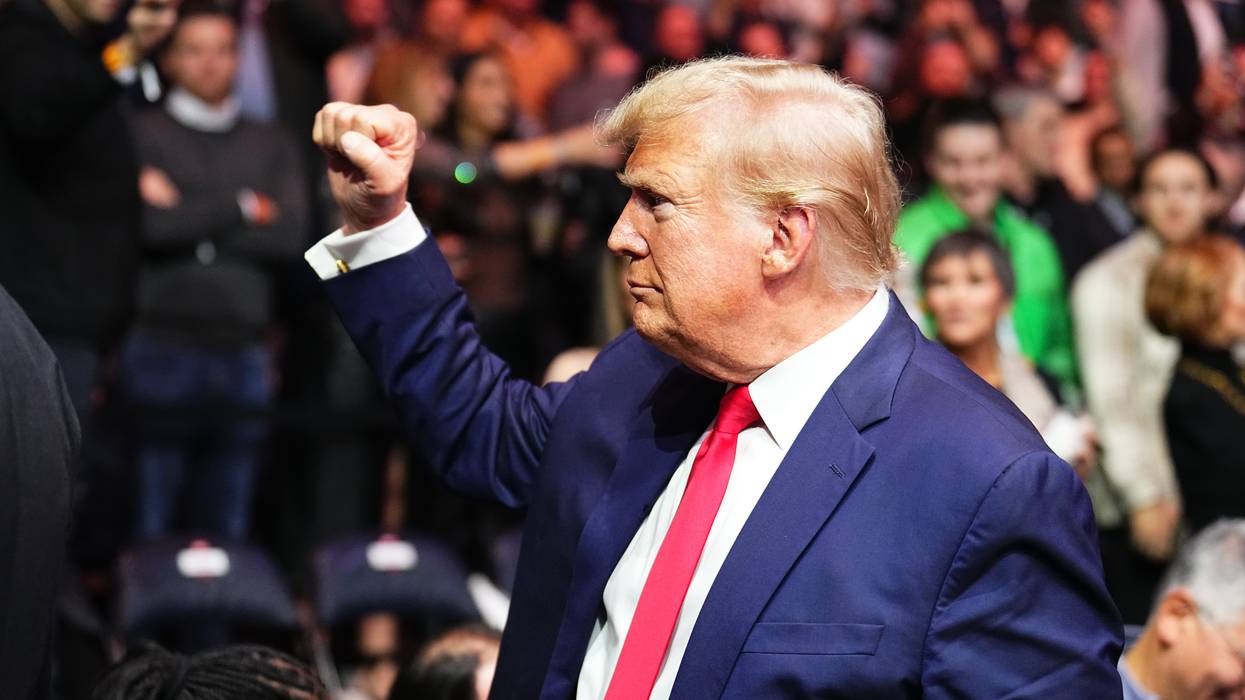
"If it wasn't already clear, our democracy is in very serious danger."
Former U.S. President Donald Trump is the GOP front-runner for 2024, setting up an expected rematch with Democratic President Joe Biden, but American media coverage of the Republican's campaign is already showing that many journalists didn't learn important lessons about how to report on his extremism, according to recent analyses.
During a Saturday rally, Trump pledged to "root out the communist, Marxist, fascist, and the radical left thugs that live like vermin within the confines of our country, that lie and steal and cheat on elections and will do anything possible—they'll do anything, whether legally or illegally—to destroy America and to destroy the American dream."
"The real threat is not from the radical right; the real threat is from the radical left, and it's growing every day, every single day. The threat from outside forces is far less sinister, dangerous, and grave than the threat from within," added Trump—who currently faces four criminal cases, two of which relate to his efforts to overturn his 2020 loss.
As Common Dreams reported, Trump's openly fascistic comments on Saturday quickly drew comparisons to Nazi rhetoric, particularly the use of the word "vermin."
"The press must get across to American citizens the crucial importance of this election and the dangers of a Trump win."
"This is straight-up Nazi talk, in a way he's never done quite before. To announce that the real enemy is domestic and then to speak of that enemy in subhuman terms is Fascism 101. Especially that particular word," The New Republic editor Michael Tomasky wrote Sunday, referencing some antisemitic content from the 1930s and '40s.
"Trump's rats are a much broader category," Tomasky continued, "and in that sense an even more dangerous one—he means whoever manages to offend him while exercising their constitutionally guaranteed right to register dissent and to criticize him."
And yet, as Philadelphia Inquirer columnist Will Bunch emphasized Sunday, "in one of the most perilous moments of crisis the world has seen in 75 years, and with the basic notions of free speech under assault, most newsrooms aren't fighting back. They are, instead, pulling their punches in a defensive, 'rope-a-dope' crouch, and thus failing to truly inform—when democracy itself is at risk."
Media Matters for America senior fellow Matt Gertz noted Monday that "if you rely on the news divisions of the Big Three broadcast networks, you haven't seen the chilling footage of Trump's remarks" from Saturday.
According to Gertz:
CBS News and ABC News have not mentioned Trump's remarks at all on their morning news, evening news, or Sunday morning political talk shows.
NBC News also did not discuss them on its morning and evening news broadcasts, and "Meet The Press'" sole coverage consisted of host Kristen Welker reading the comment to Republican National Committee Chair Ronna McDaniel and asking her, "Are you comfortable with this language coming from the GOP front-runner?" (McDaniel declined to comment).
The nation's most-read newspapers are similarly not treating these remarks as a major story.
Trump's comments did catch the attention of MSNBC host Mehdi Hasan, who addressed them Sunday evening during his monologue and in a discussion with Yale University philosophy professor Jason Stanley, a fascism expert.
However, Trump's weekend remarks and a failure to adequately cover them fit into a larger pattern that includes MSNBC.
Media Matters data integrity analyst Harrison Ray last week highlighted how CNN, Fox News, and MSNBC have handled other comments from the GOP presidential candidate:
Trump has recently vowed to implement "ideological screening" for migrants, saying he'd turn away anyone who doesn't like "our religion"; accused "liberal Jews" of voting "to destroy America and Israel"; claimed migrants are "poisoning the blood of our country"; and complimented the terrorist group Hezbollah as "very smart.
Yet these extreme and alarming statements received scant coverage across major TV news networks: Three of the four comments received no more than 22 minutes of attention each, with only one nearing an hour.
"Despite—or perhaps due to—the frequency of Trump's extreme comments, TV news networks are seemingly desensitized to his rhetoric," Ray wrote. "The networks have shown they are capable of covering such extremism—as Joint Chiefs of Staff head Mark Milley was retiring, networks eventually got around to covering Trump's suggestion that the general deserved to be executed—but often they regularly choose to ignore the GOP front-runner's inflammatory commentary."
Along with reporting on that analysis last week, Salon's Areeba Shah spoke with academics and experts who also shared concerns that U.S. journalists aren't treating Trump's extremism with a necessary seriousness.
"If we don't call out the rhetoric as extreme, we risk making it normal and acceptable," warned Libby Hemphill, a professor at the University of Michigan's School of Information and the Institute for Social Research.
University of Kansas political science professor Donald Haider-Markel, who studies domestic extremism, similarly told Shah that "when his dehumanizing comments are not challenged by the news media, viewers go along. If the dehumanization sticks, it makes support of political violence against 'enemies' more likely."
"I think you already see the consequences of underreporting and normalizing his rhetoric in polling about the 2024 race—in many polls Trump is running even or ahead of Biden even with his ever more extreme rhetoric," he said. "The news media has not learned any lessons from the period 2015-2020 and is covering him as a normal candidate doing and saying normal candidate things."
Global Project Against Hate and Extremism (GPAHE) co-founder Heidi Beirich stressed to Shah that given Trump's chances of winning the presidential race next year, "the public needs to know about policy plans, such as the program being designed for the next conservative president by the Heritage Foundation, called Project 2025."
For the past several months, critics have highlighted various concerns with Project 2025, from policies on the fossil fuel-driven climate emergency and LGBTQ+ rights to—as Common Dreams opinion contributor Thom Hartmann pointed out earlier this year—its "consolidation of power in the hands of the president, reflecting the way government is run in Hungary, China, and Russia rather than the checks-and-balances envisioned by our nation's founders."
GPAHE on Monday released a detailed analysis of the project, which "threatens Americans' civil and human rights, and is an attack on our very democracy," according to Beirich.
"Our country is facing an authoritarian threat from far-right extremists and Christian Nationalists in a new, unique, and frightening way," said GPAHE co-founder Wendy Via. "Voters, political figures, and the media must be on alert that Project 2025 is an authoritarian roadmap to dismantling a thriving, inclusive democracy for all."
Some journalists warn that Trump's recent rhetoric, given his past record, should be taken more seriously by both the press and the public.
"Do I think Trump will imprison political dissidents in the concentration camps? I don't know if he will, but I do know that it would be quite easy for him to justify putting political dissidents in concentration camps, based on things he has already said and promised to do," Current Affairs' Nathan J. Robinson wrote Monday. "We know he wants to build sprawling camps and start rounding people up. We know he wants to root out internal threats. And we know he couldn't care less about the law. Personally I do not feel reassured."
"If it wasn't already clear, our democracy is in very serious danger and everyone needs to wake up to the threat," Robinson asserted. "Once new prison camps are built, they do not tend to close down. The time for stopping them is before they get built. It's important to see major historical threats coming, before it's too late to change course."
American journalist Margaret Sullivan wrote in her column for The Guardian last week that "the press must get across to American citizens the crucial importance of this election and the dangers of a Trump win. They don't need to surrender their journalistic independence to do so or be 'in the tank' for Biden or anyone else."
Sullivan's recommendations for U.S. newsrooms included:
Report more—much more—about what Trump would do, post-election. Ask voters directly whether they are comfortable with those plans, and report on that. Display these stories prominently, and then do it again soon.
Use direct language, not couched in scaredy-cat false equivalence, about the dangers of a second Trump presidency.
Pin down Republicans about whether they support Trump's lies and autocratic plans.
"It's the media's responsibility to grab American voters by the lapels," she argued, "not just to nod to the topic politely from time to time."
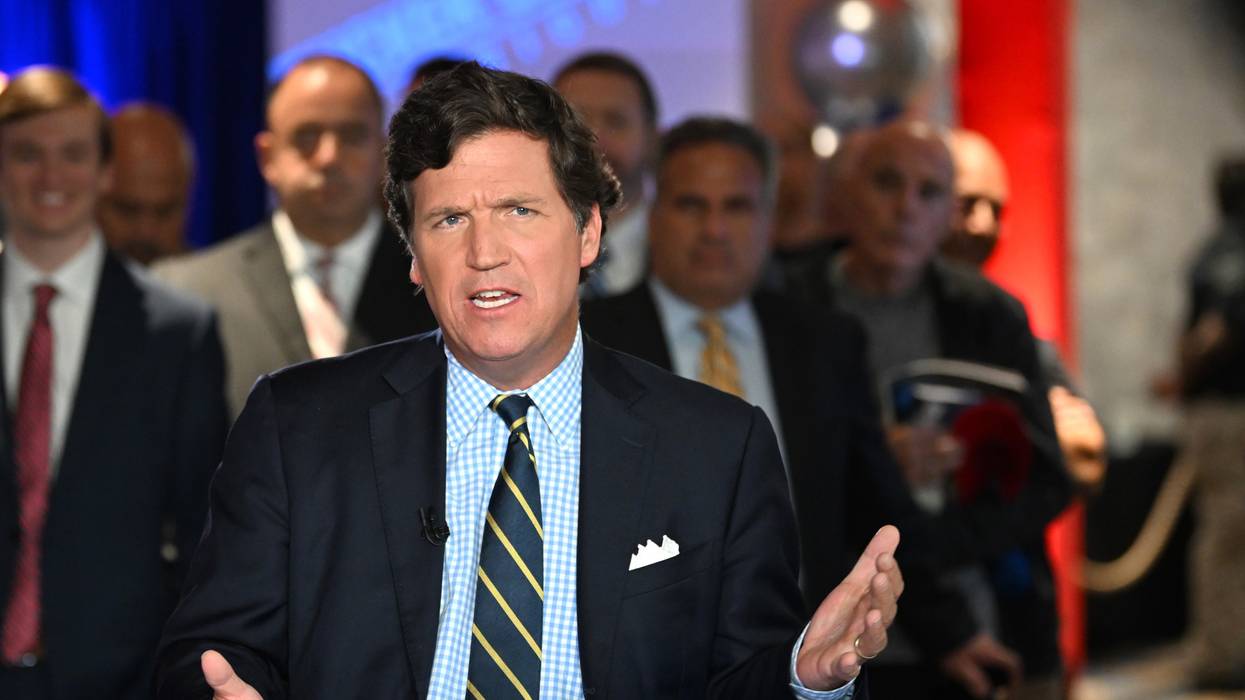
"Fox News without Tucker is basically a wet paper towel: fragile and functionally useless," said one media expert. "They will try and get their footing back fast, but don't let them."
Less than a week after avoiding a trial regarding its election lies with a $787.5 million settlement, Fox News announced on Monday that its top-rated prime-time host, Tucker Carlson, is leaving the network effective immediately.
Carlson's final show was Friday evening, and he closed the broadcast by telling viewers, "We'll be back on Monday," suggesting he wasn't aware of his imminent departure.
"Tucker Carlson Tonight" played a key role in the defamation lawsuit filed against Fox by Dominion Voting Systems, which accused the network of spreading misinformation about its election software as its hosts and guests repeatedly claimed votes cast for former Republican President Donald Trump in 2020 had been "flipped" for Democratic President Joe Biden.
Carlson had been expected to testify in the case before it was settled just before the trial was scheduled to begin last month. While claiming on-air that questions about the validity of the 2020 election results were part of "legitimate discourse and inquiry," uncovered text messages between Carlson and his producer showed that he found Trump's claims about the election "disgusting" and "destructive."
In addition to promoting lies about Biden's victory, Carlson spent his 14-year tenure at Fox News—as a contributor, panelist, co-host, and starting in 2016 as host of his own prime-time show—attacking immigrants and asylum-seekers, advancing the white supremacist "Great Replacement Theory," and urging police to crack down on racial justice protesters.
Economist Robert Reich noted that Carlson's exit does not mean that the network will "start telling the truth."
While Fox News has given no indication that its other hosts, commentators, and guests will stop promoting similar ideas, consumer rights watchdog Public Citizen President Robert Weissman called Carlson's departure "flat-out great news."
"Anything that reduces the reach of this purveyor [of] hate, racism, reaction and authoritarianism is a positive step for America and the world," he said.
With Carlson gone, said U.S. Rep. Mark Pocan (D-Wis.), Fox News officials "just need to take out the rest of the trash."
Angelo Carusone, president and CEO of Media Matters for America, said Carlson was likely pushed out because he had become "toxic" for the network, even as it relied heavily on him and his millions of viewers.
"Fox News without Tucker is basically a wet paper towel: fragile and functionally useless," said Carusone. "They will try and get their footing back fast, but don't let them."

"There better be whole bunch of broadcast apologies in this settlement."
Moments before Fox News was set to face a jury regarding the false claims repeatedly made on air about Dominion Voting Systems and the 2020 election, the right-wing media corporation announced it had reached a settlement with the company.
The settlement amounted to $787.5 million and Dominion CEO John Poulos said in a press conference outside the courtroom in New York that "Fox has admitted to telling lies about Dominion," but critics said the financial agreement robbed the public of a trial that would have exposed the news network's lies about fraud during the 2020 election and its behind-the-scenes operations.
"The trial would've exposed the underpinnings of a corporation that has spent almost three decades radicalizing middle-age and older white people with lies, fear, hatred, and white supremacy," said Ashtin Pittman of the Mississippi Free Press.
Dominion filed a defamation lawsuit against Fox in 2021, challenging repeated baseless claims by guests and hosts of the network that former President Donald Trump was the true winner of the 2020 election and that Dominion's voting machines had changed votes in President Joe Biden's favor. Private messages between hosts and producers at the network have since been exposed, showing many believed the lies to be "reckless" and "absurd" even as Fox continued to spread them.
If Fox truly admitted wrongdoing, said a number of critics, it should be required to do so on-air and not just in a private settlement.
Though the settlement means there will not be a public airing of Fox News' lies about Dominion, Media Matters president Angelo Carusone said the company has still "been completely exposed as a partisan propaganda outlet that is willing to do anything for profit and power."
"The stain this leaves on Fox can't be wiped out with money," he said. "Fox News lied about the 2020 election; they all knew it was a lie, right up to the Murdochs themselves. What the Dominion trial offered was a keyhole view into the day-to-day industrial-scale deceit that takes place at Fox. It helped illustrate why the company is such a uniquely destructive force."

Fox News hit viewers with an "avalanche of misinformation" in its weekday coverage of the coronavirus crisis from July 6 through 10, according to a national media watchdog group that documented at least 253 instances of the network's coverage undermining science, politicizing the pandemic, emphasizing economic issues, and promoting other lies or problematic positions in those five days alone.
Media Matters for America (MMFA) noted in a statement that its new analysis released Thursday follows Yahoo News reporting from earlier this month which claims that Fox News' messaging on Covid-19 was undergoing a "remarkable turn" from its earlier coverage to "acknowledge ... that the coronavirus is a far graver threat."
In contrast with the kind of shift reported by Yahoo, MMFA revealed that:
"Fox host Laura Ingraham and her prime-time show 'The Ingraham Angle' traded in coronavirus misinformation far more often than other Fox personalities and shows during the week of July 6," MMFA research analyst Rob Savillo explains in the report.
"Ingraham herself pushed coronavirus misinformation 38 times, which included 21 instances of undermining and misrepresenting the science on the coronavirus and 13 instances of politicizing the response to the pandemic," he continues. "Fox personalities and guests on 'The Ingraham Angle' were responsible for an astonishing 63 instances of misinformation."
The MMFA report features multiple videos of the network's Covid-19 coverage, including this July 8 clip from "Fox & Friends," which ranked second after Igraham's show in terms of misinformation during the analyzed period.
"Fox has argued against stay-at-home orders and business closures even though evidence shows that shutdowns likely averted up to 60 million infections in the U.S.," Savillo points out. "The network at times even continues to argue against the efficacy of wearing masks, with host Tucker Carlson claiming 'there is no evidence' that masks help stop the spread of the coronavirus. This explicitly goes against the World Health Organization's and the U.S. Centers for Disease Control and Prevention's recommendations of mask use for the general public to prevent the spread of the coronavirus."
Citing six polls that have shown Fox viewers "are woefully --and dangerously--misinformed regarding the coronavirus," Savillio says that "these recent events illustrate the real-world consequences of Fox's continued broadcasting of coronavirus misinformation that downplays the threat of the virus, dismisses the recommendations of public health officials, and misrepresents the scientific consensus on the disease."
Major corporations including Amazon, Kraft Heinz, Pzifer, and Verizon are leading sponsors of the network's shows, "and as a result helped fund Fox News' disinformation effort to undermine public health and help President Trump's reelection chances," according to MMFA's statement announcing the report. "They all advertised on the network multiple times in July."

Fox News host Tucker Carlson referred to Iraqis as "semiliterate primitive monkeys" who should "just shut the fuck up and obey us" in recordings posted Monday night by Media Matters.
The recordings were part of a larger dump of clips showing Carlson's racism toward a number of groups. The comments came between 2006 and 2011, during which time Carlson was a frequent call in guest to "The Bubba the Love Sponge Show." Carlson was a contributor to both Fox and MSNBC during those years, joining Fox in 2009.
Monday's revelations followed a story Sunday evening from Media Matters that detailed multiple statements from Carlson about women, rape, and underage girls. Carlson's reaction to that story was proudly unrepentant:
Media Matters caught me saying something naughty on a radio show more than a decade ago. Rather than express the usual ritual contrition, how about this: I'm on television every weeknight live for an hour. If you want to know what I think, you can watch. Anyone who disagrees with my views is welcome to come on and explain why.
This is a breaking story, and Carlson has not, at press time, responded to the new recordings. If and when he does, we will include that comment.
Calling Iraqis "monkeys" is in contrast to Carlson's carefully cultivated image in recent years as a libertarian critic of both sides of the political aisle, particularly on matters of foreign policy. A number of left-leaning critics of American empire, including journalists Glenn Greenwald and Michael Tracey, and lawmakers Rep. Ro Khanna (D-Calif.) and Rep. Tulsi Gabbard (D-Hi.), have either appeared on Carlson's eponymous show or promoted his work on social media.
Citing that reputation, popular Twitter user @Partisangirl defended Carlson, claiming that his comments were only being attacked because of a perceived pro-war stance.
Whatever Carlson's real views on war and empire, the genesis of Carlson's "anti-war" bona fides does not appear to be based in anything close to liberal or left principles. In a number of clips released Monday, Carlson disparaged the Iraqi people to Bubba the Love Sponge and his co-hosts and implied that most--if not all--of the blame for postwar chaos in the country was due to their culture.
"You know, I'm not defending the war in any way, but I just have zero sympathy for them or their culture," Carlson said of Iraqis on May 30, 2006. "A culture where people just don't use toilet paper or forks."
"They can just shut the fuck up and obey, is my view," Carlson continued. "And, you know, the second we leave, they're going to be calling for us to return because they can't govern themselves."
On March 11, 2008, Carlson said that Iraq could be salvaged "if, somehow, the Iraqis decided to behave like human beings or something."
Carlson's view on the war was perhaps most clearly expressed, however, shortly before Barack Obama's election as president. On October 7, 2008, Carlson told Bubba and company that invading Iraq was a mistake because of the kind of people the Iraqis were--if indeed they were people at all.
"Iraq is a crappy place filled with a bunch of, you know, semiliterate primitive monkeys," Carlson said, "that's why it wasn't worth invading."
For more clips of Carlson's appearances on "The Bubba the Love Sponge Show" and to hear more comments, see Media Matters reporting here.
To be "poor" in America isn't an identifying characteristic or a defining trait, like being forgetful or creative or tall.
Being a low-income American comes from being paid a low income.
It seems like a basic point, but it's one Andy Puzder needs to review. Puzder is CEO of CKE Restaurants, Inc., which employs more than 20,000 people and worldwide owns, operates and franchises more than 3,300 fast food restaurants, including Hardee's and Carl's Jr.
In a recent op-ed, Puzder made the specious claim that the social safety net "can lock [people] into poverty."
He argues that "these programs have the unintended consequence of discouraging work rather than encouraging independence, self-reliance and pride," and that, because of government assistance, his low-wage employees across the U.S. are refusing promotions and additional hours "for fear of losing public assistance."
What Puzder forgets to point out is that it is poverty wages--poverty wages paid by institutions like Hardee's and Carl's Jr. to many of their 20,000-plus employees-- that force families to turn to nutrition and housing assistance, and other government-supplemented work supports, just to get by.
Media Matters reports that a 2013 study by the National Employment Law Project (NELP) found that "the overwhelming majority of fast food employees (89.1 percent) make less than $9 per hour and face significant 'barriers to upward mobility' in the profession."
In a recent interview with Fox News, Puzder doubled down on his flawed thesis.
"We need a different system," he concluded.
On that point he's right.
We need a system where people like Savino, a father of two in Brooklyn and a member of the New York Communities for Change, don't have to work 72 hours a week at a local supermarket for wages that are so low they still struggle to get by.
"Sometimes things are so bad that I have to decide- should I pay rent this month, or should I eat?" said Savino.
We need a system where mothers like Ashely, a Washington, D.C. resident and a member of Working Families, don't have to sleep with a young child on the floor because jobs don't pay enough to cover rent.
"If I were paid a living wage, I could get my own place," Ashley said. "As it is, I feel stuck, and don't see a way out."
We need employers to pay enough money so that people like Darrell, who works in the auto parts industry in Ohio, can bring home more than $272 a week. Darrell hopes to move out of the two-bedroom trailer he shares with his daughter, son-in-law and 17-month-old granddaughter.
"I just want enough to survive," Darrell said, "and I think that is a reasonable expectation for someone who goes to work and works hard every day."
We need a system where parents aren't forced to choose between working more hours for low wages and paying exorbitant child care fees, or staying home with their kids and barely scraping by on government assistance.
We need a system where people are paid enough during their working years to put money away in order to retire peacefully in old age.
We need to change the current system, where people like Puzder make more in one day ($17,192) than one of his minimum wage employees would earn after working full-time for an entire year ($15,130).
This system was created by people like Puzder and political leaders who, like him, blame the very people who are just trying to make ends meet. But we have the power to change how the system works.
Not surprisingly, the road to change doesn't involve taking away supports from the people who need them most. It involves creating good jobs for the people who need them most; jobs that provide a fair wage and benefits--that give people options rather than forcing them to choose between bad and worse.