

SUBSCRIBE TO OUR FREE NEWSLETTER
Daily news & progressive opinion—funded by the people, not the corporations—delivered straight to your inbox.
5
#000000
#FFFFFF
To donate by check, phone, or other method, see our More Ways to Give page.
Daily news & progressive opinion—funded by the people, not the corporations—delivered straight to your inbox.

Lawmakers are pushing for a new combatant command they say will speed up the military’s uptake of robotic and autonomous systems. Experts warn they are ignoring serious flaws with this approach.
Even as the Pentagon mulls culling its combatant commands to reduce its bureaucratic bloat, lawmakers are itching to prop up another one — based on robots and AI.
Combatant commands like CENTCOM (Central Command) and AFRICOM (Africa Command) — sprawling military headquarters which oversee operations and activities across their assigned region or function — are notorious for their high operational costs and continued pushes for more responsibilities, including entanglements abroad.
The Department of Defense has weighed paring the commands back in response, floating restructuring plans last December that would reduce their number from 11 to 8. But lawmakers are going in the opposite direction, pushing for a new combatant command they say will speed up the military’s uptake of robotic and autonomous systems.
As experts tell RS, the new command is poised to create more redundancy, waste, and inefficiency — and the mission creep that comes with it — while stifling efforts to deploy such technologies in practice.
Tucked into the Senate Armed Services Committee’s (SASC) version of the National Defense Authorization Act (NDAA) for FY 2027, a provision called section 917 would allow for the creation of a Robotic and Autonomous Systems Command (RASCOM).
By centralizing oversight over autonomous systems, lawmakers hope RASCOM will help the military adopt them as quickly as possible. In particular, they aim to overcome difficulties that have plagued previous procurement efforts.
In a press release, SASC chairman Sen. Roger Wicker (R-Miss.) hailed the prospective combatant command as a means to help the military “embrace 21st century warfare.”
RASCOM “would standardize the way the entire armed services use unmanned systems in combat,” Wicker wrote, The armed service branches would be able to set up offices within RASCOM, “ensuring that [they all] adopt the latest systems.”
But another combatant command would be at odds with the Pentagon's stated goal of reducing its sprawling bureaucratic overhead.
DoD Secretary Pete Hegseth “has righteously complained about bloat in the GOFO [General and Flag Officers] corps, saying he wants to cut the number of [four-star generals] by 20%," Justin Logan, director of defense and foreign policy studies at the Cato Institute, told RS. "Another place to park a four-star and his buddies flies in the face of that.”
A new combatant command would also take up work the Pentagon is already doing through its deployment of uncrewed systems across its operation. And, as Jennifer Kavanagh, Defense Priorities’ director of military analysis, tells RS, the administrative structure needed for a new combatant command will “duplicate functions provided elsewhere, including at the leadership level.”
What’s more, combatant commands rarely remain limited to their original missions. Instead, they often push for greater budgets, more responsibilities, and more sway over the direction of U.S. military policy.
“If RASCOM is created, it will face the same institutional incentives to expand its mission,” Gary Sampson, a national security strategist and retired U.S. Marine Corps intelligence and international affairs officer, told RS.
“Just like the Navy pushes for Naval spending and CENTCOM pushes for wars in the Middle East, RASCOM would act as a sales team for robotics and autonomous systems,” Logan predicted, referencing CENTCOM officials’ persistent support for continued U.S. military engagement in the Middle East. “That is the job of companies who manufacture autonomous systems, not the U.S. government.”
Standing up and maintaining another command would also be costly. “This is the last thing the Pentagon needs given its already massive budget,” Kavanagh said.
And, once established, RASCOM may prove difficult to get rid of. As Dan Grazier, who directs the Stimson Center’s National Security reform program, tells RS, “there would be entrenched interests that... have a stake in seeing it continue.”
“Even if the [command’s] headquarters is stood down later, many functions, personnel, and institutional interests tend to persist and migrate elsewhere,” Sampson said.
Beyond concerns over bureaucratic bloat and mission creep, experts observe that RASCOM’s proposed organizational structure could create other operational problems.
For example, most existing combatant commands are organized around geographic missions, or by function. In contrast, RASCOM would be structured around a class of tools.
Brandon Carr, a senior studies associate at the Quincy Institute, tells RS this “logic is well-intentioned” but “likely to be counterproductive.”
“So many future robotic and autonomous systems will become part of an individual service member’s personal equipment,” Carr said. The “technology does not lend itself to a unified command with centralized control.”
To best promote innovation, he said, “robotic and autonomous systems should be integrated and deployed down to the lowest levels of each service.”
Others contend RASCOM’s centralized approach could hinder autonomous systems' use on the battlefield.
David Deptula, the dean of the Mitchell Institute for Aerospace Studies, wrote last month that a combatant command “would risk centralizing control in a way that makes [autonomous] capabilities less responsive to the commanders who need them most.”
That could create a “seam in command and control” that adversaries would exploit in combat, Deptula wrote. (The Mitchell Institute is financially supported by weapons contractors.)
More broadly, Grazier cautioned against an over-reliance on autonomous systems, warning that adversaries will inevitably look for and leverage their weaknesses.
“We’re spending a crazy amount of money building this robot army. When it’s disrupted [by enemy combatants], our skills to operate without it will have atrophied,” Grazier warned. “We’re actually building in the means of our own defeat.”

"One brutal kick sent the robot's head hanging loose."
Amid warnings from experts and political leaders about "killer robots," a Chinese robotics company on Thursday hosted an unprecedented combat tournament in which one humanoid robot decapitated another.
The fight featuring the decapitation—footage of which quickly circulated online—was part of the opening night of the Ultimate Robot Knock-out Legend (URKL) competition in Shenzhen, organized by the company EngineAI, which developed the humanoid.
The Chinese Embassy in Ireland was among the accounts on the social media platform X that highlighted the moment when one robot's "head" was dislodged.
The "white humanoid robot, named 'White Eagle' landed a high kick to the head of its black opponent, 'Matador,' which made the robot's head rock precariously in its socket before rolling completely out of place," according to Newsweek. "The two continued to spar as Matador's head was swinging from its socket until eventually the robot fell, crushing its head underneath its body."
Unveiled last year, the humanoid is called T800, a nod to the Terminator franchise. EngineAI's website features videos of T800 executing various mixed martial arts (MMA) moves, from a combination punch and a roundhouse kick to punch-kick combos.
EngineAI announced UKRL, the "world's first" humanoid robot combat league, early this year, seeking 32 teams from universities, enterprises, and research institutions worldwide to compete using its robots. The first round of competition is scheduled for July-August, followed by another round in September-October, and the grand finals in November-December.
As the Chinese tabloid Global Times reported when the tournament was announced in February:
Pan Helin, a Beijing-based veteran analyst, told the Global Times on Monday that such competitions help enhance public awareness of humanoid robots and expand potential application scenarios.
Pan noted that humanoid robots still face technological and practical limitations, and real-world application is key to their further development. Such events could yield positive effects in the entertainment and performance market, which is a necessary step forward in paving the way for further applications in factories or households, Pan said.
Tian Feng, former dean of SenseTime's Intelligence Industry Research Institute, said that the free provision of T800 robots will lower research and development barriers for smaller companies and promote the integration of applications involving industry, academia, and research bodies.
The tournament's opening night came on the heels of a series of artificial intelligence events hosted by the United Nations earlier this month, during which Secretary-General António Guterres said that "if AI is to be powerful, it must be governed," and "my main concern is with 'lethal autonomous weapon systems.'"
"Let us call them what they are: killer robots," Guterres continued. "Machines selecting and engaging their target and taking a life—without human control and judgment. That is morally repugnant. It is politically unacceptable. And it must be banned by international law."
"States are already at the discussion table. But let us not wait for atrocity to act. Some decisions must remain forever human—none more than taking a human life," he added. "Some might claim that governance is the enemy of innovation. But innovation needs guardrails. The technologies we trust most—in aviation, in medicine, in nuclear energy and beyond—earned that trust because we acted to hold their makers to account."
As Wired detailed in Friday reporting, "the US military has a long-standing interest in humanoids," and Sankaet Pathak's startup Foundation Future Industries aims to "produce an all-American robot supersoldier."
The startup's "unique in its targeting of the military market, and so far it's been lucrative," the outlet added. "The company has government contracts worth millions of dollars and high-profile backers to spread its message: Eric Trump, the president's son, is both an investor and the company's chief strategy adviser."
This article has been updated to include the Wired reporting.

"Machines selecting and engaging their target and taking a life—without human control and judgment. That is morally repugnant. It is politically unacceptable. And it must be banned by international law."
As the global artificial intelligence arms race accelerates and lethal autonomous weapons systems—better known as "killer robots"—go from the stuff of science fiction to battlefield reality, the head of the United Nations warned Monday that the world is running out of time to set international rules governing AI before the technology outpaces humanity's ability to control it.
"We may be the last generation able to set the terms on which humanity and machines coexist," UN Secretary-General António Guterres said in a social media post coinciding with his speech at the inaugural UN Global Dialogue on AI Governance in Geneva.
"If AI is to be powerful, it must be governed," he asserted. "If AI is to be trusted, those who build it must be accountable. If AI is to be global, it must be fair. And if AI is to serve the future, it must not consume the future. Let’s build a future of AI by humanity, with humanity, for all humanity."
"My main concern is with 'lethal autonomous weapon systems,'" Guterres stressed during his speech. "Let us call them what they are: killer robots."
"Machines selecting and engaging their target and taking a life—without human control and judgment," the UN chief added. "That is morally repugnant. It is politically unacceptable. And it must be banned by international law."
While scores of nations and civil society groups—chiefly, the Campaign to Stop Killer Robots—support a treaty banning lethal autonomous weapons systems, key military powers including the United States, Russia, and Israel have resisted negotiating a legally binding ban.
Proponents of killer robots argue that their development is inevitable, that they could reduce harm to noncombatants, and that they represent progress.
"It's a scary idea, but, I mean, that's the world we live in," Anduril Industries co-founder Palmer Luckey said of killer robots on CBS News' "60 Minutes" last year.
"I'd say it's a lot scarier, for example, to imagine a weapons system that doesn't have any level of intelligence at all," Luckey added. "It's not a question between smart weapons and no weapons. It's a question between smart weapons and dumb weapons."
However, recent real-world examples show how AI-powered warfare can actually multiply civilian harm. One Israeli intelligence source said that the Israel Defense Forces' use of AI systems like Habsora to automatically select airstrike targets at an exponentially faster rate than humans has transformed the IDF into a “mass assassination factory” in which the “emphasis is on quantity and not quality” of kills.
Combined with the use of massive 1,000- and 2,000-pound bombs and a policy empowering relatively junior IDF officers to order attacks on not only senior Hamas commanders but any fighter in the resistance group, regardless of civilian casualties, mass casualty events increased dramatically during Israel's ongoing genocidal war on Gaza, which has left more than 250,000 Palestinians dead, maimed, or missing.
In one AI-aided airstrike targeting a single senior Hamas commander, the IDF dropped multiple US-supplied 2,000-pound bombs, each of which can level an entire city block, on the Jabalia refugee camp in October 2023, killing at least 126 people, 68 of them children, and wounding 280 others. Hamas said four Israeli and three international hostages abducted on October 7, 2023 were also killed in the attack.
The Washington Post reported early during the illegal US-Israeli war of choice on Iran that the Pentagon has “leveraged the most advanced artificial intelligence it’s ever used in warfare," including Palantir’s Maven Smart System, which reportedly helped US commanders select 1,000 Iranian targets during the war’s first 24 hours alone. Among the civilian targets hit during that period was the Shajareh Tayyebeh girls’ elementary school in Minab. Iranian officials said the US attack massacred 156 people, at least 120 of them children, and wounded 95 others.
During his speech Monday, Guterres said "let us not wait for atrocity to act" on banning autonomous weapons systems, drawing criticism from social media users, including one account noting that Israeli forces "are quite LITERALLY using AI to commit genocide, and here you are still talking in IFs."
While acknowledging AI's enormous potential, Guterres warned about other dangers of deploying the technology without effective governance. The UN chief highlighted threats to democracy and children, as well as the risk of increasing inequality due to the concentration of power, economic disruption, and mass unemployment.
"Innovation needs guardrails," he said. "The technologies we trust most—in aviation, in medicine, in nuclear energy, and beyond—earned that trust because we acted to hold their makers to account."
Guterres also noted that, amid a worsening climate emergency, AI data centers now consume more electricity than most countries.
“By 2030, they could use more electricity than all but five nations—and enough water to meet the needs of all 1.3 billion people in sub-Saharan Africa for an entire year," he said.
Other speakers at the forum sounded the alarm on even greater risks posed by the unchecked development of AI.
"Highly concerning tests have... shown that frontier AI models are capable of deceiving humans, to understand when they are being tested," Yoshua Bengio, co-chair of the UN's Independent International Scientific Panel on AI, said.
"It sounds like science fiction, but it's a real possibility, and it could change the world in ways that we don't understand yet, and it could change the power dynamics of our planet in ways that require our attention," he added.
As with thermonuclear weapons during the Cold War, experts, including some of the pioneers of AI technology, have increasingly warned that a poorly governed race toward artificial general intelligence—a hypothetical advanced AI that can understand, learn, and apply knowledge of any subject as well as or better than a typical human—could pose an existential threat to humanity.
"AI is too consequential to be shaped by a few," said Amandeep Singh Gill, the UN special envoy for digital and emerging technologies. "We need a conversation that is global, inclusive, and grounded in evidence."

Responding to other recent remarks from the Pentagon chief, the expert warned that “a sole focus on achieving maximum lethality is inherently incompatible with civilian protection.”
As the US military accelerates its adoption of autonomous weapons systems amid a growing global artificial intelligence arms race, one expert told Common Dreams on Wednesday that "greater action needs to be taken urgently" to protect civilians and ensure meaningful human control over rapidly developing technologies.
US Defense Secretary Pete Hegseth told congressional lawmakers Wednesday during a House Armed Services Committee hearing on the proposed $1.5 trillion Pentagon budget for 2027 that the military will soon have a new "sub-unified command" dedicated to autonomous warfare.
Hegseth, who advocates “maximum lethality” for US forces, has expressed disdain for what he called “stupid rules of engagement” designed to minimize civilian harm. He has overseen the dismantling of efforts meant to mitigate wartime harm to civilians—hundreds of thousands of whom have been killed in US-led wars during this century, according to experts.
This "maximum lethality" ethos, combined with AI-powered systems allowing for exponentially faster and more numerous target selection, has raised concerns that have been underscored by actions including Israel Defense Forces massacres in Gaza and Lebanon, and US attacks like the cruise missile strike on a school in Iran that killed 155 children and staff.
"A sole focus on achieving maximum lethality is inherently incompatible with civilian protection," Verity Coyle, deputy director of Human Rights Watch's (HRW) crisis, conflict, and arms division, told Common Dreams. "If the United States truly seeks to protect civilians, it should forgo this limited focus and ensure it has guardrails in place that assess the proportionality of its actions and guarantee a distinction between civilians and combatants."
"Under international humanitarian law, civilian protection requires that military actions abide by the principles of distinction and proportionality," Coyle noted. "In other words, military actors must distinguish between civilians and combatants and ensure that the resulting harm to civilians from their actions would not be excessive in comparison to the perceived military gain."
Experts on lethal autonomous weapons systems—commonly called "killer robots"—stress the need for meaningful human control. However, with industry-backed efforts afoot to ban state and local governments from placing guardrails on AI development, retaining such control could become increasingly difficult as the technology advances.
"The lack of serious guardrails... shows a troubling lack of concern for these real and immediate risks to civilians both in the United States and abroad," Coyle said. "While we have seen some Congress members and state legislators express concern over these developments, greater action needs to be taken urgently."
Asked about the "if we don't build it, they will" mentality of many US proponents of unchecked AI development that is reminiscent of the Cold War nuclear arms race, Coyle said the United States is ignoring its "ability to set the global agenda and international humanitarian law norms."
"As we see greater integration of AI in the military domain and resulting civilian harm, we need strong international leadership to respond to these threats, not states relinquishing their responsibilities," she asserted.
Coyle continued:
Throughout [HRW's] decades of work in banning weapons that cause indiscriminate civilian harm, including the Mine Ban Treaty and Convention on Cluster Munitions, we have seen that even when some major military powers object to new international law, other states are able to band together and create new norms that major military powers eventually abide by. In this moment, the United States needs to decide if it will stand up for the principles of civilian protection and a rules-based order, or if it will walk away from the system it helped create and that has served to protect civilians for several decades.
There is also a danger that companies will proceed with risky AI weapons development, both in pursuit of profit and out of fear of getting left behind if they don't push forward. For example, Anthropic—maker of the AI assistant Claude—lost a $200 million Pentagon contract and is facing a government blacklist and legal battles after the company refused to loosen safety restrictions on autonomous weapons and surveillance.
Meanwhile, OpenAI, which makes the generative AI platform ChatGPT, rewrote its “no military use” policy to allow “national security” applications of its products, opening the door to lucrative Pentagon contracts.
Asked what civil society can do now to rein in reckless AI development, Coyle said that while HRW remains "focused on educating decision-makers and the public," there are "clear steps states can take, including supporting an international legally binding instrument on autonomous weapons systems and regulating the military use of AI."
"Through the Stop Killer Robots Campaign—a coalition of 270+ organizations focused on banning and regulating autonomous weapons systems and AI in the military domain—we are working globally to address these challenges," she noted.
While loss of human control over AI systems still appears to still be well over the horizon, Coyle said that "every day we see a world inching closer to this reality."
"Our message to states is that now is the time to take immediate, robust action to address this risk and protect civilians before it is too late," she stressed.

“Human lives are already being lost and civil liberties put at risk at home and abroad from misuses of the technology we’re playing a key role in building."
As Google on Monday became the latest player in the artificial intelligence arms race to sign a classified deal with the US Department of Defense, hundreds of workers at the Silicon Valley giant demanded that its CEO prevent the Pentagon from using the company's AI models for covert work.
Reuters reported that the $200 million agreement includes safety filters and allows the Pentagon to use Google's AI "for any lawful purpose" but not for the development of lethal autonomous weapons systems—commonly known as "killer robots"—or domestic surveillance without human oversight and control.
According to The Information's Erin Woo, the deal does not give Google “any right to control or veto lawful government operational decision-making."
The agreement also reportedly requires Google to adjust its AI safety settings at the government's request.
“We are proud to be part of a broad consortium of leading AI labs and technology and cloud companies providing AI services and infrastructure in support of national security,” a Google spokesperson told The Information.
More than 600 Google employees—many of them from the company's DeepMind AI laboratory—sent a letter Monday to CEO Sundar Pichai demanding that he block the US military from using the firm's artificial intelligence technology for classified projects.
“We want to see AI benefit humanity; not to see it being used in inhumane or extremely harmful ways," the letter says, according to The Washington Post. "This includes lethal autonomous weapons and mass surveillance but extends beyond."
“The only way to guarantee that Google does not become associated with such harms is to reject any classified workloads," the workers stressed. "Otherwise, such uses may occur without our knowledge or the power to stop them."
Thousands of AI experts have called for a pause on the development and deployment of advanced AI technology. However, tech companies and military officials have argued—much as the military-industrial complex did with nuclear weapons during the Cold War—that if the US does not pursue advanced AI, rivals like China will, leaving the US irrecoverably behind.
As US and allied forces from Israel to Ukraine use AI to make life-and-death wartime decisions—including selecting attack targets at a rate unfathomable just a few years ago—use of such technology is expediting Israel's massacres in Gaza and Lebanon and US-Israeli killings in Iran.
“Human lives are already being lost and civil liberties put at risk at home and abroad from misuses of the technology we’re playing a key role in building,” the Google workers' letter states.
The policies and actions of the humans in charge of the US government and military have also stoked fears about their use of AI.
US Defense Secretary Pete Hegseth, for example, has overseen the dismantling of initiatives aimed at reducing wartime harm to civilians—hundreds of thousands of whom have been killed in US-led wars during this century, according to experts. Hegseth has instead promoted "maximum lethality" for US forces while expressing disdain for what he called "stupid rules of engagement" designed to minimize civilian harm.
Critics say their concerns have been validated by actions including the US cruise missile strike on a girls' school in Iran that killed 168 children and staff and Israeli airstrikes, many of them using US-supplied bombs, that have killed tens of thousands of Palestinian civilians in Gaza.
Companies that have run afoul of the Trump administration for refusing military AI use requests also risk getting left behind. Anthropic—maker of the AI assistant Claude—lost a $200 million Pentagon contract and is facing a government blacklist and legal battles after the company refused to loosen safety restrictions on autonomous weapons and surveillance.
Meanwhile, OpenAI, which makes the generative AI platform ChatGPT, rewrote its "no military use" policy to allow "national security" applications of its products, opening the door to lucrative Pentagon contracts.
Not wanting to get left behind as President Donald Trump returned to office last year, Google quietly pulled back its commitment to not use artificial intelligence for harmful purposes, marking a stark departure from the company's long-standing founding motto of "Don't be Evil," which it ditched in 2018.
Pentagon contracts followed, and Google reportedly hopes to add $6 billion in AI deals by next year.
Most AI experts agree that it's not a matter of if, but when, artificial intelligence surpasses human capabilities. Experts are increasingly viewing AI as a new emerging species, and prominent industry voices—including philosopher Nick Bostrom, Machine Intelligence Research Institute co-founder Eliezer Yudkowsky, and "Godfather of AI" Geoffrey Hinton—have noted that when a more intelligent species' goals conflict with those of a less intelligent one, the less intelligent species tends to lose, and usually catastrophically.
Hinton is so concerned that he quit Google in 2023 so he could speak openly about the remote but growing risk of AI one day wiping out humanity.
The perceived probability of existentially catastrophic outcomes from AI—known as p(doom)—was once the stuff of jokes. Now, AI experts' p(doom) predictions are watched like weather or market forecasts. Yudkowski has said there's a greater than 95% chance of AI-driven catastrophe.
Hinton—who was awarded the 2024 Nobel Prize in physics for his work on the neural networks, the foundational technology behind AI—is relatively more optimistic, putting the odds at 10-20%.
"There are very few examples of more intelligent things being controlled by less intelligent things," he said after winning the Nobel Prize.

"Demanding security guardrails for how AI is used by the Department of Defense isn't radical—it's protecting the constitutional rights of the American people," said New Jersey's Democratic governor.
US President Donald Trump "is throwing this tantrum and calling Anthropic 'radical left' because they refuse to have their AI be used for illegal mass surveillance and murder. That's literally it."
That's how progressive commentator Kyle Kulinski described Trump's Friday social media post "directing EVERY Federal Agency in the United States Government to IMMEDIATELY CEASE all use" of the artificial intelligence firm's technology—including its chatbot Claude.
As Kulinski's podcast co-host and wife Krystal Ball summarized, "According to the president, objecting to autonomous killer robots and mass surveillance is 'radical left.'"
Earlier this week, Defense Secretary Pete Hegseth gave Anthropic until 5:01 pm Eastern time Friday to agree to let the Pentagon use the company's AI tech however it wants. He threatened to declare Anthropic a "supply chain risk," effectively blacklisting it for military use and ending its current contract, or invoke the Defense Production Act, which would force the company to tailor the product to the Department of Defense's (DOD) needs.
After the DOD reportedly sent Anthropic its "best and final" offer Wednesday night, the company's CEO, Dario Amodei, published a blog post explaining that "we cannot in good conscience accede to their request," and reiterated opposition to enabling autonomous weapons or surveillance of US citizens.
While Anthropic employees, other tech experts, and critics of the current administration praised Amodei for "standing on principle" and choosing "war with the Department of War"—the president's preferred name for the Pentagon—Trump predictably lashed out at the company on his Truth Social platform.
"THE UNITED STATES OF AMERICA WILL NEVER ALLOW A RADICAL LEFT, WOKE COMPANY TO DICTATE HOW OUR GREAT MILITARY FIGHTS AND WINS WARS! That decision belongs to YOUR COMMANDER-IN-CHIEF, and the tremendous leaders I appoint to run our Military," Trump wrote Friday afternoon.
"The Leftwing nut jobs at Anthropic have made a DISASTROUS MISTAKE trying to STRONG-ARM the Department of War, and force them to obey their Terms of Service instead of our Constitution," he continued. "Their selfishness is putting AMERICAN LIVES at risk, our Troops in danger, and our National Security in JEOPARDY."
Directing agencies to stop using Anthropic's tech, Trump added:
We don't need it, we don't want it, and will not do business with them again! There will be a Six Month phase out period for Agencies like the Department of War who are using Anthropic's products, at various levels. Anthropic better get their act together, and be helpful during this phase out period, or I will use the Full Power of the Presidency to make them comply, with major civil and criminal consequences to follow.
WE will decide the fate of our Country—NOT some out-of-control, Radical Left AI company run by people who have no idea what the real World is all about. Thank you for your attention to this matter. MAKE AMERICA GREAT AGAIN!
Amodei had notably written in his blog post that "our strong preference is to continue to serve the department and our warfighters—with our two requested safeguards in place. Should the department choose to offboard Anthropic, we will work to enable a smooth transition to another provider, avoiding any disruption to ongoing military planning, operations, or other critical missions."
While Trump's order preceded Hegseth's initial deadline, the defense secretary publicly weighed in at 5:14 pm, writing on Elon Musk's social media network X that "this week, Anthropic delivered a master class in arrogance and betrayal as well as a textbook case of how not to do business with the United States government or the Pentagon."
Hegseth described the company's terms of service as "defective altruism," and reiterated the Pentagon's position that "the Department of War must have full, unrestricted access to Anthropic's models for every LAWFUL purpose in defense of the republic."
The Pentagon chief also officially directed the DOD to designate the company a supply chain risk to national security, meaning that "effective immediately, no contractor, supplier, or partner that does business with the United States military may conduct any commercial activity with Anthropic."
"Anthropic will continue to provide the Department of War its services for a period of no more than six months to allow for a seamless transition to a better and more patriotic service," Hegseth added. "America's warfighters will never be held hostage by the ideological whims of Big Tech. This decision is final."
The New York Times noted that "the Pentagon is ready to move forward with Grok, produced by Elon Musk's xAI, on its classified system. But Grok is considered by current and former government officials to be an inferior product. And switching AI software would take time and almost certainly cause disruption."
While Anthropic hasn't publicly responded to Trump or Hegseth, critics, including congressional Democrats, have continued to praise the company and blast the administration for how they've each handled the conflict this week.
"Anthropic objected in part to the Department of Defense using its AI technology to engage in domestic mass surveillance. Do you agree that's a radical left, woke position?" asked Congressman Ted Lieu (D-Calif.). "That's actually the constitutional position, one that should be embraced by Americans regardless of party."
Replying to Trump's post specifically, Democratic New Jersey Gov. Mikie Sherrill similarly said: "Yet another alarming attack by the president on a private company defending its principles. Standing up against mass surveillance and demanding security guardrails for how AI is used by the Department of Defense isn't radical—it's protecting the constitutional rights of the American people."
Describing himself as "one of Congress' most vocal proponents for the modernization" of DOD and US intelligence community (IC) missions with transformative technology, Senate Select Committee on Intelligence Vice Chair Mark R. Warner (D-Va.) said in a statement that "the president's directive to halt the use of a leading American AI company across the federal government, combined with inflammatory rhetoric attacking that company, raises serious concerns about whether national security decisions are being driven by careful analysis or political considerations."
"President Trump and Secretary Hegseth's efforts to intimidate and disparage a leading American company—potentially as the pretext to steer contracts to a preferred vendor whose model a number of federal agencies have already identified as a reliability, safety, and security threat—pose an enormous risk to US defense readiness and the willingness of the US private sector and academia to work with the IC and DOD, consistent with their own values and legal ethics," he continued.
"Indeed," he added, "Secretary Hegseth's loud insistence on the sufficiency of an 'all lawful purposes' standard provides cold comfort against the backdrop of Pentagon leadership that has routinely sidelined career military attorneys and challenged longstanding norms and rules regarding lethal force."

"Time is really running out to put in some guardrails so that the nightmare scenarios that some of the most noted experts are warning of don't come to pass," said the disarmament director at the Austrian Foreign Ministry.
Countries met at the United Nations on Monday as part of an effort toward establishing global rules around the use of so-called "killer robots"—autonomous weapons systems that select targets based on inputs from sensors rather than from humans. Arms control and humanitarian officials who spoke at the meeting and to press expressed that time is running out to prohibit and regulate these weapons.
Mirjana Spoljaric, president of the International Committee of the Red Cross, said at the U.N. informal consultations on autonomous weapons that the "technology is moving at lightning speed, and the implications grow more worrying. The window to apply effective international regulations and controls on autonomous weapon systems before they are in widespread use is rapidly shrinking."
"The reality of autonomous weapons systems on the battlefield is increasing. Crucially, the need for robust international law is becoming all the more pressing and more consequential," said Verity Cole, a senior adviser and campaigner for the human rights group Amnesty International, at the U.N. meeting on Monday.
"We need a legally binding instrument... the time has come to negotiate and adopt a treaty that prohibits and regulates autonomous weapons systems," said Nicole van Rooijen, executive director of the Stop Killer Robots coalition, on Monday.
Autonomous weapons are already in use, such as in the conflict in Ukraine. Last month, the group Human Rights Watch released a report warning about the possible human rights implications of the potential unchecked proliferation of autonomous weapons.
Since 2014, countries that are party to the Convention on Conventional Weapons (CCW) "have been meeting in Geneva to discuss a potential ban fully autonomous systems that operate without meaningful human control and regulate others," according to Reuters.
In 2023, with the support of 164 states, the U.N. General Assembly adopted the first ever resolution on autonomous weapons, calling on the international community to address the risks posed by these weapons.
The Monday gathering of the U.N. General Assembly was the first time the body has met for a discussion dedicated to autonomous weapons, Reuters reported.
U.N. Secretary-General António Guterres has called for states to come up with a "legally binding instrument" to bar certain lethal autonomous weapons and regulate all other types of autonomous weapons by 2026. He reiterated this call on Monday.
According to Reuters, human rights groups are concerned there's a lack of consensus among countries for this sort of instrument.
Alexander Kmentt, director of disarmament and arms control at the Austrian Foreign Ministry, told Reuters that that needs to change.
"Time is really running out to put in some guardrails so that the nightmare scenarios that some of the most noted experts are warning of don't come to pass," he said.
"To avoid a future of automated killing, governments should seize every opportunity to work toward the goal of adopting a global treaty on autonomous weapons systems," according to the author of the report.
In a report published Monday, a leading human rights group calls for international political action to prohibit and regulate so-called "killer robots"—autonomous weapons systems that select targets based on inputs from sensors rather than from humans—and examines them in the context of six core principles in international human rights law.
In some cases, the report argues, an autonomous weapons system may simply be incompatible with a given human rights principle or obligation.
The report, co-published by Human Rights Watch and Harvard Law School's International Human Rights Clinic, comes just ahead of the first United Nations General Assembly meeting on autonomous weapons systems next month. Back in 2017, dozens of artificial intelligence and robotics experts published a letter urging the U.N. to ban the development and use of killer robots. As drone warfare has grown, those calls have continued.
"To avoid a future of automated killing, governments should seize every opportunity to work toward the goal of adopting a global treaty on autonomous weapons systems," said the author behind the report, Bonnie Docherty, a senior arms adviser at Human Rights Watch and a lecturer on law at Harvard Law School's International Human Rights Clinic, in a statement on Monday.
According to the report, which includes recommendations on a potential international treaty, the call for negotiations to adopt "a legally binding instrument to prohibit and regulate autonomous weapons systems" is supported by at least 129 countries.
Drones relying on an autonomous targeting system have been used by Ukraine to hit Russian targets during the war between the two countries, The New York Times reported last year.
In 2023, the Pentagon announced a program, known as the Replicator initiative, which involves a push to build thousands of autonomous drones. The program is part of the U.S. Defense Department's plan to counter China. In November, the watchdog group Public Citizen alleged that Pentagon officials have not been clear about whether the drones in the Replicator project would be used to kill.
A senior Navy admiral recently told Bloomberg that the program is "alive and well" under the Department of Defense's new leadership following U.S. President Donald Trump's return to the White House.
Docherty warned that the impact of killer robots will stretch beyond the traditional battlefield. "The use of autonomous weapons systems will not be limited to war, but will extend to law enforcement operations, border control, and other circumstances, raising serious concerns under international human rights law," she said in the statement
When it comes to the right to peaceful assembly under human rights law, which is important in the context of law enforcement exercising use force, "autonomous weapons systems would be incompatible with this right," according to the report.
Killer robots pose a threat to peaceful assembly because they "would lack human judgment and could not be pre-programmed or trained to address every situation," meaning they "would find it challenging to draw the line between peaceful and violent protesters."
Also, "the use or threat of use of autonomous weapons systems, especially in the hands of abusive governments, could strike fear among protesters and thus cause a chilling effect on free expression and peaceful assembly," per the report.
Killer robots would also contravene the principle of human dignity, according to the report, which establishes that all humans have inherent worth that is "universal and inviolable."
"The dignity critique is not focused on the systems generating the wrong outcomes," the report states. "Even if autonomous weapons systems could feasibly make no errors in outcomes—something that is extremely unlikely—the human dignity concerns remain, necessitating prohibitions and regulations of such systems."
"Autonomous weapon systems cannot be programmed to give value to human life, do not possess emotions like compassion that can generate restraint to violence, and would rely on processes that dehumanize individuals by making life-and-death decisions based on software and data points," Docherty added.
In total, the report considers the right to life; the right to peaceful assembly; the principle of human dignity; the principle of nondiscrimination; the right to privacy; and the right to remedy.
The report also lists cases where it's more ambiguous whether autonomous weapons systems would violate a certain right.
The right to privacy, for example, protects individuals from "arbitrary or unlawful" interferences in their personal life. According to the report, "The development and use of autonomous weapons systems could violate the right because, if they or any of their component systems are based on AI technology, their development, testing, training, and use would likely require mass surveillance."

We should all be frightened by this use of AI for death and destruction. But this is not new. Israel and the U.S. have been testing and using AI in Palestine for years.
Earlier this month, the company that brings us ChatGPT announced its partnership with California-based weapons company, Anduril, to produce AI weapons. The OpenAI-Anduril system, which was tested in California at the end of November, permits the sharing of data between external parties for decision making on the battlefield. This fits squarely within the US military and OpenAI’s plans to normalize the use of AI on the battlefield.
Anduril, based in Costa Mesa, makes AI-powered drones, missiles, and radar systems, including surveillance towers, Sentry systems, currently used at US military bases worldwide as well as the US-Mexico border and on the British coastline to detect migrants on boats. On December 3rd, they received a three-year contract with the Pentagon for a system that gives soldiers AI solutions during attacks.
In January, OpenAI deleted a direct ban in their usage policy on “activity that has high risk of physical harm” which specifically included “military and warfare” and “weapons development.” Less than one week after doing so, the company announced a partnership with the Pentagon in cybersecurity.
While they might have removed a ban on making weapons, OpenAI’s lurch into the war industry is in total antithesis to its own charter. Their own proclamation to build “safe and beneficial AGI [Artificial Generative Intelligence]” that does not “harm humanity” is laughable when they are using technology to kill. ChatGPT could feasibly, and probably soon will, write code for an automated weapon, analyze information for bombings, or assist invasions and occupations.
OpenAI’s lurch into the war industry is in total antithesis to its own charter.
We should all be frightened by this use of AI for death and destruction. But this is not new. Israel and the US have been testing and using AI in Palestine for years. In fact, Hebron has been dubbed a “smart city” as the occupation enforces its tyranny through a perforation of motion and heat sensors, facial recognition technologies, and CCTV surveillance. At the center of this oppressive surveillance is the Blue Wolf System, an AI tool that scans the faces of Palestinians, when they are photographed by Israeli occupation soldiers, and refers to a biometric database in which information about them is stored. Upon inputting the photo into the system, each person is classified by a color-coded rating based on their perceived ‘threat level’ to dictate whether the soldier should allow them to pass or arrest them. The IOF soldiers are rewarded with prizes for taking the most photographs, which they have termed “Facebook for Palestinians”, according to revelations from the Washington Post in 2021.
OpenAI’s war technology comes as the Biden administration is pushing for the US to use the technology to “fulfill national security objectives.” This was in fact part of the title of a White House memorandum released in October this year calling for rapid development of artificial intelligence “especially in the context of national security systems.” While not explicitly naming China, it is clear that a perceived ‘AI arms race’ with China is also a central motivation of the Biden administration for such a call. Not solely is this for weapons for war, but also racing for the development of technology writ large. Earlier this month, the US banned the export of HBM chips to China, a critical component of AI and high-level graphics processing units (GPU). Former Google CEO Eric Schmidt warned that China is two to three years ahead of the US when it comes to AI, a major change from his statements earlier this year where he remarked that the US is ahead of China. When he says there is a “threat escalation matrix” when there are developments in AI, he reveals that the US sees the technology only as a tool of war and a way to assert hegemony. AI is the latest in the US’ unrelenting - and dangerous - provocation and fear mongering with China, who they cannot bear to see advance them.In response to the White House memorandum, OpenAI released a statement of its own where it re-asserted many of the White House’s lines about “democratic values” and “national security.” But what is democratic about a company developing technology to better target and bomb people? Who is made secure by the collection of information to better determine war technology? This surely reveals the alignment of the company with the Biden administration’s anti-China rhetoric and imperialist justifications. As the company that has surely pushed AGI systems within general society, it is deeply alarming that they have ditched all codes and jumped right in with the Pentagon. While it’s not surprising that companies like Palantir or even Anduril itself are using AI for war, from companies like OpenAI - a supposedly mission-driven nonprofit - we should expect better.
AI is being used to streamline killing. At the US-Mexico border, in Palestine, and in US imperial outposts across the globe. While AI systems seem innocently embedded within our daily lives, from search engines to music streaming sites, we must forget these same companies are using the same technology lethally. While ChatGPT might give you ten ways to protest, it is likely being trained to kill, better and faster.
From the war machine to our planet, AI in the hands of US imperialists means only more profits for them and more devastation and destruction for us all.
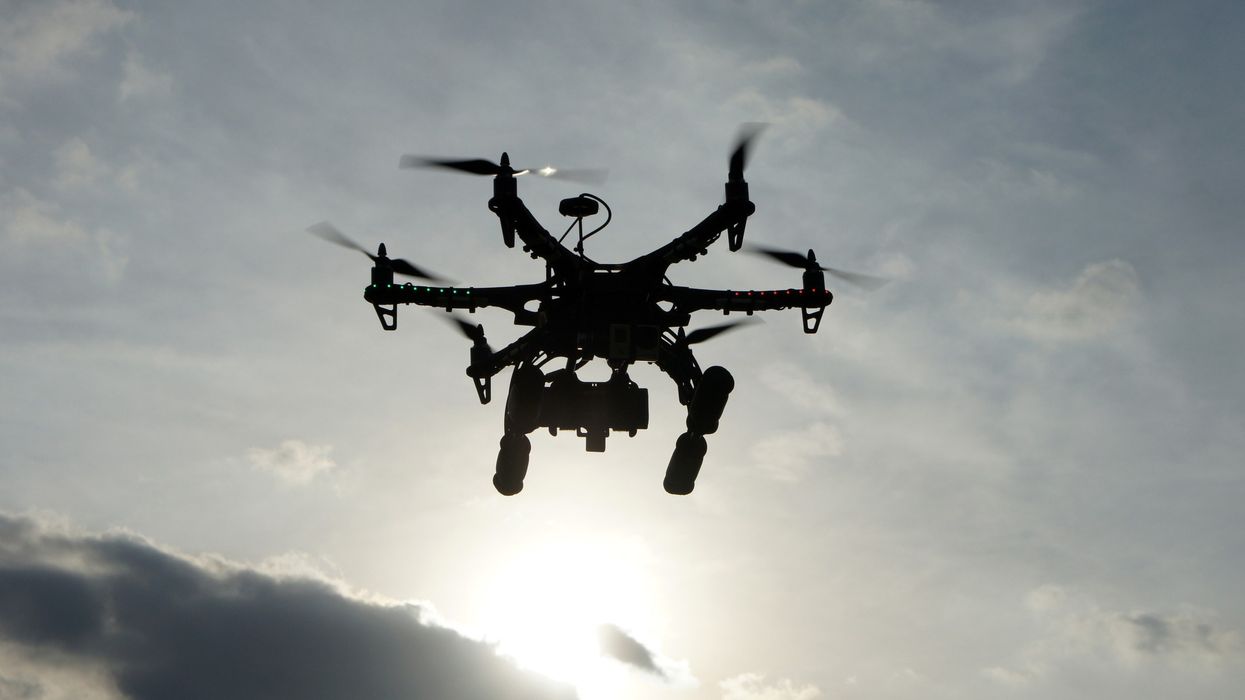
"All signs point to the Pentagon developing 'killer robots' via Replicator, despite deflections from Pentagon representatives themselves," according to Public Citizen.
A report from the government watchdog Public Citizen released Friday gives the who, what, when, where, and why of the Pentagon's flagship Replicator initiative—a program to increase the number of weapons, particularly drones, in the hands of the U.S. military.
In the report, Public Citizen re-ups concerns about one particular aspect of the program. According to the report's author, Savannah Wooten, the Defense Department has remained ambiguous on the question of whether it is developing artificial intelligence weapons that can "deploy lethal force autonomously—without a human authorizing the specific use of force in a specific context." These types of weapons are also known as "killer robots."
"It is not yet clear whether or not these technologies are designed, tested, or intended for killing," according to the report.
"All signs point to the Pentagon developing 'killer robots' via Replicator, despite deflections from Pentagon representatives themselves," wrote Wooten in the summary of the report.
The program, which was announced last year, is part of the Department of Defense's plan to deter China.
"Replicator is meant to help us overcome [China's] biggest advantage, which is mass. More ships. More missiles. More people," said Deputy Secretary of Defense Kathleen Hicks in a speech announcing the project last year. That mission will be achieved specifically by "mastering the technology of tomorrow," Hicks said.
There will soon be a "Replicator 2.0" that will focus on counter-drone technologies—per a memo from the defense secretary released in September—according to Public Citizen's report.
In a letter sent in March, Public Citizen and 13 other civil society groups highlighted remarks Hicks made in 2023 as an example of the ambiguity the Pentagon has created around the issue.
"Autonomous weapons are inherently dehumanizing and unethical, no matter whether a human is 'ultimately' responsible for the use of force or not. Deploying lethal artificial intelligence weapons in battlefield conditions necessarily means inserting them into novel conditions for which they have not been programmed, an invitation for disastrous outcomes," the organizations wrote to Hicks and Secretary of Defense Lloyd Austin.
Wooten's report reiterates that same call: "The Pentagon owes Americans clarity about its own role in advancing the autonomous weapons arms race via Replicator, as well as a detailed plan for ensuring it does not open a Pandora’s Box of new, lethal weapons on the world by refusing to hold its own operations accountable."
Additionally, "'Artificial intelligence' should not be used as a catchall justification to summon billions more in Pentagon spending, especially when the existing annual budget for the U.S. military already dwarfs every other U.S. agency and is careening towards the $1 trillion mark," Wooten wrote.
The fear that these types of weapons would open a Pandora's Box—and set off a "reckless, dangerous arms race," as Public Citizen warned of Friday—is not new. Back in 2017, dozens of artificial intelligence and robotics experts published a letter urging the United Nations to ban the development and use of so-called killer robots. As drone warfare has grown, those calls have continued.
The report also highlights the public statements of the head of one defense contractor that has been selected to produce for the Replicator initiative as a hint that the program is aimed at creating weapons that are capable of autonomous lethal force.
In early October, CEO of Anduril Palmer Luckey said that, "societies have always needed a warrior class that is enthused and excited about enacting violence on others in pursuit of good aims."
"You need people like me who are sick in that way and who don't lose any sleep making tools of violence in order to preserve freedom," he said.