

SUBSCRIBE TO OUR FREE NEWSLETTER
Daily news & progressive opinion—funded by the people, not the corporations—delivered straight to your inbox.
5
#000000
#FFFFFF
To donate by check, phone, or other method, see our More Ways to Give page.
Daily news & progressive opinion—funded by the people, not the corporations—delivered straight to your inbox.
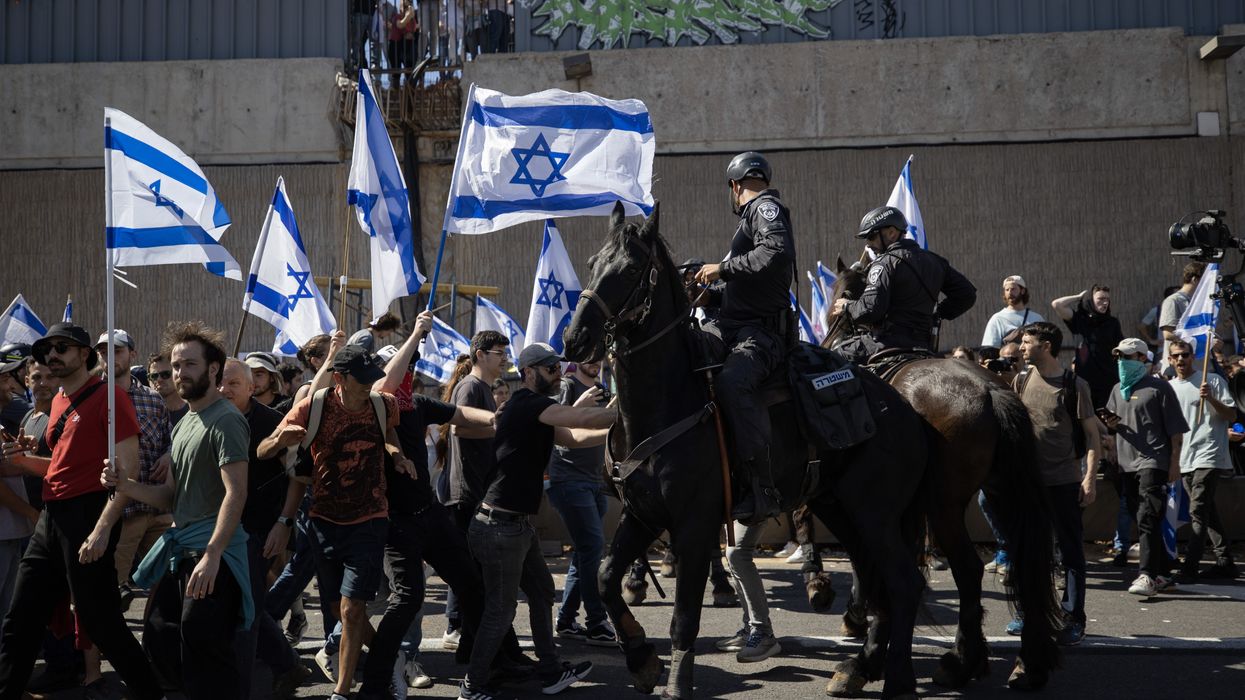
There is a broad consensus among both those who are for and those against the judicial overhaul about the importance of deepening apartheid.
In a glowing profile, The New York Times recently characterized Israeli particle physicist Dr. Shikma Bressler as “the face of Israel’s protests.”
The description could not be more apt. For nearly 30 weeks, Bressler—alongside a few others—has been leading hundreds of thousands of protesters in an effort to stop the judicial overhaul planned by Prime Minister Benjamin Netanyahu’s right-wing government.
The level and breadth of the mobilization are unprecedented, and, according to Bressler, the effort is motivated by a deep concern for Israel’s future. “We can either fall into a very dark, extreme, racist place where the Israel that we know, in all its social and economic aspects, will be destroyed,” she explained to the Times reporter, “or we can build a new stronger, better democracy for the good of all the people.”
Even as the protesters believe their “home” is being destroyed, the racism of liberal Zionism runs so deep that Bressler can describe her wish for a “democracy for the good of all the people” and yet completely elide Palestinians from this vision.
Like most mainstream media outlets, in this recent article, the Times presents Bressler and the movement she leads as the pinnacle of liberal values. Unfortunately, however, as is often the case with media coverage of developments in Israel, there is more to this story than meets the eye.
For example, on July 3, a just few hours after Israeli soldiers marched into the Jenin refugee camp, killing at least 12 Palestinians and injuring over 100 more, the same Bressler posted a tweet drawing a link between the military incursion and the protests in Tel Aviv.
“In order to continue standing with our heads held high and with all of our hearts against the threats looming from outside; so our heroic children, brothers and partners who are now fighting in Jenin will not be exposed to prosecution at The Hague, we must guarantee that Israel remain a De-mo-cr-acy. The well-being of our soldiers as well as their future and the future of our country are now (also) in the hands of the struggle.”
In many ways, Bressler is spot on: Israel’s Supreme Court has always served as a shield for soldiers invading Palestinian cities from Jenin in the north to Rafah in the south, and the government’s attack on the court could potentially leave soldiers vulnerable to international prosecution in the future. But, of course, these words also invalidate Bressler’s claim that she is fighting for “democracy for the good of all the people.” Well, at least in the eyes of those who consider Palestinians human, too.
Protection against war crime indictments became a major theme in the weeks leading up to the July 24 vote on the controversial “reasonable standard” bill—a central piece of legislation aimed at weakening the judiciary. At one point, 1,142 air force reservists, including 235 fighter pilots, 173 drone operators, and 85 special forces soldiers, threatened to stop their volunteer military service should the bill pass.
The Israeli media was up in arms, spending vast amounts of time analyzing the potential impact of widespread refusal on Israel’s military preparedness, and featuring a long line of generals to underscore the acute dangers of extensive insubordination. A few of the refuseniks were also interviewed on TV, explaining that while they were proud of their military service, they were unwilling to protect a non-democratic regime.
The subtext was clear. Israeli pilots are willing to continue dropping lethal bombs on Gaza’s crowded cities and refugee camps, but, echoing Bressler, they, too, find it difficult to trust the government and with the judicial overhaul, they are afraid they might end up being accused of war crimes in The Hague. In other words, they believe with this judiciary overhaul, the government is abdicating its responsibility to protect Jewish citizens and the privileges bestowed upon them.
The refusenik threats did not immediately succeed in stopping the legislation, and on July 25 the government passed the “reasonable standard” bill. The very next day, the Knesset passed an extension to the Admissions Committees Law but since this bill was much less controversial it received almost no media attention in the West.
The original Admissions Committees Law was enacted in 2010 to circumvent a High Court of Justice ruling that prohibited cooperative communities from leasing land exclusively to Jews. While the 2010 law allowed only communities of up to 400 families residing in the Negev or Galilee to refuse to admit Palestinian citizens of Israel into their settlement, the new bill raises the bar so that communities of up to 700 families in any part of Israel can ban Palestinian citizens from purchasing a plot.
And here is the crux of the issue: This law received the support of parliamentarians on both sides of the aisle, namely those who in the eyes of Bressler and the Israeli pilots are attacking Israeli democracy and those who are defending it. Indeed, out of 110 Jewish Knesset members (the remaining 10 are Palestinians), only two voted against this law.
Immediately after the bill passed, 20 local leaders from across the political spectrum—ranging from the directors of the Kibbutzim and Moshavim Movements to heads of regional and local councils—posted an infographic thanking Orit Strook, who is among the leaders of the Jewish settlement in Hebron and the current Minister of Settlements and National Missions, for passing the law. Addressing Strook and a number of other Knesset Members, they dispatched the following message:
During a period of division and disputes, we witnessed a rare moment of unity around one of the basic values of Zionism: settlement. Ministers and Members of Knesset from the right and the left joined together to pass the amendment to the Admissions Committees Law, which will allow the expansion of settlements in the periphery, the absorption of young people, and the strengthening of communities.
There is, in other words, a broad consensus among both those who are for and those against the judicial overhaul about the importance of deepening apartheid. And that is what unites Jewish Israelis despite the current political impasse.
Even as the protesters believe their “home” is being destroyed, the racism of liberal Zionism runs so deep that Bressler can describe her wish for a “democracy for the good of all the people” and yet completely elide Palestinians from this vision. It is also this racism that is destroying the possibility of any truly democratic entity from emerging.
Currently, about half of Israel’s Jewish citizenry are in favor of the judicial overhaul and the other half are against it, suggesting that the only way those resisting the current government have a chance of winning is by creating an alliance with Palestinians who, after all, comprise 20% of the country’s citizenry. But since such an alliance would involve abandoning the Zionists’ worldview and the privileges that come with it, the majority of protesters, including Shikma Bressler, are unwilling to even contemplate it. Thus, while theoretically there is a path leading to the establishment of a democratic polity in Israel/Palestine, the current protest movement is a very far cry from making this a reality.
Of course, even when it was more democratic for Jewish citizens, Israel presided over a hybrid colonial system that deprived 5 million of its subjects of citizenship or the franchise, the Palestinians in the Occupied Territories.
The Israeli newspaper Arab 48 reports that on Monday, the Israeli parliament or Knesset passed the article removing the power of review from Israeli courts on grounds of “reasonability” in light of the country’s basic laws. The measure passed 64-0 in the 120-seat body, with the far right-wing coalition of Prime Minister Binyamin Netanyahu unanimously in favor and the opposition having left the chamber in protest.
The country was thrown into chaos.
The move is similar to but more brazen than steps taken in illiberal states like Viktor Orban’s Hungary to place the courts under the authority of the ruling Fidezc Party. In other words, Israel has entered the category of what Fareed Zakariya has called the “illiberal democracies.” I prefer the term “elective dictatorship.” In such states, elections are held, but that is the only occasion upon which citizens have political agency, and they are expected to sit down and shut up after a government is formed, on pain of being charged with political libel. Of course, even when it was more democratic for Jewish citizens, Israel presided over a hybrid colonial system that deprived 5 million of its subjects of citizenship or the franchise, i.e. the Palestinians under Israeli military rule in the Occupied Territories.
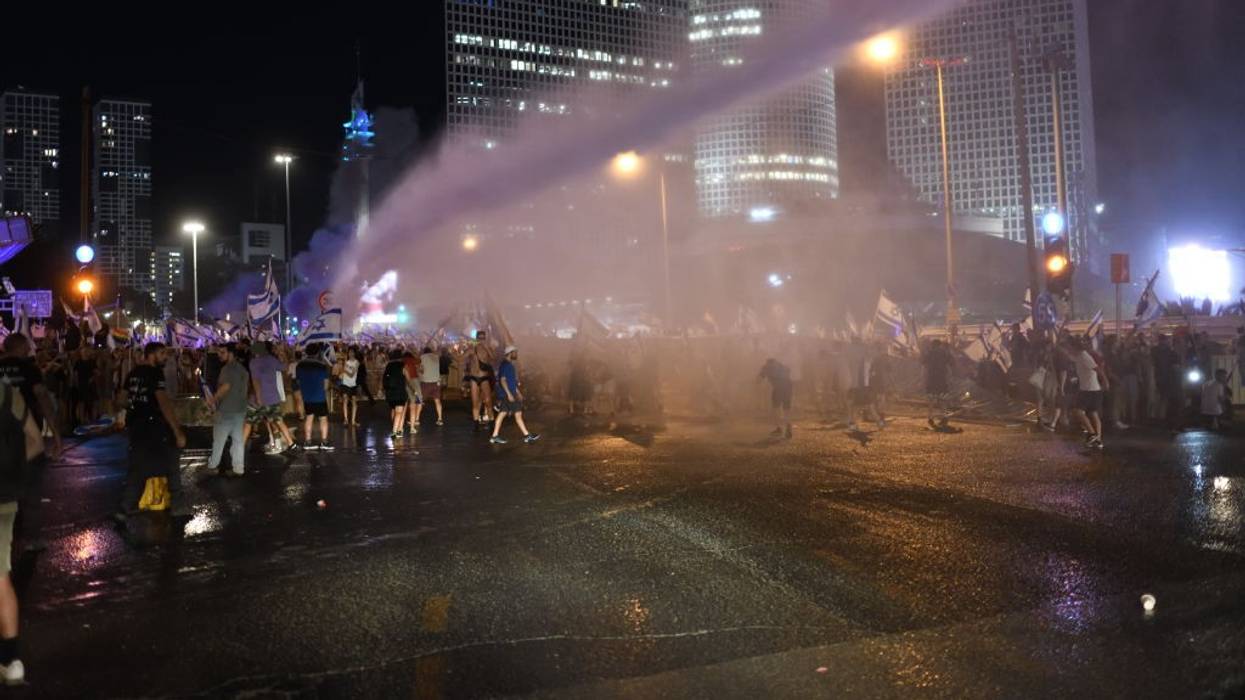
In addition to physically assaulting demonstrators, even throwing them over road barriers, and tossing burning wood planks at them, the police used water cannons and skunk water in an attempt to disperse the crowds, much the same techniques the Israeli Occupation security forces use against Palestinians in the West Bank.
Before the vote, some protesters attempted to invade the parliament building or to prevent the parliamentarians from entering and voting. At least 54 protesters were arrested.
The far right-wing coalition took the step despite massive nation-wide street protests every week for the past few months.
There have also been an unprecedented number of threats by military reservists to resign or to refuse to show up for periodic training. Last weekend 10,000 reservists threatened to go AWOL, and before that 1,400 officers in the reserves, including 400 fighter jet pilots, made a similar threat. These steps have been backed by large numbers of retired security chiefs.
The Israeli Chief of Staff, Lt. Gen. Herzi Halevi, warned Netanyahu after the vote that he and his cabinet must cease slamming the Israeli soldiers and reservists, since it was causing a serious morale problem. Many Israelis in the military, whether regular troops or reservists, have complained that they only signed up to defend a democracy, not an elective dictatorship. These statements and threats of resignations have caused harsh condemnation. Transport Minister Miri Regev called for reservists who refused to show up for training to be jailed. Halevi had been trying to get a meeting with Netanyahu since last Thursday but had been repeatedly rebuffed.
Large numbers of Israeli businesses have also been fleeing abroad with their capital and expertise, a sign that they believe that without court oversight the government will be incorrigibly corrupt in ways that will hurt free market competition. The Israeli stock market crashed, and the value of the shekel against the dollar plummeted after the vote.
In January, the Israeli Supreme Court ordered Shas Party leader Aryeh Makhlouf Deri barred from a cabinet position in the government because of a long history of embezzling, fraud, and money laundering. Although he initially defied the court, Deri ultimately stepped down and nevertheless kept his ultra-Orthodox party in the coalition. The law passed on Monday would remove from the court the ability to interfere in such appointments, so that there is now no check on corruption in high places. Israel’s legislature only has one house, so there is no senate. The executive in a prime ministerial system is elected by a majority of parliament and so is also not able to offer any check or balance regarding parliamentary overreach.
Hundreds of thousands of protesters demonstrated in the streets of Tel Aviv, Jerusalem, and other major cities on Monday evening in the wake of the legislation, often blocking major thoroughfares. The police in Tel Aviv complained that hundreds of thousands of shekels’ worth of damage to the city’s infrastructure had been done by the demonstrators. In Tel Aviv, police used tactics of especial brutality as violence escalated. In addition to physically assaulting demonstrators, even throwing them over road barriers, and tossing burning wood planks at them, the police used water cannons and skunk water in an attempt to disperse the crowds, much the same techniques the Israeli Occupation security forces use against Palestinians in the West Bank.
Right-wing organizations bused thousands of counter-demonstrators into Jerusalem, mainly from squatter settlements on Palestinian land in the Palestinian West Bank. At Kfar Saba, a right-winger rammed his car into the protesters, causing non-lethal injuries.
The Supreme Court had curbed some squatters’ initiatives, as when private individuals went off to squat on Palestinian farms with no government sanction, which even Israeli authorities consider “illegal settlements.” The current government, which includes several squatters as cabinet members, is determined to conduct a massive theft of Palestinian property and ultimately to annex the West Bank to Israel, while keeping its 3 million Palestinian inhabitants stateless and without rights. Henceforth, apparently, there will be no such thing as an illegal settlement in Israeli law.
In international law, all squatting by Israelis on occupied Palestinian territory is illegal.
Minister of Finance and racist extremist Bezalel Smotrich taunted the protesters that he understood their pain, since he had been similarly upset at the Oslo Peace Accords in 1993 and the decision of the government of Ariel Sharon to withdraw settlers from Palestinian Gaza in 2005.
Some observers are wondering whether the Supreme Court may strike down the legislation, provoking a major constitutional crisis. At that point, it seems to me, it becomes consequential with whom Lt. Gen. Halevi sides.

"We are the majority and we are out in the streets!" protesters chanted as police responded violently to the uprising.
Under fire for pushing what critics have decried as an authoritarian overhaul of Israeli's judicial system, the country's right-wing government directed police to respond with force on Wednesday as thousands of people marched, blocked traffic, and rallied to protest the plan.
Protests broke out in cities across Israel as part of what organizers called a "national day of disruption" to condemn the government's plan to weaken the justice system, as lawmakers voted on several proposals.
Police deployed stun grenades, tear gas, and water cannons to disperse protesters in Tel Aviv, where demonstrators tried to block one of the country's major highways. At least 11 people in the city were injured, the Middle East Eye (MEE) reported.
The public uprising was condemned as "anarchy" by Prime Minister Benjamin Netanyahu as his government pushed to pass several proposals as part of the judicial overhaul.
National Security Minister Itamar Ben-Gvir called on police to break up the protests and show "zero tolerance," according to MEE.
"We will not allow a civil uprising and anarchists to block major roads," Ben-Gvir said.
Haaretz journalist Judy Maltz reported "total mayhem" on the streets of Tel Aviv as police targeted one protester with a water cannon.
As the demonstrations unfolded and police arrested 39 people in Tel Aviv alone, the Constitution, Justice, and Law Committee in the Knesset approved a proposal to give Supreme Court justices the authority to strike down laws only if it has the approval of 12 out of 15 judges. Currently, the court can strike down legislation that violate Israel's 13 basic laws.
The panel also approved a clause allowing lawmakers to reinstate a law that's been disqualified by the Supreme Court with a simple majority, further limiting the high court's ability to counter laws that are unconstitutional.
Two other proposals—to legalize the death penalty in terrorism cases and to restrict the attorney general's ability to declare the prime minister unfit for office—were also passed by the Knesset in a preliminary hearing, and proceeded to the Constitution, Justice, and Law Committee.
The Israel Democracy Institute conducted a recent poll that found 66% of Israelis oppose the curtailing of the Supreme Court's authority.
In Tel Aviv Wednesday, demonstrators shouted, "We are the majority and we are out in the streets!" and "Shame!" as security forces cracked down on the protests.
Towards the end of the day, more than a thousand people convened in front of Netanyahu's home in Jerusalem after marching through the city.
Yonatan Touval, an analyst at the Israeli Institute for Regional Foreign Policies, told MEE that the uprising represents "the only chance for the government's agenda to fail."
The protests "stand a chance at preventing and perhaps at the very least slowing down the legislative agenda of the government," he said.
MEE noted that Palestinian citizens of Israel largely boycotted the demonstrations, as they believe they are "excluded" from the goal of the protesters—preserving the Supreme Court, which has supported evictions of Palestinians from land illegally occupied by Israel.
"It's very hard for Palestinians to join these protests that wish to preserve the judicial status quo—which has been deepening the oppression of Palestinian citizens of Israel and deepening the apartheid in the West Bank," Rami Younis, an independent Palestinian journalist, told MEE.
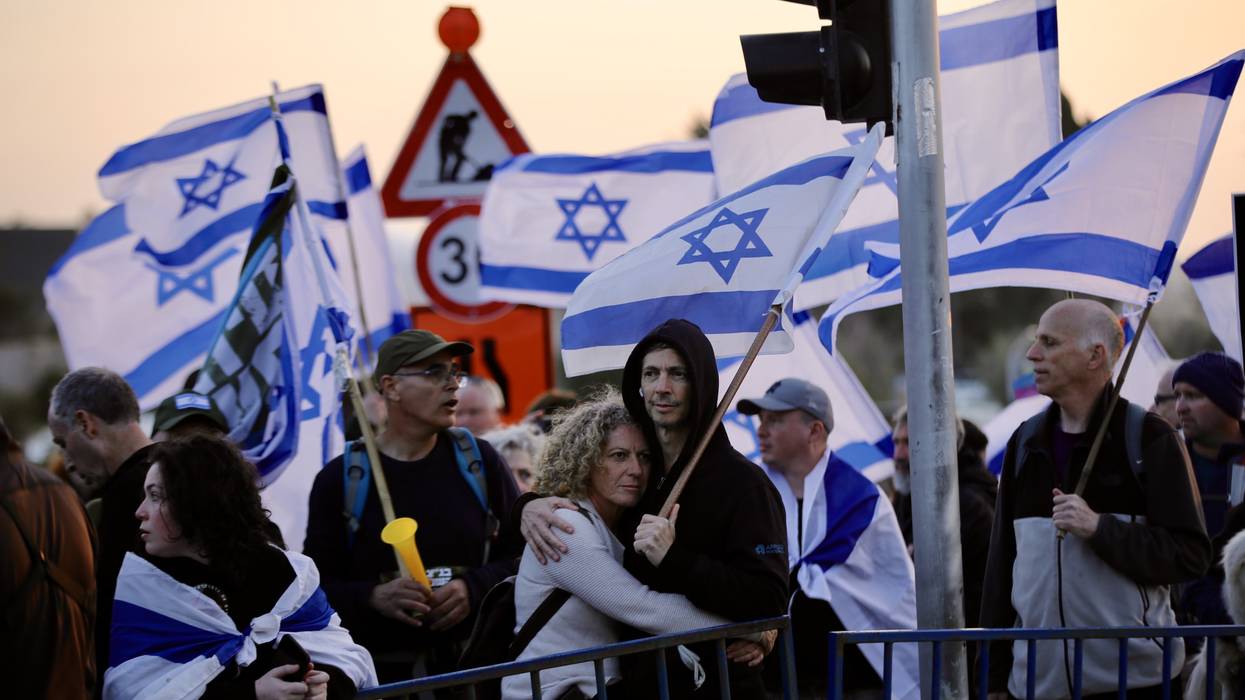
If right-wing reforms giving Prime Minister Benjamin Netanyahu and members of parliament more power over the judiciary are passed, "the protests will intensify," said organizers.
Tens of thousands of people opposed to the far-right Israeli government's proposed judicial overhaul once again hit the streets of Jerusalem and Tel Aviv on Monday, where they implored lawmakers to vote against the measures during the afternoon's first reading.
"On the morning of the vote, small groups of protesters sat down outside the front doors of some coalition lawmakers' homes in a bid to block them from leaving for parliament. They were removed by the police," The New York Times reported. After blocking highways to Jerusalem, protesters gathered outside parliament, where doctors "set up a mock triage station for 'casualties of the judicial reform.'"
Despite weeks of massive demonstrations, members of the Israeli Knesset are expected to pass the legislation, which is supported by right-wing Prime Minister Benjamin Netanyahu and his close ally, Justice Minister Yariv Levin.
If that happens, the Supreme Court's ability to overrule parliament would be weakened, as a simple 61-vote majority could override the court's decisions; the Supreme Court's ability to review and strike down attempts to change Israel's 13 quasi-constitutional "Basic Laws" would be abolished; and the ruling coalition would gain control of the Judicial Appointments Commission, a panel tasked with picking new judges.
The legislation must be approved three times to become law, with Monday afternoon's vote marking the first step in the process. Israeli President Isaac Herzog, a largely ceremonial figure, and opposition leader Yair Lapid have pleaded for Netanyahu's government to delay the legislation, to no avail.
On the eve of the initial vote, Levin said, "We won't stop the legislation now, but there is more than enough time until the second and third readings to hold an earnest and real dialogue and to reach understandings."
But as the Times noted, "critics have dismissed the government's position as disingenuous, arguing that once the bills have passed a first vote, only cosmetic changes will be possible."
Organizers, for their part, said Monday that "with the passage of the dictator's bill, the protests will intensify," according to i24 News.
Opponents "say the proposed overhaul would place unchecked power in the hands of the government, remove protections afforded to individuals and minorities, and deepen divisions in an already fractured society," the Times reported. They also worry that "Netanyahu, who is standing trial on corruption charges, could use the changes to extricate himself from his legal troubles."
In addition, Al Jazeera reported, opponents fear that "Netanyahu's nationalist allies want to weaken the Supreme Court to establish more settlements on land the Palestinians seek for a state. But settlements, which are considered illegal under international laws, have continued under successive Israeli governments. Nearly 600,000-750,000 Israelis now live in illegal settlements in the occupied West Bank and East Jerusalem."
Last week, Netanyahu's administration granted retroactive "legalization" to nine such settlements, and the prime minister has also intensified deadly raids, killing at least 50 Palestinians in occupied territories so far this year.
A right-wing neutering of the Supreme Court could exacerbate Israel's regime of violent dispossession and ethnic cleansing.
But the weekslong demonstrations against the proposed judicial overhaul "include very few Palestinians," Jewish Currents editor Peter Beinart observed Sunday in a Times op-ed titled "You Can't Save Democracy in a Jewish State."
"In fact, Palestinian politicians have criticized them for having, in the words of former Knesset member Sami Abu Shehadeh, 'nothing to do with the main problem in the region—justice and equality for all the people living here,'" Beinart wrote.
"The reason is that the movement against Mr. Netanyahu is not like the pro-democracy opposition movements in Turkey, India, or Brazil—or the movement against Trumpism in the United States," he added. "It's not a movement for equal rights. It's a movement to preserve the political system that existed before Mr. Netanyahu's right-wing coalition took power, which was not, for Palestinians, a genuine liberal democracy in the first place. It's a movement to save liberal democracy for Jews."
For Palestinians, Israel is not a democracy but rather an apartheid state, an assessment shared by numerous human rights groups around the world. The Israeli government has enacted discriminatory laws against Palestinians and colonized their land for decades, including under Lapid.
According to Beinart: "The principle that Mr. Netanyahu's liberal Zionist critics say he threatens—a Jewish and democratic state—is in reality a contradiction. Democracy means government by the people. Jewish statehood means government by Jews. In a country where Jews comprise only half of the people between the Jordan River and the Mediterranean Sea, the second imperative devours the first."
"Ultimately, a movement premised on ethnocracy cannot successfully defend the rule of law," he added. "Only a movement for equality can."
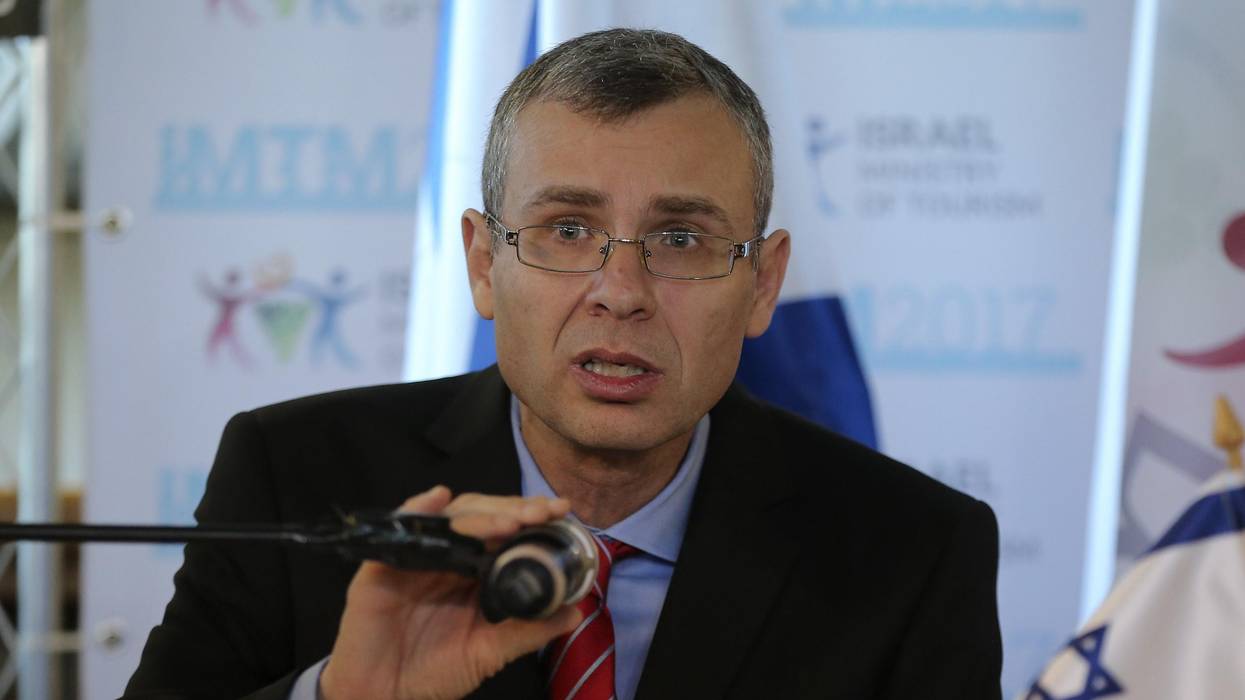
"It is not necessary to send the Proud Boys to storm the Capitol to attempt a coup," said one former Israeli ambassador. "Abusing a tiny legislative majority to crush the judiciary and the nature of Israel's democracy is also a coup."
Israeli liberals and critics around the world sounded the alarm Thursday over a plan by Israel's new far-right government to dramatically limit the power of the country's judiciary, in part by allowing a simple parliamentary majority to overturn Supreme Court rulings.
On Wednesday, Israeli Justice Minister Yariv Levin—a member of Prime Minister Benjamin Netanyahu's Likud party—released a set of proposals he said were aimed at "strengthening democracy, rehabilitating governance, restoring faith in the judicial system, and rebalancing the three branches of government."
"Judicial review? Gone. Separation of powers? Dead. Checks and balances? Kiss it goodbye."
However, opponents of the plan condemned it as a "political coup" and a "dagger in the rule of law."
"The night of January 4, 2023 will go down in history as the beginning of the regime coup in Israel, on its way to becoming a clone of Hungary/Poland/Russia/Turkey," journalist Yossi Verter wrote for the liberal Israeli newspaper Haaretz.
"A democratically elected government is assassinating democracy, for the glory of so-called democracy... on the way to the next step, the annulment of Netanyahu's trial," he added, referring to the prime minister's ongoing corruption case.
U.S.-based Partners for a Progressive Israel tweeted: "Judicial review? Gone. Separation of powers? Dead. Checks and balances? Kiss it goodbye."
The most contentious part of Levin's plan is an "override clause" that would allow a 50%+1 parliamentary majority to override rulings issued by the Supreme Court, which also sits as the High Court of Justice and has been accused by human rights groups of giving legal cover to war crimes and crimes against humanity including apartheid and the illegal occupation of Palestine.
As Haaretz's Amir Tibon noted: "Israel does not have a constitution, and the separation between the legislative and executive branches is very weak as the government almost always holds a majority in the Knesset [parliament]. This makes the Supreme Court the only institution with the power to limit government actions and legislation passed by a parliamentary majority. Now Levin wants to take that power away."
"For instance," he added, " if the government passed a law that clearly favored ultra-Orthodox citizens and hurt the rights of secular Israelis, and the Supreme Court then struck it down, all it would take to reinstate the discriminatory law is 61 votes in the Knesset."
Levin's proposal would also change how Israel's judges are selected.
"Today, the Judicial Appointments Committee includes politicians from both the government and the opposition, judges, and representatives of the Israel Bar Association," Tibon explained. "Levin wants to increase the power of the politicians and decrease that of judges and lawyers, effectively giving the government the power to appoint judges and, critically, Supreme Court justices."
The Israel Bar Association opposes Levin's proposal.
"Another change he wants to promote is to make it more difficult for the Supreme Court to annul legislation by requiring a larger majority of justices, and not just a regular majority, for any such decision to take effect," Tibon added. When this idea is combined with increasing the government's control over judicial appointments and the override clause, it becomes clear that Levin, in essence, wants the Supreme Court's ability to conduct judicial reviews to become a dead letter."
Furthermore, Levin's proposal would turn legal advisers who serve government ministries from professional appointees accountable to the attorney general into political appointments controlled by Cabinet ministers.
Finally, Levin is seeking to rescind the "reasonableness" standard used by the Supreme Court to overrule egregious government decisions like then-Prime Minister Yitzhak Rabin's refusal to fire Cabinet Minister Aryeh Deri, leader of the ultra-Orthodox Shas party, after a 1993 fraud and bribery indictment.
Levin's proposal came a day before the High Court of Justice heard arguments for and against the so-called Deri Law, legislation recently passed by the Knesset to allow Deri to serve as minister of both health and the interior despite his prior conviction and imprisonment for bribery, tax fraud, and breach of trust.
Levin's predecessor, Gideon Sa'ar, likened the proposed judiciary overhaul to "regime change," while Benny Gantz, leader of the opposition National Unity Party, called the plan "a major danger to the private citizen."
"We don't have a balanced system. We don't have a constitution to protect us. We don't have two houses [of parliament]," Gantz told Haaretz. "We have a government that with its majority controls the Knesset, and now together they will control the court."
Yair Lapid, who stepped down as Israel's prime minister last week and now leads the opposition, wrote: "Like a gang of criminals, the day before the High Court hearing on the Deri law, the government placed a loaded gun on the table. What Yariv Levin presented today is not legal reform, but rather a threatening letter. They are threatening to destroy the entire constitutional structure of Israel."
"A country that removes basic democratic checks and balances and eviscerates the independence of the judiciary can no longer be referred to seriously as a full democracy."
Daniel Sokatch, CEO of the liberal, U.S.-based New Israel Fund, said in a statement that "a country that removes basic democratic checks and balances and eviscerates the independence of the judiciary can no longer be referred to seriously as a full democracy."
"If Israel's new ruling coalition approves this legislation, it would strip power from the High Court of Justice, one of the few remaining institutions willing to protect human rights, individual freedoms, and democratic values," he continued.
"The international community, including the United States government, should see this move for what it is," Sokatch added, "a lurch towards autocracy, weakening Israel's legal system and democracy, and paving the way towards an attempt to further marginalize the most vulnerable in Israel and under Israel's control, including Palestinians, Arab citizens of Israel, members of the LGBTQ+ community, and migrants."