

SUBSCRIBE TO OUR FREE NEWSLETTER
Daily news & progressive opinion—funded by the people, not the corporations—delivered straight to your inbox.
5
#000000
#FFFFFF
To donate by check, phone, or other method, see our More Ways to Give page.
Daily news & progressive opinion—funded by the people, not the corporations—delivered straight to your inbox.
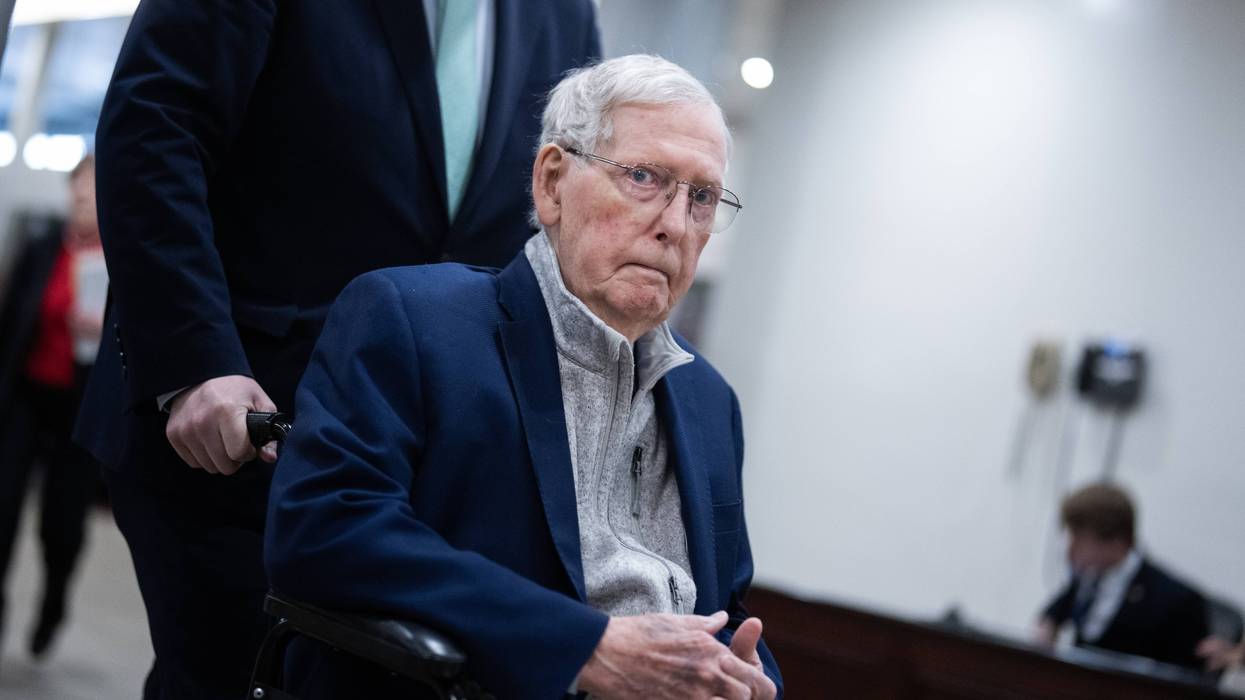
"Kentuckians are just asking you to be honest," said Gov. Andy Beshear.
After weeks of sitting on his hands, Kentucky's Democratic Gov. Andy Beshear issued an ultimatum to the state's absentee Sen. Mitch McConnell on Tuesday: Prove you're alive and can do the job or step down.
Since he was hospitalized on June 14, McConnell’s 4.6 million constituents have been left with virtually no answers about the 84-year-old Republican’s condition, leading to rampant speculation of a cover-up.
Some even pondered whether the former Senate Republican leader may have shuffled off this mortal coil altogether, but that his staff was keeping mum until the presumptive August 3 deadline to avoid a special election that could lead to suboptimal results for the GOP.
Beshear, who has the power to call a special election to fill vacant Senate seats, had chastised McConnell and his staff for weeks for the lack of transparency about his condition. But he continued to balk at taking action, even as members of his party begged him to "do something."
That is, until Monday, when McConnell's office released an update from his physician, which stated that the senator was undergoing “a strenuous course of physical therapy and rehabilitation” but was “not yet medically cleared to leave the rehab facility and return to the office.”
Beshear finally sent McConnell a letter demanding proof of life.
"It has now been 43 days since news of your hospitalization," Beshear wrote. "During that time you have cast zero votes, engaged in no official activities, and aside from two photos and corresponding statements, have made no effort to communicate with your Kentucky constituents or the nation."
The governor noted that the physician's statement still provided no details about the seven-term senator's actual condition, "including whether you can speak, reason, or carry out your duties as a senator."
"As governor of the state you serve," Beshear continued, "I am calling on you to directly and verbally address the people of Kentucky and provide proof of your capacity to serve, or resign."
Beshear said he'd sent the same letter to Senate Majority Leader John Thune (R-SD), who took over McConnell's longtime role in 2025 before he announced his plans not to run for reelection.
Beshear said if McConnell still proved "unwilling" to demonstrate his capacity to serve, he'd insist Thune—one of the few people who claim to have spoken to McConnell since he vanished from public view—fully investigate his condition.
"All of this speculation and even this letter could have been avoided with a minimal amount of transparency," Beshear concluded. "Kentuckians are just asking you to be honest."
While most states allow governors to name an interim replacement when senators die or get expelled, Kentucky is one of just four exceptions, ironically thanks to some classic McConnell machinations.
In 2021, the then-Senate minority leader pressured Kentucky's GOP-controlled Legislature to restrict Beshear's power to unilaterally name a replacement, instead requiring him to pick from a list approved by the departing senator's party.
Three years later, Kentucky abolished temporary replacements entirely, meaning the most Beshear could do was call a special election.
That said, the law has not yet been tested by a vacancy, and Beshear has said he'd be willing to challenge its constitutionality in hopes of naming the replacement himself, adding a 48th member to the chamber's Democratic caucus, at least until January, when it would be filled by whoever wins McConnell's seat during November's midterms.
While Kentucky is a consistently red state and has not elected a Democratic senator since 1992, Beshear's multiple terms as governor show it is capable of electing Democrats in statewide races, and could be more likely to do so in what is projected to be a blue wave year.
But Kentucky's law also says special elections must be called at least 63 days before they occur. This gives Republicans ample incentive to keep McConnell as Schrödinger's senator until at least August 3, after which a replacement would not be able to take office until the new Senate term begins in January.
In an interview with Bloomberg on Tuesday, Beshear argued that McConnell's absence for the rest of the year "might not be a bad thing."
"McConnell hasn't been there to vote on the SAVE Act, which would tear voting rights away. He hasn't been there to vote to support this war on Iran that this president started and shouldn't be continuing," Beshear said. "Not having Mitch McConnell show up isn't necessarily a bad thing because he certainly doesn't show up to help the American people."
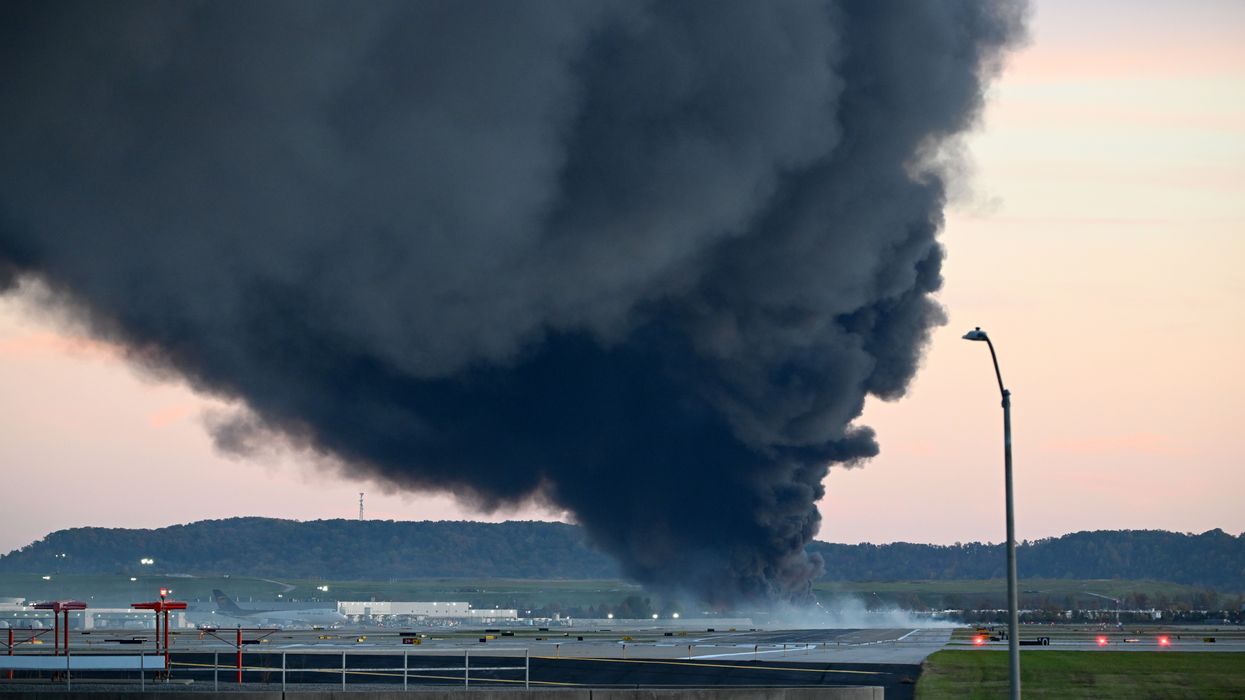
Police announced a shelter-in-place order for "all areas north of the airport to the Ohio River."
This is a developing story… Please check back for updates…
Aerial footage showed plumes of black smoke and flames around the Louisville Muhammad Ali International Airport in Kentucky after a UPS plane crashed during its departure on Tuesday evening.
The Federal Aviation Administration said on social media that UPS Flight 2976—a McDonnell Douglas MD-11 bound for Daniel K. Inouye International Airport in Honolulu, Hawaii—crashed around 5:15 pm local time. The agency added that the FAA and National Transportation Safety Board will investigate, with the NTSB providing all updates.
The Louisville Metro Police Department confirmed that the LMPD and multiple other agencies were responding to the scene, where there are "injuries reported."
LMPD initially announced a shelter-in-place order "for all locations within five miles of the airport," which was then expanded to "all areas north of the airport to the Ohio River."
The airport—which confirmed that "the airfield is closed" after the crash—is the UPS global hub. The shipping giant said in a statement that there were three crewmembers onboard and "at this time, we have not confirmed any injuries/casualties."
"UPS will release more facts as they become available, but the National Transportation Safety Board is in charge of the investigation and will be the primary source of information about the official investigation," the company added.
As CNN reported Tuesday:
The McDonnell Douglas MD-11F is a freight transport aircraft manufactured originally by McDonnell Douglas and later by Boeing. The aircraft is primarily flown by FedEx Express, Lufthansa Cargo, and UPS Airlines for cargo.
The plane also served as a popular wide-bodied passenger airplane after it was first flown in 1990. The aircraft involved in Tuesday's crash was built in 1991.
As fuel costs increased for the three engine jets many of them were converted to freighters. The plane can take off weighing in at a maximum 633,000 pounds and carrying more than 38,000 gallons of fuel, according to Boeing, which bought McDonnell Douglass.
The International Brotherhood of Teamsters said that it "is monitoring this developing tragic event on the ground," and "as this horrific scene is being investigated, prayers on behalf of our entire international union are with those killed, injured, and affected, including their families, co-workers, and loved ones."
Louisville Mayor Craig Greenberg said that he and his wife, Rachel, "are praying for victims of the UPS plane that crashed."
"We have every emergency agency responding to the scene," the Democrat added. "There are multiple injuries and the fire is still burning. There are many road closures in the area—please avoid the scene."
Democratic Kentucky Gov. Andy Beshear, who is headed to Louisville for a briefing with the mayor, said, "Please pray for the pilots, crew, and everyone affected."
Republican President Donald Trump's transportation secretary, Sean Duffy, similarly said, "Please join me in prayer for the Louisville community and flight crew impacted by this horrific crash."
During a press conference earlier on Tuesday, Duffy had warned of "mass chaos" if the ongoing government shutdown continues, saying: "You will see mass flight delays. You'll see mass cancellations, and you may see us close certain parts of the airspace, because we just cannot manage it because we don't have the air traffic controllers."
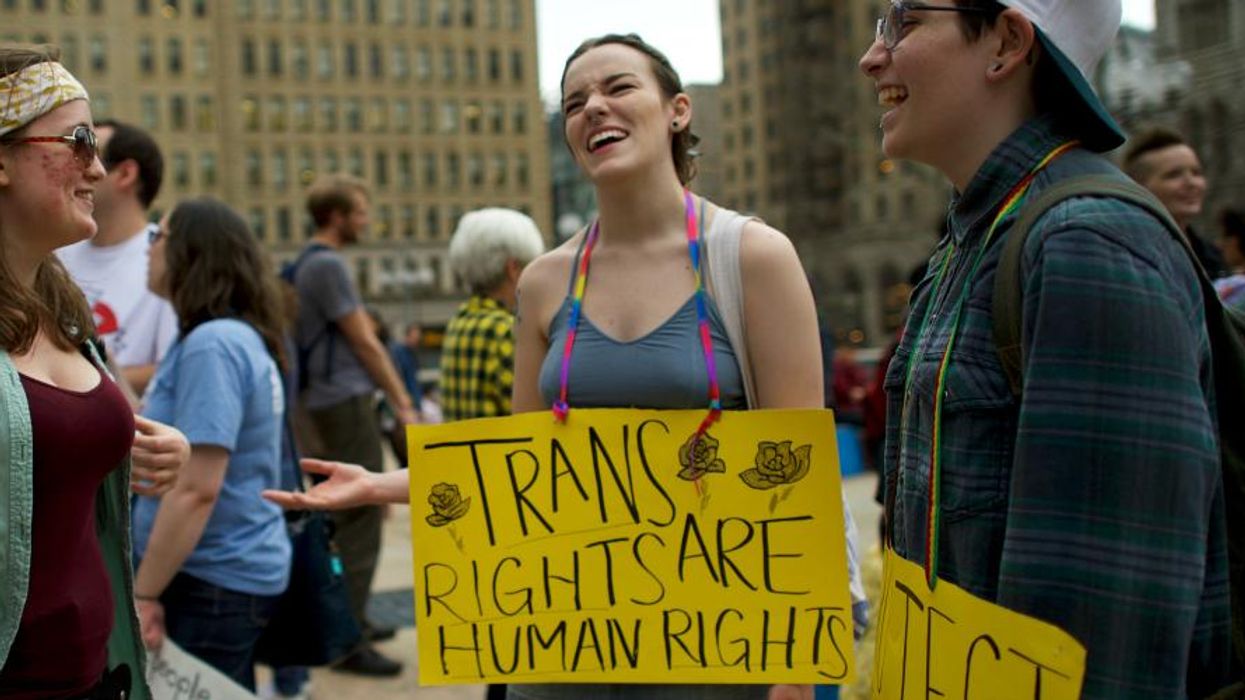
The normalization of transphobia in American politics, and the signs of looming government repression, poses a major moral test for the political leaders for the nearly 77 million Americans, and counting, who voted against Trump’s MAGA movement.
Like most people in the community she fights for on a daily basis, Philadelphia’s Naiymah Sanchez didn’t sleep at all on the night of November 5. It wasn’t only because Donald Trump’s second election would intensify her work as trans justice coordinator for the American Civil Liberties Union of Pennsylvania. It was also the personal anguish that the 41-year-old transgender woman felt knowing Trump had been elected, in part, by spending millions of dollars on TV ads that dehumanized her and people like her in shocking ways American voters had never seen before.
“I took it very personally,” Sanchez—who spent years as an activist around tough issues like combating prison rape before joining the ACLU-PA in 2017, right after Trump’s first election—told me this week. “They voted against me. They wanted to harm me.” She noted how many voters seemed to respond positively to the GOP’s openly anti-trans rhetoric, before adding: “We rest, and then we fight again.”
While Trump’s narrow but decisive win over Democrat Kamala Harris is still Topic A, the early fights over the president-elect’s off-the-wall cabinet picks and TV debates over just how anti-democratically the Trump regime might govern are still an abstraction to most Americans. It’s very different in the transgender community. There, leaders like Sanchez are having gut-wrenching conversations with people wondering if they need to accelerate major life moves, like gender-affirming surgery or a legal name change, before an openly hostile government arrives on January 20.
Selling out more than 1 million transgender Americans would wreck that brand, permanently—telling voters Democrats don’t stand for anything beyond surviving the next election.
Indeed, fears of what life might be like under Trump 47 for at least 1 million transgender Americans already began to hit home this week when the community’s one bright star on Election Day—a victory for the first-ever transgender member of Congress, Delaware’s Rep.-elect Sarah McBride—quickly became a symbol of the GOP’s determination to turn ugly campaign rhetoric into harsh governing reality.
It felt all too fitting that the Christian fundamentalist House Speaker Mike Johnson chose the annual Transgender Day of Remembrance—a day intended to both memorialize past victims of violence, including at least 30 and perhaps far more murder victims every year, and to fight this scourge—to side with South Carolina Rep. Nancy Mace’s vocal and bigoted efforts to prevent transgender people from using Capitol restrooms or other single-sex facilities of their chosen identity. Johnson claimed to be solving a problem that didn’t seem to exist for Capitol visitors or staffers before McBride’s arrival. More importantly, advocates like Sanchez know how such high-profile moves give license to everyday people to more openly voice anti-trans hatred.
This normalization of transphobia in American politics, and the signs of looming government repression, poses a major moral test—the first of many to come—for how the political leaders for the nearly 77 million Americans, and counting, who voted against Trump’s MAGA movement (for Harris or third-party candidates) are planning to respond.
Arguably, this is a real challenge for all of us. Can those of us not in the transgender community fully embrace the humanity of our friends, family members, or neighbors who are? Or, in the more meaningful than ever words of Sen. Bernie Sanders, be “willing to fight for a person you don’t know as much as you’re willing to fight for yourself”? How many will instead succumb to a focus-grouped temptation of blaming the anti-trans TV ads for Trump’s win and keep silent as demagogues like Trump and his attention-crazed acolyte Mace step up their attacks?
The early indications are not hopeful. Democratic Rep. Seth Moulton of Massachusetts—one of many seeking scapegoats for Harris’ electoral defeat and his party’s losses on Capitol Hill—threw down the gauntlet by saying Democrats are too worried about offending people before declaring: “I have two little girls, I don’t want them getting run over on a playing field by a male or formerly male athlete, but as a Democrat I’m supposed to be afraid to say that.”
Moulton’s campaign manager did resign in protest over those remarks, but more broadly Democrats have struggled to respond—to Moulton but also to the Trump TV ads that seemed to utterly flummox Team Harris, which turned to polling and focus groups before deciding there was no good way to aggressively respond.
And the hard data suggest that, yes, unfortunately, a transphobic message does influence some swing voters—not a huge number, but not many were needed in an election that was arguably decided by fewer than 300,000 ballots in three battleground states. Republicans spent at least $65 million and probably much more on anti-transgender ads in a dozen key states, including here in Pennsylvania, where the spot with the tagline “Kamala is for they/them, President Trump is for you” aired constantly during the Phillies’ late-season push or the evening news.
One polling group, Blueprint, reported that the third most-cited reason by voters for opposing Harris—after inflation and immigration—was this: “Kamala Harris is focused more on cultural issues like transgender issues rather than helping the middle class.” Blueprint added that this was the No. 1 reason for last-minute deciders rejecting Harris, while other polling groups argued that opposing transgender rights was far down their lists of voter concerns.
Still, the early data suggest why transgender activists fear too many Democrats think privately what Moulton voiced publicly. Thus, how hard will party leaders fight Republicans like Mace, who has already introduced a bill that would extend the Capitol bathroom restrictions endorsed by Johnson to all federal facilities across the United States?
The stakes couldn’t be higher as Trump prepares to take office. History has shown that the transgender community is often an early target of authoritarian strongmen. In the 1930s, for example, Adolf Hitler’s Nazis revoked “transvestite permits” that had been issued by the relatively liberal Weimar Republic, and shut down a transgender-friendly nightclub and research institute almost immediately upon taking power.
Today, in another fraught moment, it seems counterintuitive but the most effective voices for the idea of broadly embracing the humanity of transgender Americans seem to be Democrats who’ve also broken through in areas considered deep-red Trump country. Most famously, Kentucky’s Democratic Gov. Andy Beshear vetoed bills that banned gender-affirming surgery for minors and barred trans girls from cisgender sports, and—although his vetoes were overridden by GOP lawmakers—still won reelection in his heavily pro-Trump state.
“Number one: I talked about why,” Beshear told CBS’s “Face the Nation” last Sunday. “That’s my faith, where I’m taught that all children are children of God, and I wanted to stick up for children [who] were being picked on.” Voters—enough of them, anyway—respected Beshear for sticking to his values rather than doing what a consultant might have advised him to do.
Last week in the Capitol controversy, the maddeningly complicated Democratic Sen. John Fetterman, who won in 2022 after campaigning extensively in Pennsylvania’s reddest rural counties, responded to the attack on McBride not with platitudes but with a gesture: Telling the incoming House member she could use the bathroom in his office any time, and adding: “There’s no job I’m afraid to lose if it requires me to degrade anyone.” (I’m going to skip the obvious diatribe about how Fetterman might want to apply that thinking to Gaza.)
It seems to me that if Democrats want to have any hope of staying relevant over the next four years, let alone regaining power in the anti-small-”d”-democratic climate of the Trump regime, they need to embrace their inner Andy Beshear, and reject the shortsightedness of the Seth Moultons out there. Again, think back to history. In 1964, just months after the Rev. Dr. Martin Luther King Jr. delivered his “I Have a Dream” speech, 74% of Americans said mass demonstrations were detrimental to racial equality. President Lyndon B. Johnson knew that signing civil-rights legislation would probably mean near-future political pain for the Democratic Party, and he was right.
But think bigger picture. During that era, Democrats and their liberal base did build—however imperfectly—a brand that they were the party that had fought for civil rights and equality, not only for Black Americans but for Latinos, women, the LGBTQ community, and other groups that felt marginalized by conservatives. That brand—built around a moral belief and not the polling data—is how Democrats won the popular vote in seven of the last nine presidential elections, even including the disappointment of Nov. 5. Selling out more than 1 million transgender Americans would wreck that brand, permanently—telling voters Democrats don’t stand for anything beyond surviving the next election.
I might be naive, but I think matters like addressing the needs of literally a handful of athletes or making everyone comfortable at a rest stop aren’t so complicated that America can’t work them out by starting at the simple place where Beshear starts: That we are all God’s children, with some basic human rights.
And if Democrats, as well as all of us still dreaming of a better world than Donald Trump’s dark vision for America, instead choose to say nothing because we are not transgender, people shouldn’t be surprised when their group is targeted next.

"The draconian and deadly practice... is nothing more than physical, mental, and emotional torture," said the head of the National Association of Social Workers' Kentucky chapter.
LGBTQ+ rights advocates celebrated on Wednesday after Democratic Kentucky Gov. Andy Beshear signed an executive order banning "conversion therapy" for minors across the state, citing medical experts' warnings about the dangerous practice that attempts to change a person's gender identity or sexual orientation.
"Kentucky cannot possibly reach its full potential unless it is free from discrimination by or against any citizen—unless all our people feel welcome in our spaces, free from unjust barriers and supported to be themselves," Beshear said in a statement. "Conversion therapy has no basis in medicine or science, and it can cause significant long-term harm to our kids, including increased rates of suicide and depression. This is about protecting our youth from an inhumane practice that hurts them."
Specifically, as Beshear's order details:
According to a 2021 survey by the Trevor Project, 75% of LGBTQ+ youth in America reported that they had experienced discrimination based on their sexual orientation or gender identity at least once in their lifetime. The Trevor Project's 2023 survey reported that 60% of LGBTQ+ youth in America reported that they had experienced discrimination based on their sexual orientation or gender identity within the prior year. The Centers for Disease Control and Prevention and the American Academy of Pediatrics reported that LGBTQ+ youth face significant health disparities compared to their peers. The Kentucky Medical Association opposes conversion therapy in its policy manual.
In the 2023 survey by the Trevor Project, 15% of LGBTQ+ youth reported being threatened with or subjected to conversion therapy. In that same survey, 41% of LGBTQ+ youth reported seriously considering attempting suicide in the past year and 14% reported they had attempted suicide in the past year. Of those LGBTQ+ who had attempted suicide, 28% reported having been threatened with conversion therapy and 28% reported having been subjected to conversion therapy.
Kentucky on Wednesday joined 23 other states and the District of Columbia in fully banning the practice for minors, according to the Movement Advancement Project. Four other states plus Puerto Rico, a U.S. territory, have partial bans for youth.
"We applaud Gov. Andy Beshear for his bold and necessary action to protect Kentucky's LGBTQ youth from the harmful practice of conversion therapy," said Fairness Campaign executive director Chris Hartman in a statement. "Today Gov. Beshear sends a crystal-clear message to all of Kentucky's LGBTQ kids and their families—you are perfect as you are."
While some Republican lawmakers in the state opposed Beshear's order and vowed to fight it, mental health leaders offered praise. Kentucky Mental Health Coalition's Dr. Sheila Schuster and Kentucky Psychological Association's Eric Russ both welcomed the move, with Russ declaring that it "will save lives."
Brenda Rosen, head of the National Association of Social Workers' Kentucky chapter, similarly cheered the ban, stressing that "the draconian and deadly practice of 'conversation therapy'... is nothing more than physical, mental, and emotional torture."
"We celebrate with individuals and communities across Kentucky and are eternally grateful that during September's National Suicide and Prevention Month, Kentucky is powering forward to save the lives of our youth and ensuring that our LGBTQ+ citizens know they are loved and valued in the Bluegrass state," Rosen said. "Thank you, Gov. Beshear, for your steadfast commitment to ensuring that Kentucky leads in compassion, kindness, and integrity."
The order was also praised by national advocates, including Born Perfect, a survivor-led campaign by the National Center for Lesbian Rights.
"We applaud Gov. Beshear's leadership in protecting LGBTQ youth and their families from so-called conversion therapy, which has been rejected as unethical and harmful by every leading medical and mental health association in the country," Born Perfect co-founder Mathew Shurka. "This is a landmark day for Kentuckians and survivors across the state."
As the Lexington Herald-Leader reported Wednesday:
The move from Beshear comes as legislative efforts to ban conversion therapy have floundered—with those efforts coming primarily from Democrats—and as GOP efforts to limit the rights of trans youth have ramped up.
In 2023, Republicans proposed a raft of anti-LGBTQ bills, including [a] ban on gender-affirming healthcare for trans youth against the advice from Kentucky doctors who warned of the harm it would bring. That policy became law last summer.
Months later, during the 2023 race for the Kentucky governor's mansion, then-Attorney General Daniel Cameron ran a gubernatorial campaign against Beshear that hinged largely on an anti-trans sentiment.
The U.S. Supreme Court—which has a right-wing supermajority—has agreed to take up a challenge to Tennessee's 2023 ban on gender-affirming healthcare for trans youth. Its ruling next session is expected to impact policies across the country.
The 988 Suicide & Crisis Lifeline can be reached by calling or texting 988, or through chat at 988lifeline.org. The Trevor Project, which serves LGBTQ+ youth, can be reached at 1-866-488-7386, by texting "START" to 678-678, or through chat at TheTrevorProject.org. Both offer 24/7, free, and confidential support.
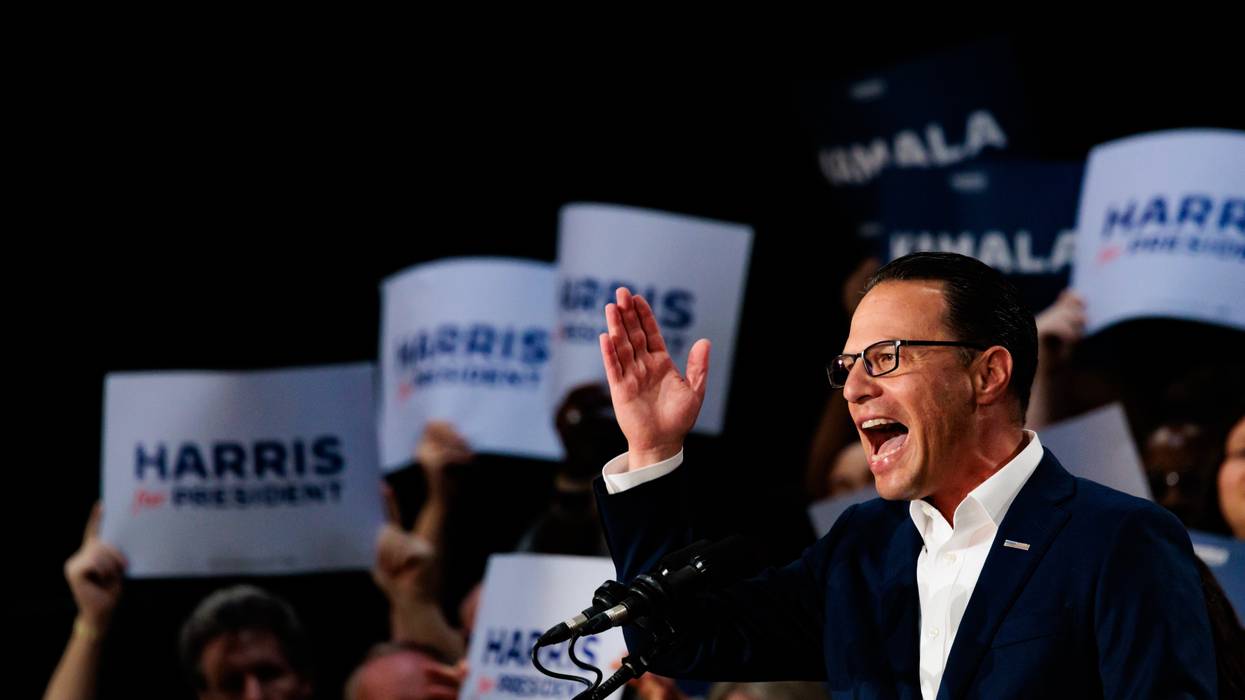
One critic argued Harris would risk alienating "precisely the people she needs to ensure her victory over Trump" if she picks Pennsylvania's governor as her running mate.
Reports that presumptive Democratic presidential nominee Kamala Harris is leaning toward selecting Pennsylvania Gov. Josh Shapiro as her running mate have sparked warnings from progressives who say his record and policy positions on key issues—from Palestine to public schools to climate—are cause for serious alarm and should be disqualifying.
Earlier this week, dozens of progressive leaders from across the United States wrote in a letter to Harris that Shapiro's "support for school vouchers is in direct conflict with our teachers union allies and the Democratic Party Platform, threatening to undermine labor support" in a general election matchup with Republican nominee Donald Trump.
The letter's signatories recommended Minnesota Gov. Tim Walz and Kentucky Gov. Andy Beshear as possible alternatives to Shapiro, who last year relented to pressure and vetoed a school voucher program that he previously supported.
The Philadelphia Inquirer reported last month that Shapiro "says school vouchers are still a priority for him."
"Democrats need a credible and respected voice that has a track record of winning over and exciting an electorate, especially the ability to turn out young voters, immigrants, and independents in swing states," reads the progressives' letter, signed by the chair of the California Democratic Party's Progressive Caucus, the head of the Nevada Democratic Party, the executive director of Progressive Democrats of America, a member of the Ohio Democratic Party's executive committee, and others.
"Shapiro has... done far more than most Democrats to attack pro-Palestine antiwar demonstrators, in ways that call into question his basic commitment to First Amendment rights."
Shapiro's attacks on pro-Palestine demonstrators and uncritical support for Israel—as well as his support for Pennsylvania's anti-boycott, divestment, and sanctions law—have also drawn progressive ire.
"Shapiro has... done far more than most Democrats to attack pro-Palestine antiwar demonstrators, in ways that call into question his basic commitment to First Amendment rights," writer David Klion argued in The New Republic last week, noting that the Pennsylvania governor compared protesters rallying against Israel's genocide in Gaza to the Ku Klux Klan.
"Then, in an executive order, Shapiro updated his administration's code of conduct to forbid state employees from engaging in 'scandalous or disgraceful' behavior, a vaguely worded instruction that civil libertarians immediately interpreted as threatening pro-Palestine speech," added Klion, who warned Harris that picking Shapiro could "discourage precisely the people she needs to ensure her victory over Trump."
A coalition of pro-Palestine groups has launched a website dubbing Shapiro "Genocide Josh" and warning Harris against picking him as her running mate.
"The left must unite over the next four weeks to ensure that America doesn't fall down the path of fascism, authoritarianism, and runaway corporatism," the website states. "It is in Harris' and the Democrats' best interests to listen to their base and ensure that both their new VP pick and their platform support the majority of Democrats and Americans who want social and economic justice for workers and an immediate cease-fire in Palestine."
Progressive organizers Jeff Cohen and Norman Solomon, co-founders of the advocacy group RootsAction, warned in a Common Dreams op-ed Monday that if Harris "chooses a running mate who intensely connects her to Biden's policies on the Gaza war that are so unpopular with much of the Democratic base, party unity—and the chances of defeating Trump—would be undermined."
On top of his attacks on pro-Palestinian demonstrators and promotion of school vouchers, Shapiro has also faced criticism for supporting corporate tax cuts.
The American Prospect's David Dayen wrote Thursday that Shapiro is currently "trying to accelerate an already scheduled cut" to Pennsylvania's corporate tax rate "from 9.9% to 4.9%" as Democrats at the national level push for a repeal of Trump's massive tax cuts for big business and the rich.
Harris herself attacked Trump during an Atlanta rally earlier this week for wanting to "give tax breaks to billionaires and big corporations."
Harris is expected to announce her vice presidential pick ahead of a scheduled rally Tuesday in Philadelphia, part of a broader campaign swing through pivotal battleground states. According to Politico, a Harris aide "cautioned against reading too much into the first city chosen for the tour," pushing back on speculation that the event's location confirms Shapiro will be Harris' running mate.
A survey released earlier this week showed that Trump is narrowly leading Harris in Pennsylvania, and it's far from clear that picking Shapiro as her running mate would help her win the state.
"Other names in the mix include Arizona Sen. Mark Kelly, Minnesota Gov. Tim Walz, Kentucky Gov. Andy Beshear, and Transportation Secretary Pete Buttigieg," Politico reported earlier this week. "Shapiro said on Tuesday that he had not spoken to Harris since July 21, the day that Biden dropped out."
Will Bunch argued in a column for The Philadelphia Inquirer "that it's no wonder that progressives seem to be lining up in the VP contest behind Minnesota's Walz, who like Shapiro has some policy wins on cherished liberal issues like expanding free school lunches but isn't lugging around political baggage like the Pennsylvania governor."
"Whether Harris, said to have close ties to Shapiro, sees it the same way will tell us a lot about her White House bid," Bunch added.
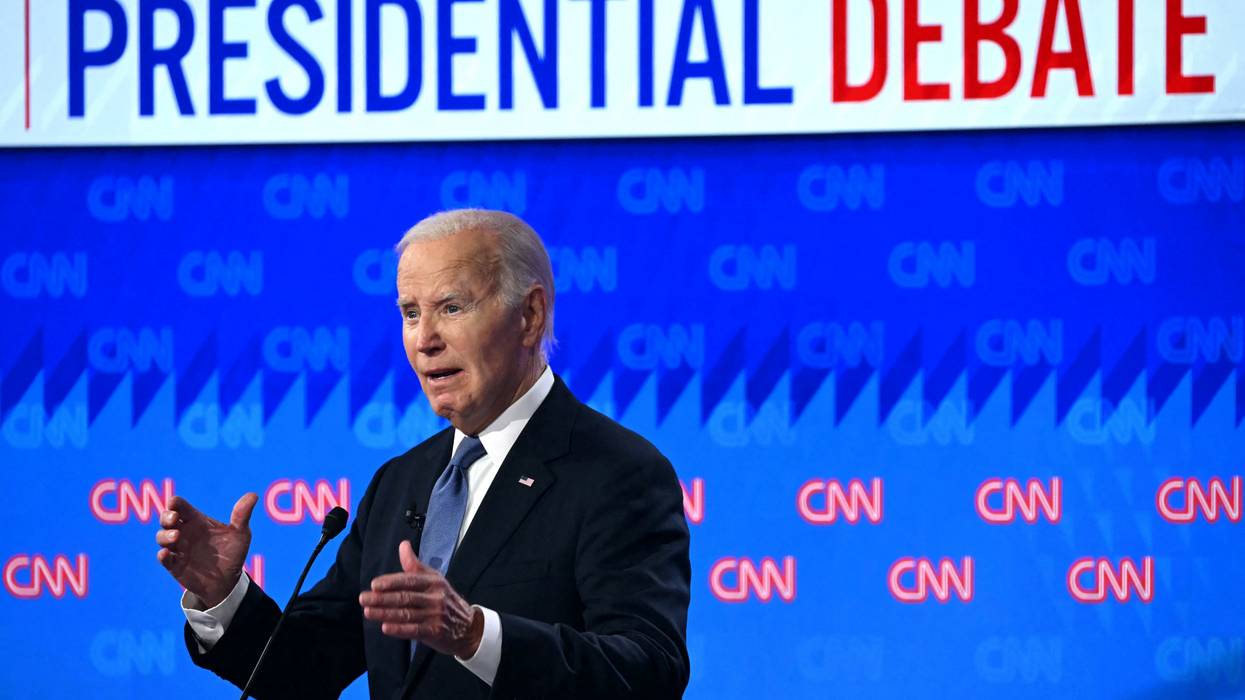
Biden stepping down and being replaced by a dynamic, younger candidate might be risky at this point. But it’s not as risky as a visibly enfeebled Biden staying in the race.
Since last week’s debate, plenty of smart people have argued that U.S. President Joe Biden must be replaced if former President Donald Trump is to be defeated and democracy protected. Among them are The New York Times editorial board, James Carville, David Remnick, former Obama speechwriter Jon Favreau, Biden friend Tom Friedman, pollster Nate Silver, and too many more to name. Meanwhile, a post-debate CBS News/YouGov poll shows that 72% of registered voters think Biden does not have the “mental & cognitive health to serve as president,” while only 27% think he does; 63% think Biden should not be running for president while only 37% think he should be.
Despite that, Biden’s inner circle and leading Democratic officials have been pushing back with their own version of a “big lie” that we shouldn’t believe what we saw with our own eyes, Biden just had one bad night, and he’ll be just fine. But as Times columnist Bret Stephens wrote: “The transparent problem with the president’s performance wasn’t that he debated poorly. It’s that he is suffering from serious cognitive decline, something from which there is no coming back… To those who love the president, starting with his wife, it’s time to tell him: for God’s sake, and the country’s, and his own—don’t run.”
So, if Biden is to be replaced as the Democratic nominee, how would it work legally?
If President Biden withdrew, and one or more prominent younger Democrats threw their hat in the ring, the party would undoubtedly hold a series of debates and town halls to introduce them to national voters and see who performs best under the national spotlight.
There are approximately 3,933 regular convention delegates elected in primaries and caucuses, almost all of whom are Biden delegates. In addition there are 739 “automatic” or “superdelegates” who are mostly party functionaries and elected officials for a total of approximately 4,672 delegates. The regular delegates may vote on the first ballot, and to win nomination on the first ballot a candidate must garner a majority of these or about 1,968 delegates. According to rule changes adopted after the 2016 Hillary Clinton/Bernie Sanders contest, superdelegates may not vote on the first ballot. They can only vote in the second and subsequent ballots, if no candidate wins on the first ballot. It would then take a majority of all delegates, including regular and superdelegates, or approximately 2,258 votes to win the nomination.
While regular delegates normally vote for the candidate they are “pledged” to, according to rules adopted after the 1980 primary contest between Jimmy Carter and Ted Kennedy, regular delegates are not technically required to vote for the candidate whom they are pledged to.
According to the convention rules, regular delegates being required to vote for the candidate they are pledged to is aspirational, not binding. The rules state that “all delegates to the National Convention pledged to a presidential candidate shall in good conscience reflect the sentiments of those who elected them.” Thus, if in “good conscience” one or more regular delegate no longer believes her candidate reflects the sentiments of those who elected her, she has the right under the rules to vote for another candidate whom she believes in good conscience does—it’s apparently up to each delegate to make that call. Thus, at least in theory, even if Biden stays in the race, if there’s a big enough groundswell to replace him, he could fail to win the nomination on the first ballot.
In reality, if Biden stays in the race, that result is highly unlikely. The regular delegates are picked in the first place because they are generally loyalists of the candidate they’re nominated to support. And prominent Democrats who might be viable alternatives to Biden are probably too scared of threats to their careers from the Democratic establishment to directly challenge Biden at this point.
If, however, Biden withdraws his candidacy before the convention, it becomes an open convention. As Elaine Kamarck of the Brookings Institution, who helped write the party rules, states: “About 4,000 people have already been elected to the convention. If Biden stepped aside tomorrow, several people would get into the race, no doubt, and the race would consist of calling these people and trying to convince them. It would be an old-fashioned convention. All 4,000 delegates pledged to Biden would suddenly be uncommitted, and you’d have a miniature campaign.”
Among the possible alternatives to Biden are Michigan Gov. Gretchen Whitmer, California Gov. Gavin Newsom, Kentucky Gov. Andy Beshear, Illinois Gov. J.B. Pritzker, Maryland Gov. Wes Moore, Pennsylvania Gov. Josh Shapiro, and Vice President Kamala Harris. If President Biden withdrew, and one or more prominent younger Democrats threw their hat in the ring, the party would undoubtedly hold a series of debates and town halls to introduce them to national voters and see who performs best under the national spotlight. None of these potential candidates significantly differ from each other or President Biden on the main issues, so the campaign for a successor would likely turn on personality and which one seems the most electable.
If an alternative to Biden is nominated, there’s then the question of what happens to the campaign funds raised to date by Biden. According to an email from Trevor Potter of the Campaign Legal Center, if a candidate withdraws, then the candidate’s campaign committee may transfer the funds to the national party that may spend them on the new nominee. If Vice President Harris were the new nominee, since Biden and Harris currently share a campaign committee, she would have access to all the funds in the committee. However, Biden’s campaign committee would not transfer more than a de minimis part of the funds to another candidate’s campaign committee. Another candidate would need to rely on the funds transferred to the National Committee, raise new funds, or refund the money to the original donors who could then contribute to the new candidate.
Biden stepping down and being replaced by a dynamic, younger candidate might be risky at this point. But it’s not as risky as a visibly enfeebled Biden staying in the race when over 70% of registered voters say they don’t think he has the mental and cognitive ability to serve. If an ageing relative no longer has the capacity to drive safely and might crash his car into a school bus killing dozens of children, you take away his keys.
Indeed, with so many voters dreading a Biden-Trump rematch, an exciting new candidate might well inspire a wave of enthusiasm.
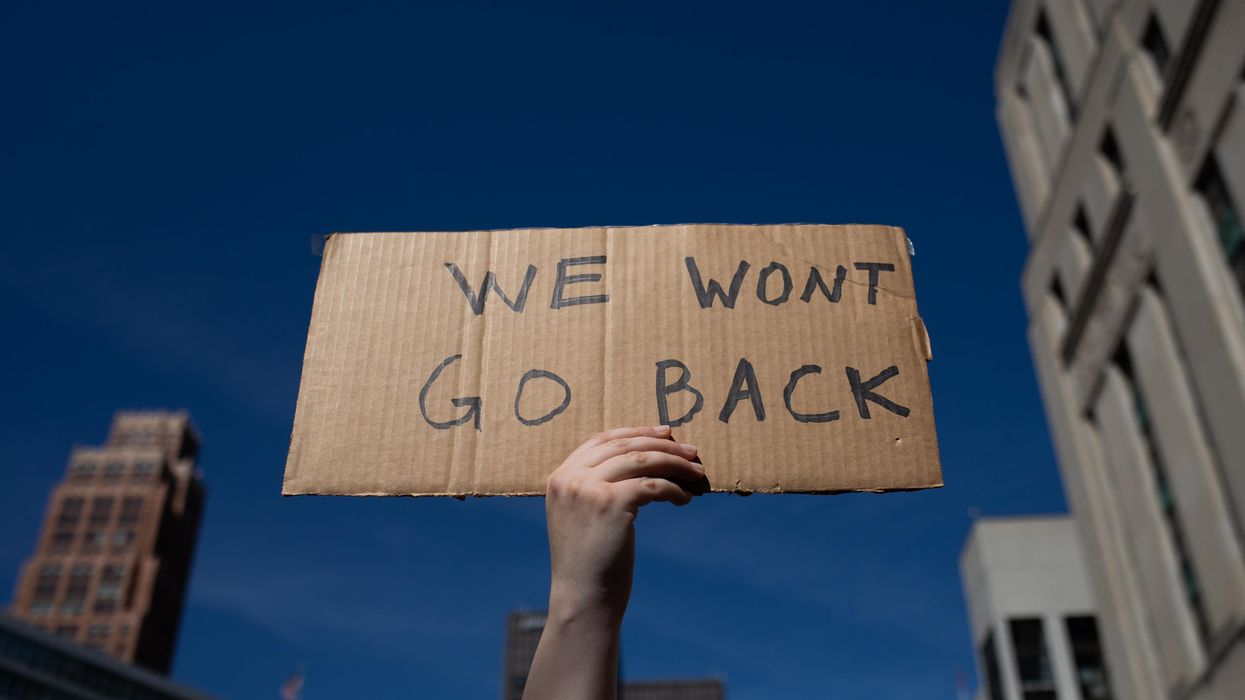
Women don't want men making laws getting between us, our families, and our doctors.
It is clear that the Dobbs decision by the Supreme Court caught the Republicans completely off guard, even though they have been working to take away the rights of women since before they killed the Equal Rights Amendment.
The right must have thought that stealing the basic rights to bodily autonomy and to determining the size of one's own family would be upsetting at first, but then we would all get over it. The pundits always say that Americans have a short span of attention, especially when it comes to politics, so it appears that the forced birthers didn't have a clue about the buzz saw they were about to confront.
The discussion of abortion has shifted greatly from the pre- Dobbs days. It is standard now, unless you are a fan of Fox and its ilk, to hear abortion referred to as "abortion healthcare." In fact, the media now tells us that abortion is a part of the many procedures used by doctors and midwives to keep women healthy. Some of the heartbreaking cases of doctors being unable or unwilling to do their jobs have resulted in permanent damage to the women who were denied care—whether it is being unable to have more children because of the damage done to the reproductive organs, or people who have to go through unbearable suffering when they could be resting, recovering, and taking care of their lives.
It is hard to imagine that these mostly white, buttoned up men think that the women of 2023—who either lived the explosion of feminism or have raised daughters with the feminist awareness of the past 50 years—will be persuaded, bribed, or forced into accepting their intervention into the most basic aspects of our lives.
A woman described her torment waiting for her sepsis to become life threatening so she could be treated for a fetus that had no chance of survival. Another woman who was so thrilled to get pregnant, only to learn that her fetus was not viable and she had to stay pregnant for months until she birthed a child who would suffer for a few days before passing away. The real fanatics want to deny women with cancer the chance to live, since often the drugs will damage a fetus.
Unlike 50 years ago, when the abortionist was forced to work in a back alley or underground and most people were secret about having the procedure, dozens of brave women have opened up and discussed their worst moments in order to prevent others from having to face the same horrors. These stories are magnified many times over on social media.
In Ohio, the voters recalled the spectacle of the poor 10 year old, impregnated by rape, who had to travel out of state in the miserable no-exception land that Ohio has been. In Kentucky, Andrew Beshear was reelected to his seat as governor with the help of a brave young woman who addressed the Republican in the race directly, telling him about her experience as a victim of incest at age 12. The deplorable Glenn Youngkin thought he was real smart when he told Virginia voters that he had the solution for all this abortion talk: the 15-week ban with exceptions for rape and incest. We all agree on this, right? Not so fast.
The voting earlier this week showed us something very interesting: Women don't want men making laws getting between us, our families, and our doctors. The vast majority of this country does not want Republican men deciding that six weeks is the cutoff for treatment, or 12 weeks, or, Mr. Youngkin, 15 weeks. The numbers don't lie: Women and those who love them say NO. Taking away a human right that most of us felt was secure will not be compromised away.
After a long string of not-even-close defeats, the Republicans, who are loathe to compromise on anything, suddenly are talking about the need to come to "common ground." It is hard to imagine that these mostly white, buttoned up men think that the women of 2023—who either lived the explosion of feminism or have raised daughters with the feminist awareness of the past 50 years—will be persuaded, bribed, or forced into accepting their intervention into the most basic aspects of our lives. Fifty years ago, women were not all in the workforce. In 2023, those who are trying to force women to give birth also fight tooth and nail against expanded Medicare, family medical leave, and any other programs helping women and families.
The level of delusion is remarkable: In Ohio, the tremendous margin of passage for the constitutional amendment enshrining abortion, birth control, and other good things into the state constitution did not seem to percolate down to the state legislature. The day after the vote, these guys are already trying to find ways to circumvent the will of the people. As Rick Santorum brilliantly deduced from the referendum "pure democracies aren't how to run a country."
Millions of women came out for the Women's March after the disaster that was the 2016 election. We did not disappear. We were waiting for the right opportunity, and after Trump-appointed justices gave us the Dobbs decision, now is the time. Women are not going back to being chattels.
And Republicans think their problem is messaging!

Part of the crowd gathered at an annual Kentucky political event chanted "lost the Senate!" and called on the longtime Republican leader to step down.
Senate Minority Leader Mitch McConnell was greeted at his home state's premier political event over the weekend with loud boos and chants of "retire!" as the longtime Republican leader faces increased scrutiny following a series of recent health incidents.
As McConnell opened his speech at Kentucky's annual Fancy Farm picnic, part of the crowd—where some were holding signs supporting the state's Democratic governor, Andy Beshear—booed and jeered the Republican senator and proceeded to shout, "Lost the Senate!"
The senator also faced calls to step down as he bashed teachers' unions and claimed Democrats are insufficiently "tough on crime."
Watch:
McConnell, 81, was first elected to the Senate in 1984 and has provided no indication that he intends to retire any time soon.
"For those of you who keep count, this is my 28th Fancy Farm," McConnell said Saturday, declaring that it "won't be my last."
During his time as the leader of the Senate Republican caucus, McConnell has dragged the federal judiciary to the right by orchestrating the mass confirmation of conservative judges while doing everything in his power to obstruct Democratic appointments.
McConnell's efforts culminated in the U.S. Supreme Court's decision last year overturning Roe v. Wade, imperiling abortion rights across the country—including in Kentucky.
"His legacy now includes the rollback of a nearly half-century-old constitutional right to abortion, which six Supreme Court justices—three of whom McConnell steered through the Senate confirmation gauntlet—have ruled never should have existed," The Courier-Journal reported. "This ruling directly impacts McConnell's home state of Kentucky, where Roe's reversal triggered a near-total abortion ban, courtesy of a law the Republican-controlled state legislature passed in 2019."
McConnell's appearance at Fancy Farm on Saturday came after the Republican leader suddenly stopped speaking in the middle of his remarks at a press conference late last month, fueling fresh questions about the senator's health.
CNN reported that McConnell has fallen "multiple times" this year, with one fall resulting in a concussion and broken ribs.
If McConnell decides to step down, there could be a legal fight over his replacement. As the Lexington Herald Leader explained, a Republican-authored law passed in 2021 "dictates that the governor select a replacement for any U.S. senator vacating the office from a list of three provided by the state executive committee of the vacating senator's party."
Citing one Louisville attorney who has previously worked with the Kentucky Democratic Party, the newspaper noted that "Beshear would likely push back against the law in one of two ways: ignore the law and appoint the replacement himself or sue against the law."

"We're horrified and sickened," said March for Our Lives. "Power and peace to those that lost their lives. We'll fight like hell in their memory. This makes 146 mass shootings this year."
This is a developing story… Please check back for possible updates...
Amid national demands for stricter gun laws, at least four people were killed and eight more were injured and transported to the hospital Monday morning in a mass shooting at Old National Bank in Louisville, Kentucky.
Louisville Metro Police Department (LMPD) Deputy Chief Paul Humphrey told reporters that two officers were shot and the suspect was dead. Interim Chief Jacquelyn Gwinn-Villaroel later confirmed that the shooter was fatally shot by police.
Authorities ultimately identified the shooter as 23-year-old Connor Sturgeon. Citing an unnamed law enforcement source, CNN reported that Sturgeon was notified that he was going to be fired from his job at the bank, and that he wrote a note for his parents and a friend.
Louisville Mayor Craig Greenberg and Gov. Andy Beshear, both Democrats, joined Humphrey at a morning press conference. Choking back tears, the governor said he uses this bank personally and had friends who were killed and injured.
The latest mass shooting in Kentucky comes as the nation also watches neighboring Tennessee, where Republicans in the state Legislature last week expelled a pair of young, Black Democratic lawmakers for supporting protests for gun control on the House floor after the deadly Covenant School shooting in Nashville.
The carnage in Louisville sparked yet another wave of demands for stricter gun laws.
"This is America," tweeted March for Our Lives, which was formed by students after the 2018 massacre at Marjory Stoneman Douglas High School in Parkland, Florida.
"We're horrified and sickened. Power and peace to those that lost their lives. We'll fight like hell in their memory. This makes 146 mass shootings this year," the group continued, citing figures from the Gun Violence Archive.
Everytown for Gun Safety declared: "More lives stolen by senseless, preventable gun violence. We shouldn't have to accept this. No other country does."
"Our hearts are with the victims, survivors, their loved ones, and the entire Louisville community," the group added. "Tonight there will be more empty seats at dinner tables and more families grieving loved ones who should still be here."
A federal law enforcement source confirmed to CNN that an AR-15-style rifle was used in the Louisville shooting.
"This horrific shooting is exactly why AR-15-style weapons and assault weapons have no place in our communities," said Kris Brown, president of Brady, the oldest national gun violence prevention group. "These weapons of war were designed for the battlefield and to kill as many people as quickly as possible, which is why they are the weapon of choice for mass shooters. Preventable tragedies like this are why other developed countries, including the United Kingdom and Australia, have banned these weapons for civilian use."
"Whether it's a bank, a school, a supermarket, or a church, Americans no longer feel safe in their communities. And Americans are increasingly tired of living in fear of being a victim of a mass shooting," Brown stressed. "It does not have to be this way. But until the gun industry no longer has a vice grip on our elected officials, this will continue to be our daily reality."
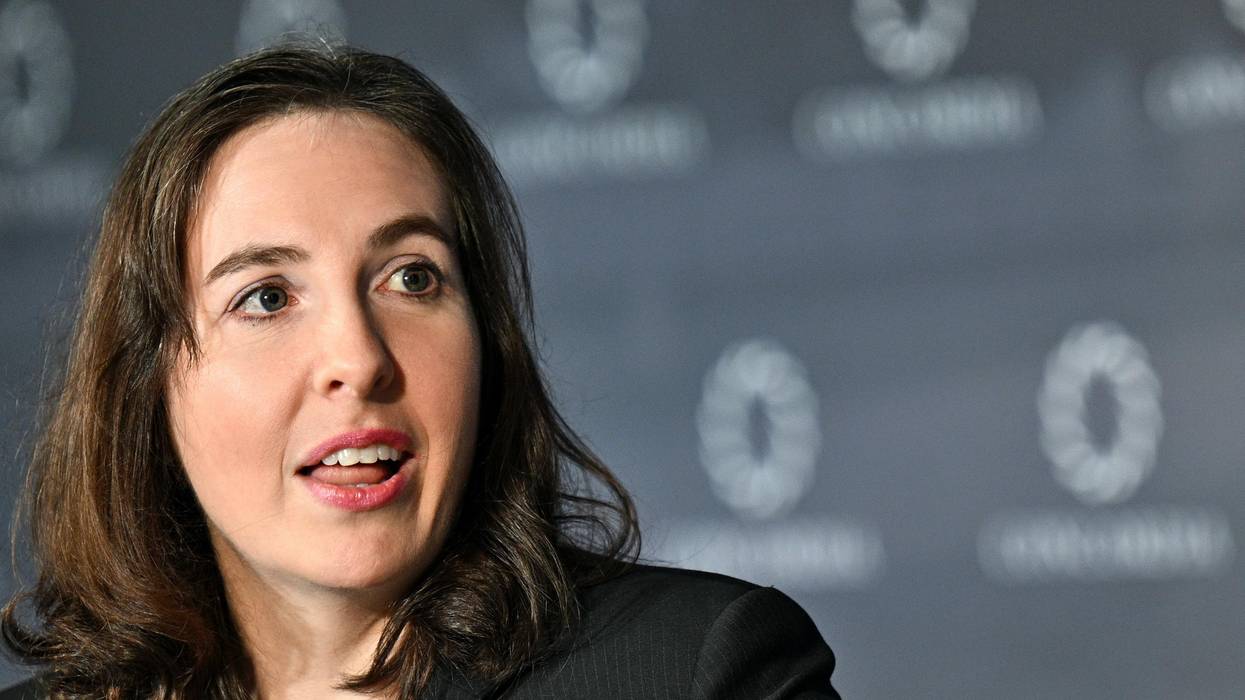
The Republican threatened to divest from financial institutions including JPMorgan Chase and Citigroup—widely accused of failing to meet even modest climate goals—under a state law banning "energy company boycotts."
Kentucky's Republican treasurer on Tuesday threatened to divest from 11 financial institutions—including major fossil fuel investors—that she falsely claimed were "engaged in energy company boycotts" in violation of commonwealth law.
"When companies boycott fossil fuels, they intentionally choke off the lifeblood of capital to Kentucky's signature industries," Treasurer Allison Ball said in a statement. "Traditional energy sources fuel our Kentucky economy, provide much-needed jobs, and warm our homes. Kentucky must not allow our signature industries to be irreparably damaged based upon the ideological whims of a select few."
In the same statement, Ball's office said that "all listed financial companies must stop engaging in the energy company boycott to avoid becoming subject to divestment."
Last year, Kentucky's Republican-dominated Legislature passed, and Democratic Gov. Andy Beshear signed into law, S.B. 205, which takes aim at environmental, social, and governance (ESG) investing, a set of criteria that include companies' policies for addressing the climate emergency.
Republicans have derided ESG as "woke" investing. Numerous GOP-led states have divested billions of dollars from targeted investment firms—even when doing so harms them financially.
Ball's list includes BlackRock—one of the world's largest investors in fossil fuels and deforestation—as well as institutions such as JPMorgan Chase and Citigroup, which also rank among the top fossil fuel industry financiers, according to Bloomberg. Climate campaigners have criticized many of the financial institutions on Ball's list for failing to meet even the modest climate goals they've set for themselves.
"The fact is that we are among the largest financers of the U.S. traditional and renewable energy industries, including in Kentucky, where we serve some of its largest energy companies and utilities," JPMorgan Chase spokesperson Trish Wexler told Bloomberg. "We believe our business practices are in line with Kentucky law, and we are hopeful a deeper look at these facts would lead to reconsideration."
BlackRock spokesperson Christopher Van Es told Bloomberg that "on behalf of our clients, we have invested approximately $276 billion in energy companies globally. BlackRock does not boycott energy companies and will continue to be investors across the energy sector."
Ball's office gave state agencies 30 days to say whether they hold investments in any of the listed financial institutions, and 90 days to "cease boycotting energy companies in order to avoid divestment."
"Treasurer Ball has long been a national leader in the fight against harmful ESG schemes which hurt our economy, threaten our national security, and prioritize political goals above financial returns," the treasurer's office said. "The compilation of this list is the latest in a series of her efforts to oppose this dangerous practice."