SUBSCRIBE TO OUR FREE NEWSLETTER
Daily news & progressive opinion—funded by the people, not the corporations—delivered straight to your inbox.
5
#000000
#FFFFFF
To donate by check, phone, or other method, see our More Ways to Give page.
Daily news & progressive opinion—funded by the people, not the corporations—delivered straight to your inbox.
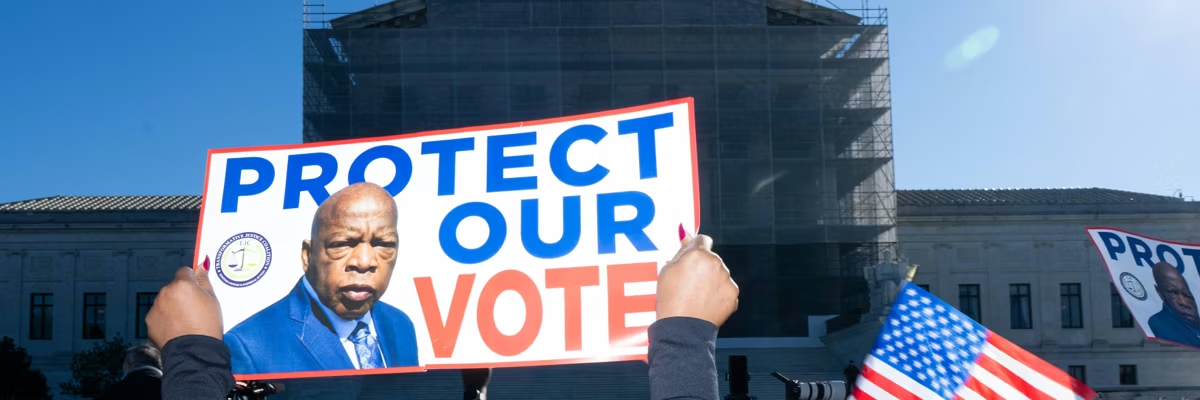
Voting rights activists protest outside the US Supreme Court as the court prepares to hear arguments in a case challenging Louisiana's congressional map in Washington on Wednesday, October 15, 2025.
While the Supreme Court is right to acknowledge that the situation today is different from past decades, it errs drastically in concluding that the proper path forward is to gut one of the key pieces of legislation that made that progress possible.
On April 29, the Supreme Court voted 6-3 along ideological lines to weaken Section 2 of the Voting Rights Act, which prohibits voting practices that discriminate based on race, color, or membership in a “language minority group.” Under this provision, states were allowed to consider race in drawing district maps for the purposes of protecting the voting power of people of color. That is, until now.
In Louisiana v. Callais, the Supreme Court struck down a Louisiana congressional map that created a second majority-Black district as “an unconstitutional gerrymander.” The map was created after the Fifth US Circuit Court of Appeals found that an earlier redistricting attempt with only one such district violated Section 2. The circuit court argued that the state unjustly divided Black communities in a way that “deprive[d] them of the opportunity to form effective voting blocs.” In response, Louisiana created a second majority-minority district, which Rep. Cleo Fields (D-La.) won in 2024.
This new map was later challenged by a group of self-described “non-African Americans” who contended that it violated the Constitution’s equal protection clause. The Supreme Court concurred. Writing for the majority, Justice Samuel Alito remarked, the new map “would violate the plaintiffs’ constitutional rights.”
Notably, the Supreme Court did not rule that Section 2 itself was unconstitutional. Rather, they determined that the framework used to determine whether a map violates the provision must be updated “so it aligns with the statutory text and reflects important developments” in the decades following the passage of the Voting Rights Act (VRA). These “great strides” include abolishing voting tests, erasing disparities in voter registration and turnout due to race, as well as greater shares of people of color elected to political office. For the Supreme Court, these developments warrant a higher bar for Section 2 violations.
The Supreme Court misunderstands the present. It pretends that we live in a nation largely free of the very kinds of racial prejudices and issues that gerrymandered maps like Louisiana’s allow Congress to overlook.
This is a reckless conclusion. While recent decades have seen sizable progress in addressing racial discrimination, the court ignores two key points: Fiirst, progress does not mean that the problem is gone. Anti-voter bills designed to undermine the political power of people of color continue to be introduced and passed across the country. This is especially true in red states. As the Brennan Center of Justice notes, “Racially diverse states controlled by Republicans are far more likely to introduce and pass restrictive provisions than very white states with Republican control; in other words, it’s states like Texas and Arizona, not Wyoming or Utah, that are passing the most restrictive legislation.” In fact, on April 27, the Supreme Court issued a shadow docket ruling that allows Texas to implement a gerrymandered map that a Trump-appointed judge had previously found to be “racially discriminatory.”
Second, and as this very ruling indicates, progress can always be undone. Prior to this ruling, the Supreme Court had already undermined core aspects of the VRA. This includes eliminating “preclearance” requirements which mandated that states with histories of racist voting practices must have new election laws or procedures reviewed by a federal court or the Department of Justice. Since then, multiple states previously covered by those requirements, including Alabama, Georgia, and Louisiana, have seen their congressional maps challenged in federal court over concerns of racial discrimination.
Becoming complacent, as the Supreme Court would have us, puts the hard-fought victories that people of color have achieved at risk. Their emphasis on racial progress overlooks that even seemingly colorblind policies can set us back decades. Consider for instance the nominally race neutral SAVE America Act. It requires proof of citizenship, such as a US passport or birth certificate, to vote. This is effectively a poll tax that will disproportionately harm poor people and people of color. According to a 2023 YouGov poll, only about a third of Black Americans have a current passport. Moreover, some Black people may face more novel challenges. The Center on Budget and Policies Priorities reports that elderly Black people who were born under Jim Crow may never have been issued a birth certificate at all. As Senate Minority Leader Chuck Schumer (D-NY) put it, the SAVE America Act is “Jim Crow 2.0. […] What they're trying to do here is the same thing that was done in the South for decades to prevent people of color from voting.” In short, the past is not simply history; if we are not vigilant, it can become our future.
The multigenerational, centuries-long issues of race will require more than 60 years to solve. While the Supreme Court is right to acknowledge that the situation today is different from past decades, it errs drastically in concluding that the proper path forward is to gut one of the key pieces of legislation that made that progress possible. More fundamentally, the Supreme Court misunderstands the present. It pretends that we live in a nation largely free of the very kinds of racial prejudices and issues that gerrymandered maps like Louisiana’s allow Congress to overlook. Importantly, by diluting the voting power of people of color and by extension their congressional representation, it undermines their efforts to combat racism, colorism, and xenophobia.
Nevertheless, under this court’s decision, future plaintiffs will have to show that “the State intentionally drew its districts to afford minority voters less opportunity because of their race.” Simply demonstrating that a congressional map dilutes a minority group’s voting power will not be sufficient. As Justice Elena Kagan writes in her dissenting opinion, requiring “vote-dilution plaintiffs” to prove a “race-based motive” will “make success in their suits nearly impossible.”
Intentionality is an incredibly difficult legal standard to meet. Proving intent is among the core reasons why hate crimes are so difficult to convict in court. As such, it is no surprise that Kagan believes this ruling effectively renders Section 2 “all but a dead letter.”
Justice Clarence Thomas, in his concurring majority opinion, wrote that the Supreme Court should never have interpreted Section 2 “to effectively give racial groups ‘an entitlement to roughly proportional representation.’” In his view, Section 2 “does not regulate districting at all.” Thomas’ opinion is not only inconsistent with the legislative and judicial history of the VRA, but it is inherently contrary to the ideals of a democracy. Proportional representation is not a mere “entitlement”—it is a constitutionally mandated guarantee that ensures that communities have their unique concerns addressed and their interests protected.
The Supreme Court’s decision, in conjunction with the Trump administration’s unrelenting assault on the Constitution, have set American democracy back decades. Yet, this is no time to despair. Now more than ever, we must organize, build broad multi-state coalitions, protest, and demand that our rights be recognized.
Dear Common Dreams reader, It’s been nearly 30 years since I co-founded Common Dreams with my late wife, Lina Newhouser. We had the radical notion that journalism should serve the public good, not corporate profits. It was clear to us from the outset what it would take to build such a project. No paid advertisements. No corporate sponsors. No millionaire publisher telling us what to think or do. Many people said we wouldn't last a year, but we proved those doubters wrong. Together with a tremendous team of journalists and dedicated staff, we built an independent media outlet free from the constraints of profits and corporate control. Our mission has always been simple: To inform. To inspire. To ignite change for the common good. Building Common Dreams was not easy. Our survival was never guaranteed. When you take on the most powerful forces—Wall Street greed, fossil fuel industry destruction, Big Tech lobbyists, and uber-rich oligarchs who have spent billions upon billions rigging the economy and democracy in their favor—the only bulwark you have is supporters who believe in your work. But here’s the urgent message from me today. It's never been this bad out there. And it's never been this hard to keep us going. At the very moment Common Dreams is most needed, the threats we face are intensifying. We need your support now more than ever. We don't accept corporate advertising and never will. We don't have a paywall because we don't think people should be blocked from critical news based on their ability to pay. Everything we do is funded by the donations of readers like you. When everyone does the little they can afford, we are strong. But if that support retreats or dries up, so do we. Will you donate now to make sure Common Dreams not only survives but thrives? —Craig Brown, Co-founder |
On April 29, the Supreme Court voted 6-3 along ideological lines to weaken Section 2 of the Voting Rights Act, which prohibits voting practices that discriminate based on race, color, or membership in a “language minority group.” Under this provision, states were allowed to consider race in drawing district maps for the purposes of protecting the voting power of people of color. That is, until now.
In Louisiana v. Callais, the Supreme Court struck down a Louisiana congressional map that created a second majority-Black district as “an unconstitutional gerrymander.” The map was created after the Fifth US Circuit Court of Appeals found that an earlier redistricting attempt with only one such district violated Section 2. The circuit court argued that the state unjustly divided Black communities in a way that “deprive[d] them of the opportunity to form effective voting blocs.” In response, Louisiana created a second majority-minority district, which Rep. Cleo Fields (D-La.) won in 2024.
This new map was later challenged by a group of self-described “non-African Americans” who contended that it violated the Constitution’s equal protection clause. The Supreme Court concurred. Writing for the majority, Justice Samuel Alito remarked, the new map “would violate the plaintiffs’ constitutional rights.”
Notably, the Supreme Court did not rule that Section 2 itself was unconstitutional. Rather, they determined that the framework used to determine whether a map violates the provision must be updated “so it aligns with the statutory text and reflects important developments” in the decades following the passage of the Voting Rights Act (VRA). These “great strides” include abolishing voting tests, erasing disparities in voter registration and turnout due to race, as well as greater shares of people of color elected to political office. For the Supreme Court, these developments warrant a higher bar for Section 2 violations.
The Supreme Court misunderstands the present. It pretends that we live in a nation largely free of the very kinds of racial prejudices and issues that gerrymandered maps like Louisiana’s allow Congress to overlook.
This is a reckless conclusion. While recent decades have seen sizable progress in addressing racial discrimination, the court ignores two key points: Fiirst, progress does not mean that the problem is gone. Anti-voter bills designed to undermine the political power of people of color continue to be introduced and passed across the country. This is especially true in red states. As the Brennan Center of Justice notes, “Racially diverse states controlled by Republicans are far more likely to introduce and pass restrictive provisions than very white states with Republican control; in other words, it’s states like Texas and Arizona, not Wyoming or Utah, that are passing the most restrictive legislation.” In fact, on April 27, the Supreme Court issued a shadow docket ruling that allows Texas to implement a gerrymandered map that a Trump-appointed judge had previously found to be “racially discriminatory.”
Second, and as this very ruling indicates, progress can always be undone. Prior to this ruling, the Supreme Court had already undermined core aspects of the VRA. This includes eliminating “preclearance” requirements which mandated that states with histories of racist voting practices must have new election laws or procedures reviewed by a federal court or the Department of Justice. Since then, multiple states previously covered by those requirements, including Alabama, Georgia, and Louisiana, have seen their congressional maps challenged in federal court over concerns of racial discrimination.
Becoming complacent, as the Supreme Court would have us, puts the hard-fought victories that people of color have achieved at risk. Their emphasis on racial progress overlooks that even seemingly colorblind policies can set us back decades. Consider for instance the nominally race neutral SAVE America Act. It requires proof of citizenship, such as a US passport or birth certificate, to vote. This is effectively a poll tax that will disproportionately harm poor people and people of color. According to a 2023 YouGov poll, only about a third of Black Americans have a current passport. Moreover, some Black people may face more novel challenges. The Center on Budget and Policies Priorities reports that elderly Black people who were born under Jim Crow may never have been issued a birth certificate at all. As Senate Minority Leader Chuck Schumer (D-NY) put it, the SAVE America Act is “Jim Crow 2.0. […] What they're trying to do here is the same thing that was done in the South for decades to prevent people of color from voting.” In short, the past is not simply history; if we are not vigilant, it can become our future.
The multigenerational, centuries-long issues of race will require more than 60 years to solve. While the Supreme Court is right to acknowledge that the situation today is different from past decades, it errs drastically in concluding that the proper path forward is to gut one of the key pieces of legislation that made that progress possible. More fundamentally, the Supreme Court misunderstands the present. It pretends that we live in a nation largely free of the very kinds of racial prejudices and issues that gerrymandered maps like Louisiana’s allow Congress to overlook. Importantly, by diluting the voting power of people of color and by extension their congressional representation, it undermines their efforts to combat racism, colorism, and xenophobia.
Nevertheless, under this court’s decision, future plaintiffs will have to show that “the State intentionally drew its districts to afford minority voters less opportunity because of their race.” Simply demonstrating that a congressional map dilutes a minority group’s voting power will not be sufficient. As Justice Elena Kagan writes in her dissenting opinion, requiring “vote-dilution plaintiffs” to prove a “race-based motive” will “make success in their suits nearly impossible.”
Intentionality is an incredibly difficult legal standard to meet. Proving intent is among the core reasons why hate crimes are so difficult to convict in court. As such, it is no surprise that Kagan believes this ruling effectively renders Section 2 “all but a dead letter.”
Justice Clarence Thomas, in his concurring majority opinion, wrote that the Supreme Court should never have interpreted Section 2 “to effectively give racial groups ‘an entitlement to roughly proportional representation.’” In his view, Section 2 “does not regulate districting at all.” Thomas’ opinion is not only inconsistent with the legislative and judicial history of the VRA, but it is inherently contrary to the ideals of a democracy. Proportional representation is not a mere “entitlement”—it is a constitutionally mandated guarantee that ensures that communities have their unique concerns addressed and their interests protected.
The Supreme Court’s decision, in conjunction with the Trump administration’s unrelenting assault on the Constitution, have set American democracy back decades. Yet, this is no time to despair. Now more than ever, we must organize, build broad multi-state coalitions, protest, and demand that our rights be recognized.
On April 29, the Supreme Court voted 6-3 along ideological lines to weaken Section 2 of the Voting Rights Act, which prohibits voting practices that discriminate based on race, color, or membership in a “language minority group.” Under this provision, states were allowed to consider race in drawing district maps for the purposes of protecting the voting power of people of color. That is, until now.
In Louisiana v. Callais, the Supreme Court struck down a Louisiana congressional map that created a second majority-Black district as “an unconstitutional gerrymander.” The map was created after the Fifth US Circuit Court of Appeals found that an earlier redistricting attempt with only one such district violated Section 2. The circuit court argued that the state unjustly divided Black communities in a way that “deprive[d] them of the opportunity to form effective voting blocs.” In response, Louisiana created a second majority-minority district, which Rep. Cleo Fields (D-La.) won in 2024.
This new map was later challenged by a group of self-described “non-African Americans” who contended that it violated the Constitution’s equal protection clause. The Supreme Court concurred. Writing for the majority, Justice Samuel Alito remarked, the new map “would violate the plaintiffs’ constitutional rights.”
Notably, the Supreme Court did not rule that Section 2 itself was unconstitutional. Rather, they determined that the framework used to determine whether a map violates the provision must be updated “so it aligns with the statutory text and reflects important developments” in the decades following the passage of the Voting Rights Act (VRA). These “great strides” include abolishing voting tests, erasing disparities in voter registration and turnout due to race, as well as greater shares of people of color elected to political office. For the Supreme Court, these developments warrant a higher bar for Section 2 violations.
The Supreme Court misunderstands the present. It pretends that we live in a nation largely free of the very kinds of racial prejudices and issues that gerrymandered maps like Louisiana’s allow Congress to overlook.
This is a reckless conclusion. While recent decades have seen sizable progress in addressing racial discrimination, the court ignores two key points: Fiirst, progress does not mean that the problem is gone. Anti-voter bills designed to undermine the political power of people of color continue to be introduced and passed across the country. This is especially true in red states. As the Brennan Center of Justice notes, “Racially diverse states controlled by Republicans are far more likely to introduce and pass restrictive provisions than very white states with Republican control; in other words, it’s states like Texas and Arizona, not Wyoming or Utah, that are passing the most restrictive legislation.” In fact, on April 27, the Supreme Court issued a shadow docket ruling that allows Texas to implement a gerrymandered map that a Trump-appointed judge had previously found to be “racially discriminatory.”
Second, and as this very ruling indicates, progress can always be undone. Prior to this ruling, the Supreme Court had already undermined core aspects of the VRA. This includes eliminating “preclearance” requirements which mandated that states with histories of racist voting practices must have new election laws or procedures reviewed by a federal court or the Department of Justice. Since then, multiple states previously covered by those requirements, including Alabama, Georgia, and Louisiana, have seen their congressional maps challenged in federal court over concerns of racial discrimination.
Becoming complacent, as the Supreme Court would have us, puts the hard-fought victories that people of color have achieved at risk. Their emphasis on racial progress overlooks that even seemingly colorblind policies can set us back decades. Consider for instance the nominally race neutral SAVE America Act. It requires proof of citizenship, such as a US passport or birth certificate, to vote. This is effectively a poll tax that will disproportionately harm poor people and people of color. According to a 2023 YouGov poll, only about a third of Black Americans have a current passport. Moreover, some Black people may face more novel challenges. The Center on Budget and Policies Priorities reports that elderly Black people who were born under Jim Crow may never have been issued a birth certificate at all. As Senate Minority Leader Chuck Schumer (D-NY) put it, the SAVE America Act is “Jim Crow 2.0. […] What they're trying to do here is the same thing that was done in the South for decades to prevent people of color from voting.” In short, the past is not simply history; if we are not vigilant, it can become our future.
The multigenerational, centuries-long issues of race will require more than 60 years to solve. While the Supreme Court is right to acknowledge that the situation today is different from past decades, it errs drastically in concluding that the proper path forward is to gut one of the key pieces of legislation that made that progress possible. More fundamentally, the Supreme Court misunderstands the present. It pretends that we live in a nation largely free of the very kinds of racial prejudices and issues that gerrymandered maps like Louisiana’s allow Congress to overlook. Importantly, by diluting the voting power of people of color and by extension their congressional representation, it undermines their efforts to combat racism, colorism, and xenophobia.
Nevertheless, under this court’s decision, future plaintiffs will have to show that “the State intentionally drew its districts to afford minority voters less opportunity because of their race.” Simply demonstrating that a congressional map dilutes a minority group’s voting power will not be sufficient. As Justice Elena Kagan writes in her dissenting opinion, requiring “vote-dilution plaintiffs” to prove a “race-based motive” will “make success in their suits nearly impossible.”
Intentionality is an incredibly difficult legal standard to meet. Proving intent is among the core reasons why hate crimes are so difficult to convict in court. As such, it is no surprise that Kagan believes this ruling effectively renders Section 2 “all but a dead letter.”
Justice Clarence Thomas, in his concurring majority opinion, wrote that the Supreme Court should never have interpreted Section 2 “to effectively give racial groups ‘an entitlement to roughly proportional representation.’” In his view, Section 2 “does not regulate districting at all.” Thomas’ opinion is not only inconsistent with the legislative and judicial history of the VRA, but it is inherently contrary to the ideals of a democracy. Proportional representation is not a mere “entitlement”—it is a constitutionally mandated guarantee that ensures that communities have their unique concerns addressed and their interests protected.
The Supreme Court’s decision, in conjunction with the Trump administration’s unrelenting assault on the Constitution, have set American democracy back decades. Yet, this is no time to despair. Now more than ever, we must organize, build broad multi-state coalitions, protest, and demand that our rights be recognized.