SUBSCRIBE TO OUR FREE NEWSLETTER
Daily news & progressive opinion—funded by the people, not the corporations—delivered straight to your inbox.
5
#000000
#FFFFFF
To donate by check, phone, or other method, see our More Ways to Give page.
Daily news & progressive opinion—funded by the people, not the corporations—delivered straight to your inbox.
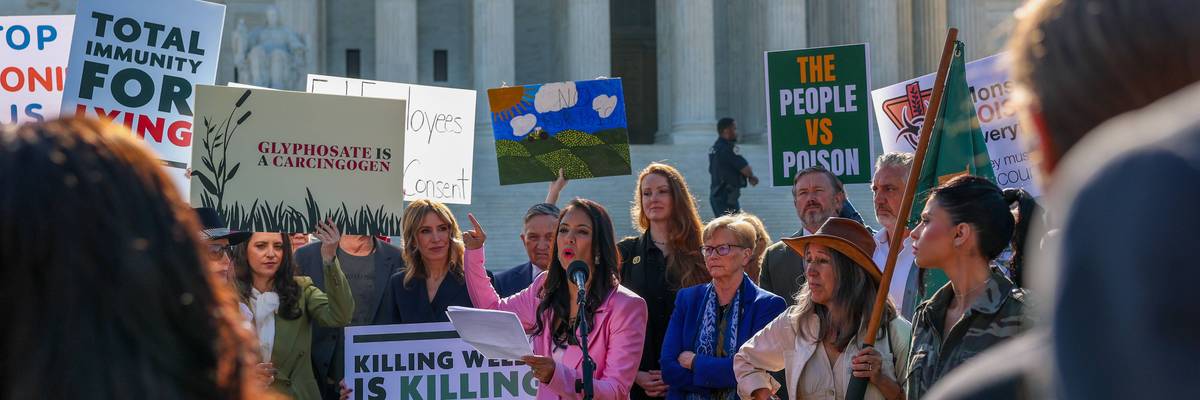
The People vs the Poison protesters gather at the US Supreme Court on April 27, 2026 in Washington, DC.
The question isn’t whether the two groups share a few habits; it’s whether they can work together to build the political muscle needed to implement regulations that make everyone safer.
Eat real food. Buy organic. Filter your water.
Scroll through Instagram and you’ll find no shortage of such advice from the “MAHA girls,”—young women drawn to the Make America Healthy Again movement. If you have been accustomed to MAHA through its most famous champion—Health Secretary Robert F. Kennedy Jr., who helped popularize the slogan—#MAHA girls show a wider and growing allure of MAHA and their messages.
It’s tempting for progressives to either mock them or tune out, especially given their association with the current administration. But that would be a mistake. Not because MAHA has the right solutions—it often doesn’t—but because it names a real problem: Our modern lives are saturated with industrial contaminants from which individual consumer hacks can’t protect us.
As a sociologist who studies food systems, I recognize the mix of anxiety and practicality driving this trend. The MAHA movement’s concerns overlap with long-standing environmental and public health priorities championed by progressives. But the question isn’t whether these groups share a few “clean” habits; it’s whether they can work together to build the political muscle needed to implement regulations that make everyone safer.
Rather than rejecting MAHA’s sentiments, progressives need to listen carefully to the experiences that drive this movement, while being mindful of the limits of individual actions.
Consider glyphosate, the active ingredient in the herbicide Roundup. There has been ongoing debate over its potential consequences. Thousands of lawsuits have been filed against Monsanto and its parent company, Bayer. And on April 27, the US Supreme Court heard arguments in Monsanto v. Durnell. The MAHA movement is watching the case closely and held a protest outside the Supreme Court.
Environmental and public health advocates have warned about these chemicals for decades. On this point, MAHA advocates and progressive environmentalists are aligned: Both want glyphosate out of the food system.
Or take fermented foods. My book, Fermenting for the Future, traces the decline of fermentation practices in industrial societies and the resulting loss of gut microbial diversity. Our guts are often described as the “industrial microbiota”—but thanks to our modern food system, they are becoming a less diverse ecosystem linked to a rise in chronic conditions. That’s because industrial food systems don’t just add questionable additives; they also reshape “traditional” foods that are standardized, pasteurized, or only nominally fermented—optimized for cost and convenience.
Here, too, MAHA supporters often agree. They champion fermented foods such as kimchi and miso and emphasize gut health. These concerns have even entered mainstream policy, as seen in the 2025 Dietary Guidelines for Americans, which highlighted gut health and fermented foods.
Usually, MAHA’s intellectual roots are traced simply to MAGA (Make America Great Again). But its intellectual roots run deeper: health freedom movements, environmentalism, and women’s health activism—many of which have progressive roots.
But there are key differences and they matter.
First, MAHA discourse is marked by a strong current of purism: the idea that we can purify our bodies, homes, and communities if we shop correctly and avoid the “bad” stuff. Purism often draws a moral boundary between the “pure” and the “impure.” Historically, such thinking can slide from labeling chemicals as “impure” to applying the same labels to people—feeding stigma, exclusion, and conspiracy thinking.
Purism also rests on an illusion. We live in a world saturated with contaminants—from microplastics to forever chemicals—such that we are, in a sense, born “pre-polluted.” To try to shield ourselves individually by careful shopping choices is impossible and creates a sense of false security.
Second, the movement is deeply shaped by healthism—an idea that puts most of the responsibility for health on personal behavior. If you feel unwell, the MAHA approach is to take personal steps: Monitor your glucose, eliminate processed foods, buy organic. Structural factors—regulation, labor conditions, environmental exposure—fade into the background.
This is a paradox. While MAHA advocates sometimes call for tighter regulation of certain substances, their overall mindset often distrusts government and scientists, which limits their willingness for necessary systemic reforms and support for experts.
Healthism also obscures inequality. The capacity to “choose health” is unevenly distributed. A single mother juggling multiple precarious jobs likely lacks both the time to research good supplements and the income to purchase organic foods. Without structural changes in how food is produced, regulated, and distributed, those with fewer resources will continue to bear higher burdens—and then be blamed for their circumstances.
Despite these differences, the underlying overlap to progressive causes offers a window of opportunity. Many of the MAHA girls on Instagram are responding to real personal experiences that speak to larger issues: chronic symptoms without clear diagnoses, medical visits that feel rushed or dismissive. Conditions such as allergies, eczema, irritable bowel syndrome, and diabetes have become prevalent, and the fear that today’s generation may fare worse than their parents cannot be waved away as mere hyperbole.
Rather than rejecting MAHA’s sentiments, progressives need to listen carefully to the experiences that drive this movement, while being mindful of the limits of individual actions. If we are serious about making Americans—and the environments we inhabit—healthier, we can’t rely on individual choices alone.
We should meet this moment with “clean rules,” not just clean eating. Tackling bad food requires sustained advocacy for better regulations that foremostly consider the existing and potential harms to the most socioeconomically marginalized, such as farm laborers, fenceline communities, and the poor. And better food governance requires more support for scientists and public agencies that help to build a solid knowledge base for regulations and for them to be fully enforced.
“Clean” also means addressing conflict of interests in appointment of officials, in scientific data gathering, and in the endorsement of “solutions” including commercial products. Those reforms would help everyone—including the people with the least time and money to manage risk on their own.
Dear Common Dreams reader, It’s been nearly 30 years since I co-founded Common Dreams with my late wife, Lina Newhouser. We had the radical notion that journalism should serve the public good, not corporate profits. It was clear to us from the outset what it would take to build such a project. No paid advertisements. No corporate sponsors. No millionaire publisher telling us what to think or do. Many people said we wouldn't last a year, but we proved those doubters wrong. Together with a tremendous team of journalists and dedicated staff, we built an independent media outlet free from the constraints of profits and corporate control. Our mission has always been simple: To inform. To inspire. To ignite change for the common good. Building Common Dreams was not easy. Our survival was never guaranteed. When you take on the most powerful forces—Wall Street greed, fossil fuel industry destruction, Big Tech lobbyists, and uber-rich oligarchs who have spent billions upon billions rigging the economy and democracy in their favor—the only bulwark you have is supporters who believe in your work. But here’s the urgent message from me today. It's never been this bad out there. And it's never been this hard to keep us going. At the very moment Common Dreams is most needed, the threats we face are intensifying. We need your support now more than ever. We don't accept corporate advertising and never will. We don't have a paywall because we don't think people should be blocked from critical news based on their ability to pay. Everything we do is funded by the donations of readers like you. When everyone does the little they can afford, we are strong. But if that support retreats or dries up, so do we. Will you donate now to make sure Common Dreams not only survives but thrives? —Craig Brown, Co-founder |
Eat real food. Buy organic. Filter your water.
Scroll through Instagram and you’ll find no shortage of such advice from the “MAHA girls,”—young women drawn to the Make America Healthy Again movement. If you have been accustomed to MAHA through its most famous champion—Health Secretary Robert F. Kennedy Jr., who helped popularize the slogan—#MAHA girls show a wider and growing allure of MAHA and their messages.
It’s tempting for progressives to either mock them or tune out, especially given their association with the current administration. But that would be a mistake. Not because MAHA has the right solutions—it often doesn’t—but because it names a real problem: Our modern lives are saturated with industrial contaminants from which individual consumer hacks can’t protect us.
As a sociologist who studies food systems, I recognize the mix of anxiety and practicality driving this trend. The MAHA movement’s concerns overlap with long-standing environmental and public health priorities championed by progressives. But the question isn’t whether these groups share a few “clean” habits; it’s whether they can work together to build the political muscle needed to implement regulations that make everyone safer.
Rather than rejecting MAHA’s sentiments, progressives need to listen carefully to the experiences that drive this movement, while being mindful of the limits of individual actions.
Consider glyphosate, the active ingredient in the herbicide Roundup. There has been ongoing debate over its potential consequences. Thousands of lawsuits have been filed against Monsanto and its parent company, Bayer. And on April 27, the US Supreme Court heard arguments in Monsanto v. Durnell. The MAHA movement is watching the case closely and held a protest outside the Supreme Court.
Environmental and public health advocates have warned about these chemicals for decades. On this point, MAHA advocates and progressive environmentalists are aligned: Both want glyphosate out of the food system.
Or take fermented foods. My book, Fermenting for the Future, traces the decline of fermentation practices in industrial societies and the resulting loss of gut microbial diversity. Our guts are often described as the “industrial microbiota”—but thanks to our modern food system, they are becoming a less diverse ecosystem linked to a rise in chronic conditions. That’s because industrial food systems don’t just add questionable additives; they also reshape “traditional” foods that are standardized, pasteurized, or only nominally fermented—optimized for cost and convenience.
Here, too, MAHA supporters often agree. They champion fermented foods such as kimchi and miso and emphasize gut health. These concerns have even entered mainstream policy, as seen in the 2025 Dietary Guidelines for Americans, which highlighted gut health and fermented foods.
Usually, MAHA’s intellectual roots are traced simply to MAGA (Make America Great Again). But its intellectual roots run deeper: health freedom movements, environmentalism, and women’s health activism—many of which have progressive roots.
But there are key differences and they matter.
First, MAHA discourse is marked by a strong current of purism: the idea that we can purify our bodies, homes, and communities if we shop correctly and avoid the “bad” stuff. Purism often draws a moral boundary between the “pure” and the “impure.” Historically, such thinking can slide from labeling chemicals as “impure” to applying the same labels to people—feeding stigma, exclusion, and conspiracy thinking.
Purism also rests on an illusion. We live in a world saturated with contaminants—from microplastics to forever chemicals—such that we are, in a sense, born “pre-polluted.” To try to shield ourselves individually by careful shopping choices is impossible and creates a sense of false security.
Second, the movement is deeply shaped by healthism—an idea that puts most of the responsibility for health on personal behavior. If you feel unwell, the MAHA approach is to take personal steps: Monitor your glucose, eliminate processed foods, buy organic. Structural factors—regulation, labor conditions, environmental exposure—fade into the background.
This is a paradox. While MAHA advocates sometimes call for tighter regulation of certain substances, their overall mindset often distrusts government and scientists, which limits their willingness for necessary systemic reforms and support for experts.
Healthism also obscures inequality. The capacity to “choose health” is unevenly distributed. A single mother juggling multiple precarious jobs likely lacks both the time to research good supplements and the income to purchase organic foods. Without structural changes in how food is produced, regulated, and distributed, those with fewer resources will continue to bear higher burdens—and then be blamed for their circumstances.
Despite these differences, the underlying overlap to progressive causes offers a window of opportunity. Many of the MAHA girls on Instagram are responding to real personal experiences that speak to larger issues: chronic symptoms without clear diagnoses, medical visits that feel rushed or dismissive. Conditions such as allergies, eczema, irritable bowel syndrome, and diabetes have become prevalent, and the fear that today’s generation may fare worse than their parents cannot be waved away as mere hyperbole.
Rather than rejecting MAHA’s sentiments, progressives need to listen carefully to the experiences that drive this movement, while being mindful of the limits of individual actions. If we are serious about making Americans—and the environments we inhabit—healthier, we can’t rely on individual choices alone.
We should meet this moment with “clean rules,” not just clean eating. Tackling bad food requires sustained advocacy for better regulations that foremostly consider the existing and potential harms to the most socioeconomically marginalized, such as farm laborers, fenceline communities, and the poor. And better food governance requires more support for scientists and public agencies that help to build a solid knowledge base for regulations and for them to be fully enforced.
“Clean” also means addressing conflict of interests in appointment of officials, in scientific data gathering, and in the endorsement of “solutions” including commercial products. Those reforms would help everyone—including the people with the least time and money to manage risk on their own.
Eat real food. Buy organic. Filter your water.
Scroll through Instagram and you’ll find no shortage of such advice from the “MAHA girls,”—young women drawn to the Make America Healthy Again movement. If you have been accustomed to MAHA through its most famous champion—Health Secretary Robert F. Kennedy Jr., who helped popularize the slogan—#MAHA girls show a wider and growing allure of MAHA and their messages.
It’s tempting for progressives to either mock them or tune out, especially given their association with the current administration. But that would be a mistake. Not because MAHA has the right solutions—it often doesn’t—but because it names a real problem: Our modern lives are saturated with industrial contaminants from which individual consumer hacks can’t protect us.
As a sociologist who studies food systems, I recognize the mix of anxiety and practicality driving this trend. The MAHA movement’s concerns overlap with long-standing environmental and public health priorities championed by progressives. But the question isn’t whether these groups share a few “clean” habits; it’s whether they can work together to build the political muscle needed to implement regulations that make everyone safer.
Rather than rejecting MAHA’s sentiments, progressives need to listen carefully to the experiences that drive this movement, while being mindful of the limits of individual actions.
Consider glyphosate, the active ingredient in the herbicide Roundup. There has been ongoing debate over its potential consequences. Thousands of lawsuits have been filed against Monsanto and its parent company, Bayer. And on April 27, the US Supreme Court heard arguments in Monsanto v. Durnell. The MAHA movement is watching the case closely and held a protest outside the Supreme Court.
Environmental and public health advocates have warned about these chemicals for decades. On this point, MAHA advocates and progressive environmentalists are aligned: Both want glyphosate out of the food system.
Or take fermented foods. My book, Fermenting for the Future, traces the decline of fermentation practices in industrial societies and the resulting loss of gut microbial diversity. Our guts are often described as the “industrial microbiota”—but thanks to our modern food system, they are becoming a less diverse ecosystem linked to a rise in chronic conditions. That’s because industrial food systems don’t just add questionable additives; they also reshape “traditional” foods that are standardized, pasteurized, or only nominally fermented—optimized for cost and convenience.
Here, too, MAHA supporters often agree. They champion fermented foods such as kimchi and miso and emphasize gut health. These concerns have even entered mainstream policy, as seen in the 2025 Dietary Guidelines for Americans, which highlighted gut health and fermented foods.
Usually, MAHA’s intellectual roots are traced simply to MAGA (Make America Great Again). But its intellectual roots run deeper: health freedom movements, environmentalism, and women’s health activism—many of which have progressive roots.
But there are key differences and they matter.
First, MAHA discourse is marked by a strong current of purism: the idea that we can purify our bodies, homes, and communities if we shop correctly and avoid the “bad” stuff. Purism often draws a moral boundary between the “pure” and the “impure.” Historically, such thinking can slide from labeling chemicals as “impure” to applying the same labels to people—feeding stigma, exclusion, and conspiracy thinking.
Purism also rests on an illusion. We live in a world saturated with contaminants—from microplastics to forever chemicals—such that we are, in a sense, born “pre-polluted.” To try to shield ourselves individually by careful shopping choices is impossible and creates a sense of false security.
Second, the movement is deeply shaped by healthism—an idea that puts most of the responsibility for health on personal behavior. If you feel unwell, the MAHA approach is to take personal steps: Monitor your glucose, eliminate processed foods, buy organic. Structural factors—regulation, labor conditions, environmental exposure—fade into the background.
This is a paradox. While MAHA advocates sometimes call for tighter regulation of certain substances, their overall mindset often distrusts government and scientists, which limits their willingness for necessary systemic reforms and support for experts.
Healthism also obscures inequality. The capacity to “choose health” is unevenly distributed. A single mother juggling multiple precarious jobs likely lacks both the time to research good supplements and the income to purchase organic foods. Without structural changes in how food is produced, regulated, and distributed, those with fewer resources will continue to bear higher burdens—and then be blamed for their circumstances.
Despite these differences, the underlying overlap to progressive causes offers a window of opportunity. Many of the MAHA girls on Instagram are responding to real personal experiences that speak to larger issues: chronic symptoms without clear diagnoses, medical visits that feel rushed or dismissive. Conditions such as allergies, eczema, irritable bowel syndrome, and diabetes have become prevalent, and the fear that today’s generation may fare worse than their parents cannot be waved away as mere hyperbole.
Rather than rejecting MAHA’s sentiments, progressives need to listen carefully to the experiences that drive this movement, while being mindful of the limits of individual actions. If we are serious about making Americans—and the environments we inhabit—healthier, we can’t rely on individual choices alone.
We should meet this moment with “clean rules,” not just clean eating. Tackling bad food requires sustained advocacy for better regulations that foremostly consider the existing and potential harms to the most socioeconomically marginalized, such as farm laborers, fenceline communities, and the poor. And better food governance requires more support for scientists and public agencies that help to build a solid knowledge base for regulations and for them to be fully enforced.
“Clean” also means addressing conflict of interests in appointment of officials, in scientific data gathering, and in the endorsement of “solutions” including commercial products. Those reforms would help everyone—including the people with the least time and money to manage risk on their own.