SUBSCRIBE TO OUR FREE NEWSLETTER
Daily news & progressive opinion—funded by the people, not the corporations—delivered straight to your inbox.
5
#000000
#FFFFFF
To donate by check, phone, or other method, see our More Ways to Give page.
Daily news & progressive opinion—funded by the people, not the corporations—delivered straight to your inbox.
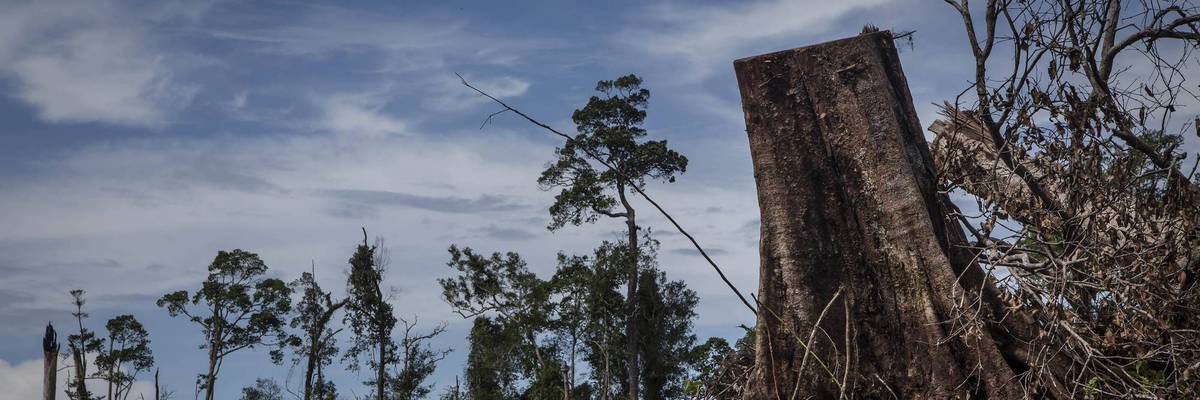
A view shows recentl land clearing for palm oil plantations of the peatland forest inside Singkil peat swamp Leuser ecosystem, habitat of Sumatran orangutan (Pongo abelii) in Iemeudama village on November 13, 2016 in Trumon subdistrict, South Aceh, Aceh province, Indonesia.
Oreo may seem harmless. But when palm oil is sourced from destroyed rainforest or land taken without consent, the cost is not just environmental—it is human.
Oreo is marketed as “milk’s favorite cookie.” But behind that familiar blue package is a supply chain tied to rainforest destruction and violence against the people who defend their land.
Mondelēz International, the corporate giant that makes Oreo, has built a global snack empire worth nearly $40 billion a year. Its products line grocery shelves across the country. What most consumers never see is the palm oil that goes into those products—or the damage connected to its production.
Palm oil expansion remains one of the leading drivers of tropical deforestation. It is also linked to land grabs, intimidation, and violence against Indigenous and local communities who resist losing their forests.
According to Rainforest Action Network’s 2025 Keep Forests Standing Scorecard, Mondelēz ranked last among major consumer goods companies on deforestation and human rights safeguards. The company scored just 4 out of 24 possible points. Most alarming, it received zero points for having a public policy protecting Human Rights Defenders—people who face threats, criminalization, and violence for standing up to destructive development.
Communities should not be displaced for cookies.
Between 2015 and 2024, more than 6,400 attacks and over 1,000 killings of land and environmental defenders were documented worldwide. Industrial agriculture is a major driver of this violence.
These defenders are farmers, Indigenous leaders, journalists, teachers, and community members. They are protecting forests that stabilize the climate, regulate rainfall, and support biodiversity found nowhere else on Earth. They are also protecting their homes.
Mondelēz has been exposed more than once for sourcing palm oil linked to illegal deforestation in Indonesia’s Leuser Ecosystem—often called the “Orangutan Capital of the World.” The Leuser region is one of the last places on Earth where critically endangered species including rhinos, elephants, tigers, and orangutans still coexist in the wild. It is also home to Indigenous communities who depend on intact forests for survival.
Satellite monitoring continues to show forest loss in protected areas within this ecosystem. That means safeguards are failing.
Mondelēz promotes its “Snacking Made Right” campaign as proof of sustainability leadership. But marketing language does not stop chainsaws. Without enforceable policies and independent monitoring, companies continue to profit while forests fall.
The absence of a Human Rights Defender policy is not a minor oversight. It sends a message through the supply chain that violence and intimidation are not red lines. When corporations fail to adopt zero-tolerance policies against threats and criminalization, suppliers operate with fewer consequences.
This is not just about environmental damage. It is about whether communities have the right to say no when their land is targeted for development. It is about Free, Prior, and Informed Consent. It is about whether corporate profit outweighs human safety.
Deforestation is accelerating the climate crisis. Tropical rainforests absorb carbon and cool the planet. When they are cleared, that stored carbon is released, intensifying global warming. From stronger hurricanes to prolonged droughts and wildfires, the effects are already visible.
Corporations that rely on forest-risk commodities have the power to change this trajectory. Mondelēz could require full traceability for its palm oil supply. It could suspend suppliers linked to deforestation or violence. It could adopt a clear, public Human Rights Defender policy with zero tolerance for intimidation and criminalization. It could require proof that communities have granted Free, Prior, and Informed Consent before land is developed.
Instead, it continues business as usual.
Oreo may seem harmless. But when palm oil is sourced from destroyed rainforest or land taken without consent, the cost is not just environmental—it is human.
Communities should not be displaced for cookies. Forest defenders should not risk their lives so multinational corporations can maintain margins.
Mondelēz has the size and influence to shift industry standards. What it lacks is the political will.
Protecting forests starts with protecting the people who defend them. Until companies like Mondelēz adopt enforceable policies that prioritize human rights and end deforestation in their supply chains, their sustainability claims will ring hollow.
Consumers deserve snacks that do not come at the expense of forests and communities. And the people risking their lives to protect the planet deserve more than silence from the corporations profiting from their land.
Dear Common Dreams reader, It’s been nearly 30 years since I co-founded Common Dreams with my late wife, Lina Newhouser. We had the radical notion that journalism should serve the public good, not corporate profits. It was clear to us from the outset what it would take to build such a project. No paid advertisements. No corporate sponsors. No millionaire publisher telling us what to think or do. Many people said we wouldn't last a year, but we proved those doubters wrong. Together with a tremendous team of journalists and dedicated staff, we built an independent media outlet free from the constraints of profits and corporate control. Our mission has always been simple: To inform. To inspire. To ignite change for the common good. Building Common Dreams was not easy. Our survival was never guaranteed. When you take on the most powerful forces—Wall Street greed, fossil fuel industry destruction, Big Tech lobbyists, and uber-rich oligarchs who have spent billions upon billions rigging the economy and democracy in their favor—the only bulwark you have is supporters who believe in your work. But here’s the urgent message from me today. It's never been this bad out there. And it's never been this hard to keep us going. At the very moment Common Dreams is most needed, the threats we face are intensifying. We need your support now more than ever. We don't accept corporate advertising and never will. We don't have a paywall because we don't think people should be blocked from critical news based on their ability to pay. Everything we do is funded by the donations of readers like you. When everyone does the little they can afford, we are strong. But if that support retreats or dries up, so do we. Will you donate now to make sure Common Dreams not only survives but thrives? —Craig Brown, Co-founder |
Oreo is marketed as “milk’s favorite cookie.” But behind that familiar blue package is a supply chain tied to rainforest destruction and violence against the people who defend their land.
Mondelēz International, the corporate giant that makes Oreo, has built a global snack empire worth nearly $40 billion a year. Its products line grocery shelves across the country. What most consumers never see is the palm oil that goes into those products—or the damage connected to its production.
Palm oil expansion remains one of the leading drivers of tropical deforestation. It is also linked to land grabs, intimidation, and violence against Indigenous and local communities who resist losing their forests.
According to Rainforest Action Network’s 2025 Keep Forests Standing Scorecard, Mondelēz ranked last among major consumer goods companies on deforestation and human rights safeguards. The company scored just 4 out of 24 possible points. Most alarming, it received zero points for having a public policy protecting Human Rights Defenders—people who face threats, criminalization, and violence for standing up to destructive development.
Communities should not be displaced for cookies.
Between 2015 and 2024, more than 6,400 attacks and over 1,000 killings of land and environmental defenders were documented worldwide. Industrial agriculture is a major driver of this violence.
These defenders are farmers, Indigenous leaders, journalists, teachers, and community members. They are protecting forests that stabilize the climate, regulate rainfall, and support biodiversity found nowhere else on Earth. They are also protecting their homes.
Mondelēz has been exposed more than once for sourcing palm oil linked to illegal deforestation in Indonesia’s Leuser Ecosystem—often called the “Orangutan Capital of the World.” The Leuser region is one of the last places on Earth where critically endangered species including rhinos, elephants, tigers, and orangutans still coexist in the wild. It is also home to Indigenous communities who depend on intact forests for survival.
Satellite monitoring continues to show forest loss in protected areas within this ecosystem. That means safeguards are failing.
Mondelēz promotes its “Snacking Made Right” campaign as proof of sustainability leadership. But marketing language does not stop chainsaws. Without enforceable policies and independent monitoring, companies continue to profit while forests fall.
The absence of a Human Rights Defender policy is not a minor oversight. It sends a message through the supply chain that violence and intimidation are not red lines. When corporations fail to adopt zero-tolerance policies against threats and criminalization, suppliers operate with fewer consequences.
This is not just about environmental damage. It is about whether communities have the right to say no when their land is targeted for development. It is about Free, Prior, and Informed Consent. It is about whether corporate profit outweighs human safety.
Deforestation is accelerating the climate crisis. Tropical rainforests absorb carbon and cool the planet. When they are cleared, that stored carbon is released, intensifying global warming. From stronger hurricanes to prolonged droughts and wildfires, the effects are already visible.
Corporations that rely on forest-risk commodities have the power to change this trajectory. Mondelēz could require full traceability for its palm oil supply. It could suspend suppliers linked to deforestation or violence. It could adopt a clear, public Human Rights Defender policy with zero tolerance for intimidation and criminalization. It could require proof that communities have granted Free, Prior, and Informed Consent before land is developed.
Instead, it continues business as usual.
Oreo may seem harmless. But when palm oil is sourced from destroyed rainforest or land taken without consent, the cost is not just environmental—it is human.
Communities should not be displaced for cookies. Forest defenders should not risk their lives so multinational corporations can maintain margins.
Mondelēz has the size and influence to shift industry standards. What it lacks is the political will.
Protecting forests starts with protecting the people who defend them. Until companies like Mondelēz adopt enforceable policies that prioritize human rights and end deforestation in their supply chains, their sustainability claims will ring hollow.
Consumers deserve snacks that do not come at the expense of forests and communities. And the people risking their lives to protect the planet deserve more than silence from the corporations profiting from their land.
Oreo is marketed as “milk’s favorite cookie.” But behind that familiar blue package is a supply chain tied to rainforest destruction and violence against the people who defend their land.
Mondelēz International, the corporate giant that makes Oreo, has built a global snack empire worth nearly $40 billion a year. Its products line grocery shelves across the country. What most consumers never see is the palm oil that goes into those products—or the damage connected to its production.
Palm oil expansion remains one of the leading drivers of tropical deforestation. It is also linked to land grabs, intimidation, and violence against Indigenous and local communities who resist losing their forests.
According to Rainforest Action Network’s 2025 Keep Forests Standing Scorecard, Mondelēz ranked last among major consumer goods companies on deforestation and human rights safeguards. The company scored just 4 out of 24 possible points. Most alarming, it received zero points for having a public policy protecting Human Rights Defenders—people who face threats, criminalization, and violence for standing up to destructive development.
Communities should not be displaced for cookies.
Between 2015 and 2024, more than 6,400 attacks and over 1,000 killings of land and environmental defenders were documented worldwide. Industrial agriculture is a major driver of this violence.
These defenders are farmers, Indigenous leaders, journalists, teachers, and community members. They are protecting forests that stabilize the climate, regulate rainfall, and support biodiversity found nowhere else on Earth. They are also protecting their homes.
Mondelēz has been exposed more than once for sourcing palm oil linked to illegal deforestation in Indonesia’s Leuser Ecosystem—often called the “Orangutan Capital of the World.” The Leuser region is one of the last places on Earth where critically endangered species including rhinos, elephants, tigers, and orangutans still coexist in the wild. It is also home to Indigenous communities who depend on intact forests for survival.
Satellite monitoring continues to show forest loss in protected areas within this ecosystem. That means safeguards are failing.
Mondelēz promotes its “Snacking Made Right” campaign as proof of sustainability leadership. But marketing language does not stop chainsaws. Without enforceable policies and independent monitoring, companies continue to profit while forests fall.
The absence of a Human Rights Defender policy is not a minor oversight. It sends a message through the supply chain that violence and intimidation are not red lines. When corporations fail to adopt zero-tolerance policies against threats and criminalization, suppliers operate with fewer consequences.
This is not just about environmental damage. It is about whether communities have the right to say no when their land is targeted for development. It is about Free, Prior, and Informed Consent. It is about whether corporate profit outweighs human safety.
Deforestation is accelerating the climate crisis. Tropical rainforests absorb carbon and cool the planet. When they are cleared, that stored carbon is released, intensifying global warming. From stronger hurricanes to prolonged droughts and wildfires, the effects are already visible.
Corporations that rely on forest-risk commodities have the power to change this trajectory. Mondelēz could require full traceability for its palm oil supply. It could suspend suppliers linked to deforestation or violence. It could adopt a clear, public Human Rights Defender policy with zero tolerance for intimidation and criminalization. It could require proof that communities have granted Free, Prior, and Informed Consent before land is developed.
Instead, it continues business as usual.
Oreo may seem harmless. But when palm oil is sourced from destroyed rainforest or land taken without consent, the cost is not just environmental—it is human.
Communities should not be displaced for cookies. Forest defenders should not risk their lives so multinational corporations can maintain margins.
Mondelēz has the size and influence to shift industry standards. What it lacks is the political will.
Protecting forests starts with protecting the people who defend them. Until companies like Mondelēz adopt enforceable policies that prioritize human rights and end deforestation in their supply chains, their sustainability claims will ring hollow.
Consumers deserve snacks that do not come at the expense of forests and communities. And the people risking their lives to protect the planet deserve more than silence from the corporations profiting from their land.