SUBSCRIBE TO OUR FREE NEWSLETTER
Daily news & progressive opinion—funded by the people, not the corporations—delivered straight to your inbox.
5
#000000
#FFFFFF
To donate by check, phone, or other method, see our More Ways to Give page.
Daily news & progressive opinion—funded by the people, not the corporations—delivered straight to your inbox.
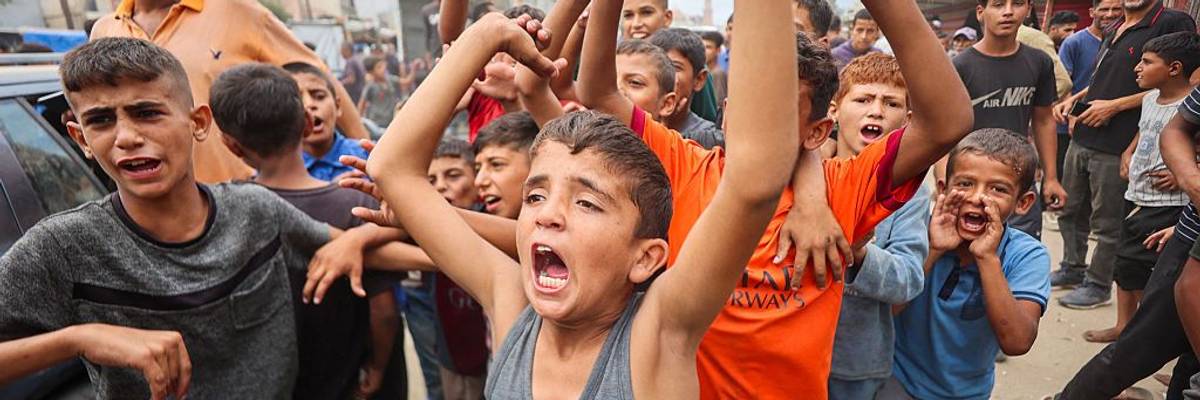
Palestinian children celebrate in Khan Younis on October 9, 2025, following news of a new Gaza ceasefire deal.
For ordinary people, survival, continuity, and self-assertion are the ultimate signs of victory against Israel, a country that does not hesitate to use genocide for temporary political gains.
For the last two years, my social media algorithm has been relentlessly dominated by Gaza, particularly by the voices of ordinary Gazans, displaying a blend of emotions that centers on two core principles: grief and defiance.
Grief has characterized life in Gaza for many years, a consequence of successive Israeli wars, the unrelenting siege, and habitual bombardment. The last two years, marked by genocide and famine, however, have redefined that grief in a way almost incomprehensible to the Palestinians themselves.
Yes, Palestine has endured numerous massacres before, during, and since the Nakba—the tragic destruction of the Palestinian homeland. But those massacres were typically episodic, each distinctively marked by specific historical circumstances. Each is incorporated into the Palestinian collective psyche as proof of Israeli barbarity, but also as a demonstration of their own enduring resilience as a people.
I grew up in a Gaza refugee camp where we commemorated each massacre with rallies, general strikes, and artistic expressions. We knew the victims and immortalized them through chants, political graffiti, poetry, and the like.
The Palestinian nation has emerged even more deeply rooted in its identity, both in Gaza and elsewhere.
The war of extermination launched by Israel against Gaza in the last two years has fundamentally changed all of that. On a single day, October 31, 2023, the Israeli army killed 704 Palestinians, and 120 in the Jabaliya refugee camp alone. Single bombs would annihilate hundreds in one strike, often in hospitals, refugee shelters, or United Nations schools. Massacres were taking place every day, everywhere.
There was no time to reflect on any of these massacres, to pray for the victims, or even to bury them with proper dignity. All that Gazans could do was desperately try to cling to life itself, bury their loved ones in mass graves, and use their own bare hands to dig out the wounded and dead from underneath the massive slabs of concrete and mountains of rubble. Thousands remain unaccounted for, and about a quarter of a million Gazans have been killed and wounded.
The tally will continue to grow, and the degree of devastation keeps worsening, even now that the rate of killing has subsided. But why, then, does my social media feed continue to show Palestinians openly celebrating their victory? Why are Gaza's children, though gaunt and exhausted due to the famine, continuing to perform traditional debka dances? Why is 5-year-old Maria Hannoun, one of Gaza's many influencers, continuing to recite the poetry of Mahmoud Darwish and sending fiery messages to US President Donald Trump that Gaza will never be defeated?
To say that "Gazans are built differently" is a massive understatement. I have spent the last 20 years dedicated to academic research on the people‘s history of Palestine, focusing heavily on Gaza, and I still find their collective will astonishing. They seem to have made a shared, conscious decision: The metrics for their defeat or victory would be entirely separate from those used by the media covering the war.
These measures are rooted in resistance as a foundational choice. Core values like Karamah (dignity), Izza (pride), and Sabr (patience), among others, are the standards by which Gaza judges its performance. And, by these profound standards, the people of the genocide- and famine-stricken strip have won this war.
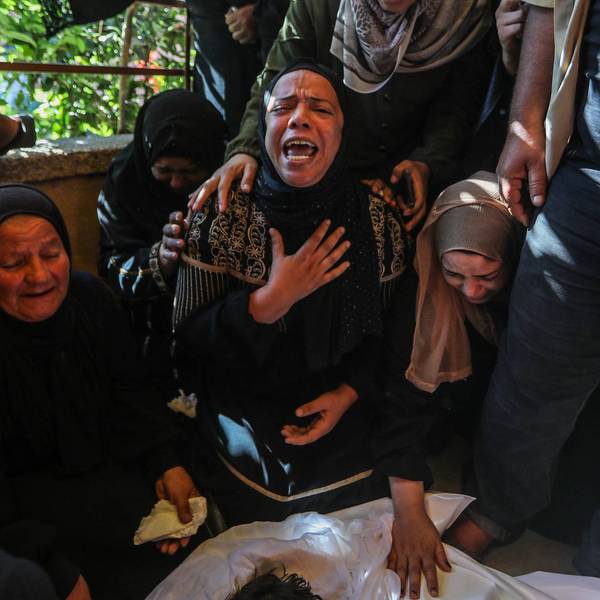
Because these values are often ignored or misinterpreted in war coverage, many have found Gaza’s response to the ceasefire, one of unbridled joy and celebration, confusing. The scene of mothers waiting for their sons to be released in a large celebration in Khan Younis, southern Gaza, was particularly illuminating. They cried bitterly, while clapping and ululating all at once. One mother perfectly clarified the paradox for a reporter: The tears were for the sons and daughters killed in the war, and the ululating was for the ones being released.
News media, however, rarely understand the complexity of the Gaza survival paradigm. Some, including Israeli military analysts, have concluded that Israeli Prime Minister Benjamin Netanyahu has lost the war because he failed to achieve any of his declared objectives. Others speak of some kind of Israeli victory simply because Israel managed to obliterate nearly the whole of Gaza and a large section of its population.
Each side uses numbers and figures to back up their claims. Yet, Palestinians in Gaza view this situation in a fundamentally different way. They understand that Israel's war was ultimately an attempt to destroy their very peoplehood—to shatter their spirit, disorient their culture, turn them against one another, and ultimately eradicate the core essence of being Palestinian.
Gazans celebrate precisely because they know Israel has failed. The Palestinian nation has emerged even more deeply rooted in its identity, both in Gaza and elsewhere. The child singing of the martyrs, the civil defense workers dancing the debka for their fallen comrades, and the woman using the wreckage of a destroyed Israeli Merkava tank to air her laundry—all these images speak of a nation unified by its love for life and its fierce commitment to shared values of valor, honor, and love.
Some analysts, trying to find a more nuanced and reasoned conclusion, have resolved that neither Israel won the war, nor were Palestinians defeated. While this balanced approach can be appreciated in terms of the strategic reading of the ceasefire, it is still profoundly incorrect when understood against the backdrop of popular Palestinian culture. For ordinary people, survival, continuity, and self-assertion are the ultimate signs of victory against Israel, a country that does not hesitate to use genocide for temporary political gains. The core of their triumph is simply this: They remain.
Dear Common Dreams reader, It’s been nearly 30 years since I co-founded Common Dreams with my late wife, Lina Newhouser. We had the radical notion that journalism should serve the public good, not corporate profits. It was clear to us from the outset what it would take to build such a project. No paid advertisements. No corporate sponsors. No millionaire publisher telling us what to think or do. Many people said we wouldn't last a year, but we proved those doubters wrong. Together with a tremendous team of journalists and dedicated staff, we built an independent media outlet free from the constraints of profits and corporate control. Our mission has always been simple: To inform. To inspire. To ignite change for the common good. Building Common Dreams was not easy. Our survival was never guaranteed. When you take on the most powerful forces—Wall Street greed, fossil fuel industry destruction, Big Tech lobbyists, and uber-rich oligarchs who have spent billions upon billions rigging the economy and democracy in their favor—the only bulwark you have is supporters who believe in your work. But here’s the urgent message from me today. It's never been this bad out there. And it's never been this hard to keep us going. At the very moment Common Dreams is most needed, the threats we face are intensifying. We need your support now more than ever. We don't accept corporate advertising and never will. We don't have a paywall because we don't think people should be blocked from critical news based on their ability to pay. Everything we do is funded by the donations of readers like you. When everyone does the little they can afford, we are strong. But if that support retreats or dries up, so do we. Will you donate now to make sure Common Dreams not only survives but thrives? —Craig Brown, Co-founder |
For the last two years, my social media algorithm has been relentlessly dominated by Gaza, particularly by the voices of ordinary Gazans, displaying a blend of emotions that centers on two core principles: grief and defiance.
Grief has characterized life in Gaza for many years, a consequence of successive Israeli wars, the unrelenting siege, and habitual bombardment. The last two years, marked by genocide and famine, however, have redefined that grief in a way almost incomprehensible to the Palestinians themselves.
Yes, Palestine has endured numerous massacres before, during, and since the Nakba—the tragic destruction of the Palestinian homeland. But those massacres were typically episodic, each distinctively marked by specific historical circumstances. Each is incorporated into the Palestinian collective psyche as proof of Israeli barbarity, but also as a demonstration of their own enduring resilience as a people.
I grew up in a Gaza refugee camp where we commemorated each massacre with rallies, general strikes, and artistic expressions. We knew the victims and immortalized them through chants, political graffiti, poetry, and the like.
The Palestinian nation has emerged even more deeply rooted in its identity, both in Gaza and elsewhere.
The war of extermination launched by Israel against Gaza in the last two years has fundamentally changed all of that. On a single day, October 31, 2023, the Israeli army killed 704 Palestinians, and 120 in the Jabaliya refugee camp alone. Single bombs would annihilate hundreds in one strike, often in hospitals, refugee shelters, or United Nations schools. Massacres were taking place every day, everywhere.
There was no time to reflect on any of these massacres, to pray for the victims, or even to bury them with proper dignity. All that Gazans could do was desperately try to cling to life itself, bury their loved ones in mass graves, and use their own bare hands to dig out the wounded and dead from underneath the massive slabs of concrete and mountains of rubble. Thousands remain unaccounted for, and about a quarter of a million Gazans have been killed and wounded.
The tally will continue to grow, and the degree of devastation keeps worsening, even now that the rate of killing has subsided. But why, then, does my social media feed continue to show Palestinians openly celebrating their victory? Why are Gaza's children, though gaunt and exhausted due to the famine, continuing to perform traditional debka dances? Why is 5-year-old Maria Hannoun, one of Gaza's many influencers, continuing to recite the poetry of Mahmoud Darwish and sending fiery messages to US President Donald Trump that Gaza will never be defeated?
To say that "Gazans are built differently" is a massive understatement. I have spent the last 20 years dedicated to academic research on the people‘s history of Palestine, focusing heavily on Gaza, and I still find their collective will astonishing. They seem to have made a shared, conscious decision: The metrics for their defeat or victory would be entirely separate from those used by the media covering the war.
These measures are rooted in resistance as a foundational choice. Core values like Karamah (dignity), Izza (pride), and Sabr (patience), among others, are the standards by which Gaza judges its performance. And, by these profound standards, the people of the genocide- and famine-stricken strip have won this war.
Because these values are often ignored or misinterpreted in war coverage, many have found Gaza’s response to the ceasefire, one of unbridled joy and celebration, confusing. The scene of mothers waiting for their sons to be released in a large celebration in Khan Younis, southern Gaza, was particularly illuminating. They cried bitterly, while clapping and ululating all at once. One mother perfectly clarified the paradox for a reporter: The tears were for the sons and daughters killed in the war, and the ululating was for the ones being released.
News media, however, rarely understand the complexity of the Gaza survival paradigm. Some, including Israeli military analysts, have concluded that Israeli Prime Minister Benjamin Netanyahu has lost the war because he failed to achieve any of his declared objectives. Others speak of some kind of Israeli victory simply because Israel managed to obliterate nearly the whole of Gaza and a large section of its population.
Each side uses numbers and figures to back up their claims. Yet, Palestinians in Gaza view this situation in a fundamentally different way. They understand that Israel's war was ultimately an attempt to destroy their very peoplehood—to shatter their spirit, disorient their culture, turn them against one another, and ultimately eradicate the core essence of being Palestinian.
Gazans celebrate precisely because they know Israel has failed. The Palestinian nation has emerged even more deeply rooted in its identity, both in Gaza and elsewhere. The child singing of the martyrs, the civil defense workers dancing the debka for their fallen comrades, and the woman using the wreckage of a destroyed Israeli Merkava tank to air her laundry—all these images speak of a nation unified by its love for life and its fierce commitment to shared values of valor, honor, and love.
Some analysts, trying to find a more nuanced and reasoned conclusion, have resolved that neither Israel won the war, nor were Palestinians defeated. While this balanced approach can be appreciated in terms of the strategic reading of the ceasefire, it is still profoundly incorrect when understood against the backdrop of popular Palestinian culture. For ordinary people, survival, continuity, and self-assertion are the ultimate signs of victory against Israel, a country that does not hesitate to use genocide for temporary political gains. The core of their triumph is simply this: They remain.
For the last two years, my social media algorithm has been relentlessly dominated by Gaza, particularly by the voices of ordinary Gazans, displaying a blend of emotions that centers on two core principles: grief and defiance.
Grief has characterized life in Gaza for many years, a consequence of successive Israeli wars, the unrelenting siege, and habitual bombardment. The last two years, marked by genocide and famine, however, have redefined that grief in a way almost incomprehensible to the Palestinians themselves.
Yes, Palestine has endured numerous massacres before, during, and since the Nakba—the tragic destruction of the Palestinian homeland. But those massacres were typically episodic, each distinctively marked by specific historical circumstances. Each is incorporated into the Palestinian collective psyche as proof of Israeli barbarity, but also as a demonstration of their own enduring resilience as a people.
I grew up in a Gaza refugee camp where we commemorated each massacre with rallies, general strikes, and artistic expressions. We knew the victims and immortalized them through chants, political graffiti, poetry, and the like.
The Palestinian nation has emerged even more deeply rooted in its identity, both in Gaza and elsewhere.
The war of extermination launched by Israel against Gaza in the last two years has fundamentally changed all of that. On a single day, October 31, 2023, the Israeli army killed 704 Palestinians, and 120 in the Jabaliya refugee camp alone. Single bombs would annihilate hundreds in one strike, often in hospitals, refugee shelters, or United Nations schools. Massacres were taking place every day, everywhere.
There was no time to reflect on any of these massacres, to pray for the victims, or even to bury them with proper dignity. All that Gazans could do was desperately try to cling to life itself, bury their loved ones in mass graves, and use their own bare hands to dig out the wounded and dead from underneath the massive slabs of concrete and mountains of rubble. Thousands remain unaccounted for, and about a quarter of a million Gazans have been killed and wounded.
The tally will continue to grow, and the degree of devastation keeps worsening, even now that the rate of killing has subsided. But why, then, does my social media feed continue to show Palestinians openly celebrating their victory? Why are Gaza's children, though gaunt and exhausted due to the famine, continuing to perform traditional debka dances? Why is 5-year-old Maria Hannoun, one of Gaza's many influencers, continuing to recite the poetry of Mahmoud Darwish and sending fiery messages to US President Donald Trump that Gaza will never be defeated?
To say that "Gazans are built differently" is a massive understatement. I have spent the last 20 years dedicated to academic research on the people‘s history of Palestine, focusing heavily on Gaza, and I still find their collective will astonishing. They seem to have made a shared, conscious decision: The metrics for their defeat or victory would be entirely separate from those used by the media covering the war.
These measures are rooted in resistance as a foundational choice. Core values like Karamah (dignity), Izza (pride), and Sabr (patience), among others, are the standards by which Gaza judges its performance. And, by these profound standards, the people of the genocide- and famine-stricken strip have won this war.
Because these values are often ignored or misinterpreted in war coverage, many have found Gaza’s response to the ceasefire, one of unbridled joy and celebration, confusing. The scene of mothers waiting for their sons to be released in a large celebration in Khan Younis, southern Gaza, was particularly illuminating. They cried bitterly, while clapping and ululating all at once. One mother perfectly clarified the paradox for a reporter: The tears were for the sons and daughters killed in the war, and the ululating was for the ones being released.
News media, however, rarely understand the complexity of the Gaza survival paradigm. Some, including Israeli military analysts, have concluded that Israeli Prime Minister Benjamin Netanyahu has lost the war because he failed to achieve any of his declared objectives. Others speak of some kind of Israeli victory simply because Israel managed to obliterate nearly the whole of Gaza and a large section of its population.
Each side uses numbers and figures to back up their claims. Yet, Palestinians in Gaza view this situation in a fundamentally different way. They understand that Israel's war was ultimately an attempt to destroy their very peoplehood—to shatter their spirit, disorient their culture, turn them against one another, and ultimately eradicate the core essence of being Palestinian.
Gazans celebrate precisely because they know Israel has failed. The Palestinian nation has emerged even more deeply rooted in its identity, both in Gaza and elsewhere. The child singing of the martyrs, the civil defense workers dancing the debka for their fallen comrades, and the woman using the wreckage of a destroyed Israeli Merkava tank to air her laundry—all these images speak of a nation unified by its love for life and its fierce commitment to shared values of valor, honor, and love.
Some analysts, trying to find a more nuanced and reasoned conclusion, have resolved that neither Israel won the war, nor were Palestinians defeated. While this balanced approach can be appreciated in terms of the strategic reading of the ceasefire, it is still profoundly incorrect when understood against the backdrop of popular Palestinian culture. For ordinary people, survival, continuity, and self-assertion are the ultimate signs of victory against Israel, a country that does not hesitate to use genocide for temporary political gains. The core of their triumph is simply this: They remain.