SUBSCRIBE TO OUR FREE NEWSLETTER
Daily news & progressive opinion—funded by the people, not the corporations—delivered straight to your inbox.
5
#000000
#FFFFFF
To donate by check, phone, or other method, see our More Ways to Give page.
Daily news & progressive opinion—funded by the people, not the corporations—delivered straight to your inbox.
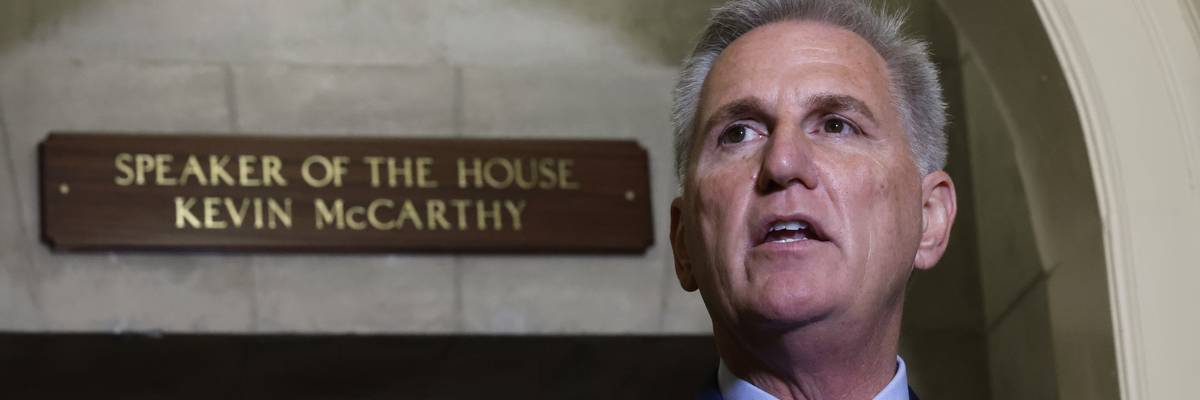
U.S. Speaker of the House Kevin McCarthy (R-Calif.) announces an impeachment inquiry against U.S. President Joe Biden to members of the media outside his office at the U.S. Capitol on September 12, 2023 in Washington, D.C.
Rather than proposing policies that could reverse the deeply troubling trend of hardship for vulnerable and hard-working people, the budget proposal would deepen poverty and increase suffering for tens of millions.
It’s tempting to ignore a budget resolution released just days before the start of the fiscal year that it’s meant to guide, and amid the chaotic debate around a short-term extension of government funding to avoid a shutdown. But House Budget Committee Chair Jodey Arrington’s proposed budget is important for what it illustrates about House Republicans’ disturbing vision for the country: health care stripped away from millions of people, higher poverty and hunger, capitulation to climate change, more tax cheating by high-income people, and large-scale disinvestment from the building blocks of opportunity and economic growth—from medical research to education to child care. It would narrow opportunity, worsen racial inequities, and make it harder for people to afford the basics. It reflects the wrong priorities for the country and should be roundly rejected.
Chair Arrington made clear in his remarks the intent to extend the expiring tax cuts from the 2017 tax law, which included large tax cuts for the wealthy. In addition, the budget resolution itself would pave the way for unlimited, unpaid-for tax cuts that could go well beyond those extensions. The extensions alone would give annual tax breaks averaging $41,000 to tax filers in the top 1 percent and cost more than $350 billion a year, the Congressional Budget Office estimates. The budget reflects none of these costs and fails to explain how—or whether—they will be offset.
Cuts would fall on a wide range of basic functions and services that support families, communities, and the broader economy, including Social Security customer service, support for K-12 and college education, funding for national parks and clean air and water, rental housing assistance for families with low incomes, and more.
A shocking share of the spending cuts Chair Arrington specifies target people with low and moderate incomes, including $1.9 trillion in Medicaid cuts and hundreds of billions in cuts to economic security programs, such as cuts to assistance that helps people afford food and other basic needs. Just last week the Census Bureau released data showing that poverty spiked last year, more than doubling for children. Rather than proposing policies that could reverse this deeply troubling trend, the budget proposal would deepen poverty and increase hardship.
The budget would also make deep cuts in the part of the budget that is funded annually through appropriations bills. Disingenuously, the budget resolution shows that these cuts total more than $4 trillion over ten years—but hides the program areas that would be cut, labeling them “government-wide savings.” But this year’s House Appropriations bills—which include substantial cuts—make clear that cuts would fall on a wide range of basic functions and services that support families, communities, and the broader economy, including Social Security customer service, support for K-12 and college education, funding for national parks and clean air and water, rental housing assistance for families with low incomes, and more.
[ThisGOP] budget blueprint would shortchange much-needed investments and lock in wasteful tax cuts to the already wealthy for the next decade.
Chair Arrington claims the budget’s deep and damaging program cuts are in the name of deficit reduction. But the failure to identify a single revenue increase for high-income people or corporations—and in fact, to potentially shower them with more unpaid-for tax cuts—is an extreme and misguided approach. Moreover, calling for a balanced budget in ten years is merely a slogan that has little to do with addressing our nation’s needs—and the budget resolution resorts to gimmicks and games to even appear to get there, including $3 trillion in deficit reduction it claims would accrue from higher economic growth it assumes would be achieved by budget policies.
A budget plan should focus on the nation’s needs and lay out an agenda that broadens opportunity, invests in people and families, reduces the too-high levels of hardship and financial stress faced by households across the country, and raises revenues for those investments. But the Arrington budget blueprint would shortchange much-needed investments and lock in wasteful tax cuts to the already wealthy for the next decade.
House Republicans are pursuing a damaging agenda at every turn—first threatening the nation with default, and now demanding deep cuts in an array of priorities in this year’s appropriations debate, risking a government shutdown, and proposing a budget blueprint that would take the country in the wrong direction.
Dear Common Dreams reader, It’s been nearly 30 years since I co-founded Common Dreams with my late wife, Lina Newhouser. We had the radical notion that journalism should serve the public good, not corporate profits. It was clear to us from the outset what it would take to build such a project. No paid advertisements. No corporate sponsors. No millionaire publisher telling us what to think or do. Many people said we wouldn't last a year, but we proved those doubters wrong. Together with a tremendous team of journalists and dedicated staff, we built an independent media outlet free from the constraints of profits and corporate control. Our mission has always been simple: To inform. To inspire. To ignite change for the common good. Building Common Dreams was not easy. Our survival was never guaranteed. When you take on the most powerful forces—Wall Street greed, fossil fuel industry destruction, Big Tech lobbyists, and uber-rich oligarchs who have spent billions upon billions rigging the economy and democracy in their favor—the only bulwark you have is supporters who believe in your work. But here’s the urgent message from me today. It's never been this bad out there. And it's never been this hard to keep us going. At the very moment Common Dreams is most needed, the threats we face are intensifying. We need your support now more than ever. We don't accept corporate advertising and never will. We don't have a paywall because we don't think people should be blocked from critical news based on their ability to pay. Everything we do is funded by the donations of readers like you. When everyone does the little they can afford, we are strong. But if that support retreats or dries up, so do we. Will you donate now to make sure Common Dreams not only survives but thrives? —Craig Brown, Co-founder |
It’s tempting to ignore a budget resolution released just days before the start of the fiscal year that it’s meant to guide, and amid the chaotic debate around a short-term extension of government funding to avoid a shutdown. But House Budget Committee Chair Jodey Arrington’s proposed budget is important for what it illustrates about House Republicans’ disturbing vision for the country: health care stripped away from millions of people, higher poverty and hunger, capitulation to climate change, more tax cheating by high-income people, and large-scale disinvestment from the building blocks of opportunity and economic growth—from medical research to education to child care. It would narrow opportunity, worsen racial inequities, and make it harder for people to afford the basics. It reflects the wrong priorities for the country and should be roundly rejected.
Chair Arrington made clear in his remarks the intent to extend the expiring tax cuts from the 2017 tax law, which included large tax cuts for the wealthy. In addition, the budget resolution itself would pave the way for unlimited, unpaid-for tax cuts that could go well beyond those extensions. The extensions alone would give annual tax breaks averaging $41,000 to tax filers in the top 1 percent and cost more than $350 billion a year, the Congressional Budget Office estimates. The budget reflects none of these costs and fails to explain how—or whether—they will be offset.
Cuts would fall on a wide range of basic functions and services that support families, communities, and the broader economy, including Social Security customer service, support for K-12 and college education, funding for national parks and clean air and water, rental housing assistance for families with low incomes, and more.
A shocking share of the spending cuts Chair Arrington specifies target people with low and moderate incomes, including $1.9 trillion in Medicaid cuts and hundreds of billions in cuts to economic security programs, such as cuts to assistance that helps people afford food and other basic needs. Just last week the Census Bureau released data showing that poverty spiked last year, more than doubling for children. Rather than proposing policies that could reverse this deeply troubling trend, the budget proposal would deepen poverty and increase hardship.
The budget would also make deep cuts in the part of the budget that is funded annually through appropriations bills. Disingenuously, the budget resolution shows that these cuts total more than $4 trillion over ten years—but hides the program areas that would be cut, labeling them “government-wide savings.” But this year’s House Appropriations bills—which include substantial cuts—make clear that cuts would fall on a wide range of basic functions and services that support families, communities, and the broader economy, including Social Security customer service, support for K-12 and college education, funding for national parks and clean air and water, rental housing assistance for families with low incomes, and more.
[ThisGOP] budget blueprint would shortchange much-needed investments and lock in wasteful tax cuts to the already wealthy for the next decade.
Chair Arrington claims the budget’s deep and damaging program cuts are in the name of deficit reduction. But the failure to identify a single revenue increase for high-income people or corporations—and in fact, to potentially shower them with more unpaid-for tax cuts—is an extreme and misguided approach. Moreover, calling for a balanced budget in ten years is merely a slogan that has little to do with addressing our nation’s needs—and the budget resolution resorts to gimmicks and games to even appear to get there, including $3 trillion in deficit reduction it claims would accrue from higher economic growth it assumes would be achieved by budget policies.
A budget plan should focus on the nation’s needs and lay out an agenda that broadens opportunity, invests in people and families, reduces the too-high levels of hardship and financial stress faced by households across the country, and raises revenues for those investments. But the Arrington budget blueprint would shortchange much-needed investments and lock in wasteful tax cuts to the already wealthy for the next decade.
House Republicans are pursuing a damaging agenda at every turn—first threatening the nation with default, and now demanding deep cuts in an array of priorities in this year’s appropriations debate, risking a government shutdown, and proposing a budget blueprint that would take the country in the wrong direction.
It’s tempting to ignore a budget resolution released just days before the start of the fiscal year that it’s meant to guide, and amid the chaotic debate around a short-term extension of government funding to avoid a shutdown. But House Budget Committee Chair Jodey Arrington’s proposed budget is important for what it illustrates about House Republicans’ disturbing vision for the country: health care stripped away from millions of people, higher poverty and hunger, capitulation to climate change, more tax cheating by high-income people, and large-scale disinvestment from the building blocks of opportunity and economic growth—from medical research to education to child care. It would narrow opportunity, worsen racial inequities, and make it harder for people to afford the basics. It reflects the wrong priorities for the country and should be roundly rejected.
Chair Arrington made clear in his remarks the intent to extend the expiring tax cuts from the 2017 tax law, which included large tax cuts for the wealthy. In addition, the budget resolution itself would pave the way for unlimited, unpaid-for tax cuts that could go well beyond those extensions. The extensions alone would give annual tax breaks averaging $41,000 to tax filers in the top 1 percent and cost more than $350 billion a year, the Congressional Budget Office estimates. The budget reflects none of these costs and fails to explain how—or whether—they will be offset.
Cuts would fall on a wide range of basic functions and services that support families, communities, and the broader economy, including Social Security customer service, support for K-12 and college education, funding for national parks and clean air and water, rental housing assistance for families with low incomes, and more.
A shocking share of the spending cuts Chair Arrington specifies target people with low and moderate incomes, including $1.9 trillion in Medicaid cuts and hundreds of billions in cuts to economic security programs, such as cuts to assistance that helps people afford food and other basic needs. Just last week the Census Bureau released data showing that poverty spiked last year, more than doubling for children. Rather than proposing policies that could reverse this deeply troubling trend, the budget proposal would deepen poverty and increase hardship.
The budget would also make deep cuts in the part of the budget that is funded annually through appropriations bills. Disingenuously, the budget resolution shows that these cuts total more than $4 trillion over ten years—but hides the program areas that would be cut, labeling them “government-wide savings.” But this year’s House Appropriations bills—which include substantial cuts—make clear that cuts would fall on a wide range of basic functions and services that support families, communities, and the broader economy, including Social Security customer service, support for K-12 and college education, funding for national parks and clean air and water, rental housing assistance for families with low incomes, and more.
[ThisGOP] budget blueprint would shortchange much-needed investments and lock in wasteful tax cuts to the already wealthy for the next decade.
Chair Arrington claims the budget’s deep and damaging program cuts are in the name of deficit reduction. But the failure to identify a single revenue increase for high-income people or corporations—and in fact, to potentially shower them with more unpaid-for tax cuts—is an extreme and misguided approach. Moreover, calling for a balanced budget in ten years is merely a slogan that has little to do with addressing our nation’s needs—and the budget resolution resorts to gimmicks and games to even appear to get there, including $3 trillion in deficit reduction it claims would accrue from higher economic growth it assumes would be achieved by budget policies.
A budget plan should focus on the nation’s needs and lay out an agenda that broadens opportunity, invests in people and families, reduces the too-high levels of hardship and financial stress faced by households across the country, and raises revenues for those investments. But the Arrington budget blueprint would shortchange much-needed investments and lock in wasteful tax cuts to the already wealthy for the next decade.
House Republicans are pursuing a damaging agenda at every turn—first threatening the nation with default, and now demanding deep cuts in an array of priorities in this year’s appropriations debate, risking a government shutdown, and proposing a budget blueprint that would take the country in the wrong direction.