SUBSCRIBE TO OUR FREE NEWSLETTER
Daily news & progressive opinion—funded by the people, not the corporations—delivered straight to your inbox.
5
#000000
#FFFFFF
To donate by check, phone, or other method, see our More Ways to Give page.
Daily news & progressive opinion—funded by the people, not the corporations—delivered straight to your inbox.
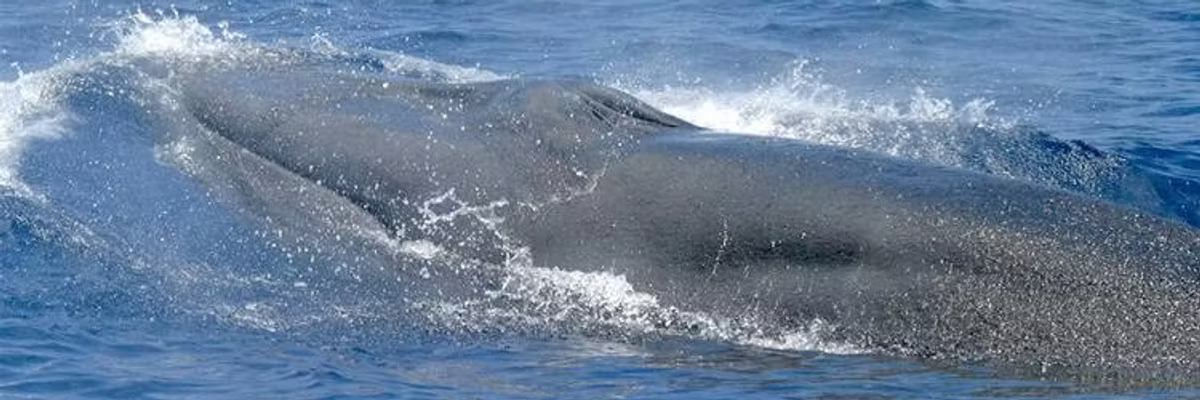
The critically endangered Rice's whale (pictured) would be at risk if Endangered Species protections are waved for oil and gas operations in the Gulf of Mexico.
If the defense secretary forces the God Squad to grant this sweeping—and unprecedented exemption—all the threatened and endangered creatures, both large and small, that call the Gulf waters and coastlines home will be at risk.
The Trump administration has made clear from day one that it intends to dramatically expand fossil fuel extraction on federal lands and in federal waters, with no regard for the consequences to wildlife or the public interest. In the latest jaw-dropping move, late on the night of March 25, government lawyers revealed in a court filing that, on March 13, Defense Secretary Pete Hegseth allegedly contacted Interior Secretary Doug Burgum to demand he convene a meeting of the Endangered Species Committee, or “God Squad.”
Secretary Hegseth’s rationale for the convening is based on a false narrative that “national security” reasons dictate that the God Squad must grant an Endangered Species Act (ESA) exemption for all oil and gas activities the Interior Department authorizes in the Gulf of Mexico.
On March 16, Burgum publicly announced a snap God Squad meeting on March 31 to consider exempting oil and gas activities in the Gulf from the ESA’s requirement that federal agencies avoid taking actions likely to jeopardize the continued existence of endangered and threatened species. The cryptic notice gave no indication that “national security” reasons warranted the meeting—the first in 35 years.
Certainly, none of the detailed statutory prerequisites to a God Squad vote have been met, and no complete exemption application has been teed up for the committee to consider, let alone for the public to examine.
No administration, Republican or Democratic, has ever tried to write itself a blank check to ignore the ESA’s requirements.
It cannot be a coincidence that Secretary Hegseth demanded a God Squad meeting just two weeks after the United States launched airstrikes across Iran. Iran has now blockaded the Strait of Hormuz, a key transit point for 20% of the world’s oil and gas supplies. The result: Global oil prices have spiked, and Republicans are on the ropes. But bypassing the ESA to further the administration's massive plans to expand Gulf oil production will do nothing to help Americans facing higher energy, food, and consumer goods prices today.
The truth is that the ESA has never stood—and is not now standing—in the way of oil and gas development in the Gulf. To assert otherwise is a red herring.
In fact, data shows that the ESA almost never stops projects.
Defenders of Wildlife’s Center for Conservation Innovation analyzed over 88,000 US Fish and Wildlife Service ESA consultations that took place between 2008-2015 and found that not a single project was halted or extensively altered due to a jeopardy finding. Most projects were not even delayed, and only two consultations resulted in a jeopardy finding.
And for a jeopardy opinion, the wildlife agency must try to develop a “reasonable and prudent alternative” that allows the project to go forward while avoiding jeopardy. The wildlife agency works closely with other federal agencies to ensure their actions can proceed without risking a species’ extinction.
If the defense secretary forces the God Squad to grant this sweeping—and unprecedented exemption—all the threatened and endangered creatures, both large and small, that call the Gulf waters and coastlines home will be at risk. From the critically endangered Rice’s whale with only 51 surviving animals to the beloved Florida manatee, from the tiny Alabama beach mouse and five sea turtle species to the largest animal that has ever lived, the blue whale and more—all will suffer the consequences if their ESA protections are ripped away.
No administration, Republican or Democratic, has ever tried to write itself a blank check to ignore the ESA’s requirements.
Invoking “national security” cannot justify potentially pushing the Rice’s whale—or any of our nation’s irreplaceable wildlife species—over the brink of extinction. If this administration were truly concerned about national security, it would focus on what is most important to Americans—a healthy environment; clean, renewable energy sources; an abundant and affordable food supply; public lands to recreate on; and the protection of our country’s shared heritage of treasured lands, waters, and wildlife.
Dear Common Dreams reader, It’s been nearly 30 years since I co-founded Common Dreams with my late wife, Lina Newhouser. We had the radical notion that journalism should serve the public good, not corporate profits. It was clear to us from the outset what it would take to build such a project. No paid advertisements. No corporate sponsors. No millionaire publisher telling us what to think or do. Many people said we wouldn't last a year, but we proved those doubters wrong. Together with a tremendous team of journalists and dedicated staff, we built an independent media outlet free from the constraints of profits and corporate control. Our mission has always been simple: To inform. To inspire. To ignite change for the common good. Building Common Dreams was not easy. Our survival was never guaranteed. When you take on the most powerful forces—Wall Street greed, fossil fuel industry destruction, Big Tech lobbyists, and uber-rich oligarchs who have spent billions upon billions rigging the economy and democracy in their favor—the only bulwark you have is supporters who believe in your work. But here’s the urgent message from me today. It's never been this bad out there. And it's never been this hard to keep us going. At the very moment Common Dreams is most needed, the threats we face are intensifying. We need your support now more than ever. We don't accept corporate advertising and never will. We don't have a paywall because we don't think people should be blocked from critical news based on their ability to pay. Everything we do is funded by the donations of readers like you. When everyone does the little they can afford, we are strong. But if that support retreats or dries up, so do we. Will you donate now to make sure Common Dreams not only survives but thrives? —Craig Brown, Co-founder |
The Trump administration has made clear from day one that it intends to dramatically expand fossil fuel extraction on federal lands and in federal waters, with no regard for the consequences to wildlife or the public interest. In the latest jaw-dropping move, late on the night of March 25, government lawyers revealed in a court filing that, on March 13, Defense Secretary Pete Hegseth allegedly contacted Interior Secretary Doug Burgum to demand he convene a meeting of the Endangered Species Committee, or “God Squad.”
Secretary Hegseth’s rationale for the convening is based on a false narrative that “national security” reasons dictate that the God Squad must grant an Endangered Species Act (ESA) exemption for all oil and gas activities the Interior Department authorizes in the Gulf of Mexico.
On March 16, Burgum publicly announced a snap God Squad meeting on March 31 to consider exempting oil and gas activities in the Gulf from the ESA’s requirement that federal agencies avoid taking actions likely to jeopardize the continued existence of endangered and threatened species. The cryptic notice gave no indication that “national security” reasons warranted the meeting—the first in 35 years.
Certainly, none of the detailed statutory prerequisites to a God Squad vote have been met, and no complete exemption application has been teed up for the committee to consider, let alone for the public to examine.
No administration, Republican or Democratic, has ever tried to write itself a blank check to ignore the ESA’s requirements.
It cannot be a coincidence that Secretary Hegseth demanded a God Squad meeting just two weeks after the United States launched airstrikes across Iran. Iran has now blockaded the Strait of Hormuz, a key transit point for 20% of the world’s oil and gas supplies. The result: Global oil prices have spiked, and Republicans are on the ropes. But bypassing the ESA to further the administration's massive plans to expand Gulf oil production will do nothing to help Americans facing higher energy, food, and consumer goods prices today.
The truth is that the ESA has never stood—and is not now standing—in the way of oil and gas development in the Gulf. To assert otherwise is a red herring.
In fact, data shows that the ESA almost never stops projects.
Defenders of Wildlife’s Center for Conservation Innovation analyzed over 88,000 US Fish and Wildlife Service ESA consultations that took place between 2008-2015 and found that not a single project was halted or extensively altered due to a jeopardy finding. Most projects were not even delayed, and only two consultations resulted in a jeopardy finding.
And for a jeopardy opinion, the wildlife agency must try to develop a “reasonable and prudent alternative” that allows the project to go forward while avoiding jeopardy. The wildlife agency works closely with other federal agencies to ensure their actions can proceed without risking a species’ extinction.
If the defense secretary forces the God Squad to grant this sweeping—and unprecedented exemption—all the threatened and endangered creatures, both large and small, that call the Gulf waters and coastlines home will be at risk. From the critically endangered Rice’s whale with only 51 surviving animals to the beloved Florida manatee, from the tiny Alabama beach mouse and five sea turtle species to the largest animal that has ever lived, the blue whale and more—all will suffer the consequences if their ESA protections are ripped away.
No administration, Republican or Democratic, has ever tried to write itself a blank check to ignore the ESA’s requirements.
Invoking “national security” cannot justify potentially pushing the Rice’s whale—or any of our nation’s irreplaceable wildlife species—over the brink of extinction. If this administration were truly concerned about national security, it would focus on what is most important to Americans—a healthy environment; clean, renewable energy sources; an abundant and affordable food supply; public lands to recreate on; and the protection of our country’s shared heritage of treasured lands, waters, and wildlife.
The Trump administration has made clear from day one that it intends to dramatically expand fossil fuel extraction on federal lands and in federal waters, with no regard for the consequences to wildlife or the public interest. In the latest jaw-dropping move, late on the night of March 25, government lawyers revealed in a court filing that, on March 13, Defense Secretary Pete Hegseth allegedly contacted Interior Secretary Doug Burgum to demand he convene a meeting of the Endangered Species Committee, or “God Squad.”
Secretary Hegseth’s rationale for the convening is based on a false narrative that “national security” reasons dictate that the God Squad must grant an Endangered Species Act (ESA) exemption for all oil and gas activities the Interior Department authorizes in the Gulf of Mexico.
On March 16, Burgum publicly announced a snap God Squad meeting on March 31 to consider exempting oil and gas activities in the Gulf from the ESA’s requirement that federal agencies avoid taking actions likely to jeopardize the continued existence of endangered and threatened species. The cryptic notice gave no indication that “national security” reasons warranted the meeting—the first in 35 years.
Certainly, none of the detailed statutory prerequisites to a God Squad vote have been met, and no complete exemption application has been teed up for the committee to consider, let alone for the public to examine.
No administration, Republican or Democratic, has ever tried to write itself a blank check to ignore the ESA’s requirements.
It cannot be a coincidence that Secretary Hegseth demanded a God Squad meeting just two weeks after the United States launched airstrikes across Iran. Iran has now blockaded the Strait of Hormuz, a key transit point for 20% of the world’s oil and gas supplies. The result: Global oil prices have spiked, and Republicans are on the ropes. But bypassing the ESA to further the administration's massive plans to expand Gulf oil production will do nothing to help Americans facing higher energy, food, and consumer goods prices today.
The truth is that the ESA has never stood—and is not now standing—in the way of oil and gas development in the Gulf. To assert otherwise is a red herring.
In fact, data shows that the ESA almost never stops projects.
Defenders of Wildlife’s Center for Conservation Innovation analyzed over 88,000 US Fish and Wildlife Service ESA consultations that took place between 2008-2015 and found that not a single project was halted or extensively altered due to a jeopardy finding. Most projects were not even delayed, and only two consultations resulted in a jeopardy finding.
And for a jeopardy opinion, the wildlife agency must try to develop a “reasonable and prudent alternative” that allows the project to go forward while avoiding jeopardy. The wildlife agency works closely with other federal agencies to ensure their actions can proceed without risking a species’ extinction.
If the defense secretary forces the God Squad to grant this sweeping—and unprecedented exemption—all the threatened and endangered creatures, both large and small, that call the Gulf waters and coastlines home will be at risk. From the critically endangered Rice’s whale with only 51 surviving animals to the beloved Florida manatee, from the tiny Alabama beach mouse and five sea turtle species to the largest animal that has ever lived, the blue whale and more—all will suffer the consequences if their ESA protections are ripped away.
No administration, Republican or Democratic, has ever tried to write itself a blank check to ignore the ESA’s requirements.
Invoking “national security” cannot justify potentially pushing the Rice’s whale—or any of our nation’s irreplaceable wildlife species—over the brink of extinction. If this administration were truly concerned about national security, it would focus on what is most important to Americans—a healthy environment; clean, renewable energy sources; an abundant and affordable food supply; public lands to recreate on; and the protection of our country’s shared heritage of treasured lands, waters, and wildlife.