SUBSCRIBE TO OUR FREE NEWSLETTER
Daily news & progressive opinion—funded by the people, not the corporations—delivered straight to your inbox.
5
#000000
#FFFFFF
To donate by check, phone, or other method, see our More Ways to Give page.
Daily news & progressive opinion—funded by the people, not the corporations—delivered straight to your inbox.
Weaponizing antisemitism on behalf of Israel does not protect Jewish people. It only makes them more vulnerable to future violence—for their sake, and the sake of Palestinians, Iranians and other victims of Israel’s violence, it must stop.
On March 17, Joe Kent, the director of the National Counterterrorism Center and pro-Trump ally, resigned from his position in protest of the war in Iran. In his resignation letter, he remarked, “Iran posed no imminent threat to our nation, and it is clear that we started this war due to pressure from Israel and its powerful American lobby.”
Kent is not alone here. Secretary of State Marco Rubio told reporters, “We knew that there was going to be an Israeli action, we knew that that would precipitate an attack against American forces, and we knew that if we didn’t preemptively go after them before they launched those attacks, we would suffer higher casualties.” Sen. Chris Van Hollen (D-Md.) remarked that ”[Israeli Prime Minister Benjamin] Netanyahu just a few weeks ago said he’d been waiting 40 years for an American president to join him in attacking Iran. And in Donald Trump, he finally found somebody stupid enough and reckless enough to actually do it.”
Now, it is worth noting that this is one of several conflicting reasons that have been provided to justify this war. Yet, that is precisely why these allegations should be taken seriously and investigated. As it stands, the US and Israel have launched an illegal, unprovoked war that is indiscriminately killing civilians, including children, while wrecking the global economy. We must know why.
Despite this, these allegations against Israel have been criticized as antisemitic. Anti-Defamation League (ADL) CEO Jonathan Greenblatt condemned those who blamed “the Jews” for inciting this war. “It is a sad irony,” Greenblatt said, “that an operation against the world’s largest sponsor of antisemitism has prompted so much antisemitism.” Zack Beauchamp, writing for Vox, accused Kent of engaging in “antisemitic conspiracism.” He wrote, “Antiwar antisemitism is still antisemitism.”
Conflating criticism of Israel with genuine bigotry only makes it more difficult to assess and address this serious problem.
These responses represent a continuing and troubling trend of conflating criticisms of Israel (and the Israeli government more specifically) with antisemitism.
Let us be clear: Not all criticisms of Israel are rooted in antisemitism. Likewise, not all criticisms of Iran are Islamophobic. The same holds true for individuals: It is not inherently antisemitic to criticize Benjamin Netanyahu.
What matters is the underlying rationale. Are we judging the person or nation based on the actions they have taken, the thoughts they have expressed, or the policies they have implemented? Or are stereotypes, prejudices, and ignorance fueling those claims? Are the accusations of Israel provoking this war based on the best available evidence or antisemitic hallucinations of a “secret Jewish cabal” plotting world domination?
Parsing through these questions requires careful assessment. If the allegations against Israel are grounded in hatred, then we must hold the people spreading those lies accountable. Antisemitism can never be tolerated.
If, however, they are supported by hard evidence, then a commitment to justice, morality, and humanity requires we hold Israel accountable. The same standard applies to all nations and world leaders, regardless of race, ethnicity, religion, or any other characteristic. No one is beyond reproach.
Greenblatt argues that referring to Israel as an “apartheid state,” accusing it of committing a genocide, or starting the war with Iran contribute to the “most concentrated, most dangerous surge of antisemitism in living memory.” What Greenblatt fails to realize is the role of people like him in driving this surge. His rhetoric does not silence opposition. It does not contribute to productive dialogue and understanding. Rather, it creates the false perception that all of Israel’s actions reflect its Jewish identity; that Israel speaks for and represents all Jewish people. That only someone who hates “the Jew” would ever find fault in Israel’s actions. That antisemitism is the only reason why someone would support Palestinians and advocate for their sovereignty.
We must remember that antisemitism and racism, like all forms of prejudice, are acts of depersonalization and dehumanization. The antisemite treats all Jewish people as a homogenous group—they all share the same thoughts, have the same aspirations, engage in the same acts. Here, the diversity of thoughts and opinions is denied. For the bigot, everything the Jewish person does is not a reflection of them as a person, but rather of their “Jewishness.” This flawed logic paves the way for the antisemite to hold all Jewish people accountable for the words and deeds of a few. When people like Greenblatt indiscriminately label any criticism of Israel as antisemitic, he follows this same logic: He treats Israel not as a sovereign nation whose actions reflect its own internal decision-making but as “the Jewish state” whose actions are inseparable from its Jewish identity. It reduces all discussion of Israel to its ethnicity and religion—that is, itself, antisemitic.
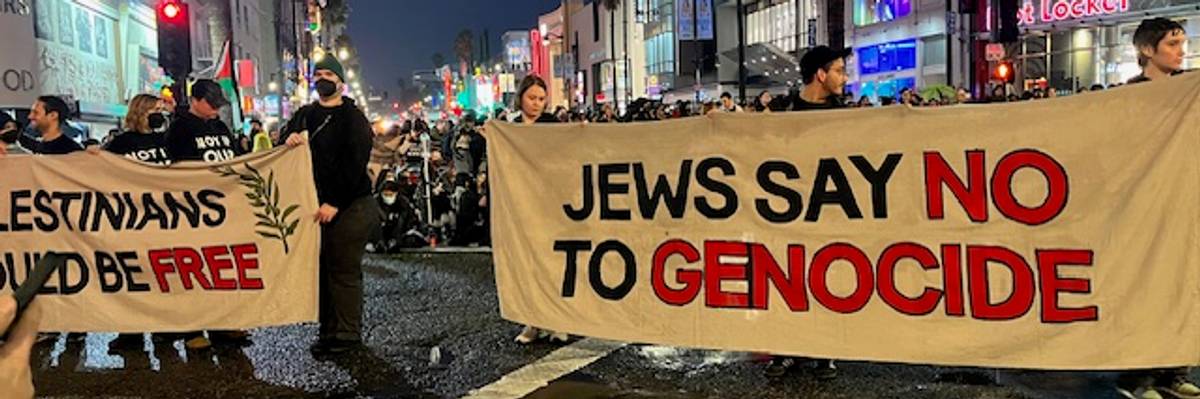
Jewish people are neither collectively responsible for Israel’s actions nor do they universally support them. For instance, two prominent Israeli rights groups—B’Tselem and Physicians for Human Rights-Israel—have accused Israel of committing a genocide in Gaza. Jewish Voice for Peace, an anti-Zionist advocacy group, has protested against the US government’s unfettered support for Israel. According to a October 2025 Washington Post poll, 61% of American Jews say Israel has committed war crimes in Gaza, with 39% saying it is committing a genocide. None of this is antisemitism.
The reality is that according to both the Gaza Health Ministry and an Israeli security official over 70,000 Gazans have been killed in Israeli attacks since Oct 7, 2023. The reality is that Israeli officials have repeatedly implied or outright expressed genocidal intent. In 2024, Netanyahu said in a news conference, “In any future arrangement… Israel needs security control over all territory west of the Jordan.” In 2025, he said: "We are going to fulfil our promise that there will be no Palestinian state. This place belongs to us." More pointedly, Deputy Speaker of the Knesset Nissim Vaturi said, we must “wipe Gaza off the face of the Earth,” while adding “Gaza must be burned.” Those killings happened, those words were said—we must reckon with this reality, not cast it aside as an antisemitic conspiracy.
None of this is to deny that antisemitism is on the rise worldwide. However, conflating criticism of Israel with genuine bigotry only makes it more difficult to assess and address this serious problem. It dilutes the moral weight of accusations of antisemitism and distracts us from the harm suffered by its victims. Ultimately, we cannot seek justice for one group while denying it for another. We must stand with Palestinians who have been terrorized by Israel’s military assaults, as well as the victims of the Bondi Beach shooting, Temple Israel synagogue attack, and other acts of violence. A moral double standard cannot be tolerated.
And yes, it is the case that some anti-Israel critics, like Nick Fuentes, are antisemitic. Similarly, some disparagements of African, Asian, and Latin American countries are racist; and some attacks against Middle Eastern countries are Islamophobic. This possibility, however, does not mean we should treat every criticism as being singularly and inherently hateful. Rather, it must caution us to be more careful and critical with the words we use.
Weaponizing antisemitism on behalf of Israel does not protect Jewish people. It only makes them more vulnerable to future violence—for their sake, and for the sake of Palestinians, Iranians, and other victims of Israel’s violence, it must stop.
Dear Common Dreams reader, It’s been nearly 30 years since I co-founded Common Dreams with my late wife, Lina Newhouser. We had the radical notion that journalism should serve the public good, not corporate profits. It was clear to us from the outset what it would take to build such a project. No paid advertisements. No corporate sponsors. No millionaire publisher telling us what to think or do. Many people said we wouldn't last a year, but we proved those doubters wrong. Together with a tremendous team of journalists and dedicated staff, we built an independent media outlet free from the constraints of profits and corporate control. Our mission has always been simple: To inform. To inspire. To ignite change for the common good. Building Common Dreams was not easy. Our survival was never guaranteed. When you take on the most powerful forces—Wall Street greed, fossil fuel industry destruction, Big Tech lobbyists, and uber-rich oligarchs who have spent billions upon billions rigging the economy and democracy in their favor—the only bulwark you have is supporters who believe in your work. But here’s the urgent message from me today. It's never been this bad out there. And it's never been this hard to keep us going. At the very moment Common Dreams is most needed, the threats we face are intensifying. We need your support now more than ever. We don't accept corporate advertising and never will. We don't have a paywall because we don't think people should be blocked from critical news based on their ability to pay. Everything we do is funded by the donations of readers like you. When everyone does the little they can afford, we are strong. But if that support retreats or dries up, so do we. Will you donate now to make sure Common Dreams not only survives but thrives? —Craig Brown, Co-founder |
On March 17, Joe Kent, the director of the National Counterterrorism Center and pro-Trump ally, resigned from his position in protest of the war in Iran. In his resignation letter, he remarked, “Iran posed no imminent threat to our nation, and it is clear that we started this war due to pressure from Israel and its powerful American lobby.”
Kent is not alone here. Secretary of State Marco Rubio told reporters, “We knew that there was going to be an Israeli action, we knew that that would precipitate an attack against American forces, and we knew that if we didn’t preemptively go after them before they launched those attacks, we would suffer higher casualties.” Sen. Chris Van Hollen (D-Md.) remarked that ”[Israeli Prime Minister Benjamin] Netanyahu just a few weeks ago said he’d been waiting 40 years for an American president to join him in attacking Iran. And in Donald Trump, he finally found somebody stupid enough and reckless enough to actually do it.”
Now, it is worth noting that this is one of several conflicting reasons that have been provided to justify this war. Yet, that is precisely why these allegations should be taken seriously and investigated. As it stands, the US and Israel have launched an illegal, unprovoked war that is indiscriminately killing civilians, including children, while wrecking the global economy. We must know why.
Despite this, these allegations against Israel have been criticized as antisemitic. Anti-Defamation League (ADL) CEO Jonathan Greenblatt condemned those who blamed “the Jews” for inciting this war. “It is a sad irony,” Greenblatt said, “that an operation against the world’s largest sponsor of antisemitism has prompted so much antisemitism.” Zack Beauchamp, writing for Vox, accused Kent of engaging in “antisemitic conspiracism.” He wrote, “Antiwar antisemitism is still antisemitism.”
Conflating criticism of Israel with genuine bigotry only makes it more difficult to assess and address this serious problem.
These responses represent a continuing and troubling trend of conflating criticisms of Israel (and the Israeli government more specifically) with antisemitism.
Let us be clear: Not all criticisms of Israel are rooted in antisemitism. Likewise, not all criticisms of Iran are Islamophobic. The same holds true for individuals: It is not inherently antisemitic to criticize Benjamin Netanyahu.
What matters is the underlying rationale. Are we judging the person or nation based on the actions they have taken, the thoughts they have expressed, or the policies they have implemented? Or are stereotypes, prejudices, and ignorance fueling those claims? Are the accusations of Israel provoking this war based on the best available evidence or antisemitic hallucinations of a “secret Jewish cabal” plotting world domination?
Parsing through these questions requires careful assessment. If the allegations against Israel are grounded in hatred, then we must hold the people spreading those lies accountable. Antisemitism can never be tolerated.
If, however, they are supported by hard evidence, then a commitment to justice, morality, and humanity requires we hold Israel accountable. The same standard applies to all nations and world leaders, regardless of race, ethnicity, religion, or any other characteristic. No one is beyond reproach.
Greenblatt argues that referring to Israel as an “apartheid state,” accusing it of committing a genocide, or starting the war with Iran contribute to the “most concentrated, most dangerous surge of antisemitism in living memory.” What Greenblatt fails to realize is the role of people like him in driving this surge. His rhetoric does not silence opposition. It does not contribute to productive dialogue and understanding. Rather, it creates the false perception that all of Israel’s actions reflect its Jewish identity; that Israel speaks for and represents all Jewish people. That only someone who hates “the Jew” would ever find fault in Israel’s actions. That antisemitism is the only reason why someone would support Palestinians and advocate for their sovereignty.
We must remember that antisemitism and racism, like all forms of prejudice, are acts of depersonalization and dehumanization. The antisemite treats all Jewish people as a homogenous group—they all share the same thoughts, have the same aspirations, engage in the same acts. Here, the diversity of thoughts and opinions is denied. For the bigot, everything the Jewish person does is not a reflection of them as a person, but rather of their “Jewishness.” This flawed logic paves the way for the antisemite to hold all Jewish people accountable for the words and deeds of a few. When people like Greenblatt indiscriminately label any criticism of Israel as antisemitic, he follows this same logic: He treats Israel not as a sovereign nation whose actions reflect its own internal decision-making but as “the Jewish state” whose actions are inseparable from its Jewish identity. It reduces all discussion of Israel to its ethnicity and religion—that is, itself, antisemitic.
Jewish people are neither collectively responsible for Israel’s actions nor do they universally support them. For instance, two prominent Israeli rights groups—B’Tselem and Physicians for Human Rights-Israel—have accused Israel of committing a genocide in Gaza. Jewish Voice for Peace, an anti-Zionist advocacy group, has protested against the US government’s unfettered support for Israel. According to a October 2025 Washington Post poll, 61% of American Jews say Israel has committed war crimes in Gaza, with 39% saying it is committing a genocide. None of this is antisemitism.
The reality is that according to both the Gaza Health Ministry and an Israeli security official over 70,000 Gazans have been killed in Israeli attacks since Oct 7, 2023. The reality is that Israeli officials have repeatedly implied or outright expressed genocidal intent. In 2024, Netanyahu said in a news conference, “In any future arrangement… Israel needs security control over all territory west of the Jordan.” In 2025, he said: "We are going to fulfil our promise that there will be no Palestinian state. This place belongs to us." More pointedly, Deputy Speaker of the Knesset Nissim Vaturi said, we must “wipe Gaza off the face of the Earth,” while adding “Gaza must be burned.” Those killings happened, those words were said—we must reckon with this reality, not cast it aside as an antisemitic conspiracy.
None of this is to deny that antisemitism is on the rise worldwide. However, conflating criticism of Israel with genuine bigotry only makes it more difficult to assess and address this serious problem. It dilutes the moral weight of accusations of antisemitism and distracts us from the harm suffered by its victims. Ultimately, we cannot seek justice for one group while denying it for another. We must stand with Palestinians who have been terrorized by Israel’s military assaults, as well as the victims of the Bondi Beach shooting, Temple Israel synagogue attack, and other acts of violence. A moral double standard cannot be tolerated.
And yes, it is the case that some anti-Israel critics, like Nick Fuentes, are antisemitic. Similarly, some disparagements of African, Asian, and Latin American countries are racist; and some attacks against Middle Eastern countries are Islamophobic. This possibility, however, does not mean we should treat every criticism as being singularly and inherently hateful. Rather, it must caution us to be more careful and critical with the words we use.
Weaponizing antisemitism on behalf of Israel does not protect Jewish people. It only makes them more vulnerable to future violence—for their sake, and for the sake of Palestinians, Iranians, and other victims of Israel’s violence, it must stop.
On March 17, Joe Kent, the director of the National Counterterrorism Center and pro-Trump ally, resigned from his position in protest of the war in Iran. In his resignation letter, he remarked, “Iran posed no imminent threat to our nation, and it is clear that we started this war due to pressure from Israel and its powerful American lobby.”
Kent is not alone here. Secretary of State Marco Rubio told reporters, “We knew that there was going to be an Israeli action, we knew that that would precipitate an attack against American forces, and we knew that if we didn’t preemptively go after them before they launched those attacks, we would suffer higher casualties.” Sen. Chris Van Hollen (D-Md.) remarked that ”[Israeli Prime Minister Benjamin] Netanyahu just a few weeks ago said he’d been waiting 40 years for an American president to join him in attacking Iran. And in Donald Trump, he finally found somebody stupid enough and reckless enough to actually do it.”
Now, it is worth noting that this is one of several conflicting reasons that have been provided to justify this war. Yet, that is precisely why these allegations should be taken seriously and investigated. As it stands, the US and Israel have launched an illegal, unprovoked war that is indiscriminately killing civilians, including children, while wrecking the global economy. We must know why.
Despite this, these allegations against Israel have been criticized as antisemitic. Anti-Defamation League (ADL) CEO Jonathan Greenblatt condemned those who blamed “the Jews” for inciting this war. “It is a sad irony,” Greenblatt said, “that an operation against the world’s largest sponsor of antisemitism has prompted so much antisemitism.” Zack Beauchamp, writing for Vox, accused Kent of engaging in “antisemitic conspiracism.” He wrote, “Antiwar antisemitism is still antisemitism.”
Conflating criticism of Israel with genuine bigotry only makes it more difficult to assess and address this serious problem.
These responses represent a continuing and troubling trend of conflating criticisms of Israel (and the Israeli government more specifically) with antisemitism.
Let us be clear: Not all criticisms of Israel are rooted in antisemitism. Likewise, not all criticisms of Iran are Islamophobic. The same holds true for individuals: It is not inherently antisemitic to criticize Benjamin Netanyahu.
What matters is the underlying rationale. Are we judging the person or nation based on the actions they have taken, the thoughts they have expressed, or the policies they have implemented? Or are stereotypes, prejudices, and ignorance fueling those claims? Are the accusations of Israel provoking this war based on the best available evidence or antisemitic hallucinations of a “secret Jewish cabal” plotting world domination?
Parsing through these questions requires careful assessment. If the allegations against Israel are grounded in hatred, then we must hold the people spreading those lies accountable. Antisemitism can never be tolerated.
If, however, they are supported by hard evidence, then a commitment to justice, morality, and humanity requires we hold Israel accountable. The same standard applies to all nations and world leaders, regardless of race, ethnicity, religion, or any other characteristic. No one is beyond reproach.
Greenblatt argues that referring to Israel as an “apartheid state,” accusing it of committing a genocide, or starting the war with Iran contribute to the “most concentrated, most dangerous surge of antisemitism in living memory.” What Greenblatt fails to realize is the role of people like him in driving this surge. His rhetoric does not silence opposition. It does not contribute to productive dialogue and understanding. Rather, it creates the false perception that all of Israel’s actions reflect its Jewish identity; that Israel speaks for and represents all Jewish people. That only someone who hates “the Jew” would ever find fault in Israel’s actions. That antisemitism is the only reason why someone would support Palestinians and advocate for their sovereignty.
We must remember that antisemitism and racism, like all forms of prejudice, are acts of depersonalization and dehumanization. The antisemite treats all Jewish people as a homogenous group—they all share the same thoughts, have the same aspirations, engage in the same acts. Here, the diversity of thoughts and opinions is denied. For the bigot, everything the Jewish person does is not a reflection of them as a person, but rather of their “Jewishness.” This flawed logic paves the way for the antisemite to hold all Jewish people accountable for the words and deeds of a few. When people like Greenblatt indiscriminately label any criticism of Israel as antisemitic, he follows this same logic: He treats Israel not as a sovereign nation whose actions reflect its own internal decision-making but as “the Jewish state” whose actions are inseparable from its Jewish identity. It reduces all discussion of Israel to its ethnicity and religion—that is, itself, antisemitic.
Jewish people are neither collectively responsible for Israel’s actions nor do they universally support them. For instance, two prominent Israeli rights groups—B’Tselem and Physicians for Human Rights-Israel—have accused Israel of committing a genocide in Gaza. Jewish Voice for Peace, an anti-Zionist advocacy group, has protested against the US government’s unfettered support for Israel. According to a October 2025 Washington Post poll, 61% of American Jews say Israel has committed war crimes in Gaza, with 39% saying it is committing a genocide. None of this is antisemitism.
The reality is that according to both the Gaza Health Ministry and an Israeli security official over 70,000 Gazans have been killed in Israeli attacks since Oct 7, 2023. The reality is that Israeli officials have repeatedly implied or outright expressed genocidal intent. In 2024, Netanyahu said in a news conference, “In any future arrangement… Israel needs security control over all territory west of the Jordan.” In 2025, he said: "We are going to fulfil our promise that there will be no Palestinian state. This place belongs to us." More pointedly, Deputy Speaker of the Knesset Nissim Vaturi said, we must “wipe Gaza off the face of the Earth,” while adding “Gaza must be burned.” Those killings happened, those words were said—we must reckon with this reality, not cast it aside as an antisemitic conspiracy.
None of this is to deny that antisemitism is on the rise worldwide. However, conflating criticism of Israel with genuine bigotry only makes it more difficult to assess and address this serious problem. It dilutes the moral weight of accusations of antisemitism and distracts us from the harm suffered by its victims. Ultimately, we cannot seek justice for one group while denying it for another. We must stand with Palestinians who have been terrorized by Israel’s military assaults, as well as the victims of the Bondi Beach shooting, Temple Israel synagogue attack, and other acts of violence. A moral double standard cannot be tolerated.
And yes, it is the case that some anti-Israel critics, like Nick Fuentes, are antisemitic. Similarly, some disparagements of African, Asian, and Latin American countries are racist; and some attacks against Middle Eastern countries are Islamophobic. This possibility, however, does not mean we should treat every criticism as being singularly and inherently hateful. Rather, it must caution us to be more careful and critical with the words we use.
Weaponizing antisemitism on behalf of Israel does not protect Jewish people. It only makes them more vulnerable to future violence—for their sake, and for the sake of Palestinians, Iranians, and other victims of Israel’s violence, it must stop.