March, 18 2021, 12:00am EDT
For Immediate Release
Contact:
Alex Doukas, Oil Change International: alex@priceofoil.org
Anne Hawke, NRDC: ahawke@nrdc.org
Kate DeAngelis, Friends of the Earth U.S.: kdeangelis@foe.org
Nearly 450 Organizations Call on Biden Administration to End Public Finance for Fossil Fuels
WASHINGTON
In a letter released today, nearly 450 organizations called on the Biden Administration to immediately end all US public financing for fossil fuels, including natural gas.
Signatories to the letter span six continents, and include major US civil society organizations, international groups, and organizations in the Global South concerned about the impacts of US support for overseas fossil fuel projects.
US public finance for overseas fossil fuel projects averaged more than $4 billion annually over the past decade, according to Oil Change International, at times exceeding $10 billion in a single year (primarily through the US Export-Import Bank and the US Development Finance Corporation, formerly the Overseas Private Investment Corporation).
The letter follows a Biden Administration executive order which directed agencies to end "carbon-intensive" finance, a commitment that Climate Envoy John Kerry characterized as "a plan for ending international financing of fossil fuel projects with public money." The signatories call for a policy that excludes US public finance for all fossil fuels, including gas, which received high volumes of support under both the Obama and Trump administrations.
The letter argues that if the US announces an immediate end to its international support for fossil fuels, this would influence many other governments to do the same, and could help eliminate tens of billions of dollars annually in support for the fossil fuel industry. Analysis shows that G20 governments alone have provided at least $77 billion annually in public finance for fossil fuels, even after the Paris Agreement was reached.
A commitment to end fossil fuel finance would enable the US to join forces with other governments that have taken steps in this direction. The UK - the host of this year's G7 Summit and UN climate negotiations - is the first major economy to announce such a policy across the whole of government. Prime Minister Boris Johnson announced an end to public finance for fossil fuel projects overseas in December 2019, and following a public consultation on the topic, the government is expected to publish its new policy over the next few weeks. A joint commitment around the time of the G7 Summit in June, for example, would put further pressure on peers providing large volumes of finance for highly-polluting activities such as Japan, Canada, and China, and would build momentum for climate action toward the UN climate negotiations in November.
If the commitment comes soon, it could also significantly influence the Asian Development Bank's review of their energy lending policy, as the US is the Bank's largest shareholder alongside Japan.
Organizations who signed the letter provided the following statements:
"Governments can't claim to be serious about climate change if they pump billions of dollars into the most polluting industries every year. If President Biden is serious about zeroing out emissions by mid-century or earlier, the US must end its billions of dollars in support for oil, gas, and coal projects around the world," said Alex Doukas from Oil Change International.
"U.S. financing of fossil fuel projects all over the world has led to devastating impacts on local communities and even loss of lives. President Biden must shift this destructive financing away from fossil fuels toward distributed renewables that can improve livelihoods through access to clean and affordable electricity." said Kate DeAngelis from Friends of the Earth United States.
"By promoting fossil fuel projects overseas, especially gas infrastructure, the US is making it harder for countries to decarbonize. We have to stop subsidizing fossil fuel companies at the expense of our climate. It's irrational for an administration so focused on climate change to promote LNG facilities. Those facilities could waste billions in taxpayer dollars and would lock countries into high-emissions pathways. Why would we promote fossil fuel infrastructure in Vietnam, for example, instead of competing with European and Chinese businesses that are dominating the renewables market there?" said Han Chen, manager of energy for the International program at NRDC (the Natural Resources Defense Council)
You can find the full version of the letter with the list of signatories here.
Oil Change International is a research, communications, and advocacy organization focused on exposing the true costs of fossil fuels and facilitating the ongoing transition to clean energy.
(202) 518-9029LATEST NEWS
'I'd Like to Report a Theft': Sanders Mocks Corrupt Trump's Anti-Fraud Tipline
"A man inside our government illegally spent nearly $22 million in taxpayer dollars on bogus campaign ads praising himself," Sen. Bernie Sanders wrote. "He now resides on 1600 Pennsylvania Avenue."
Oct 21, 2026
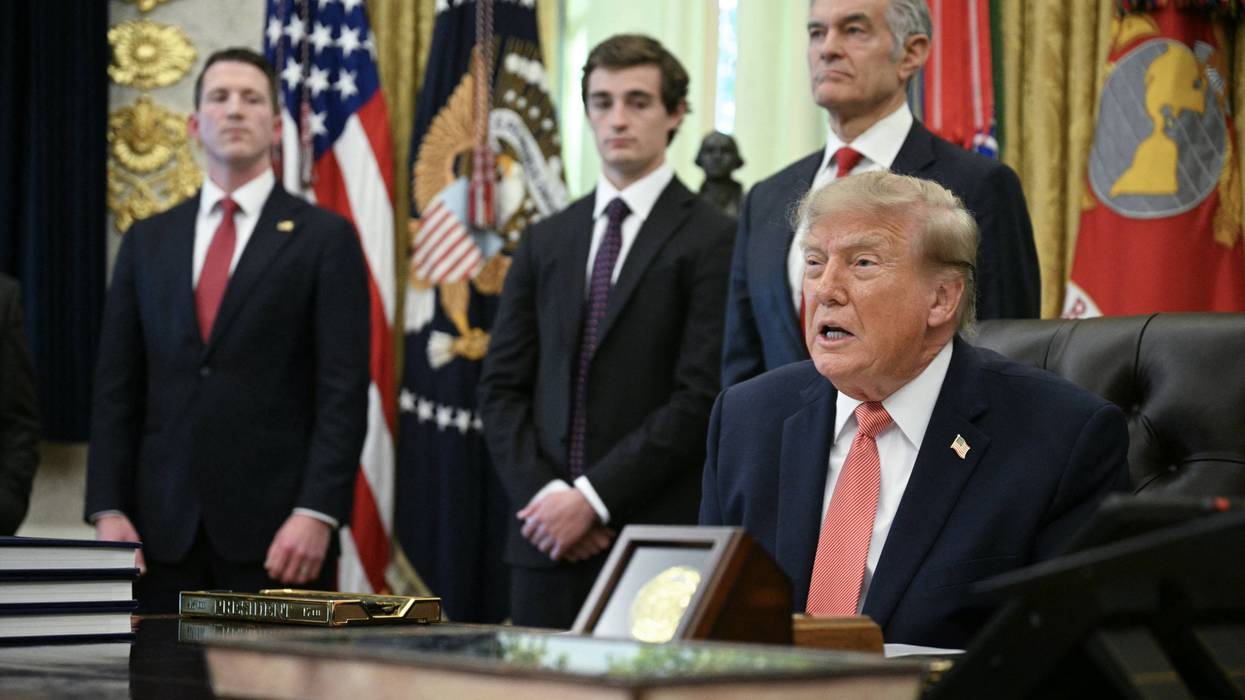
US President Donald Trump, widely considered the most corrupt president in American history, announced a $25 million initiative on Tuesday designed to reward tipsters who report people defrauding the federal government.
Sen. Bernie Sanders (I-Vt.) responded sardonically to the announcement, writing on social media, "I'd like to report a theft." Referencing the administration's illegal use of federal funds for pro-Trump propaganda, Sanders added: "A man inside our government illegally spent nearly $22 million in taxpayer dollars on bogus campaign ads praising himself. He now resides on 1600 Pennsylvania Avenue."
"Taxpayers want to know when they’ll get their money back," the senator wrote.
Trump's new Fraud Whistleblower Incentive Program will be administered by the Justice Department and will offer up to $30,000 in taxpayer-funded rewards for tips that result in criminal charges. People can submit reports through a dedicated government website.
The president, who has profited massively from his second White House term and freely handed out pardons to convicted fraudsters, told reporters on Tuesday that he would "be the arbitrator" of who gets rewards under the new program. The first cash gift went to far-right YouTuber Nick Shirley, creator of a viral video on Minnesota childcare facilities that the Trump administration seized upon as a pretext to cut off funding to states.
"There's never been an incentive for anyone to ever expose fraud," Shirley said, falsely, at the White House on Tuesday.
Naomi Seligman, president of the advocacy group Whistleblower Aid, said in a statement that her organization "would of course applaud any legitimate program that supports lawful whistleblowing."
"However, President Trump has been overtly hostile to public interest whistleblowers who have bravely exposed fraud and corruption within his administrations," said Seligman. "If the president is truly interested in rooting out wrongdoing, Whistleblower Aid invites him to start by examining the violations perpetrated by his own administration, including senior officials. We would happily work with him on this vital accountability effort to help save our democracy."
Trump announced the new initiative on the same day that The New York Times published a story examining the case of Julio Herrera Velutini, a billionaire Venezuelan banker who "faced felony bribery charges in the United States and struck an unusually lenient plea deal in August 2025 for a misdemeanor campaign finance violation."
"But he felt that reduced charge was still a stain on his record," the Times noted, so he instructed his lawyer—a former member of Trump's personal legal team—to push the White House for a clemency agreement. Additionally, Herrera's daughter, an American citizen, made a $3.5 million donation to a pro-Trump super PAC.
"Then the Herrera family hired Alina Habba, who had been one of Mr. Trump’s personal lawyers and at the time was an adviser at the Justice Department. They offered her $10 million a year for four years along with a range of bonuses," the Times reported. "Under the agreement, Ms. Habba would become general counsel at Concord Partners, a company that Ms. Herrera set up in late October 2025 in Florida... She formally began her work for Concord Partners on January 1. Weeks later, Mr. Trump granted Mr. Herrera a full and unconditional pardon."
"Someone should send this to the new Trump fraud tipline," quipped Bulwark reporter Sam Stein.
Keep ReadingShow Less
1.5 Million Latinos Lost Food Aid Since Trump Passed Tax Giveaway for the Rich: Analysis
“As is so often the case, working families and communities of color bear the brunt of Trump’s economic policies."
Oct 20, 2026
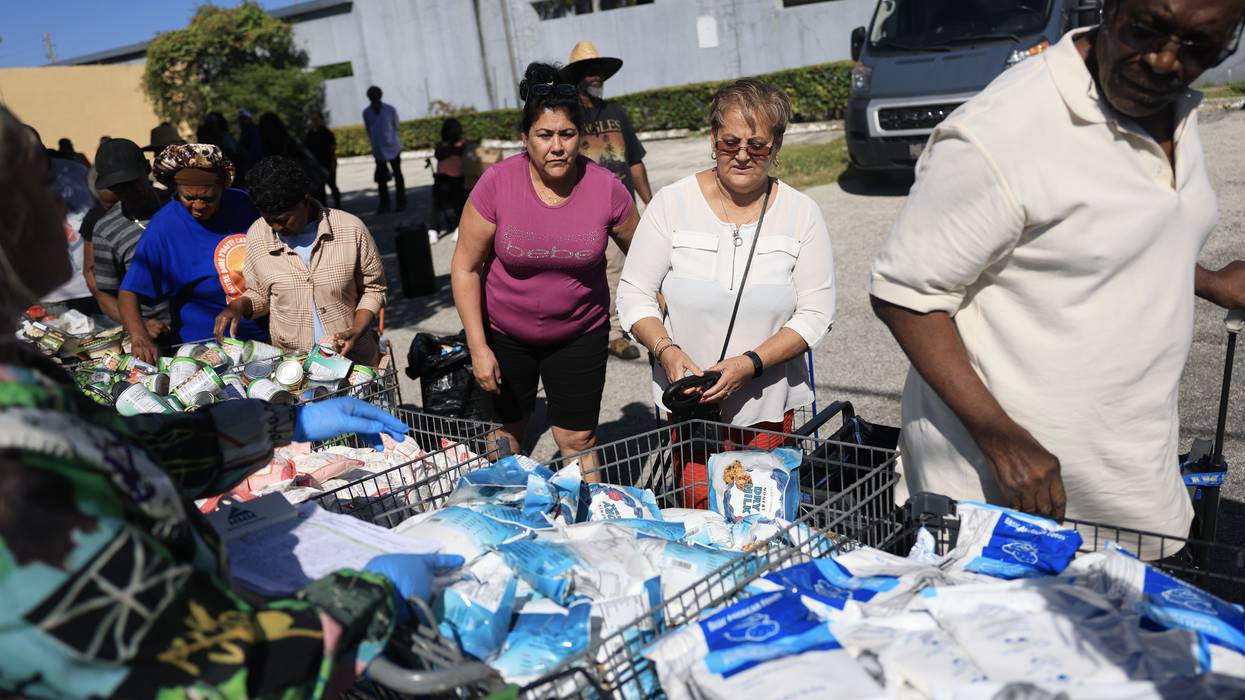
An analysis published Tuesday estimates that 1.5 million US Latinos have lost access to federal food assistance since the passage of President Donald Trump’s so-called One Big Beautiful Bill Act, the latest of numerous indicators of how the law's evisceration of the social safety net is hitting working-class families while delivering enormous benefits to the wealthy.
The analysis by Unrig Our Economy and Americans for Tax Fairness estimates that in seven states alone—Texas, Arizona, New York, Pennsylvania, New Jersey, Nebraska, and Iowa—771,687 Latinos have lost Supplemental Nutrition Assistance Program benefits since July 2025, when Trump signed the sweeping budget reconciliation package into law. The One Big Beautiful Bill Act (OBBBA) contains the biggest cuts to SNAP and Medicaid in those programs' histories.
According to the analysis, Texas alone accounts for more than half of those losses, with an estimated 396,164 Latino residents losing food assistance, while Arizona has lost another 200,124 and New York has lost 92,816.
“The Republican tax law took food assistance away from more than 1.5 million Latinos to pay for tax breaks for billionaires and big corporations,” Leor Tal, campaign director for Unrig Our Economy, said in a statement. “Families are already struggling with the high cost of groceries and gas thanks to the war in Iran and tariffs. SNAP cuts make it even harder for Latino families—who are disproportionately impacted—to put food on the table.”
More broadly, the Center on Budget and Policy Priorities estimated earlier this year that SNAP enrollment fell by more than 5 million people between July 2025 and June 2026, while more than 1.5 million children lost assistance.
The OBBBA contains new SNAP qualification requirements for people experiencing homelessness, veterans, former foster youth, and older adults. The Trump administration says the new rules are meant to ensure that only the truly needy receive benefits. However, the more stringent requirements are harming some of the most vulnerable people, as compliance procedures have proved to be an exclusionary barrier to qualified aid applicants.
The SNAP cuts have fueled what the New York Federal Reserve Bank in May called a “remarkable increase in food insecurity, particularly among lower-educated and lower-income households and households with young children.”
“The results are in: Trump and his GOP allies in Congress cut critical nutrition assistance that helps millions of Latinos and working people across the country meet their basic needs—all to deliver historic tax giveaways to billionaires and business elites,” said Jodie Rubenstein, executive director of Americans for Tax Fairness.
“As is so often the case, working families and communities of color bear the brunt of Trump’s economic policies," Rubenstein added. "We cannot allow billionaire wealth to grow unchecked while communities go hungry.”
Keep ReadingShow Less
'Go Vote': Poll Shows 70% of US Voters Doubt Trump Will Accept GOP Walloping in Midterms
"Too many Americans fought and died for democracy. Trump’s authoritarianism will not prevail," said Sen. Bernie Sanders. "We WILL win this election whether Trump likes it or not."
Oct 20, 2026
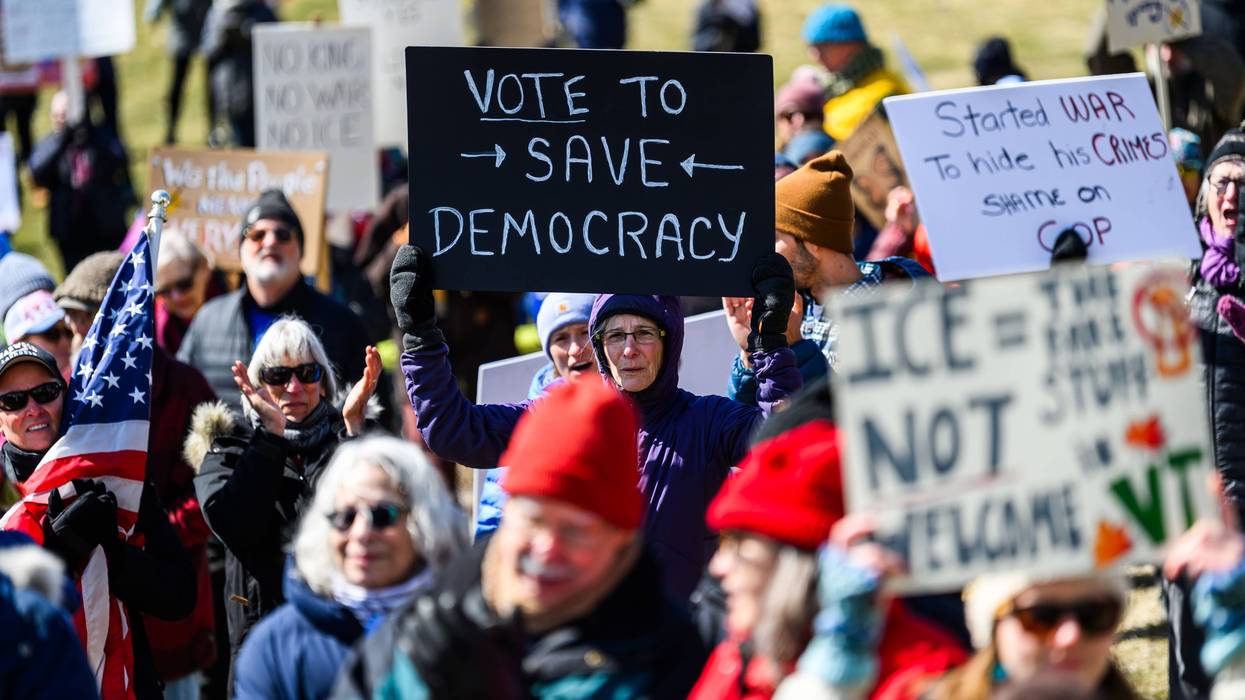
Seven in 10 Americans doubt President Donald Trump would accept the results of next month's midterm elections if Republicans suffer major losses, according to a Washington Post-ABC News-Ipsos poll released Tuesday that spurred one progressive senator to implore people to get out and vote.
The poll, conducted October 9-13 among 2,545 US adults, found that just 28% were very or somewhat confident that Trump would accept the election results if Republicans lose, while 70% were not confident. Half of respondents said they were "not at all" confident he would accept a decisive GOP defeat.
While an overwhelming majority of Democratic respondents— 94%—and 77% of independents doubted Trump would accept a Republican midterm loss, 36% of Republicans also expressed doubts. Among Republicans, 63% said they were confident Trump would accept the results, although only a quarter were very confident.
Sixty-one percent of respondents also said they believe Trump is not committed to ensuring free and fair elections, up from 56% last year.
Still, the new polling suggests that confidence in Trump's willingness to respect electoral outcomes is substantially weaker than confidence in the voting process itself, as about 6 in 10 respondents said they were confident the midterms would be conducted fairly and accurately, while 65% said they believed that votes would be correctly counted.
US Sen. Bernie Sanders (I-Vt.) responded to the poll in a social media post urging Americans to vote in order to thwart Trump's attacks on democracy.
"Too many Americans fought and died for democracy," Sanders asserted. "Trump’s authoritarianism will not prevail. Go vote. We WILL win this election whether Trump likes it or not."
The poll's findings come as Democrats seek to regain control of Congress, and Trump continues to promote baseless claims of widespread voter fraud in the 2020 election, which his own administration's Cybersecurity and Infrastructure Security Agency called “the most secure in American history.”
According to the poll, Democrats are leading Republicans by eight percentage points among likely voters in congressional races, 52% to 44%. Trump has continued campaigning for Republican candidates as his approval ratings have tanked amid dissatisfaction over the economy and the illegal US-Israeli war of choice against Iran.
Trump campaigned on promises to tackle the affordability crisis and not wage new wars. As of last month, the benchmark consumer price index has soared by nearly 30% since Biden's administration, while Trump has ordered military attacks against 10 countries during his two terms—more than any president in modern history.
Keep ReadingShow Less
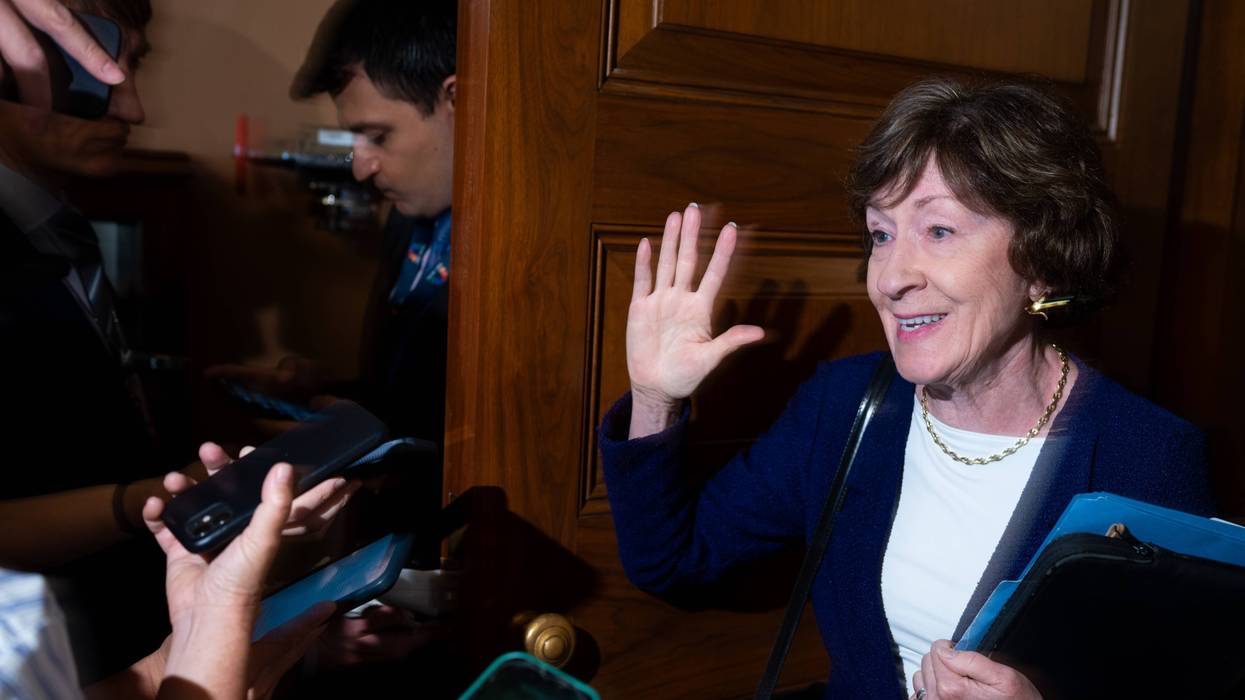
'Just a Flat-Out Lie': Collins Says She Couldn't Have Known Kavanaugh Would Vote to Overturn Roe v. Wade
"This is just another flimsy attempt to avoid responsibility for her actions," said a spokesperson for Planned Parenthood Votes Maine.
Oct 20, 2026
As she faces a tough reelection fight in Maine, Republican Sen. Susan Collins is twisting the facts about her role in laying the groundwork for the US Supreme Court's overturning of abortion rights.
Throughout the campaign, Collins has been dogged by questions about her fateful decision in 2018 to cast a key vote to confirm Justice Brett Kavanaugh to the court. In 2022, he joined the court's conservative majority to overturn the 1973 Roe v. Wade precedent, allowing states to impose severe new bans and restrictions on abortion.
In June, Collins—who has described herself as pro-choice—said she did "not regret" her vote to confirm Kavanaugh, falsely claiming that Roe was overturned by a 6-3 margin and was therefore doomed regardless of her vote. In fact, the precedent was overturned by a 5-4 margin, meaning Kavanaugh's vote proved decisive.
Now in a dead heat race with Democratic nominee Troy Jackson, who has repeatedly hammered her on abortion rights, Collins has continued to defend her confirmation vote. She's also kept fudging the truth.
“I’m very disappointed in his vote to overturn Roe v. Wade,” Collins said of Kavanaugh during an interview published Monday by Maine ABC affiliate WMTW. “There was no way for me to anticipate that.”
Collins had, in fact, been warned that Kavanaugh might overturn Roe v. Wade. In her October 5, 2018, speech supporting his confirmation, she explicitly acknowledged “the concern that Judge Kavanaugh would seek to overturn Roe v. Wade” and noted that President Donald Trump had pledged to nominate judges who would do so.
Reproductive freedom advocates cautioned her that Kavanaugh was not being truthful when he said he considered Roe to be settled precedent, citing his history of ruling against abortion access and praising former Chief Justice William Rehnquist’s dissent in Roe.
But Collins dismissed these advocates' warnings, arguing that Republican-appointed Justices Sandra Day O’Connor, David Souter, and Anthony Kennedy had voted to reaffirm Roe despite opposition to some of their nominations from abortion rights groups. “Suffice it to say, prominent advocacy organizations have been wrong,” Collins said.
In this case, they were not. Lisa Margulies, spokesperson for Planned Parenthood Votes in Maine, said it was dishonest of Collins to plead innocence.
"It’s just a flat-out lie that Susan Collins had ‘no way’ of knowing Brett Kavanaugh would overturn our federal right to abortion," she said. "Mainers drove down to DC and begged her not to confirm him. They knew he was a direct threat to abortion, and so did Susan Collins."
"This is just another flimsy attempt to avoid responsibility for her actions," Margulies said. "Enough is enough. Mainers deserve better than a senator who will throw their rights under the bus and then refuse to acknowledge the harm done."
Keep ReadingShow Less
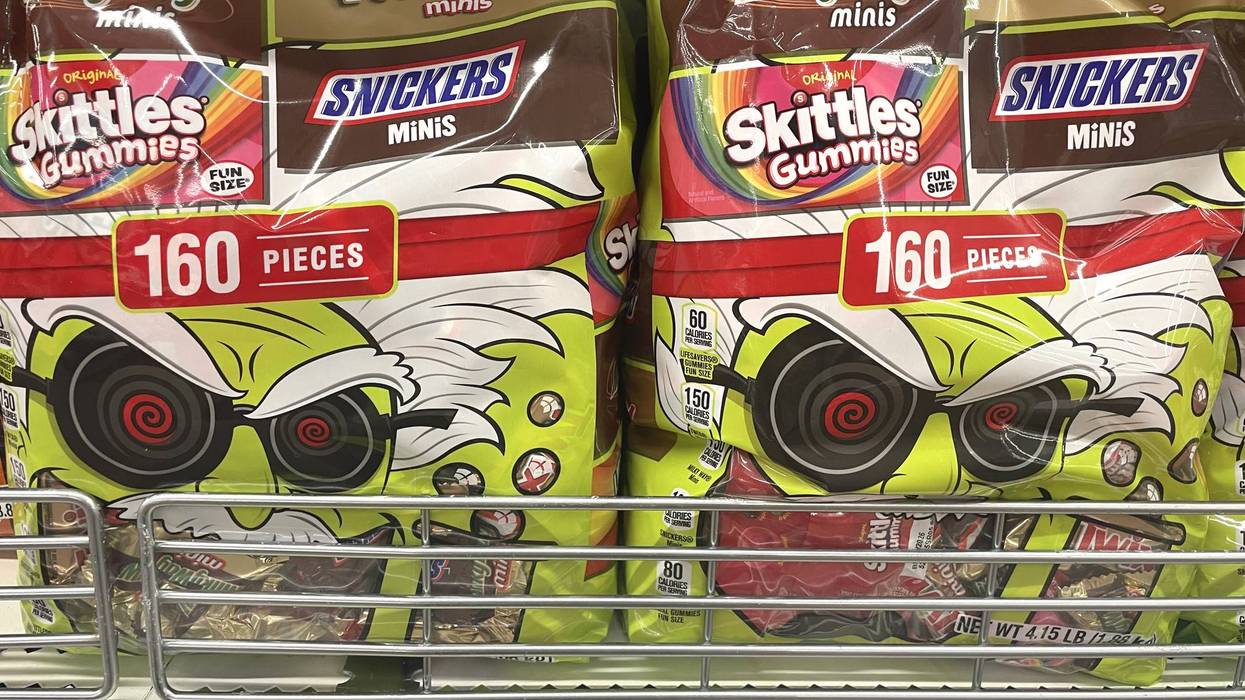
'Consumers Are Feeling Spooked': Trump's Failed Economic Policies Send Price of Halloween Candy Soaring
"Trick-or-treaters will have to make due with miniature candy bars this year to accommodate Trump’s king-size price hikes."
Oct 20, 2026
President Donald Trump's illegal war with Iran and his global tariffs have tag-teamed to jack up the price of Halloween candy, according to a report published Tuesday.
The new analysis by Groundwork Collaborative and The Century Foundation finds that the price of popular Halloween candy has increased by more than 15% during the last year, which is several times the overall rate of inflation over the same period.
The biggest jump in price came from candy maker Mondelez, whose sour gummy candy variety pack saw its price shoot up by more than 39% in the last year.
Other notable price hikes included the Hershey variety pack, which increased by nearly 20%; the Ferrero chocolate pack, which increased by 19%; the Mars chocolate variety pack, which increased by over 13%; and Tootsie seasonal lollipops, which increased by over 7%.
The report notes that Trump's illegal Iran War and his aluminum tariffs have had an impact on candy prices by driving up packaging costs for sweets.
However, the report also points the finger at the candy companies, which have continued to raise prices even after receiving a tariff exemption for cocoa and getting refunds for illegal tariffs Trump charged them last year.
"Hershey’s profit margin jumped 50% year over year, helped by pocketing a $9 million tariff refund that never made its way back to shoppers," the report notes, "while Mondelez saw a similar 30% bump in margins."
Kyle K. Moore, chief economist at The Century Foundation, said that Trump's policies had helped turn "a fun family tradition into another terrifying bill."
"With debt and high prices eating into families’ Halloween budgets," said Moore, "it's no wonder consumers are feeling spooked."
Elizabeth Pancotti, vice president of policy and advocacy at Groundwork Collaborative, pointed out that consumer sentiment recently hit record lows, as Americans are also struggling with the rising costs of gasoline and groceries.
"Trick-or-treaters will have to make due with miniature candy bars this year to accommodate Trump’s king-size price hikes," Pancotti said.
A Sunday report in The Cleveland Plain Dealer highlighted an additional reason for the high price of Halloween candy: The price of sugar, which has been affected by "poor weather and weaker production forecasts in several major sugar-producing regions."
A survey released earlier this month by Lending Tree found that Americans expect to spend significantly less on Halloween overall this year, with 23% saying they plan to buy fewer overall Halloween items compared to a year ago, while 24% said they expected to go into debt while celebrating the holiday.
Data released by the US Bureau of Labor Statistics last week showed inflation in September rising to its fastest level in six months, driven in large part by costs related to the Iran War.
Keep ReadingShow Less
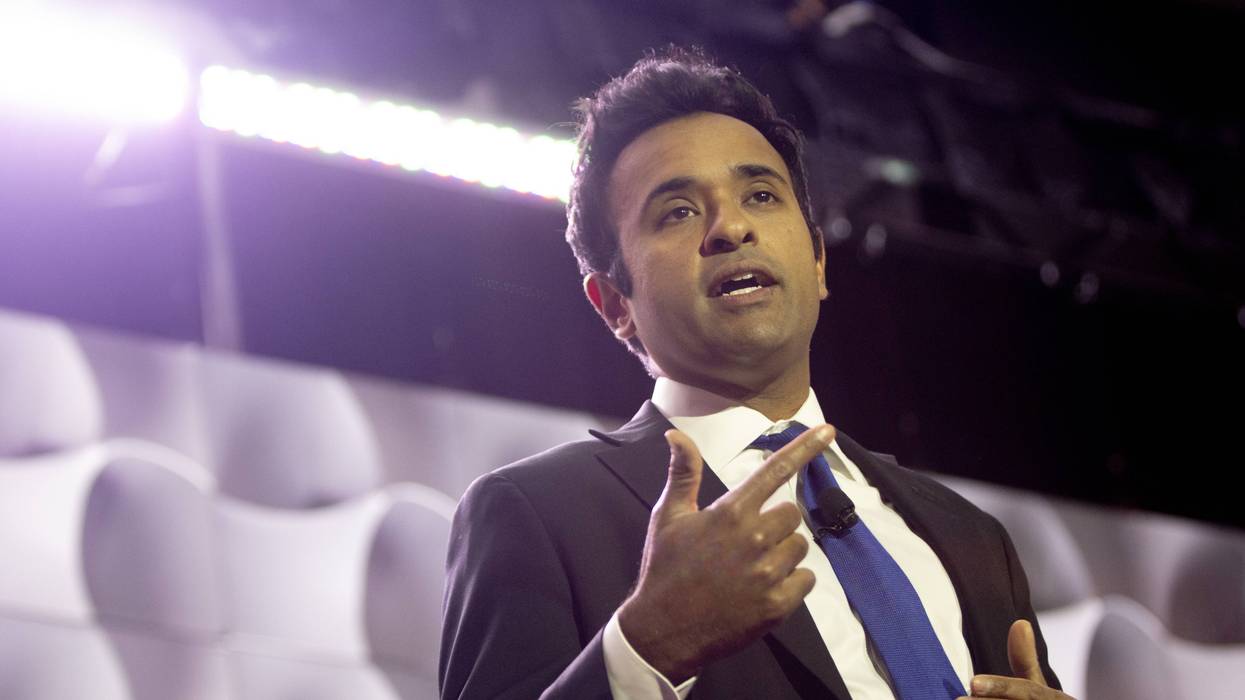
'Pathetic Excuse for a Man': Ramaswamy Slammed Over Ad Featuring Acton’s Estranged Mother in Ohio
Acton's brother said the ad was a "despicable low," noting that their mother stood by their stepfather after he was charged with raping Acton at the age of 12.
Oct 20, 2026
With just two weeks left until Election Day, Republican Ohio gubernatorial candidate Vivek Ramaswamy is drawing criticism from across the political spectrum over a vicious attack video featuring his Democratic opponent Amy Acton's estranged mother, whom she has accused of abandoning her after she was sexually abused as a child.
The 60-second video, which surfaced on social media Monday and was amplified by conservative accounts, features Donna Arthur, Acton’s biological mother, urging Ohioans to vote against Acton and accusing her of lying about experiencing homelessness and living in a tent during her childhood.
"I love my daughter, but when I saw her lying about her opponent, it's not easy for a mother to say this, but Amy has a serious problem. She is a liar," Arthur said. "She says she grew up living in a tent. None of that is true. She's lied her entire life."
After the ad went viral on social media, Acton's brother, Philip Stearns, accused Ramaswamy of sinking to "a despicable low." In a statement Tuesday, he noted that "after he was arrested and Amy and I were removed from their custody, our birth mother stayed married to Amy's rapist until he died."
Stearns called the ad an "attempt to turn the sexual abuse Amy endured at 12 years old from our birth mother’s husband into a political talking point."
It remains unclear who produced the ad, which contains no sponsorship disclosure indicating whether Ramaswamy's campaign or a supporting political action committee was behind it. Acton's campaign, however, has blamed her opponent.
Ramaswamy's political allies have previously attacked Acton over therapy she received following the abuse. Ramaswamy himself drew criticism in April after claiming that his opponent had no vision for Ohio "other than to complain about what someone else did to her."
“This desperate, disgusting attack reveals exactly who Vivek Ramaswamy is at his core,” Stearns said, describing him as “a pathetic excuse for a man who is willing to hurt anyone as long as it gets him what he wants.”
Though President Donald Trump won Ohio by double digits in 2024, several recent polls show Acton with a substantial lead over Ramaswamy, a staunch ally of the president.
In a statement to HuffPost, the Ramaswamy campaign did not take credit for the ad, but defended its substance.
"We don't know what happened between Amy and her mother, who first spoke out about Amy in 2020, but we know that Amy Acton is a serial fabulist who has some serious problems with the truth that the public needs to be aware of before deciding who to entrust as governor," said Connie Luck, a spokesperson for the Ramaswamy campaign.
She added: “Everyone who knows [Acton] best—her former boss, her former state colleagues, her fellow physicians, and now her own mother—are clearly warning Ohioans not to vote for her. Ohioans deserve to know that.”
Acton has spoken on the campaign trail about the hardships she experienced as a child and has made them central to her pledge to make life more affordable for struggling Ohio families.
"I know what it feels like to go hungry, to not have enough," Acton said during an interview in August. "My brother and I actually were in a tent in the middle of winter growing up, so these problems are real to me."
She spoke about these experiences long before she ran for governor. In a 2019 profile by The Youngstown Vindicator, Acton—then serving as the director of Ohio's health department under Republican Gov. Mike DeWine—recounted a childhood marked by poverty, neglect, and abuse.
By age 12, she said, she and her brother, Stearns, had lived in roughly 18 different homes. She said her stepfather had already faced molestation allegations when her mother married him—a claim confirmed by newspaper reports and court records from the time. She said her family was living in a tent at a campground outside Youngstown in the winter when her stepfather raped her.
After charges were filed, Acton and her brother went to live with their biological father and his relatives, who had been granted custody. She recalled trying to kiss her mother goodbye at the courthouse, only for her mother to turn her cheek away.
"That was the last time I ever saw her," Acton said. According to the profile, her mother and stepfather subsequently fled town while he was out of jail on bond.
The attack on Acton has drawn bipartisan outrage.
Ohio state Rep. Allison Russo (D-7), who is running for secretary of state, described the ad as "among the most vile political attacks I’ve ever seen."
"Millions of adults from all walks of life are estranged from a parent, often because of childhood abuse and trauma that are far too common in our society," she said. "Exploiting that deeply personal pain for political gain is cruel, shameful, and deserving of unequivocal condemnation."
US Rep. Greg Landsman (D-Ohio) agreed that it was “one of the most despicable things I’ve ever seen in politics.”
"He’s arguably the most unlikable person in the history of people… because of stuff like this," he said of Ramaswamy. "By the end of the day, Ohioans will learn what happened to Amy as a 12-year-old girl, how her mother lost custody of Amy as a result, and what a disgrace Vivek is for pulling this."
Rep. Sam Liccardo (D-Calif.), who previously prosecuted child sexual assault cases, said that Arthur’s defense of her late husband despite her daughter’s assault allegation is something he has witnessed “too frequently.”
"A child victim discloses the abuse by a stepdad or mom’s boyfriend, and mom takes the abuser’s side because she can’t bear to think that she had exposed her own child to a monster," he said. "Mom is protecting mom—not the child."
He added that "Ramaswamy has embraced the Trumpian role of taking the side of the predator."
While right-wing influencers, including Donald Trump Jr., amplified the ad and treated it as a “bombshell” October surprise that could upend Acton’s campaign, some conservatives also expressed dismay.
GOP strategist Liz Mair called the ad "terrible" and said it is "going to remind people of that one family member who hates them for no rational reason at all and make them feel sympathetic towards Acton."
“In brief, it pushed me towards Acton, not away from her,” Mair continued. “And this is genuinely the only thing I’ve seen or read about Acton to make me think anything positive of her."
"It seems crazy to me [that] one would assume this would work and not backfire," said conservative commentator Mary Katharine Ham. "An estranged mom from a rough childhood going straight to camera to trash her daughter as a trustworthy messenger?"
Washington Examiner columnist Tim Carney predicted bluntly that "This ad could sink Vivek."
Keep ReadingShow Less
ADL, Creator of Infamous ‘Mamdani Monitor,’ Won't Even Say Trump's Name After Antisemitic Slur
The statement exposed the ADL as "a deeply unserious organization that has drifted far away from its stated mission, and one that has lost all credibility," said one critic.
Oct 20, 2026
A brief statement from the Anti-Defamation League sharing the history of the antisemitic term "shylock," made a day after President Donald Trump used the slur at a campaign rally, illustrated "two paths for American Jews," according to Indivisible co-founder Leah Greenberg.
"Throw in to fight for multiracial pluralistic democracy or seek junior partner status in the MAGA coalition," said Greenberg, who is Jewish. "This is where the latter path leads."
The ADL was founded in 1913 to protect Jewish people from antisemitic attacks, but has focused heavily on promoting the United States' support of Israel and conflating antisemitism with criticism of Israel's violent treatment of Palestinians.
Considering the ADL's roots, Greenberg was among several observers who noticed that the group's response to Trump's recent comment on US Sen. Roger Marshall (R-Kan.) failed to mention the president by name.
Trump used the term to defend Marshall, a doctor, from criticism over his suing of more than 700 patients for their unpaid medical bills.
Marshall's opponents had portrayed him as “some kind of a Shylock-type guy,” said the president, who has used the term before. The word comes from the name of a Jewish moneylender in the William Shakespeare play "The Merchant of Venice," and has been used as an anti-Jewish slur indicating greediness and unfair lending practices.
In response to Trump's comments, the ADL wrote on social media that the term "is rooted in a longstanding antisemitic stereotype. Regardless of intent, its use can reinforce harmful tropes about Jews and normalize language that has long been used to target the Jewish community."
Dylan Williams, vice president for government affairs at the Center for International Policy (CIP), called the ADL's response "meek and endangering response" that contrasted sharply with the ADL's treatment of progressive lawmakers who condemn Israel.
The ADL's focus on anti-Israel criticism has become especially pronounced in recent years, as Americans' sympathies have turned toward Palestinians and away from Israel's US-backed government and military, which has waged war on the entire population of Gaza since October 2023 and is pushing to violently force Palestinians out of the illegally occupied West Bank.
The group, led by CEO Jonathan Greenblatt, has been incensed by student-led protests demanding an end to US military support for Israel by the electoral victories and campaigns of numerous Palestinian rights supporters, including New York City Mayor Zohran Mamdani.
Last year, the ADL saw fit to launch a "Mamdani Monitor" aimed at tracking the popular progressive mayor's supposedly "antisemitic" policies. The monitor has highlighted Mamdani's revocation of New York City's recognition of the International Holocaust Remembrance Alliance's definition of antisemitism, which has been rejected by dozens of Jewish historians and Holocaust experts who say it conflates antisemitism with criticism of Israel.
If a Democrat used the term Trump did, said Matt Duss, executive vice president at CIP, "Jonathan Greenblatt would be knocking people over to get in front of a camera to condemn them by name, but it was Trump so it’s just a general public service announcement."
The statement exposed the ADL as "a deeply unserious organization that has drifted far away from its stated mission, and one that has lost all credibility," said Adam Carlson of Zenith Polls.
The group has previously come to the defense of Republican megadonor and Trump adviser Elon Musk, a vehement supporter of Israel, when he made what appeared to be a "Sieg Heil" Nazi salute at a Trump inaugural event. Greenblatt said the apparent salute was simply an "awkward gesture."
"The ADL is apparently too busy chasing down college students with 'Free Palestine' stickers," said Tariq Kenney-Shawa of the Institute for Middle East Understanding, "to worry about the president of the United States casually dropping some medieval-age antisemitism at a campaign rally."
Keep ReadingShow Less
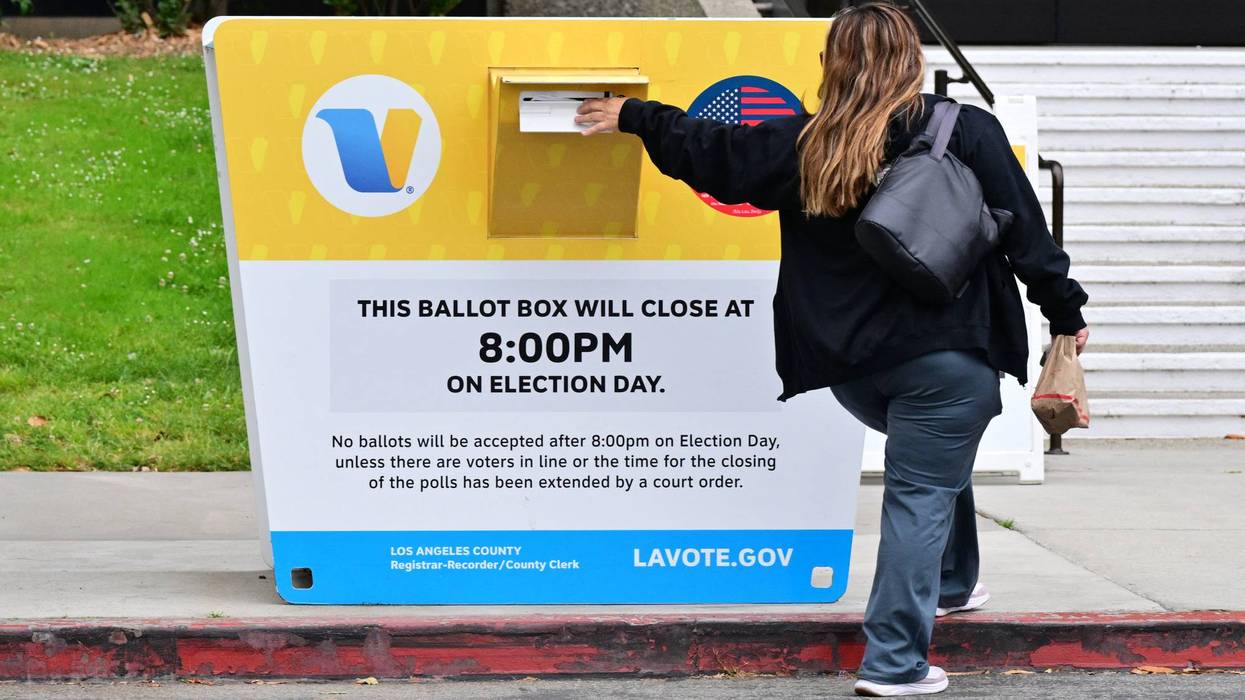
Rights Group Says Polling Places Should Be 'No ICE' Zones During Midterm Elections
"Voters should not have to fear being caught in an ICE dragnet when they head to the polls.”
Oct 20, 2026
Human Rights Watch on Tuesday called for the establishment of “No ICE” zones around polling places, early voting locations, and ballot drop boxes ahead of next month's midterm elections, warning that the presence of US Immigration and Customs Enforcement (ICE) agents could deter eligible Americans from exercising their right to vote.
“ICE officers’ abuses have already seriously affected US citizens who have been stopped, beaten, detained, deported, and even killed,” Human Rights Watch (HRW) executive director Philippe Bolopion said in a statement. “Voters should not have to fear being caught in an ICE dragnet when they head to the polls.”
As HRW noted:
Federal law generally prohibits federal officials from sending “troops or armed men” to voting sites. Several state laws prohibit any armed officers, including police, from engaging in acts that could interfere with the elections or intimidate voters by their presence near polling places. Some states bar law enforcement officers, including police, from being in close proximity to polling places at all unless they are responding to a specific incident.
Despite these robust prohibitions, neither President Donald Trump nor the heads of the US Department of Homeland Security (DHS) and the Federal Bureau of Investigation have been willing to rule out the possibility that federal agents, including ICE, may be at places where people vote.
While Trump administration officials, including Homeland Security Secretary Markwayne Mullin, have indicated there are no plans to deploy ICE agents to polling stations, many voters—especially nonwhite ones—are nonetheless wary amid mixed signals and an often violent, and sometimes deadly, anti-immigrant crackdown that's harmed both immigrants and citizens.
In a survey released last month by the Center for Transparent and Trusted Elections at the University of California, San Diego School of Social Sciences, 40% of respondents said they expected some kind of ICE presence at polling places, with nonwhite respondents even more likely to anticipate seeing immigration enforcers where they vote.
Critics point to Trump's efforts to cast doubt on the integrity of US voting, as well as the push by some of the president's allies for a martial law declaration, as cause for alarm. Trump has repeatedly promoted unsubstantiated claims of widespread election fraud and noncitizen voting—even after his own administration's Cybersecurity and Infrastructure Security Agency called the 2020 election “the most secure in American history.”
The president's "Big Lie" that Democrats stole that election fueled the deadly January 6, 2021 Capitol insurrection, while sowing doubt in the minds of right-wing voters, 82% of whom believe that the biggest problem in the nation’s elections is “ineligible people casting votes,” according to a Public Religion Research Institute survey released Tuesday.
HRW noted that three lawsuits are pending in federal courts to prevent ICE from conducting operations at polling places, with an additional case seeking to compel the federal government to disclose any plans for such deployments. Additionally, the Washington, DC Board of Elections recently asked the National Guard to limit troops' presence near midterm drop box locations after Guard members were spotted near one such box in Foggy Bottom.
“ICE agents should be publicly ordered to stay away from the polls, and anywhere ballots are being cast,” Bolopion said.
Keep ReadingShow Less
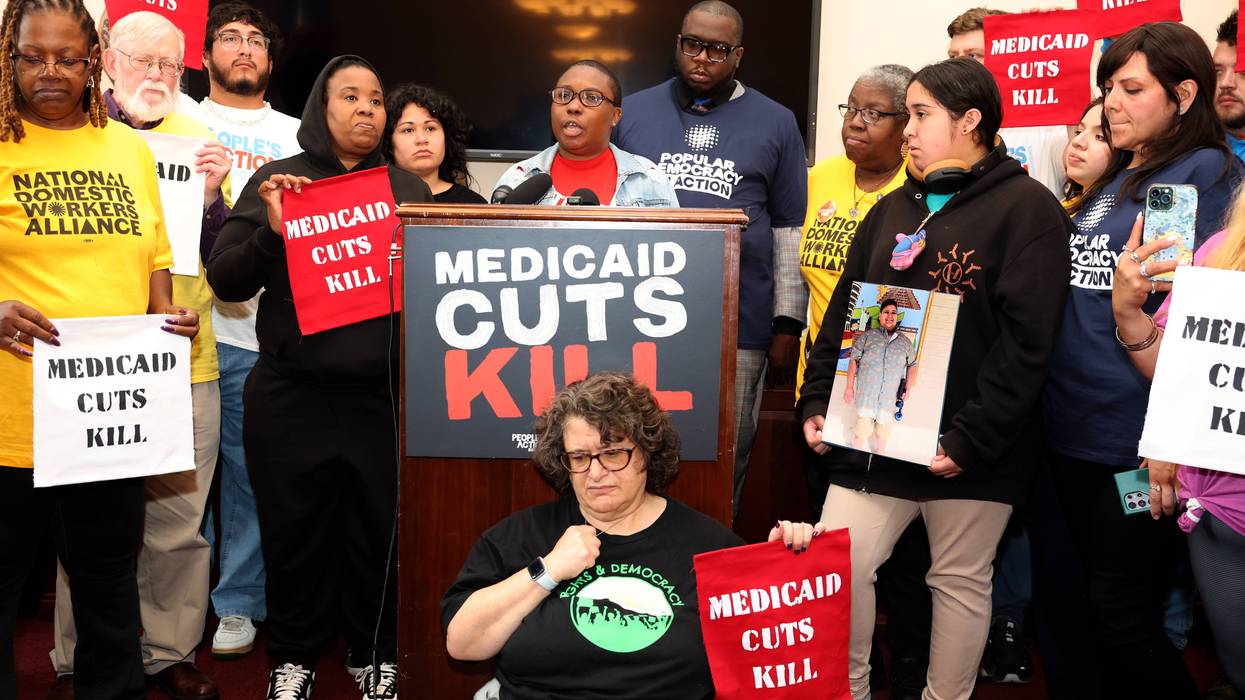
Private Medicaid Contractors Set to Cash In as Trump-GOP Cuts Take Care From Millions
"It’s plain wrong for these companies to boost their profits by kicking people off their healthcare."
Oct 20, 2026
As millions of Americans lose Medicaid coverage due to the unparalleled cuts that President Donald Trump signed into law last year, large private contractors are poised to make a financial killing as states move to implement draconian new work reporting requirements that are already wreaking havoc in several states.
A report published Tuesday by Democrats on the Senate Finance Committee warns that "a small handful of companies—some whose technology has a history of grievous errors—will be in charge of implementing historically harsh Medicaid work reporting requirements that never should have been enacted in the first place." The report spotlights five firms that hold contracts with states for Medicaid eligibility and enrollment work: Maximus, Gainwell, General Dynamics Information Technology, Conduent, and Deloitte.
"This investigation began by asking contractors a series of questions to determine whether they are up to the task of implementing Medicaid work reporting requirements on behalf of states, and the committee’s interim findings show that we cannot conclude they are," the report states. "The companies who stand to profit from new Medicaid work reporting requirements evaded hard questions about past performance, current process, and the potential for errors that cause widespread harm."
The Democrats' report comes as states are rushing to implement the new Medicaid work reporting requirements ahead of the January 1, 2027 deadline. The mandates require certain Medicaid recipients to document at least 80 hours per month of work or other qualifying activities—or lose coverage.
As KFF Health News reported earlier this year, state governments rely on private firms to "design and operate computer systems that assess whether low-income people qualify for Medicaid."
"Those state systems have a history of errors that can cut off benefits to eligible people," the outlet added, pointing to its 2024 investigation of Deloitte, which holds Medicaid-related contracts in at least 25 states.
States are paying Deloitte and other for-profit firms millions of dollars in taxpayer funds to help their governments comply with the new federal Medicaid rules, which could strip coverage from more than 10 million people by 2028.
None of the five vendors that Senate Democrats are investigating agreed to provide data on how many people their systems have reported to state Medicaid offices as potentially ineligible for coverage—though all of them denied having contract provisions that incentivize kicking people off the program. The companies also declined to disclose the compensation of their CEOs.
Nebraska, Montana, and Arkansas are so far the only US states that have begun implementing work requirements included in the Trump-GOP budget law. Preliminary data out of Nebraska indicates that red tape stemming from the work reporting mandates accounts for most of the coverage loss and denials so far.
Across the country, around 4 million people have lost Medicaid and Children's Health Insurance Program coverage since Trump signed the Republican budget package into law last July.
"The nation is just weeks away from Republicans rolling out the red tape on unsuspecting Americans who have life-or-death healthcare needs. This rushed rollout is going to be a disaster," Sen. Ron Wyden (D-Ore.), the top Democrat on the Senate Finance Committee, said in a statement on Tuesday. "It is essential to hold these contractors to a higher standard and implement commonsense accountability measures that make fast, simple, and durable enrollment in healthcare coverage the bar for earning taxpayer dollars."
Sen. Elizabeth Warren (D-Mass.) added that "as President Trump and Republicans gut healthcare for millions of Americans, big corporations are cashing in by running systems that snarl Americans in red tape and strip them of their Medicaid coverage."
"It’s plain wrong for these companies to boost their profits by kicking people off their healthcare," the senator added, "and I’ll keep fighting to end this corporate greed."
Keep ReadingShow Less
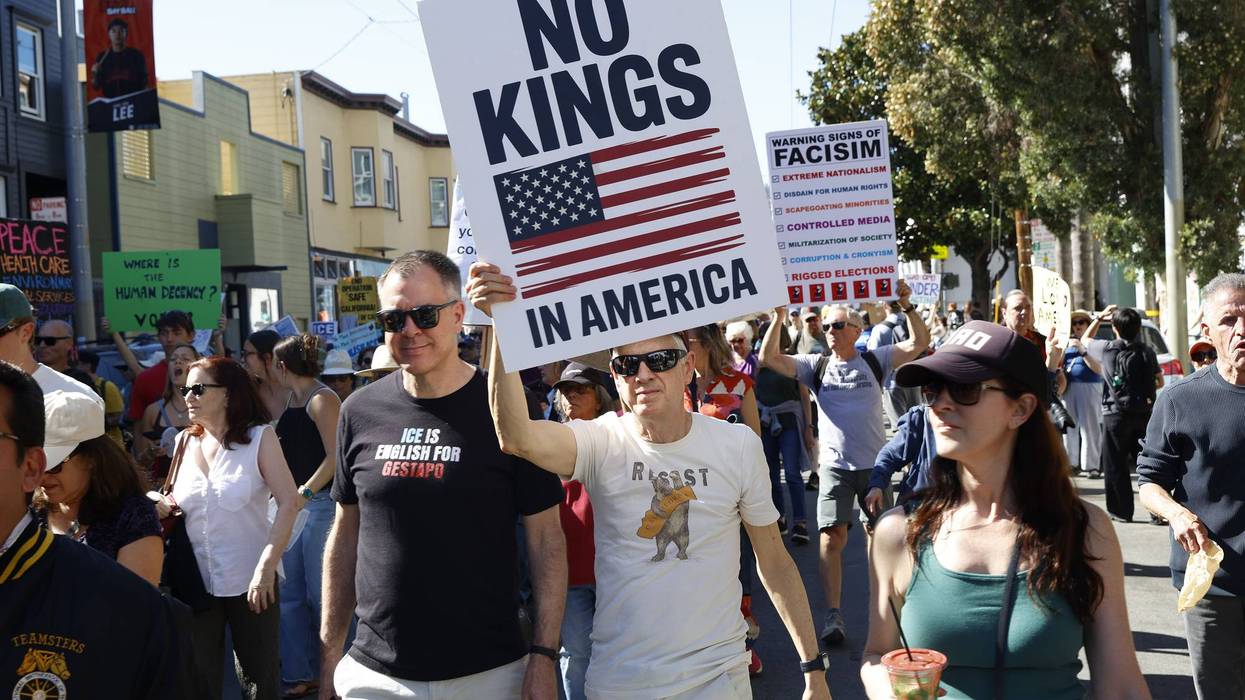
'The Public Deserves Answers': No Kings Coalition Gives Zuckerberg 24 Hours to Come Clean on Instagram Block
"Critical voter information or civic participation should not be blocked, throttled, or otherwise interfered with if Meta aspires to be a trusted actor in our democracy."
Oct 20, 2026
The coalition of organizations behind the No Kings demonstrations on Monday demanded answers from Meta CEO Mark Zuckerberg about why Instagram suspended the movement's primary account on Saturday.
In a letter to Zuckerberg, No Kings took issue with the explanations given by the company so far about the account's removal, which lasted approximately 90 minutes at the peak of rally activity.
"Public comments from representatives of Meta do not sufficiently explain these actions or the significant delay in remedying the so-called 'technical glitch,'" the letter states. "This raises serious questions among the public about why these actions were taken and the implications during the election season. Critical voter information or civic participation should not be blocked, throttled, or otherwise interfered with if Meta aspires to be a trusted actor in our democracy."
"The public deserves answers," the letter continues. "As such, the No Kings Coalition demands public response to the following questions. Americans are voting, and the election is fast approaching. Time is of the essence."
The letter then lists several questions that Meta needs to answer about the incident, giving the company until Wednesday at 5:00 pm PT to respond.
Among other things, No Kings wants Meta to release enforcement logs related to the account's suspension, to divulge any communications company officials have had with the Trump administration, and to explain any role that artificial intelligence agents potentially played in getting the account taken down.
Meta's suspension of the No Kings Instagram account is just one of many recent incidents that have raised concern about Big Tech platforms putting their thumbs on the scale on behalf of right-wing interests.
In Brazil, the campaign of President Luiz Inácio Lula da Silva filed a legal complaint last week accusing Meta of shutting down accounts promoting his candidacy while using its algorithms to promote content produced by the campaign of far-right rival Flávio Bolsonaro.
As The Associated Press reported on Thursday, a judge in Brazil’s top electoral court sided with Lula’s campaign, ruling that Meta “cannot reduce the distribution of political content, restrict searches, or remove posts in a way that creates an imbalance between Lula and Bolsonaro.”
Bleecker Street, the distributor of director Alex Gibney’s four-hour documentary about SpaceX CEO Elon Musk, told The Hollywood Reporter on Saturday that TikTok had permanently suspended the film’s promotional account.
Messages shared with The Hollywood Reporter revealed that TikTok accused the Musk documentary account of violating its rules regarding political content, but it was not clear what those violations were.
Keep ReadingShow Less
See More
Most Popular