May, 10 2013, 03:21pm EDT

For Immediate Release
Contact:
Miyoko Sakashita, Center for Biological Diversity, (510) 845-6703, miyoko@biologicaldiversity.org
Michael Jasny, NRDC, (604) 736-9386, mjasny@nrdc.org
Cyn Sarthou, Gulf Restoration Network, (504) 525-1528 x 202, cyn@healthygulf.org
Devorah Ancel, Sierra Club, (415) 977-5721, devorah.ancel@sierraclub.org
Feds Finally Examining Impacts of Oil Industry's Seismic Blasts on Marine Mammals
SAN FRANCISCO
The federal agency that oversees offshore drilling is finally going to analyze the effects that intense, underwater seismic blasts have on whales and dolphins in the Gulf of Mexico. In a notice published today, the Bureau of Ocean Energy Management announced that it will evaluate the effects of seismic surveys used to detect oil under the seabed in an environmental impact statement.
"Whales and dolphins in the Gulf depend on sound for communication and finding food, but these blasts -- sometimes as loud as an explosion -- make it all but impossible," said Miyoko Sakashita, oceans director at the Center for Biological Diversity. "I'm happy that the government is finally scrutinizing these underwater sound explosions, but it shouldn't stop there. We simply have to do whatever's needed to protect the Gulf's sensitive wildlife."
The agency and its predecessor, the Minerals Management Service, have for years allowed oil exploration using noisy seismic surveys without permits, in violation of the Marine Mammal Protection Act and the Endangered Species Act. A coalition of conservation groups sued the agency in 2010 for failing to look at the significant impacts of seismic surveys on whales and dolphins. That litigation (NRDC v. Salazar) remains active in the Eastern District Court of Louisiana.
"Seismic surveys have a vast environmental footprint -- and in this case they're harming the same populations of whales and dolphins already compromised by the Gulf spill," said Michael Jasny, a senior policy analyst at the Natural Resources Defense Council. "It's vital that the agencies take steps to evaluate and reduce the impacts."
Seismic exploration surveys use arrays of high-powered air guns to search for oil and generate the loudest human sounds in the ocean short of explosives. The blasts, which can reach more than 250 decibels, can cause hearing loss in marine mammals, disturb essential behaviors such as feeding and breeding over vast distances, mask communications between individual whales and dolphins, and reduce catch rates of commercial fish.
"The epicenter of BP's drilling disaster is some of the most important hunting grounds for the Gulf's resident sperm whales, and dead dolphins are still washing up at elevated rates," said Cynthia Sarthou, executive director of the Gulf Restoration Network. "It's critical that other impacts to Gulf marine mammals are scrutinized and minimized, so the government needs to carefully look at the impacts of seismic on these mammal and do everything possible to eliminate them."
"The Gulf's ecosystem and sensitive species have been compromised time and again by oil industry activities and negligence, and the government's evaluation of seismic impacts is an important initial step in ensuring adequate protections for the Gulf," said Devorah Ancel, attorney at the Sierra Club.
The environmental review of seismic surveys in the Gulf of Mexico is being prepared in anticipation of future permits for oil exploration surveys and also for regulations under the Marine Mammal Protection Act. The agency is seeking comments to guide its review of seismic surveys for 45 days.
The groups that sued over the failure to conduct an environmental analysis are the Center for Biological Diversity, Gulf Restoration Network, NRDC and Sierra Club.
At the Center for Biological Diversity, we believe that the welfare of human beings is deeply linked to nature — to the existence in our world of a vast diversity of wild animals and plants. Because diversity has intrinsic value, and because its loss impoverishes society, we work to secure a future for all species, great and small, hovering on the brink of extinction. We do so through science, law and creative media, with a focus on protecting the lands, waters and climate that species need to survive.
(520) 623-5252LATEST NEWS
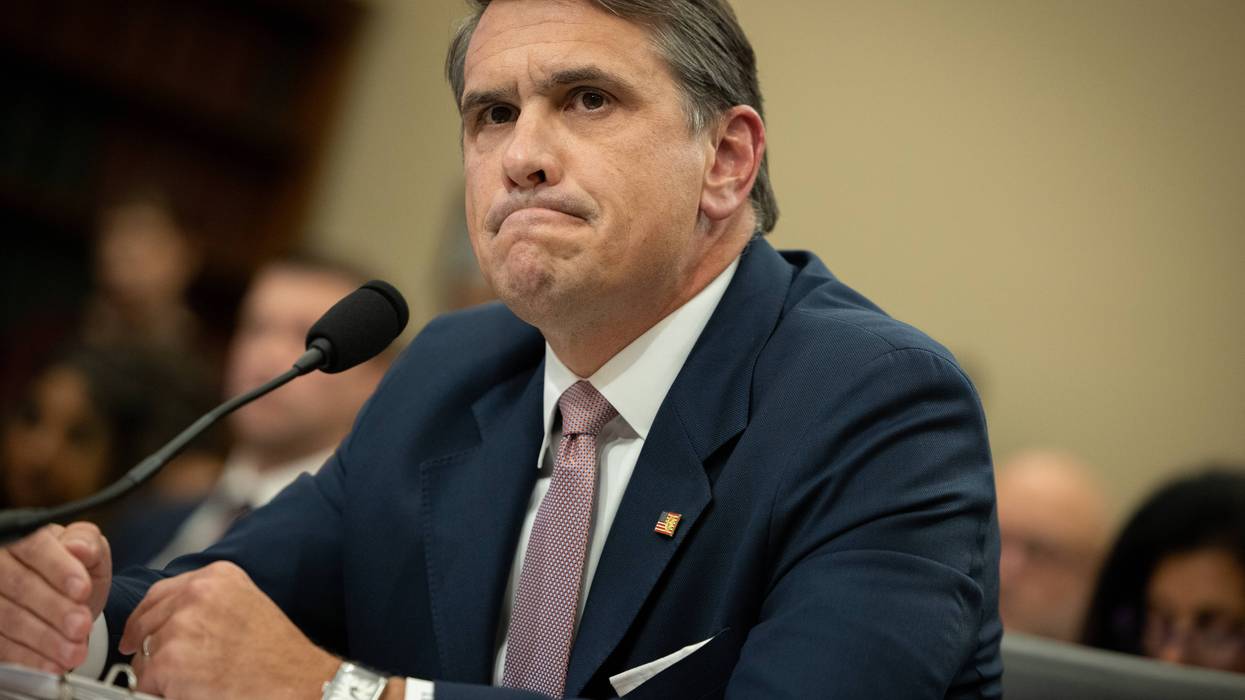
Trump DOJ's Use of Subpoenas Against Journalists Is 'Straight Out of the Dictator's Playbook': Press Freedom Group
"The potential of the government intruding into the newsgathering process is even greater when you are in the grand jury than it is for a subpoena for documents," said one press freedom advocate.
Jun 23, 2026
The US Department of Justice's attempt to compel journalists to testify before a grand jury is drawing blowback from a top press freedom group, which is accusing President Donald Trump's administration of behaving like an authoritarian regime.
According to a Tuesday report in The New York Times, the DOJ earlier this month issued subpoenas for national security reporters at The Washington Post and The Wall Street Journal related to national security leaks.
Subpoenas against both news organizations were withdrawn after they issued legal challenges in sealed filings.
"The Justice Department had sought information from three reporters at The Journal about an article detailing how top officials warned... Trump of the risks of a major military campaign against Iran," reported the Times. "It also sought information from a reporter at The Post, Ellen Nakashima, about reporting related to US military action in Venezuela."
As the Times noted, it is highly uncommon for government investigators to subpoena journalists when they are probing national security leaks, as such actions are generally seen as having a chilling effect on reporters' ability to gather information.
After the details of the subpoenas and news of their withdrawal broke, Reporters Without Borders slammed the Trump DOJ for hitting a "new low" in its attempt to "suppress information from the American people."
"Subpoenaing journalists to appear before a grand jury under the guise of ‘national security’ is straight out of the dictator's playbook," the group said. "Fortunately, in the United States, newsrooms are fighting back and winning."
A Tuesday CNN report claimed that Trump had personally pushed acting Attorney General Todd Blanche to subpoena the journalists, going so far as to hand Blanche "a sticky note—with the word 'Treason' written in Sharpie—placed atop a stack of printed articles."
CNN also reported that both the Post and the Journal "remain on guard against the possibility that the subpoenas will be reissued in the future."
A spokesperson for the Post ripped the Trump DOJ for issuing "an unwarranted subpoena of our reporter," which the newspaper described as "a clear violation of constitutionally guaranteed press freedom."
"We will continue to stand fully behind the journalism of The Washington Post," the spokesperson added, "and fight all efforts by any administration that violate our First Amendment rights."
Gabe Rottman, vice president of policy at Reporters Committee for Freedom of the Press, said in an interview with the Post that issuing grand jury subpoenas to reporters puts core First Amendment rights at risk because "once you are up in front of the grand jury, the testimony can go in many different ways and can inquire into stories that are unrelated to the underlying investigation."
"The potential of the government intruding into the newsgathering process is even greater when you are in the grand jury than it is for a subpoena for documents," Rottman added.
Keep ReadingShow Less
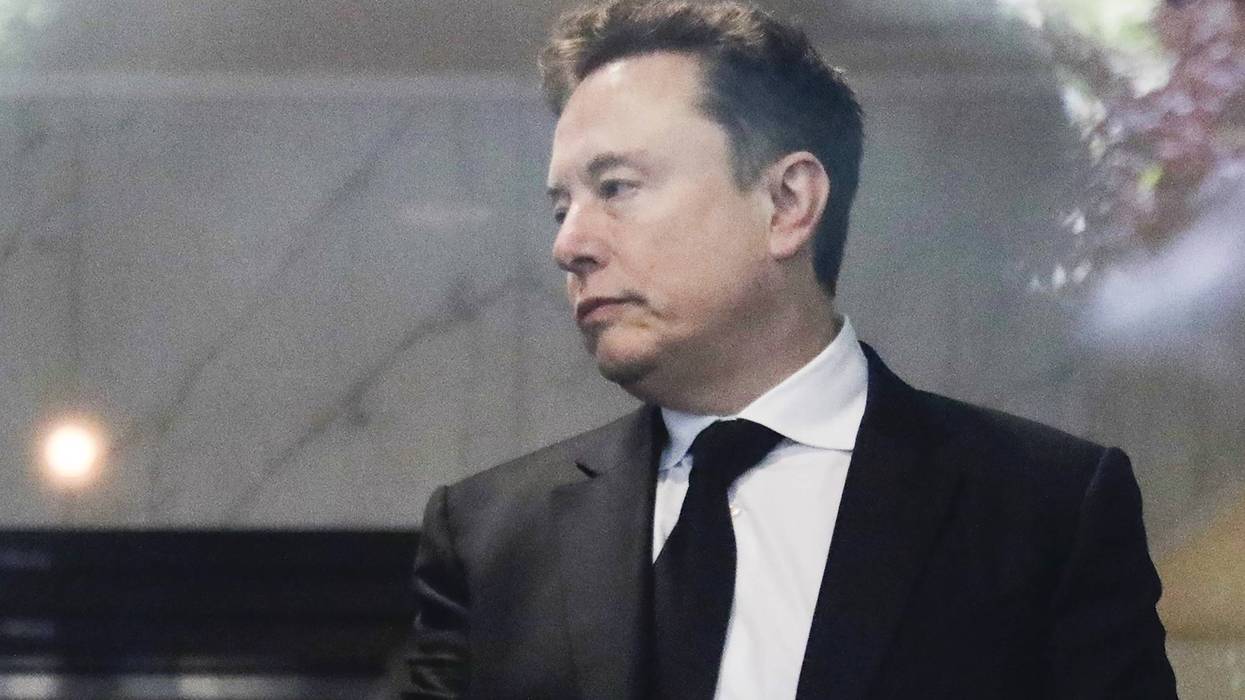
Undeterred by Threats, Khanna Tells Musk to 'Testify, Under Oath, About What He Did' to USAID
"Someone confident he did nothing wrong shows up and clears his name," Khanna said. "Elon Musk is doing the opposite because he genuinely believes the law does not apply to him."
Jun 23, 2026
In the face of lawsuit threats from the richest man in the world, Rep. Ro Khanna on Monday renewed his call for Elon Musk to testify before Congress and defend his dramatic cuts to foreign aid against the claim that they are killing millions of children.
Earlier this week, Musk threatened to sue Khanna (D-Calif.) for defamation and said he “should be in prison” after the congressman said that the trillionaire’s Department of Government Efficiency (DOGE) had “possibly sentenced” 4.5 million children “to death” through its dismantling of the United States Agency for International Development (USAID) last year at the start of the second Trump administration.
Khanna's assertion was based on the findings of a July 2025 Lancet study, which found that DOGE's cancellation of roughly 83% of the programs run by USAID—including 88% cuts to child health aid, 87% cuts to epidemic and disease surveillance, and 94% cuts to family planning assistance—could result in the deaths of 14 million people by 2030, including 4.5 million children under five.
"That number is not mine," Khanna explained in a Substack post on Monday. "It comes straight from the first comprehensive analysis of its kind into what American foreign aid actually does. Over the past two decades, The Lancet found USAID-funded programs helped prevent more than 91 million deaths, 30 million of them children."
While at the time Musk boasted that he was "feeding USAID into the wood chipper," he claimed on Tuesday that all DOGE actually did was "require... contact information of the recipients to confirm that funding was not fraudulent. No validated medical funding was stopped."
He added that "anything that appeared to be legitimate lifesaving funding continued and is now administered by the State Department."
This is broadly not true. While some funds were restored, according to an April 2025 analysis by KFF, about 80% of USAID identifiable global health awards—including ones for polio vaccination, HIV treatment, malaria, and tuberculosis prevention—were still listed as terminated after the review.
In another video posted Tuesday, Musk claimed that when organizations requested that their lifesaving aid be restored, he rebuffed them because they refused to let him personally speak with the children whom they serve. This, he claimed, was evidence of an "enormous amount of fraud and graft."
Khanna said on Monday that if Musk's actions were truly harmless as he claims, he "should sit before the House Oversight Committee," of which the congressman is a member, and "testify, under oath, about what he did."
He said Musk's belligerent response to being called to testify was damning.
"He could have shown up and made his case. He could have argued the study was wrong. Instead, he called me 'an evil liar.'" Khanna said. "When that did not work, he reached for something uglier. He announced he would sue me. He called for my arrest. He said I belong in prison."
"The richest man in human history answered a request to testify by trying to put the person who asked behind bars. Someone confident he did nothing wrong shows up and clears his name," Khanna continued. "Elon Musk is doing the opposite because he genuinely believes the law does not apply to him."
The congressman accused Musk of attempting to use his wealth, and the threat of "years of litigation, paid for by the deepest pockets on the planet," to scare him "into silence."
"It won’t," Khanna said.
"Here is my answer to Elon Musk. I have already challenged him to a televised debate on the rule of law," he said. "Come testify before the Oversight Committee and answer under oath, the way every other person who has held this kind of power has had to."
Keep ReadingShow Less
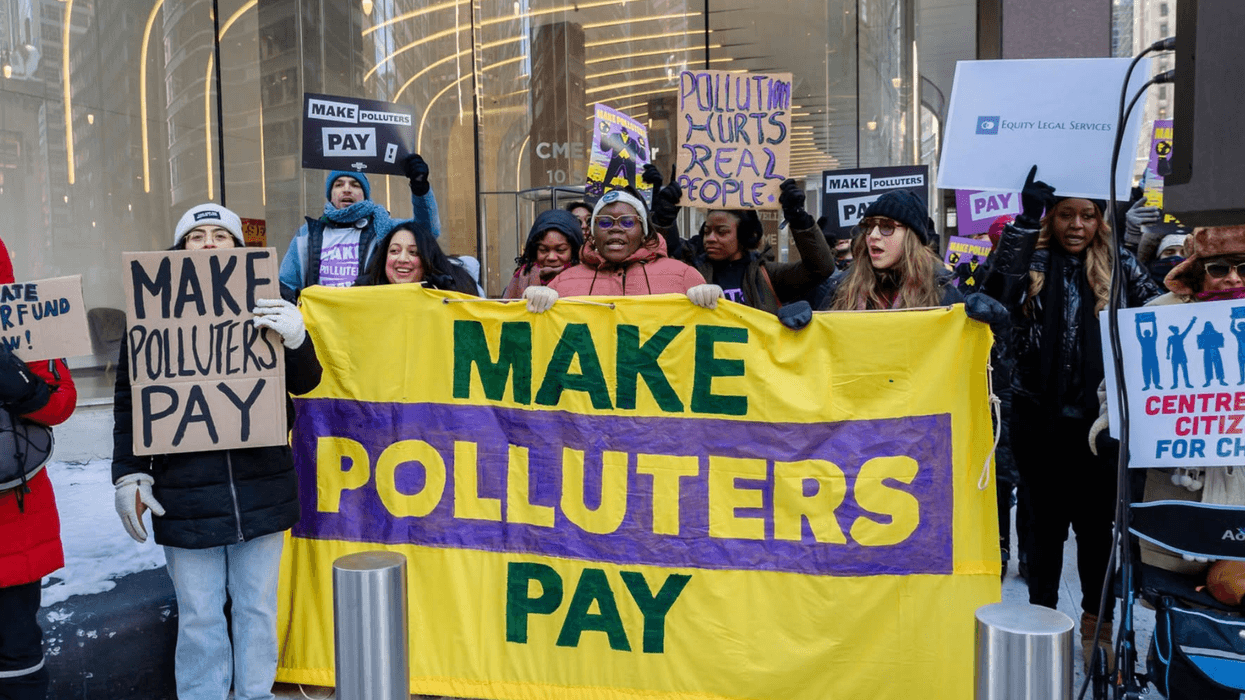
'No Immunity for Big Oil': Dem Leaders Urged to Block GOP Gift to Fossil Fuel Industry
"If we do not also protect Americans’ right to hold bad actors accountable in court, we will be handing Big Oil a get-out-of-jail-free card," said a coalition of over 190 civil society groups.
Jun 23, 2026
Nearly 200 civil society groups on Tuesday urged congressional Democrats to reject any legislation granting fossil fuel companies immunity from climate lawsuits, warning that such protections would block communities from pursuing accountability and compensation for climate-related damages.
"As communities across the country are taking Big Oil companies to court for lying to the public about the climate harms of their products, we are alarmed by reports that the fossil fuel industry is trying to secure a legal liability waiver that would block communities from attempts to hold them accountable," the No Immunity for Big Oil coalition wrote in a letter to Senate Minority Leader Chuck Schumer (D-NY), House Minority Leader Hakeem Jeffries (D-NY), and Democratic lawmakers in both chambers.
"The American Petroleum Institute—the largest oil and gas trade association in the country and a defendant in several climate accountability lawsuits—has announced that stopping 'abusive state climate lawsuits' against fossil fuel companies is a top priority for the industry this year," the letter continues.
"We’re urging you to protect our right to hold Big Oil accountable and reject any proposal that would shield fossil fuel companies from the legal and legislative efforts communities across the country are advancing to make polluters pay for the damage their climate lies and pollution [have] caused," added the groups, which include the Sierra Club, Natural Resources Defense Council, Greenpeace USA, Union of Concerned Scientists, Center for Biological Diversity, and Amnesty International USA.
In April, Sen. Ted Cruz (R-Texas) and Rep. Harriet Hageman (R-Wyo.) introduced companion versions of the Stop Climate Shakedowns Act of 2026, which would “prohibit liability against those engaged in the mining, extraction, production, refinement, transportation, distribution, marketing, manufacture, or sale of energy for damages or injunctive or other relief from the use of their products, and for other purposes.”
Hageman's office explained at the time that the legislation aims “to protect American energy from leftist legal crusades punishing lawful activity."
At the state level, there has been a coordinated push by Republican-controlled legislatures to shield fossil fuel companies from climate-related lawsuits. Earlier this year, Utah became the first state to pass a law "all but shutting down communities’ ability to hold gas-emitting polluters responsible for harms caused by their bad actions," according to law professor and critic Wes Henricksen.
Numerous Republican-controlled state legislatures are following suit, with similar legislation in various stages of advancement.
An investigation published in April by ProPublica's Abrahm Lustgarten found that "most of these bills are part of a coordinated effort, orchestrated by a constellation of groups that share staff or have funding ties to the prominent conservative activist Leonard Leo, who is credited with placing conservative justices on the US Supreme Court."
"These groups have drafted state legislation, planned its dissemination, and engaged a well-connected lobbying firm to get them signed into law," Lustgarten wrote. "The effort is unfolding as courts are weighing more than 30 significant lawsuits by states, counties, and municipalities accusing fossil fuel companies of misrepresenting the risks their products posed to consumers and seeking to recoup the costs of disasters and other climate impacts like wildfire losses or coastal flooding that their products helped cause."
"A goal of the legislation is to block these cases from going forward and prevent new ones from being filed," he added.
Responding to an effort to establish a state program that could collect as much as $50 billion from fossil fuel companies responsible for climate-wrecking greenhouse gas emissions, New Jersey state Rep. Dawn Fantasia (R-24) asked Tuesday on social media, "Since when do we get to retroactively tax oil companies for decades of lawful, heavily-regulated activity?"
But that's precisely what the 1998 Master Settlement Agreement did, forcing tobacco companies pay states more than $200 billion to compensate for past public health and medical costs caused by smoking-related harms. Like Big Tobacco before it, the fossil fuel industry has been accused of downplaying and obscuring evidence of climate and health harms from its products while working to stymie regulation and skirt legal and financial accountability.
Sixteen Republican state attorneys general are also pushing a liability shield for Big Oil modeled on the Protection of Lawful Commerce in Arms Act, legislation signed by former President George W. Bush that grants gun manufacturers and dealers legal immunity from civil litigation.
As the No Immunity for Big Oil letter notes:
The mounting threat of climate change is being felt first-hand by our communities as worsening floods, storms, and other extreme weather events leave destruction in their wake, saddling everyday Americans and local governments with skyrocketing costs to recover, respond, and adapt to the growing crisis. The record-breaking extreme weather events walloping our communities with increasing frequency and intensity are a result of fossil fuel pollution enabled for decades by Big Oil companies and their coordinated campaign of climate deception. Oil and gas companies have known for decades that their products posed “potentially catastrophic” risk to the climate—but instead of disclosing this knowledge, they chose to run a historic and ongoing campaign to deceive the public, protect their profits, and delay our transition to cleaner and cheaper energy.
"There are many ongoing fights to protect justice, democracy, and fundamental rights that demand your attention—and we thank you for fighting to keep our communities’ rights intact," the letter concludes. "If we do not also protect Americans’ right to hold bad actors accountable in court, we will be handing Big Oil a get-out-of-jail-free card."
The No Immunity for Big Oil coalition's letter comes as 10 Democratic state governors are also calling on congressional leaders to "reject federal legislation that would grant sweeping legal protections to fossil fuel companies and limit the authority of states and local governments to enforce their own laws."
“No industry should receive a blanket exemption from accountability under the law,” said Illinois Gov. JB Pritzker. “States have the right to protect their residents, enforce their laws, and seek justice when communities are harmed."
"This proposal before Congress would undermine those principles and set a dangerous precedent by allowing one industry to avoid legal scrutiny," Pritzker added, referring to the Stop Climate Shakedowns Act. "I urge Congress to reject this proposal and stand with states, taxpayers, and the rule of law—not special protections for powerful corporations.”
Keep ReadingShow Less
Most Popular