

SUBSCRIBE TO OUR FREE NEWSLETTER
Daily news & progressive opinion—funded by the people, not the corporations—delivered straight to your inbox.
5
#000000
#FFFFFF
To donate by check, phone, or other method, see our More Ways to Give page.
Daily news & progressive opinion—funded by the people, not the corporations—delivered straight to your inbox.
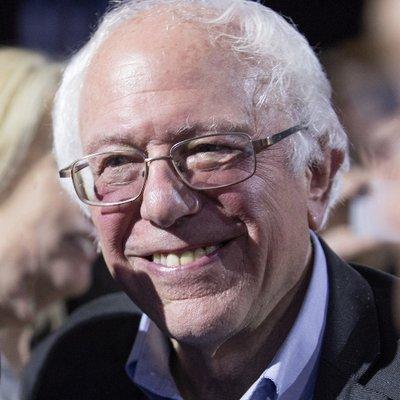
Sen. Bernie Sanders (I-Vt.) today introduced legislation to break up banks that have grown so big that the Justice Department fears the financial system would be put at risk if criminal charges were filed. Rep. Brad Sherman (D-Calif.) proposed a companion bill in the House.
The 10 largest banks in the United States are bigger now than before a taxpayer bailout following the 2008 financial crisis when the Federal Reserve propped up financial institutions with $16 trillion in near zero-interest loans and Congress approved a $700 billion rescue for banks that some considered "too big to fail." Attorney General Eric H. Holder Jr. now says the Justice Department may not pursue criminal cases against big banks because filing charges could "have a negative impact on the national economy, perhaps even the world economy."
"We have a situation now where Wall Street banks are not only too big to fail, they are too big to jail," Sanders said. "That is unacceptable and that has got to change because America is based on a system of law and justice."
"Never again should a financial institution be able to demand a federal bailout," Sherman said. "They claim; 'if we go down, the economy is going down with us,' but by breaking up these institutions long before they face a crisis, we ensure a healthy financial system where medium sized institutions can compete in the free market."
The Sanders and Sherman legislation would give the Treasury Department 90 days to identify commercial banks, investment banks, hedge funds and insurance companies whose "failure would have a catastrophic effect on the stability of either the financial system or the United States economy without substantial government assistance."
The list would have to include institutions deemed "systemically important banks" by the Financial Stability Board, the G-20 body that monitors and makes recommendations about the global financial system. The board in a press release last Nov. 4 identified eight U.S. banks required to maintain extra capital buffers: Bank of America, Bank of New York Mellon, Citigroup, Goldman Sachs, JPMorgan Chase, Morgan Stanley, State Street and Wells Fargo. Treasury would be required to break up those and any other institutions identified by the secretary as too big to fail.
The six largest U.S. financial institutions today have assets of nearly $9.6 trillion, a figure equal to about two-thirds of the nation's gross domestic product. These six financial institutions issue more than two-thirds of all credit cards, over half of all mortgages, control 95 percent of all derivatives held in financial institutions and hold more than 40 percent of all bank deposits in the United States.
"In my view," Sanders concluded, "no single financial institution should have holdings so extensive that its failure could send the world economy into crisis. At the very least, no institution, no CEO in America should be above the law. If an institution is too big to fail, it is too big to exist."
To read the bill, click here.
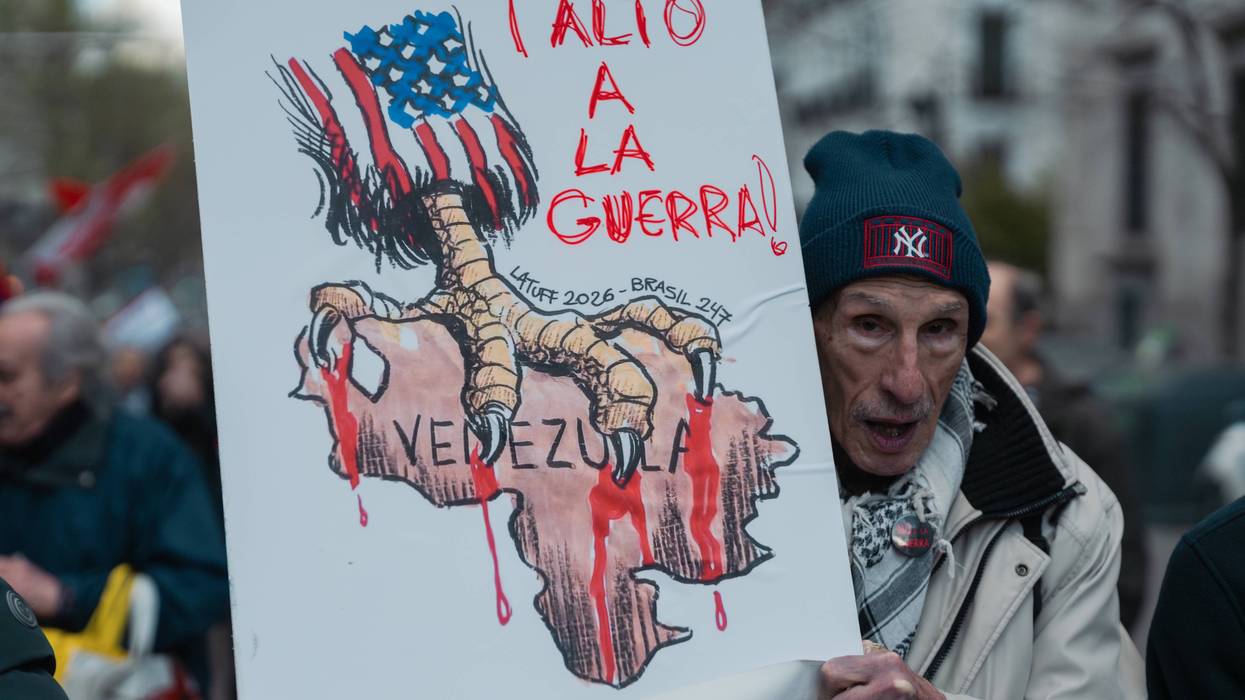
“We need to build a durable and lasting coalition of progressives that can take on the right-wing forces and answer them with the necessary call of the people,” said Congresswoman Pramila Jayapal.
A delegation of progressive congressional lawmakers and candidates is set to head to Uruguay this week to take part in a conference focused on Pan-American solidarity amid the resurgence of both US imperialism and right-wing governments in the hemisphere.
The third Pan-American Congress, to take place in the Uruguayan capital Montevideo, will bring together progressive legislators from North, Central, and South America and the Caribbean to discuss what organizers describe as hemispheric cooperation based on "solidarity between peoples" and "sovereignty among nations"—a vision sharply at odds with what critics have dubbed US President Donald Trump's "Donroe Doctrine" militant imperialism.
The US delegation will be led by Rep. Pramila Jayapal (D-Wash.), joined by Rep. Jesús “Chuy” García (D-Ill.), Democratic congressional candidate Dr. Adam Hamawy of New Jersey, and three members of Democratic Socialists of America also running for Congress: Claire Valdez and Darializa Avila Chevalier of New York and Chris Rabb from Pennsylvania.
"We need to build a durable and lasting coalition of progressives that can take on the right-wing forces and answer them with the necessary call of the people,” Jayapal said in a video posted to social media.
We need a foreign policy based on partnership, exchange, and mutual respect.I spoke with @elpais.com about joining the upcoming Panamerican Congress and the need to fight back against far-right extremism across the globe. Read more here:
[image or embed]
— Congresswoman Pramila Jayapal (@jayapal.house.gov) August 17, 2026 at 12:46 PM
Sen. Bernie Sanders (I-Vt.) is slated to address the conference remotely. Congressional Progressive Caucus Chair Greg Casar (D-Texas) will not attend but expressed his support for “pushing back against right-wing radicalization, tackling the climate crisis, and addressing our joint economic crisis.”
In an interview with El País published over the weekend, Japayal called the conference "an opportunity to hear from our Latin American counterparts about what is happening on the ground: how US foreign policy is affecting them and how we can work together to build a progressive movement and combat far-right disinformation. The United States is doing a lot of pain with our Donroe Doctrine."
Jayapal is leading a letter signed by Sanders, Casar, García, and seven other progressive Democrats asking Secretary of State Marco Rubio "to answer for the regional implications of the 'Trump Corollary' to the Monroe Doctrine, and ground US foreign policy toward the Western Hemisphere on the principles of mutual respect and advancement of human rights."
"The interventions conducted under the banner of the ‘Donroe Doctrine' appear to follow a partisan playbook: the endorsement of favored candidates, the placement of political allies, the weaponization of tariffs and sanctions, and, where those fail, the application of direct military force," the lawmakers wrote. "These are tactics that destabilize our hemisphere and endanger our neighbors."
Before this year's Panamerican Congress, I'm demanding the Trump administration answer for their "Donroe” Doctrine.It follows a partisan playbook of tactics that destabilize our hemisphere and endanger our neighbors.
[image or embed]
— Congresswoman Pramila Jayapal (@jayapal.house.gov) August 17, 2026 at 3:30 PM
Two of the letter's signatories, Reps. Nydia Velázquez (D-NY) and Delia Ramirez (D-Ill.), earlier this year introduced the New Good Neighbor Act, a bill inspired by the short-lived period when the Franklin D. Roosevelt administration pursued policies of nonintervention and improved diplomatic relations with Latin America in the 1930s.
Since returning to the White House just last year, Trump—who campaigned as the "peace president"—has bombed and invaded Venezuela to abduct President Nicolás Maduro and his wife, launched airstrikes against what he claims without evidence are drug-smuggling boats in the Caribbean Sea and Pacific Ocean, and deployed troops to Ecuador as part of a joint campaign against alleged drug gangs dubbed Operation Total Extermination.
Trump has also ordered the military to plan an invasion to seize the Panama Canal, threatened to “take” Cuba, possibly attack Mexico and Colombia, invade and annex Greenland, and somehow make Canada the “51st state.”
That’s just in the Western Hemisphere. Overall, Trump has bombed seven countries around the world since returning to the White House and 10 nations over the course of his two terms—including Iran, where he launched an increasingly protracted illegal war in concert with Israel.
Just last week, Ramirez dismissed as a "cheap piece of imperialist propaganda" a video published by the State Department hailing the Monroe Doctrine, which was cited to justify numerous US wars of aggression, conquest, destabilizing invasions, the overthrow of democratically elected governments, and support for pro-Washington military dictatorships.
Issued in December 1823 by President James Monroe as Spanish colonies in the Americas won their independence, the eponymous doctrine states that European powers should not establish new colonies or interfere politically in the independent states of the Western Hemisphere. While it was partly a response to European attempts to restore colonial rule in Latin America, the Monroe Doctrine also asserted US hegemony over the Americas.
According to John Coatsworth, a historian specializing in Latin America, the US has launched at least 41 interventions that successfully overthrew governments in the Americas since 1898. The number of US military interventions in the region is much higher.
Former Colombian President Ernesto Samper, who is attending the conference, told The Hill on Monday that the resurgence of right-wing leaders, including Abelardo de la Espriella in his country, is “leading us toward a form of neofascism."
Samper said that Trump's "hegemonic aggression" in the Americas shows that the hemisphere "deserves a progressive and sensible response, which I hope will emerge from this forum."
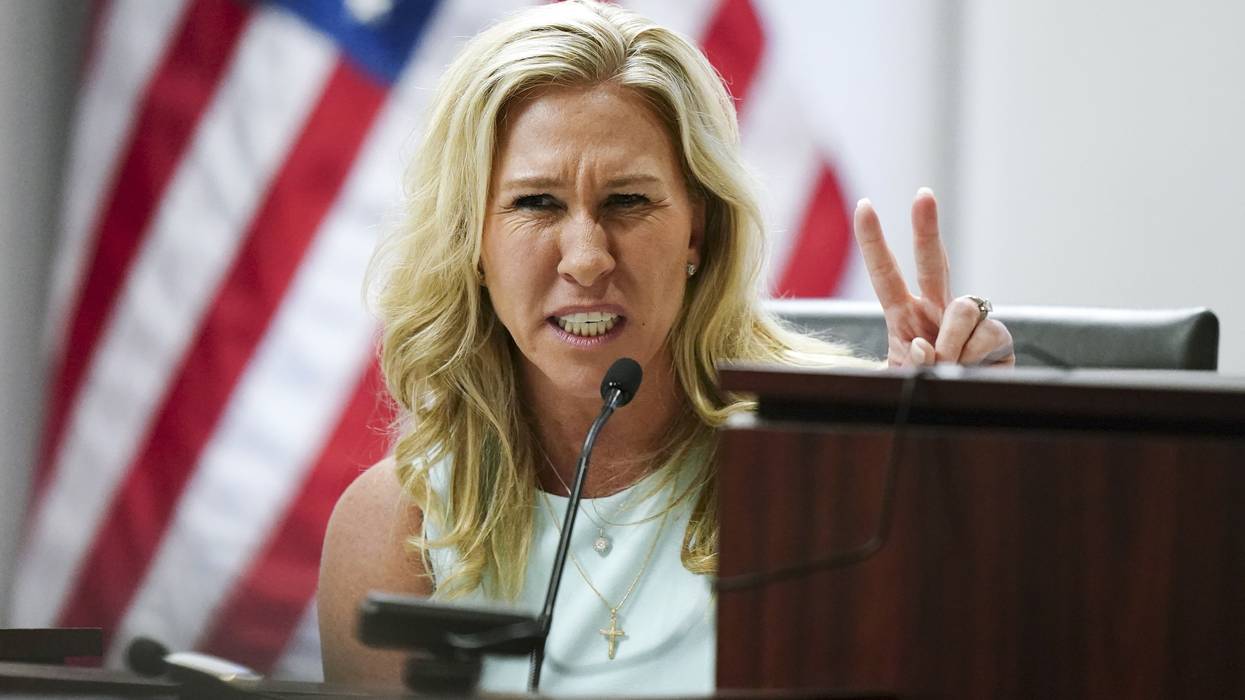
"Nuclear weapons must never be used," said the head of an Iranian American group. "This war must end before its architects drag millions more people, and potentially the entire world, into an even greater catastrophe."
A leading Iranian American organization on Monday responded with alarm after former Congresswoman Marjorie Taylor Greene claimed that members of President Donald Trump's administration "are discussing using nuclear weapons on Iran in strategy meetings."
Jamal Abdi, president of the National Iranian American Council (NIAC), declared that "we must shut the Pandora’s box of the Iran war before more horrors are unleashed—including the possible use of nuclear weapons. The longer this catastrophic war of choice continues, the more horrors we risk unleashing that many of us would have previously found unthinkable."
"It is deeply alarming that we are once again seeing reports that US officials are contemplating using nuclear weapons inside Iran," he said. "The taboo against the use of nuclear weapons has lasted for 81 years thanks to tremendous global efforts to contain a threat that could wipe out all life on Earth. That the taboo would be broken for a 'tactical purpose' in a war that was illegal under US and international law, threatening countless lives and risking a renewed nuclear arms race, is almost too horrifying to imagine."
Abdi's statement came as a 60-day ceasefire deal expired without any indications that an end to the conflict is close, and a day after Greene, a Georgia Republican and erstwhile Trump ally, made the claim about talks behind closed doors, writing on social media Sunday: "It's real. I'm not speculating, I know. And it's pure evil."
Pointing to the only previous use of nuclear weapons—when the United States dropped atomic bombs on Japan's cities of Hiroshima and Nagasaki in 1945—Greene noted that after the immediate deaths from those attacks, "the extreme suffering continued for the Japanese people from radiation sickness, skyrocketing cancer rates, and generational birth defects. Not to mention wiping out all means of their economy. And the suffering was so great that all of humanity vowed, 'never again.'"
Trump and his administration "were told by our own intelligence that Iran was nowhere near creating a nuclear weapon, then Israel said the same line it's repeated for decades, 'Iran is only weeks away.' So we bombed anyways, killed their leaders and innocent little children in a school, and Iran has controlled the Strait of Hormuz ever since and punished the region for their part in it," she wrote. "And now our government is the one actually discussing lowering the nuclear threshold in order to use nuclear weapons against Iran even though Trump claims he's won the war like 40 times and says the US controls the SOH."
Iran's restrictions on ship traffic through the strait have driven US gasoline prices to a record high for mid-August and had various other economic impacts—and the public seems to be giving Trump credit for his "mismanagement" of the economy, with his approval rating hitting a new low and a majority of Americans, including many of his own voters, saying they are worse off financially under his second administration.
"Trump promised no more foreign wars, but may actually be the one who delivers a nuclear holocaust that would likely drag the entire world into major conflict, economic depression, and mass human suffering we've never seen in our lifetimes and maybe throughout history," added Greene, who promoted various conspiracy theories while in office. "People need to speak out and boldly stop this insanity. America is not untouchable. If and when that happens, everyone, and I do mean everyone, will hold ALL of those in leadership right now fully responsible for the rest of human history. Do not use nuclear weapons and stop this war NOW."
Meanwhile, Trump on Monday repeated claims that "the number one Goal is, and always will be, that Iran cannot have, in any way, shape, or form, a Nuclear Weapon," comments that came just days after he pledged to "never apologize" for launching the war.
In addition to bombing an elementary school in Minab on February 28, the first day of the war, US forces have destroyed various other civilian infrastructure across Iran, and the conflict has killed thousands of people throughout the Middle East. Amid difficult negotiations, Trump—who ripped up the Obama administration's Iran nuclear deal during his first term—has overtly threatened to commit more war crimes.
NIAC's Abdi explained just how catastrophic the addition of nuclear weapons could be: "A NUKEMAP simulation of a 15-megaton surface detonation in Isfahan province, the area of Pickaxe Mountain, estimates nearly 1.9 million people killed and more than 523,000 injured from the immediate effects alone, and those estimates deliberately exclude casualties from radioactive fallout. Even entertaining this option takes us farther than any government should ever be willing to go."
"This war is already eviscerating any notion of America's moral standing in the world and, like the Israeli genocide in Gaza, is systematically disintegrating the international norms over the use of state violence that we take for granted," he said. "Already, we have the US president constantly threatening to destroy Iranian civilization and boasting about conducting war crimes like attacking civilian bridges and water plants and civilian infrastructure. His Pentagon is stonewalling the American people regarding its use of AI to conduct strikes like the double-tap bombings of the Minab girls school."
"Now, amidst increasing advocacy from pro-war voices hyping 'Pickaxe Mountain' as a necessary target in the war, Trump has vowed to target it and hit it hard. Additional commentary has suggested that nuclear weapons might be the most likely to damage or destroy the underground facility, which is deeper than the facilities President Trump severely damaged in June 2025 military operations, and Trump could drop the bomb and then declare victory," he continued. "The Defense Department has also recently begun drafting a new nuclear doctrine that envisions the possible use of tactical nuclear weapons in a war with Russia or China."
Abdi added that "if nuclear use against Iran is being discussed inside this administration, our lawmakers must demand answers immediately and every policymaker must unequivocally reject it. There can be no hedging and no debate over circumstances in which this could become 'necessary.' Nuclear weapons must never be used. This war must end before its architects drag millions more people, and potentially the entire world, into an even greater catastrophe."

While welcoming the development, one advocate stressed that "we won't rest until the contracts are canceled, the waivers of law are rescinded, and the bulldozers are sent packing for good."
US Customs and Border Protection Commissioner Rodney Scott announced Monday that "CBP is pausing all construction activity in Big Bend National Park while I visit and conduct a personal, on-the-ground evaluation" of the Trump administration's controversial plans for the Texas site.
Although CBP previously abandoned plans for a 30-foot wall, crews recently started work on its revised scheme for the national land and a state park in the area, which involves "a new road, lights, miles of barriers designed to stop cars from crossing the border, and technology such as fiber optic cables to be buried under the fences," as The Associated Press reported Monday. It's part of President Donald Trump's much broader anti-immigrant agenda, which includes mass detention and deportation efforts.
The new plans for southern Texas have drawn criticism from local residents, Democratic and Republican politicians, all five sheriffs in the Big Bend border region, and organizations including the Center for Biological Diversity, which has filed a related lawsuit. The group's national public lands advocate, Laiken Jordahl, said last week that "this is the most heinous attack on an American national park in generations."
"The administration is preparing to blast hundreds of miles of destructive roads through the wildest place left in Texas and cut off public access to the Rio Grande, all to enrich private contractors," Jordahl continued. "Big Bend belongs to us all, and sacrificing it is a betrayal of every Texan and every American who believes our national parks should be protected. We won’t stop fighting this reckless assault on Big Bend National Park and America's natural heritage until this destruction ends."
National Parks Conservation Association president and CEO, Tiernan Sittenfeld, similarly declared last week that "bulldozing Big Bend National Park is an unconscionable attack on one of America's greatest treasures."
"The administration is slashing through miles of this wild landscape, threatening access to recreation, and harming sensitive wildlife habitat, she said. "Park advocates and local communities have warned the administration for months that their plan to build border wall infrastructure in Big Bend poses serious risks to this one-of-a-kind national park and surrounding landscape. Now Big Bend National Park and the people who love this place are suffering the consequences."
"Customs and Border Protection must halt construction in this iconic landscape," Sittenfeld argued. "There is still a chance for the administration to work together with Congress and communities to form a new plan for border security in the region that will not forever damage America's national parks."
Heeding such calls on Monday, Scott claimed that "CBP is firmly committed to protecting America, and that includes our national treasures like Big Bend National Park. We know the current and predictable national security threats and they are real. Now over the next couple of days, I will join a small team to evaluate the terrain and listen to local leadership, community members, and stakeholders to ensure that we secure our borders while simultaneously protecting BBNP for generations to come."
Noting that the "massive, nonpartisan outcry has taken Texas and the nation by storm," Jordahl welcomed Scott's announcement.
"For the first time in weeks, the machines are quiet," he said. "This is welcome news, but they will likely commence with destruction again soon. DHS has lied to us every step of the way about this project. We can't afford to let up the pressure. We won't rest until the contracts are canceled, the waivers of law are rescinded, and the bulldozers are sent packing for good."

"The people of the DRC deserve the world’s attention, resources, care, and solidarity," said one advocate.
As the Ebola crisis that was first detected in the Democratic Republic of Congo in May became the deadliest outbreak of the disease in the country's history on Monday, one global public health expert in the United Kingdom pointed to the key difference between the 2014 epidemic in West Africa and the one that has now killed at least 2,325 people in the DRC.
In 2014, wrote Devi Sridhar, chair of global public health at the University of Edinburgh, in The Guardian, the US and other wealthy countries "worked with the World Health Organization (WHO) to escalate a response, bringing military-like coordination, necessary resources, logistics, and trained personnel."
Now, said Sridhar, "we’ve had two 'America-First'" terms of President Donald Trump.
"The US is no longer part of the WHO or working multilaterally, favoring a 'go-it-alone' response," she wrote.
In Trump's second term, the president cut tens of billions of dollars in foreign aid spending. Data released by the Organization for Economic Cooperation and Development in April showed the US spent 56.9% less on foreign assistance last year after Trump dismantled the US Agency for International Development (USAID), cut smaller programs, and demanded that Congress rescind billions that had already been appropriated for countries and programs in need.
Ebola has become the DRC's worst-ever outbreak in just three months, wrote Sridhar, "in the context of the defunding of foreign aid, the censorship of scientists, the closure of USAID, the implosion of the Centers for Disease Control and Prevention, and a 'Make America Healthy Again' movement."
By the time officials announced that the outbreak had been detected in May, they had already recorded 246 suspected cases and 80 suspected deaths in Ituri province—suggesting that US aid and public health cuts had "undermined some of the surveillance and detection initiatives that might have helped to catch this earlier," as Jeremy Konyndyk of Refugees International said at the time.
Months after getting a significant head start in spreading throughout the population, Ebola has now been detected in six of the DRC's 26 provinces, and the country's public health institute has recorded at least 4,945 cases, with 101 detected in the 24 hours preceding Monday's announcement.
Ebola "is winning in the Democratic Republic of the Congo,” said the United Nations last Friday, noting that the epidemic was killing one person every 30 minutes.
Amnesty International called on the globa; community to urgently try to make up for the surveillance failures that happened earlier this year and mobilize to slow the outbreak.
"We call for global solidarity as eastern DRC faces its deadliest Ebola outbreak in the country's history," said Amnesty. "Human rights must continue to be prioritized as health workers treat the disease across the region."
The US State Department said earlier this month that it has provided $512 million in direct assistance to help respond to the outbreak—far less than the $5.4 billion the US enacted in December 2014 to fight the epidemic in West Africa.
US spending is lagging as the outbreak has become the fastest-growing in the history of the virus, as The Guardian reported Monday. The 2014 outbreak took five months to reach 1,000 deaths, but more than 2,000 people have died of Ebola in less than three months since the disease was detected.
Thomas Parisch, a public health specialist with Doctors Without Borders in the DRC, told The Guardian that the country still appears to be struggling with the limits imposed by aid cuts.
"Normally, as an outbreak progresses, the case fatality ratio should fall as contact tracing improves and patients are identified and treated earlier," said Parisch. "Instead, we’re still seeing many cases detected very late, when treatment is less likely to succeed, with many identified only after they die in the community.”
The outbreak also differs from previous epidemics in that the current Ebola infections are being caused by the rare Bundibugyo virus. There are no approved vaccines or treatments for the strain, but WHO Director-General Tedros Adhanom Ghebreyesus said recently that two new vaccines were being tested on people.
Lawyer and advocate Bernice King urged the public to "refuse to look away."
"Nonviolence is an active commitment to protect life," said King. "The people of the DRC deserve the world’s attention, resources, care, and solidarity."
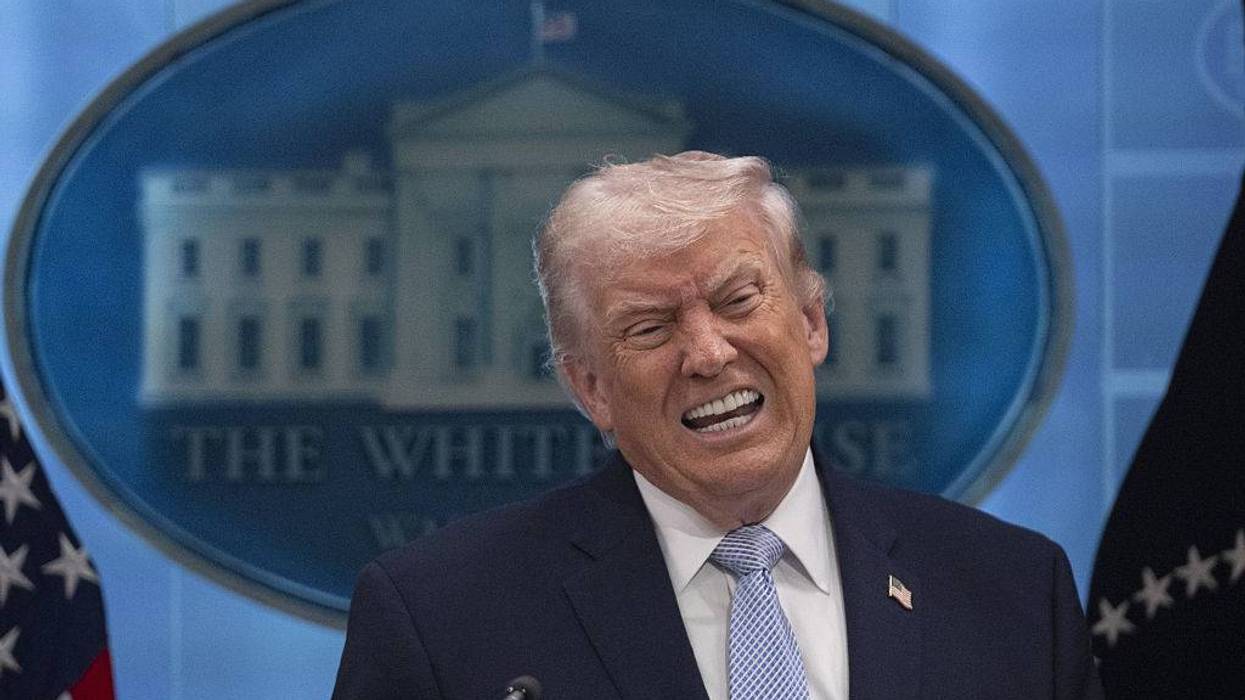
As inflation has wiped out wage growth, 53% of voters said they were worse off financially than when Trump took office, including nearly a quarter of Republicans.
President Donald Trump's approval rating has hit a new low as the majority of Americans—including many of his own voters—now say they are economically worse off under his second administration.
In a Reuters/Ipsos poll released Monday, just 33% of Americans said they approved of Trump's performance in the White House, while 64% disapproved, a drop from 35% approval earlier in the month. They're the worst marks he's received during this term and are tied with his worst ever, which came in December 2017.
Trump's nadir comes as a majority of Americans say their finances have gotten worse since he came to power. In a Financial Times poll released on Sunday, more than 53% of registered voters said they were worse off since January 2025. This includes 57% of independents, but also nearly a quarter of Republicans.
Voters' economic angst aligns with what the metrics show. After hitting a three-year peak of 4.2% in May, inflation was still higher in July than it was when Trump took office, at 3.4%. Real wages declined as hourly pay failed to keep up with inflation, and the economy shed 23,000 jobs last month.
Trump responded to this bleak report by celebrating that the economy was "doing unbelievably from the standpoint of Wall Street," with the stock market continuing to soar.
The pocketbook issues faced by many Americans have been made worse by Trump's war with Iran, which has caused oil prices to spike, triggering a surge in gasoline prices and inflation that has rippled throughout the economy.
The war began unpopular and has only grown more so as the conflict, which Trump said would be over in weeks, approaches its sixth month. In a Reuters poll released in late July, only about a third of Americans said they supported it.
After backing out of a peace agreement earlier this summer, Trump has doubled down on the war in recent weeks. Americans, regardless of party, are now overwhelmingly doubtful that it will end any time soon.
Among all adults, 4 in 5 said they believed the war would "go on for a long time." This includes 80% of independents, but also 71% of Republicans. Across all parties, just 16% said they believed the war would "end in a matter of weeks."
There are increasing signs that even Trump's core base is beginning to sour on him. An Economist/YouGov poll out last week showed that his overall approval among GOP voters had fallen to a second-term low of 79%.
Even more concerning for him is a decline in enthusiasm among supporters: Where 68% said they "strongly approve" of Trump near the start of his term, just 48% now feel that way.
Democratic voters, meanwhile, appear fired up as November approaches. A Washington Post/Ipsos poll from July showed that Democrats have a 10-point advantage over the GOP among those who say they are certain to vote.
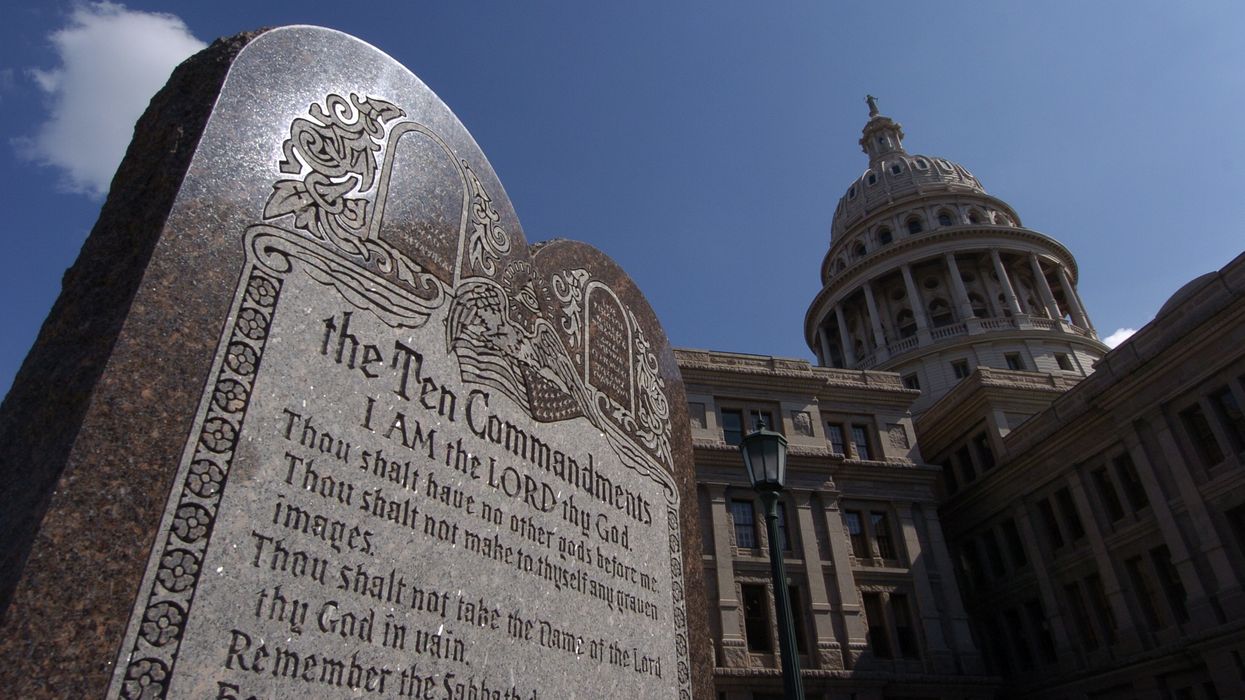
"In a diverse public school environment, all students should be treated with equal respect, regardless of their religious beliefs, or lack thereof," said one plaintiff.
A group of families is asking the US Supreme Court to strike down Texas Senate Bill 10, a state law mandating that a copy of the Ten Commandments be displayed in public school classrooms.
The families, who come from a variety of religious denominations and are being represented by several prominent civil liberties groups, argued in a Monday court filing that SB 10 violates the First Amendment of the US Constitution because it "imposes on public school children, for nearly every hour they are in school, the state's favored scripture."
In making their case, the families argued that a recent appeals court ruling upholding the Texas law ran afoul of multiple past Supreme Court rulings, including the 2022 ruling in Kennedy v. Bremerton School District, which made reference to "problematically coercive" religious messages being "publicly broadcast or recited to a captive audience," and the 1980 ruling in Stone v. Graham, which determined that posting the Ten Commandments in schools violates the Constitution's establishment clause.
Rabbi Joshua Fixler, a plaintiff in the case, said the Texas Ten Commandments law made him "not only worried about my own kids," but "deeply concerned about all the children in my congregation."
"These displays put children in the position of having to defend themselves and their families’ religious beliefs," said Fixler, "against a government mandate that makes them feel different and separate from their classmates."
Fellow plaintiff Nichole Manning, an atheist from Dallas, argued that the Texas law is "interfering with our family’s decisions about how our children engage with religion."
“As a parent, I intentionally choose to have my children attend public school because I prefer an educational environment without any religious affiliation," Manning emphasized. "In a diverse public school environment, all students should be treated with equal respect, regardless of their religious beliefs, or lack thereof."
In an editorial published in the Houston Chronicle on Monday, plaintiff Audrey Nath said that the Texas law was interfering with her right to raise her children to "celebrate the diversity of religious faiths in our families: Hinduism, Jainism, Judaism, and Quakerism."
"My 9-year-old son is proud of his heritage, and he even brought that statue of Shiva to his public school as part of a presentation about his family history," Nath explained. "SB 10 puts a permanent, state-mandated sign above his desk telling him what he carried in is forbidden."
ACLU of Texas staff attorney Chloe Kempf, who is co-representing the families, said that past legal precedents give the current Supreme Court a clear roadmap to overturn the Texas law.
"The US Supreme Court has rejected this kind of government-imposed religion before, and it should do so again,” said Kempf. “Having these posters in Texas classrooms puts students at risk of bullying, stigmatization, and religious coercion. Our nation’s bedrock principle of separating church and state means that families and faith communities—not politicians—get to decide what role religion plays in children’s lives."
Annie Laurie Gaylor, co-president of the Freedom From Religion Foundation, argued that mandating schools display the First Commandment alone is "the antithesis of our First Amendment" because it dictates "which god must be worshipped."
"It is not the government’s role to daily expose young children to a coercive display of one religion’s set of religious edicts in our public schools," Gaylor emphasized. "Our public schools exist to educate, not to proselytize."
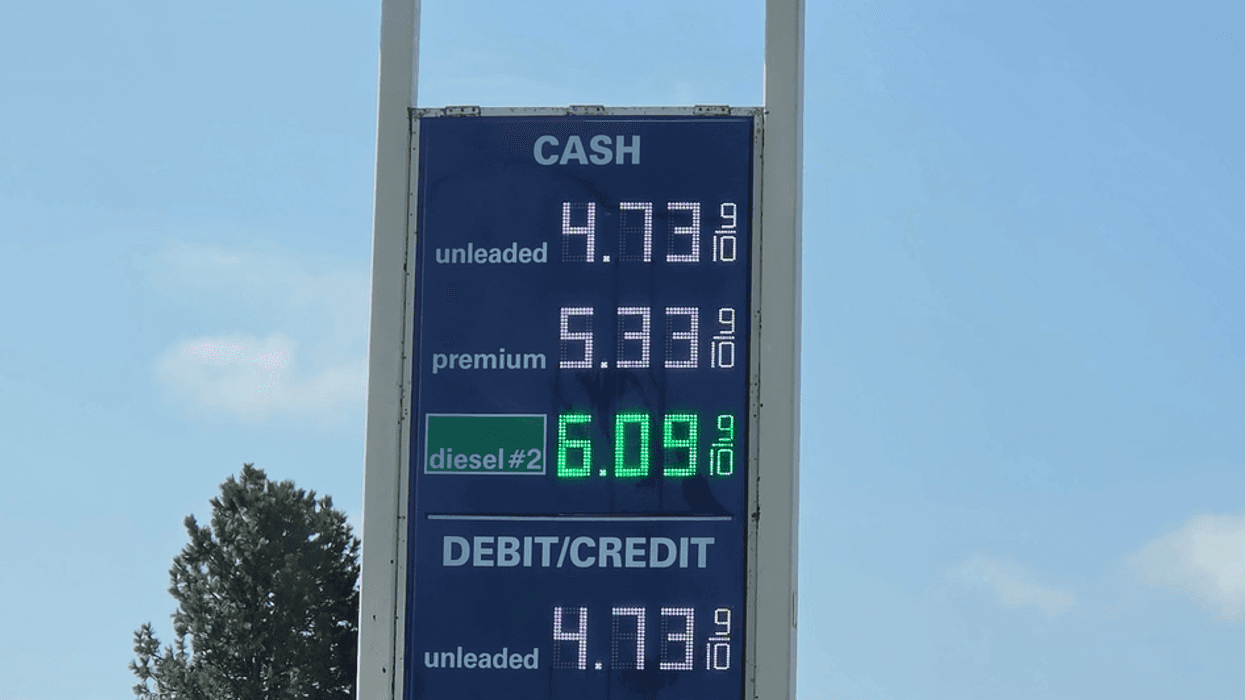
Trump campaigned on fixing the affordability crisis but defends high gas prices as the cost of preventing Iran from building nuclear weapons that his own administration said Tehran is not trying to build.
The American Automobile Association reported Monday that drivers are paying more at the pump than ever before for this point in August as President Donald Trump's war on Iran continues to disrupt global energy supplies—and he says he won't apologize for the pain his illegal war of choice is inflicting upon consumers.
AAA said the national average price for a gallon of regular gasoline stood at $4.06 on Monday, more than 92 cents higher than a year ago and double the $1.85 recently promised by Trump. The price is the highest ever recorded for mid-August, according to GasBuddy petroleum analyst Patrick De Haan. In California and Hawaii, average prices are approaching—or exceeding—$5.40 per gallon.
The record gas prices come amid the protracted US-Israeli war on Iran that has killed thousands of people and severely disrupted shipping through the Strait of Hormuz, a crucial global energy artery through which roughly one-fifth of the world’s oil and liquefied natural gas supplies normally pass. According to Reuters, only five vessels traversed the strait Saturday, and none did so Sunday. Brent crude was trading near $89 per barrel on Monday, while West Texas Intermediate was above $82.
While Trump has said the war is "over" or nearly over dozens of times—The Guardian's Robert Tait recently called the recurrent spectacle his "own Groundhog Day"—Iran currently appears to have the upper hand, as shipping has overwhelmingly avoided the US-supported route through the Strait of Hormuz, with most vessels using a course set by Tehran or eschewing the waterway altogether.
The Guardian reported Monday that US households have collectively spent an additional $56.4 billion on gasoline over the past six months—an average of roughly $477 per home. Meanwhile, major oil companies raked in a combined $90 billion in profits during the second quarter.
Trump, who campaigned on promises to tackle the affordability crisis, has repeatedly defended high gas prices as the cost of preventing Iran from developing nuclear weapons that every administration since George W. Bush's—including his own—has said Tehran is not seeking to build.
"For you to pay a tiny little bit more for your gasoline, just remember, you're doing it so that a very evil country cannot have... a nuclear weapon," Trump said Friday during a speech to law enforcement officers in Garden City, New York.
"So remember that when you have to pay a little bit more, you're at $4; it's OK... I'll never apologize, I did the right thing," the president added to raucous applause.
Critics slammed Trump's remarks, with Congresswoman Shontel Brown (D-Ohio) noting on Monday that, while "Trump’s family got rich off of his failed war," the American people—including his own supporters—"got screwed."
"Now he wants to us to smile and accept the higher prices he caused," she added.
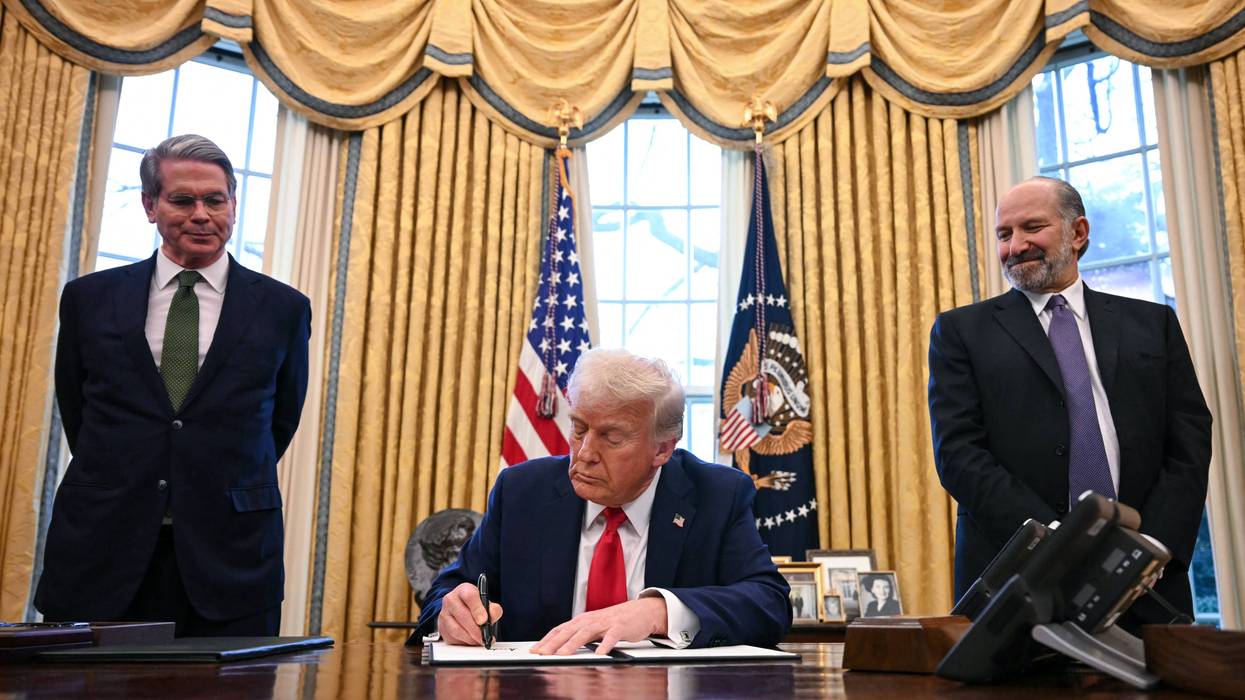
The Trump administration has over 10 times as many of these super-rich appointees as the Biden, Obama, and George W. Bush administrations.
President Donald Trump has created a government "of the rich, by the rich, for the rich."
That's what Sen. Bernie Sanders (I-Vt.) said on Monday following the release of a report demonstrating how the president has handed the reins of power over to the ultra-wealthy on an unprecedented scale.
The analysis by the watchdog group Public Citizen found that 57 officials working for the Trump administration are worth over $100 million, while eight of them are worth a billion or more.
Seventeen of them are ambassadors, while the other 40 occupy senior posts, including over a third of Cabinet positions. More than half of them were donors to Trump’s 2024 presidential campaign, giving a combined $65 million in campaign contributions to him or his associated political committees.
The tally does not include Trump himself, who has seen his family's wealth explode by over $2 billion, mostly from his cryptocurrency venture, since returning to power. His net worth is now estimated by Forbes to be about $6.2 billion.
The ultra-rich officials include Education Secretary Linda McMahon, the wife of former World Wrestling Entertainment (WWE) CEO Vince McMahon, who has little experience working in education but is worth between $413 million and $1.3 billion and has spent over $20 million supporting Trump; Commerce Secretary Howard Lutnick, who is worth at least $723 million and spent over $9 million to back the president; and Treasury Secretary Scott Bessent, who spent about $1.15 million in 2024 supporting Trump.
The Trump administration has more than 10 times as many "ultra-millionaires" as previous administrations, the report found. The Biden administration had just five members with over $100 million; the Obama administration had three, and the George W. Bush administration had five.
"The enormous wealth of Trump administration officials raises questions about whether they are driven by their sweeping personal financial interests or the interests of the American public at large, which they have an obligation to serve," writes its author, Doug Pasternak, the head of Public Citizen's Trump Accountability Project.
Since returning to office in January 2025, Trump has not only employed the super-rich but has also enacted a slate of policies benefiting them.
The administration has facilitated what has been described as the largest upward transfer of wealth in US history, with over $1 trillion in tax cuts for the top 1% paid for by brutal cuts to programs that benefit the poorest Americans, like Medicaid and the Supplemental Nutrition Assistance Program (SNAP).
On top of this, he has gutted the Consumer Financial Protection Bureau, which protected Americans against abuse by powerful financial institutions, and enacted sweeping deregulation of cryptocurrencies. His Labor Department has systematically dismantled worker protections while he’s stripped collective bargaining rights from over 1 million federal employees.
The report also notes that many of Trump's wealthy appointees retain financial ties to companies or industries directly affected by the agencies they now control, creating significant potential conflicts of interest.
Lutnick's Commerce Department, for example, has a role in regulating the financial services firm Cantor Fitzgerald, which is now controlled by his sons and was chosen to handle a $1.5 billion stock offering tied to a mining company receiving federal support from the department. Deputy Defense Secretary Stephen Feinberg’s former firm, Cerberus, meanwhile, owns companies that have received at least $90 million in Pentagon investments and contracts.
"When the people holding the reins of government are drawn overwhelmingly from the ranks of the ultra-rich, it leads to misplaced incentives and corruption, and begs the question whose interests they are truly serving," said Lisa Gilbert, the co-president of Public Citizen.
The report points out the enormous chasm between the extraordinary wealth of the average Trump appointee and that of the Americans they represent, whose average annual salary is about $64,500.
"This disconnect," the report says, "has ripple effects throughout the government and across the entire nation."
In a June poll conducted by the Brennan Center for Justice, 62% of registered voters said corruption in US politics and government was “a very big problem.” More than two-thirds described Trump as corrupt, while over 4 in 5 said the Cabinet was.
"The breadth and depth of the economic divide we quantified in this report," Pasternak said, "should be deeply troubling to anyone concerned about the welfare of our democracy."
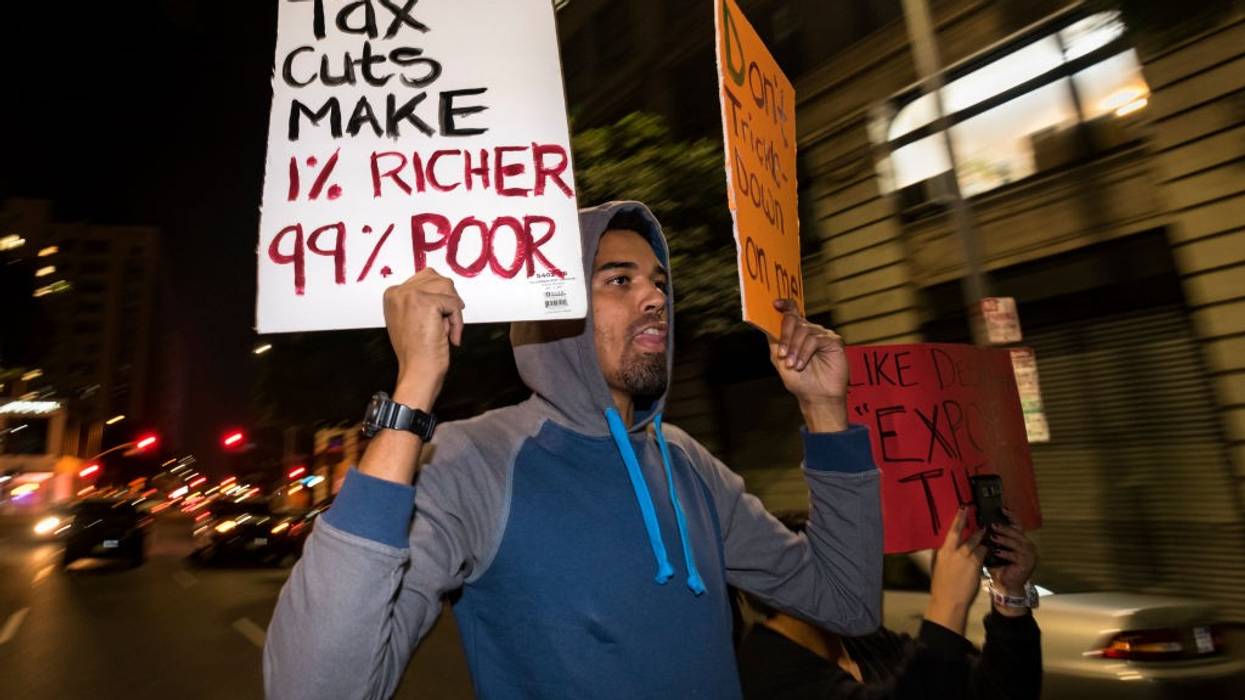
"This is an extraordinary concentration of tax benefits among some of the biggest and most profitable companies in the world," said an ITEP senior fellow.
As with the GOP's 2017 tax legislation, experts warned that big businesses and ultrarich individuals would benefit from President Donald Trump signing the One Big Beautiful Bill Act last year, while everyday Americans would suffer, and a Monday analysis identifies some of the companies now paying billions of dollars less in taxes.
The Institute on Taxation and Economic Policy (ITEP) "has tracked $204 billion in federal tax breaks disclosed by publicly traded US companies so far for 2025," the report says. "But those benefits were not spread evenly across the corporate sector: Six companies alone accounted for $83 billion of them."
The publication points out that "the stunning size of the federal income tax breaks corporations claimed this year dwarfs past corporate tax breaks, themselves sizeable. Microsoft received $18.7 billion in federal income tax breaks, a record high for single-year federal tax breaks for one publicly traded company. Alphabet claimed a staggering $18.4 billion, and Amazon walked away with $17.4 billion in tax breaks. Meta received $13.7 billion, JPMorgan Chase received $8.3 billion, and Nvidia received $6.8 billion."
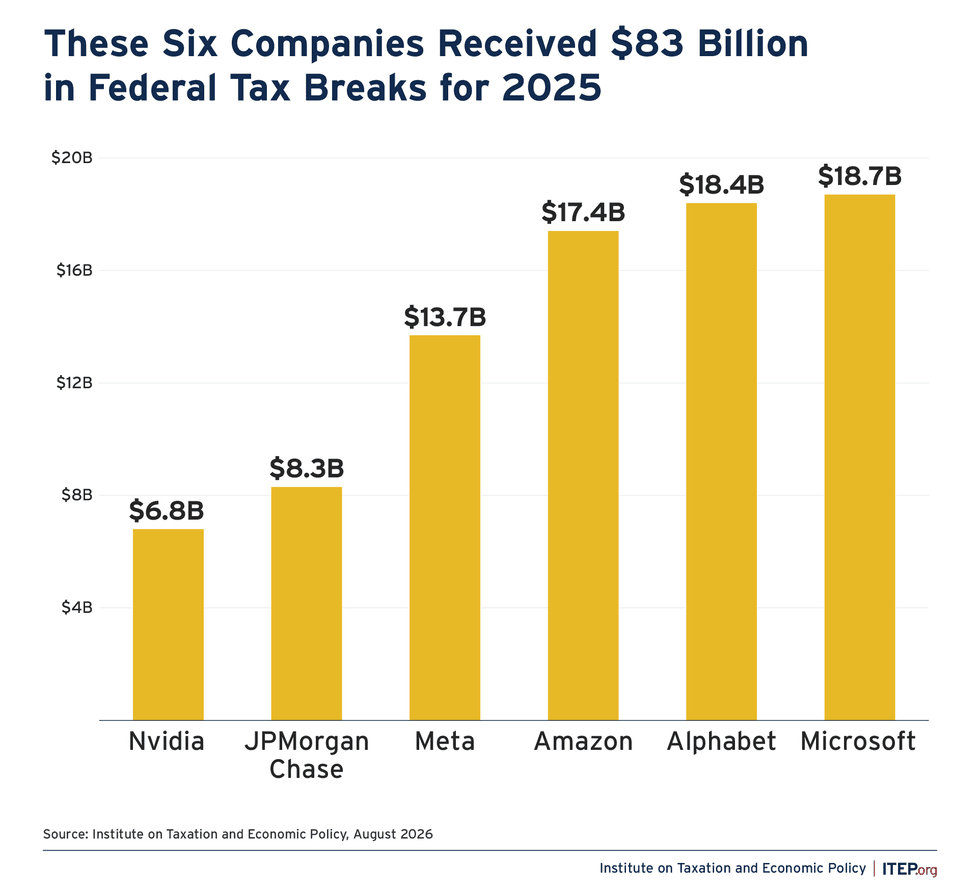
To put that $83 billion into context, the report highlights that it "represents nearly 18%, or almost $1 out of ever $5, of total federal corporation tax collections according to the Congressional Budget Office." It also "exceeds the entire annual discretionary budget of the US Department of Education," which Trump is notably aiming to eliminate as part of a broader mission to gut the federal government in his second term.
"This is an extraordinary concentration of tax benefits among some of the biggest and most profitable companies in the world," report co-author and ITEP senior fellow Matthew Gardner said in a statement. "When six companies can collect tax breaks equal to nearly one-fifth of what the federal government raises from the corporate income tax altogether, policymakers should be asking whether these provisions are serving the public interest or simply rewarding companies that are already enormously profitable and politically influential."
Gardner and his co-author, ITEP intern Sarah Buttikofer, emphasized that the top four firms featured in their analysis are tech giants: "Microsoft, Alphabet, Amazon, and Meta collectively received $68 billion in federal income tax breaks—which represents roughly 33% of the overall total."
"These figures show what Americans intuitively know: Corporate profits and economic power are increasingly concentrated among a relatively small number of extremely large companies," the pair wrote. "The presence of half a dozen tech CEOs at Donald Trump's January 2025 inauguration was a stark reminder that the economic leverage these companies are gaining is being translated into political power as well. That makes the tax treatment of these companies especially important."
Amazon founder Jeff Bezos and Meta CEO Mark Zuckerberg were among the Big Tech executives with prime seating at the inauguration. There was also the world's richest man, Elon Musk, who went on to help Trump rip apart the federal workforce as the de facto leader of the so-called Department of Government Efficiency.
To put these enormous tax breaks in context, the largest single-year tax break we've documented for any corporation before 2025 was J.P. Morgan’s $5.2 billion haul in 2024.itep.org/six-companie...
[image or embed]
— ITEP (@itep.org) August 14, 2026 at 12:18 PM
Musk leads various businesses, including Tesla, which was among 88 companies that paid no federal income tax last year, despite making almost $5.7 billion, according to an April analysis from ITEP. The others range from airlines and banks to energy, entertainment, and tech companies, such as Citigroup, Edison International, Palantir, United, and Walt Disney.
Meanwhile, near the end of last year, as Trump dismissed affordability concerns, an Associated Press-NORC Center for Public Affairs Research poll found that only 31% of voters approved of Trump's handling of the economy, the survey's lowest figure for his two terms.
Then, a January analysis by Democrats on the Joint Economic Committee revealed that the average American family paid $1,625 in higher costs last year as his policies drove up prices.
That was followed by a February warning from the Economic Policy Institute that Trump's economic agenda "will make ordinary families reliably poorer in the future." EPI's chief economist, Josh Bivens, pointed to the president's anti-labor policies, cuts to federal spending and jobs, mass deportation efforts, and tariffs—as well as the OBBBA, which gave tax breaks to the rich while stripping healthcare and food assistance from Americans in need.
With the US now enduring the consequences of Trump's war of choice on Iran, inflation remains high. Americans are struggling with the cost of gasoline, groceries, healthcare, housing, and more. After the latest figures were released last week, Alex Jacquez, a former Obama administration official who is now senior vice president of policy and advocacy at Groundwork Collaborative, said that "prices started climbing again in July, and Trump's catastrophic mismanagement of our economy means more spikes in the months ahead."

Anthropic CEO Dario Amodei said on Sunday that Americans distrust Big Tech because they "always suspect that we are cooking up some new way to screw them over."
Opposition to artificial intelligence data centers has exploded across the US in 2026, as a recent Annenberg Public Policy Center poll showed that more than 60% of Americans say they are against building AI facilities in their areas.
However, a new survey highlighted by Futurism on Sunday shows that the AI industry has bigger problems than just the unpopularity of data centers.
As Futurism noted, the poll by CNBC found widespread distrust of artificial intelligence CEOs among Americans between the ages of 18 and 34.
In fact, more than two-thirds of respondents said they did not trust Palantir CEO Alex Karp, Alphabet CEO Sundar Pichai, Anthropic CEO Dario Amodei, OpenAI CEO Sam Altman, Meta CEO Mark Zuckerberg, Nvidia CEO Jensen Huang, or SpaceX CEO Elon Musk to responsibly expand the use of AI.
"Those are some appalling approval ratings," commented Futurism, "reflecting the massive swing in popularity the tech industry has experienced over the last decade, driven by concerns around data privacy, the purposeful decay of once-useful platforms, and the erosion of democracy."
The survey comes amid signs that the AI industry knows it faces a significant deficit in public opinion.
Anthropic boss Amodei wrote a social media post on Sunday acknowledging that "the public has a negative view of AI," which he said was "fundamentally a crisis of trust."
"I think that ordinary people don't trust companies, governments, or the tech industry and always suspect that we are cooking up some new way to screw them over," wrote Amodei. "The causes of this go back decades and AI is just the latest iteration of it."
The Anthropic CEO added that he didn't think any positive public relations campaign could turn around people's perception of the industry, and he said that one of the few ways it could gain trust was "actually curing cancer."
The rapid expansion of AI data centers, pushed by President Donald Trump, has provoked grassroots campaigns in communities across the country, with people loudly opposing the facilities that have been linked to high household electricity bills, massive water consumption, and few, if any, long-term job opportunities.
Amodei's musings about AI's unpopularity came days after Zuckerberg published a 6,500-word manifesto, in which he pushed back on AI developers who believe the technology will "eliminate most jobs and much of humanity's relevance," while insisting that Meta would develop "personal superintelligence for everyone" that would put "power in people's hands" rather than taking it away.
However, Zuckerberg's promises of a benevolent AI future drew skepticism from TechCrunch AI editor Russell Brandom, who argued in an essay published last week that the Meta chief's manifesto would fall on deaf ears given his own toxic reputation. Meta was recently ordered to pay nearly $1 billion in fines due to its products' harms to children and teens.
"Suffice it to say, Facebook as a product and Zuckerberg as a person are both unpopular with the US public," wrote Brandom. "A recent survey found that 64% of Americans believe social media has been harmful to democracy and a similar percentage believe it should be more heavily regulated, numbers that cut evenly across partisan lines."
People's own past experience with social media, Brandom continued, is a big reason why they are revolting against Big Tech's ambitions to use AI to remake society.
"The public does not trust tech executives to make sure new technologies like this have a positive impact on society," Brandom explained. "Instead of acknowledging that and trying to win back their trust, this essay demonstrates over and over again how the trust was lost in the first place."
Brandom cited Zuckerberg's discussion of human lawyers eventually being replaced by AI as particularly problematic, given that enabling chatbots to engage in litigation could result in a wave of nuisance lawsuits that would clog up the legal system.
"It’s hard to feel calm about any of this stuff," commented Brandom, "and the fact that Zuckerberg isn’t worried makes me more worried."