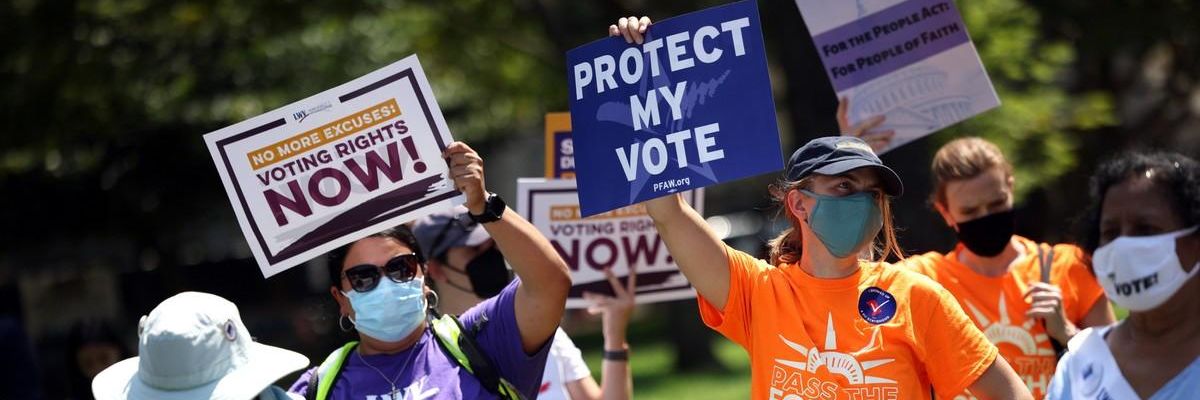
Voting rights activists participate in a voting rights rally outside the White House on August 24, 2021 in Washington, DC.
(Photo: Kevin Dietsch/Getty Images)
US Voter Registrations Surge as Republicans Try to Limit Ballot Access
One group said it has registered over 100,000 new voters since U.S. President Joe Biden dropped out of the 2024 race.
Jul 26, 2024
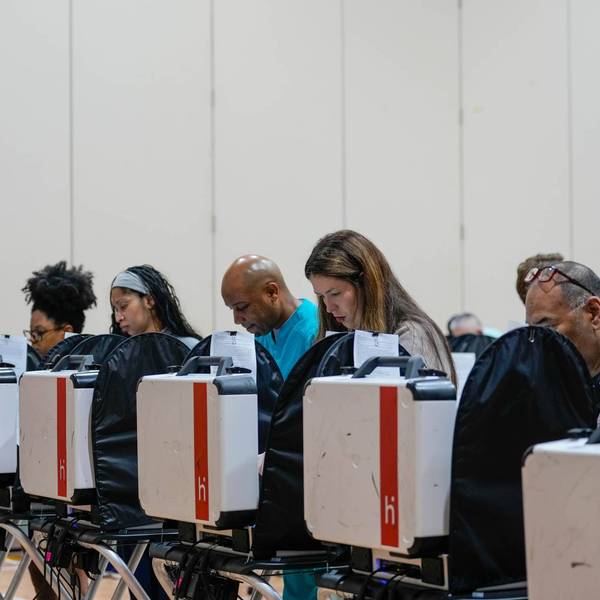
The group behind a popular get-out-the-vote technology platform said Friday that it's registered more than 100,000 new U.S. voters since President Joe Biden withdrew from the 2024 presidential race, a surge that came amid mounting Republican efforts to make it harder to register and vote.
Vote.org said that 84% of voters registered in the new wave are under age 35. Nearly 1 in 5 new registrees is 18 years old. Andrea Hailey, the group's CEO, said that "since 2020, we have led the largest voter registration drive in U.S. history," with more than 7.8 million people registered.
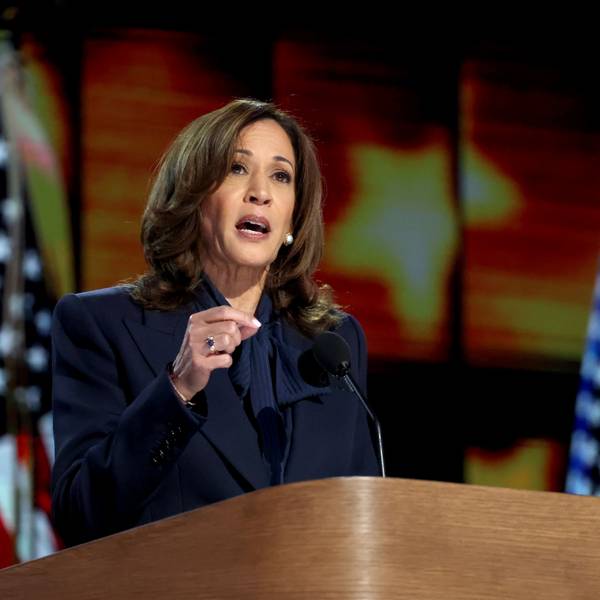
After dropping out, Biden endorsed Vice President Kamala Harris to face former Republican President Donald Trump and Sen. JD Vance (R-Ohio) in the November election. The new presumptive Democratic candidate has already earned endorsements from many Democrats in Congress and groups advocating on issues including climate, labor, and reproductive rights.
Vote.org's success comes as Republicans at the federal level are proposing and passing legislation creating obstacles to the ballot box.
Earlier this month, U.S. House Republicans passed Rep. Chip Roy's (R-Texas)
Safeguard American Voter Eligibility (SAVE) Act, which would require proof of American citizenship to vote in federal elections. Republicans claim the bill is meant to fix the virtually nonexistent "problem" of noncitizen voter fraud.
However, Rep. Summer Lee (D-Pa.)
slammed the bill as a "xenophobic attack" meant to silence "Black voices, brown voices, LBGTQIA+ voices, [and] young voices."
Lee said the SAVE Act underscores the need to pass her recently introduced Right to Vote Act, "which would establish the first-ever affirmative federal voting rights guarantee, ensuring every citizen may exercise their fundamental right to cast a ballot."
Earlier this year, U.S. Senate Democrats also reintroduced the John R. Lewis Voting Rights Advancement Act, legislation its sponsors say will "update and restore critical safeguards of the original Voting Rights Act."
Meanwhile, Republican-controlled state legislatures and red-state governors are enacting laws imposing tough restrictions on voter registration, with violations punishable by stiff fines that critics say are meant to dissuade people from registration drives and similar efforts.
Again under the guise of preventing fraud, Republican Florida Gov. Ron DeSantis last year signed legislation limiting voter registration drives, with fines of up to $250,000 for violators.
"These draconian laws and rules are like taking a sledgehammer to hit a flea," Cecile Scoon, an attorney and president of the Florida chapter of the League of Women Voters,
told The New York Times in an article published Friday.
Three years after Kansas passed a law making "false representation" of an election official a crime, campaigners say it's become extremely difficult to sign up new voters.
"In 2020, even with the pandemic, we had registered nearly 10,000 Kansans to vote. Now, we haven't been able to register anyone," Davis Hammet, president of the youth voter mobilization group Loud Light, told the Times.
In Louisiana, Republican state lawmakers quietly passed legislation making it easier for election officials to toss out absentee ballots with missing details, limiting how people can mail in other voters' ballots, and restricting the ability to assist people with disabilities with their ballots.
"What we've found is that these measures have a disproportionate impact on voters with disabilities, both Black and white," NAACP Legal Defense Fund senior policy counsel Jared Evans
told Nola.com earlier this week.
"It's clear that their goal is to make it harder to vote, harder for specific communities to vote especially," Evans added. "What they don't realize is that these laws hurt white voters, too."
In Nebraska, Republican Secretary of State Bob Evnen last week
ordered county election offices to stop registering voters with past felony convictions who have not received official pardons. The move came after the state's unicameral Legislature passed a bill granting voting eligibility to felons immediately after they have completed their sentences instead of waiting two years.
"We refuse to accept thousands of Nebraskans having their voting rights stripped away," ACLU of Nebraska legal and policy fellow Jane Seu said in a statement. "We are confident in the constitutionality of these laws, and we are exploring every option to ensure that Nebraskans who have done their time can vote."
Urgent. It's never been this bad.
Dear Common Dreams reader, It’s been nearly 30 years since I co-founded Common Dreams with my late wife, Lina Newhouser. We had the radical notion that journalism should serve the public good, not corporate profits. It was clear to us from the outset what it would take to build such a project. No paid advertisements. No corporate sponsors. No millionaire publisher telling us what to think or do. Many people said we wouldn't last a year, but we proved those doubters wrong. Together with a tremendous team of journalists and dedicated staff, we built an independent media outlet free from the constraints of profits and corporate control. Our mission from the outset was simple. To inform. To inspire. To ignite change for the common good. Building Common Dreams was not easy. Our survival was never guaranteed. When you take on the most powerful forces—Wall Street greed, fossil fuel industry destruction, Big Tech lobbyists, and uber-rich oligarchs who have spent billions upon billions rigging the economy and democracy in their favor—the only bulwark you have is supporters who believe in your work. But here’s the urgent message from me today. It’s never been this bad out there. And it’s never been this hard to keep us going. At the very moment Common Dreams is most needed and doing some of its best and most important work, the threats we face are intensifying. Right now, with just hours left in our Spring Campaign, we're still falling short of our make-or-break goal. When everyone does the little they can afford, we are strong. But if that support retreats or dries up, so do we. Can you make a gift right now to make sure Common Dreams not only survives but thrives? There is no backup plan or rainy day fund. There is only you. —Craig Brown, Co-founder |
Our work is licensed under Creative Commons (CC BY-NC-ND 3.0). Feel free to republish and share widely.
u.s. congress
joe biden
voting rights
john r. lewis voting rights advancement act
save act
election 2024
summer lee
voter suppression
republican party
The group behind a popular get-out-the-vote technology platform said Friday that it's registered more than 100,000 new U.S. voters since President Joe Biden withdrew from the 2024 presidential race, a surge that came amid mounting Republican efforts to make it harder to register and vote.
Vote.org said that 84% of voters registered in the new wave are under age 35. Nearly 1 in 5 new registrees is 18 years old. Andrea Hailey, the group's CEO, said that "since 2020, we have led the largest voter registration drive in U.S. history," with more than 7.8 million people registered.
After dropping out, Biden endorsed Vice President Kamala Harris to face former Republican President Donald Trump and Sen. JD Vance (R-Ohio) in the November election. The new presumptive Democratic candidate has already earned endorsements from many Democrats in Congress and groups advocating on issues including climate, labor, and reproductive rights.
Vote.org's success comes as Republicans at the federal level are proposing and passing legislation creating obstacles to the ballot box.
Earlier this month, U.S. House Republicans passed Rep. Chip Roy's (R-Texas)
Safeguard American Voter Eligibility (SAVE) Act, which would require proof of American citizenship to vote in federal elections. Republicans claim the bill is meant to fix the virtually nonexistent "problem" of noncitizen voter fraud.
However, Rep. Summer Lee (D-Pa.)
slammed the bill as a "xenophobic attack" meant to silence "Black voices, brown voices, LBGTQIA+ voices, [and] young voices."
Lee said the SAVE Act underscores the need to pass her recently introduced Right to Vote Act, "which would establish the first-ever affirmative federal voting rights guarantee, ensuring every citizen may exercise their fundamental right to cast a ballot."
Earlier this year, U.S. Senate Democrats also reintroduced the John R. Lewis Voting Rights Advancement Act, legislation its sponsors say will "update and restore critical safeguards of the original Voting Rights Act."
Meanwhile, Republican-controlled state legislatures and red-state governors are enacting laws imposing tough restrictions on voter registration, with violations punishable by stiff fines that critics say are meant to dissuade people from registration drives and similar efforts.
Again under the guise of preventing fraud, Republican Florida Gov. Ron DeSantis last year signed legislation limiting voter registration drives, with fines of up to $250,000 for violators.
"These draconian laws and rules are like taking a sledgehammer to hit a flea," Cecile Scoon, an attorney and president of the Florida chapter of the League of Women Voters,
told The New York Times in an article published Friday.
Three years after Kansas passed a law making "false representation" of an election official a crime, campaigners say it's become extremely difficult to sign up new voters.
"In 2020, even with the pandemic, we had registered nearly 10,000 Kansans to vote. Now, we haven't been able to register anyone," Davis Hammet, president of the youth voter mobilization group Loud Light, told the Times.
In Louisiana, Republican state lawmakers quietly passed legislation making it easier for election officials to toss out absentee ballots with missing details, limiting how people can mail in other voters' ballots, and restricting the ability to assist people with disabilities with their ballots.
"What we've found is that these measures have a disproportionate impact on voters with disabilities, both Black and white," NAACP Legal Defense Fund senior policy counsel Jared Evans
told Nola.com earlier this week.
"It's clear that their goal is to make it harder to vote, harder for specific communities to vote especially," Evans added. "What they don't realize is that these laws hurt white voters, too."
In Nebraska, Republican Secretary of State Bob Evnen last week
ordered county election offices to stop registering voters with past felony convictions who have not received official pardons. The move came after the state's unicameral Legislature passed a bill granting voting eligibility to felons immediately after they have completed their sentences instead of waiting two years.
"We refuse to accept thousands of Nebraskans having their voting rights stripped away," ACLU of Nebraska legal and policy fellow Jane Seu said in a statement. "We are confident in the constitutionality of these laws, and we are exploring every option to ensure that Nebraskans who have done their time can vote."
From Your Site Articles
- How Advocates Are Fighting Voter Suppression ›
- Montana Supreme Court Strikes Down 4 'Unconstitutional' Voting Laws Passed by GOP ›
- Report Warns State Voter Purges Are a Growing Threat to Democracy ›
- Opinion | The Disabled Community’s Election-Season Message to America: Don’t Box Us Out | Common Dreams ›
- Opinion | Hey Democrats, Tell Biden to Break Something for Democracy! | Common Dreams ›
- Opinion | How Years of GOP Voter Suppression Helped Trump Win in 2024 | Common Dreams ›
- Opinion | The Worst Existential Threat to American Democracy Is Already Here: Voter Suppression | Common Dreams ›
- Opinion | The GOP Is Already Planning to Win the Midterms... by Suppressing Your Vote! | Common Dreams ›
- Opinion | It’s Bigger Than Texas: Beware the Republican War on Fair Elections | Common Dreams ›
- Opinion | Voting Still Matters, But Only If We Fix It | Common Dreams ›
- 'Abuse of Power': Trump DOJ Attack on State Voter Rolls Decried as Threat to Democracy | Common Dreams ›
- Opinion | Our Voices and Our Votes Matter | Common Dreams ›
The group behind a popular get-out-the-vote technology platform said Friday that it's registered more than 100,000 new U.S. voters since President Joe Biden withdrew from the 2024 presidential race, a surge that came amid mounting Republican efforts to make it harder to register and vote.
Vote.org said that 84% of voters registered in the new wave are under age 35. Nearly 1 in 5 new registrees is 18 years old. Andrea Hailey, the group's CEO, said that "since 2020, we have led the largest voter registration drive in U.S. history," with more than 7.8 million people registered.
After dropping out, Biden endorsed Vice President Kamala Harris to face former Republican President Donald Trump and Sen. JD Vance (R-Ohio) in the November election. The new presumptive Democratic candidate has already earned endorsements from many Democrats in Congress and groups advocating on issues including climate, labor, and reproductive rights.
Vote.org's success comes as Republicans at the federal level are proposing and passing legislation creating obstacles to the ballot box.
Earlier this month, U.S. House Republicans passed Rep. Chip Roy's (R-Texas)
Safeguard American Voter Eligibility (SAVE) Act, which would require proof of American citizenship to vote in federal elections. Republicans claim the bill is meant to fix the virtually nonexistent "problem" of noncitizen voter fraud.
However, Rep. Summer Lee (D-Pa.)
slammed the bill as a "xenophobic attack" meant to silence "Black voices, brown voices, LBGTQIA+ voices, [and] young voices."
Lee said the SAVE Act underscores the need to pass her recently introduced Right to Vote Act, "which would establish the first-ever affirmative federal voting rights guarantee, ensuring every citizen may exercise their fundamental right to cast a ballot."
Earlier this year, U.S. Senate Democrats also reintroduced the John R. Lewis Voting Rights Advancement Act, legislation its sponsors say will "update and restore critical safeguards of the original Voting Rights Act."
Meanwhile, Republican-controlled state legislatures and red-state governors are enacting laws imposing tough restrictions on voter registration, with violations punishable by stiff fines that critics say are meant to dissuade people from registration drives and similar efforts.
Again under the guise of preventing fraud, Republican Florida Gov. Ron DeSantis last year signed legislation limiting voter registration drives, with fines of up to $250,000 for violators.
"These draconian laws and rules are like taking a sledgehammer to hit a flea," Cecile Scoon, an attorney and president of the Florida chapter of the League of Women Voters,
told The New York Times in an article published Friday.
Three years after Kansas passed a law making "false representation" of an election official a crime, campaigners say it's become extremely difficult to sign up new voters.
"In 2020, even with the pandemic, we had registered nearly 10,000 Kansans to vote. Now, we haven't been able to register anyone," Davis Hammet, president of the youth voter mobilization group Loud Light, told the Times.
In Louisiana, Republican state lawmakers quietly passed legislation making it easier for election officials to toss out absentee ballots with missing details, limiting how people can mail in other voters' ballots, and restricting the ability to assist people with disabilities with their ballots.
"What we've found is that these measures have a disproportionate impact on voters with disabilities, both Black and white," NAACP Legal Defense Fund senior policy counsel Jared Evans
told Nola.com earlier this week.
"It's clear that their goal is to make it harder to vote, harder for specific communities to vote especially," Evans added. "What they don't realize is that these laws hurt white voters, too."
In Nebraska, Republican Secretary of State Bob Evnen last week
ordered county election offices to stop registering voters with past felony convictions who have not received official pardons. The move came after the state's unicameral Legislature passed a bill granting voting eligibility to felons immediately after they have completed their sentences instead of waiting two years.
"We refuse to accept thousands of Nebraskans having their voting rights stripped away," ACLU of Nebraska legal and policy fellow Jane Seu said in a statement. "We are confident in the constitutionality of these laws, and we are exploring every option to ensure that Nebraskans who have done their time can vote."
From Your Site Articles
- How Advocates Are Fighting Voter Suppression ›
- Montana Supreme Court Strikes Down 4 'Unconstitutional' Voting Laws Passed by GOP ›
- Report Warns State Voter Purges Are a Growing Threat to Democracy ›
- Opinion | The Disabled Community’s Election-Season Message to America: Don’t Box Us Out | Common Dreams ›
- Opinion | Hey Democrats, Tell Biden to Break Something for Democracy! | Common Dreams ›
- Opinion | How Years of GOP Voter Suppression Helped Trump Win in 2024 | Common Dreams ›
- Opinion | The Worst Existential Threat to American Democracy Is Already Here: Voter Suppression | Common Dreams ›
- Opinion | The GOP Is Already Planning to Win the Midterms... by Suppressing Your Vote! | Common Dreams ›
- Opinion | It’s Bigger Than Texas: Beware the Republican War on Fair Elections | Common Dreams ›
- Opinion | Voting Still Matters, But Only If We Fix It | Common Dreams ›
- 'Abuse of Power': Trump DOJ Attack on State Voter Rolls Decried as Threat to Democracy | Common Dreams ›
- Opinion | Our Voices and Our Votes Matter | Common Dreams ›
u.s. congress
joe biden
voting rights
john r. lewis voting rights advancement act
save act
election 2024
summer lee
voter suppression
republican party
We've had enough. The 1% own and operate the corporate media. They are doing everything they can to defend the status quo, squash dissent and protect the wealthy and the powerful. The Common Dreams media model is different. We cover the news that matters to the 99%. Our mission? To inform. To inspire. To ignite change for the common good. How? Nonprofit. Independent. Reader-supported. Free to read. Free to republish. Free to share. With no advertising. No paywalls. No selling of your data. Thousands of small donations fund our newsroom and allow us to continue publishing. Can you chip in? We can't do it without you. Thank you.