SUBSCRIBE TO OUR FREE NEWSLETTER
Daily news & progressive opinion—funded by the people, not the corporations—delivered straight to your inbox.
5
#000000
#FFFFFF
To donate by check, phone, or other method, see our More Ways to Give page.
Daily news & progressive opinion—funded by the people, not the corporations—delivered straight to your inbox.
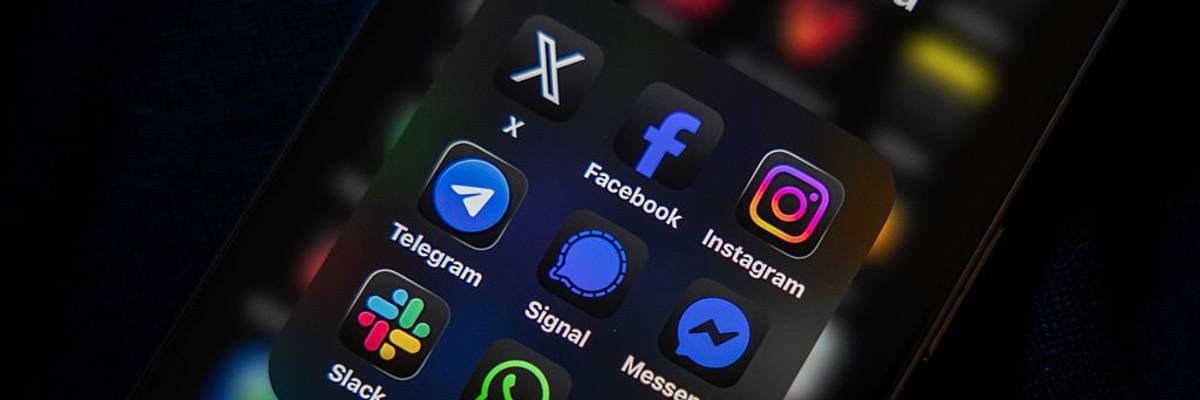
In this photo illustration, social media and messaging apps are seen on a mobile phone screen on November 11, 2025 in Istanbul, Turkey.
One critic predicted the policy would "exacerbate civil liberties harms" if enacted.
Visiting the US as a tourist could soon become significantly more onerous under a new plan being mulled by the Trump administration.
According to a Tuesday report in the New York Times, US Customs and Border Protection (CBP) this week filed a new proposal that would force visitors to submit up to five years' worth of social media posts for inspection before being allowed to enter the country.
In addition to social media history, CPB says it plans to ask prospective tourists to provide them with email addresses they've used over the last decade, as well as "the names, birth dates, places of residence, and birthplaces of parents, spouses, siblings, and children."
The policy would apply even to citizens of countries that have long been US allies, including the UK, Germany, Australia, and Japan, which have long been exempt from visa requirements.
Sophia Cope, a senior staff attorney for the Electronic Frontier Foundation, told the Times that the CBP policy would "exacerbate civil liberties harms."
Cope added that such policies have "not proven effective at finding terrorists and other bad guys" but have instead "chilled the free speech and invaded the privacy of innocent travelers, along with that of their American family, friends and colleagues."
Journalist Bethany Allen, head of China investigations at the Australian Strategic Policy Institute, expressed shock that the US would take such drastic measures to scrutinize the social media posts of tourists.
"Wow," she wrote in a post on X, "even China doesn't do this."
In addition to concerns about civil liberties violations, there are also worries about what the new policy would do to the US tourism industry.
The Times noted in its report that several tourism-dependent businesses last month signed a letter opposing an administration proposal to collect a $250 "visa integrity fee," and one travel industry official told the paper that the CBP's new proposal appears to be "a significant escalation in traveler vetting."
The American tourism industry has already taken a blow during President Donald Trump's second term, even without a policy of forcing tourists to share their social media history.
A report released on Wednesday from Democrats on the Senate's Joint Economic Committee (JEC) found that US businesses that have long depended on tourism from Canada to stay afloat have been getting hit hard, as Canadian tourists stay away in protest of Trump's trade war against their country.
Overall, the report found that "the number of passenger vehicles crossing the US-Canada border declined by nearly 20% compared to the same time period in 2024, with some states seeing declines as large as 27%."
Elizabeth Guerin, owner of New Hampshire-based gift shop Fiddleheads, told the JEC that Canadians used to make up to a quarter of her custom base, but now "I can probably count the number of Canadian visitors on one hand."
Christa Bowdish, owner of the Vermont-based Old Stagecoach Inn, told the JEC that she feared a long-term loss in Canadian customers, even if Trump ended his feud with the nation tomorrow.
"This is long-lasting damage to a relationship and emotional damage takes time to heal," she said. "While people aren’t visiting Vermont, they’ll be finding new places to visit, making new memories, building new family traditions, and we will not recapture all of that."
Dear Common Dreams reader, It’s been nearly 30 years since I co-founded Common Dreams with my late wife, Lina Newhouser. We had the radical notion that journalism should serve the public good, not corporate profits. It was clear to us from the outset what it would take to build such a project. No paid advertisements. No corporate sponsors. No millionaire publisher telling us what to think or do. Many people said we wouldn't last a year, but we proved those doubters wrong. Together with a tremendous team of journalists and dedicated staff, we built an independent media outlet free from the constraints of profits and corporate control. Our mission has always been simple: To inform. To inspire. To ignite change for the common good. Building Common Dreams was not easy. Our survival was never guaranteed. When you take on the most powerful forces—Wall Street greed, fossil fuel industry destruction, Big Tech lobbyists, and uber-rich oligarchs who have spent billions upon billions rigging the economy and democracy in their favor—the only bulwark you have is supporters who believe in your work. But here’s the urgent message from me today. It's never been this bad out there. And it's never been this hard to keep us going. At the very moment Common Dreams is most needed, the threats we face are intensifying. We need your support now more than ever. We don't accept corporate advertising and never will. We don't have a paywall because we don't think people should be blocked from critical news based on their ability to pay. Everything we do is funded by the donations of readers like you. When everyone does the little they can afford, we are strong. But if that support retreats or dries up, so do we. Will you donate now to make sure Common Dreams not only survives but thrives? —Craig Brown, Co-founder |
Visiting the US as a tourist could soon become significantly more onerous under a new plan being mulled by the Trump administration.
According to a Tuesday report in the New York Times, US Customs and Border Protection (CBP) this week filed a new proposal that would force visitors to submit up to five years' worth of social media posts for inspection before being allowed to enter the country.
In addition to social media history, CPB says it plans to ask prospective tourists to provide them with email addresses they've used over the last decade, as well as "the names, birth dates, places of residence, and birthplaces of parents, spouses, siblings, and children."
The policy would apply even to citizens of countries that have long been US allies, including the UK, Germany, Australia, and Japan, which have long been exempt from visa requirements.
Sophia Cope, a senior staff attorney for the Electronic Frontier Foundation, told the Times that the CBP policy would "exacerbate civil liberties harms."
Cope added that such policies have "not proven effective at finding terrorists and other bad guys" but have instead "chilled the free speech and invaded the privacy of innocent travelers, along with that of their American family, friends and colleagues."
Journalist Bethany Allen, head of China investigations at the Australian Strategic Policy Institute, expressed shock that the US would take such drastic measures to scrutinize the social media posts of tourists.
"Wow," she wrote in a post on X, "even China doesn't do this."
In addition to concerns about civil liberties violations, there are also worries about what the new policy would do to the US tourism industry.
The Times noted in its report that several tourism-dependent businesses last month signed a letter opposing an administration proposal to collect a $250 "visa integrity fee," and one travel industry official told the paper that the CBP's new proposal appears to be "a significant escalation in traveler vetting."
The American tourism industry has already taken a blow during President Donald Trump's second term, even without a policy of forcing tourists to share their social media history.
A report released on Wednesday from Democrats on the Senate's Joint Economic Committee (JEC) found that US businesses that have long depended on tourism from Canada to stay afloat have been getting hit hard, as Canadian tourists stay away in protest of Trump's trade war against their country.
Overall, the report found that "the number of passenger vehicles crossing the US-Canada border declined by nearly 20% compared to the same time period in 2024, with some states seeing declines as large as 27%."
Elizabeth Guerin, owner of New Hampshire-based gift shop Fiddleheads, told the JEC that Canadians used to make up to a quarter of her custom base, but now "I can probably count the number of Canadian visitors on one hand."
Christa Bowdish, owner of the Vermont-based Old Stagecoach Inn, told the JEC that she feared a long-term loss in Canadian customers, even if Trump ended his feud with the nation tomorrow.
"This is long-lasting damage to a relationship and emotional damage takes time to heal," she said. "While people aren’t visiting Vermont, they’ll be finding new places to visit, making new memories, building new family traditions, and we will not recapture all of that."
Visiting the US as a tourist could soon become significantly more onerous under a new plan being mulled by the Trump administration.
According to a Tuesday report in the New York Times, US Customs and Border Protection (CBP) this week filed a new proposal that would force visitors to submit up to five years' worth of social media posts for inspection before being allowed to enter the country.
In addition to social media history, CPB says it plans to ask prospective tourists to provide them with email addresses they've used over the last decade, as well as "the names, birth dates, places of residence, and birthplaces of parents, spouses, siblings, and children."
The policy would apply even to citizens of countries that have long been US allies, including the UK, Germany, Australia, and Japan, which have long been exempt from visa requirements.
Sophia Cope, a senior staff attorney for the Electronic Frontier Foundation, told the Times that the CBP policy would "exacerbate civil liberties harms."
Cope added that such policies have "not proven effective at finding terrorists and other bad guys" but have instead "chilled the free speech and invaded the privacy of innocent travelers, along with that of their American family, friends and colleagues."
Journalist Bethany Allen, head of China investigations at the Australian Strategic Policy Institute, expressed shock that the US would take such drastic measures to scrutinize the social media posts of tourists.
"Wow," she wrote in a post on X, "even China doesn't do this."
In addition to concerns about civil liberties violations, there are also worries about what the new policy would do to the US tourism industry.
The Times noted in its report that several tourism-dependent businesses last month signed a letter opposing an administration proposal to collect a $250 "visa integrity fee," and one travel industry official told the paper that the CBP's new proposal appears to be "a significant escalation in traveler vetting."
The American tourism industry has already taken a blow during President Donald Trump's second term, even without a policy of forcing tourists to share their social media history.
A report released on Wednesday from Democrats on the Senate's Joint Economic Committee (JEC) found that US businesses that have long depended on tourism from Canada to stay afloat have been getting hit hard, as Canadian tourists stay away in protest of Trump's trade war against their country.
Overall, the report found that "the number of passenger vehicles crossing the US-Canada border declined by nearly 20% compared to the same time period in 2024, with some states seeing declines as large as 27%."
Elizabeth Guerin, owner of New Hampshire-based gift shop Fiddleheads, told the JEC that Canadians used to make up to a quarter of her custom base, but now "I can probably count the number of Canadian visitors on one hand."
Christa Bowdish, owner of the Vermont-based Old Stagecoach Inn, told the JEC that she feared a long-term loss in Canadian customers, even if Trump ended his feud with the nation tomorrow.
"This is long-lasting damage to a relationship and emotional damage takes time to heal," she said. "While people aren’t visiting Vermont, they’ll be finding new places to visit, making new memories, building new family traditions, and we will not recapture all of that."