

SUBSCRIBE TO OUR FREE NEWSLETTER
Daily news & progressive opinion—funded by the people, not the corporations—delivered straight to your inbox.
5
#000000
#FFFFFF
To donate by check, phone, or other method, see our More Ways to Give page.
Daily news & progressive opinion—funded by the people, not the corporations—delivered straight to your inbox.
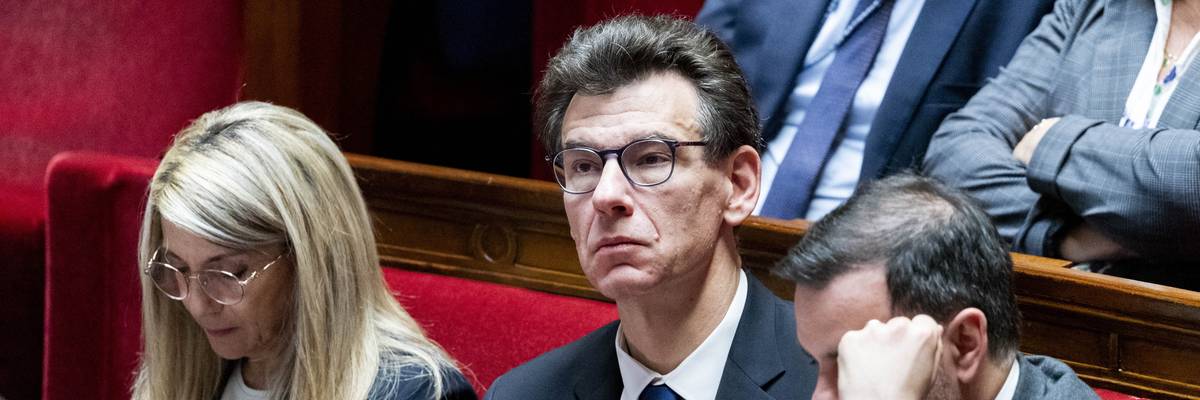
French Minister of Higher Education and Research Philippe Baptiste attends a session at the National Assembly in Paris, on March 19, 2025.
"The purpose is to create fear and self-censorship everywhere," said one pro-democracy advocate.
France's minister of higher education and research spoke out Thursday over reports that a French scientist was refused entry to the U.S. after customs agents found messages on his cellphone that were critical of President Donald Trump—yet another incident that has raised alarm over the Trump administration's views of First Amendment rights.
The unnamed space researcher works for the French government's National Center for Scientific Research and was traveling on March 9 to a conference in the Houston area when he was reportedly randomly selected by Customs and Border Protection (CBP) agents for a search.
The officers searched his electronic devices—something that happened to fewer than 0.01% of the international travelers who arrived in the U.S. in 2024, according to the CBP—and found messages that "conveyed hatred of Trump and could be qualified as terrorism," the agency said.
The messages reportedly criticized Trump's treatment of scientists and his views on academic freedom, and prompted an FBI investigation that was quickly dropped.
With the so-called Department of Government Efficiency, which billionaire Tesla CEO and Trump megadonor Elon Musk was named to lead, the president has introduced massive cuts to the National Institutes of Health, National Oceanic and Atmospheric Administration, Centers for Disease Control and Prevention, Environmental Protection Agency, and other agencies—slashing jobs and tens of billions of dollars in grants that fund crucial work that has helped the U.S. become a leader in scientific and biomedical research.
"It's no secret that Trump and Elon Musk's Department of Government Efficiency effort has resulted in millions of dollars in cuts to scientific research," wrote Hafiz Rashid at The New Republic on Wednesday. "The idea that criticism of this would rise to the level of terrorism and result in someone being barred from the U.S. is absurd."
The researcher's apparent expression of disapproval regarding Trump's policies led officers to confiscate his phone and computer before sending him back to France the next day.
"It's no secret that Trump and Elon Musk's Department of Government Efficiency effort has resulted in millions of dollars in cuts to scientific research. The idea that criticism of this would rise to the level of terrorism and result in someone being barred from the U.S. is absurd."
"Freedom of opinion, free research, and academic freedom are values we will continue to proudly uphold," Philippe Baptiste, the French research minister, said in a statement. "I will defend the possibility for all French researchers to be faithful to them, in compliance with the law, wherever they may be in the world."
Baptiste said CBP officers only found that the scientist's "phone contained exchanges with colleagues and friendly relations in which he expressed a personal opinion on the Trump administration's research policy."
In recent weeks, the Trump administration has detained and pushed to deport a recent Columbia University graduate and a Georgetown University postdoctoral fellow for statements they and their family members have made in support of Palestinian rights and criticizing U.S. and Israeli policy in the occupied Palestine territories, accusing them without evidence of providing aid and support to Hamas.
The president also said last week that critical coverage of his administration by media companies such as CNN and MSNBC "has to be illegal."
National security researcher and analyst Olga Lautman said the CBP's decision to refuse entry to the French scientist serves as "more proof that we are now an authoritarian state."
Sarah Leah Whitson, executive director of the pro-democracy group DAWN, said that "searching people's cellphones and punishing them for having critical comments is exactly what the dictators in Egypt and Syria have done," and pointed to a recent Amnesty International report about a British national, Ahmed al-Doush, who was arrested by Saudi authorities after finding a social media post by him that they objected to.
"The purpose" of the CBP's recent actions, said Whitson, "is to create fear and self-censorship everywhere."
Dear Common Dreams reader, It’s been nearly 30 years since I co-founded Common Dreams with my late wife, Lina Newhouser. We had the radical notion that journalism should serve the public good, not corporate profits. It was clear to us from the outset what it would take to build such a project. No paid advertisements. No corporate sponsors. No millionaire publisher telling us what to think or do. Many people said we wouldn't last a year, but we proved those doubters wrong. Together with a tremendous team of journalists and dedicated staff, we built an independent media outlet free from the constraints of profits and corporate control. Our mission has always been simple: To inform. To inspire. To ignite change for the common good. Building Common Dreams was not easy. Our survival was never guaranteed. When you take on the most powerful forces—Wall Street greed, fossil fuel industry destruction, Big Tech lobbyists, and uber-rich oligarchs who have spent billions upon billions rigging the economy and democracy in their favor—the only bulwark you have is supporters who believe in your work. But here’s the urgent message from me today. It's never been this bad out there. And it's never been this hard to keep us going. At the very moment Common Dreams is most needed, the threats we face are intensifying. We need your support now more than ever. We don't accept corporate advertising and never will. We don't have a paywall because we don't think people should be blocked from critical news based on their ability to pay. Everything we do is funded by the donations of readers like you. When everyone does the little they can afford, we are strong. But if that support retreats or dries up, so do we. Will you donate now to make sure Common Dreams not only survives but thrives? —Craig Brown, Co-founder |
France's minister of higher education and research spoke out Thursday over reports that a French scientist was refused entry to the U.S. after customs agents found messages on his cellphone that were critical of President Donald Trump—yet another incident that has raised alarm over the Trump administration's views of First Amendment rights.
The unnamed space researcher works for the French government's National Center for Scientific Research and was traveling on March 9 to a conference in the Houston area when he was reportedly randomly selected by Customs and Border Protection (CBP) agents for a search.
The officers searched his electronic devices—something that happened to fewer than 0.01% of the international travelers who arrived in the U.S. in 2024, according to the CBP—and found messages that "conveyed hatred of Trump and could be qualified as terrorism," the agency said.
The messages reportedly criticized Trump's treatment of scientists and his views on academic freedom, and prompted an FBI investigation that was quickly dropped.
With the so-called Department of Government Efficiency, which billionaire Tesla CEO and Trump megadonor Elon Musk was named to lead, the president has introduced massive cuts to the National Institutes of Health, National Oceanic and Atmospheric Administration, Centers for Disease Control and Prevention, Environmental Protection Agency, and other agencies—slashing jobs and tens of billions of dollars in grants that fund crucial work that has helped the U.S. become a leader in scientific and biomedical research.
"It's no secret that Trump and Elon Musk's Department of Government Efficiency effort has resulted in millions of dollars in cuts to scientific research," wrote Hafiz Rashid at The New Republic on Wednesday. "The idea that criticism of this would rise to the level of terrorism and result in someone being barred from the U.S. is absurd."
The researcher's apparent expression of disapproval regarding Trump's policies led officers to confiscate his phone and computer before sending him back to France the next day.
"It's no secret that Trump and Elon Musk's Department of Government Efficiency effort has resulted in millions of dollars in cuts to scientific research. The idea that criticism of this would rise to the level of terrorism and result in someone being barred from the U.S. is absurd."
"Freedom of opinion, free research, and academic freedom are values we will continue to proudly uphold," Philippe Baptiste, the French research minister, said in a statement. "I will defend the possibility for all French researchers to be faithful to them, in compliance with the law, wherever they may be in the world."
Baptiste said CBP officers only found that the scientist's "phone contained exchanges with colleagues and friendly relations in which he expressed a personal opinion on the Trump administration's research policy."
In recent weeks, the Trump administration has detained and pushed to deport a recent Columbia University graduate and a Georgetown University postdoctoral fellow for statements they and their family members have made in support of Palestinian rights and criticizing U.S. and Israeli policy in the occupied Palestine territories, accusing them without evidence of providing aid and support to Hamas.
The president also said last week that critical coverage of his administration by media companies such as CNN and MSNBC "has to be illegal."
National security researcher and analyst Olga Lautman said the CBP's decision to refuse entry to the French scientist serves as "more proof that we are now an authoritarian state."
Sarah Leah Whitson, executive director of the pro-democracy group DAWN, said that "searching people's cellphones and punishing them for having critical comments is exactly what the dictators in Egypt and Syria have done," and pointed to a recent Amnesty International report about a British national, Ahmed al-Doush, who was arrested by Saudi authorities after finding a social media post by him that they objected to.
"The purpose" of the CBP's recent actions, said Whitson, "is to create fear and self-censorship everywhere."
France's minister of higher education and research spoke out Thursday over reports that a French scientist was refused entry to the U.S. after customs agents found messages on his cellphone that were critical of President Donald Trump—yet another incident that has raised alarm over the Trump administration's views of First Amendment rights.
The unnamed space researcher works for the French government's National Center for Scientific Research and was traveling on March 9 to a conference in the Houston area when he was reportedly randomly selected by Customs and Border Protection (CBP) agents for a search.
The officers searched his electronic devices—something that happened to fewer than 0.01% of the international travelers who arrived in the U.S. in 2024, according to the CBP—and found messages that "conveyed hatred of Trump and could be qualified as terrorism," the agency said.
The messages reportedly criticized Trump's treatment of scientists and his views on academic freedom, and prompted an FBI investigation that was quickly dropped.
With the so-called Department of Government Efficiency, which billionaire Tesla CEO and Trump megadonor Elon Musk was named to lead, the president has introduced massive cuts to the National Institutes of Health, National Oceanic and Atmospheric Administration, Centers for Disease Control and Prevention, Environmental Protection Agency, and other agencies—slashing jobs and tens of billions of dollars in grants that fund crucial work that has helped the U.S. become a leader in scientific and biomedical research.
"It's no secret that Trump and Elon Musk's Department of Government Efficiency effort has resulted in millions of dollars in cuts to scientific research," wrote Hafiz Rashid at The New Republic on Wednesday. "The idea that criticism of this would rise to the level of terrorism and result in someone being barred from the U.S. is absurd."
The researcher's apparent expression of disapproval regarding Trump's policies led officers to confiscate his phone and computer before sending him back to France the next day.
"It's no secret that Trump and Elon Musk's Department of Government Efficiency effort has resulted in millions of dollars in cuts to scientific research. The idea that criticism of this would rise to the level of terrorism and result in someone being barred from the U.S. is absurd."
"Freedom of opinion, free research, and academic freedom are values we will continue to proudly uphold," Philippe Baptiste, the French research minister, said in a statement. "I will defend the possibility for all French researchers to be faithful to them, in compliance with the law, wherever they may be in the world."
Baptiste said CBP officers only found that the scientist's "phone contained exchanges with colleagues and friendly relations in which he expressed a personal opinion on the Trump administration's research policy."
In recent weeks, the Trump administration has detained and pushed to deport a recent Columbia University graduate and a Georgetown University postdoctoral fellow for statements they and their family members have made in support of Palestinian rights and criticizing U.S. and Israeli policy in the occupied Palestine territories, accusing them without evidence of providing aid and support to Hamas.
The president also said last week that critical coverage of his administration by media companies such as CNN and MSNBC "has to be illegal."
National security researcher and analyst Olga Lautman said the CBP's decision to refuse entry to the French scientist serves as "more proof that we are now an authoritarian state."
Sarah Leah Whitson, executive director of the pro-democracy group DAWN, said that "searching people's cellphones and punishing them for having critical comments is exactly what the dictators in Egypt and Syria have done," and pointed to a recent Amnesty International report about a British national, Ahmed al-Doush, who was arrested by Saudi authorities after finding a social media post by him that they objected to.
"The purpose" of the CBP's recent actions, said Whitson, "is to create fear and self-censorship everywhere."

