SUBSCRIBE TO OUR FREE NEWSLETTER
Daily news & progressive opinion—funded by the people, not the corporations—delivered straight to your inbox.
5
#000000
#FFFFFF
To donate by check, phone, or other method, see our More Ways to Give page.
Daily news & progressive opinion—funded by the people, not the corporations—delivered straight to your inbox.
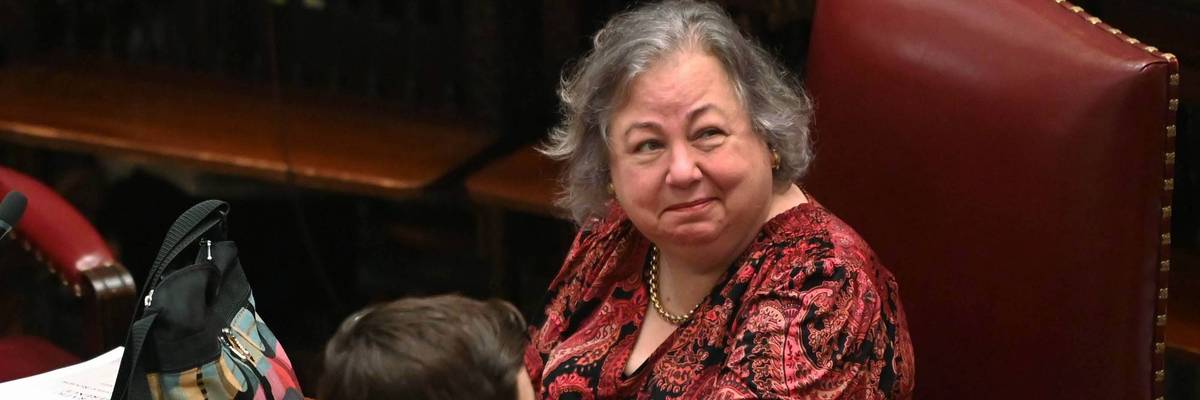
New York state Sen. Liz Krueger (D-28) looks to the gallery in the Senate chamber of the Capitol on June 9, 2025, in Albany, New York.
"New Yorkers are suffering from an affordability crisis and a climate crisis, and data centers are going to make both of those much harder to deal with," said state Sen. Liz Krueger, one of the bill's sponsors.
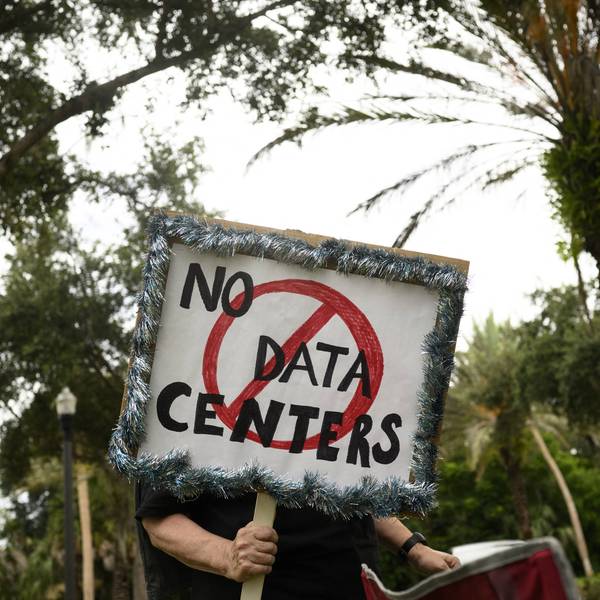
In response to rising concerns about the extreme energy demands of artificial intelligence data centers, Democratic legislators in New York are proposing a three-year pause on their creation in the state.
The environmental group Food & Water Watch called the proposal, introduced Friday by state Sen. Liz Krueger (D-28) and Assemblymember Anna Kelles (D-125), the "strongest data center moratorium bill in the country," the sort that is in increasing demand as the public becomes aware of the staggering energy costs required to power the centers.
Last month, a study by the Union of Concerned Scientists found that US electricity demand could increase by 60% to 80% over the next quarter century, with data centers accounting for more than half the increase by 2030—costing anywhere from $886 billion to $978 billion and pumping anywhere from 19% to 29% more planet-heating carbon dioxide into the atmosphere.
In large part due to data centers, New York's power grid may fall as much as 1.6 gigawatts short of reliability requirements, according to a projection from the New York Independent System Operator last year.
“Massive data centers are gunning for New York, and right now we are completely unprepared," Krueger said. When one of these energy-guzzling facilities comes to town, they drive up utility prices and have significant negative impacts on the environment and the community—and they have little to no positive impact on the local economy.
"New Yorkers are suffering from an affordability crisis and a climate crisis, and data centers are going to make both of those much harder to deal with," she added.
The bill would halt new data center projects exceeding 20 megawatts for three years and require the state to conduct environmental reviews and propose new regulations to address any identified impacts.
"Data centers are being built rapidly and with little meaningful oversight, despite the serious strain they place on our energy system, water resources, and local communities," explained Assemblymember Jessica González-Rojas (D-34), another supporter of the legislation.
"These facilities increase pollution, drive up electricity costs, and threaten farmland and natural land, while disproportionately impacting low-income communities and Black, Brown, and Indigenous communities that have long faced environmental injustice," she said.
According to Politico, pushes to curb data center growth are gaining steam around the country:
New York is the largest state where lawmakers have proposed a moratorium on data centers. But concerns about the growing issue are bipartisan, with Republicans and Democrats backing moratoriums in various states.
Similar measures have been introduced in Maryland, Georgia, Oklahoma, Virginia, and Vermont. A Republican legislator in Michigan—where dozens of local governments have already passed moratoriums—has said she’ll introduce a statewide measure there, as well. In Wisconsin, a Democratic gubernatorial candidate has also called for a moratorium.
Eric Weltman, senior New York organizer at Food & Water Watch, said the bill was necessary to curb "one of the biggest environmental and social threats of our generation."
"This expansion is rapidly increasing demand for dirty energy, straining water resources, and raising electricity rates for families and small businesses," Weltman said. "New Yorkers are paying the price while Big Tech rakes in the riches. This strongest-in-the-nation moratorium bill is logical, it’s timely, and it will deliver the results we need."
Yvonne Taylor, vice president of Seneca Lake Guardian, said the bill "not only safeguards our shared future here in New York, but sets a powerful precedent for states across the nation."
Dear Common Dreams reader, It’s been nearly 30 years since I co-founded Common Dreams with my late wife, Lina Newhouser. We had the radical notion that journalism should serve the public good, not corporate profits. It was clear to us from the outset what it would take to build such a project. No paid advertisements. No corporate sponsors. No millionaire publisher telling us what to think or do. Many people said we wouldn't last a year, but we proved those doubters wrong. Together with a tremendous team of journalists and dedicated staff, we built an independent media outlet free from the constraints of profits and corporate control. Our mission has always been simple: To inform. To inspire. To ignite change for the common good. Building Common Dreams was not easy. Our survival was never guaranteed. When you take on the most powerful forces—Wall Street greed, fossil fuel industry destruction, Big Tech lobbyists, and uber-rich oligarchs who have spent billions upon billions rigging the economy and democracy in their favor—the only bulwark you have is supporters who believe in your work. But here’s the urgent message from me today. It's never been this bad out there. And it's never been this hard to keep us going. At the very moment Common Dreams is most needed, the threats we face are intensifying. We need your support now more than ever. We don't accept corporate advertising and never will. We don't have a paywall because we don't think people should be blocked from critical news based on their ability to pay. Everything we do is funded by the donations of readers like you. When everyone does the little they can afford, we are strong. But if that support retreats or dries up, so do we. Will you donate now to make sure Common Dreams not only survives but thrives? —Craig Brown, Co-founder |
In response to rising concerns about the extreme energy demands of artificial intelligence data centers, Democratic legislators in New York are proposing a three-year pause on their creation in the state.
The environmental group Food & Water Watch called the proposal, introduced Friday by state Sen. Liz Krueger (D-28) and Assemblymember Anna Kelles (D-125), the "strongest data center moratorium bill in the country," the sort that is in increasing demand as the public becomes aware of the staggering energy costs required to power the centers.
Last month, a study by the Union of Concerned Scientists found that US electricity demand could increase by 60% to 80% over the next quarter century, with data centers accounting for more than half the increase by 2030—costing anywhere from $886 billion to $978 billion and pumping anywhere from 19% to 29% more planet-heating carbon dioxide into the atmosphere.
In large part due to data centers, New York's power grid may fall as much as 1.6 gigawatts short of reliability requirements, according to a projection from the New York Independent System Operator last year.
“Massive data centers are gunning for New York, and right now we are completely unprepared," Krueger said. When one of these energy-guzzling facilities comes to town, they drive up utility prices and have significant negative impacts on the environment and the community—and they have little to no positive impact on the local economy.
"New Yorkers are suffering from an affordability crisis and a climate crisis, and data centers are going to make both of those much harder to deal with," she added.
The bill would halt new data center projects exceeding 20 megawatts for three years and require the state to conduct environmental reviews and propose new regulations to address any identified impacts.
"Data centers are being built rapidly and with little meaningful oversight, despite the serious strain they place on our energy system, water resources, and local communities," explained Assemblymember Jessica González-Rojas (D-34), another supporter of the legislation.
"These facilities increase pollution, drive up electricity costs, and threaten farmland and natural land, while disproportionately impacting low-income communities and Black, Brown, and Indigenous communities that have long faced environmental injustice," she said.
According to Politico, pushes to curb data center growth are gaining steam around the country:
New York is the largest state where lawmakers have proposed a moratorium on data centers. But concerns about the growing issue are bipartisan, with Republicans and Democrats backing moratoriums in various states.
Similar measures have been introduced in Maryland, Georgia, Oklahoma, Virginia, and Vermont. A Republican legislator in Michigan—where dozens of local governments have already passed moratoriums—has said she’ll introduce a statewide measure there, as well. In Wisconsin, a Democratic gubernatorial candidate has also called for a moratorium.
Eric Weltman, senior New York organizer at Food & Water Watch, said the bill was necessary to curb "one of the biggest environmental and social threats of our generation."
"This expansion is rapidly increasing demand for dirty energy, straining water resources, and raising electricity rates for families and small businesses," Weltman said. "New Yorkers are paying the price while Big Tech rakes in the riches. This strongest-in-the-nation moratorium bill is logical, it’s timely, and it will deliver the results we need."
Yvonne Taylor, vice president of Seneca Lake Guardian, said the bill "not only safeguards our shared future here in New York, but sets a powerful precedent for states across the nation."
In response to rising concerns about the extreme energy demands of artificial intelligence data centers, Democratic legislators in New York are proposing a three-year pause on their creation in the state.
The environmental group Food & Water Watch called the proposal, introduced Friday by state Sen. Liz Krueger (D-28) and Assemblymember Anna Kelles (D-125), the "strongest data center moratorium bill in the country," the sort that is in increasing demand as the public becomes aware of the staggering energy costs required to power the centers.
Last month, a study by the Union of Concerned Scientists found that US electricity demand could increase by 60% to 80% over the next quarter century, with data centers accounting for more than half the increase by 2030—costing anywhere from $886 billion to $978 billion and pumping anywhere from 19% to 29% more planet-heating carbon dioxide into the atmosphere.
In large part due to data centers, New York's power grid may fall as much as 1.6 gigawatts short of reliability requirements, according to a projection from the New York Independent System Operator last year.
“Massive data centers are gunning for New York, and right now we are completely unprepared," Krueger said. When one of these energy-guzzling facilities comes to town, they drive up utility prices and have significant negative impacts on the environment and the community—and they have little to no positive impact on the local economy.
"New Yorkers are suffering from an affordability crisis and a climate crisis, and data centers are going to make both of those much harder to deal with," she added.
The bill would halt new data center projects exceeding 20 megawatts for three years and require the state to conduct environmental reviews and propose new regulations to address any identified impacts.
"Data centers are being built rapidly and with little meaningful oversight, despite the serious strain they place on our energy system, water resources, and local communities," explained Assemblymember Jessica González-Rojas (D-34), another supporter of the legislation.
"These facilities increase pollution, drive up electricity costs, and threaten farmland and natural land, while disproportionately impacting low-income communities and Black, Brown, and Indigenous communities that have long faced environmental injustice," she said.
According to Politico, pushes to curb data center growth are gaining steam around the country:
New York is the largest state where lawmakers have proposed a moratorium on data centers. But concerns about the growing issue are bipartisan, with Republicans and Democrats backing moratoriums in various states.
Similar measures have been introduced in Maryland, Georgia, Oklahoma, Virginia, and Vermont. A Republican legislator in Michigan—where dozens of local governments have already passed moratoriums—has said she’ll introduce a statewide measure there, as well. In Wisconsin, a Democratic gubernatorial candidate has also called for a moratorium.
Eric Weltman, senior New York organizer at Food & Water Watch, said the bill was necessary to curb "one of the biggest environmental and social threats of our generation."
"This expansion is rapidly increasing demand for dirty energy, straining water resources, and raising electricity rates for families and small businesses," Weltman said. "New Yorkers are paying the price while Big Tech rakes in the riches. This strongest-in-the-nation moratorium bill is logical, it’s timely, and it will deliver the results we need."
Yvonne Taylor, vice president of Seneca Lake Guardian, said the bill "not only safeguards our shared future here in New York, but sets a powerful precedent for states across the nation."