SUBSCRIBE TO OUR FREE NEWSLETTER
Daily news & progressive opinion—funded by the people, not the corporations—delivered straight to your inbox.
5
#000000
#FFFFFF
To donate by check, phone, or other method, see our More Ways to Give page.
Daily news & progressive opinion—funded by the people, not the corporations—delivered straight to your inbox.

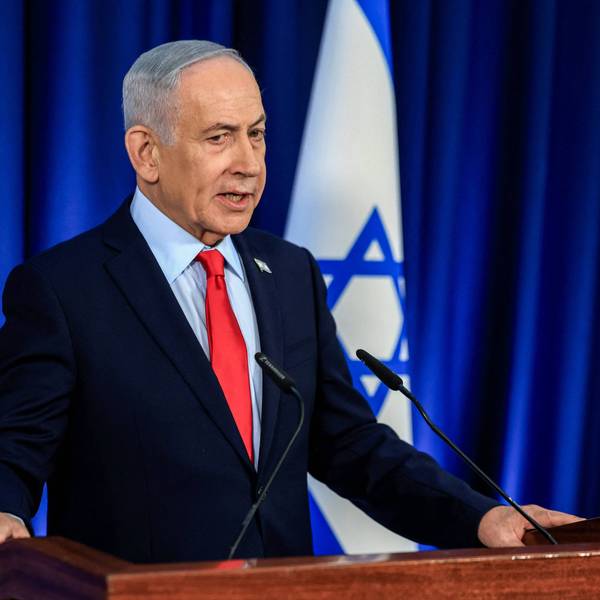
Israeli Prime Minister Benjamin Netanyahu gives a press conference in Jerusalem on March 19, 2026.
"Trump doesn't need Israel's permission to end this war," said one observer. "The longer he waits, the more Americans pay."
Israeli Prime Minister Benjamin Netanyahu said Thursday that "there has to be a ground component" to the war on Iran as a new survey of US voters showed just 7% support for a large-scale invasion involving American forces.
"It is often said that you can't win, you can't do revolutions from the air. That is true," Netanyahu told reporters during a press conference in Jerusalem. "You can do a lot of things from the air... but there has to be a ground component, as well. There are many possibilities for this ground component. And I take the liberty of not sharing with you all of those possibilities."
Netanyahu's insistence on the necessity of ground operations in Iran came as US President Donald Trump declared to reporters in the White House on Thursday, "I'm not putting troops anywhere."
"If I were," he added, "I certainly wouldn't tell you."
A Reuters/Ipsos poll released Thursday found that just 7% of US voters support the idea of a large-scale ground invasion of Iran—but 65% of Americans believe that Trump will order such an operation anyway.
Just 34% of US voters would support "deploying a small number of special forces troops" to Iran, the survey found, while 55% said they would oppose the use of any ground troops.
The survey came days after Reuters reported that the Trump administration is "considering deploying thousands of US troops to reinforce its operation in the Middle East, as the US military prepares for possible next steps in its campaign against Iran."
The Pentagon's push for $200 billion in supplemental funding from the US Congress, which did not authorize the Iran war, amplified concerns that the Trump administration is gearing up for a prolonged conflict that could involve American troops on the ground, despite Trump's repeated public insistence that the war will be over "very soon."
Both US and Israeli intelligence agencies have reportedly assessed that Iran's regime is not on the verge of collapse after nearly three weeks of relentless bombing.
"Western officials and analysts who study Iran said they see little near-term prospect of a 'regime change' end to the 47-year-old Islamic republic or the rise of a more democratic government," The Washington Post reported earlier this week. "The latter is a goal cited by Israeli Prime Minister Benjamin Netanyahu and sometimes by President Donald Trump, who has said he’ll know the war is over 'when I feel it in my bones.'"
Raed Jarrar, advocacy director at the pro-democracy group DAWN, said Thursday that "the United States and Israel are not fighting the same war," pointing to recent Israeli strikes on Iranian energy infrastructure. The strikes drew a public rebuke from Trump, who is facing soaring gas prices at home due to the illegal war he launched in partnership with Netanyahu.
"Trump wants a quick exit. Netanyahu wants to permanently destroy Iran as a regional power," said Shakir. "There is an exit. Trump doesn't need Israel's permission to end this war. He's done it before in Yemen. The longer he waits, the more Americans pay."
Trita Parsi, executive vice president of the Quincy Institute for Responsible Statecraft, warned Thursday that Trump may be running out of time to "convincingly declare victory and provide himself a face-saving exit."
"Israel will do all it can to sabotage any such off-ramp, including killing Iranian's negotiators," Parsi wrote. "But it will become increasingly clear—if it hasn't already—to Trump that all his escalatory options only deepen the lose-lose situation he has put himself in."
"That's why Trump should never have listened to Netanyahu in the first place," he added.
Dear Common Dreams reader, It’s been nearly 30 years since I co-founded Common Dreams with my late wife, Lina Newhouser. We had the radical notion that journalism should serve the public good, not corporate profits. It was clear to us from the outset what it would take to build such a project. No paid advertisements. No corporate sponsors. No millionaire publisher telling us what to think or do. Many people said we wouldn't last a year, but we proved those doubters wrong. Together with a tremendous team of journalists and dedicated staff, we built an independent media outlet free from the constraints of profits and corporate control. Our mission has always been simple: To inform. To inspire. To ignite change for the common good. Building Common Dreams was not easy. Our survival was never guaranteed. When you take on the most powerful forces—Wall Street greed, fossil fuel industry destruction, Big Tech lobbyists, and uber-rich oligarchs who have spent billions upon billions rigging the economy and democracy in their favor—the only bulwark you have is supporters who believe in your work. But here’s the urgent message from me today. It's never been this bad out there. And it's never been this hard to keep us going. At the very moment Common Dreams is most needed, the threats we face are intensifying. We need your support now more than ever. We don't accept corporate advertising and never will. We don't have a paywall because we don't think people should be blocked from critical news based on their ability to pay. Everything we do is funded by the donations of readers like you. When everyone does the little they can afford, we are strong. But if that support retreats or dries up, so do we. Will you donate now to make sure Common Dreams not only survives but thrives? —Craig Brown, Co-founder |
Israeli Prime Minister Benjamin Netanyahu said Thursday that "there has to be a ground component" to the war on Iran as a new survey of US voters showed just 7% support for a large-scale invasion involving American forces.
"It is often said that you can't win, you can't do revolutions from the air. That is true," Netanyahu told reporters during a press conference in Jerusalem. "You can do a lot of things from the air... but there has to be a ground component, as well. There are many possibilities for this ground component. And I take the liberty of not sharing with you all of those possibilities."
Netanyahu's insistence on the necessity of ground operations in Iran came as US President Donald Trump declared to reporters in the White House on Thursday, "I'm not putting troops anywhere."
"If I were," he added, "I certainly wouldn't tell you."
A Reuters/Ipsos poll released Thursday found that just 7% of US voters support the idea of a large-scale ground invasion of Iran—but 65% of Americans believe that Trump will order such an operation anyway.
Just 34% of US voters would support "deploying a small number of special forces troops" to Iran, the survey found, while 55% said they would oppose the use of any ground troops.
The survey came days after Reuters reported that the Trump administration is "considering deploying thousands of US troops to reinforce its operation in the Middle East, as the US military prepares for possible next steps in its campaign against Iran."
The Pentagon's push for $200 billion in supplemental funding from the US Congress, which did not authorize the Iran war, amplified concerns that the Trump administration is gearing up for a prolonged conflict that could involve American troops on the ground, despite Trump's repeated public insistence that the war will be over "very soon."
Both US and Israeli intelligence agencies have reportedly assessed that Iran's regime is not on the verge of collapse after nearly three weeks of relentless bombing.
"Western officials and analysts who study Iran said they see little near-term prospect of a 'regime change' end to the 47-year-old Islamic republic or the rise of a more democratic government," The Washington Post reported earlier this week. "The latter is a goal cited by Israeli Prime Minister Benjamin Netanyahu and sometimes by President Donald Trump, who has said he’ll know the war is over 'when I feel it in my bones.'"
Raed Jarrar, advocacy director at the pro-democracy group DAWN, said Thursday that "the United States and Israel are not fighting the same war," pointing to recent Israeli strikes on Iranian energy infrastructure. The strikes drew a public rebuke from Trump, who is facing soaring gas prices at home due to the illegal war he launched in partnership with Netanyahu.
"Trump wants a quick exit. Netanyahu wants to permanently destroy Iran as a regional power," said Shakir. "There is an exit. Trump doesn't need Israel's permission to end this war. He's done it before in Yemen. The longer he waits, the more Americans pay."
Trita Parsi, executive vice president of the Quincy Institute for Responsible Statecraft, warned Thursday that Trump may be running out of time to "convincingly declare victory and provide himself a face-saving exit."
"Israel will do all it can to sabotage any such off-ramp, including killing Iranian's negotiators," Parsi wrote. "But it will become increasingly clear—if it hasn't already—to Trump that all his escalatory options only deepen the lose-lose situation he has put himself in."
"That's why Trump should never have listened to Netanyahu in the first place," he added.
Israeli Prime Minister Benjamin Netanyahu said Thursday that "there has to be a ground component" to the war on Iran as a new survey of US voters showed just 7% support for a large-scale invasion involving American forces.
"It is often said that you can't win, you can't do revolutions from the air. That is true," Netanyahu told reporters during a press conference in Jerusalem. "You can do a lot of things from the air... but there has to be a ground component, as well. There are many possibilities for this ground component. And I take the liberty of not sharing with you all of those possibilities."
Netanyahu's insistence on the necessity of ground operations in Iran came as US President Donald Trump declared to reporters in the White House on Thursday, "I'm not putting troops anywhere."
"If I were," he added, "I certainly wouldn't tell you."
A Reuters/Ipsos poll released Thursday found that just 7% of US voters support the idea of a large-scale ground invasion of Iran—but 65% of Americans believe that Trump will order such an operation anyway.
Just 34% of US voters would support "deploying a small number of special forces troops" to Iran, the survey found, while 55% said they would oppose the use of any ground troops.
The survey came days after Reuters reported that the Trump administration is "considering deploying thousands of US troops to reinforce its operation in the Middle East, as the US military prepares for possible next steps in its campaign against Iran."
The Pentagon's push for $200 billion in supplemental funding from the US Congress, which did not authorize the Iran war, amplified concerns that the Trump administration is gearing up for a prolonged conflict that could involve American troops on the ground, despite Trump's repeated public insistence that the war will be over "very soon."
Both US and Israeli intelligence agencies have reportedly assessed that Iran's regime is not on the verge of collapse after nearly three weeks of relentless bombing.
"Western officials and analysts who study Iran said they see little near-term prospect of a 'regime change' end to the 47-year-old Islamic republic or the rise of a more democratic government," The Washington Post reported earlier this week. "The latter is a goal cited by Israeli Prime Minister Benjamin Netanyahu and sometimes by President Donald Trump, who has said he’ll know the war is over 'when I feel it in my bones.'"
Raed Jarrar, advocacy director at the pro-democracy group DAWN, said Thursday that "the United States and Israel are not fighting the same war," pointing to recent Israeli strikes on Iranian energy infrastructure. The strikes drew a public rebuke from Trump, who is facing soaring gas prices at home due to the illegal war he launched in partnership with Netanyahu.
"Trump wants a quick exit. Netanyahu wants to permanently destroy Iran as a regional power," said Shakir. "There is an exit. Trump doesn't need Israel's permission to end this war. He's done it before in Yemen. The longer he waits, the more Americans pay."
Trita Parsi, executive vice president of the Quincy Institute for Responsible Statecraft, warned Thursday that Trump may be running out of time to "convincingly declare victory and provide himself a face-saving exit."
"Israel will do all it can to sabotage any such off-ramp, including killing Iranian's negotiators," Parsi wrote. "But it will become increasingly clear—if it hasn't already—to Trump that all his escalatory options only deepen the lose-lose situation he has put himself in."
"That's why Trump should never have listened to Netanyahu in the first place," he added.