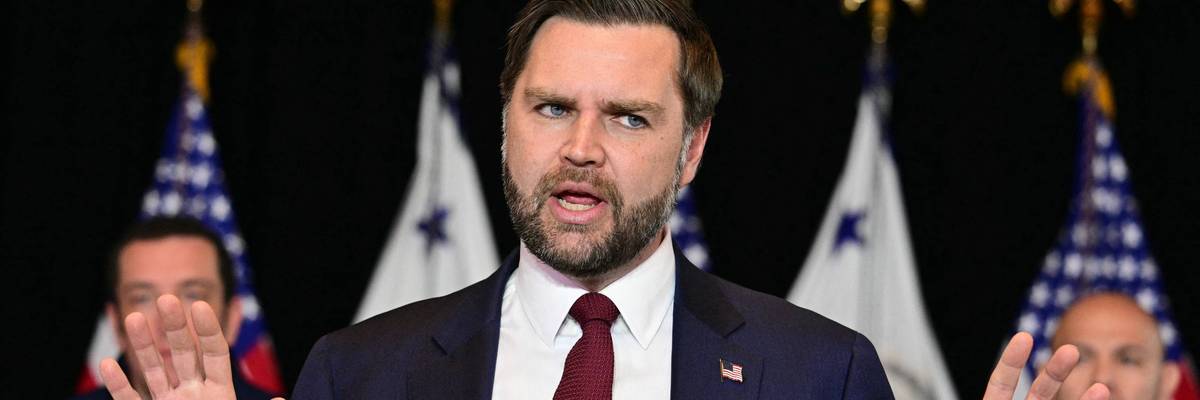
US Vice President JD Vance speaks at Royalston Square in Minneapolis, Minnesota, on January 22, 2026.
JD Vance Caught in Several 'Pernicious' Lies in Defense of ICE
Vance claimed he never said agents had "absolute immunity," that the government was investigating the shooting of Renee Good, and that ICE agents weren't entering homes without judges' warrants. None of it was true.
Vice President JD Vance is being called out by legal experts and other critics who say he lied voluminously on Thursday in response to questions about his past claims that immigration agents enjoyed “absolute immunity,” about whether they are now illegally entering residences without warrants, and about the shooting of Renee Good.
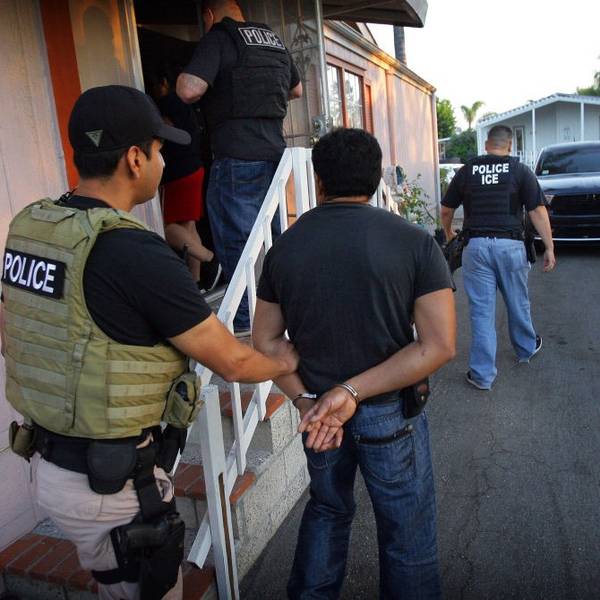
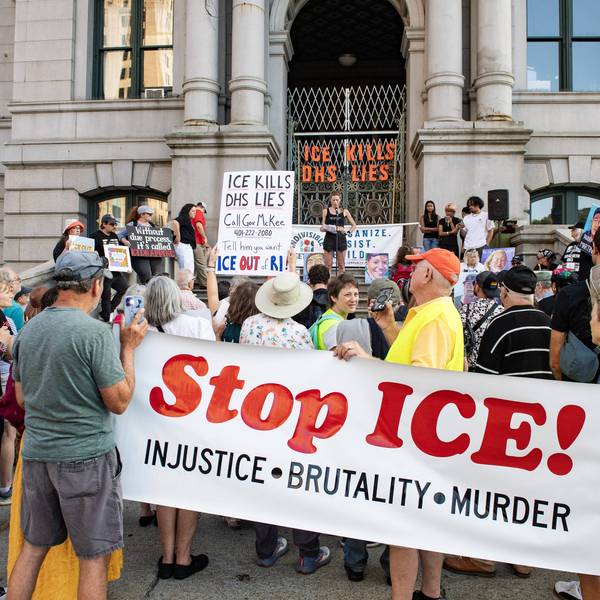
Vance was peppered with questions during a press conference after meeting with Immigration and Customs Enforcement (ICE) agents in Minneapolis, where their conduct has been met with growing backlash in recent weeks, following the shooting of Good on January 7 by agent Jonathan Ross and other violent and unconstitutional actions that have been documented since.
Shortly after the shooting, in a rush to clear Ross of any wrongdoing, Vance made the highly dubious claim that because Ross was "a federal law enforcement official engaging in federal law enforcement action,” he is therefore "protected by absolute immunity."
Legal scholars immediately called out the concept of "absolute immunity" as a fiction that does not refer to any recognized statute.
But despite those remarks having been widely publicized just weeks ago, when asked about them again on Thursday, Vance pretended he never made such a claim.
"No, I didn't say—and I don't think any other official within the Trump administration said that officers who engaged in wrongdoing would enjoy immunity. That's absurd," he said. "What I did say is that when federal law enforcement officers violate the law, that is typically something that federal officials would look into."
"But of course we're going to investigate these things," Vance continued. "We're investigating the Renee Good shooting. But we're investigating them in a way that respects people's rights and ensures that if somebody did something wrong, yes, they're going to face disciplinary action. But we're not going to judge them in the court of public opinion."
In reality, the administration repeatedly said it is not pursuing a criminal investigation into Ross. According to a report from the Washington Post earlier this week, the FBI opened an initial probe into the shooting, and an agent in Minnesota found that "sufficient grounds" existed to open a civil rights probe into Ross, but DOJ officials chose not to pursue it.
Deputy Attorney General Todd Blanche confirmed last week that the DOJ was not investigating the case. “We don’t just go out and investigate every time an officer is forced to defend himself against somebody putting his life in danger. We never do,” he said.
Meanwhile, the Trump administration's officials have repeatedly "judged" the case in the court of public opinion by routinely making statements justifying the shooting, with Vance himself praising Ross for "doing his job" and others in the administration referring to Good as a "domestic terrorist."
While it is not investigating Ross for shooting Good, the DOJ is reportedly investigating Good's widow, Becca Good, over the couple's involvement in monitoring and protesting ICE's actions in Minneapolis, which prompted six federal prosecutors with the DOJ to resign in outrage last week.
Xochitl Hinojosa, a former head of public affairs at the DOJ, found Vance's claim that the shooting was being investigated to be in total contradiction to everything else the administration has said about the case.
"Todd Blanche says no criminal civil rights investigation into the shooting of Renee Good. Vance says today they are investigating the incident," she said. "So who exactly is investigating the incident? Because this would normally be the DOJ or the FBI."
While those claims were self-evidently false, legal scholars noted a more "pernicious" lie by Vance in response to a question about a report earlier this week that ICE had issued a memo allowing agents to forcibly enter homes without a judge's warrant, which has been described as a violation of the Fourth Amendment of the US Constitution.
Asked if the memo, which was first reported on by the Associated Press, violated the Constitution, Vance responded that the story was "missing a whole lot of context" and that what ICE and other agencies proposed was that "we can get administrative warrants to enforce administrative immigration law."
"Nobody is talking about doing immigration enforcement without a warrant. We're talking about different types of warrants that exist in our system," Vance went on. "Typically, in the immigration system, those are handled by administrative law judges. So we're talking about getting warrants from those administrative law judges... That's very consistent with the practice of American law."
Rob Doar, a Minnesota-based criminal defense and civil rights attorney, said that Vance had gotten "just about everything wrong" in his explanation.
"Immigration judges are not [administrative law judges]. They don’t issue warrants," Doar said. "ICE 'administrative warrants' are signed by ICE officers, not judges. They do not authorize home entry. Only a judicial warrant does."
Ryan Goodman, a law professor at New York University and the co-editor-in-chief of Just Security said it was a case of "pernicious wordplay by Vance."
The Department of Homeland Security "is doing immigration enforcement in people's homes without a judicial warrant," he said. "Our system—the Fourth Amendment—requires a judicial warrant."
Joe Mastrosimone, a law professor at Washburn University in Kansas, was amazed that a lawyer of Vance's pedigree could be so inaccurate.
"Good Lord," he wrote on social media. "Did JD Vance actually attend and graduate from Yale Law School? He seems to be a really bad lawyer... This is really basic stuff."
We are at a crossroads
This country and this world are at a monumental crossroads. In a few short weeks, US voters will have an opportunity to beat back the forces of fascism and confront the billionaires who are rigging the economy, our media system, and our democracy, making it increasingly impossible for ordinary people to get by. We’re not just talking about the election. We’re talking about what must be done once these fascist elements are vanquished from power. We need a bolder set of solutions than what either major party has so far been willing to offer and a working-class movement ready to fight like hell for it. Trump didn't emerge from nowhere. The conditions that fueled MAGA authoritarianism were created by decades of radical neoliberal economic policies and a corrupt political system dominated by corporate interests. They slashed taxes on the super-rich, promising that the benefits would trickle down. They said giveaways to the corporate titans would make life more affordable for the rest of us. It was all bullshit. And when a bitter, betrayed populace searches for someone to blame, right-wing demagogues have little trouble finding scapegoats. People know when they're being lied to, but you won't hear any of this from the corporate media. Only independent journalism—powered and funded by people who believe in building a better world—can deliver truly trustworthy daily news. Our Fall Campaign is underway, and we need your help. To power our newsroom through the rest of the year, we need to raise $125,000 by midnight on October 31. So if you share our vision, please contribute whatever you can to sustain our work. |
Vice President JD Vance is being called out by legal experts and other critics who say he lied voluminously on Thursday in response to questions about his past claims that immigration agents enjoyed “absolute immunity,” about whether they are now illegally entering residences without warrants, and about the shooting of Renee Good.
Vance was peppered with questions during a press conference after meeting with Immigration and Customs Enforcement (ICE) agents in Minneapolis, where their conduct has been met with growing backlash in recent weeks, following the shooting of Good on January 7 by agent Jonathan Ross and other violent and unconstitutional actions that have been documented since.
Shortly after the shooting, in a rush to clear Ross of any wrongdoing, Vance made the highly dubious claim that because Ross was "a federal law enforcement official engaging in federal law enforcement action,” he is therefore "protected by absolute immunity."
Legal scholars immediately called out the concept of "absolute immunity" as a fiction that does not refer to any recognized statute.
But despite those remarks having been widely publicized just weeks ago, when asked about them again on Thursday, Vance pretended he never made such a claim.
"No, I didn't say—and I don't think any other official within the Trump administration said that officers who engaged in wrongdoing would enjoy immunity. That's absurd," he said. "What I did say is that when federal law enforcement officers violate the law, that is typically something that federal officials would look into."
"But of course we're going to investigate these things," Vance continued. "We're investigating the Renee Good shooting. But we're investigating them in a way that respects people's rights and ensures that if somebody did something wrong, yes, they're going to face disciplinary action. But we're not going to judge them in the court of public opinion."
In reality, the administration repeatedly said it is not pursuing a criminal investigation into Ross. According to a report from the Washington Post earlier this week, the FBI opened an initial probe into the shooting, and an agent in Minnesota found that "sufficient grounds" existed to open a civil rights probe into Ross, but DOJ officials chose not to pursue it.
Deputy Attorney General Todd Blanche confirmed last week that the DOJ was not investigating the case. “We don’t just go out and investigate every time an officer is forced to defend himself against somebody putting his life in danger. We never do,” he said.
Meanwhile, the Trump administration's officials have repeatedly "judged" the case in the court of public opinion by routinely making statements justifying the shooting, with Vance himself praising Ross for "doing his job" and others in the administration referring to Good as a "domestic terrorist."
While it is not investigating Ross for shooting Good, the DOJ is reportedly investigating Good's widow, Becca Good, over the couple's involvement in monitoring and protesting ICE's actions in Minneapolis, which prompted six federal prosecutors with the DOJ to resign in outrage last week.
Xochitl Hinojosa, a former head of public affairs at the DOJ, found Vance's claim that the shooting was being investigated to be in total contradiction to everything else the administration has said about the case.
"Todd Blanche says no criminal civil rights investigation into the shooting of Renee Good. Vance says today they are investigating the incident," she said. "So who exactly is investigating the incident? Because this would normally be the DOJ or the FBI."
While those claims were self-evidently false, legal scholars noted a more "pernicious" lie by Vance in response to a question about a report earlier this week that ICE had issued a memo allowing agents to forcibly enter homes without a judge's warrant, which has been described as a violation of the Fourth Amendment of the US Constitution.
Asked if the memo, which was first reported on by the Associated Press, violated the Constitution, Vance responded that the story was "missing a whole lot of context" and that what ICE and other agencies proposed was that "we can get administrative warrants to enforce administrative immigration law."
"Nobody is talking about doing immigration enforcement without a warrant. We're talking about different types of warrants that exist in our system," Vance went on. "Typically, in the immigration system, those are handled by administrative law judges. So we're talking about getting warrants from those administrative law judges... That's very consistent with the practice of American law."
Rob Doar, a Minnesota-based criminal defense and civil rights attorney, said that Vance had gotten "just about everything wrong" in his explanation.
"Immigration judges are not [administrative law judges]. They don’t issue warrants," Doar said. "ICE 'administrative warrants' are signed by ICE officers, not judges. They do not authorize home entry. Only a judicial warrant does."
Ryan Goodman, a law professor at New York University and the co-editor-in-chief of Just Security said it was a case of "pernicious wordplay by Vance."
The Department of Homeland Security "is doing immigration enforcement in people's homes without a judicial warrant," he said. "Our system—the Fourth Amendment—requires a judicial warrant."
Joe Mastrosimone, a law professor at Washburn University in Kansas, was amazed that a lawyer of Vance's pedigree could be so inaccurate.
"Good Lord," he wrote on social media. "Did JD Vance actually attend and graduate from Yale Law School? He seems to be a really bad lawyer... This is really basic stuff."
Vice President JD Vance is being called out by legal experts and other critics who say he lied voluminously on Thursday in response to questions about his past claims that immigration agents enjoyed “absolute immunity,” about whether they are now illegally entering residences without warrants, and about the shooting of Renee Good.
Vance was peppered with questions during a press conference after meeting with Immigration and Customs Enforcement (ICE) agents in Minneapolis, where their conduct has been met with growing backlash in recent weeks, following the shooting of Good on January 7 by agent Jonathan Ross and other violent and unconstitutional actions that have been documented since.
Shortly after the shooting, in a rush to clear Ross of any wrongdoing, Vance made the highly dubious claim that because Ross was "a federal law enforcement official engaging in federal law enforcement action,” he is therefore "protected by absolute immunity."
Legal scholars immediately called out the concept of "absolute immunity" as a fiction that does not refer to any recognized statute.
But despite those remarks having been widely publicized just weeks ago, when asked about them again on Thursday, Vance pretended he never made such a claim.
"No, I didn't say—and I don't think any other official within the Trump administration said that officers who engaged in wrongdoing would enjoy immunity. That's absurd," he said. "What I did say is that when federal law enforcement officers violate the law, that is typically something that federal officials would look into."
"But of course we're going to investigate these things," Vance continued. "We're investigating the Renee Good shooting. But we're investigating them in a way that respects people's rights and ensures that if somebody did something wrong, yes, they're going to face disciplinary action. But we're not going to judge them in the court of public opinion."
In reality, the administration repeatedly said it is not pursuing a criminal investigation into Ross. According to a report from the Washington Post earlier this week, the FBI opened an initial probe into the shooting, and an agent in Minnesota found that "sufficient grounds" existed to open a civil rights probe into Ross, but DOJ officials chose not to pursue it.
Deputy Attorney General Todd Blanche confirmed last week that the DOJ was not investigating the case. “We don’t just go out and investigate every time an officer is forced to defend himself against somebody putting his life in danger. We never do,” he said.
Meanwhile, the Trump administration's officials have repeatedly "judged" the case in the court of public opinion by routinely making statements justifying the shooting, with Vance himself praising Ross for "doing his job" and others in the administration referring to Good as a "domestic terrorist."
While it is not investigating Ross for shooting Good, the DOJ is reportedly investigating Good's widow, Becca Good, over the couple's involvement in monitoring and protesting ICE's actions in Minneapolis, which prompted six federal prosecutors with the DOJ to resign in outrage last week.
Xochitl Hinojosa, a former head of public affairs at the DOJ, found Vance's claim that the shooting was being investigated to be in total contradiction to everything else the administration has said about the case.
"Todd Blanche says no criminal civil rights investigation into the shooting of Renee Good. Vance says today they are investigating the incident," she said. "So who exactly is investigating the incident? Because this would normally be the DOJ or the FBI."
While those claims were self-evidently false, legal scholars noted a more "pernicious" lie by Vance in response to a question about a report earlier this week that ICE had issued a memo allowing agents to forcibly enter homes without a judge's warrant, which has been described as a violation of the Fourth Amendment of the US Constitution.
Asked if the memo, which was first reported on by the Associated Press, violated the Constitution, Vance responded that the story was "missing a whole lot of context" and that what ICE and other agencies proposed was that "we can get administrative warrants to enforce administrative immigration law."
"Nobody is talking about doing immigration enforcement without a warrant. We're talking about different types of warrants that exist in our system," Vance went on. "Typically, in the immigration system, those are handled by administrative law judges. So we're talking about getting warrants from those administrative law judges... That's very consistent with the practice of American law."
Rob Doar, a Minnesota-based criminal defense and civil rights attorney, said that Vance had gotten "just about everything wrong" in his explanation.
"Immigration judges are not [administrative law judges]. They don’t issue warrants," Doar said. "ICE 'administrative warrants' are signed by ICE officers, not judges. They do not authorize home entry. Only a judicial warrant does."
Ryan Goodman, a law professor at New York University and the co-editor-in-chief of Just Security said it was a case of "pernicious wordplay by Vance."
The Department of Homeland Security "is doing immigration enforcement in people's homes without a judicial warrant," he said. "Our system—the Fourth Amendment—requires a judicial warrant."
Joe Mastrosimone, a law professor at Washburn University in Kansas, was amazed that a lawyer of Vance's pedigree could be so inaccurate.
"Good Lord," he wrote on social media. "Did JD Vance actually attend and graduate from Yale Law School? He seems to be a really bad lawyer... This is really basic stuff."