SUBSCRIBE TO OUR FREE NEWSLETTER
Daily news & progressive opinion—funded by the people, not the corporations—delivered straight to your inbox.
5
#000000
#FFFFFF
To donate by check, phone, or other method, see our More Ways to Give page.
Daily news & progressive opinion—funded by the people, not the corporations—delivered straight to your inbox.
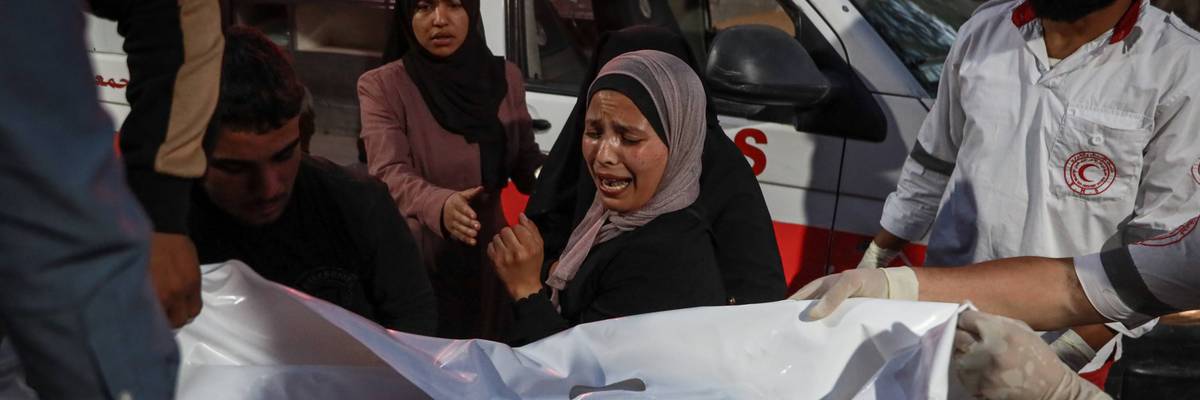
Relatives mourn as the body of a Palestinian killed in an Israeli attack is brought to al-Shifa Hospital in Gaza City, Gaza, Palestine, on May 28, 2026.
“It was a jungle,” one soldier said. “After the ceasefire, the order was: If someone crosses the line, you shoot them.”
Israel Defense Forces soldiers interviewed for an article published Friday by The Associated Press described ongoing indiscriminate killing of Palestinians—including civilians—despite a purported ceasefire.
One IDF combat soldier told the AP that he saw his teammates "yelling in celebration" and "congratulating one another" after blowing up a vehicle driving near the ever-expanding so-called "yellow line" dividing the Gaza Strip into Israeli and Palestinian-controlled zones. The strike killed everyone inside the vehicle.
“It was a jungle,” the soldier said. “After the ceasefire, the order was: If someone crosses the line, you shoot them.”
The problem is, the yellow line is often unclear, invisible, and often shifts. It cuts through farmland, roads, neighborhoods, and areas where Palestinians live and work.
Nadav Weiman, an IDF veteran who is now the executive director of the veterans' whistleblower group Breaking the Silence, told the AP that the military's permissive shoot-to-kill policy has "created a reality where countless civilians have and are being killed for crossing invisible lines."
One IDF soldier interviewed by the AP said “there was a general feeling that human lives are not valuable." The soldier said his commanding officer told him it would be "too much work" to clearly mark the yellow line, and that Palestinians were supposed to somehow know where it was.
According to the AP, one soldier said that "sometimes snipers fired warning shots at people close to the line... but commanders told troops to do more to protect themselves. The soldier understood that to mean firing more lethal shots."
"Soldiers shooting or ordering drone strikes don’t always know who’s crossing the line," the AP reported, citing interviewed troops. "Although soldiers must provide coordinates and get approval from superiors before striking, it’s hard to give exact information as people are moving," and soldiers reported colleagues "calling in coordinates based on a hunch or the last place they saw someone."
IDF troops interviewed by the AP also described "a sense of confusion" and "a lack of clarity on rules of engagement around the yellow line." Some commanders "paid lip service" to the ceasefire agreement that's been in effect since last October, but in practice ignored it.
According to Gaza's Government Media Office, Israel has violated the ceasefire more than 3,005 times, resulting in more than 900 Palestinians killed and nearly 2,800 others injured, despite the truce.
“To call it a ceasefire is a joke,” one IDF soldier told the AP.
Israel claims that the entire length of the yellow line is now clearly marked. However, as Common Dreams reported this week, the IDF has incrementally shifted the boundary deeper into Gaza, where Israel now controls more than 60% of the coastal strip. This has left Palestinians sometimes waking up to learn they're in "open-fire zones" where they are subjected to being shot on sight.
Since the October 7, 2023 Hamas-led attack on Israel, Israeli forces have killed or wounded more than 250,000 Palestinians in Gaza, including thousands of people who are missing and presumed dead and buried beneath rubble. Israeli troops have previously described indiscriminate killing of Palestinian civilians, including children and aid-seekers.
While such killings have become less frequent since the ceasefire, some IDF soldiers dismiss the word as practically meaningless.
“We need to stop using this term,” one soldier told the AP, referring to the word ceasefire. “It’s not serving people that want to stop the war.”
Dear Common Dreams reader, It’s been nearly 30 years since I co-founded Common Dreams with my late wife, Lina Newhouser. We had the radical notion that journalism should serve the public good, not corporate profits. It was clear to us from the outset what it would take to build such a project. No paid advertisements. No corporate sponsors. No millionaire publisher telling us what to think or do. Many people said we wouldn't last a year, but we proved those doubters wrong. Together with a tremendous team of journalists and dedicated staff, we built an independent media outlet free from the constraints of profits and corporate control. Our mission has always been simple: To inform. To inspire. To ignite change for the common good. Building Common Dreams was not easy. Our survival was never guaranteed. When you take on the most powerful forces—Wall Street greed, fossil fuel industry destruction, Big Tech lobbyists, and uber-rich oligarchs who have spent billions upon billions rigging the economy and democracy in their favor—the only bulwark you have is supporters who believe in your work. But here’s the urgent message from me today. It's never been this bad out there. And it's never been this hard to keep us going. At the very moment Common Dreams is most needed, the threats we face are intensifying. We need your support now more than ever. We don't accept corporate advertising and never will. We don't have a paywall because we don't think people should be blocked from critical news based on their ability to pay. Everything we do is funded by the donations of readers like you. When everyone does the little they can afford, we are strong. But if that support retreats or dries up, so do we. Will you donate now to make sure Common Dreams not only survives but thrives? —Craig Brown, Co-founder |
Israel Defense Forces soldiers interviewed for an article published Friday by The Associated Press described ongoing indiscriminate killing of Palestinians—including civilians—despite a purported ceasefire.
One IDF combat soldier told the AP that he saw his teammates "yelling in celebration" and "congratulating one another" after blowing up a vehicle driving near the ever-expanding so-called "yellow line" dividing the Gaza Strip into Israeli and Palestinian-controlled zones. The strike killed everyone inside the vehicle.
“It was a jungle,” the soldier said. “After the ceasefire, the order was: If someone crosses the line, you shoot them.”
The problem is, the yellow line is often unclear, invisible, and often shifts. It cuts through farmland, roads, neighborhoods, and areas where Palestinians live and work.
Nadav Weiman, an IDF veteran who is now the executive director of the veterans' whistleblower group Breaking the Silence, told the AP that the military's permissive shoot-to-kill policy has "created a reality where countless civilians have and are being killed for crossing invisible lines."
One IDF soldier interviewed by the AP said “there was a general feeling that human lives are not valuable." The soldier said his commanding officer told him it would be "too much work" to clearly mark the yellow line, and that Palestinians were supposed to somehow know where it was.
According to the AP, one soldier said that "sometimes snipers fired warning shots at people close to the line... but commanders told troops to do more to protect themselves. The soldier understood that to mean firing more lethal shots."
"Soldiers shooting or ordering drone strikes don’t always know who’s crossing the line," the AP reported, citing interviewed troops. "Although soldiers must provide coordinates and get approval from superiors before striking, it’s hard to give exact information as people are moving," and soldiers reported colleagues "calling in coordinates based on a hunch or the last place they saw someone."
IDF troops interviewed by the AP also described "a sense of confusion" and "a lack of clarity on rules of engagement around the yellow line." Some commanders "paid lip service" to the ceasefire agreement that's been in effect since last October, but in practice ignored it.
According to Gaza's Government Media Office, Israel has violated the ceasefire more than 3,005 times, resulting in more than 900 Palestinians killed and nearly 2,800 others injured, despite the truce.
“To call it a ceasefire is a joke,” one IDF soldier told the AP.
Israel claims that the entire length of the yellow line is now clearly marked. However, as Common Dreams reported this week, the IDF has incrementally shifted the boundary deeper into Gaza, where Israel now controls more than 60% of the coastal strip. This has left Palestinians sometimes waking up to learn they're in "open-fire zones" where they are subjected to being shot on sight.
Since the October 7, 2023 Hamas-led attack on Israel, Israeli forces have killed or wounded more than 250,000 Palestinians in Gaza, including thousands of people who are missing and presumed dead and buried beneath rubble. Israeli troops have previously described indiscriminate killing of Palestinian civilians, including children and aid-seekers.
While such killings have become less frequent since the ceasefire, some IDF soldiers dismiss the word as practically meaningless.
“We need to stop using this term,” one soldier told the AP, referring to the word ceasefire. “It’s not serving people that want to stop the war.”
Israel Defense Forces soldiers interviewed for an article published Friday by The Associated Press described ongoing indiscriminate killing of Palestinians—including civilians—despite a purported ceasefire.
One IDF combat soldier told the AP that he saw his teammates "yelling in celebration" and "congratulating one another" after blowing up a vehicle driving near the ever-expanding so-called "yellow line" dividing the Gaza Strip into Israeli and Palestinian-controlled zones. The strike killed everyone inside the vehicle.
“It was a jungle,” the soldier said. “After the ceasefire, the order was: If someone crosses the line, you shoot them.”
The problem is, the yellow line is often unclear, invisible, and often shifts. It cuts through farmland, roads, neighborhoods, and areas where Palestinians live and work.
Nadav Weiman, an IDF veteran who is now the executive director of the veterans' whistleblower group Breaking the Silence, told the AP that the military's permissive shoot-to-kill policy has "created a reality where countless civilians have and are being killed for crossing invisible lines."
One IDF soldier interviewed by the AP said “there was a general feeling that human lives are not valuable." The soldier said his commanding officer told him it would be "too much work" to clearly mark the yellow line, and that Palestinians were supposed to somehow know where it was.
According to the AP, one soldier said that "sometimes snipers fired warning shots at people close to the line... but commanders told troops to do more to protect themselves. The soldier understood that to mean firing more lethal shots."
"Soldiers shooting or ordering drone strikes don’t always know who’s crossing the line," the AP reported, citing interviewed troops. "Although soldiers must provide coordinates and get approval from superiors before striking, it’s hard to give exact information as people are moving," and soldiers reported colleagues "calling in coordinates based on a hunch or the last place they saw someone."
IDF troops interviewed by the AP also described "a sense of confusion" and "a lack of clarity on rules of engagement around the yellow line." Some commanders "paid lip service" to the ceasefire agreement that's been in effect since last October, but in practice ignored it.
According to Gaza's Government Media Office, Israel has violated the ceasefire more than 3,005 times, resulting in more than 900 Palestinians killed and nearly 2,800 others injured, despite the truce.
“To call it a ceasefire is a joke,” one IDF soldier told the AP.
Israel claims that the entire length of the yellow line is now clearly marked. However, as Common Dreams reported this week, the IDF has incrementally shifted the boundary deeper into Gaza, where Israel now controls more than 60% of the coastal strip. This has left Palestinians sometimes waking up to learn they're in "open-fire zones" where they are subjected to being shot on sight.
Since the October 7, 2023 Hamas-led attack on Israel, Israeli forces have killed or wounded more than 250,000 Palestinians in Gaza, including thousands of people who are missing and presumed dead and buried beneath rubble. Israeli troops have previously described indiscriminate killing of Palestinian civilians, including children and aid-seekers.
While such killings have become less frequent since the ceasefire, some IDF soldiers dismiss the word as practically meaningless.
“We need to stop using this term,” one soldier told the AP, referring to the word ceasefire. “It’s not serving people that want to stop the war.”