SUBSCRIBE TO OUR FREE NEWSLETTER
Daily news & progressive opinion—funded by the people, not the corporations—delivered straight to your inbox.
5
#000000
#FFFFFF
To donate by check, phone, or other method, see our More Ways to Give page.
Daily news & progressive opinion—funded by the people, not the corporations—delivered straight to your inbox.
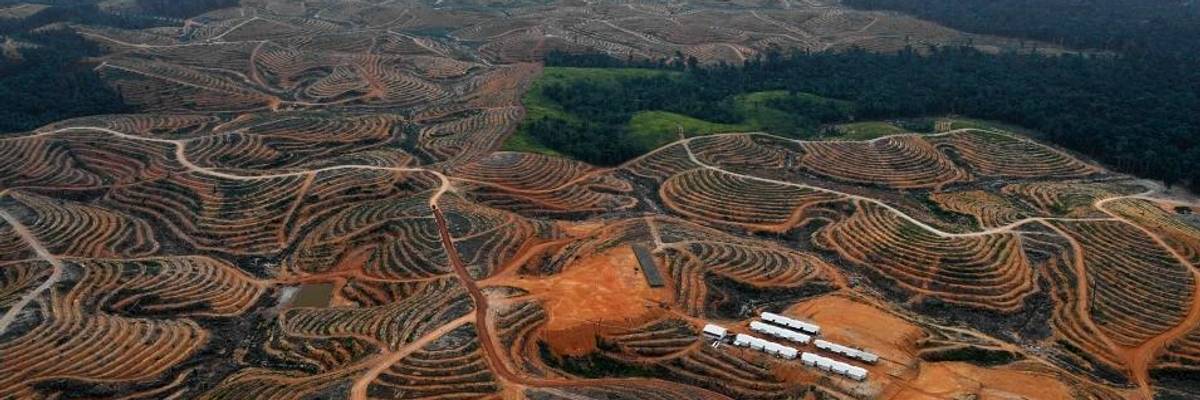
An aerial photograph taken on February 24, 2014 shows the destruction of an Indonesian rainforest--the habitat of endangered orangutans, tigers, and other animal as well as plant species--cleared to make way for a palm oil plantation on Borneo Island. (Photo: Bay Ismoyo/AFP via Getty Images)
As the United Nations on Thursday released a report on the triple emergency of the climate crisis, the destruction of wildlife and habitats, and deadly pollution, the head of the world body sounded the alarm on what he called humanity's "senseless and suicidal war on nature."
"I want to be clear. Without nature's help, we will not thrive or even survive."
-- Antonio Guterres
U.N. Secretary-General
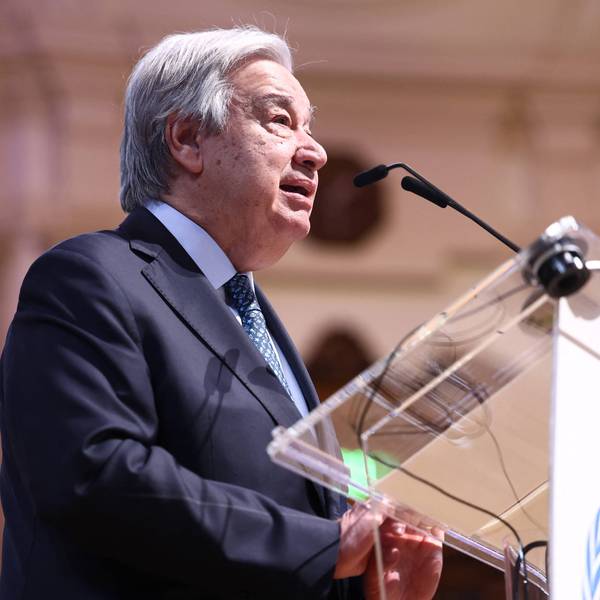
The United Nations Environment Program (UNEP) report, entitled Making Peace With Nature: A scientific blueprint to tackle the climate, biodiversity, and pollution emergencies (pdf), was introduced by Secretary-General Antonio Guterres at U.N. headquarters in New York.
"I want to be clear. Without nature's help, we will not thrive or even survive," said Guterres. "For too long, we have been waging a senseless and suicidal war on nature. The result is three interlinked environmental crises--climate disruption, biodiversity loss, and pollution--that threaten our viability as a species."
"They are caused by unsustainable production and consumption," he added. "Human well-being lies in protecting the health of the planet. It's time to reevaluate and reset our relationship with nature. This report can help us do so."
Among the report's recommendations are carbon taxes; a redirection in the nearly $5 trillion in annual worldwide subsidies to sectors including fossil fuels, mining, industrial agriculture, and fishing "toward alternative livelihoods and new business models;" and reenvisioning indicators of economic performance so that the value of mitigating the climate emergency, preserving ecosystems, and reducing pollution count--not just GDP.
Additionally, the report asserts that "changes in patterns of consumption are critical to transforming food, water, and energy systems and can be achieved through altered norms in business and cultural practices."
"Changes in patterns of consumption are critical to transforming food, water, and energy systems and can be achieved through altered norms in business and cultural practices."
--UNEP report
"Changing the dietary habits of consumers, particularly in developed countries, where consumption of energy- and water-intensive meat and dairy products is high, would reduce pressure on biodiversity and the climate system," the report states. "These habits are a function of individual choices but are also influenced by advertising, food and agricultural subsidies, and excess availability of cheap food that provides poor nutrition."
Robert Watson, the report's lead author, told Al Jazeera that "vested interests" were thwarting many of the policies and actions needed to make peace with nature.
"We have subsidies for agriculture, for energy, for fossil fuels that are perverse," said Watson. "They encourage the use of fossil fuels. They encourage the use of bad agricultural practices."
"If we can get the business community to work with governments around the world, I'm optimistic we can start to move in the right direction," he added.
Dear Common Dreams reader, It’s been nearly 30 years since I co-founded Common Dreams with my late wife, Lina Newhouser. We had the radical notion that journalism should serve the public good, not corporate profits. It was clear to us from the outset what it would take to build such a project. No paid advertisements. No corporate sponsors. No millionaire publisher telling us what to think or do. Many people said we wouldn't last a year, but we proved those doubters wrong. Together with a tremendous team of journalists and dedicated staff, we built an independent media outlet free from the constraints of profits and corporate control. Our mission has always been simple: To inform. To inspire. To ignite change for the common good. Building Common Dreams was not easy. Our survival was never guaranteed. When you take on the most powerful forces—Wall Street greed, fossil fuel industry destruction, Big Tech lobbyists, and uber-rich oligarchs who have spent billions upon billions rigging the economy and democracy in their favor—the only bulwark you have is supporters who believe in your work. But here’s the urgent message from me today. It's never been this bad out there. And it's never been this hard to keep us going. At the very moment Common Dreams is most needed, the threats we face are intensifying. We need your support now more than ever. We don't accept corporate advertising and never will. We don't have a paywall because we don't think people should be blocked from critical news based on their ability to pay. Everything we do is funded by the donations of readers like you. When everyone does the little they can afford, we are strong. But if that support retreats or dries up, so do we. Will you donate now to make sure Common Dreams not only survives but thrives? —Craig Brown, Co-founder |
As the United Nations on Thursday released a report on the triple emergency of the climate crisis, the destruction of wildlife and habitats, and deadly pollution, the head of the world body sounded the alarm on what he called humanity's "senseless and suicidal war on nature."
"I want to be clear. Without nature's help, we will not thrive or even survive."
-- Antonio Guterres
U.N. Secretary-General
The United Nations Environment Program (UNEP) report, entitled Making Peace With Nature: A scientific blueprint to tackle the climate, biodiversity, and pollution emergencies (pdf), was introduced by Secretary-General Antonio Guterres at U.N. headquarters in New York.
"I want to be clear. Without nature's help, we will not thrive or even survive," said Guterres. "For too long, we have been waging a senseless and suicidal war on nature. The result is three interlinked environmental crises--climate disruption, biodiversity loss, and pollution--that threaten our viability as a species."
"They are caused by unsustainable production and consumption," he added. "Human well-being lies in protecting the health of the planet. It's time to reevaluate and reset our relationship with nature. This report can help us do so."
Among the report's recommendations are carbon taxes; a redirection in the nearly $5 trillion in annual worldwide subsidies to sectors including fossil fuels, mining, industrial agriculture, and fishing "toward alternative livelihoods and new business models;" and reenvisioning indicators of economic performance so that the value of mitigating the climate emergency, preserving ecosystems, and reducing pollution count--not just GDP.
Additionally, the report asserts that "changes in patterns of consumption are critical to transforming food, water, and energy systems and can be achieved through altered norms in business and cultural practices."
"Changes in patterns of consumption are critical to transforming food, water, and energy systems and can be achieved through altered norms in business and cultural practices."
--UNEP report
"Changing the dietary habits of consumers, particularly in developed countries, where consumption of energy- and water-intensive meat and dairy products is high, would reduce pressure on biodiversity and the climate system," the report states. "These habits are a function of individual choices but are also influenced by advertising, food and agricultural subsidies, and excess availability of cheap food that provides poor nutrition."
Robert Watson, the report's lead author, told Al Jazeera that "vested interests" were thwarting many of the policies and actions needed to make peace with nature.
"We have subsidies for agriculture, for energy, for fossil fuels that are perverse," said Watson. "They encourage the use of fossil fuels. They encourage the use of bad agricultural practices."
"If we can get the business community to work with governments around the world, I'm optimistic we can start to move in the right direction," he added.
As the United Nations on Thursday released a report on the triple emergency of the climate crisis, the destruction of wildlife and habitats, and deadly pollution, the head of the world body sounded the alarm on what he called humanity's "senseless and suicidal war on nature."
"I want to be clear. Without nature's help, we will not thrive or even survive."
-- Antonio Guterres
U.N. Secretary-General
The United Nations Environment Program (UNEP) report, entitled Making Peace With Nature: A scientific blueprint to tackle the climate, biodiversity, and pollution emergencies (pdf), was introduced by Secretary-General Antonio Guterres at U.N. headquarters in New York.
"I want to be clear. Without nature's help, we will not thrive or even survive," said Guterres. "For too long, we have been waging a senseless and suicidal war on nature. The result is three interlinked environmental crises--climate disruption, biodiversity loss, and pollution--that threaten our viability as a species."
"They are caused by unsustainable production and consumption," he added. "Human well-being lies in protecting the health of the planet. It's time to reevaluate and reset our relationship with nature. This report can help us do so."
Among the report's recommendations are carbon taxes; a redirection in the nearly $5 trillion in annual worldwide subsidies to sectors including fossil fuels, mining, industrial agriculture, and fishing "toward alternative livelihoods and new business models;" and reenvisioning indicators of economic performance so that the value of mitigating the climate emergency, preserving ecosystems, and reducing pollution count--not just GDP.
Additionally, the report asserts that "changes in patterns of consumption are critical to transforming food, water, and energy systems and can be achieved through altered norms in business and cultural practices."
"Changes in patterns of consumption are critical to transforming food, water, and energy systems and can be achieved through altered norms in business and cultural practices."
--UNEP report
"Changing the dietary habits of consumers, particularly in developed countries, where consumption of energy- and water-intensive meat and dairy products is high, would reduce pressure on biodiversity and the climate system," the report states. "These habits are a function of individual choices but are also influenced by advertising, food and agricultural subsidies, and excess availability of cheap food that provides poor nutrition."
Robert Watson, the report's lead author, told Al Jazeera that "vested interests" were thwarting many of the policies and actions needed to make peace with nature.
"We have subsidies for agriculture, for energy, for fossil fuels that are perverse," said Watson. "They encourage the use of fossil fuels. They encourage the use of bad agricultural practices."
"If we can get the business community to work with governments around the world, I'm optimistic we can start to move in the right direction," he added.