

SUBSCRIBE TO OUR FREE NEWSLETTER
Daily news & progressive opinion—funded by the people, not the corporations—delivered straight to your inbox.
5
#000000
#FFFFFF
To donate by check, phone, or other method, see our More Ways to Give page.
Daily news & progressive opinion—funded by the people, not the corporations—delivered straight to your inbox.
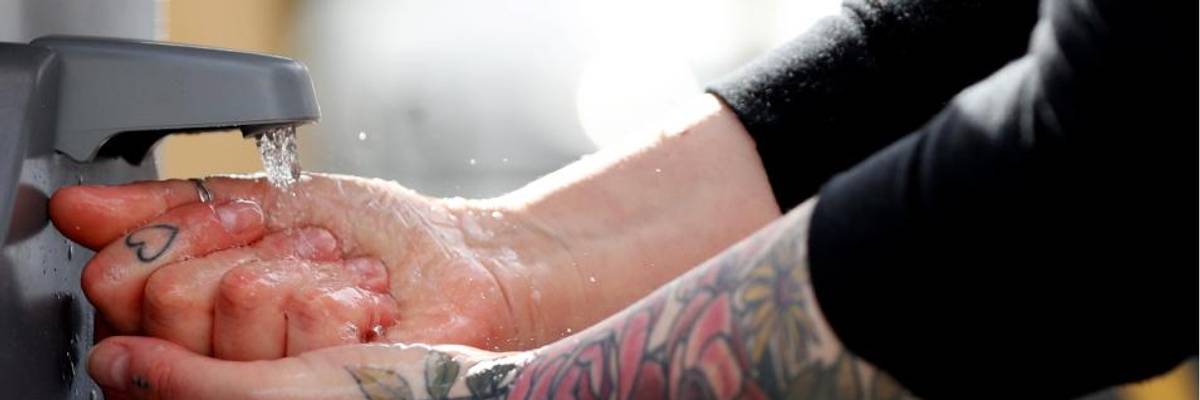
"How the hell are you supposed to wash your hands... when your water has been shut off?" Sen. Bernie Sanders (I-Vt.) asked in April 2020. (Photo: Maddie Meyer/Getty Images)
A diverse coalition of more than 600 labor, environmental, racial justice, and faith-based organizations delivered a letter Wednesday urging President-elect Joe Biden and his administration to enact a nationwide moratorium on utility disconnections on day one in the White House, stressing that continued access to water, electricity, heat, broadband, and other services is essential to slowing the spread of Covid-19, alleviating financial burdens on struggling households, and enabling remote learning.
"In order to fight both this deadly virus and deepening economic and social inequality, the Biden administration must use its power to enact a nationwide utility shutoff moratorium."
--Rep. Rashida Tlaib
The call from the No Shutoffs Coalition--led by Food & Water Watch, Free Press Action, Center for Biological Diversity, the Partnership for Southern Equity, and the Democracy Collaborative--declared that immediate federal action is needed to help millions of individuals and families facing poverty and lack of crucial services in the midst of unprecedented political and economic chaos during a deadly pandemic that has claimed nearly 380,000 lives in the U.S. alone over the last 10 months.
"No American--regardless of the color of their skin, their zip code, or their income--should ever have to choose between heating their homes, keeping the lights on, the broadband they need to work or learn remotely, and putting food on the table. That's especially true in the middle of a global pandemic, where public health experts are emphasizing how important it is that each of us stay home to stay safe," Sen. Jeff Merkley (D-Ore.) said in a statement supporting the coalition's demand.
"While many states and utility companies have stepped up to do the right thing, many families are still just a missed payment away from losing critical utilities in the middle of this public health and economic emergency," added Merkley, who last April wrote a letter signed by 113 Congress members in support of a federal halt on shutoffs. "For all of us to get through this together we need to have a national disconnection moratorium that ensures that no family is left behind in the patchwork of policies."
Even though regular hand-washing is critical to curbing the spread of Covid-19, "moratoriums on water shutoffs have so far been patchy and often short-lived," The Guardian reported Wednesday. "Only 20 states banned disconnections last year despite warnings from public health experts, and 11 of these moratoriums have expired. Currently, 56% of Americans--183 million people--are at risk of losing their water supply if they cannot keep up with bill payments."
The letter to Biden and Vice President-elect Kamala Harris includes a draft Executive Order that would instruct the Centers for Disease Control and Prevention to use its authority under the Public Health Service Act to implement a federal moratorium on utility shutoffs lasting for the duration of the coronavirus crisis plus an additional 12 months at minimum.
In addition to halting residential disconnections of all water, electricity, heat, broadband, and other necessary utilities, the proposed order would mandate restoration of services to previously disconnected homes.
The demand for executive action follows congressional lawmakers' failure to include adequate funding and a shutoff moratorium in the relief bill passed in December.
"For months I have been leading the fight in Washington to ensure that no person goes without water in their home during this pandemic and beyond, because water is life now and always," Rep. Rashida Tlaib (D-Mich.) said in a statement backing the coalition's call. "We know that water and other utility shutoffs disproportionately hurt our neighbors of color, and that it's no coincidence these disparately impacted groups are also facing the worst of the Covid-19 pandemic."
"In order to fight both this deadly virus and deepening economic and social inequality," Tlaib continued, "the Biden administration must use its power to enact a nationwide utility shutoff moratorium and immediate water service line reconnection as soon as possible."
Tlaib is also advocating for a $1.5 billion fund to be created under the Emergency Water is a Human Right Act, which she introduced in the House in April, alongside Merkley's Senate version of the bill. The legislation would assist low-income households with water payments.
Water, electricity, and heat are not the only services required to effectively shelter-in-place during the ongoing pandemic. Internet is an indispensable tool for online learning, remote work, and other daily activities.
According to Food & Water Watch, nearly 80 million people in the U.S. lack access to adequate broadband at home, and this "digital divide" impacts poor families and communities of color disproportionately.
"During this pandemic, internet connectivity is a literal lifeline for families," said Dana Floberg, policy manager at Free Press Action. "But untold numbers of people are having those lifelines cut in the midst of a global health crisis because they can't afford the bills charged by extremely profitable internet providers. Blocking internet shutoffs means ensuring all families can connect to virtual learning, remote work, telehealth appointments, and critical information for participating in our democracy."
Jean Su, director of the Center for Biological Diversity's energy justice program, pointed out that "private power utilities are disconnecting thousands of families every month, while continuing to reward shareholders."
"America's utility shutoffs crisis is a human rights crisis," said Su.
Dear Common Dreams reader, It’s been nearly 30 years since I co-founded Common Dreams with my late wife, Lina Newhouser. We had the radical notion that journalism should serve the public good, not corporate profits. It was clear to us from the outset what it would take to build such a project. No paid advertisements. No corporate sponsors. No millionaire publisher telling us what to think or do. Many people said we wouldn't last a year, but we proved those doubters wrong. Together with a tremendous team of journalists and dedicated staff, we built an independent media outlet free from the constraints of profits and corporate control. Our mission has always been simple: To inform. To inspire. To ignite change for the common good. Building Common Dreams was not easy. Our survival was never guaranteed. When you take on the most powerful forces—Wall Street greed, fossil fuel industry destruction, Big Tech lobbyists, and uber-rich oligarchs who have spent billions upon billions rigging the economy and democracy in their favor—the only bulwark you have is supporters who believe in your work. But here’s the urgent message from me today. It's never been this bad out there. And it's never been this hard to keep us going. At the very moment Common Dreams is most needed, the threats we face are intensifying. We need your support now more than ever. We don't accept corporate advertising and never will. We don't have a paywall because we don't think people should be blocked from critical news based on their ability to pay. Everything we do is funded by the donations of readers like you. When everyone does the little they can afford, we are strong. But if that support retreats or dries up, so do we. Will you donate now to make sure Common Dreams not only survives but thrives? —Craig Brown, Co-founder |
A diverse coalition of more than 600 labor, environmental, racial justice, and faith-based organizations delivered a letter Wednesday urging President-elect Joe Biden and his administration to enact a nationwide moratorium on utility disconnections on day one in the White House, stressing that continued access to water, electricity, heat, broadband, and other services is essential to slowing the spread of Covid-19, alleviating financial burdens on struggling households, and enabling remote learning.
"In order to fight both this deadly virus and deepening economic and social inequality, the Biden administration must use its power to enact a nationwide utility shutoff moratorium."
--Rep. Rashida Tlaib
The call from the No Shutoffs Coalition--led by Food & Water Watch, Free Press Action, Center for Biological Diversity, the Partnership for Southern Equity, and the Democracy Collaborative--declared that immediate federal action is needed to help millions of individuals and families facing poverty and lack of crucial services in the midst of unprecedented political and economic chaos during a deadly pandemic that has claimed nearly 380,000 lives in the U.S. alone over the last 10 months.
"No American--regardless of the color of their skin, their zip code, or their income--should ever have to choose between heating their homes, keeping the lights on, the broadband they need to work or learn remotely, and putting food on the table. That's especially true in the middle of a global pandemic, where public health experts are emphasizing how important it is that each of us stay home to stay safe," Sen. Jeff Merkley (D-Ore.) said in a statement supporting the coalition's demand.
"While many states and utility companies have stepped up to do the right thing, many families are still just a missed payment away from losing critical utilities in the middle of this public health and economic emergency," added Merkley, who last April wrote a letter signed by 113 Congress members in support of a federal halt on shutoffs. "For all of us to get through this together we need to have a national disconnection moratorium that ensures that no family is left behind in the patchwork of policies."
Even though regular hand-washing is critical to curbing the spread of Covid-19, "moratoriums on water shutoffs have so far been patchy and often short-lived," The Guardian reported Wednesday. "Only 20 states banned disconnections last year despite warnings from public health experts, and 11 of these moratoriums have expired. Currently, 56% of Americans--183 million people--are at risk of losing their water supply if they cannot keep up with bill payments."
The letter to Biden and Vice President-elect Kamala Harris includes a draft Executive Order that would instruct the Centers for Disease Control and Prevention to use its authority under the Public Health Service Act to implement a federal moratorium on utility shutoffs lasting for the duration of the coronavirus crisis plus an additional 12 months at minimum.
In addition to halting residential disconnections of all water, electricity, heat, broadband, and other necessary utilities, the proposed order would mandate restoration of services to previously disconnected homes.
The demand for executive action follows congressional lawmakers' failure to include adequate funding and a shutoff moratorium in the relief bill passed in December.
"For months I have been leading the fight in Washington to ensure that no person goes without water in their home during this pandemic and beyond, because water is life now and always," Rep. Rashida Tlaib (D-Mich.) said in a statement backing the coalition's call. "We know that water and other utility shutoffs disproportionately hurt our neighbors of color, and that it's no coincidence these disparately impacted groups are also facing the worst of the Covid-19 pandemic."
"In order to fight both this deadly virus and deepening economic and social inequality," Tlaib continued, "the Biden administration must use its power to enact a nationwide utility shutoff moratorium and immediate water service line reconnection as soon as possible."
Tlaib is also advocating for a $1.5 billion fund to be created under the Emergency Water is a Human Right Act, which she introduced in the House in April, alongside Merkley's Senate version of the bill. The legislation would assist low-income households with water payments.
Water, electricity, and heat are not the only services required to effectively shelter-in-place during the ongoing pandemic. Internet is an indispensable tool for online learning, remote work, and other daily activities.
According to Food & Water Watch, nearly 80 million people in the U.S. lack access to adequate broadband at home, and this "digital divide" impacts poor families and communities of color disproportionately.
"During this pandemic, internet connectivity is a literal lifeline for families," said Dana Floberg, policy manager at Free Press Action. "But untold numbers of people are having those lifelines cut in the midst of a global health crisis because they can't afford the bills charged by extremely profitable internet providers. Blocking internet shutoffs means ensuring all families can connect to virtual learning, remote work, telehealth appointments, and critical information for participating in our democracy."
Jean Su, director of the Center for Biological Diversity's energy justice program, pointed out that "private power utilities are disconnecting thousands of families every month, while continuing to reward shareholders."
"America's utility shutoffs crisis is a human rights crisis," said Su.
A diverse coalition of more than 600 labor, environmental, racial justice, and faith-based organizations delivered a letter Wednesday urging President-elect Joe Biden and his administration to enact a nationwide moratorium on utility disconnections on day one in the White House, stressing that continued access to water, electricity, heat, broadband, and other services is essential to slowing the spread of Covid-19, alleviating financial burdens on struggling households, and enabling remote learning.
"In order to fight both this deadly virus and deepening economic and social inequality, the Biden administration must use its power to enact a nationwide utility shutoff moratorium."
--Rep. Rashida Tlaib
The call from the No Shutoffs Coalition--led by Food & Water Watch, Free Press Action, Center for Biological Diversity, the Partnership for Southern Equity, and the Democracy Collaborative--declared that immediate federal action is needed to help millions of individuals and families facing poverty and lack of crucial services in the midst of unprecedented political and economic chaos during a deadly pandemic that has claimed nearly 380,000 lives in the U.S. alone over the last 10 months.
"No American--regardless of the color of their skin, their zip code, or their income--should ever have to choose between heating their homes, keeping the lights on, the broadband they need to work or learn remotely, and putting food on the table. That's especially true in the middle of a global pandemic, where public health experts are emphasizing how important it is that each of us stay home to stay safe," Sen. Jeff Merkley (D-Ore.) said in a statement supporting the coalition's demand.
"While many states and utility companies have stepped up to do the right thing, many families are still just a missed payment away from losing critical utilities in the middle of this public health and economic emergency," added Merkley, who last April wrote a letter signed by 113 Congress members in support of a federal halt on shutoffs. "For all of us to get through this together we need to have a national disconnection moratorium that ensures that no family is left behind in the patchwork of policies."
Even though regular hand-washing is critical to curbing the spread of Covid-19, "moratoriums on water shutoffs have so far been patchy and often short-lived," The Guardian reported Wednesday. "Only 20 states banned disconnections last year despite warnings from public health experts, and 11 of these moratoriums have expired. Currently, 56% of Americans--183 million people--are at risk of losing their water supply if they cannot keep up with bill payments."
The letter to Biden and Vice President-elect Kamala Harris includes a draft Executive Order that would instruct the Centers for Disease Control and Prevention to use its authority under the Public Health Service Act to implement a federal moratorium on utility shutoffs lasting for the duration of the coronavirus crisis plus an additional 12 months at minimum.
In addition to halting residential disconnections of all water, electricity, heat, broadband, and other necessary utilities, the proposed order would mandate restoration of services to previously disconnected homes.
The demand for executive action follows congressional lawmakers' failure to include adequate funding and a shutoff moratorium in the relief bill passed in December.
"For months I have been leading the fight in Washington to ensure that no person goes without water in their home during this pandemic and beyond, because water is life now and always," Rep. Rashida Tlaib (D-Mich.) said in a statement backing the coalition's call. "We know that water and other utility shutoffs disproportionately hurt our neighbors of color, and that it's no coincidence these disparately impacted groups are also facing the worst of the Covid-19 pandemic."
"In order to fight both this deadly virus and deepening economic and social inequality," Tlaib continued, "the Biden administration must use its power to enact a nationwide utility shutoff moratorium and immediate water service line reconnection as soon as possible."
Tlaib is also advocating for a $1.5 billion fund to be created under the Emergency Water is a Human Right Act, which she introduced in the House in April, alongside Merkley's Senate version of the bill. The legislation would assist low-income households with water payments.
Water, electricity, and heat are not the only services required to effectively shelter-in-place during the ongoing pandemic. Internet is an indispensable tool for online learning, remote work, and other daily activities.
According to Food & Water Watch, nearly 80 million people in the U.S. lack access to adequate broadband at home, and this "digital divide" impacts poor families and communities of color disproportionately.
"During this pandemic, internet connectivity is a literal lifeline for families," said Dana Floberg, policy manager at Free Press Action. "But untold numbers of people are having those lifelines cut in the midst of a global health crisis because they can't afford the bills charged by extremely profitable internet providers. Blocking internet shutoffs means ensuring all families can connect to virtual learning, remote work, telehealth appointments, and critical information for participating in our democracy."
Jean Su, director of the Center for Biological Diversity's energy justice program, pointed out that "private power utilities are disconnecting thousands of families every month, while continuing to reward shareholders."
"America's utility shutoffs crisis is a human rights crisis," said Su.

