SUBSCRIBE TO OUR FREE NEWSLETTER
Daily news & progressive opinion—funded by the people, not the corporations—delivered straight to your inbox.
5
#000000
#FFFFFF
To donate by check, phone, or other method, see our More Ways to Give page.
Daily news & progressive opinion—funded by the people, not the corporations—delivered straight to your inbox.
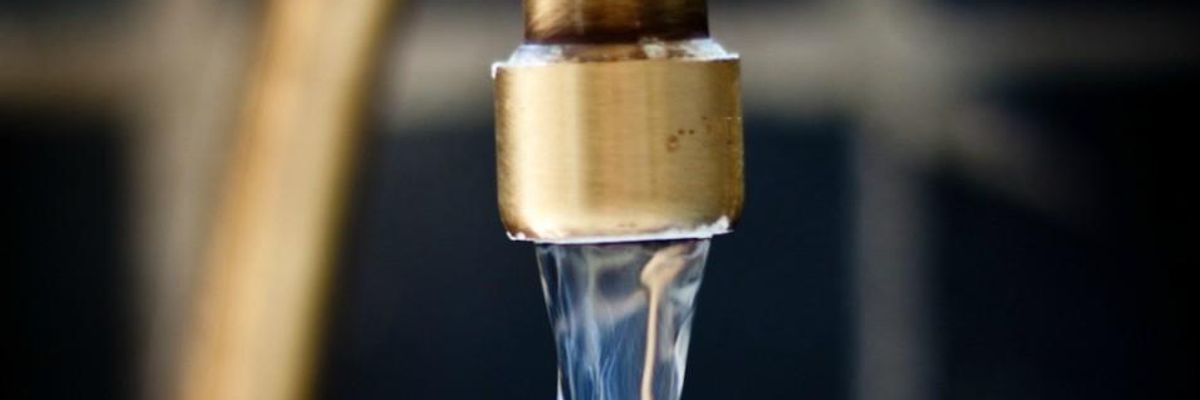
More than 800 groups called on Congress to include relief from water and utility shutoffs in any new coronavirus relief package. (Photo: Peter Werkman/Flickr/cc)
With more than a quarter of Americans reporting lost income as a result of the coronavirus pandemic, over 830 national justice groups are demanding Congress center working people's needs in the next coronavirus relief package by ensuring support for people across the country struggling to pay their utility bills.
Groups including the Center for Biological Diversity, 350.org, and the Poor People's Economic Human Rights Campaign signed a letter to congressional leaders, calling on lawmakers to implement a nationwide moratorium on utility shutoffs. Access to water, broadband, electricity, and other essential utilities in homes must be maintained during the coronavirus pandemic to support public health, the groups said.
"While we thank Congress for the CARES Act's inclusion of important paycheck and eviction protection measures, the act unfortunately failed to include any moratorium on shut-offs of the basic utility services that families need to survive and protect themselves during this health pandemic," the letter reads. "Utility services must be retained to ensure basic family survival and to fight the health pandemic at ground zero."
The Center for Biological Diversity called on supporters to sign a petition demanding the moratorium.
The groups sent the letter after the passage of the Coronavirus Aid, Relief, and Economic Security (CARES) Act, which included $500 billion for large corporations but failed to include a moratorium on utility shutoffs, making low-income families vulnerable to losing water access and other necessities.
"It's unconscionable that Senate Republicans chose to protect corporate America over families in the last rescue package," said Jean Su, director of the Center for Biological Diversity's energy justice program. "Families are facing impossible choices between paying for food or electricity, water, or healthcare."
Water shutoffs, the groups noted, could make it harder for families to fight the spread of the coronavirus, officially known as COVID-19, as frequent hand-washing is one of the top recommendations for stopping transmission.
Sen. Bernie Sanders (I-Vt.) on Twitter last week demanded to know how utility shutoffs were acceptable during a public health crisis.
"How the hell are you supposed to wash your hands during a pandemic when your water has been shut off?" Sanders asked.
"There is absolutely no excuse left for Congress to exclude basic human needs from the next coronavirus stimulus package, or in general," said Rianna Eckel, senior national water organizer at Food & Water Action. "People are facing the reality of living through a summer without running water right now. We need national action to protect every single person in this country from inhumane utility shutoffs, nothing less."
"Now more than ever it is clear that access to core services like water, electricity, and broadband is a human right."
--Johanna Bozuwa, Democracy Collaborative.
The letter comes as the U.S. unemployment rate stands at 13%, according to economists--the worst since the Great Depression. The Department of Labor announced at the beginning of April that 17 million Americans successfully filed jobless claims in the past four weeks as the pandemic forced businesses across the country to shut down.
Any upcoming relief package must include the reconnection of utilities for any household that has experienced a shutoff and the forgiveness of bill payments and late fees for low-wealth households, the groups wrote. Actions by states and some utility companies in recent weeks have given relief from shutoffs to more than half of the U.S. population--but advocates say that support must be extended to all Americans.
In addition to relief for struggling families, the groups called on Congress to invest heavily in long-term funding for clean energy systems and percentage-of-income payment plans for water, electricity, and other utilities to help prevent families from being financially overburdened to pay for necessities.
According to the letter, about 1% of American households experienced utility shutoffs within the past three months, before the pandemic caused the current unemployment crisis. The average water utility disconnected water access for about 5% of households due to non-payment in 2016, affecting about 15% of Americans, and nearly a quarter of households do not have internet at home.
"Lacking access to these essential utility services disproportionately harms low-wealth communities, communities of color, and tribes," reads the letter. "Moreover, the climate emergency has exacerbated the country's extreme weather conditions--through unprecedented wildfires, heat waves, and increased frequency and intensity of storms--that necessitate a greater demand in electricity, water, and broadband services for survival and to maintain a basic standard of living, most especially in American Indian and Alaska Native and rural regions."
Now that the coronavirus pandemic has laid bare the precarity in which millions of Americans live, the groups said, Congress must take immediate action make sure all households can access utilities.
"Now more than ever it is clear that access to core services like water, electricity, and broadband is a human right," said Johanna Bozuwa of the Democracy Collaborative. "Before the COVID-19 pandemic, the United States was confronted with a utility shutoff crisis, particularly in communities of color."
"Congress needs to step up and secure access for all," said Bozuwa, "as well as make long-term commitments to affordable, more resilient systems by investing in renewable energy, cleaning up our water systems, and expanding broadband access."
Dear Common Dreams reader, It’s been nearly 30 years since I co-founded Common Dreams with my late wife, Lina Newhouser. We had the radical notion that journalism should serve the public good, not corporate profits. It was clear to us from the outset what it would take to build such a project. No paid advertisements. No corporate sponsors. No millionaire publisher telling us what to think or do. Many people said we wouldn't last a year, but we proved those doubters wrong. Together with a tremendous team of journalists and dedicated staff, we built an independent media outlet free from the constraints of profits and corporate control. Our mission has always been simple: To inform. To inspire. To ignite change for the common good. Building Common Dreams was not easy. Our survival was never guaranteed. When you take on the most powerful forces—Wall Street greed, fossil fuel industry destruction, Big Tech lobbyists, and uber-rich oligarchs who have spent billions upon billions rigging the economy and democracy in their favor—the only bulwark you have is supporters who believe in your work. But here’s the urgent message from me today. It's never been this bad out there. And it's never been this hard to keep us going. At the very moment Common Dreams is most needed, the threats we face are intensifying. We need your support now more than ever. We don't accept corporate advertising and never will. We don't have a paywall because we don't think people should be blocked from critical news based on their ability to pay. Everything we do is funded by the donations of readers like you. When everyone does the little they can afford, we are strong. But if that support retreats or dries up, so do we. Will you donate now to make sure Common Dreams not only survives but thrives? —Craig Brown, Co-founder |
With more than a quarter of Americans reporting lost income as a result of the coronavirus pandemic, over 830 national justice groups are demanding Congress center working people's needs in the next coronavirus relief package by ensuring support for people across the country struggling to pay their utility bills.
Groups including the Center for Biological Diversity, 350.org, and the Poor People's Economic Human Rights Campaign signed a letter to congressional leaders, calling on lawmakers to implement a nationwide moratorium on utility shutoffs. Access to water, broadband, electricity, and other essential utilities in homes must be maintained during the coronavirus pandemic to support public health, the groups said.
"While we thank Congress for the CARES Act's inclusion of important paycheck and eviction protection measures, the act unfortunately failed to include any moratorium on shut-offs of the basic utility services that families need to survive and protect themselves during this health pandemic," the letter reads. "Utility services must be retained to ensure basic family survival and to fight the health pandemic at ground zero."
The Center for Biological Diversity called on supporters to sign a petition demanding the moratorium.
The groups sent the letter after the passage of the Coronavirus Aid, Relief, and Economic Security (CARES) Act, which included $500 billion for large corporations but failed to include a moratorium on utility shutoffs, making low-income families vulnerable to losing water access and other necessities.
"It's unconscionable that Senate Republicans chose to protect corporate America over families in the last rescue package," said Jean Su, director of the Center for Biological Diversity's energy justice program. "Families are facing impossible choices between paying for food or electricity, water, or healthcare."
Water shutoffs, the groups noted, could make it harder for families to fight the spread of the coronavirus, officially known as COVID-19, as frequent hand-washing is one of the top recommendations for stopping transmission.
Sen. Bernie Sanders (I-Vt.) on Twitter last week demanded to know how utility shutoffs were acceptable during a public health crisis.
"How the hell are you supposed to wash your hands during a pandemic when your water has been shut off?" Sanders asked.
"There is absolutely no excuse left for Congress to exclude basic human needs from the next coronavirus stimulus package, or in general," said Rianna Eckel, senior national water organizer at Food & Water Action. "People are facing the reality of living through a summer without running water right now. We need national action to protect every single person in this country from inhumane utility shutoffs, nothing less."
"Now more than ever it is clear that access to core services like water, electricity, and broadband is a human right."
--Johanna Bozuwa, Democracy Collaborative.
The letter comes as the U.S. unemployment rate stands at 13%, according to economists--the worst since the Great Depression. The Department of Labor announced at the beginning of April that 17 million Americans successfully filed jobless claims in the past four weeks as the pandemic forced businesses across the country to shut down.
Any upcoming relief package must include the reconnection of utilities for any household that has experienced a shutoff and the forgiveness of bill payments and late fees for low-wealth households, the groups wrote. Actions by states and some utility companies in recent weeks have given relief from shutoffs to more than half of the U.S. population--but advocates say that support must be extended to all Americans.
In addition to relief for struggling families, the groups called on Congress to invest heavily in long-term funding for clean energy systems and percentage-of-income payment plans for water, electricity, and other utilities to help prevent families from being financially overburdened to pay for necessities.
According to the letter, about 1% of American households experienced utility shutoffs within the past three months, before the pandemic caused the current unemployment crisis. The average water utility disconnected water access for about 5% of households due to non-payment in 2016, affecting about 15% of Americans, and nearly a quarter of households do not have internet at home.
"Lacking access to these essential utility services disproportionately harms low-wealth communities, communities of color, and tribes," reads the letter. "Moreover, the climate emergency has exacerbated the country's extreme weather conditions--through unprecedented wildfires, heat waves, and increased frequency and intensity of storms--that necessitate a greater demand in electricity, water, and broadband services for survival and to maintain a basic standard of living, most especially in American Indian and Alaska Native and rural regions."
Now that the coronavirus pandemic has laid bare the precarity in which millions of Americans live, the groups said, Congress must take immediate action make sure all households can access utilities.
"Now more than ever it is clear that access to core services like water, electricity, and broadband is a human right," said Johanna Bozuwa of the Democracy Collaborative. "Before the COVID-19 pandemic, the United States was confronted with a utility shutoff crisis, particularly in communities of color."
"Congress needs to step up and secure access for all," said Bozuwa, "as well as make long-term commitments to affordable, more resilient systems by investing in renewable energy, cleaning up our water systems, and expanding broadband access."
With more than a quarter of Americans reporting lost income as a result of the coronavirus pandemic, over 830 national justice groups are demanding Congress center working people's needs in the next coronavirus relief package by ensuring support for people across the country struggling to pay their utility bills.
Groups including the Center for Biological Diversity, 350.org, and the Poor People's Economic Human Rights Campaign signed a letter to congressional leaders, calling on lawmakers to implement a nationwide moratorium on utility shutoffs. Access to water, broadband, electricity, and other essential utilities in homes must be maintained during the coronavirus pandemic to support public health, the groups said.
"While we thank Congress for the CARES Act's inclusion of important paycheck and eviction protection measures, the act unfortunately failed to include any moratorium on shut-offs of the basic utility services that families need to survive and protect themselves during this health pandemic," the letter reads. "Utility services must be retained to ensure basic family survival and to fight the health pandemic at ground zero."
The Center for Biological Diversity called on supporters to sign a petition demanding the moratorium.
The groups sent the letter after the passage of the Coronavirus Aid, Relief, and Economic Security (CARES) Act, which included $500 billion for large corporations but failed to include a moratorium on utility shutoffs, making low-income families vulnerable to losing water access and other necessities.
"It's unconscionable that Senate Republicans chose to protect corporate America over families in the last rescue package," said Jean Su, director of the Center for Biological Diversity's energy justice program. "Families are facing impossible choices between paying for food or electricity, water, or healthcare."
Water shutoffs, the groups noted, could make it harder for families to fight the spread of the coronavirus, officially known as COVID-19, as frequent hand-washing is one of the top recommendations for stopping transmission.
Sen. Bernie Sanders (I-Vt.) on Twitter last week demanded to know how utility shutoffs were acceptable during a public health crisis.
"How the hell are you supposed to wash your hands during a pandemic when your water has been shut off?" Sanders asked.
"There is absolutely no excuse left for Congress to exclude basic human needs from the next coronavirus stimulus package, or in general," said Rianna Eckel, senior national water organizer at Food & Water Action. "People are facing the reality of living through a summer without running water right now. We need national action to protect every single person in this country from inhumane utility shutoffs, nothing less."
"Now more than ever it is clear that access to core services like water, electricity, and broadband is a human right."
--Johanna Bozuwa, Democracy Collaborative.
The letter comes as the U.S. unemployment rate stands at 13%, according to economists--the worst since the Great Depression. The Department of Labor announced at the beginning of April that 17 million Americans successfully filed jobless claims in the past four weeks as the pandemic forced businesses across the country to shut down.
Any upcoming relief package must include the reconnection of utilities for any household that has experienced a shutoff and the forgiveness of bill payments and late fees for low-wealth households, the groups wrote. Actions by states and some utility companies in recent weeks have given relief from shutoffs to more than half of the U.S. population--but advocates say that support must be extended to all Americans.
In addition to relief for struggling families, the groups called on Congress to invest heavily in long-term funding for clean energy systems and percentage-of-income payment plans for water, electricity, and other utilities to help prevent families from being financially overburdened to pay for necessities.
According to the letter, about 1% of American households experienced utility shutoffs within the past three months, before the pandemic caused the current unemployment crisis. The average water utility disconnected water access for about 5% of households due to non-payment in 2016, affecting about 15% of Americans, and nearly a quarter of households do not have internet at home.
"Lacking access to these essential utility services disproportionately harms low-wealth communities, communities of color, and tribes," reads the letter. "Moreover, the climate emergency has exacerbated the country's extreme weather conditions--through unprecedented wildfires, heat waves, and increased frequency and intensity of storms--that necessitate a greater demand in electricity, water, and broadband services for survival and to maintain a basic standard of living, most especially in American Indian and Alaska Native and rural regions."
Now that the coronavirus pandemic has laid bare the precarity in which millions of Americans live, the groups said, Congress must take immediate action make sure all households can access utilities.
"Now more than ever it is clear that access to core services like water, electricity, and broadband is a human right," said Johanna Bozuwa of the Democracy Collaborative. "Before the COVID-19 pandemic, the United States was confronted with a utility shutoff crisis, particularly in communities of color."
"Congress needs to step up and secure access for all," said Bozuwa, "as well as make long-term commitments to affordable, more resilient systems by investing in renewable energy, cleaning up our water systems, and expanding broadband access."