SUBSCRIBE TO OUR FREE NEWSLETTER
Daily news & progressive opinion—funded by the people, not the corporations—delivered straight to your inbox.
5
#000000
#FFFFFF
To donate by check, phone, or other method, see our More Ways to Give page.
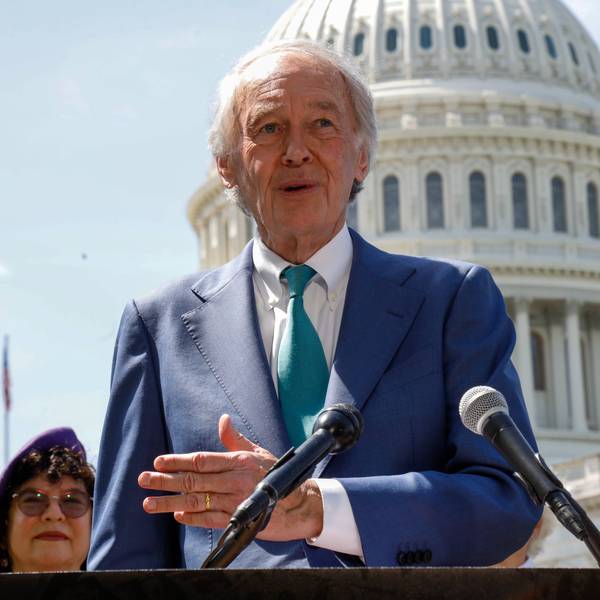
"Selling more weapons to Saudi Arabia doesn't make America safer or align with our country's values," said Sen. Elizabeth Warren (D-Mass.) in a tweet. "It only benefits defense contractors and @realDonaldTrump's alarming desire to sow chaos abroad."
Sen. Bob Menendez (D-N.J.), the ranking member of the Senate Foreign Relations Committee, announced on Friday the administration's plans to utilize the emergency provision to bypass the 30-day congressional notification period for arms sales. Secretary of State Mike Pompeo later confirmed the plan.
Pompeo's statement on Friday said, in part,
Today, I made a determination pursuant to section 36 of the Arms Export Control Act and directed the Department to complete immediately the formal notification of 22 pending arms transfers to Jordan, the United Arab Emirates, and Saudi Arabia totaling approximately $8.1 billion to deter Iranian aggression and build partner self-defense capacity. These sales will support our allies, enhance Middle East stability, and help these nations to deter and defend themselves from the Islamic Republic of Iran.
Delaying this shipment could cause degraded systems and a lack of necessary parts and maintenance that could create severe airworthiness and interoperability concerns for our key partners, during a time of increasing regional volatility... The equipment notified today includes aircraft support maintenance; intelligence, surveillance, and reconnaissance (ISR); munitions; and other supplies.
The development left Sen. Chris Murphy (D-Conn.), a vocal critic of the war on Yemen, bristling.
Other anti-war voices pushed back against the administration's narrative of "Iranian aggression."
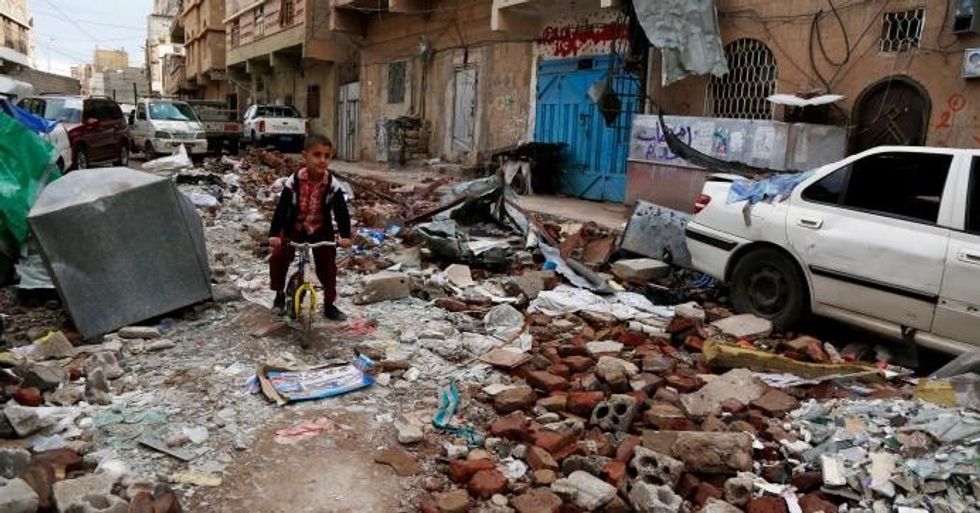
With those perhaps most affected by the arms sale--Yemeni civilians--voiceless in the decision, Amnesty International USA and Rep. Ro Khanna (D-Calif.) highlighted the devastation wrought by American weaponry.
"The Trump administration must stop supplying arms to the Saudi-led coalition, which has repeatedly committed horrific violations in Yemen, some amounting to war crimes, devastating the lives of thousands," said Philippe Nassif, advocacy director for the Middle East and North Africa at Amnesty International USA.
"We know arms manufactured in the United States have been used in deadly strikes against civilians," he added. "U.S. munitions have been found in the remains of bombed homes, hospitals, and hotels throughout Yemen's devastating war, killing almost 7,000 people."
The news of the arms sale follows Trump announcing the deployment of 900 new troops and the extended deployment of 600 more in the Middle East to counter supposed Iranian threats--a move Pompeo's Iranian counterpart sharply criticized.
Speaking to state news agency IRNA, Iranian foreign minister Javad Zarif said Saturday, "The Americans have made such allegations to justify their hostile policies and to raise tensions in the Persian Gulf."
"Increased U.S. presence in our region is extremely dangerous," he said, "and it threatens international peace and security, and this should be addressed."
"Selling more weapons to Saudi Arabia doesn't make America safer or align with our country's values," said Sen. Elizabeth Warren (D-Mass.) in a tweet. "It only benefits defense contractors and @realDonaldTrump's alarming desire to sow chaos abroad."
Sen. Bob Menendez (D-N.J.), the ranking member of the Senate Foreign Relations Committee, announced on Friday the administration's plans to utilize the emergency provision to bypass the 30-day congressional notification period for arms sales. Secretary of State Mike Pompeo later confirmed the plan.
Pompeo's statement on Friday said, in part,
Today, I made a determination pursuant to section 36 of the Arms Export Control Act and directed the Department to complete immediately the formal notification of 22 pending arms transfers to Jordan, the United Arab Emirates, and Saudi Arabia totaling approximately $8.1 billion to deter Iranian aggression and build partner self-defense capacity. These sales will support our allies, enhance Middle East stability, and help these nations to deter and defend themselves from the Islamic Republic of Iran.
Delaying this shipment could cause degraded systems and a lack of necessary parts and maintenance that could create severe airworthiness and interoperability concerns for our key partners, during a time of increasing regional volatility... The equipment notified today includes aircraft support maintenance; intelligence, surveillance, and reconnaissance (ISR); munitions; and other supplies.
The development left Sen. Chris Murphy (D-Conn.), a vocal critic of the war on Yemen, bristling.
Other anti-war voices pushed back against the administration's narrative of "Iranian aggression."
With those perhaps most affected by the arms sale--Yemeni civilians--voiceless in the decision, Amnesty International USA and Rep. Ro Khanna (D-Calif.) highlighted the devastation wrought by American weaponry.
"The Trump administration must stop supplying arms to the Saudi-led coalition, which has repeatedly committed horrific violations in Yemen, some amounting to war crimes, devastating the lives of thousands," said Philippe Nassif, advocacy director for the Middle East and North Africa at Amnesty International USA.
"We know arms manufactured in the United States have been used in deadly strikes against civilians," he added. "U.S. munitions have been found in the remains of bombed homes, hospitals, and hotels throughout Yemen's devastating war, killing almost 7,000 people."
The news of the arms sale follows Trump announcing the deployment of 900 new troops and the extended deployment of 600 more in the Middle East to counter supposed Iranian threats--a move Pompeo's Iranian counterpart sharply criticized.
Speaking to state news agency IRNA, Iranian foreign minister Javad Zarif said Saturday, "The Americans have made such allegations to justify their hostile policies and to raise tensions in the Persian Gulf."
"Increased U.S. presence in our region is extremely dangerous," he said, "and it threatens international peace and security, and this should be addressed."
"Selling more weapons to Saudi Arabia doesn't make America safer or align with our country's values," said Sen. Elizabeth Warren (D-Mass.) in a tweet. "It only benefits defense contractors and @realDonaldTrump's alarming desire to sow chaos abroad."
Sen. Bob Menendez (D-N.J.), the ranking member of the Senate Foreign Relations Committee, announced on Friday the administration's plans to utilize the emergency provision to bypass the 30-day congressional notification period for arms sales. Secretary of State Mike Pompeo later confirmed the plan.
Pompeo's statement on Friday said, in part,
Today, I made a determination pursuant to section 36 of the Arms Export Control Act and directed the Department to complete immediately the formal notification of 22 pending arms transfers to Jordan, the United Arab Emirates, and Saudi Arabia totaling approximately $8.1 billion to deter Iranian aggression and build partner self-defense capacity. These sales will support our allies, enhance Middle East stability, and help these nations to deter and defend themselves from the Islamic Republic of Iran.
Delaying this shipment could cause degraded systems and a lack of necessary parts and maintenance that could create severe airworthiness and interoperability concerns for our key partners, during a time of increasing regional volatility... The equipment notified today includes aircraft support maintenance; intelligence, surveillance, and reconnaissance (ISR); munitions; and other supplies.
The development left Sen. Chris Murphy (D-Conn.), a vocal critic of the war on Yemen, bristling.
Other anti-war voices pushed back against the administration's narrative of "Iranian aggression."
With those perhaps most affected by the arms sale--Yemeni civilians--voiceless in the decision, Amnesty International USA and Rep. Ro Khanna (D-Calif.) highlighted the devastation wrought by American weaponry.
"The Trump administration must stop supplying arms to the Saudi-led coalition, which has repeatedly committed horrific violations in Yemen, some amounting to war crimes, devastating the lives of thousands," said Philippe Nassif, advocacy director for the Middle East and North Africa at Amnesty International USA.
"We know arms manufactured in the United States have been used in deadly strikes against civilians," he added. "U.S. munitions have been found in the remains of bombed homes, hospitals, and hotels throughout Yemen's devastating war, killing almost 7,000 people."
The news of the arms sale follows Trump announcing the deployment of 900 new troops and the extended deployment of 600 more in the Middle East to counter supposed Iranian threats--a move Pompeo's Iranian counterpart sharply criticized.
Speaking to state news agency IRNA, Iranian foreign minister Javad Zarif said Saturday, "The Americans have made such allegations to justify their hostile policies and to raise tensions in the Persian Gulf."
"Increased U.S. presence in our region is extremely dangerous," he said, "and it threatens international peace and security, and this should be addressed."