SUBSCRIBE TO OUR FREE NEWSLETTER
Daily news & progressive opinion—funded by the people, not the corporations—delivered straight to your inbox.
5
#000000
#FFFFFF
To donate by check, phone, or other method, see our More Ways to Give page.
Daily news & progressive opinion—funded by the people, not the corporations—delivered straight to your inbox.
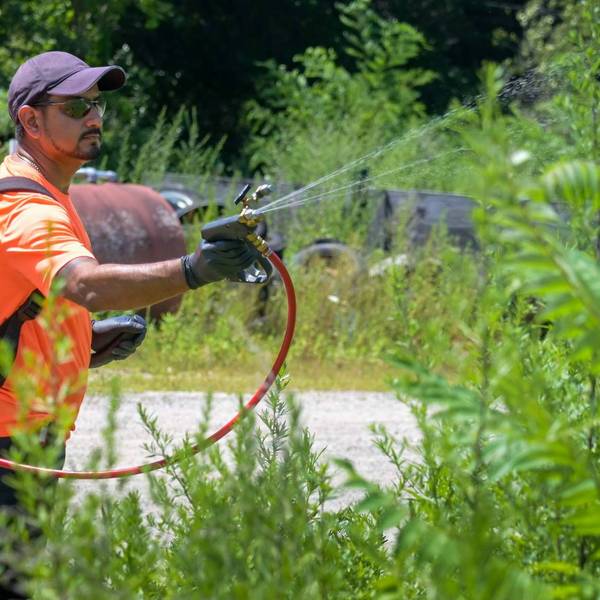
Glyphosate, the key ingredient in Monsanto's herbicide Roundup, is now the most heavily used weed killer ever and its use has exploded in the past decade, a new report finds, a fact that may portend "a host of adverse environmental and public health consequences."
The new paper on the global use of the herbicide comes less than a year after the World Health Organization's International Agency for Research on Cancer classified it as "probably carcinogenic to humans."
Since its introduction in 1974, 18.9 billion pounds of glyphosate have been used globally, author Charles Benbrook writes in the paper, but 74 percent of all glyphosate sprayed on crops has happened in just the last decade.
In fact, since the introduction of "Roundup Ready" crops--those engineered to be resistant to the herbicide--in 1996, there's been close to a 15-fold increase in the use of glyphosate globally. In the United States, there's been a 20-fold increase, from 12.5 million pounds in 1995 to 250 million pounds in 2014.
"Not only has glyphosate been sprayed on more hectares planted to HT [herbicide tolerant] crops, it has also been applied more intensively--i.e., more applications per hectare in a given crop year, and higher one-time rates of application," Benbrook writes.
In addition, the report adds, increased use of glyphosate can be attributed to the "steady expansion in the number of crops registered for use on glyphosate product labels, the adoption of no-tillage and conservation tillage systems, the declining price per pound of active ingredient, new application method and timing options, and new agricultural use patterns (e.g., as a desiccant to accelerate the harvest of small grains, edible beans, and other crops)."
Among the problems this has spawned is "the spread of tolerant and resistant weeds in the U.S. and globally," Benbrook writes, and because "glyphosate is moderately persistent and mobile, levels in surface and groundwater will likely rise in step with use, and this will increase the diversity of potential routes of animal and human exposure."
"The dramatic and rapid growth in overall use of glyphosate will likely contribute to a host of adverse environmental and public health consequences," Benbrook adds.
The report, according to Mary Ellen Kustin, senior policy analyst at Environmental Working Group, shows the problems with a chemical-based approach to farming, as it "makes it clear that the use of glyphosate, combined with the dominance of genetically engineered crops, has produced a looming public health threat both in the U.S. and around the world."
"Farmers have sprayed billions of pounds of a chemical now considered a probable human carcinogen over the past decade. Growers spray glyphosate several times a year on the majority of U.S. cropland. The sheer volume of use of this toxic weed-killer is a clear indication that this chemical dependency is a case of farming gone wrong," she stated.
Yet, as she wrote Wednesday, "It doesn't have to be this way."
Organic farmers, for instance, don't use glyphosate or any synthetic pesticides. Although only about 1 percent of American farms are currently certified organic by the Department of Agriculture, the rising sales of organic food may soon lure more. Organic sales topped $39 billion in 2014, according to the Organic Trade Association.
Short of organic farming, farmers can reduce their use of glyphosate and other chemicals by applying a variety of proven weed management techniques.
Unfortunately, however, Congress has funneled the bulk of taxpayer dollars spent on agriculture to growers who are ramping up the chemical treadmill by relying overly on toxic weed killers. Less than 1 percent of the funding spent under the federal Farm Bill has anything to with organic farming, and only a fraction of those dollars go to help farm operations become certified organic.
"The next Farm Bill will need to do more to help farmers become better stewards of the land," Kustin concludes.
The study was published Tuesday in the journal Environmental Sciences Europe.
Dear Common Dreams reader, It’s been nearly 30 years since I co-founded Common Dreams with my late wife, Lina Newhouser. We had the radical notion that journalism should serve the public good, not corporate profits. It was clear to us from the outset what it would take to build such a project. No paid advertisements. No corporate sponsors. No millionaire publisher telling us what to think or do. Many people said we wouldn't last a year, but we proved those doubters wrong. Together with a tremendous team of journalists and dedicated staff, we built an independent media outlet free from the constraints of profits and corporate control. Our mission has always been simple: To inform. To inspire. To ignite change for the common good. Building Common Dreams was not easy. Our survival was never guaranteed. When you take on the most powerful forces—Wall Street greed, fossil fuel industry destruction, Big Tech lobbyists, and uber-rich oligarchs who have spent billions upon billions rigging the economy and democracy in their favor—the only bulwark you have is supporters who believe in your work. But here’s the urgent message from me today. It's never been this bad out there. And it's never been this hard to keep us going. At the very moment Common Dreams is most needed, the threats we face are intensifying. We need your support now more than ever. We don't accept corporate advertising and never will. We don't have a paywall because we don't think people should be blocked from critical news based on their ability to pay. Everything we do is funded by the donations of readers like you. When everyone does the little they can afford, we are strong. But if that support retreats or dries up, so do we. Will you donate now to make sure Common Dreams not only survives but thrives? —Craig Brown, Co-founder |
Glyphosate, the key ingredient in Monsanto's herbicide Roundup, is now the most heavily used weed killer ever and its use has exploded in the past decade, a new report finds, a fact that may portend "a host of adverse environmental and public health consequences."
The new paper on the global use of the herbicide comes less than a year after the World Health Organization's International Agency for Research on Cancer classified it as "probably carcinogenic to humans."
Since its introduction in 1974, 18.9 billion pounds of glyphosate have been used globally, author Charles Benbrook writes in the paper, but 74 percent of all glyphosate sprayed on crops has happened in just the last decade.
In fact, since the introduction of "Roundup Ready" crops--those engineered to be resistant to the herbicide--in 1996, there's been close to a 15-fold increase in the use of glyphosate globally. In the United States, there's been a 20-fold increase, from 12.5 million pounds in 1995 to 250 million pounds in 2014.
"Not only has glyphosate been sprayed on more hectares planted to HT [herbicide tolerant] crops, it has also been applied more intensively--i.e., more applications per hectare in a given crop year, and higher one-time rates of application," Benbrook writes.
In addition, the report adds, increased use of glyphosate can be attributed to the "steady expansion in the number of crops registered for use on glyphosate product labels, the adoption of no-tillage and conservation tillage systems, the declining price per pound of active ingredient, new application method and timing options, and new agricultural use patterns (e.g., as a desiccant to accelerate the harvest of small grains, edible beans, and other crops)."
Among the problems this has spawned is "the spread of tolerant and resistant weeds in the U.S. and globally," Benbrook writes, and because "glyphosate is moderately persistent and mobile, levels in surface and groundwater will likely rise in step with use, and this will increase the diversity of potential routes of animal and human exposure."
"The dramatic and rapid growth in overall use of glyphosate will likely contribute to a host of adverse environmental and public health consequences," Benbrook adds.
The report, according to Mary Ellen Kustin, senior policy analyst at Environmental Working Group, shows the problems with a chemical-based approach to farming, as it "makes it clear that the use of glyphosate, combined with the dominance of genetically engineered crops, has produced a looming public health threat both in the U.S. and around the world."
"Farmers have sprayed billions of pounds of a chemical now considered a probable human carcinogen over the past decade. Growers spray glyphosate several times a year on the majority of U.S. cropland. The sheer volume of use of this toxic weed-killer is a clear indication that this chemical dependency is a case of farming gone wrong," she stated.
Yet, as she wrote Wednesday, "It doesn't have to be this way."
Organic farmers, for instance, don't use glyphosate or any synthetic pesticides. Although only about 1 percent of American farms are currently certified organic by the Department of Agriculture, the rising sales of organic food may soon lure more. Organic sales topped $39 billion in 2014, according to the Organic Trade Association.
Short of organic farming, farmers can reduce their use of glyphosate and other chemicals by applying a variety of proven weed management techniques.
Unfortunately, however, Congress has funneled the bulk of taxpayer dollars spent on agriculture to growers who are ramping up the chemical treadmill by relying overly on toxic weed killers. Less than 1 percent of the funding spent under the federal Farm Bill has anything to with organic farming, and only a fraction of those dollars go to help farm operations become certified organic.
"The next Farm Bill will need to do more to help farmers become better stewards of the land," Kustin concludes.
The study was published Tuesday in the journal Environmental Sciences Europe.
Glyphosate, the key ingredient in Monsanto's herbicide Roundup, is now the most heavily used weed killer ever and its use has exploded in the past decade, a new report finds, a fact that may portend "a host of adverse environmental and public health consequences."
The new paper on the global use of the herbicide comes less than a year after the World Health Organization's International Agency for Research on Cancer classified it as "probably carcinogenic to humans."
Since its introduction in 1974, 18.9 billion pounds of glyphosate have been used globally, author Charles Benbrook writes in the paper, but 74 percent of all glyphosate sprayed on crops has happened in just the last decade.
In fact, since the introduction of "Roundup Ready" crops--those engineered to be resistant to the herbicide--in 1996, there's been close to a 15-fold increase in the use of glyphosate globally. In the United States, there's been a 20-fold increase, from 12.5 million pounds in 1995 to 250 million pounds in 2014.
"Not only has glyphosate been sprayed on more hectares planted to HT [herbicide tolerant] crops, it has also been applied more intensively--i.e., more applications per hectare in a given crop year, and higher one-time rates of application," Benbrook writes.
In addition, the report adds, increased use of glyphosate can be attributed to the "steady expansion in the number of crops registered for use on glyphosate product labels, the adoption of no-tillage and conservation tillage systems, the declining price per pound of active ingredient, new application method and timing options, and new agricultural use patterns (e.g., as a desiccant to accelerate the harvest of small grains, edible beans, and other crops)."
Among the problems this has spawned is "the spread of tolerant and resistant weeds in the U.S. and globally," Benbrook writes, and because "glyphosate is moderately persistent and mobile, levels in surface and groundwater will likely rise in step with use, and this will increase the diversity of potential routes of animal and human exposure."
"The dramatic and rapid growth in overall use of glyphosate will likely contribute to a host of adverse environmental and public health consequences," Benbrook adds.
The report, according to Mary Ellen Kustin, senior policy analyst at Environmental Working Group, shows the problems with a chemical-based approach to farming, as it "makes it clear that the use of glyphosate, combined with the dominance of genetically engineered crops, has produced a looming public health threat both in the U.S. and around the world."
"Farmers have sprayed billions of pounds of a chemical now considered a probable human carcinogen over the past decade. Growers spray glyphosate several times a year on the majority of U.S. cropland. The sheer volume of use of this toxic weed-killer is a clear indication that this chemical dependency is a case of farming gone wrong," she stated.
Yet, as she wrote Wednesday, "It doesn't have to be this way."
Organic farmers, for instance, don't use glyphosate or any synthetic pesticides. Although only about 1 percent of American farms are currently certified organic by the Department of Agriculture, the rising sales of organic food may soon lure more. Organic sales topped $39 billion in 2014, according to the Organic Trade Association.
Short of organic farming, farmers can reduce their use of glyphosate and other chemicals by applying a variety of proven weed management techniques.
Unfortunately, however, Congress has funneled the bulk of taxpayer dollars spent on agriculture to growers who are ramping up the chemical treadmill by relying overly on toxic weed killers. Less than 1 percent of the funding spent under the federal Farm Bill has anything to with organic farming, and only a fraction of those dollars go to help farm operations become certified organic.
"The next Farm Bill will need to do more to help farmers become better stewards of the land," Kustin concludes.
The study was published Tuesday in the journal Environmental Sciences Europe.