Last week, the
Pentagon announced the approval of the sale of an additional $1.15 billion worth of weapons to
Saudi Arabia. The callousness of this announcement - just days after Saudi Arabia rebooted its devastating bombing campaign in
Yemen - is breathtaking. The Saudi-led coalition has used American-made fighter jets, bombs and other munitions in a relentless onslaught against Yemen that has left thousands of innocent civilians dead and created a humanitarian crisis that the
United Nations characterizes as a "catastrophe." In just the last few days, the Saudi-led coalition has killed at least 35 people - most of them women and
children - in three airstrikes against a school, a residential neighborhood and a hospital in northern Yemen.
Congress has thirty days to block the sale of these weapons. It is a moral imperative that they do so.
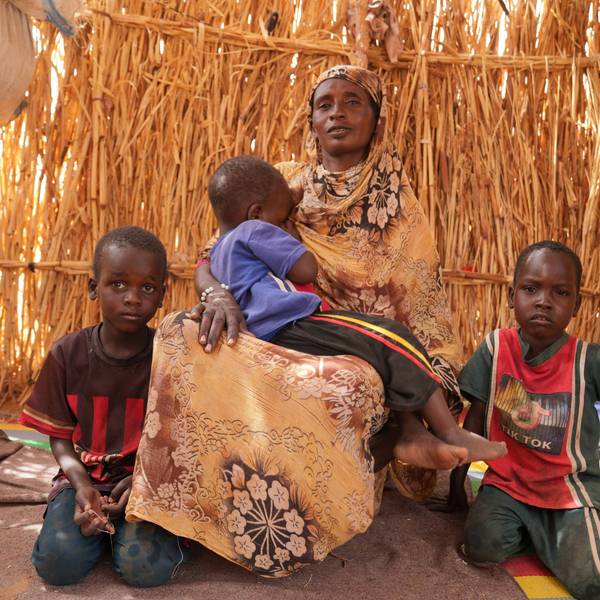
The internal crisis in Yemen spiraled out of control when the Saudis intervened in March 2015. The BBC has reported that nearly all of the more than 3,000 civilian deaths reported in the conflict have been caused by airstrikes from the Saudi-led coalition. Saudi air strikes have also decimated Yemen's infrastructure, leaving more than 21 million people desperately in need of humanitarian assistance.
The Saudi aggression is only possible with U.S. weapons and logistical support. The U.S. government has authorized the sale of $20 billion of American-made weapons to the Saudis since their offensive began 18 months ago. Sen. Chris Murphy (D-Conn.)says this makes the U.S. complicit in a humanitarian crisis. "If you talk to Yemeni Americans, they will tell you in Yemen this isn't a Saudi bombing campaign, it's a U.S. bombing campaign," said Sen. Murphy. "Every single civilian death inside Yemen is attributable to the United States."
Given the devastation of the attack on Yemen, a diverse group of organizations and individuals have called on the U.S. government to stop the sale of additional weapons to Saudi Arabia. The United Nations has said that Saudi air strikes on civilian targets likely constitute war crimes. Amnesty International and Human Rights Watch have called for an end of all weapon sales to Saudi Arabia until the crisis is resolved. Democratic Sen. Chris Murphy and Republican Sen. Rand Paul of Kentucky have both voiced concern over the new weapon sales, with Paul stating "Saudi Arabia is an unreliable ally with a poor human rights record. We should not rush to sell them advanced arms and promote an arms race in the Middle East."
Some would argue that the Saudis are a long-time stable ally in the turbulent Middle East. But to paraphrase the cliche, with allies like these, who needs enemies? Saudi Arabia is the number one exporter of radical Islamic extremism on the planet. Fifteen of the nineteen 9/11 hijackers were radicalized Saudi citizens and the recently declassified "28 pages" showed that a Saudi intelligence officer supplied the men with money, housing and training to carry out their attack. The Saudis oppress religious minorities, women, LGBT people and dissidents, and dozens of non-violent participants in Arab Spring protests face or have been executed, usually by beheading. Yet the United States continues its unquestioning support of this repressive, totalitarian regime.
In approving the sale of these weapons, the Obama Administration has abdicated responsibility for ensuring that the United States is not complicit in war crimes. Now it is up to Congress to stop this ill-conceived arms deal from going through. For the sake of the millions of displaced Yemenis still suffering through air strikes and thousands more innocent civilians who could be slaughtered with these weapons, I'm pleading that they do so.
Our work is licensed under Creative Commons (CC BY-NC-ND 3.0). Feel free to republish and share widely.
Medea BenjaminMedea Benjamin is co-founder of Global Exchange and CODEPINK: Women for Peace. She is the co-author, with Nicolas J.S. Davies, of War in Ukraine: Making Sense of a Senseless Conflict, available from OR Books in November 2022. Other books include, "Inside Iran: The Real History and Politics of the Islamic Republic of Iran" (2018); "Kingdom of the Unjust: Behind the U.S.-Saudi Connection" (2016); "Drone Warfare: Killing by Remote Control" (2013); "Don't Be Afraid Gringo: A Honduran Woman Speaks from the Heart" (1989), and (with Jodie Evans) "Stop the Next War Now" (2005).
Last week, the
Pentagon announced the approval of the sale of an additional $1.15 billion worth of weapons to
Saudi Arabia. The callousness of this announcement - just days after Saudi Arabia rebooted its devastating bombing campaign in
Yemen - is breathtaking. The Saudi-led coalition has used American-made fighter jets, bombs and other munitions in a relentless onslaught against Yemen that has left thousands of innocent civilians dead and created a humanitarian crisis that the
United Nations characterizes as a "catastrophe." In just the last few days, the Saudi-led coalition has killed at least 35 people - most of them women and
children - in three airstrikes against a school, a residential neighborhood and a hospital in northern Yemen.
Congress has thirty days to block the sale of these weapons. It is a moral imperative that they do so.
The internal crisis in Yemen spiraled out of control when the Saudis intervened in March 2015. The BBC has reported that nearly all of the more than 3,000 civilian deaths reported in the conflict have been caused by airstrikes from the Saudi-led coalition. Saudi air strikes have also decimated Yemen's infrastructure, leaving more than 21 million people desperately in need of humanitarian assistance.
The Saudi aggression is only possible with U.S. weapons and logistical support. The U.S. government has authorized the sale of $20 billion of American-made weapons to the Saudis since their offensive began 18 months ago. Sen. Chris Murphy (D-Conn.)says this makes the U.S. complicit in a humanitarian crisis. "If you talk to Yemeni Americans, they will tell you in Yemen this isn't a Saudi bombing campaign, it's a U.S. bombing campaign," said Sen. Murphy. "Every single civilian death inside Yemen is attributable to the United States."
Given the devastation of the attack on Yemen, a diverse group of organizations and individuals have called on the U.S. government to stop the sale of additional weapons to Saudi Arabia. The United Nations has said that Saudi air strikes on civilian targets likely constitute war crimes. Amnesty International and Human Rights Watch have called for an end of all weapon sales to Saudi Arabia until the crisis is resolved. Democratic Sen. Chris Murphy and Republican Sen. Rand Paul of Kentucky have both voiced concern over the new weapon sales, with Paul stating "Saudi Arabia is an unreliable ally with a poor human rights record. We should not rush to sell them advanced arms and promote an arms race in the Middle East."
Some would argue that the Saudis are a long-time stable ally in the turbulent Middle East. But to paraphrase the cliche, with allies like these, who needs enemies? Saudi Arabia is the number one exporter of radical Islamic extremism on the planet. Fifteen of the nineteen 9/11 hijackers were radicalized Saudi citizens and the recently declassified "28 pages" showed that a Saudi intelligence officer supplied the men with money, housing and training to carry out their attack. The Saudis oppress religious minorities, women, LGBT people and dissidents, and dozens of non-violent participants in Arab Spring protests face or have been executed, usually by beheading. Yet the United States continues its unquestioning support of this repressive, totalitarian regime.
In approving the sale of these weapons, the Obama Administration has abdicated responsibility for ensuring that the United States is not complicit in war crimes. Now it is up to Congress to stop this ill-conceived arms deal from going through. For the sake of the millions of displaced Yemenis still suffering through air strikes and thousands more innocent civilians who could be slaughtered with these weapons, I'm pleading that they do so.