SUBSCRIBE TO OUR FREE NEWSLETTER
Daily news & progressive opinion—funded by the people, not the corporations—delivered straight to your inbox.
5
#000000
#FFFFFF
To donate by check, phone, or other method, see our More Ways to Give page.
A solemn moment of silence. The world over, this is the traditional response when lives are cut short by tragedy.
It has also been a common response to tragedies in Europe and off its shores which have ended the lives of thousands of refugees and migrants. Not killed by bombs in Syria, but killed while making terrifying journeys in search of safety and better lives in Europe.
But the scale and rapid succession of these tragedies calls for breaking the silence.
In the space of a week, along with people across the world, I recoiled in horror as four new tragedies added to a growing list of events that have already brought a record number of refugees and migrants to untimely deaths this year. According to UNHCR, 2,500 have already perished en route to Europe since 1 January 2015.
On 26 August, 52 bodies were found inside the hull of a ship about 30 nautical miles off the coast of Libya.
On 27 August, police in Austria discovered the corpses of 71 people, including children, crammed inside a truck left abandoned at the side of the main highway between Budapest and Vienna. Police have told media the dead are believed to have been Syrians and apparently died by suffocation.
That same night came news of yet another tragic shipwreck off the coast of Zuwara, Libya in which up to 200 people may have died.
And yesterday, a shocking photo of a drowned toddler washed up on a Turkish beach hit global headlines, bringing the crisis into even sharper focus. He and his young brother, believed to be from Kobane in Syria, were among at least 11 people believed to have perished when their vessel ran into trouble as they tried to reach the Greek island of Kos.
The nature of tragedies is that they are usually rare and happen unexpectedly, to ordinary people who find themselves swept up in extraordinary circumstances. The past week's horrors were neither unexpected nor singular.
People dying in their dozens - whether crammed into a truck or a ship, en route to seek safety or better lives - is a tragic indictment of European leaders' failures to provide safe ways to reach Europe. That it is now happening on a daily basis is Europe's collective shame.
In Vienna last week, not far from where police made their awful discovery, European Union (EU) leaders were meeting with key EU Member States and western Balkan countries. Despite not being on the initial agenda, the treatment of refugees in the region quickly took top billing.
And with good reason - earlier in the week Amnesty International had reported from Macedonia's southern border with Greece, where up to 4,000 refugees became trapped when Macedonia closed the border. Paramilitary police units blocked the border crossing with razor wire and fired stun grenades at shocked families who had fled the war in Syria.
My colleague met a mother of four children from Damascus who clung tightly on to her youngest son amid the booms of stun grenades nearby: "This reminds me of Syria. It scares the children; I never expected to find that in Europe. Never; never," she said.
Further up the Balkans migration route in Hungary, police this week fired tear gas inside a crowded reception centre, and Hungarian authorities are in the process of erecting a razor wire fence along the border with Serbia to prevent more refugees and migrants from entering.
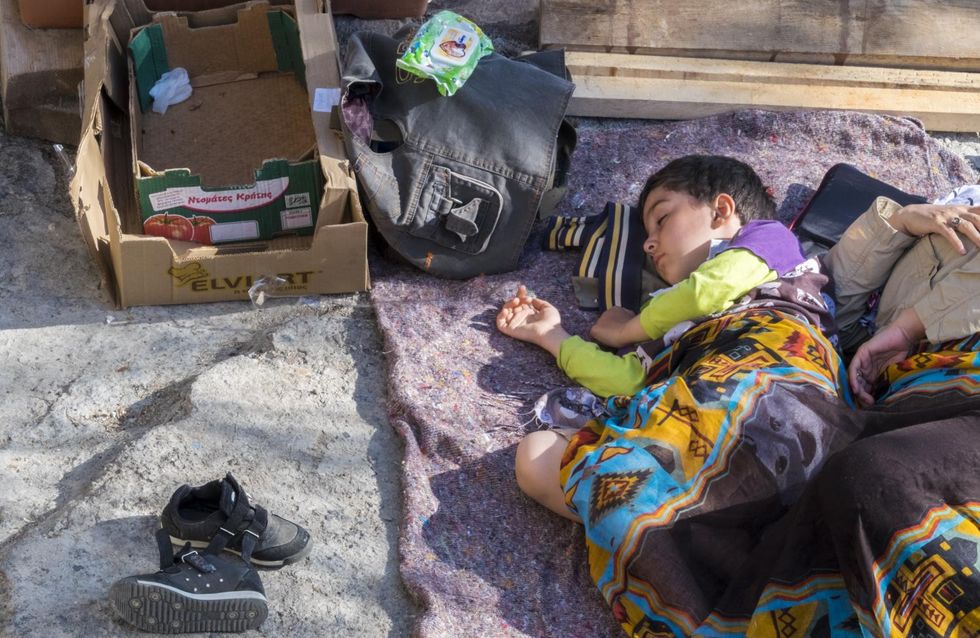
And Amnesty International has recently visited both Kos and Lesvos, Greek islands on the frontline of Europe's refugee crisis. Overloaded, under-resourced authorities are failing to copewith the dramatic increase in the number of people arriving on the island - 33,000 on Lesvos since 1 August alone. As a result, thousands of people, including many Syrian refugees, are staying in squalid conditions.
All these crises are symptoms of the same problem: Europe is not accepting its responsibility in an unprecedented global refugee crisis. It is failing to create safe routes for refugees that respect the rights and protection needs of people with the dignity they are entitled to.
So, what can be done? No more moments of silence - we've had enough of those. It is now the time for leadership.
European leaders - some of them, at least - seem to be getting the message.
At the Vienna summit, the calls were less about Fortress Europe and keeping people out, and more about solidarity and responsibility.
Vice-President of the European Commission Federica Mogherini could not have been clearer in her remarks at the end of the meeting. Europe, she said has a "moral and legal duty" to protect asylum seekers.
The right words, certainly. But they now need to be matched with action.
Amnesty International has been calling for this Europe-wide approach for years, but recent events prove that it has never been more urgently needed than now. Could we be reaching a tipping point.
European leaders at all levels must step up and provide protection to more people, better share responsibility and show solidarity to other countries and to those most in need.
At the very least, such a response should involve a significant increase in the resettlement of refugees - current proposals pale in comparison to Turkey's hosting of 1.8 million Syrian refugees - more humanitarian visas and more ways to reunite families.
Anything less would be a moral and human rights failure of tragic proportions - something we simply cannot be silent about.
A solemn moment of silence. The world over, this is the traditional response when lives are cut short by tragedy.
It has also been a common response to tragedies in Europe and off its shores which have ended the lives of thousands of refugees and migrants. Not killed by bombs in Syria, but killed while making terrifying journeys in search of safety and better lives in Europe.
But the scale and rapid succession of these tragedies calls for breaking the silence.
In the space of a week, along with people across the world, I recoiled in horror as four new tragedies added to a growing list of events that have already brought a record number of refugees and migrants to untimely deaths this year. According to UNHCR, 2,500 have already perished en route to Europe since 1 January 2015.
On 26 August, 52 bodies were found inside the hull of a ship about 30 nautical miles off the coast of Libya.
On 27 August, police in Austria discovered the corpses of 71 people, including children, crammed inside a truck left abandoned at the side of the main highway between Budapest and Vienna. Police have told media the dead are believed to have been Syrians and apparently died by suffocation.
That same night came news of yet another tragic shipwreck off the coast of Zuwara, Libya in which up to 200 people may have died.
And yesterday, a shocking photo of a drowned toddler washed up on a Turkish beach hit global headlines, bringing the crisis into even sharper focus. He and his young brother, believed to be from Kobane in Syria, were among at least 11 people believed to have perished when their vessel ran into trouble as they tried to reach the Greek island of Kos.
The nature of tragedies is that they are usually rare and happen unexpectedly, to ordinary people who find themselves swept up in extraordinary circumstances. The past week's horrors were neither unexpected nor singular.
People dying in their dozens - whether crammed into a truck or a ship, en route to seek safety or better lives - is a tragic indictment of European leaders' failures to provide safe ways to reach Europe. That it is now happening on a daily basis is Europe's collective shame.
In Vienna last week, not far from where police made their awful discovery, European Union (EU) leaders were meeting with key EU Member States and western Balkan countries. Despite not being on the initial agenda, the treatment of refugees in the region quickly took top billing.
And with good reason - earlier in the week Amnesty International had reported from Macedonia's southern border with Greece, where up to 4,000 refugees became trapped when Macedonia closed the border. Paramilitary police units blocked the border crossing with razor wire and fired stun grenades at shocked families who had fled the war in Syria.
My colleague met a mother of four children from Damascus who clung tightly on to her youngest son amid the booms of stun grenades nearby: "This reminds me of Syria. It scares the children; I never expected to find that in Europe. Never; never," she said.
Further up the Balkans migration route in Hungary, police this week fired tear gas inside a crowded reception centre, and Hungarian authorities are in the process of erecting a razor wire fence along the border with Serbia to prevent more refugees and migrants from entering.
And Amnesty International has recently visited both Kos and Lesvos, Greek islands on the frontline of Europe's refugee crisis. Overloaded, under-resourced authorities are failing to copewith the dramatic increase in the number of people arriving on the island - 33,000 on Lesvos since 1 August alone. As a result, thousands of people, including many Syrian refugees, are staying in squalid conditions.
All these crises are symptoms of the same problem: Europe is not accepting its responsibility in an unprecedented global refugee crisis. It is failing to create safe routes for refugees that respect the rights and protection needs of people with the dignity they are entitled to.
So, what can be done? No more moments of silence - we've had enough of those. It is now the time for leadership.
European leaders - some of them, at least - seem to be getting the message.
At the Vienna summit, the calls were less about Fortress Europe and keeping people out, and more about solidarity and responsibility.
Vice-President of the European Commission Federica Mogherini could not have been clearer in her remarks at the end of the meeting. Europe, she said has a "moral and legal duty" to protect asylum seekers.
The right words, certainly. But they now need to be matched with action.
Amnesty International has been calling for this Europe-wide approach for years, but recent events prove that it has never been more urgently needed than now. Could we be reaching a tipping point.
European leaders at all levels must step up and provide protection to more people, better share responsibility and show solidarity to other countries and to those most in need.
At the very least, such a response should involve a significant increase in the resettlement of refugees - current proposals pale in comparison to Turkey's hosting of 1.8 million Syrian refugees - more humanitarian visas and more ways to reunite families.
Anything less would be a moral and human rights failure of tragic proportions - something we simply cannot be silent about.
A solemn moment of silence. The world over, this is the traditional response when lives are cut short by tragedy.
It has also been a common response to tragedies in Europe and off its shores which have ended the lives of thousands of refugees and migrants. Not killed by bombs in Syria, but killed while making terrifying journeys in search of safety and better lives in Europe.
But the scale and rapid succession of these tragedies calls for breaking the silence.
In the space of a week, along with people across the world, I recoiled in horror as four new tragedies added to a growing list of events that have already brought a record number of refugees and migrants to untimely deaths this year. According to UNHCR, 2,500 have already perished en route to Europe since 1 January 2015.
On 26 August, 52 bodies were found inside the hull of a ship about 30 nautical miles off the coast of Libya.
On 27 August, police in Austria discovered the corpses of 71 people, including children, crammed inside a truck left abandoned at the side of the main highway between Budapest and Vienna. Police have told media the dead are believed to have been Syrians and apparently died by suffocation.
That same night came news of yet another tragic shipwreck off the coast of Zuwara, Libya in which up to 200 people may have died.
And yesterday, a shocking photo of a drowned toddler washed up on a Turkish beach hit global headlines, bringing the crisis into even sharper focus. He and his young brother, believed to be from Kobane in Syria, were among at least 11 people believed to have perished when their vessel ran into trouble as they tried to reach the Greek island of Kos.
The nature of tragedies is that they are usually rare and happen unexpectedly, to ordinary people who find themselves swept up in extraordinary circumstances. The past week's horrors were neither unexpected nor singular.
People dying in their dozens - whether crammed into a truck or a ship, en route to seek safety or better lives - is a tragic indictment of European leaders' failures to provide safe ways to reach Europe. That it is now happening on a daily basis is Europe's collective shame.
In Vienna last week, not far from where police made their awful discovery, European Union (EU) leaders were meeting with key EU Member States and western Balkan countries. Despite not being on the initial agenda, the treatment of refugees in the region quickly took top billing.
And with good reason - earlier in the week Amnesty International had reported from Macedonia's southern border with Greece, where up to 4,000 refugees became trapped when Macedonia closed the border. Paramilitary police units blocked the border crossing with razor wire and fired stun grenades at shocked families who had fled the war in Syria.
My colleague met a mother of four children from Damascus who clung tightly on to her youngest son amid the booms of stun grenades nearby: "This reminds me of Syria. It scares the children; I never expected to find that in Europe. Never; never," she said.
Further up the Balkans migration route in Hungary, police this week fired tear gas inside a crowded reception centre, and Hungarian authorities are in the process of erecting a razor wire fence along the border with Serbia to prevent more refugees and migrants from entering.
And Amnesty International has recently visited both Kos and Lesvos, Greek islands on the frontline of Europe's refugee crisis. Overloaded, under-resourced authorities are failing to copewith the dramatic increase in the number of people arriving on the island - 33,000 on Lesvos since 1 August alone. As a result, thousands of people, including many Syrian refugees, are staying in squalid conditions.
All these crises are symptoms of the same problem: Europe is not accepting its responsibility in an unprecedented global refugee crisis. It is failing to create safe routes for refugees that respect the rights and protection needs of people with the dignity they are entitled to.
So, what can be done? No more moments of silence - we've had enough of those. It is now the time for leadership.
European leaders - some of them, at least - seem to be getting the message.
At the Vienna summit, the calls were less about Fortress Europe and keeping people out, and more about solidarity and responsibility.
Vice-President of the European Commission Federica Mogherini could not have been clearer in her remarks at the end of the meeting. Europe, she said has a "moral and legal duty" to protect asylum seekers.
The right words, certainly. But they now need to be matched with action.
Amnesty International has been calling for this Europe-wide approach for years, but recent events prove that it has never been more urgently needed than now. Could we be reaching a tipping point.
European leaders at all levels must step up and provide protection to more people, better share responsibility and show solidarity to other countries and to those most in need.
At the very least, such a response should involve a significant increase in the resettlement of refugees - current proposals pale in comparison to Turkey's hosting of 1.8 million Syrian refugees - more humanitarian visas and more ways to reunite families.
Anything less would be a moral and human rights failure of tragic proportions - something we simply cannot be silent about.