SUBSCRIBE TO OUR FREE NEWSLETTER
Daily news & progressive opinion—funded by the people, not the corporations—delivered straight to your inbox.
5
#000000
#FFFFFF
To donate by check, phone, or other method, see our More Ways to Give page.
Daily news & progressive opinion—funded by the people, not the corporations—delivered straight to your inbox.
Are Americans disturbed about growing economic inequality in the United States?
Numerous opinion surveys in recent years indicate that substantial majorities of Americans not only recognize that the gap between the wealthy and everyone else has grown, but favor greater economic equality. A Gallup poll conducted in April 2015 found that 63 percent of respondents believed that wealth in the United States should be distributed more evenly. Similarly, a New York Times/CBS News poll conducted in late May 2015 revealed that 66 percent of Americans favored the redistribution of "the money and wealth in this country" along more egalitarian lines.
A key reason for Americans' desire to share the wealth more equally is that many of them think that riches are amassed unfairly. A Pew Research Center survey in January 2014 found that 60 percent of respondents believed that "the economic system in this country unfairly favors the wealthy." Asked about why someone was wealthy, 51 percent said: "Because he or she had more advantages." The New York Times/CBS News poll reported that 61 percent of respondents believed that "just a few people at the top have a chance to get ahead.
Furthermore, despite the many billions of dollars U.S. corporations lavish on advertising and other forms of public relations to give themselves a positive image, Americans are remarkably wary of these giant economic enterprises. According to a Gallup poll of June 2014, only 21 percent of Americans had a great deal of confidence in big business. By contrast, 40 percent of respondents said they had very little or no confidence in it. A year later, another Gallup survey found that Americans' confidence in big business remained stuck at 21 percent -- below historic norms. A survey done by the public relations industry in 2014 reported that, although Americans valued corporate products, 47 percent of the public said that, when it came to ethics, they had little or no trust in major corporations. Health insurance companies, pharmaceutical companies, banks, and energy companies were viewed as the least trustworthy.
By contrast, Americans have a more sympathetic attitude toward considerably less wealthy groups that challenge corporate dominance. The June 2015 Gallup survey found a higher rate of public confidence in unions and, especially, in small businesses. In August 2014, another Gallup survey found that Americans approved of unions by 53 to 38 percent. That was up from five years before, when 48 percent approved and 45 percent disapproved of them. Questioned in the New York Times/CBS News survey, 74 percent of respondents said that large corporations had "too much influence" in "American life and politics today." When it came to unions, however, only 37 percent said they had "too much influence," while 54 percent said they had "too little influence" or "about the right amount of influence."
In an apparent attempt to downplay these signs of public dismay with the economic playing field, the American Enterprise Institute -- a leading champion of the wealthy and corporations -- argued recently that "inequality does not appear to be a top-tier concern" for Americans. This big business think tank also trumpeted the claim that 70 percent of Americans "believe that most people are better off in a free market economy even though some people are rich and some are poor."
Nevertheless, this dismissive appraisal of public concern is called into question by the widespread demand for government action to counter economic inequality. The Pew Research Center's January 2014 opinion poll found that 82 percent of American respondents favored government action to reduce poverty and 69 percent supported government action "to reduce the gap between the rich and everyone else." In May of this year, the New York Times/CBS News survey reported that, by 57 to 39 percent, Americans favored using government to "reduce the gap between the rich and the poor in this country."
Furthermore, most Americans back specific government programs along these lines. The New York Times/CBS News survey found broad public support for the following programs: raising the minimum wage (71 percent); increasing taxes on the rich (68 percent); and requiring employers to provide paid family leave (80 percent). Even the more unusual approach of limiting the pay of top corporate executives received the backing of 50 percent. Other recent polls reveal similar priorities: between 71 percent (CNN/ORC) and 73 percent (Pew) of Americans favor raising the federal minimum wage; 52 percent favor "heavy taxes on the rich" (Gallup); 54 percent support raising taxes on the wealthy and the corporations (Pew); and 70 percent support federal funding of pre-school education (Gallup).
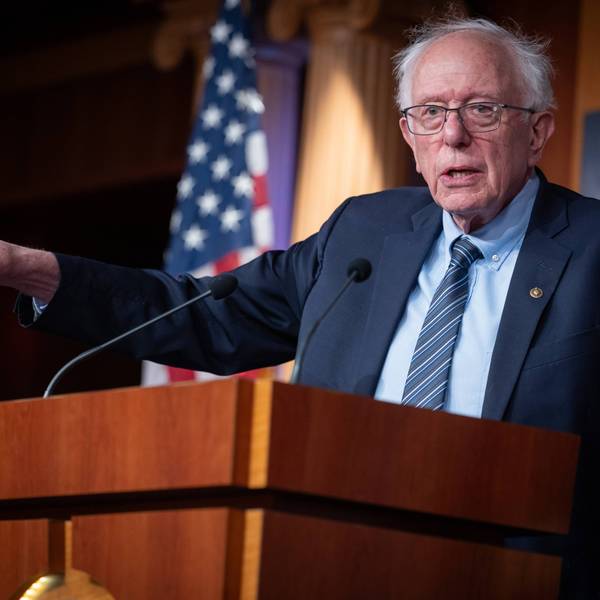
Against this backdrop, it is hardly surprising that a relatively unknown figure like U.S. Senator Bernie Sanders, long a sharp critic of the economic divide in American life, is surging in the polls and drawing large, enthusiastic crowds in his campaign for the Democratic presidential nomination. Nor is it any wonder that Hillary Clinton, in her own campaign for that nomination, has started to emphasize economic unfairness. Indeed, even some Republican aspirants for the presidency have begun to adopt a populist rhetoric -- although the specific policies they advocate continue to advance the narrow economic interests of the wealthy and the corporations.
Even so, when the electioneering is over, will the U.S. government really take action to promote greater economic equality? That's anyone's guess. But it's clearly what most Americans want.
Dear Common Dreams reader, It’s been nearly 30 years since I co-founded Common Dreams with my late wife, Lina Newhouser. We had the radical notion that journalism should serve the public good, not corporate profits. It was clear to us from the outset what it would take to build such a project. No paid advertisements. No corporate sponsors. No millionaire publisher telling us what to think or do. Many people said we wouldn't last a year, but we proved those doubters wrong. Together with a tremendous team of journalists and dedicated staff, we built an independent media outlet free from the constraints of profits and corporate control. Our mission has always been simple: To inform. To inspire. To ignite change for the common good. Building Common Dreams was not easy. Our survival was never guaranteed. When you take on the most powerful forces—Wall Street greed, fossil fuel industry destruction, Big Tech lobbyists, and uber-rich oligarchs who have spent billions upon billions rigging the economy and democracy in their favor—the only bulwark you have is supporters who believe in your work. But here’s the urgent message from me today. It's never been this bad out there. And it's never been this hard to keep us going. At the very moment Common Dreams is most needed, the threats we face are intensifying. We need your support now more than ever. We don't accept corporate advertising and never will. We don't have a paywall because we don't think people should be blocked from critical news based on their ability to pay. Everything we do is funded by the donations of readers like you. When everyone does the little they can afford, we are strong. But if that support retreats or dries up, so do we. Will you donate now to make sure Common Dreams not only survives but thrives? —Craig Brown, Co-founder |
Are Americans disturbed about growing economic inequality in the United States?
Numerous opinion surveys in recent years indicate that substantial majorities of Americans not only recognize that the gap between the wealthy and everyone else has grown, but favor greater economic equality. A Gallup poll conducted in April 2015 found that 63 percent of respondents believed that wealth in the United States should be distributed more evenly. Similarly, a New York Times/CBS News poll conducted in late May 2015 revealed that 66 percent of Americans favored the redistribution of "the money and wealth in this country" along more egalitarian lines.
A key reason for Americans' desire to share the wealth more equally is that many of them think that riches are amassed unfairly. A Pew Research Center survey in January 2014 found that 60 percent of respondents believed that "the economic system in this country unfairly favors the wealthy." Asked about why someone was wealthy, 51 percent said: "Because he or she had more advantages." The New York Times/CBS News poll reported that 61 percent of respondents believed that "just a few people at the top have a chance to get ahead.
Furthermore, despite the many billions of dollars U.S. corporations lavish on advertising and other forms of public relations to give themselves a positive image, Americans are remarkably wary of these giant economic enterprises. According to a Gallup poll of June 2014, only 21 percent of Americans had a great deal of confidence in big business. By contrast, 40 percent of respondents said they had very little or no confidence in it. A year later, another Gallup survey found that Americans' confidence in big business remained stuck at 21 percent -- below historic norms. A survey done by the public relations industry in 2014 reported that, although Americans valued corporate products, 47 percent of the public said that, when it came to ethics, they had little or no trust in major corporations. Health insurance companies, pharmaceutical companies, banks, and energy companies were viewed as the least trustworthy.
By contrast, Americans have a more sympathetic attitude toward considerably less wealthy groups that challenge corporate dominance. The June 2015 Gallup survey found a higher rate of public confidence in unions and, especially, in small businesses. In August 2014, another Gallup survey found that Americans approved of unions by 53 to 38 percent. That was up from five years before, when 48 percent approved and 45 percent disapproved of them. Questioned in the New York Times/CBS News survey, 74 percent of respondents said that large corporations had "too much influence" in "American life and politics today." When it came to unions, however, only 37 percent said they had "too much influence," while 54 percent said they had "too little influence" or "about the right amount of influence."
In an apparent attempt to downplay these signs of public dismay with the economic playing field, the American Enterprise Institute -- a leading champion of the wealthy and corporations -- argued recently that "inequality does not appear to be a top-tier concern" for Americans. This big business think tank also trumpeted the claim that 70 percent of Americans "believe that most people are better off in a free market economy even though some people are rich and some are poor."
Nevertheless, this dismissive appraisal of public concern is called into question by the widespread demand for government action to counter economic inequality. The Pew Research Center's January 2014 opinion poll found that 82 percent of American respondents favored government action to reduce poverty and 69 percent supported government action "to reduce the gap between the rich and everyone else." In May of this year, the New York Times/CBS News survey reported that, by 57 to 39 percent, Americans favored using government to "reduce the gap between the rich and the poor in this country."
Furthermore, most Americans back specific government programs along these lines. The New York Times/CBS News survey found broad public support for the following programs: raising the minimum wage (71 percent); increasing taxes on the rich (68 percent); and requiring employers to provide paid family leave (80 percent). Even the more unusual approach of limiting the pay of top corporate executives received the backing of 50 percent. Other recent polls reveal similar priorities: between 71 percent (CNN/ORC) and 73 percent (Pew) of Americans favor raising the federal minimum wage; 52 percent favor "heavy taxes on the rich" (Gallup); 54 percent support raising taxes on the wealthy and the corporations (Pew); and 70 percent support federal funding of pre-school education (Gallup).
Against this backdrop, it is hardly surprising that a relatively unknown figure like U.S. Senator Bernie Sanders, long a sharp critic of the economic divide in American life, is surging in the polls and drawing large, enthusiastic crowds in his campaign for the Democratic presidential nomination. Nor is it any wonder that Hillary Clinton, in her own campaign for that nomination, has started to emphasize economic unfairness. Indeed, even some Republican aspirants for the presidency have begun to adopt a populist rhetoric -- although the specific policies they advocate continue to advance the narrow economic interests of the wealthy and the corporations.
Even so, when the electioneering is over, will the U.S. government really take action to promote greater economic equality? That's anyone's guess. But it's clearly what most Americans want.
Are Americans disturbed about growing economic inequality in the United States?
Numerous opinion surveys in recent years indicate that substantial majorities of Americans not only recognize that the gap between the wealthy and everyone else has grown, but favor greater economic equality. A Gallup poll conducted in April 2015 found that 63 percent of respondents believed that wealth in the United States should be distributed more evenly. Similarly, a New York Times/CBS News poll conducted in late May 2015 revealed that 66 percent of Americans favored the redistribution of "the money and wealth in this country" along more egalitarian lines.
A key reason for Americans' desire to share the wealth more equally is that many of them think that riches are amassed unfairly. A Pew Research Center survey in January 2014 found that 60 percent of respondents believed that "the economic system in this country unfairly favors the wealthy." Asked about why someone was wealthy, 51 percent said: "Because he or she had more advantages." The New York Times/CBS News poll reported that 61 percent of respondents believed that "just a few people at the top have a chance to get ahead.
Furthermore, despite the many billions of dollars U.S. corporations lavish on advertising and other forms of public relations to give themselves a positive image, Americans are remarkably wary of these giant economic enterprises. According to a Gallup poll of June 2014, only 21 percent of Americans had a great deal of confidence in big business. By contrast, 40 percent of respondents said they had very little or no confidence in it. A year later, another Gallup survey found that Americans' confidence in big business remained stuck at 21 percent -- below historic norms. A survey done by the public relations industry in 2014 reported that, although Americans valued corporate products, 47 percent of the public said that, when it came to ethics, they had little or no trust in major corporations. Health insurance companies, pharmaceutical companies, banks, and energy companies were viewed as the least trustworthy.
By contrast, Americans have a more sympathetic attitude toward considerably less wealthy groups that challenge corporate dominance. The June 2015 Gallup survey found a higher rate of public confidence in unions and, especially, in small businesses. In August 2014, another Gallup survey found that Americans approved of unions by 53 to 38 percent. That was up from five years before, when 48 percent approved and 45 percent disapproved of them. Questioned in the New York Times/CBS News survey, 74 percent of respondents said that large corporations had "too much influence" in "American life and politics today." When it came to unions, however, only 37 percent said they had "too much influence," while 54 percent said they had "too little influence" or "about the right amount of influence."
In an apparent attempt to downplay these signs of public dismay with the economic playing field, the American Enterprise Institute -- a leading champion of the wealthy and corporations -- argued recently that "inequality does not appear to be a top-tier concern" for Americans. This big business think tank also trumpeted the claim that 70 percent of Americans "believe that most people are better off in a free market economy even though some people are rich and some are poor."
Nevertheless, this dismissive appraisal of public concern is called into question by the widespread demand for government action to counter economic inequality. The Pew Research Center's January 2014 opinion poll found that 82 percent of American respondents favored government action to reduce poverty and 69 percent supported government action "to reduce the gap between the rich and everyone else." In May of this year, the New York Times/CBS News survey reported that, by 57 to 39 percent, Americans favored using government to "reduce the gap between the rich and the poor in this country."
Furthermore, most Americans back specific government programs along these lines. The New York Times/CBS News survey found broad public support for the following programs: raising the minimum wage (71 percent); increasing taxes on the rich (68 percent); and requiring employers to provide paid family leave (80 percent). Even the more unusual approach of limiting the pay of top corporate executives received the backing of 50 percent. Other recent polls reveal similar priorities: between 71 percent (CNN/ORC) and 73 percent (Pew) of Americans favor raising the federal minimum wage; 52 percent favor "heavy taxes on the rich" (Gallup); 54 percent support raising taxes on the wealthy and the corporations (Pew); and 70 percent support federal funding of pre-school education (Gallup).
Against this backdrop, it is hardly surprising that a relatively unknown figure like U.S. Senator Bernie Sanders, long a sharp critic of the economic divide in American life, is surging in the polls and drawing large, enthusiastic crowds in his campaign for the Democratic presidential nomination. Nor is it any wonder that Hillary Clinton, in her own campaign for that nomination, has started to emphasize economic unfairness. Indeed, even some Republican aspirants for the presidency have begun to adopt a populist rhetoric -- although the specific policies they advocate continue to advance the narrow economic interests of the wealthy and the corporations.
Even so, when the electioneering is over, will the U.S. government really take action to promote greater economic equality? That's anyone's guess. But it's clearly what most Americans want.