SUBSCRIBE TO OUR FREE NEWSLETTER
Daily news & progressive opinion—funded by the people, not the corporations—delivered straight to your inbox.
5
#000000
#FFFFFF
To donate by check, phone, or other method, see our More Ways to Give page.
Daily news & progressive opinion—funded by the people, not the corporations—delivered straight to your inbox.
Lawmakers are attempting to make it even easier for fossil fuel companies to bid on public land auctions without facing disapproval from climate advocates, a move that green groups say buckles to corporate interests.
Earlier this week, the U.S. House Committee on Natural Resources approved a bill that would require lease sales for offshore drilling to be held online rather than in person, as the Obama administration gears up to do the same with an onshore public land auction originally slated for a sell-off in Washington, D.C.
All this despite the fact that climate advocates have been imploring the White House to end such leases altogether to help curtail rising greenhouse gases and fulfill its pledges as mandated by the Paris agreement.
"New fossil fuel leasing is wrong for people and the planet. Moving lease sales online will only make it easier for fossil fuel companies to get away with turning our public lands and waters into energy sacrifice zones," said Marissa Knodel, climate change campaigner with Friends of the Earth.
The bill's sponsors, Reps. Garret Graves (R-La.) and Alan Lowenthal (D-Calif.), say the aim is to increase transparency and attract more bidders, which Graves claimed would ultimately benefit taxpayers with higher returns. In Graves' home state of Louisiana, hundreds of Gulf Coast residents descended on a public auction held in the New Orleans Superdome earlier this year calling for an end to lease sales and proclaiming the city would "no longer...be a sacrifice zone."
Morning Consult reports:
Online lease sales aren't a totally new idea. The Bureau of Land Management plans to conduct an online lease sale for onshore production this fall. The Bureau of Ocean Energy Management already does online sales for offshore wind leases.
Some states have also adopted online lease sales for onshore production. In Texas, which has adopted online lease sales for onshore production, there have been cases in which the highest bid is "tens of millions of dollars" greater than the second highest, said Jon Hrobsky, policy director for lobbying and law firm Brownstein Hyatt Farber Schreck LLP, at the hearing.
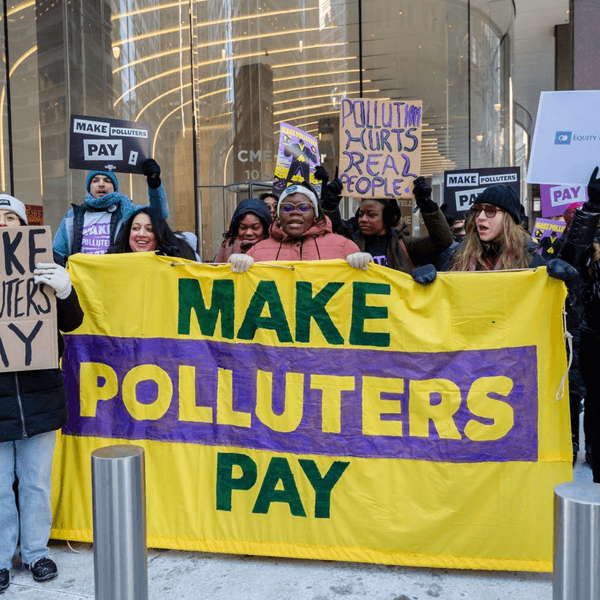
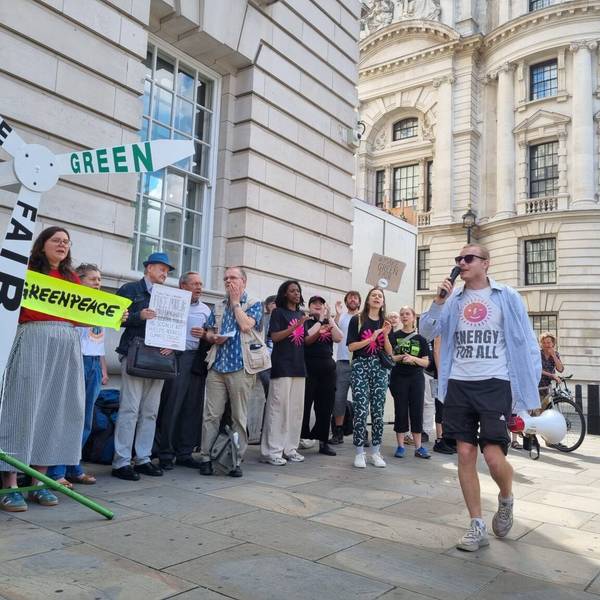
The decision follows several instances in which oil and gas auctions were disrupted by activists calling for the government to end new leases and keep fossil fuels in the ground.
In a statement released Thursday, Friends of the Earth charged that "Moving the auctions online serves one purpose: to make it easier for the fossil fuel industry to take control of our public lands, shielded from public scrutiny and input."
"Now the administration has a clear choice: take action in keeping with our international climate commitments or cater to the fossil fuel industry," the group said.
Similar criticisms were lobbed by organizations like the Center for Biological Diversity (CBD), the Science and Environmental Health Network, and the Louisiana Bucket Brigade, among others.
"This bill is about circumventing public scrutiny. It says a lot when the public is so disgusted with Big Oil that they have to retreat and hide," said Anne Rolfes, founding director of the Louisiana Bucket Brigade. "They can change the rules but not the facts: they are destroying our health and our planet, and we are here to stop them."
CBD's Taylor McKinnon added, "Moving fossil fuel auctions online still doesn't hide the dangerous disconnect between the administration's climate rhetoric and its fossil fuel leasing. The clock is ticking on the climate crisis, and each new lease makes a bad problem worse. It's time for the president to shut the federal carbon pollution spigot for good."
Dear Common Dreams reader, It’s been nearly 30 years since I co-founded Common Dreams with my late wife, Lina Newhouser. We had the radical notion that journalism should serve the public good, not corporate profits. It was clear to us from the outset what it would take to build such a project. No paid advertisements. No corporate sponsors. No millionaire publisher telling us what to think or do. Many people said we wouldn't last a year, but we proved those doubters wrong. Together with a tremendous team of journalists and dedicated staff, we built an independent media outlet free from the constraints of profits and corporate control. Our mission has always been simple: To inform. To inspire. To ignite change for the common good. Building Common Dreams was not easy. Our survival was never guaranteed. When you take on the most powerful forces—Wall Street greed, fossil fuel industry destruction, Big Tech lobbyists, and uber-rich oligarchs who have spent billions upon billions rigging the economy and democracy in their favor—the only bulwark you have is supporters who believe in your work. But here’s the urgent message from me today. It's never been this bad out there. And it's never been this hard to keep us going. At the very moment Common Dreams is most needed, the threats we face are intensifying. We need your support now more than ever. We don't accept corporate advertising and never will. We don't have a paywall because we don't think people should be blocked from critical news based on their ability to pay. Everything we do is funded by the donations of readers like you. When everyone does the little they can afford, we are strong. But if that support retreats or dries up, so do we. Will you donate now to make sure Common Dreams not only survives but thrives? —Craig Brown, Co-founder |
Lawmakers are attempting to make it even easier for fossil fuel companies to bid on public land auctions without facing disapproval from climate advocates, a move that green groups say buckles to corporate interests.
Earlier this week, the U.S. House Committee on Natural Resources approved a bill that would require lease sales for offshore drilling to be held online rather than in person, as the Obama administration gears up to do the same with an onshore public land auction originally slated for a sell-off in Washington, D.C.
All this despite the fact that climate advocates have been imploring the White House to end such leases altogether to help curtail rising greenhouse gases and fulfill its pledges as mandated by the Paris agreement.
"New fossil fuel leasing is wrong for people and the planet. Moving lease sales online will only make it easier for fossil fuel companies to get away with turning our public lands and waters into energy sacrifice zones," said Marissa Knodel, climate change campaigner with Friends of the Earth.
The bill's sponsors, Reps. Garret Graves (R-La.) and Alan Lowenthal (D-Calif.), say the aim is to increase transparency and attract more bidders, which Graves claimed would ultimately benefit taxpayers with higher returns. In Graves' home state of Louisiana, hundreds of Gulf Coast residents descended on a public auction held in the New Orleans Superdome earlier this year calling for an end to lease sales and proclaiming the city would "no longer...be a sacrifice zone."
Morning Consult reports:
Online lease sales aren't a totally new idea. The Bureau of Land Management plans to conduct an online lease sale for onshore production this fall. The Bureau of Ocean Energy Management already does online sales for offshore wind leases.
Some states have also adopted online lease sales for onshore production. In Texas, which has adopted online lease sales for onshore production, there have been cases in which the highest bid is "tens of millions of dollars" greater than the second highest, said Jon Hrobsky, policy director for lobbying and law firm Brownstein Hyatt Farber Schreck LLP, at the hearing.
The decision follows several instances in which oil and gas auctions were disrupted by activists calling for the government to end new leases and keep fossil fuels in the ground.
In a statement released Thursday, Friends of the Earth charged that "Moving the auctions online serves one purpose: to make it easier for the fossil fuel industry to take control of our public lands, shielded from public scrutiny and input."
"Now the administration has a clear choice: take action in keeping with our international climate commitments or cater to the fossil fuel industry," the group said.
Similar criticisms were lobbed by organizations like the Center for Biological Diversity (CBD), the Science and Environmental Health Network, and the Louisiana Bucket Brigade, among others.
"This bill is about circumventing public scrutiny. It says a lot when the public is so disgusted with Big Oil that they have to retreat and hide," said Anne Rolfes, founding director of the Louisiana Bucket Brigade. "They can change the rules but not the facts: they are destroying our health and our planet, and we are here to stop them."
CBD's Taylor McKinnon added, "Moving fossil fuel auctions online still doesn't hide the dangerous disconnect between the administration's climate rhetoric and its fossil fuel leasing. The clock is ticking on the climate crisis, and each new lease makes a bad problem worse. It's time for the president to shut the federal carbon pollution spigot for good."
Lawmakers are attempting to make it even easier for fossil fuel companies to bid on public land auctions without facing disapproval from climate advocates, a move that green groups say buckles to corporate interests.
Earlier this week, the U.S. House Committee on Natural Resources approved a bill that would require lease sales for offshore drilling to be held online rather than in person, as the Obama administration gears up to do the same with an onshore public land auction originally slated for a sell-off in Washington, D.C.
All this despite the fact that climate advocates have been imploring the White House to end such leases altogether to help curtail rising greenhouse gases and fulfill its pledges as mandated by the Paris agreement.
"New fossil fuel leasing is wrong for people and the planet. Moving lease sales online will only make it easier for fossil fuel companies to get away with turning our public lands and waters into energy sacrifice zones," said Marissa Knodel, climate change campaigner with Friends of the Earth.
The bill's sponsors, Reps. Garret Graves (R-La.) and Alan Lowenthal (D-Calif.), say the aim is to increase transparency and attract more bidders, which Graves claimed would ultimately benefit taxpayers with higher returns. In Graves' home state of Louisiana, hundreds of Gulf Coast residents descended on a public auction held in the New Orleans Superdome earlier this year calling for an end to lease sales and proclaiming the city would "no longer...be a sacrifice zone."
Morning Consult reports:
Online lease sales aren't a totally new idea. The Bureau of Land Management plans to conduct an online lease sale for onshore production this fall. The Bureau of Ocean Energy Management already does online sales for offshore wind leases.
Some states have also adopted online lease sales for onshore production. In Texas, which has adopted online lease sales for onshore production, there have been cases in which the highest bid is "tens of millions of dollars" greater than the second highest, said Jon Hrobsky, policy director for lobbying and law firm Brownstein Hyatt Farber Schreck LLP, at the hearing.
The decision follows several instances in which oil and gas auctions were disrupted by activists calling for the government to end new leases and keep fossil fuels in the ground.
In a statement released Thursday, Friends of the Earth charged that "Moving the auctions online serves one purpose: to make it easier for the fossil fuel industry to take control of our public lands, shielded from public scrutiny and input."
"Now the administration has a clear choice: take action in keeping with our international climate commitments or cater to the fossil fuel industry," the group said.
Similar criticisms were lobbed by organizations like the Center for Biological Diversity (CBD), the Science and Environmental Health Network, and the Louisiana Bucket Brigade, among others.
"This bill is about circumventing public scrutiny. It says a lot when the public is so disgusted with Big Oil that they have to retreat and hide," said Anne Rolfes, founding director of the Louisiana Bucket Brigade. "They can change the rules but not the facts: they are destroying our health and our planet, and we are here to stop them."
CBD's Taylor McKinnon added, "Moving fossil fuel auctions online still doesn't hide the dangerous disconnect between the administration's climate rhetoric and its fossil fuel leasing. The clock is ticking on the climate crisis, and each new lease makes a bad problem worse. It's time for the president to shut the federal carbon pollution spigot for good."