SUBSCRIBE TO OUR FREE NEWSLETTER
Daily news & progressive opinion—funded by the people, not the corporations—delivered straight to your inbox.
5
#000000
#FFFFFF
To donate by check, phone, or other method, see our More Ways to Give page.
Daily news & progressive opinion—funded by the people, not the corporations—delivered straight to your inbox.

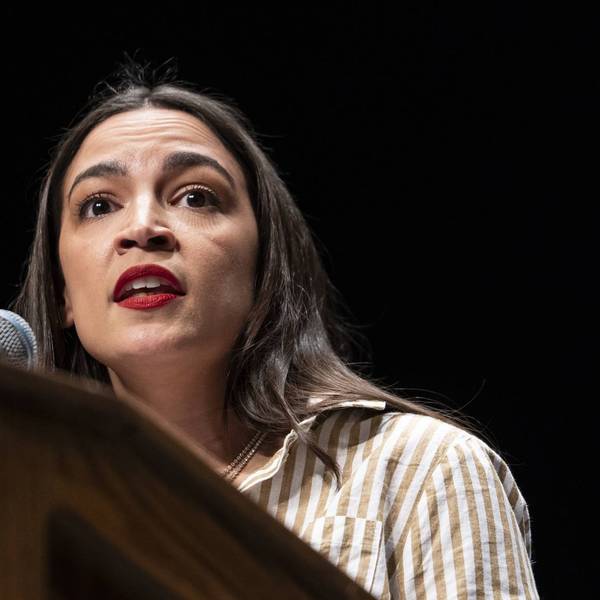
Rep. Alexandria Ocasio-Cortez (D-N.Y.) wears a face mask to protect herself from the coronavirus during a press conference in the Corona neighborhood of Queens on April 14, 2020 in New York City. (Photo: Johannes Eisele/AFP via Getty Images)
In response to Congressman Ted Yoho's horrible sexist abuse, Congresswoman Alexandria Ocasio-Cortez (D-N.Y.) offered a powerful critique of the culture of misogyny, impunity, and dehumanization of women in a passionate speech on the House floor last Thursday.
Using the same brush to paint experiences of all women and an assumption of shared and equal vulnerability ignore the disproportionate amount of struggle women of color and working-class women must go through as they resist intersecting systems of oppression.
What is interesting in the whole discourse is the dominant tendency of framing this incident exclusively in terms of sexism while ignoring its intersection with race as well as class. House Speaker Nancy Pelosi (D-Calif.) expressed solidarity with Ocasio-Cortez (D-N.Y.) and indicated she had been called offensive names for the past 18 years. Sen. Elizabeth Warren (D-Mass.) tweeted, "Imagine what we could get done if women didn't have to deal with things like this on top of doing their job." The overwhelming support for AOC and critiques of Yoho (R-Fla.) came from liberal white women and other progressive circles who consciously or inadvertently upheld the language of "sisterhood." This sisterhood promoted solidarity that is based on the shared identity and struggles of being women. On the one hand, this solidarity based on sex is essential at a time when the sitting president has been accused of a series of sexual misconducts and violence against women and when there have been concerted efforts by the government to overturn Roe v. Wade and abortion rights, cut international funding for women's rights and reproductive health, and dismantle reproductive health services for women in the United States. On the other hand, using the same brush to paint experiences of all women and an assumption of shared and equal vulnerability ignore the disproportionate amount of struggle women of color and working-class women must go through as they resist intersecting systems of oppression.
Lisa Lerer rightly points out in a New York Times article that Hilary Clinton, for example, has been called a "bitch" numerous times (and she never condemned these abuses publicly). Still, she was never called that word in the nation's capital in front of reporters by a sitting congressman, which very likely indicates her white and class privileges. In contrast, what AOC experienced last week is a continuation of the trend of using sexist and racist slurs against powerful women of color. In 2017, for example, the Florida Republican Sen. Frank Artiles referred to Audrey Gibson--a Black woman and Democratic member of the Florida Senate--as "fucking asshole," "bitch," "girl," and also used the n-word at a members-only Governors Club steps away from the state capital.
Dissident and non-conforming women like AOC are not necessarily strangers to the word "bitch." However, the mundanity of calling rebel women a "bitch" in private and public spaces takes a spectacular turn as the abuse becomes so normalized that powerful, privileged white men do not hesitate to use the language within the space of the nation's capital. Does it become normalized for ALL women, though? It didn't get normalized for Hilary Clinton, but this happened to women of color like AOC and Audrey Gibson.
AOC's belongingness to the United States was questioned by President Trump, who asked AOC, along with three other women of color of the squad, to "go back and help fix the totally broken and crime-infested places from which they came." Focusing only on AOC's sex and ignoring the intersection of sex and race will disregard white privilege as well as class privilege many women enjoy as they express solidarity with AOC and engage in sisterhood resisting abhorrent sexism. Overlooking the intersectional intricacies will also reinforce the problematic tendency of addressing the "women problem" by merely adding on women without challenging intersecting systems of oppression. For example, after the AOC incident, in response to the reporters' question about whether the Republican party has a "women problem," House Minority Leader Kevin McCarthy (R.-Calif)--who argued Yoho's "apology" was enough--suggested that the Republican Party now have more women than ever running for Congress.
Also, let's not forget that the dispute between AOC and Yoho started over the past comments of AOC as she suggested that the rising crime in New York City did not necessarily stem from the lack of policing but was fueled by unprecedented economic disparities, unemployment, and poverty during the global Covid-19 pandemic. To establish that he is equally mindful of a class analysis like AOC, Yoho sought resort to his personal experience of doing what he called "odd jobs" at a young age and being on food stamps and claimed his familiarity with the face of poverty. His white privileged linear personal progress narrative of a hardworking, law-abiding American citizen totally ignored how intersecting structures of racism, classism, capitalism, and other systems of oppression do not create a level-playing field for everyone, thereby making some communities more vulnerable than others.
In her speech, AOC referred to her working-class background and experience of being racially targeted by President Trump. I wish she directly used the word "race" in her speech and more explicitly highlighted the intersectional struggles of women of color. The language of sisterhood and solidarity with white women and white liberal circles are critical in the Trump era, but we need to make sure this inadvertent or strategic move should not eclipse unique racialized and classed struggles of women of color as they fight against heteropatriarchy on a day-to-day basis.
Dear Common Dreams reader, It’s been nearly 30 years since I co-founded Common Dreams with my late wife, Lina Newhouser. We had the radical notion that journalism should serve the public good, not corporate profits. It was clear to us from the outset what it would take to build such a project. No paid advertisements. No corporate sponsors. No millionaire publisher telling us what to think or do. Many people said we wouldn't last a year, but we proved those doubters wrong. Together with a tremendous team of journalists and dedicated staff, we built an independent media outlet free from the constraints of profits and corporate control. Our mission has always been simple: To inform. To inspire. To ignite change for the common good. Building Common Dreams was not easy. Our survival was never guaranteed. When you take on the most powerful forces—Wall Street greed, fossil fuel industry destruction, Big Tech lobbyists, and uber-rich oligarchs who have spent billions upon billions rigging the economy and democracy in their favor—the only bulwark you have is supporters who believe in your work. But here’s the urgent message from me today. It's never been this bad out there. And it's never been this hard to keep us going. At the very moment Common Dreams is most needed, the threats we face are intensifying. We need your support now more than ever. We don't accept corporate advertising and never will. We don't have a paywall because we don't think people should be blocked from critical news based on their ability to pay. Everything we do is funded by the donations of readers like you. When everyone does the little they can afford, we are strong. But if that support retreats or dries up, so do we. Will you donate now to make sure Common Dreams not only survives but thrives? —Craig Brown, Co-founder |
In response to Congressman Ted Yoho's horrible sexist abuse, Congresswoman Alexandria Ocasio-Cortez (D-N.Y.) offered a powerful critique of the culture of misogyny, impunity, and dehumanization of women in a passionate speech on the House floor last Thursday.
Using the same brush to paint experiences of all women and an assumption of shared and equal vulnerability ignore the disproportionate amount of struggle women of color and working-class women must go through as they resist intersecting systems of oppression.
What is interesting in the whole discourse is the dominant tendency of framing this incident exclusively in terms of sexism while ignoring its intersection with race as well as class. House Speaker Nancy Pelosi (D-Calif.) expressed solidarity with Ocasio-Cortez (D-N.Y.) and indicated she had been called offensive names for the past 18 years. Sen. Elizabeth Warren (D-Mass.) tweeted, "Imagine what we could get done if women didn't have to deal with things like this on top of doing their job." The overwhelming support for AOC and critiques of Yoho (R-Fla.) came from liberal white women and other progressive circles who consciously or inadvertently upheld the language of "sisterhood." This sisterhood promoted solidarity that is based on the shared identity and struggles of being women. On the one hand, this solidarity based on sex is essential at a time when the sitting president has been accused of a series of sexual misconducts and violence against women and when there have been concerted efforts by the government to overturn Roe v. Wade and abortion rights, cut international funding for women's rights and reproductive health, and dismantle reproductive health services for women in the United States. On the other hand, using the same brush to paint experiences of all women and an assumption of shared and equal vulnerability ignore the disproportionate amount of struggle women of color and working-class women must go through as they resist intersecting systems of oppression.
Lisa Lerer rightly points out in a New York Times article that Hilary Clinton, for example, has been called a "bitch" numerous times (and she never condemned these abuses publicly). Still, she was never called that word in the nation's capital in front of reporters by a sitting congressman, which very likely indicates her white and class privileges. In contrast, what AOC experienced last week is a continuation of the trend of using sexist and racist slurs against powerful women of color. In 2017, for example, the Florida Republican Sen. Frank Artiles referred to Audrey Gibson--a Black woman and Democratic member of the Florida Senate--as "fucking asshole," "bitch," "girl," and also used the n-word at a members-only Governors Club steps away from the state capital.
Dissident and non-conforming women like AOC are not necessarily strangers to the word "bitch." However, the mundanity of calling rebel women a "bitch" in private and public spaces takes a spectacular turn as the abuse becomes so normalized that powerful, privileged white men do not hesitate to use the language within the space of the nation's capital. Does it become normalized for ALL women, though? It didn't get normalized for Hilary Clinton, but this happened to women of color like AOC and Audrey Gibson.
AOC's belongingness to the United States was questioned by President Trump, who asked AOC, along with three other women of color of the squad, to "go back and help fix the totally broken and crime-infested places from which they came." Focusing only on AOC's sex and ignoring the intersection of sex and race will disregard white privilege as well as class privilege many women enjoy as they express solidarity with AOC and engage in sisterhood resisting abhorrent sexism. Overlooking the intersectional intricacies will also reinforce the problematic tendency of addressing the "women problem" by merely adding on women without challenging intersecting systems of oppression. For example, after the AOC incident, in response to the reporters' question about whether the Republican party has a "women problem," House Minority Leader Kevin McCarthy (R.-Calif)--who argued Yoho's "apology" was enough--suggested that the Republican Party now have more women than ever running for Congress.
Also, let's not forget that the dispute between AOC and Yoho started over the past comments of AOC as she suggested that the rising crime in New York City did not necessarily stem from the lack of policing but was fueled by unprecedented economic disparities, unemployment, and poverty during the global Covid-19 pandemic. To establish that he is equally mindful of a class analysis like AOC, Yoho sought resort to his personal experience of doing what he called "odd jobs" at a young age and being on food stamps and claimed his familiarity with the face of poverty. His white privileged linear personal progress narrative of a hardworking, law-abiding American citizen totally ignored how intersecting structures of racism, classism, capitalism, and other systems of oppression do not create a level-playing field for everyone, thereby making some communities more vulnerable than others.
In her speech, AOC referred to her working-class background and experience of being racially targeted by President Trump. I wish she directly used the word "race" in her speech and more explicitly highlighted the intersectional struggles of women of color. The language of sisterhood and solidarity with white women and white liberal circles are critical in the Trump era, but we need to make sure this inadvertent or strategic move should not eclipse unique racialized and classed struggles of women of color as they fight against heteropatriarchy on a day-to-day basis.
In response to Congressman Ted Yoho's horrible sexist abuse, Congresswoman Alexandria Ocasio-Cortez (D-N.Y.) offered a powerful critique of the culture of misogyny, impunity, and dehumanization of women in a passionate speech on the House floor last Thursday.
Using the same brush to paint experiences of all women and an assumption of shared and equal vulnerability ignore the disproportionate amount of struggle women of color and working-class women must go through as they resist intersecting systems of oppression.
What is interesting in the whole discourse is the dominant tendency of framing this incident exclusively in terms of sexism while ignoring its intersection with race as well as class. House Speaker Nancy Pelosi (D-Calif.) expressed solidarity with Ocasio-Cortez (D-N.Y.) and indicated she had been called offensive names for the past 18 years. Sen. Elizabeth Warren (D-Mass.) tweeted, "Imagine what we could get done if women didn't have to deal with things like this on top of doing their job." The overwhelming support for AOC and critiques of Yoho (R-Fla.) came from liberal white women and other progressive circles who consciously or inadvertently upheld the language of "sisterhood." This sisterhood promoted solidarity that is based on the shared identity and struggles of being women. On the one hand, this solidarity based on sex is essential at a time when the sitting president has been accused of a series of sexual misconducts and violence against women and when there have been concerted efforts by the government to overturn Roe v. Wade and abortion rights, cut international funding for women's rights and reproductive health, and dismantle reproductive health services for women in the United States. On the other hand, using the same brush to paint experiences of all women and an assumption of shared and equal vulnerability ignore the disproportionate amount of struggle women of color and working-class women must go through as they resist intersecting systems of oppression.
Lisa Lerer rightly points out in a New York Times article that Hilary Clinton, for example, has been called a "bitch" numerous times (and she never condemned these abuses publicly). Still, she was never called that word in the nation's capital in front of reporters by a sitting congressman, which very likely indicates her white and class privileges. In contrast, what AOC experienced last week is a continuation of the trend of using sexist and racist slurs against powerful women of color. In 2017, for example, the Florida Republican Sen. Frank Artiles referred to Audrey Gibson--a Black woman and Democratic member of the Florida Senate--as "fucking asshole," "bitch," "girl," and also used the n-word at a members-only Governors Club steps away from the state capital.
Dissident and non-conforming women like AOC are not necessarily strangers to the word "bitch." However, the mundanity of calling rebel women a "bitch" in private and public spaces takes a spectacular turn as the abuse becomes so normalized that powerful, privileged white men do not hesitate to use the language within the space of the nation's capital. Does it become normalized for ALL women, though? It didn't get normalized for Hilary Clinton, but this happened to women of color like AOC and Audrey Gibson.
AOC's belongingness to the United States was questioned by President Trump, who asked AOC, along with three other women of color of the squad, to "go back and help fix the totally broken and crime-infested places from which they came." Focusing only on AOC's sex and ignoring the intersection of sex and race will disregard white privilege as well as class privilege many women enjoy as they express solidarity with AOC and engage in sisterhood resisting abhorrent sexism. Overlooking the intersectional intricacies will also reinforce the problematic tendency of addressing the "women problem" by merely adding on women without challenging intersecting systems of oppression. For example, after the AOC incident, in response to the reporters' question about whether the Republican party has a "women problem," House Minority Leader Kevin McCarthy (R.-Calif)--who argued Yoho's "apology" was enough--suggested that the Republican Party now have more women than ever running for Congress.
Also, let's not forget that the dispute between AOC and Yoho started over the past comments of AOC as she suggested that the rising crime in New York City did not necessarily stem from the lack of policing but was fueled by unprecedented economic disparities, unemployment, and poverty during the global Covid-19 pandemic. To establish that he is equally mindful of a class analysis like AOC, Yoho sought resort to his personal experience of doing what he called "odd jobs" at a young age and being on food stamps and claimed his familiarity with the face of poverty. His white privileged linear personal progress narrative of a hardworking, law-abiding American citizen totally ignored how intersecting structures of racism, classism, capitalism, and other systems of oppression do not create a level-playing field for everyone, thereby making some communities more vulnerable than others.
In her speech, AOC referred to her working-class background and experience of being racially targeted by President Trump. I wish she directly used the word "race" in her speech and more explicitly highlighted the intersectional struggles of women of color. The language of sisterhood and solidarity with white women and white liberal circles are critical in the Trump era, but we need to make sure this inadvertent or strategic move should not eclipse unique racialized and classed struggles of women of color as they fight against heteropatriarchy on a day-to-day basis.