SUBSCRIBE TO OUR FREE NEWSLETTER
Daily news & progressive opinion—funded by the people, not the corporations—delivered straight to your inbox.
5
#000000
#FFFFFF
To donate by check, phone, or other method, see our More Ways to Give page.
Daily news & progressive opinion—funded by the people, not the corporations—delivered straight to your inbox.
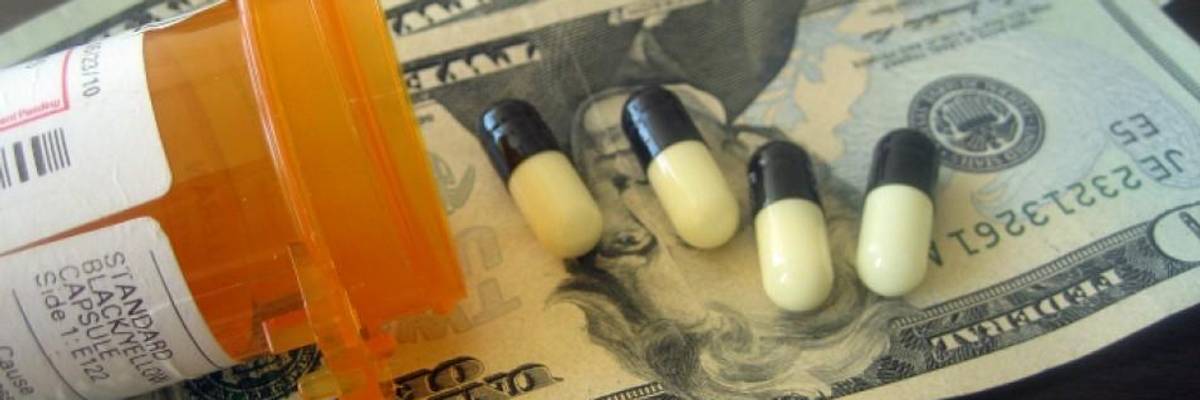
The health sector spent a record $594 million on lobbying last year, up nearly 5 percent from 2018. (Photo: TaxRebate.org.uk/Flickr/cc)
Federal lobbying spending surpassed $3.47 billion last year, a nine-year high, as influential industries tried to sway the Trump administration and Congress over policies that would hurt the bottom lines of some of the nation's most powerful companies.
Not accounting for inflation, lobbying spending in 2019 falls just behind the record $3.51 billion spent in 2010 amid a lobbying bonanza around the Affordable Care Act.
The massive figure was driven by lobbying on President Donald Trump's priorities, particularly the administration's tariffs and trade deal with Mexico and Canada, as well as proposals in Congress to address rising drug prices and expensive surprise medical bills. As a result, several influential sectors reached all-time lobbying spending records last year.
Amid proposed overhauls to various aspects of the healthcare system, both from Congress and the Trump administration, the health sector spent a record $594 million on lobbying last year, up nearly 5 percent from 2018.
Within the sector, the pharmaceuticals/health products industry spent a record $295 million to combat legislation from House Democrats to regulate drug prices, and to fight drug price controls proposed by the Trump administration. The Trump administration's proposals have stalled, as has drug pricing legislation in Congress. Drugmakers were dealt one blow when the Trump administration's industry friendly provisions in the North American trade deal were stripped from the final package amid outrage from lawmakers.
Other major forces in the health sector, health professionals and health services/HMOs, also smashed lobbying spending records last year, while hospitals came close to the all-time high they hit in 2009. All three crucial parts of the healthcare supply chain weighed in heavily on proposed legislation to address surprise medical bills.
Doctors, hospitals and emergency medical providers came out against bipartisan legislation to cap the amount of money patients have to pay for out-of-network services. The legislation, which would lower pay for some specialists, was opposed by these industries that said it was too favorable to insurers. Private equity firms that control physician staffing companies launched a massive "dark money" ad campaign to pressure vulnerable lawmakers over the issue, spending nearly $54 million on ads as of early January.
Amid unprecedented lobbying efforts from these industries, the surprise billing legislation -- endorsed by Republican and Democratic leaders and the White House -- did not make it into the year-end spending package that included many other add-ons.
Trump administration action draws lobbyist response
The Trump administration's trade wars with China, Europe and other countries attracted big lobbying spending, as did its proposed trade agreements. A record 1,430 clients reported lobbying on the issue of trade in 2019, blowing past previous years' highs.
Some of the largest companies in the country such as Amazon and General Motors hired Trump-tied firms to influence the administration over the issue of tariffs. Major companies are hiring Washington insiders to secure exemptions from tariffs, while less wealthy businesses have to wait in line.
The transportation sector, awash with companies affected by the administration's aggressive trade policy, spent $259 million last year, an all-time high. The air transport industry, featuring trade warring companies Boeing and Airbus, spent a record $104 million lobbying Washington.
The Trump administration's action on Chinese telecoms also drew a strong response from major industries. Chipmakers such as Qualcomm and Intel, along with the Semiconductor Industry Association, successfully pushed the administration to reverse its ban on U.S. companies selling to Huawei last summer.
The larger communications/electronics sector spent a record $435 million last year, driven primarily by electronics manufacturers, as well as other industry giants including Apple, Microsoft and IBM. Apple, Amazon and Facebook set lobbying records last year amid increased pressure from lawmakers and an antitrust probe from the Department of Justice.
Researcher Dan Auble contributed to this report.
Dear Common Dreams reader, It’s been nearly 30 years since I co-founded Common Dreams with my late wife, Lina Newhouser. We had the radical notion that journalism should serve the public good, not corporate profits. It was clear to us from the outset what it would take to build such a project. No paid advertisements. No corporate sponsors. No millionaire publisher telling us what to think or do. Many people said we wouldn't last a year, but we proved those doubters wrong. Together with a tremendous team of journalists and dedicated staff, we built an independent media outlet free from the constraints of profits and corporate control. Our mission has always been simple: To inform. To inspire. To ignite change for the common good. Building Common Dreams was not easy. Our survival was never guaranteed. When you take on the most powerful forces—Wall Street greed, fossil fuel industry destruction, Big Tech lobbyists, and uber-rich oligarchs who have spent billions upon billions rigging the economy and democracy in their favor—the only bulwark you have is supporters who believe in your work. But here’s the urgent message from me today. It's never been this bad out there. And it's never been this hard to keep us going. At the very moment Common Dreams is most needed, the threats we face are intensifying. We need your support now more than ever. We don't accept corporate advertising and never will. We don't have a paywall because we don't think people should be blocked from critical news based on their ability to pay. Everything we do is funded by the donations of readers like you. When everyone does the little they can afford, we are strong. But if that support retreats or dries up, so do we. Will you donate now to make sure Common Dreams not only survives but thrives? —Craig Brown, Co-founder |
Federal lobbying spending surpassed $3.47 billion last year, a nine-year high, as influential industries tried to sway the Trump administration and Congress over policies that would hurt the bottom lines of some of the nation's most powerful companies.
Not accounting for inflation, lobbying spending in 2019 falls just behind the record $3.51 billion spent in 2010 amid a lobbying bonanza around the Affordable Care Act.
The massive figure was driven by lobbying on President Donald Trump's priorities, particularly the administration's tariffs and trade deal with Mexico and Canada, as well as proposals in Congress to address rising drug prices and expensive surprise medical bills. As a result, several influential sectors reached all-time lobbying spending records last year.
Amid proposed overhauls to various aspects of the healthcare system, both from Congress and the Trump administration, the health sector spent a record $594 million on lobbying last year, up nearly 5 percent from 2018.
Within the sector, the pharmaceuticals/health products industry spent a record $295 million to combat legislation from House Democrats to regulate drug prices, and to fight drug price controls proposed by the Trump administration. The Trump administration's proposals have stalled, as has drug pricing legislation in Congress. Drugmakers were dealt one blow when the Trump administration's industry friendly provisions in the North American trade deal were stripped from the final package amid outrage from lawmakers.
Other major forces in the health sector, health professionals and health services/HMOs, also smashed lobbying spending records last year, while hospitals came close to the all-time high they hit in 2009. All three crucial parts of the healthcare supply chain weighed in heavily on proposed legislation to address surprise medical bills.
Doctors, hospitals and emergency medical providers came out against bipartisan legislation to cap the amount of money patients have to pay for out-of-network services. The legislation, which would lower pay for some specialists, was opposed by these industries that said it was too favorable to insurers. Private equity firms that control physician staffing companies launched a massive "dark money" ad campaign to pressure vulnerable lawmakers over the issue, spending nearly $54 million on ads as of early January.
Amid unprecedented lobbying efforts from these industries, the surprise billing legislation -- endorsed by Republican and Democratic leaders and the White House -- did not make it into the year-end spending package that included many other add-ons.
Trump administration action draws lobbyist response
The Trump administration's trade wars with China, Europe and other countries attracted big lobbying spending, as did its proposed trade agreements. A record 1,430 clients reported lobbying on the issue of trade in 2019, blowing past previous years' highs.
Some of the largest companies in the country such as Amazon and General Motors hired Trump-tied firms to influence the administration over the issue of tariffs. Major companies are hiring Washington insiders to secure exemptions from tariffs, while less wealthy businesses have to wait in line.
The transportation sector, awash with companies affected by the administration's aggressive trade policy, spent $259 million last year, an all-time high. The air transport industry, featuring trade warring companies Boeing and Airbus, spent a record $104 million lobbying Washington.
The Trump administration's action on Chinese telecoms also drew a strong response from major industries. Chipmakers such as Qualcomm and Intel, along with the Semiconductor Industry Association, successfully pushed the administration to reverse its ban on U.S. companies selling to Huawei last summer.
The larger communications/electronics sector spent a record $435 million last year, driven primarily by electronics manufacturers, as well as other industry giants including Apple, Microsoft and IBM. Apple, Amazon and Facebook set lobbying records last year amid increased pressure from lawmakers and an antitrust probe from the Department of Justice.
Researcher Dan Auble contributed to this report.
Federal lobbying spending surpassed $3.47 billion last year, a nine-year high, as influential industries tried to sway the Trump administration and Congress over policies that would hurt the bottom lines of some of the nation's most powerful companies.
Not accounting for inflation, lobbying spending in 2019 falls just behind the record $3.51 billion spent in 2010 amid a lobbying bonanza around the Affordable Care Act.
The massive figure was driven by lobbying on President Donald Trump's priorities, particularly the administration's tariffs and trade deal with Mexico and Canada, as well as proposals in Congress to address rising drug prices and expensive surprise medical bills. As a result, several influential sectors reached all-time lobbying spending records last year.
Amid proposed overhauls to various aspects of the healthcare system, both from Congress and the Trump administration, the health sector spent a record $594 million on lobbying last year, up nearly 5 percent from 2018.
Within the sector, the pharmaceuticals/health products industry spent a record $295 million to combat legislation from House Democrats to regulate drug prices, and to fight drug price controls proposed by the Trump administration. The Trump administration's proposals have stalled, as has drug pricing legislation in Congress. Drugmakers were dealt one blow when the Trump administration's industry friendly provisions in the North American trade deal were stripped from the final package amid outrage from lawmakers.
Other major forces in the health sector, health professionals and health services/HMOs, also smashed lobbying spending records last year, while hospitals came close to the all-time high they hit in 2009. All three crucial parts of the healthcare supply chain weighed in heavily on proposed legislation to address surprise medical bills.
Doctors, hospitals and emergency medical providers came out against bipartisan legislation to cap the amount of money patients have to pay for out-of-network services. The legislation, which would lower pay for some specialists, was opposed by these industries that said it was too favorable to insurers. Private equity firms that control physician staffing companies launched a massive "dark money" ad campaign to pressure vulnerable lawmakers over the issue, spending nearly $54 million on ads as of early January.
Amid unprecedented lobbying efforts from these industries, the surprise billing legislation -- endorsed by Republican and Democratic leaders and the White House -- did not make it into the year-end spending package that included many other add-ons.
Trump administration action draws lobbyist response
The Trump administration's trade wars with China, Europe and other countries attracted big lobbying spending, as did its proposed trade agreements. A record 1,430 clients reported lobbying on the issue of trade in 2019, blowing past previous years' highs.
Some of the largest companies in the country such as Amazon and General Motors hired Trump-tied firms to influence the administration over the issue of tariffs. Major companies are hiring Washington insiders to secure exemptions from tariffs, while less wealthy businesses have to wait in line.
The transportation sector, awash with companies affected by the administration's aggressive trade policy, spent $259 million last year, an all-time high. The air transport industry, featuring trade warring companies Boeing and Airbus, spent a record $104 million lobbying Washington.
The Trump administration's action on Chinese telecoms also drew a strong response from major industries. Chipmakers such as Qualcomm and Intel, along with the Semiconductor Industry Association, successfully pushed the administration to reverse its ban on U.S. companies selling to Huawei last summer.
The larger communications/electronics sector spent a record $435 million last year, driven primarily by electronics manufacturers, as well as other industry giants including Apple, Microsoft and IBM. Apple, Amazon and Facebook set lobbying records last year amid increased pressure from lawmakers and an antitrust probe from the Department of Justice.
Researcher Dan Auble contributed to this report.