SUBSCRIBE TO OUR FREE NEWSLETTER
Daily news & progressive opinion—funded by the people, not the corporations—delivered straight to your inbox.
5
#000000
#FFFFFF
To donate by check, phone, or other method, see our More Ways to Give page.
Daily news & progressive opinion—funded by the people, not the corporations—delivered straight to your inbox.
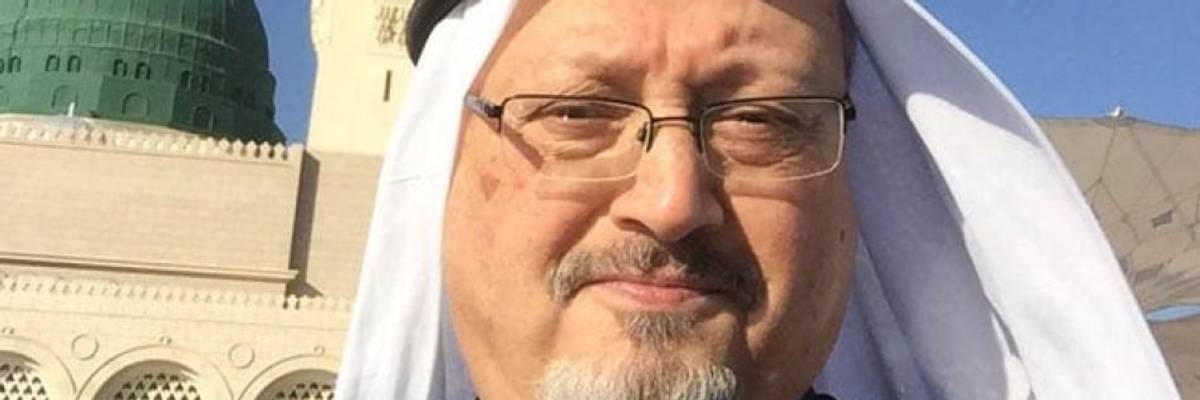
If there was anything Jamal was passionate about--almost desperate for--it was to be heard, read and understood first and foremost by Saudis, and ultimately by readers across the Arab world. (Photo: Twitter)
Almost every time I finished editing a piece that Jamal Khashoggi had written for The Post's Global Opinions section, he would ask me the same question.
"Great, that's done. Do you want me to translate this to Arabic?"
In the year since his senseless and brutal murder, amid the pain, grief and anger, I find myself reflecting quite a bit about translation, cultural understanding and knowledge. If there was anything Jamal was passionate about--almost desperate for--it was to be heard, read and understood first and foremost by Saudis, and ultimately by readers across the Arab world.
A few weeks ago, Turkish intelligence officials released more details of Jamal's last words to the newspaper the Daily Sabah: "Do not keep my mouth closed," he said to his killers, according to a transcript published in English and Turkish. "I have asthma, do not do it. You'll suffocate me."
From Syria to Yemen to Egypt, the United States has largely turned a deaf ear to the cries of pain, war and abuses by tyrants. It tunes out the screams of people such as Jamal and pays more attention to the oppressive background rhythm of money changing hands in exchange for weapons--or lucrative consulting contracts.
To those of us who knew Jamal, the year-long slow-drip release of details has been agonizing. I would console myself thinking that the calculated release of information would help lead to justice. Now, the latest releases feel more like morbid attempts to titillate the public and score political points, rather than honest pursuits of accountability. But there is one release that would honor Jamal's connection to his mother tongue and serve the cause of justice.
Turkish authorities should release the audio of Jamal's last words in Arabic. Jamal's fellow Saudis should hear his accent, inflections and distinct Saudi-ness--and they should also hear the voices and tone of Jamal's killers. I can't help but think Jamal would have wanted his wish to be heard in Arabic to be honored to the end, so we could hear his unaltered and unedited final plea. Even in death, Jamal deserves to be heard, and his friends, family and compatriots deserve to have the chance to know the truth.
But as I reflect, I am also reminded that this is not enough. For every Arab revolution started by viral images of traumatized Arab bodies, there are tens of thousands of traumas that elicit nothing more than a collective shrug and shake of the head. Last year, when Turkish intelligence provided audio of Jamal's killing to U.S. officials, President Trump refused to listen to the tapes. But it was perhaps now-former national security adviser John Bolton who laid out best why he refused to listen to the audio: He told reporters, "You want me to listen to it? . . . What am I going to learn from--I mean, if they were speaking Korean, I wouldn't learn any more from it, either." Then-Defense Secretary Jim Mattis also said he had not listened to the tapes because he could not "understand the language."
In response, Columbia University professor Hamid Dabashi penned a poignant essay, in which he asked, "How does one scream in Arabic?" He wrote that Jamal's last sounds were not in Arabic or any particular language, but rather "were the primordial cries of a people from one end of the Arab and Muslim world to the next, maligned and brutalised by a sustained history of tyrannical abuse."
From Syria to Yemen to Egypt, the United States has largely turned a deaf ear to the cries of pain, war and abuses by tyrants. It tunes out the screams of people such as Jamal and pays more attention to the oppressive background rhythm of money changing hands in exchange for weapons--or lucrative consulting contracts. Indeed, in March, the Trump administration moved to send more than $8 billion worth of weapons to Saudi Arabia, the United Arab Emirates and Jordan.
If Jamal were alive, he might have been heartened by the chorus of Arabic cries coming from the streets of Sudan, and more recently the streets of Cairo. This spring, brave protesters in Sudan helped oust Omar Hassan al-Bashir. And in recent weeks, the people of Egypt have been demanding the removal of that country's strongman, Abdel Fatah al-Sissi. These Arabic cries of hope and resistance are a demonstration of the power the people can still wield.
And perhaps enduring justice for Jamal will come on the very day that the Saudi people themselves will scream loudly, for the world to hear, that they deserve better, and that the bargain they have been presented with--complicity with the regime or death--is one they will no longer accept.
Dear Common Dreams reader, It’s been nearly 30 years since I co-founded Common Dreams with my late wife, Lina Newhouser. We had the radical notion that journalism should serve the public good, not corporate profits. It was clear to us from the outset what it would take to build such a project. No paid advertisements. No corporate sponsors. No millionaire publisher telling us what to think or do. Many people said we wouldn't last a year, but we proved those doubters wrong. Together with a tremendous team of journalists and dedicated staff, we built an independent media outlet free from the constraints of profits and corporate control. Our mission has always been simple: To inform. To inspire. To ignite change for the common good. Building Common Dreams was not easy. Our survival was never guaranteed. When you take on the most powerful forces—Wall Street greed, fossil fuel industry destruction, Big Tech lobbyists, and uber-rich oligarchs who have spent billions upon billions rigging the economy and democracy in their favor—the only bulwark you have is supporters who believe in your work. But here’s the urgent message from me today. It's never been this bad out there. And it's never been this hard to keep us going. At the very moment Common Dreams is most needed, the threats we face are intensifying. We need your support now more than ever. We don't accept corporate advertising and never will. We don't have a paywall because we don't think people should be blocked from critical news based on their ability to pay. Everything we do is funded by the donations of readers like you. When everyone does the little they can afford, we are strong. But if that support retreats or dries up, so do we. Will you donate now to make sure Common Dreams not only survives but thrives? —Craig Brown, Co-founder |
Almost every time I finished editing a piece that Jamal Khashoggi had written for The Post's Global Opinions section, he would ask me the same question.
"Great, that's done. Do you want me to translate this to Arabic?"
In the year since his senseless and brutal murder, amid the pain, grief and anger, I find myself reflecting quite a bit about translation, cultural understanding and knowledge. If there was anything Jamal was passionate about--almost desperate for--it was to be heard, read and understood first and foremost by Saudis, and ultimately by readers across the Arab world.
A few weeks ago, Turkish intelligence officials released more details of Jamal's last words to the newspaper the Daily Sabah: "Do not keep my mouth closed," he said to his killers, according to a transcript published in English and Turkish. "I have asthma, do not do it. You'll suffocate me."
From Syria to Yemen to Egypt, the United States has largely turned a deaf ear to the cries of pain, war and abuses by tyrants. It tunes out the screams of people such as Jamal and pays more attention to the oppressive background rhythm of money changing hands in exchange for weapons--or lucrative consulting contracts.
To those of us who knew Jamal, the year-long slow-drip release of details has been agonizing. I would console myself thinking that the calculated release of information would help lead to justice. Now, the latest releases feel more like morbid attempts to titillate the public and score political points, rather than honest pursuits of accountability. But there is one release that would honor Jamal's connection to his mother tongue and serve the cause of justice.
Turkish authorities should release the audio of Jamal's last words in Arabic. Jamal's fellow Saudis should hear his accent, inflections and distinct Saudi-ness--and they should also hear the voices and tone of Jamal's killers. I can't help but think Jamal would have wanted his wish to be heard in Arabic to be honored to the end, so we could hear his unaltered and unedited final plea. Even in death, Jamal deserves to be heard, and his friends, family and compatriots deserve to have the chance to know the truth.
But as I reflect, I am also reminded that this is not enough. For every Arab revolution started by viral images of traumatized Arab bodies, there are tens of thousands of traumas that elicit nothing more than a collective shrug and shake of the head. Last year, when Turkish intelligence provided audio of Jamal's killing to U.S. officials, President Trump refused to listen to the tapes. But it was perhaps now-former national security adviser John Bolton who laid out best why he refused to listen to the audio: He told reporters, "You want me to listen to it? . . . What am I going to learn from--I mean, if they were speaking Korean, I wouldn't learn any more from it, either." Then-Defense Secretary Jim Mattis also said he had not listened to the tapes because he could not "understand the language."
In response, Columbia University professor Hamid Dabashi penned a poignant essay, in which he asked, "How does one scream in Arabic?" He wrote that Jamal's last sounds were not in Arabic or any particular language, but rather "were the primordial cries of a people from one end of the Arab and Muslim world to the next, maligned and brutalised by a sustained history of tyrannical abuse."
From Syria to Yemen to Egypt, the United States has largely turned a deaf ear to the cries of pain, war and abuses by tyrants. It tunes out the screams of people such as Jamal and pays more attention to the oppressive background rhythm of money changing hands in exchange for weapons--or lucrative consulting contracts. Indeed, in March, the Trump administration moved to send more than $8 billion worth of weapons to Saudi Arabia, the United Arab Emirates and Jordan.
If Jamal were alive, he might have been heartened by the chorus of Arabic cries coming from the streets of Sudan, and more recently the streets of Cairo. This spring, brave protesters in Sudan helped oust Omar Hassan al-Bashir. And in recent weeks, the people of Egypt have been demanding the removal of that country's strongman, Abdel Fatah al-Sissi. These Arabic cries of hope and resistance are a demonstration of the power the people can still wield.
And perhaps enduring justice for Jamal will come on the very day that the Saudi people themselves will scream loudly, for the world to hear, that they deserve better, and that the bargain they have been presented with--complicity with the regime or death--is one they will no longer accept.
Almost every time I finished editing a piece that Jamal Khashoggi had written for The Post's Global Opinions section, he would ask me the same question.
"Great, that's done. Do you want me to translate this to Arabic?"
In the year since his senseless and brutal murder, amid the pain, grief and anger, I find myself reflecting quite a bit about translation, cultural understanding and knowledge. If there was anything Jamal was passionate about--almost desperate for--it was to be heard, read and understood first and foremost by Saudis, and ultimately by readers across the Arab world.
A few weeks ago, Turkish intelligence officials released more details of Jamal's last words to the newspaper the Daily Sabah: "Do not keep my mouth closed," he said to his killers, according to a transcript published in English and Turkish. "I have asthma, do not do it. You'll suffocate me."
From Syria to Yemen to Egypt, the United States has largely turned a deaf ear to the cries of pain, war and abuses by tyrants. It tunes out the screams of people such as Jamal and pays more attention to the oppressive background rhythm of money changing hands in exchange for weapons--or lucrative consulting contracts.
To those of us who knew Jamal, the year-long slow-drip release of details has been agonizing. I would console myself thinking that the calculated release of information would help lead to justice. Now, the latest releases feel more like morbid attempts to titillate the public and score political points, rather than honest pursuits of accountability. But there is one release that would honor Jamal's connection to his mother tongue and serve the cause of justice.
Turkish authorities should release the audio of Jamal's last words in Arabic. Jamal's fellow Saudis should hear his accent, inflections and distinct Saudi-ness--and they should also hear the voices and tone of Jamal's killers. I can't help but think Jamal would have wanted his wish to be heard in Arabic to be honored to the end, so we could hear his unaltered and unedited final plea. Even in death, Jamal deserves to be heard, and his friends, family and compatriots deserve to have the chance to know the truth.
But as I reflect, I am also reminded that this is not enough. For every Arab revolution started by viral images of traumatized Arab bodies, there are tens of thousands of traumas that elicit nothing more than a collective shrug and shake of the head. Last year, when Turkish intelligence provided audio of Jamal's killing to U.S. officials, President Trump refused to listen to the tapes. But it was perhaps now-former national security adviser John Bolton who laid out best why he refused to listen to the audio: He told reporters, "You want me to listen to it? . . . What am I going to learn from--I mean, if they were speaking Korean, I wouldn't learn any more from it, either." Then-Defense Secretary Jim Mattis also said he had not listened to the tapes because he could not "understand the language."
In response, Columbia University professor Hamid Dabashi penned a poignant essay, in which he asked, "How does one scream in Arabic?" He wrote that Jamal's last sounds were not in Arabic or any particular language, but rather "were the primordial cries of a people from one end of the Arab and Muslim world to the next, maligned and brutalised by a sustained history of tyrannical abuse."
From Syria to Yemen to Egypt, the United States has largely turned a deaf ear to the cries of pain, war and abuses by tyrants. It tunes out the screams of people such as Jamal and pays more attention to the oppressive background rhythm of money changing hands in exchange for weapons--or lucrative consulting contracts. Indeed, in March, the Trump administration moved to send more than $8 billion worth of weapons to Saudi Arabia, the United Arab Emirates and Jordan.
If Jamal were alive, he might have been heartened by the chorus of Arabic cries coming from the streets of Sudan, and more recently the streets of Cairo. This spring, brave protesters in Sudan helped oust Omar Hassan al-Bashir. And in recent weeks, the people of Egypt have been demanding the removal of that country's strongman, Abdel Fatah al-Sissi. These Arabic cries of hope and resistance are a demonstration of the power the people can still wield.
And perhaps enduring justice for Jamal will come on the very day that the Saudi people themselves will scream loudly, for the world to hear, that they deserve better, and that the bargain they have been presented with--complicity with the regime or death--is one they will no longer accept.