

SUBSCRIBE TO OUR FREE NEWSLETTER
Daily news & progressive opinion—funded by the people, not the corporations—delivered straight to your inbox.
5
#000000
#FFFFFF
To donate by check, phone, or other method, see our More Ways to Give page.
Daily news & progressive opinion—funded by the people, not the corporations—delivered straight to your inbox.
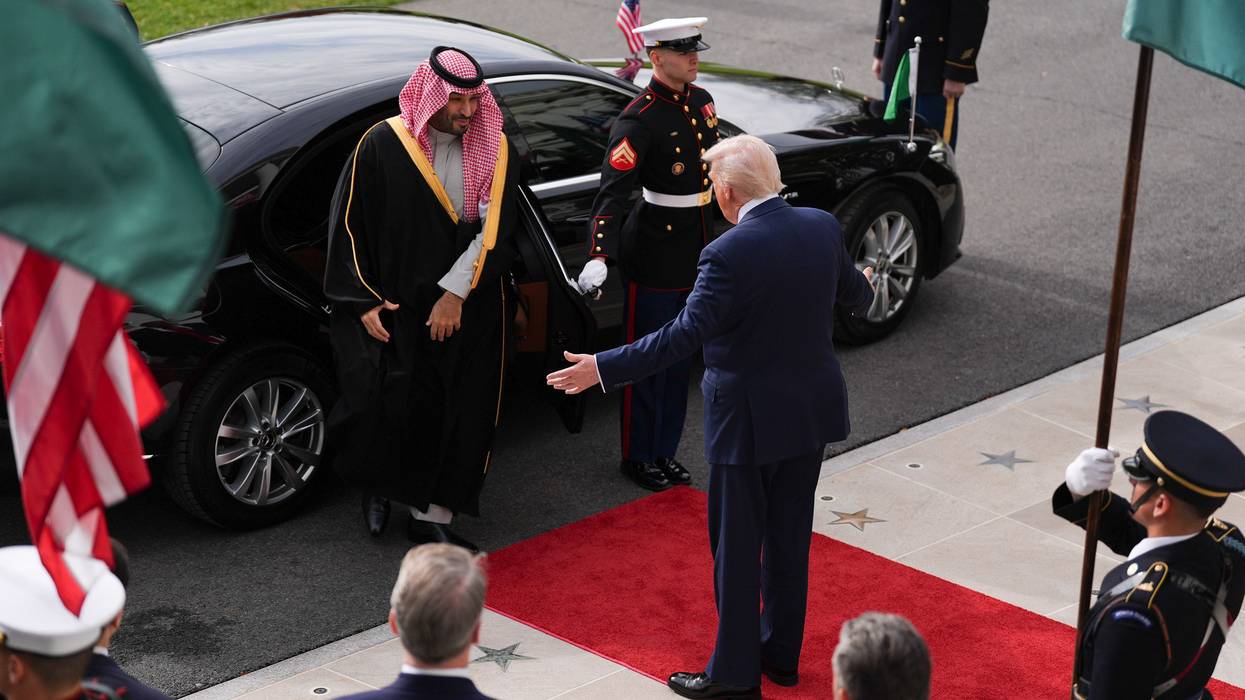
"Trump is prioritizing weapons-contractor profits and his own family’s business interests," said US Rep. Ilhan Omar.
The deputy chair of the Congressional Progressive Caucus said Tuesday that lawmakers should pull out all the stops to prevent US President Donald Trump from selling F-35s to Saudi Arabia following Saudi Crown Prince Mohammed bin Salman's White House visit.
Rep. Ilhan Omar (D-Minn.) called the White House reception for bin Salman, who is commonly known as MBS, a "disgusting display" and a "new low in longstanding US support for the repressive monarchy," pointing to Trump's whitewashing of the crown prince's role in the horrific murder of journalist Jamal Khashoggi in 2018.
Omar also condemned Trump's attack on ABC News reporter Mary Bruce, who asked about Khashoggi's murder during the crown prince's White House visit.
"It is truly disturbing that the president of the United States dismissed Khashoggi’s entrapment, murder, and dismemberment at the hands of MBS' assassins simply as, 'things happen,'" said the Minnesota Democrat.
Omar called on fellow lawmakers to join her in working to block Trump's "reckless and corrupt deals" with the Saudis, including his proposed sale of F-35 fighter jets.
"With announced sales of F-35 warplanes and billions in financial investments, Trump is prioritizing weapons-contractor profits and his own family’s business interests, including Jared Kushner’s private equity firm that took $2 billion from MBS," said Omar, who noted that the Saudis have used US arms to devastating effect in Yemen.
The details of Trump's proposed F-35 sale are not yet fully clear, but the US president indicated on Tuesday that the agreement would not include any conditions. The Saudi regime is one of the world's worst human rights abusers, wielding the death penalty and other repressive tactics to violently crush dissent.
"We’re going to have a deal. They’ve going purchase F-35s," Trump said Tuesday. "They’re buying them from Lockheed and it’s a great plane."
Once Congress is formally notified of the proposed sale, lawmakers will have a limited window to consider a resolution of disapproval that, if passed, would block the transaction.
"While the defense industry and American billionaires will profit handsomely with the gifts Trump is doling out to MBS. The American people will be left holding the bill."
During Tuesday's meeting, Trump announced that his administration has designated Saudi Arabia as a "major non-NATO ally," a status that enhances military cooperation between the two countries. Israel is also a "major non-NATO ally" of the US.
Omar said Tuesday that "no American soldiers may be sent into harm’s way to defend Saudi Arabia" as part of the agreement "without a debate and vote of authorization from Congress."
"My Progressive Caucus colleagues and I are committed to ensuring that this remains the case," she added.
The human rights group DAWN, an organization founded by Khashoggi, also voiced concerns about the security pact, warning in a statement that Trump is working to "protect a reckless, impulsive dictator, all in the interests of personal and corporate gains."
"While the defense industry and American billionaires will profit handsomely with the gifts Trump is doling out to MBS," the group added, "the American people will be left holding the bill."
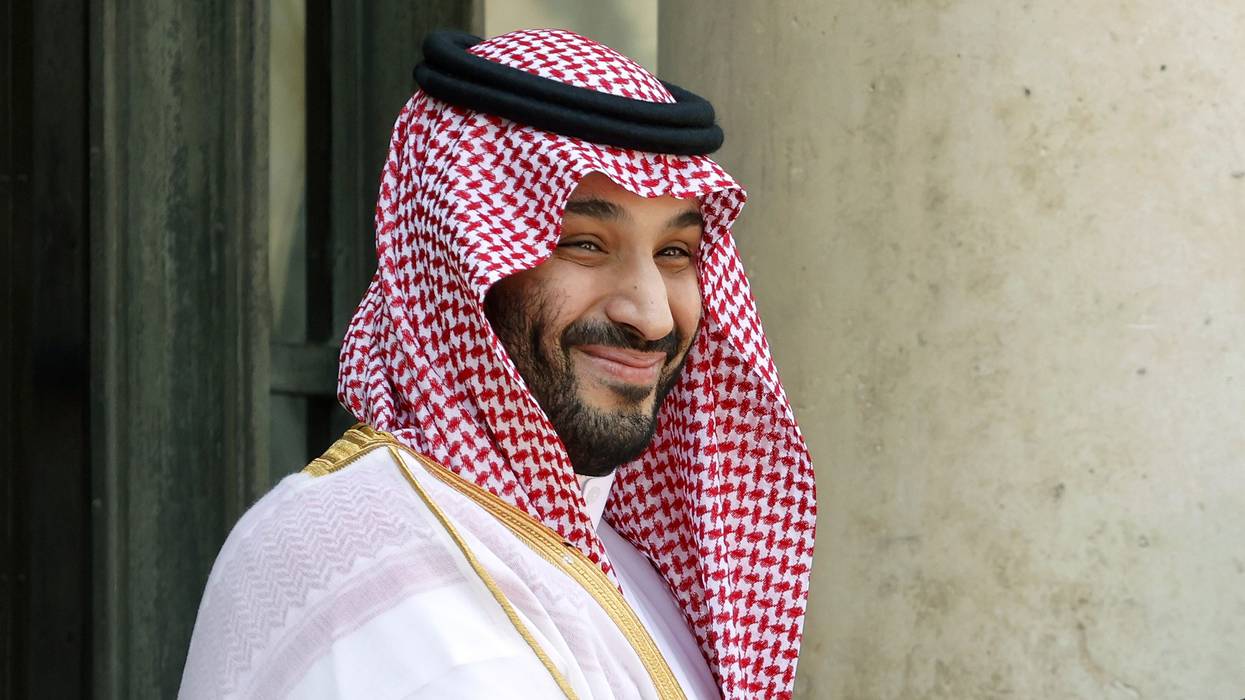
"It's like the tobacco companies that knew the addictive and lethal nature of cigarettes yet continued to get millions of teenagers hooked on them," said one African critic.
With the world hurtling toward catastrophic temperature rise, "Saudi Crown Prince Mohammed bin Salman is overseeing a sweeping global investment program" intended to "ensure that emerging economies across Africa and Asia become vastly more dependent on oil" even as the international community tries to phase out planet-heating fossil fuels.
That's according to a sixth-month undercover investigation by the U.K.'s Center for Climate Reporting (CCR) and Channel 4 News, based on regulatory filings, documents from Saudi officials, and secret recordings.
The findings were published Monday in the leadup to the United Nations Climate Change Conference (COP28) set to kick off Thursday in the United Arab Emirates.
As CCR detailed:
The Oil Demand Sustainability Program (OSP) is a vast government program with dozens of projects aimed at embedding a high-carbon, fossil fuel-dependent development model in countries across Africa and Asia. This includes meticulously researched plans to drive a major increase in gasoline and diesel-fueled vehicles and boost jet fuel sales via increased air travel.
It brings together the most powerful arms of the Saudi state, including the $700 billion Saudi Public Investment Fund; the world's largest oil company, Saudi Aramco; petrochemicals giant, Sabic; and the kingdom's most important ministries—all under the auspices of the crown prince's supreme committee of hydrocarbon affairs.
When asked by an undercover reporter whether the aim of the program is to artificially stimulate oil demand to counter global efforts to reduce oil consumption and tackle climate change, a Saudi official responded: "Yes... it is one of the main objectives that we are trying to accomplish."
Saudi Arabia's Ministry of Energy—which did not respond to a request for comment—mainly "characterizes the OSP as a sustainable development initiative" to aid developing countries, CCR reported.
However, as the center highlighted, key pieces of the kingdom's plot include plans to promote oil-based power generation, deploy petrol and diesel vehicles in Africa and Asia, work with a global auto manufacturer to make a cheap car, lobby against government subsidies for electric vehicles, and fast-track commercial supersonic air travel.
Power Shift Africa director Mohamed Adow told CCR that "the Saudi government is like a drug dealer trying to get Africa hooked on its harmful product. The rest of the world is cleaning up its act and weaning itself off dirty and polluting fossil fuels and Saudi Arabia is getting desperate for more customers and is turning its sights on Africa."
"It's like the tobacco companies that knew the addictive and lethal nature of cigarettes yet continued to get millions of teenagers hooked on them," Adow added, "it's repulsive."
Rapid Transition Alliance coordinator Andrew Simms similarly said on social media, "Straight outta the tobacco companies' playbook."
The Saudi investigation was released on the same day that the center and BBC revealed that Sultan Ahmed Al Jaber, CEO of the UAE's Abu Dhabi National Oil Company and president of COP28, used meetings about the summit to push for foreign fossil fuel deals.
"This undermines essential impartiality and the integrity of the talks, and will accelerate devastating global heating," said the Environmental Justice Foundation, pointing to both revelations. "These backroom deals serve wealthy nations and fossil fuel profiteers at the expense of everyone else."
Also noting both reports, American author and climate activist Bill McKibben wrote Tuesday that "the new documents, which really must be read to be believed, perform the same essential task as the revelations almost a decade ago about Exxon's climate lies. They end any pretense that these countries are engaged in good-faith efforts to wind down the industry."
"It's difficult, I think, to imagine anything much more systemically evil than this spate of bids by the oil companies and oil countries to keep wrecking the planet; it's akin to the way that tobacco companies, facing legal losses in the U.S., pivoted to expand their markets in Asia instead," he added, describing the Saudi plot as "almost cartoonishly villainous."
The kingdom has a long history of impeding climate action—particularly progress at global talks, as three experts laid out in a paper released last week by the Climate Social Science Network at the Institute at Brown for Environment and Society.
"Saudi delegations to the U.N. climate talks are highly skilled, well-organized, and have been extremely successful over decades at slowing the efforts of the world community on climate change to a crawl," the trio wrote. "Saudi Arabia's actions should be seen as part of a wider web of obstruction to an effective response to climate change, which includes fossil fuel industry groups and other (predominantly U.S.-based) political lobbyists and elites, and allied intergovernmental organizations."
As Common Dreams reported last week, the U.N. has allowed at least 7,200 delegates for fossil fuel companies and industry trade groups to attended climate talks since 2003. This year, attendees must disclose their affiliation under new transparency rules.
The summit comes as scientists warn that 2023 is projected to be the hottest year in 125,000 years and currently implemented emissions policies will likely lead to 3°C of temperature rise by the end of the century—or double the 1.5°C goal of the Paris agreement.
"Leaders must act to limit global temperature rise to 1.5°C, protect people from climate chaos, and end the fossil fuel age," United Nations Secretary-General António Guterres declared Monday. "They must make COP28 count."
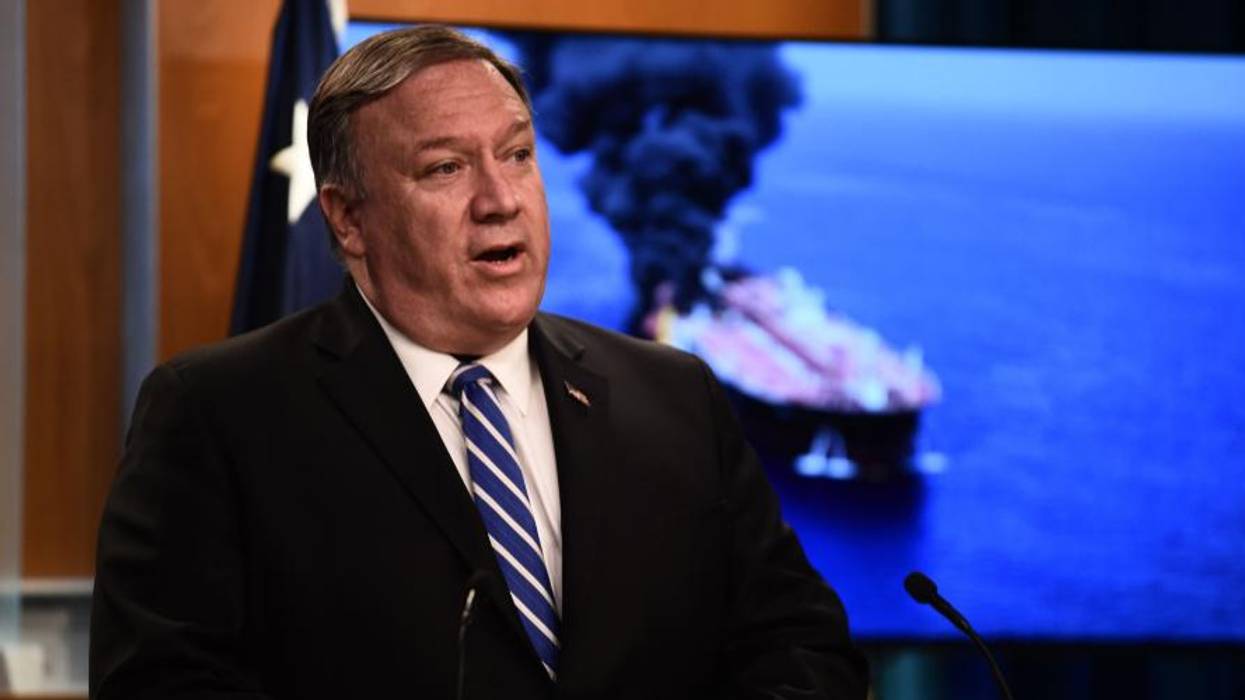
"Astonishing use of 'but' that enables the efforts of the Saudi regime to blame Khashoggi for his own murder," said one journalist.
The widow of murdered Washington Post journalist Jamal Khashoggi on Monday denounced former U.S. Secretary of State Mike Pompeo for his comments about her husband in Pompeo's upcoming memoir, in which he questions Khashoggi's journalism credentials and his allegiances.
As excerpts from Pompeo's book, Never Give an Inch: Fighting for the America I Love, became public a day before its publication date, Hanan Elatr Khashoggi told NBC News she wishes she were able "to silence all of these people who publish books, disparage my husband, and collect money from it."
Elatr Khashoggi fired back after NBC News reported that in Pompeo's book, he writes of Jamal Khashoggi, "He didn't deserve to die, but we need to be clear about who he was—and too many in the media were not."
The book contains accusations that Khashoggi "was cozy with the terrorist-supporting Muslim Brotherhood," alludes to his coverage of and friendship with Osama bin Laden when both were young, and says he was an "activist" rather than a journalist.
Elatr Khashoggi, whom the Saudi national married in 2018 in an Islamic ceremony, told NBC that "Jamal Kashoggi is not part of the Muslim Brotherhood" and that he "always condemned" the September 11, 2001 attacks masterminded by bin Laden.
"Whatever Mike Pompeo mentions about my husband Jamal Khashoggi, he doesn't know my husband," Elatr Khashoggi tweeted.
Khashoggi, who wrote critically of the Saudi government, was killed in October 2018 by a group of assassins in Istanbul. Khashoggi's family sued Saudi Crown Prince Mohammed bin Salman and accused him of personally ordering the execution in 2020, and a United Nations report found that "high-level officials" in Saudi Arabia were responsible for the murder, but last year the Biden administration recommended that bin Salman, as prime minister, be shielded from U.S. lawsuits regarding the case.
While attacking Khashoggi for his loyalties, Pompeo, a Republican who has said he is considering a 2024 presidential run, notes in the book that the U.S. has a "strategic" relationship with the Saudis to consider.
"Shame on you, Mike Pompeo, HarperCollins, and Broadside Books for publishing these lies about my husband," tweeted Elatr Khashoggi.
Update (8:56 pm EST):
Sen. Bernie Sanders on Tuesday night withdrew a Senate resolution to end U.S. involvement in the Saudi-led war on Yemen, but vowed to work with the Biden administration and congressional colleagues to keep trying.
"Today, I withdrew from consideration by the U.S. Senate my War Powers Resolution after the Biden administration agreed to continue working with my office on ending the war in Yemen," Sanders said in a statement.
"Let me be clear," Sanders continued: "If we do not reach agreement, I will, along with my colleagues, bring this resolution back for a vote in the near future and do everything possible to end this horrific conflict."
Earlier:
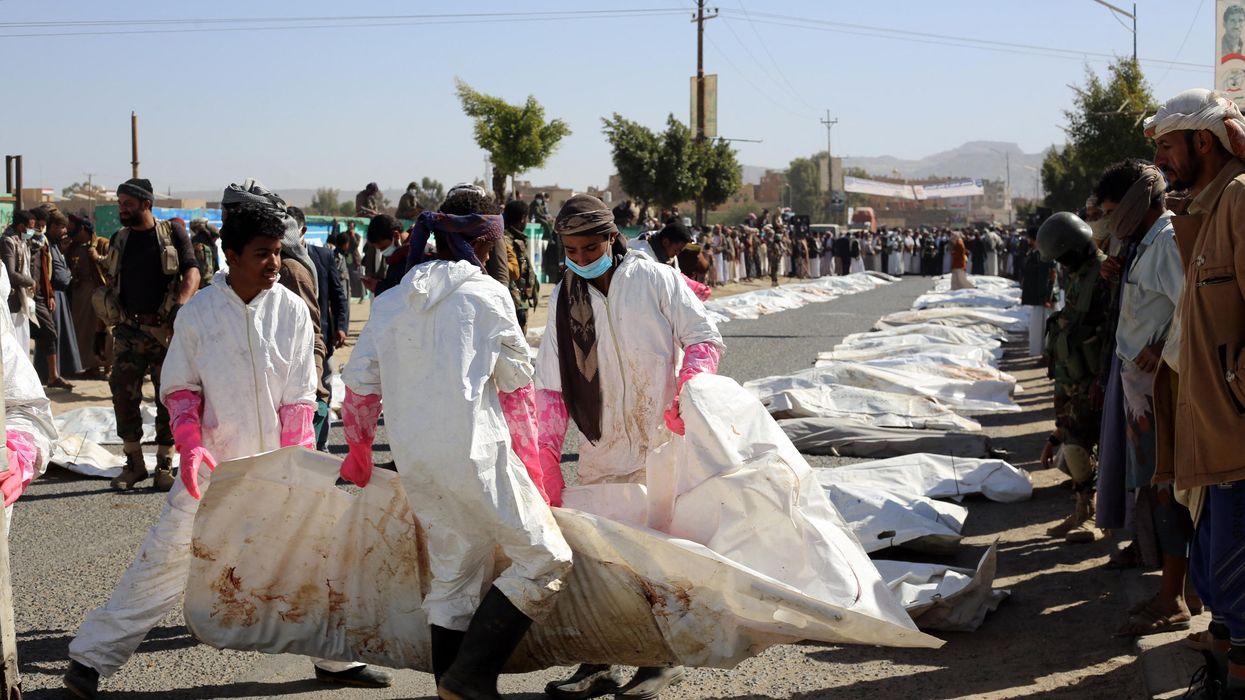
Anticipating an evening Senate vote on a resolution that, if passed, would block American support for the Saudi-led war in Yemen, human rights defenders on Tuesday implored lawmakers to approve the measure and end what they call the United States' unconstitutional participation in the conflict.
"Members of Congress can't afford to punt on this any longer, and grassroots activists won't let them."
"For over seven years, Americans have been providing military support and weapons for Saudi Arabia that the dictatorship has used against civilians in Yemen. Article I of the Constitution says Congress--and not the president--has the power to declare war," wrote progressive activist Isaac Evans-Frantz, a co-leader of a national coalition against the war, in VTDigger Tuesday. "The 1973 War Powers Act further asserts Congress' role."
In July, Sen. Bernie Sanders (I-Vt.), along with Sens. Patrick Leahy (D-Vt.) and Elizabeth Warren (D-Mass.), introduced a Senate war powers resolution (WPR) after a similar measure was put forth in the House by Reps. Peter DeFazio (D-Ore.), Pramila Jayapal (D-Wash.), Nancy Mace (R-S.C.), and Adam Schiff (D-Calif.) the previous month. A procedural vote on the Senate resolution is scheduled for Tuesday at approximately 7:00 pm local time.
"We applaud Sen. Sanders' move to hold a vote on this critical resolution, and encourage all senators to vote in support of the WPR," Cavan Kharrazian, the foreign policy adviser at the advocacy group Demand Progress, said in a statement Tuesday.
Kharrazian noted that President Joe Biden "has said he is looking to work with Congress to hold Saudi Arabia accountable for siding with [Russian President Vladimir] Putin in the war on Ukraine and its oil price hike for the United States."
"The Yemen WPR provides the last clear opportunity for Biden to hold Saudi Arabia accountable on these fronts, and is a direct, measured congressional response to Saudi Arabia and Mohammed bin Salman for their human rights violations, including the murder of journalist Jamal Khashoggi," he added.
The White House, however, is reportedly urging senators to vote down the resolution.
The Saudi-led intervention in support of the Yemeni government against Houthi rebels began several months after civil war broke out in the country in late 2014. According to United Nations humanitarian officials, nearly 400,000 people have died since then, and a Saudi blockade has exacerbated starvation and disease in the country of 30 million people--more than 23 million of whom required assistance in 2022.
Despite a promise to make Saudi Arabia a "pariah" due to its abysmal human rights record, an initial freeze on U.S. arms sales, and a pledge to end "offensive" support for the war, the administration of President Joe Biden--who infamously fist-bumped Saudi Crown Prince Mohammed bin Salman during a July visit--continues to back the war while also selling the repressive kingdom billions of dollars worth of weaponry and services.
In addition to providing intelligence, logistics, refueling, search-and-rescue, and diplomatic support to the Saudi-led coalition, the United States has also conducted more than 100 airstrikes and some ground raids in Yemen as part of its 21-year, open-ended so-called War on Terror.
"When [Donald] Trump was president, Bernie and his Democratic colleagues like Sen. Chris Murphy of Connecticut had no problem going all-out against Trump's support for the Saudi aggression in Yemen," Evans-Frantz said. "With a Democrat in the White House, Congress has been abdicating its constitutional responsibility over war. Congress has competing priorities, but members of Congress can't afford to punt on this any longer, and grassroots activists won't let them."
Indeed, hundreds of advocacy groups and activists have urged lawmakers to pass the Yemen WPR.
"We have a huge opportunity to remove unauthorized U.S. support for deadly and inhumane actions from Saudi Arabia, and Congress must act immediately," Kharrazian asserted. "The ceasefire in Yemen expired in October, and without a renewed peace agreement, Saudi Arabia could resume its bombing campaign in Yemen with crucial, unauthorized U.S. assistance."
"With uncertainty over what legislation will be able to pass in next year's Congress," he added, "this could be the last opportunity to pass the Yemen war powers resolution."

Central banks' unwavering determination to increase interest rates is truly remarkable. In the name of taming inflation, they have deliberately set themselves on a path to cause a recession--or to worsen it if it comes anyway. Moreover, they openly acknowledge the pain their policies will cause, even if they don't emphasize that it is the poor and marginalized, not their friends on Wall Street, who will bear the brunt of it. And in the United States, this pain will disproportionately befall people of color.
As a new Roosevelt Institute report that I co-authored shows, any benefits from the extra interest-rate-driven reduction in inflation will be minimal, compared to what would have happened anyway. Inflation already appears to be easing. It may be moderating more slowly than optimists hoped a year ago--before Russia's war in Ukraine--but it is moderating nonetheless, and for the same reasons that optimists had outlined. For example, high auto prices, caused by a shortage of computer chips, would come down as the bottlenecks were resolved. That has been happening, and car inventories have indeed been rising.
Optimists also expected oil prices to decrease, rather than continuing to increase; that, too, is precisely what has happened. In fact, the declining cost of renewables implies that the long-run price of oil will fall even lower than today's price. It is a shame that we didn't move to renewables earlier. We would have been much better insulated from the vagaries of fossil-fuel prices, and far less vulnerable to the whims of petrostate dictators like Russian President Vladimir Putin and Saudi Arabia's own war-mongering, journalist-murdering leader, Crown Prince Mohammed bin Salman (widely known as MBS). We should be thankful that both men failed in their apparent attempt to influence the US 2022 midterm election by sharply cutting oil production in early October.
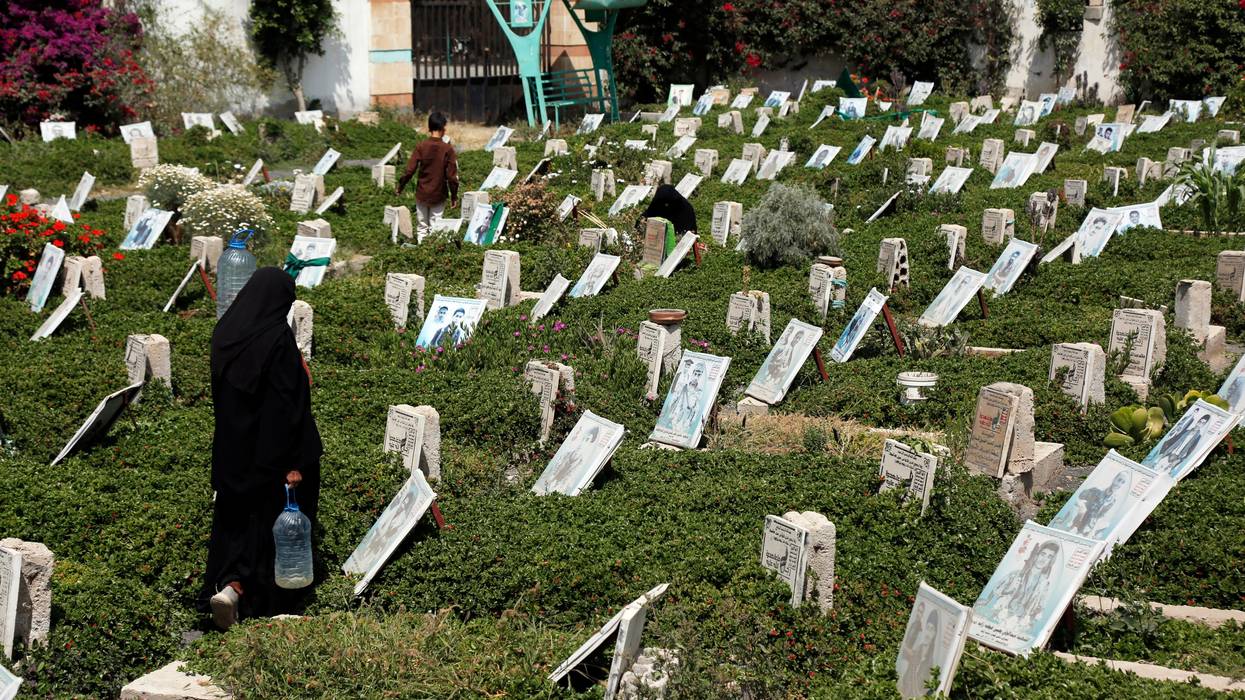
A coalition of more than 100 advocacy, faith-based, and news organizations on Wednesday urged members of Congress to adopt Sen. Bernie Sanders' War Powers Resolution to block U.S. support for the Saudi-led war in Yemen, where the recent expiry of a temporary cease-fire has renewed suffering in one of the world's worst humanitarian crises.
"We, the undersigned 105 organizations, welcomed news earlier this year that Yemen's warring parties agreed to a nationwide truce to halt military operations, lift fuel restrictions, and open Sanaa airport to commercial traffic," the signatories wrote in a letter to congressional lawmakers. "Unfortunately, it's been almost two months since the U.N.-brokered truce in Yemen expired, violence on the ground is escalating, and there is still no formal mechanism preventing a return to all-out war."
"In an effort to renew this truce and further incentivize Saudi Arabia to stay at the negotiating table, we urge you to bring the War Powers Resolutions to end U.S. military participation in the Saudi-led coalition's war on Yemen," the signers added.
In June, 48 bipartisan House lawmakers led by Reps. Peter DeFazio (D-Ore.), Pramila Jayapal (D-Wash.), Nancy Mace (R-S.C.), and Adam Schiff (D-Calif.) introduced a War Powers Resolution to end unauthorized U.S. support for a war in which nearly 400,000 people have been killed.
A Saudi-led blockade has also exacerbated starvation and disease in Yemen, where more than 23 million of the country's 30 million people required some form of assistance in 2022, according to United Nations humanitarian officials.
Sanders (I-Vt.), along with Sens. Patrick Leahy (D-Vt.) and Elizabeth Warren (D-Mass.), introduced a Senate version of the resolution in July, with the two-time Democratic presidential candidate declaring that "we must put an end to the unauthorized and unconstitutional involvement of U.S. armed forces in the catastrophic Saudi-led war in Yemen."
On Tuesday, Sanders said he believes he has enough support to pass a Senate resolution, and that he plans to bring the measure to a floor vote "hopefully next week."
The War Powers Resolution would require only a simple majority to pass in both the House and Senate.
Meanwhile, progressives are pushing President Joe Biden to hold Saudi leaders, especially Crown Prince and Prime Minister Mohammed bin Salman, accountable for atrocities including war crimes in Yemen and the murder of journalist Jamal Khashoggi.
As the groups' letter details:
With continued U.S. military support, Saudi Arabia escalated its campaign of collective punishment on the people of Yemen in recent months... Earlier this year, Saudi airstrikes targeting a migrant detention facility and vital communications infrastructure killed at least 90 civilians, wounded over 200, and triggered a nationwide internet blackout.
After seven years of direct and indirect involvement in the Yemen war, the United States must cease supplying weapons, spare parts, maintenance services, and logistical support to Saudi Arabia to ensure that there is no return of hostilities in Yemen and the conditions remain for the parties to achieve a lasting peace agreement.
In October, Rep. Ro Khanna (D-Calif.) and Sen. Richard Blumenthal (D-Conn.) introduced a bill to block all U.S. weapons sales to Saudi Arabia. After initially freezing arms sales to the kingdom and its coalition partner United Arab Emirates and promising to end all offensive support for the war shortly after taking office, Biden resumed hundreds of millions of dollars in arms and support sales to the countries.
The new letter's signatories include: American Friends Service Committee, Antiwar.com, Center for Constitutional Rights, CodePink, Defending Rights & Dissent, Demand Progress, Democracy for the Arab World Now, Evangelical Lutheran Church in America, Indivisible, Jewish Voice for Peace Action, MADRE, MoveOn, MPower Change, Muslim Justice League, National Council of Churches, Our Revolution, Pax Christi USA, Peace Action, Physicians for Social Responsibility, Presbyterian Church USA, Public Citizen, RootsAction, Sunrise Movement, Veterans for Peace, Win Without War, and World Beyond War.
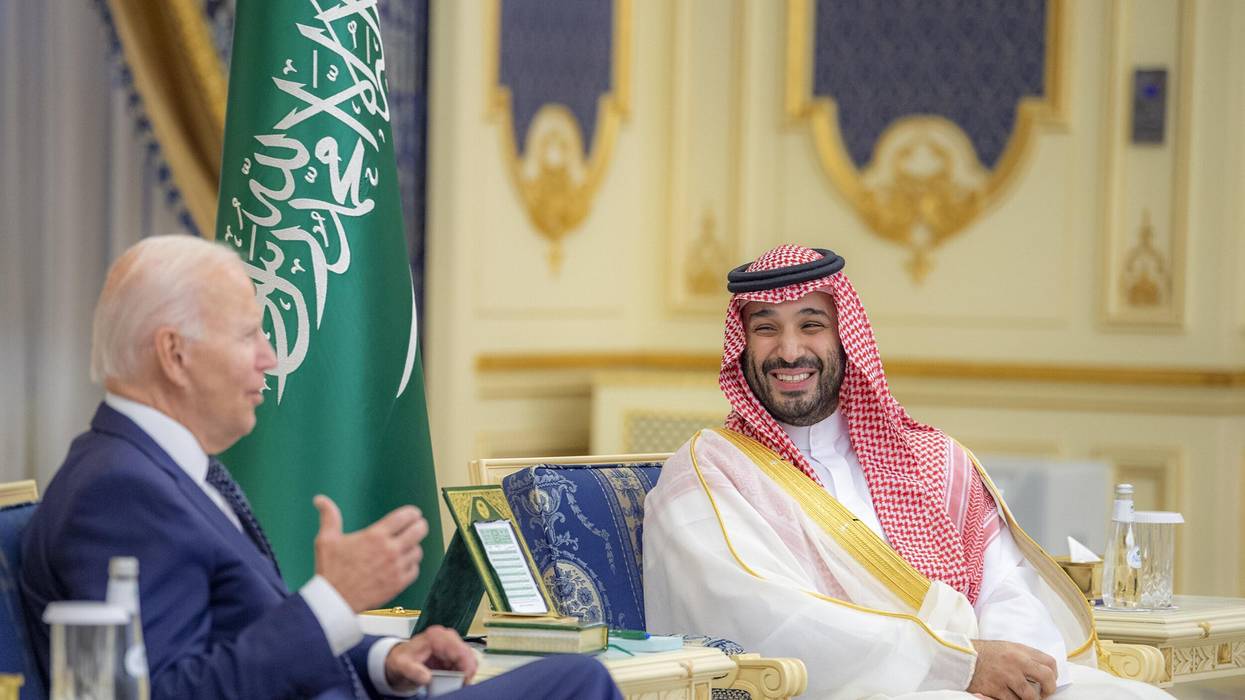
U.S. progressives in recent days have renewed efforts to push President Joe Biden and Congress to hold Saudi Arabia accountable for atrocities including war crimes in Yemen and the murder of journalist Jamal Khashoggi.
"Our foreign policy should not be based on a dependence on oil or the geopolitical whims of foreign despots."
Last week, the Biden administration angered human rights defenders by seeking sovereign immunity status for Saudi Crown Prince and Prime Minister Mohammed bin Salman--commonly called by his initials, MBS--in a lawsuit over the 2018 kidnapping and brutal murder of Khashoggi, a Washington Post columnist with permanent U.S. residency.
Activists were already infuriated with Biden for "letting MBS get away with the murder," as one writer put it, as well as for his summer summit and infamous fist-bump with the crown prince, and for continuing to support the Saudi-led war in Yemen after an initial temporary freeze on arms sales.
"President Biden vowed to hold accountable Saudi ruler MBS for Khashoggi's murder by making him a 'pariah,' and Congress should help Biden keep his word by passing a War Powers Resolution that cuts off U.S. support for the Saudi war in Yemen," David Segal, executive director of the online-intensive activist group Demand Progress, said in a statement Tuesday.
"Saudi Arabia is controlled by an outlaw regime, as demonstrated by the murder of a U.S.-based journalist and by deliberately holding down oil production to support Russia's illegal war in Ukraine," Segal added. "The United States should no longer prop up that regime's unconscionable war in Yemen that killed nearly 400,000 people, including untold children."
Additionally, a Saudi-led blockade has exacerbated starvation and disease in Yemen. Of Yemen's approximately 30 million people, more than 23 million required some form of assistance in 2022, according to United Nations humanitarian officials.
In June, 48 bipartisan U.S. House lawmakers introduced a War Powers Resolution to end the nation's unauthorized involvement in the Saudi-led war. The following month, Sens. Bernie Sanders (I-Vt.), Patrick Leahy (D-Vt.), and Elizabeth Warren (D-Mass.) proposed a similar measure in the upper chamber.
Interviewed for an Intercept article published on Monday, U.S. Rep. Ilhan Omar (D-Minn.)--one of the 48 co-sponsors of the House resolution--asserted that "our foreign policy should not be based on a dependence on oil or the geopolitical whims of foreign despots. It should be based on the rule of law and human rights."
Omar and Rep. Joaquin Castro (D-Texas) led a letter signed last week by 13 House Democrats to Secretary of State Antony Blinken "to express our strong support for the United States to use its influence at the United Nations Human Rights Council to work towards the establishment of an independent, international investigative mechanism on Yemen at the earliest opportunity."
"This new mechanism should have the authority to collect and preserve evidence of violations for future consideration, by competent judicial authorities, of possible crimes committed by all parties to the conflict," the lawmakers' letter added. "Having an international mechanism would play a crucial role in ensuring accountability for the atrocities that have taken place for more than a decade in Yemen."
Omar contended that "true peace demands justice" and that "international institutions have a responsibility to account for any and all atrocities that took place in Yemen, and the United States has a responsibility to advocate for them."
"Truly centering human rights and a rules-based order in our foreign policy," she added, "requires full accountability when those rights are violated."
Joey Shea, a researcher on Saudi Arabia and the United Arab Emirates at Human Rights Watch, noted Monday that Biden's July meeting with bin Salman "was followed by an uptick in serious violations of human rights by Saudi authorities."
"In August, a Saudi appeals court dramatically increased the prison sentence of Saudi doctoral student Salma al-Shehab from six years to 34 years, based solely on her Twitter activity," she continued. "Other people--including at least one U.S. citizen--critical of the Saudi government on social media have received extreme prison sentences from Saudi courts."
"Biden's campaign promise to make Saudi authorities 'pay the price' for Khashoggi's heinous murder has not been met," Shea added. "Absent real sanctions against the Saudi government for its transnational repression, MBS will read U.S. policy as a 'green light' to continue committing abuses at home and abroad while enjoying generous U.S. military, diplomatic, and political support."

U.S. Sen. Tim Kaine on Friday sharply criticized President Joe Biden's administration for claiming in a federal court filing that Saudi Crown Prince Mohammed bin Salman "enjoys head-of-state immunity" in a civil case brought by the fiancee of murdered journalist Jamal Khashoggi.
The Virginia Democrat is a member of the Senate Foreign Relations Committee, chairs its subcommittee on human rights, and has been outspoken about the 2018 killing of Khashoggi, who lived in his state but disappeared after entering the Saudi consulate in Istanbul, Turkey.
"I am deeply disappointed in the State Department's decision to intervene in a federal lawsuit filed by the friends and family of Virginia resident and Washington Post journalist Jamal Khashoggi against Saudi defendants responsible for his gruesome execution," Kaine said. "President Biden has been very clear about this horrific crime. He declared in 2019: 'It was flat-out murder... We should treat it that way and there should be consequences.'"
Using the Saudi prime minister's nickname, the senator highlighted that "despite the U.S. intelligence community concluding that MBS approved the execution of Khashoggi, the Biden administration has imposed no direct consequences on the crown prince."
According to Kaine:
As disappointing as it is that the U.S. has been unwilling to hold MBS to account for the assassination of a U.S.-resident journalist, last night's announcement by the State Department is even more egregious. The case is a civil suit filed by the friends and family of Khashoggi in the hopes of acquiring even a modicum of justice from the Saudi defendants. The U.S. is not a party to the case. The Saudi defendants have full opportunity to defend their own actions in the federal proceedings.
The court offered the administration the option to express an opinion on the question of whether sovereign immunity doctrines protect MBS from the suit. The administration had no duty to take a proactive position and could have simply refrained from doing so. Instead, it has chosen to take the side of the party that our own intelligence agencies have concluded is responsible for the murder, and is standing against family members seeking recompense for this gross injustice.
"Why has the administration changed its view from the strong moral stance taken by the president in 2019?" Kaine asked. "Is the administration casting aside its confidence in its own intelligence community's judgment?"
"If the friends and family of Khashoggi are denied a path to accountability in the American court system, where in the world can they go?" he continued. "How can the U.S. look at any dictator in the world who is oppressing journalists and urge good behavior when we refuse to impose accountability for a shocking murder of an American-based journalist and even take affirmative steps to block efforts by the victim's friends and families to seek justice?"
Kaine was far from alone in expressing outrage over the State Department's decision. Hatice Cengiz, Khashoggi's fiancee, and human rights advocates around the world also condemned it.
Karen Attiah, who recruited the late journalist as a columnist for the Post, tweeted that "the Biden administration has failed all of us who fought for justice for Jamal Khashoggi. To shield the Crown Prince MBS from lawsuits is a disgusting betrayal."
"If you have enough money and power and are U.S. 'ally' you can get away with basically anything," she added. "And they release this news on a Thursday night before a major holiday weekend... as Twitter goes under. Cowards."

The Biden administration said in a U.S. federal court filing on Thursday that Saudi Crown Prince Mohammed bin Salman should be granted sovereign immunity in a civil case brought by the fiancee of murdered journalist Jamal Khashoggi, a stance that human rights advocates condemned as a betrayal of the president's vow to hold the Saudi leader accountable.
Lawyers for the U.S. Department of Justice wrote in the new filing that the White House "has determined that Defendant bin Salman, as the sitting head of a foreign government, enjoys head-of-state immunity from the jurisdiction of U.S. courts as a result of that office and is entitled to immunity from the court's jurisdiction of this suit while he holds that office."
"It's impossible to read the Biden administration's move today as anything more than a capitulation to Saudi pressure tactics."
Hatice Cengiz, Khashoggi's fiancee, tweeted in response to the Justice Department's filing that "Jamal died again today."
While the Biden administration's intervention is non-binding, it will likely spell an end to the case, which sought "significant" monetary damages as well as "discovery from American law enforcement, intelligence, and administration officials to prove that the extrajudicial killing of Mr. Khashoggi was ordered from the top of the Saudi leadership hierarchy."
Rights groups pointed out that while bin Salman, commonly known as MBS, has been the de facto ruler of Saudi Arabia for years, his formal status as the country's prime minister--a position traditionally held by the king--was enshrined less than two months ago in what observers called an apparent scheme to ensure his immunity from legal action.
"It's impossible to read the Biden administration's move today as anything more than a capitulation to Saudi pressure tactics, including slashing oil output to twist our arms to recognize MBS' fake immunity ploy," said Sarah Leah Whitson, executive director of Democracy for the Arab World Now (DAWN), a group that Khashoggi founded.
"Rather than rewarding MBS with impunity for his merciless crimes, Biden should have stood up for American values and legal principles," Whitson added. "Whether or not MBS succeeds in worming out of this lawsuit, we will extract in discovery against his co-defendants every last bit of evidence about his role in this murders. Try as he might, he will not succeed in burying his crime."
A U.S. intelligence report released last year determined that MBS "approved an operation in Istanbul, Turkey to capture or kill" Khashoggi, but the Biden administration has yet to take any steps to punish the crown prince directly despite U.S. President Joe Biden's campaign promise to make Saudi leaders "pay the price" for Khashoggi's murder.
Lina al-Hathloul, head of monitoring and communications for the advocacy group ALQST and the sister of Saudi women's rights activist Loujain al-Hathloul, warned that the Biden administration's decision "will empower a regime that punishes its own citizens and U.S. citizens alike."
"Granting immunity is not only morally deplorable, but will also put the world on notice that America does not back up its words with action," al-Hathloul said.
In a letter accompanying the Justice Department's Thursday filing, State Department legal adviser Richard Visek insisted that the administration's position in the civil lawsuit against MBS and his co-conspirators has nothing to do with the "merits" of the legal challenge. Visek also reiterated the State Department's "unequivocal condemnation of the heinous murder of Jamal Khashoggi."
But the Biden administration was not required to express its view on whether MBS should be immune from legal action in U.S. courts. As DAWN noted in a press release, "Neither the Trump nor Biden administrations previously had agreed to Saudi government demands to suggest immunity for MBS in multiple lawsuits pending against him in the United States."
"The Biden administration's decision to suggest immunity for MBS in our lawsuit was an unnecessary, elective action that will serve only to undermine the most important action for accountability for Khashoggi's heinous murder," Whitson said. "It's beyond ironic that President Biden has single-handedly assured MBS can escape accountability when it was President Biden who promised the American people he would do everything to hold him accountable. Not even the Trump administration did this."
Khalid Aljabri, a U.S.-based doctor whose two siblings are currently political prisoners in Saudi Arabia, argued that "instead of siding with MBS and allowing him to manipulate the U.S. judicial system by title-washing his crimes, the Biden administration should have remained neutral and left it to the court to decide whether MBS deserves immunity or not."
"After breaking its pledge to punish MBS for Khashoggi's assassination," Aljabri continued, "the Biden administration has not only shielded MBS from accountability in U.S. courts, but has effectively issued him a license to kill more detractors and declared that he will never be held accountable."

President Joe Biden has a lot of reasons to be furious with his national security team who, against his better judgment, systematically pressured him for 18 months to do an about-face on Saudi Arabia.
The White House has reportedly been in a state of "spasm and panic" since Wednesday, when it became clear that several of the U.S.'s Persian Gulf partners, led by Saudi Arabia and the United Arab Emirates, were set to commit what the White House considered "a hostile act": an extensive cut in oil production coordinated with Russia's Vladimir Putin, which will send oil prices soaring and very likely harm Democrats in the U.S. midterm elections in November.
In response to the American president bending the knee to him (who can forget the infamous fist bump), MBS put a dagger in Biden's back.
Instead of pressing the kingdom to stop undermining U.S. interests, Biden was told to mend fences with Saudi Crown Prince Mohammed bin Salman. In response to the American president bending the knee to him (who can forget the infamous fist bump), MBS put a dagger in Biden's back.
The Saudi-led cut is particularly disastrous because it is far more aggressive than what the members of OPEC+ had been signaling. The impact will not only fall heavily on the U.S. and global economies, but it will also bleed into other areas of geopolitical importance: Higher oil prices could help Russia finance its war on Ukraine and possibly also weaken the resolve of countries supporting Ukraine, particularly European powers.
A distressed White House had little choice but to admit that Saudi Arabia and other U.S. partners in the Persian Gulf were "aligning with Russia."
This is precisely what I, and many other observers of the Middle East, predicted would happen. In June, I wrote: "The most likely outcome of Biden's meeting with the crown prince is that Saudi Arabia and the UAE will pocket Biden's many concessions and offer tactical collaboration against Russia and China in the short run, while keeping their options open to betray Washington down the road."
It appears MBS deliberately provided Biden with a false sense of security by offering a slight increase in oil production in July, only to stab him in the back months later with a massive production cut at a time when Biden was most vulnerable.
The irony is that Biden initially did not want to travel to Saudi Arabia and had no inclination to appease the Saudi dictator. The trip, and the entire idea that appeasing Riyadh was a strategic imperative, shows a clear lack of imagination in U.S. policy when it comes to the Middle East. Brett McGurk, the national security council director for the Middle East explained in November 2021 that Biden aims to bring U.S. foreign policy "back to its basics" in the Middle East rather than rethinking it more fundamentally.
Pulling off the Saudi trip was a "herculean effort," according to one U.S. official, which entailed weekly meetings with national security adviser Jake Sullivan. McGurk also played a crucial role in convincing the president that America had no choice but to embrace the Saudis.
Instead of his advisers, Biden should have listened to the American people.
Throughout it all, it was Biden himself who was reportedly the "biggest hurdle." Even after he had approved the about-face, he publicly remained hesitant and uncomfortable, going as far as to deny that there actually would be a meeting between him and MBS. "I'm not going to meet with MBS," Biden told reporters on June 17. "I'm going to an international meeting. And he's going to be a part of it." Yet once in Saudi Arabia, MBS ended up serving as Biden's escort throughout most of the visit, which must have been embarrassing to Biden.
Biden should have stuck to his instincts. None of the arguments in favor of appeasing the Saudis were convincing. He never had a realistic chance of persuading the Saudis to increase oil production in a meaningful way. Integrating Israel into the Middle East without ending Israel's occupation of Palestinian territories would not stabilize the region. Appeasing MBS would not solidify a delicate cease-fire between Saudi Arabia and Yemen in the long term (the truce collapsed earlier this week). Nor could Biden convince the Saudis and Emiratis to align themselves closer to the U.S. against Russia and China without offering them rock-solid security guarantees, which would run completely counter to U.S. interests.
Instead of his advisers, Biden should have listened to the American people. Fewer than one-quarter of Americans supported the idea of the president going to Saudi Arabia.
In some quarters on Capitol Hill, patience is now running out with Biden's Middle East policy. Several Hill staffers I spoke to Wednesday were furious about this predictable fiasco and expressed support for a shake-up in Biden's national security team. Two lawmakers have already prepared a response; New Jersey Democrat Rep. Tom Malinowski tweeted that "this is a hostile act by Saudi Arabia and the UAE, designed to hurt the United States and our allies and to help Russia, despite President Biden's overtures," adding that he and Rep. Sean Casten will be introducing legislation calling for the U.S. to withdraw our troops from Saudi Arabia and the UAE.
Now, that is advice Biden would be wise to take.