

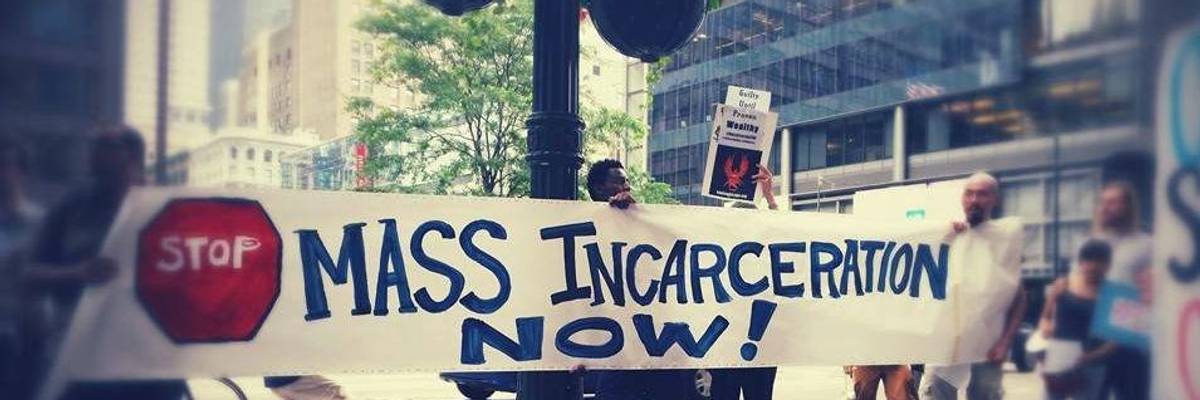
The mass incarceration system has relied on the same kind of dehumanizing language to sustain and legitimize its abuses.
How Dehumanizing Language Fuels Mass Incarceration
Projects to dismantle the system of mass incarceration must exist alongside a concerted effort to restore the humanity of incarcerated people, formerly incarcerated people, and other justice-involved people.
The late Eddie Ellis was a leading voice in the movement for human rights, as both the founder for the Center for NuLeadership on Urban Solutions and an internationally recognized scholar on prison policy. Imprisoned for a quarter-century (on a charge for which he maintained his innocence), Ellis earned two Associates Degrees, a Bachelor of Science degree, and a Masters Degree while incarcerated. "An Open Letter to Our Friends on the Question of Language"--Ellis's letter on the dangerous effects of criminalizing and dehumanizing language--remains an influential text for those committed to ending mass incarceration and transforming the justice system.
"We habitually underestimate the power of language," he writes in the letter. Ellis understood better than most how language can be both a means of liberation and a tool of oppression.
Throughout history, dehumanizing language has been used to justify terrible acts of violence. During World War II, Nazi Germany used the term mischling, which roughly translates to "mongrel," to legally classify people of part-Jewish ancestry. Following the war, the term was used for babies born to non-white soldiers and German women. During the Rwandan genocide, Tutsi people were regularly referred to as inyenzi, or cockroaches.
Words like felon, convict, criminal, prisoner, offender, and perpetrator create a paradigm where the person is removed from the equation and individuals are defined by a single experience.
The mass incarceration system has relied on the same kind of dehumanizing language to sustain and legitimize its abuses. Words like felon, convict, criminal, prisoner, offender, and perpetrator create a paradigm where the person is removed from the equation and individuals are defined by a single experience. These labels ignore the social, economic, and political drivers of mass incarceration and deprive people of their complex identities. They make reentry into society increasingly difficult due to stigmas and prejudices associated with these labels.
Kevin Richardson, speaking years later on his wrongful conviction in the Central Park Five case, said "People called us animals, wolf pack. It still hurts me emotionally." Donald Trump took out full-page ads in four New York City newspapers calling for the death penalty for the five Black teenagers. Even after they were vindicated by DNA evidence, Trump has continued to use dehumanizing language on social media to attack the exonerated men.
Numerous studies have been published showing how dehumanizing language alters the way we view and treat people. A 2017 study found a rise in hostile sexist attitudes after exposing people to language that compared women to animals. A 2015 study found that dehumanizing language toward people of Arab identity "strongly predicts support for aggressive actions like torture and retalitory violence."
"If we cannot persuade you to refer to us, and think of us, as people, then all our other efforts at reform and change are seriously compromised," wrote Ellis.
Decarceration advocates must hold policymakers, media outlets, and public figures accountable for promoting a language that allows for shifts in the broader consciousness. They must be just as committed to laying the groundwork for the future as they are in changing the policies of today. Language has the power to transform the larger narrative, so that the reforms we fight for create space for new possibilities--and are not simply rolled back as soon as a new administration comes in, as we have seen time and time again.
An Urgent Message From Our Co-Founder
Dear Common Dreams reader, It’s been nearly 30 years since I co-founded Common Dreams with my late wife, Lina Newhouser. We had the radical notion that journalism should serve the public good, not corporate profits. It was clear to us from the outset what it would take to build such a project. No paid advertisements. No corporate sponsors. No millionaire publisher telling us what to think or do. Many people said we wouldn't last a year, but we proved those doubters wrong. Together with a tremendous team of journalists and dedicated staff, we built an independent media outlet free from the constraints of profits and corporate control. Our mission has always been simple: To inform. To inspire. To ignite change for the common good. Building Common Dreams was not easy. Our survival was never guaranteed. When you take on the most powerful forces—Wall Street greed, fossil fuel industry destruction, Big Tech lobbyists, and uber-rich oligarchs who have spent billions upon billions rigging the economy and democracy in their favor—the only bulwark you have is supporters who believe in your work. But here’s the urgent message from me today. It's never been this bad out there. And it's never been this hard to keep us going. At the very moment Common Dreams is most needed, the threats we face are intensifying. We need your support now more than ever. We don't accept corporate advertising and never will. We don't have a paywall because we don't think people should be blocked from critical news based on their ability to pay. Everything we do is funded by the donations of readers like you. When everyone does the little they can afford, we are strong. But if that support retreats or dries up, so do we. Will you donate now to make sure Common Dreams not only survives but thrives? —Craig Brown, Co-founder |
The late Eddie Ellis was a leading voice in the movement for human rights, as both the founder for the Center for NuLeadership on Urban Solutions and an internationally recognized scholar on prison policy. Imprisoned for a quarter-century (on a charge for which he maintained his innocence), Ellis earned two Associates Degrees, a Bachelor of Science degree, and a Masters Degree while incarcerated. "An Open Letter to Our Friends on the Question of Language"--Ellis's letter on the dangerous effects of criminalizing and dehumanizing language--remains an influential text for those committed to ending mass incarceration and transforming the justice system.
"We habitually underestimate the power of language," he writes in the letter. Ellis understood better than most how language can be both a means of liberation and a tool of oppression.
Throughout history, dehumanizing language has been used to justify terrible acts of violence. During World War II, Nazi Germany used the term mischling, which roughly translates to "mongrel," to legally classify people of part-Jewish ancestry. Following the war, the term was used for babies born to non-white soldiers and German women. During the Rwandan genocide, Tutsi people were regularly referred to as inyenzi, or cockroaches.
Words like felon, convict, criminal, prisoner, offender, and perpetrator create a paradigm where the person is removed from the equation and individuals are defined by a single experience.
The mass incarceration system has relied on the same kind of dehumanizing language to sustain and legitimize its abuses. Words like felon, convict, criminal, prisoner, offender, and perpetrator create a paradigm where the person is removed from the equation and individuals are defined by a single experience. These labels ignore the social, economic, and political drivers of mass incarceration and deprive people of their complex identities. They make reentry into society increasingly difficult due to stigmas and prejudices associated with these labels.
Kevin Richardson, speaking years later on his wrongful conviction in the Central Park Five case, said "People called us animals, wolf pack. It still hurts me emotionally." Donald Trump took out full-page ads in four New York City newspapers calling for the death penalty for the five Black teenagers. Even after they were vindicated by DNA evidence, Trump has continued to use dehumanizing language on social media to attack the exonerated men.
Numerous studies have been published showing how dehumanizing language alters the way we view and treat people. A 2017 study found a rise in hostile sexist attitudes after exposing people to language that compared women to animals. A 2015 study found that dehumanizing language toward people of Arab identity "strongly predicts support for aggressive actions like torture and retalitory violence."
"If we cannot persuade you to refer to us, and think of us, as people, then all our other efforts at reform and change are seriously compromised," wrote Ellis.
Decarceration advocates must hold policymakers, media outlets, and public figures accountable for promoting a language that allows for shifts in the broader consciousness. They must be just as committed to laying the groundwork for the future as they are in changing the policies of today. Language has the power to transform the larger narrative, so that the reforms we fight for create space for new possibilities--and are not simply rolled back as soon as a new administration comes in, as we have seen time and time again.
The late Eddie Ellis was a leading voice in the movement for human rights, as both the founder for the Center for NuLeadership on Urban Solutions and an internationally recognized scholar on prison policy. Imprisoned for a quarter-century (on a charge for which he maintained his innocence), Ellis earned two Associates Degrees, a Bachelor of Science degree, and a Masters Degree while incarcerated. "An Open Letter to Our Friends on the Question of Language"--Ellis's letter on the dangerous effects of criminalizing and dehumanizing language--remains an influential text for those committed to ending mass incarceration and transforming the justice system.
"We habitually underestimate the power of language," he writes in the letter. Ellis understood better than most how language can be both a means of liberation and a tool of oppression.
Throughout history, dehumanizing language has been used to justify terrible acts of violence. During World War II, Nazi Germany used the term mischling, which roughly translates to "mongrel," to legally classify people of part-Jewish ancestry. Following the war, the term was used for babies born to non-white soldiers and German women. During the Rwandan genocide, Tutsi people were regularly referred to as inyenzi, or cockroaches.
Words like felon, convict, criminal, prisoner, offender, and perpetrator create a paradigm where the person is removed from the equation and individuals are defined by a single experience.
The mass incarceration system has relied on the same kind of dehumanizing language to sustain and legitimize its abuses. Words like felon, convict, criminal, prisoner, offender, and perpetrator create a paradigm where the person is removed from the equation and individuals are defined by a single experience. These labels ignore the social, economic, and political drivers of mass incarceration and deprive people of their complex identities. They make reentry into society increasingly difficult due to stigmas and prejudices associated with these labels.
Kevin Richardson, speaking years later on his wrongful conviction in the Central Park Five case, said "People called us animals, wolf pack. It still hurts me emotionally." Donald Trump took out full-page ads in four New York City newspapers calling for the death penalty for the five Black teenagers. Even after they were vindicated by DNA evidence, Trump has continued to use dehumanizing language on social media to attack the exonerated men.
Numerous studies have been published showing how dehumanizing language alters the way we view and treat people. A 2017 study found a rise in hostile sexist attitudes after exposing people to language that compared women to animals. A 2015 study found that dehumanizing language toward people of Arab identity "strongly predicts support for aggressive actions like torture and retalitory violence."
"If we cannot persuade you to refer to us, and think of us, as people, then all our other efforts at reform and change are seriously compromised," wrote Ellis.
Decarceration advocates must hold policymakers, media outlets, and public figures accountable for promoting a language that allows for shifts in the broader consciousness. They must be just as committed to laying the groundwork for the future as they are in changing the policies of today. Language has the power to transform the larger narrative, so that the reforms we fight for create space for new possibilities--and are not simply rolled back as soon as a new administration comes in, as we have seen time and time again.