SUBSCRIBE TO OUR FREE NEWSLETTER
Daily news & progressive opinion—funded by the people, not the corporations—delivered straight to your inbox.
5
#000000
#FFFFFF
To donate by check, phone, or other method, see our More Ways to Give page.
Daily news & progressive opinion—funded by the people, not the corporations—delivered straight to your inbox.
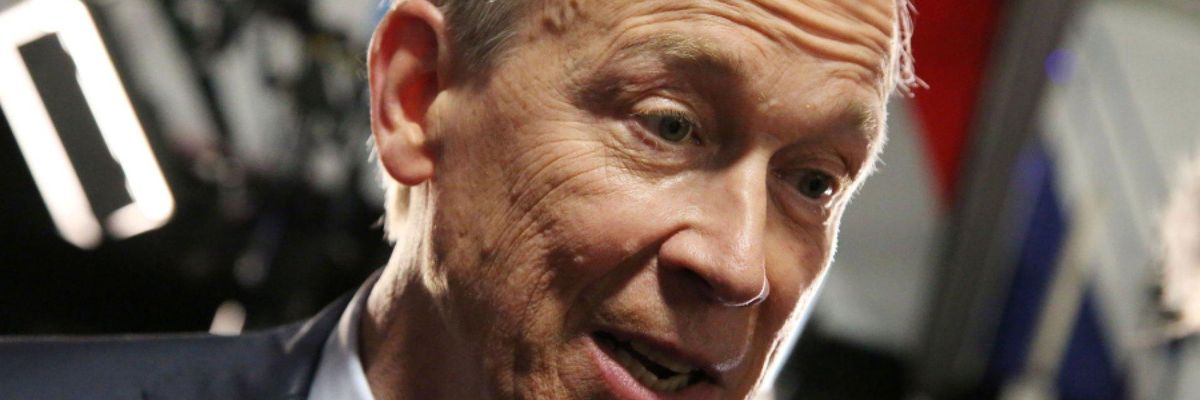
The tweet seems harmless enough, on the surface. The Democratic Senatorial Campaign Committee's account slapped its logo atop a John Hickenlooper for Colorado ad and gave the presidential dropout a big thumbs up.
Hickenlooper, the DSCC wrote, "is running against Cory Gardner--the most vulnerable Republican up in 2020! If we want to end the gridlock, cut the costs of health care and prescription drugs, and act on climate -- we need to flip this #COSen seat."
The Democratic Party endorsing a former Democratic governor in a Senate race may not sound like a headline. Still, it's one of those "Why do they have to be such dicks?" moves that leads progressives to think the Party is thumbing the scale against them.
The tweet seems harmless enough, on the surface. The Democratic Senatorial Campaign Committee's account slapped its logo atop a John Hickenlooper for Colorado ad and gave the presidential dropout a big thumbs up.
Hickenlooper, the DSCC wrote, "is running against Cory Gardner--the most vulnerable Republican up in 2020! If we want to end the gridlock, cut the costs of health care and prescription drugs, and act on climate -- we need to flip this #COSen seat."
The Democratic Party endorsing a former Democratic governor in a Senate race may not sound like a headline. Still, it's one of those "Why do they have to be such dicks?" moves that leads progressives to think the Party is thumbing the scale against them.
Hickenlooper had people booing the words "public option." It was like watching the Unknown Comic address the Bundestag. There are Democrats who are uninspiring on the stump, but Hickenlooper is one of the party's few outright gong acts with liberal voters.
Still, why not run for Senate, in a race Democrats desperately need if they want to regain the chamber? One reason might be that as recently as February, Hickenlooper gave a speech in which he said, "I'm not cut out to be a Senator." Apparently, he has too much of an executive temperament for the job.
Despite this, and despite the fact that Hickenlooper's in-state approval rating has plunged eight points since his punchline presidential run, the party is backing him against a large field of primary contenders that includes former Colorado House Speaker Andrew Romanoff. Doing so sets up the Colorado Democratic primary to be a flashpoint contest similar to the Connecticut Senate primary of 2006, with Hickenlooper as the V-neck sweatered analog to Joe Lieberman.
Back then, Lieberman's bomb-happy advocacy for the War on Terror created an open party schism. Antiwar Democrats were forced to challenge Lieberman via the candidacy of Ned Lamont, winning a primary thanks largely to grassroots and Internet advocacy.
The party and much of the national punditocracy responded with horror to Lamont's 2006 primary win. David Brooks of the New York Times famously said it proved "Polarized primary voters shouldn't be allowed to define the choices in American politics."
Though Lieberman ultimately retained his seat by running as an independent, the 2006 Connecticut primary standoff showed support of the Iraq war was no longer a tenable position within the Democratic electorate. This began a change in party consensus on that issue (even if the Democrats remain divided on the issue of military intervention overall).
A similar situation is developing with regard to climate issues. While Green New Deal proposals and urgent climate action are popular with Democratic voters, neither the party itself nor much of the national press seem to have warmed up to the idea. The unspoken logic behind backing Hickenlooper is that name recognition and proven fundraising ability trump all in tossup races.
On the other hand, Colorado is now a solidly a blue state. The incumbent Senator Cory Gardner is its only statewide office-holding Republican. Polls suggest any Colorado Democrat would fare well against Gardner, among the more unpopular Senators. The state just elected a very liberal governor. If ever there were a time to observe the Prime Directive of non-interference, it would be in a Colorado Senate race.
Outright endorsements by the DSCC in primaries are not common, but when they have happened, the beneficiary tends to be the party's idea of an "electable" moderate. In 2016, the committee backed Katie McGinty over John Fetterman in Pennsylvania. She lost to Republican Patrick Toomey. This year it has backed several "moderates" already, including Nancy Pelosi acolyte Ben Ray Lujan in New Mexico against Maggie Oliver. (Both candidates back the Green New Deal and Medicare for All.)
The endorsement of Hickenlooper would have made sense under back when politicians who took gobs of industry money could believably market themselves as moderates or centrists. Today, voters see corporate donations as competition. They don't want to share political leaders with oil and gas companies, or health insurance companies, or weapons contractors.
By deciding to publicly back Hickenlooper, who has a history of lavish support from energy companies, the Democratic Party is making a statement about what side of the corporate donation argument it backs. It seems determined to sink or swim with its Hickenloopers and Joe Manchins, continuing to push the unconvincing line that hackery is synonymous with electability.
It took Joe Lieberman taking a primary L for the party to see the light about Iraq. Perhaps Colorado will be the scene for an epiphany on climate change.
Dear Common Dreams reader, It’s been nearly 30 years since I co-founded Common Dreams with my late wife, Lina Newhouser. We had the radical notion that journalism should serve the public good, not corporate profits. It was clear to us from the outset what it would take to build such a project. No paid advertisements. No corporate sponsors. No millionaire publisher telling us what to think or do. Many people said we wouldn't last a year, but we proved those doubters wrong. Together with a tremendous team of journalists and dedicated staff, we built an independent media outlet free from the constraints of profits and corporate control. Our mission has always been simple: To inform. To inspire. To ignite change for the common good. Building Common Dreams was not easy. Our survival was never guaranteed. When you take on the most powerful forces—Wall Street greed, fossil fuel industry destruction, Big Tech lobbyists, and uber-rich oligarchs who have spent billions upon billions rigging the economy and democracy in their favor—the only bulwark you have is supporters who believe in your work. But here’s the urgent message from me today. It's never been this bad out there. And it's never been this hard to keep us going. At the very moment Common Dreams is most needed, the threats we face are intensifying. We need your support now more than ever. We don't accept corporate advertising and never will. We don't have a paywall because we don't think people should be blocked from critical news based on their ability to pay. Everything we do is funded by the donations of readers like you. When everyone does the little they can afford, we are strong. But if that support retreats or dries up, so do we. Will you donate now to make sure Common Dreams not only survives but thrives? —Craig Brown, Co-founder |
The tweet seems harmless enough, on the surface. The Democratic Senatorial Campaign Committee's account slapped its logo atop a John Hickenlooper for Colorado ad and gave the presidential dropout a big thumbs up.
Hickenlooper, the DSCC wrote, "is running against Cory Gardner--the most vulnerable Republican up in 2020! If we want to end the gridlock, cut the costs of health care and prescription drugs, and act on climate -- we need to flip this #COSen seat."
The Democratic Party endorsing a former Democratic governor in a Senate race may not sound like a headline. Still, it's one of those "Why do they have to be such dicks?" moves that leads progressives to think the Party is thumbing the scale against them.
The tweet seems harmless enough, on the surface. The Democratic Senatorial Campaign Committee's account slapped its logo atop a John Hickenlooper for Colorado ad and gave the presidential dropout a big thumbs up.
Hickenlooper, the DSCC wrote, "is running against Cory Gardner--the most vulnerable Republican up in 2020! If we want to end the gridlock, cut the costs of health care and prescription drugs, and act on climate -- we need to flip this #COSen seat."
The Democratic Party endorsing a former Democratic governor in a Senate race may not sound like a headline. Still, it's one of those "Why do they have to be such dicks?" moves that leads progressives to think the Party is thumbing the scale against them.
Hickenlooper had people booing the words "public option." It was like watching the Unknown Comic address the Bundestag. There are Democrats who are uninspiring on the stump, but Hickenlooper is one of the party's few outright gong acts with liberal voters.
Still, why not run for Senate, in a race Democrats desperately need if they want to regain the chamber? One reason might be that as recently as February, Hickenlooper gave a speech in which he said, "I'm not cut out to be a Senator." Apparently, he has too much of an executive temperament for the job.
Despite this, and despite the fact that Hickenlooper's in-state approval rating has plunged eight points since his punchline presidential run, the party is backing him against a large field of primary contenders that includes former Colorado House Speaker Andrew Romanoff. Doing so sets up the Colorado Democratic primary to be a flashpoint contest similar to the Connecticut Senate primary of 2006, with Hickenlooper as the V-neck sweatered analog to Joe Lieberman.
Back then, Lieberman's bomb-happy advocacy for the War on Terror created an open party schism. Antiwar Democrats were forced to challenge Lieberman via the candidacy of Ned Lamont, winning a primary thanks largely to grassroots and Internet advocacy.
The party and much of the national punditocracy responded with horror to Lamont's 2006 primary win. David Brooks of the New York Times famously said it proved "Polarized primary voters shouldn't be allowed to define the choices in American politics."
Though Lieberman ultimately retained his seat by running as an independent, the 2006 Connecticut primary standoff showed support of the Iraq war was no longer a tenable position within the Democratic electorate. This began a change in party consensus on that issue (even if the Democrats remain divided on the issue of military intervention overall).
A similar situation is developing with regard to climate issues. While Green New Deal proposals and urgent climate action are popular with Democratic voters, neither the party itself nor much of the national press seem to have warmed up to the idea. The unspoken logic behind backing Hickenlooper is that name recognition and proven fundraising ability trump all in tossup races.
On the other hand, Colorado is now a solidly a blue state. The incumbent Senator Cory Gardner is its only statewide office-holding Republican. Polls suggest any Colorado Democrat would fare well against Gardner, among the more unpopular Senators. The state just elected a very liberal governor. If ever there were a time to observe the Prime Directive of non-interference, it would be in a Colorado Senate race.
Outright endorsements by the DSCC in primaries are not common, but when they have happened, the beneficiary tends to be the party's idea of an "electable" moderate. In 2016, the committee backed Katie McGinty over John Fetterman in Pennsylvania. She lost to Republican Patrick Toomey. This year it has backed several "moderates" already, including Nancy Pelosi acolyte Ben Ray Lujan in New Mexico against Maggie Oliver. (Both candidates back the Green New Deal and Medicare for All.)
The endorsement of Hickenlooper would have made sense under back when politicians who took gobs of industry money could believably market themselves as moderates or centrists. Today, voters see corporate donations as competition. They don't want to share political leaders with oil and gas companies, or health insurance companies, or weapons contractors.
By deciding to publicly back Hickenlooper, who has a history of lavish support from energy companies, the Democratic Party is making a statement about what side of the corporate donation argument it backs. It seems determined to sink or swim with its Hickenloopers and Joe Manchins, continuing to push the unconvincing line that hackery is synonymous with electability.
It took Joe Lieberman taking a primary L for the party to see the light about Iraq. Perhaps Colorado will be the scene for an epiphany on climate change.
The tweet seems harmless enough, on the surface. The Democratic Senatorial Campaign Committee's account slapped its logo atop a John Hickenlooper for Colorado ad and gave the presidential dropout a big thumbs up.
Hickenlooper, the DSCC wrote, "is running against Cory Gardner--the most vulnerable Republican up in 2020! If we want to end the gridlock, cut the costs of health care and prescription drugs, and act on climate -- we need to flip this #COSen seat."
The Democratic Party endorsing a former Democratic governor in a Senate race may not sound like a headline. Still, it's one of those "Why do they have to be such dicks?" moves that leads progressives to think the Party is thumbing the scale against them.
The tweet seems harmless enough, on the surface. The Democratic Senatorial Campaign Committee's account slapped its logo atop a John Hickenlooper for Colorado ad and gave the presidential dropout a big thumbs up.
Hickenlooper, the DSCC wrote, "is running against Cory Gardner--the most vulnerable Republican up in 2020! If we want to end the gridlock, cut the costs of health care and prescription drugs, and act on climate -- we need to flip this #COSen seat."
The Democratic Party endorsing a former Democratic governor in a Senate race may not sound like a headline. Still, it's one of those "Why do they have to be such dicks?" moves that leads progressives to think the Party is thumbing the scale against them.
Hickenlooper had people booing the words "public option." It was like watching the Unknown Comic address the Bundestag. There are Democrats who are uninspiring on the stump, but Hickenlooper is one of the party's few outright gong acts with liberal voters.
Still, why not run for Senate, in a race Democrats desperately need if they want to regain the chamber? One reason might be that as recently as February, Hickenlooper gave a speech in which he said, "I'm not cut out to be a Senator." Apparently, he has too much of an executive temperament for the job.
Despite this, and despite the fact that Hickenlooper's in-state approval rating has plunged eight points since his punchline presidential run, the party is backing him against a large field of primary contenders that includes former Colorado House Speaker Andrew Romanoff. Doing so sets up the Colorado Democratic primary to be a flashpoint contest similar to the Connecticut Senate primary of 2006, with Hickenlooper as the V-neck sweatered analog to Joe Lieberman.
Back then, Lieberman's bomb-happy advocacy for the War on Terror created an open party schism. Antiwar Democrats were forced to challenge Lieberman via the candidacy of Ned Lamont, winning a primary thanks largely to grassroots and Internet advocacy.
The party and much of the national punditocracy responded with horror to Lamont's 2006 primary win. David Brooks of the New York Times famously said it proved "Polarized primary voters shouldn't be allowed to define the choices in American politics."
Though Lieberman ultimately retained his seat by running as an independent, the 2006 Connecticut primary standoff showed support of the Iraq war was no longer a tenable position within the Democratic electorate. This began a change in party consensus on that issue (even if the Democrats remain divided on the issue of military intervention overall).
A similar situation is developing with regard to climate issues. While Green New Deal proposals and urgent climate action are popular with Democratic voters, neither the party itself nor much of the national press seem to have warmed up to the idea. The unspoken logic behind backing Hickenlooper is that name recognition and proven fundraising ability trump all in tossup races.
On the other hand, Colorado is now a solidly a blue state. The incumbent Senator Cory Gardner is its only statewide office-holding Republican. Polls suggest any Colorado Democrat would fare well against Gardner, among the more unpopular Senators. The state just elected a very liberal governor. If ever there were a time to observe the Prime Directive of non-interference, it would be in a Colorado Senate race.
Outright endorsements by the DSCC in primaries are not common, but when they have happened, the beneficiary tends to be the party's idea of an "electable" moderate. In 2016, the committee backed Katie McGinty over John Fetterman in Pennsylvania. She lost to Republican Patrick Toomey. This year it has backed several "moderates" already, including Nancy Pelosi acolyte Ben Ray Lujan in New Mexico against Maggie Oliver. (Both candidates back the Green New Deal and Medicare for All.)
The endorsement of Hickenlooper would have made sense under back when politicians who took gobs of industry money could believably market themselves as moderates or centrists. Today, voters see corporate donations as competition. They don't want to share political leaders with oil and gas companies, or health insurance companies, or weapons contractors.
By deciding to publicly back Hickenlooper, who has a history of lavish support from energy companies, the Democratic Party is making a statement about what side of the corporate donation argument it backs. It seems determined to sink or swim with its Hickenloopers and Joe Manchins, continuing to push the unconvincing line that hackery is synonymous with electability.
It took Joe Lieberman taking a primary L for the party to see the light about Iraq. Perhaps Colorado will be the scene for an epiphany on climate change.