SUBSCRIBE TO OUR FREE NEWSLETTER
Daily news & progressive opinion—funded by the people, not the corporations—delivered straight to your inbox.
5
#000000
#FFFFFF
To donate by check, phone, or other method, see our More Ways to Give page.
Daily news & progressive opinion—funded by the people, not the corporations—delivered straight to your inbox.
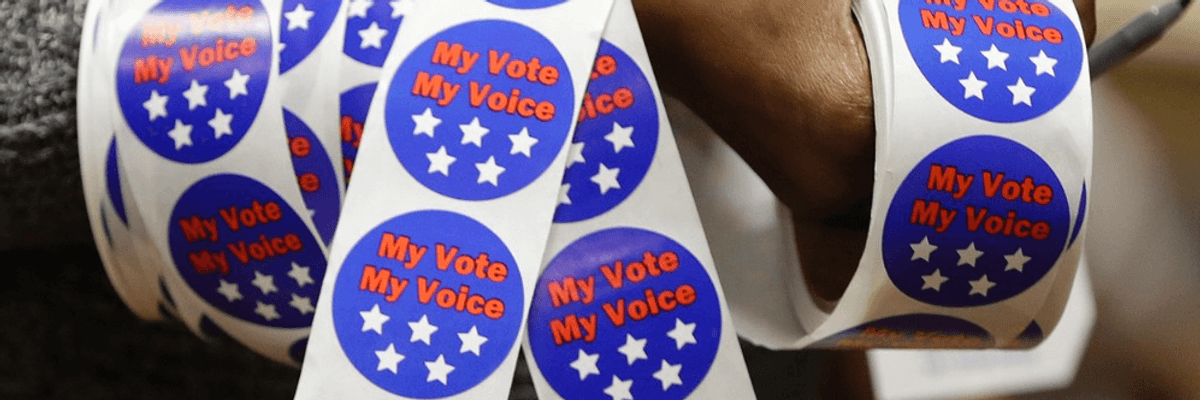
How would a half-billion dollars for voter education and mobilization be spent effectively? Ralph Nader explains a few crucial ways. (Photo: AP)
About 80 days separate the people from the November 6th Congressional elections. Judging by the past midterm turnout, at least 125 million age-eligible voters will stay home. Too many people say: "Can't be bothered;" "politicians don't care about me;" "all politicians lie so why should I be part of that game;" "I'm not into politics;" "Nobody I like."
Whoever finds the way to bring ten million or so of these non-voters to the polls in swing Congressional Districts will solidly control the Congress. Control of the House of Representatives by the Democratic Party stops most of Trumpism in its tracks, assuming the Democrats use their power and uphold their sworn duties in domestic and military/foreign matters under the Constitution.
Ten million non-voters becoming voters may not seem so decisive. Remember, however, that John Kerry lost to George W. Bush in 2004 by less than 90,000 votes just in Ohio. Donald Trump swung the key Electoral College votes in Pennsylvania, Michigan, and Wisconsin by a mere 107,000 votes.
"The benefit of increasing the turnout of informed voters is a more enlightened Congress. A new and improved Congress could produce huge savings in dollars, lives, health, safety, and improve the environment."
Therefore, let's ask the question: What's it worth in costs compared to benefits? How do we achieve a progressive Congress, committed to the needs and rights of the American people and not beholden to the big corporations? A mere half a billion dollars would achieve that objective--about what the Koch brothers' network intends to spend this year.
The benefit of increasing the turnout of informed voters is a more enlightened Congress. A new and improved Congress could produce huge savings in dollars, lives, health, safety, and improve the environment. In addition, a new Congress could end boomeranging illegal wars, enact a long-overdue increased minimum wage, corporate tax reform, facilitate faster conversion to solar-renewable energy, and restore our public facilities with good local jobs. Our public transit, national parks, schools, highways, bridges, libraries, and community health clinics all need repairs. Ending massive, taxpayer-funded corporate welfare and taming the bloated, skyrocketing military budget that is devouring our public resources are also benefits of rebuilding a responsive Congress.
The list could go on, but permit a single example. Over a decade ago, it was revealed that a single disclosure line, put back in the tax forms filed by business partnerships, would end a loophole that has cost Uncle Sam anywhere from $7 billion to $20 billion a year in tax revenue. The corporate-indentured Congress refused to approve such a line and fund its implementation.
In the massive accounts receivable for big business that is our federal budget, you can pick and choose what can be saved were a super-majority of our 535 Representatives and Senators accountable to the voters and they definitely can be.
How would a half-billion dollars for voter education and mobilization be spent effectively? Not by using the same old ways of getting out the non-voters that have failed again and again.
First, most get-out-the-vote efforts target registered voters. Non-voters are considered, for the most part, too hard to convert into voters.
The reasons are obvious. You don't get these conversions by the usual last-minute phone banks, post cards and door knocks. You have to have adequate time and you need engaged neighborhood people-to-people resources for at least several weeks to achieve those persuasions through relationships of trust and discussion and you may need transportation facilities. Voter suppression and registration barriers also need to be overcome one voter, one family at a time.
In the late 1880s, dirt-poor Texas farmers started one of the greatest political revolts/reforms in American history. Spreading into many other states, this populist surge-- against the rapacity of banks, railroads and their political toadies-- elected Governors, took over state legislatures, installed members of Congress and almost won the presidency. What did the farmers have? Their land, open minds, courage, heart, passion, energy, and the Post Office.
What did they lack? Money (other than the $1 dues from each Texas farmer), telephones, paved roads, motor vehicles, radio, television, and the Internet. Yet somehow they pulled it off and we're benefiting this day from their electoral, economic, and pro-farmer-labor reforms.
At present, every neighborhood, housing project, and community has what political analysts call "influentials," long known and trusted people who can be persuasive in converting non-voters to voters. Two thousand full-time organizers can spark these "influentials" into action--if the organizers have the financial resources to pay for necessary expenses, arrange pot-luck suppers, and provide transportation to the polls.
Backup support by people skilled in administration, law, accounting, recruitment, public relations, and media would accelerate the pace and minimize pitfalls. Moving people together in buses to the polls followed by celebratory dinners increases the spirit, the elan of what would likely become a widely publicized movement, extending beyond Election Day, replete with visuals, posters, special songs, and even empowering parades.
Five billionaires could provide the money with one resolute meeting! Our country has more than that number of concerned philanthropists with records of enlightenment. They are worried about the downward direction of our country and what it means to the children and grandchildren, and to our precious environment, to our need for stable peace. They want to be good ancestors. They can make a very quick decision and start making it happen.
Are any possible benefactors listening? If so, contact us at nader.org.
Dear Common Dreams reader, It’s been nearly 30 years since I co-founded Common Dreams with my late wife, Lina Newhouser. We had the radical notion that journalism should serve the public good, not corporate profits. It was clear to us from the outset what it would take to build such a project. No paid advertisements. No corporate sponsors. No millionaire publisher telling us what to think or do. Many people said we wouldn't last a year, but we proved those doubters wrong. Together with a tremendous team of journalists and dedicated staff, we built an independent media outlet free from the constraints of profits and corporate control. Our mission has always been simple: To inform. To inspire. To ignite change for the common good. Building Common Dreams was not easy. Our survival was never guaranteed. When you take on the most powerful forces—Wall Street greed, fossil fuel industry destruction, Big Tech lobbyists, and uber-rich oligarchs who have spent billions upon billions rigging the economy and democracy in their favor—the only bulwark you have is supporters who believe in your work. But here’s the urgent message from me today. It's never been this bad out there. And it's never been this hard to keep us going. At the very moment Common Dreams is most needed, the threats we face are intensifying. We need your support now more than ever. We don't accept corporate advertising and never will. We don't have a paywall because we don't think people should be blocked from critical news based on their ability to pay. Everything we do is funded by the donations of readers like you. When everyone does the little they can afford, we are strong. But if that support retreats or dries up, so do we. Will you donate now to make sure Common Dreams not only survives but thrives? —Craig Brown, Co-founder |
About 80 days separate the people from the November 6th Congressional elections. Judging by the past midterm turnout, at least 125 million age-eligible voters will stay home. Too many people say: "Can't be bothered;" "politicians don't care about me;" "all politicians lie so why should I be part of that game;" "I'm not into politics;" "Nobody I like."
Whoever finds the way to bring ten million or so of these non-voters to the polls in swing Congressional Districts will solidly control the Congress. Control of the House of Representatives by the Democratic Party stops most of Trumpism in its tracks, assuming the Democrats use their power and uphold their sworn duties in domestic and military/foreign matters under the Constitution.
Ten million non-voters becoming voters may not seem so decisive. Remember, however, that John Kerry lost to George W. Bush in 2004 by less than 90,000 votes just in Ohio. Donald Trump swung the key Electoral College votes in Pennsylvania, Michigan, and Wisconsin by a mere 107,000 votes.
"The benefit of increasing the turnout of informed voters is a more enlightened Congress. A new and improved Congress could produce huge savings in dollars, lives, health, safety, and improve the environment."
Therefore, let's ask the question: What's it worth in costs compared to benefits? How do we achieve a progressive Congress, committed to the needs and rights of the American people and not beholden to the big corporations? A mere half a billion dollars would achieve that objective--about what the Koch brothers' network intends to spend this year.
The benefit of increasing the turnout of informed voters is a more enlightened Congress. A new and improved Congress could produce huge savings in dollars, lives, health, safety, and improve the environment. In addition, a new Congress could end boomeranging illegal wars, enact a long-overdue increased minimum wage, corporate tax reform, facilitate faster conversion to solar-renewable energy, and restore our public facilities with good local jobs. Our public transit, national parks, schools, highways, bridges, libraries, and community health clinics all need repairs. Ending massive, taxpayer-funded corporate welfare and taming the bloated, skyrocketing military budget that is devouring our public resources are also benefits of rebuilding a responsive Congress.
The list could go on, but permit a single example. Over a decade ago, it was revealed that a single disclosure line, put back in the tax forms filed by business partnerships, would end a loophole that has cost Uncle Sam anywhere from $7 billion to $20 billion a year in tax revenue. The corporate-indentured Congress refused to approve such a line and fund its implementation.
In the massive accounts receivable for big business that is our federal budget, you can pick and choose what can be saved were a super-majority of our 535 Representatives and Senators accountable to the voters and they definitely can be.
How would a half-billion dollars for voter education and mobilization be spent effectively? Not by using the same old ways of getting out the non-voters that have failed again and again.
First, most get-out-the-vote efforts target registered voters. Non-voters are considered, for the most part, too hard to convert into voters.
The reasons are obvious. You don't get these conversions by the usual last-minute phone banks, post cards and door knocks. You have to have adequate time and you need engaged neighborhood people-to-people resources for at least several weeks to achieve those persuasions through relationships of trust and discussion and you may need transportation facilities. Voter suppression and registration barriers also need to be overcome one voter, one family at a time.
In the late 1880s, dirt-poor Texas farmers started one of the greatest political revolts/reforms in American history. Spreading into many other states, this populist surge-- against the rapacity of banks, railroads and their political toadies-- elected Governors, took over state legislatures, installed members of Congress and almost won the presidency. What did the farmers have? Their land, open minds, courage, heart, passion, energy, and the Post Office.
What did they lack? Money (other than the $1 dues from each Texas farmer), telephones, paved roads, motor vehicles, radio, television, and the Internet. Yet somehow they pulled it off and we're benefiting this day from their electoral, economic, and pro-farmer-labor reforms.
At present, every neighborhood, housing project, and community has what political analysts call "influentials," long known and trusted people who can be persuasive in converting non-voters to voters. Two thousand full-time organizers can spark these "influentials" into action--if the organizers have the financial resources to pay for necessary expenses, arrange pot-luck suppers, and provide transportation to the polls.
Backup support by people skilled in administration, law, accounting, recruitment, public relations, and media would accelerate the pace and minimize pitfalls. Moving people together in buses to the polls followed by celebratory dinners increases the spirit, the elan of what would likely become a widely publicized movement, extending beyond Election Day, replete with visuals, posters, special songs, and even empowering parades.
Five billionaires could provide the money with one resolute meeting! Our country has more than that number of concerned philanthropists with records of enlightenment. They are worried about the downward direction of our country and what it means to the children and grandchildren, and to our precious environment, to our need for stable peace. They want to be good ancestors. They can make a very quick decision and start making it happen.
Are any possible benefactors listening? If so, contact us at nader.org.
About 80 days separate the people from the November 6th Congressional elections. Judging by the past midterm turnout, at least 125 million age-eligible voters will stay home. Too many people say: "Can't be bothered;" "politicians don't care about me;" "all politicians lie so why should I be part of that game;" "I'm not into politics;" "Nobody I like."
Whoever finds the way to bring ten million or so of these non-voters to the polls in swing Congressional Districts will solidly control the Congress. Control of the House of Representatives by the Democratic Party stops most of Trumpism in its tracks, assuming the Democrats use their power and uphold their sworn duties in domestic and military/foreign matters under the Constitution.
Ten million non-voters becoming voters may not seem so decisive. Remember, however, that John Kerry lost to George W. Bush in 2004 by less than 90,000 votes just in Ohio. Donald Trump swung the key Electoral College votes in Pennsylvania, Michigan, and Wisconsin by a mere 107,000 votes.
"The benefit of increasing the turnout of informed voters is a more enlightened Congress. A new and improved Congress could produce huge savings in dollars, lives, health, safety, and improve the environment."
Therefore, let's ask the question: What's it worth in costs compared to benefits? How do we achieve a progressive Congress, committed to the needs and rights of the American people and not beholden to the big corporations? A mere half a billion dollars would achieve that objective--about what the Koch brothers' network intends to spend this year.
The benefit of increasing the turnout of informed voters is a more enlightened Congress. A new and improved Congress could produce huge savings in dollars, lives, health, safety, and improve the environment. In addition, a new Congress could end boomeranging illegal wars, enact a long-overdue increased minimum wage, corporate tax reform, facilitate faster conversion to solar-renewable energy, and restore our public facilities with good local jobs. Our public transit, national parks, schools, highways, bridges, libraries, and community health clinics all need repairs. Ending massive, taxpayer-funded corporate welfare and taming the bloated, skyrocketing military budget that is devouring our public resources are also benefits of rebuilding a responsive Congress.
The list could go on, but permit a single example. Over a decade ago, it was revealed that a single disclosure line, put back in the tax forms filed by business partnerships, would end a loophole that has cost Uncle Sam anywhere from $7 billion to $20 billion a year in tax revenue. The corporate-indentured Congress refused to approve such a line and fund its implementation.
In the massive accounts receivable for big business that is our federal budget, you can pick and choose what can be saved were a super-majority of our 535 Representatives and Senators accountable to the voters and they definitely can be.
How would a half-billion dollars for voter education and mobilization be spent effectively? Not by using the same old ways of getting out the non-voters that have failed again and again.
First, most get-out-the-vote efforts target registered voters. Non-voters are considered, for the most part, too hard to convert into voters.
The reasons are obvious. You don't get these conversions by the usual last-minute phone banks, post cards and door knocks. You have to have adequate time and you need engaged neighborhood people-to-people resources for at least several weeks to achieve those persuasions through relationships of trust and discussion and you may need transportation facilities. Voter suppression and registration barriers also need to be overcome one voter, one family at a time.
In the late 1880s, dirt-poor Texas farmers started one of the greatest political revolts/reforms in American history. Spreading into many other states, this populist surge-- against the rapacity of banks, railroads and their political toadies-- elected Governors, took over state legislatures, installed members of Congress and almost won the presidency. What did the farmers have? Their land, open minds, courage, heart, passion, energy, and the Post Office.
What did they lack? Money (other than the $1 dues from each Texas farmer), telephones, paved roads, motor vehicles, radio, television, and the Internet. Yet somehow they pulled it off and we're benefiting this day from their electoral, economic, and pro-farmer-labor reforms.
At present, every neighborhood, housing project, and community has what political analysts call "influentials," long known and trusted people who can be persuasive in converting non-voters to voters. Two thousand full-time organizers can spark these "influentials" into action--if the organizers have the financial resources to pay for necessary expenses, arrange pot-luck suppers, and provide transportation to the polls.
Backup support by people skilled in administration, law, accounting, recruitment, public relations, and media would accelerate the pace and minimize pitfalls. Moving people together in buses to the polls followed by celebratory dinners increases the spirit, the elan of what would likely become a widely publicized movement, extending beyond Election Day, replete with visuals, posters, special songs, and even empowering parades.
Five billionaires could provide the money with one resolute meeting! Our country has more than that number of concerned philanthropists with records of enlightenment. They are worried about the downward direction of our country and what it means to the children and grandchildren, and to our precious environment, to our need for stable peace. They want to be good ancestors. They can make a very quick decision and start making it happen.
Are any possible benefactors listening? If so, contact us at nader.org.