
The distance from St. Peter's Square to St. Petersburg, Russia, parallels the gulf between the pope's hopes and the president's plans. Obama, attending the G-20 meeting in St. Petersburg, will lobby world leaders to support a military strike against Syria so that the U.S. is not acting alone. What a squandered opportunity for doubling down on diplomacy, with this global summit set in Russia, the Syrian regime's main sponsor.
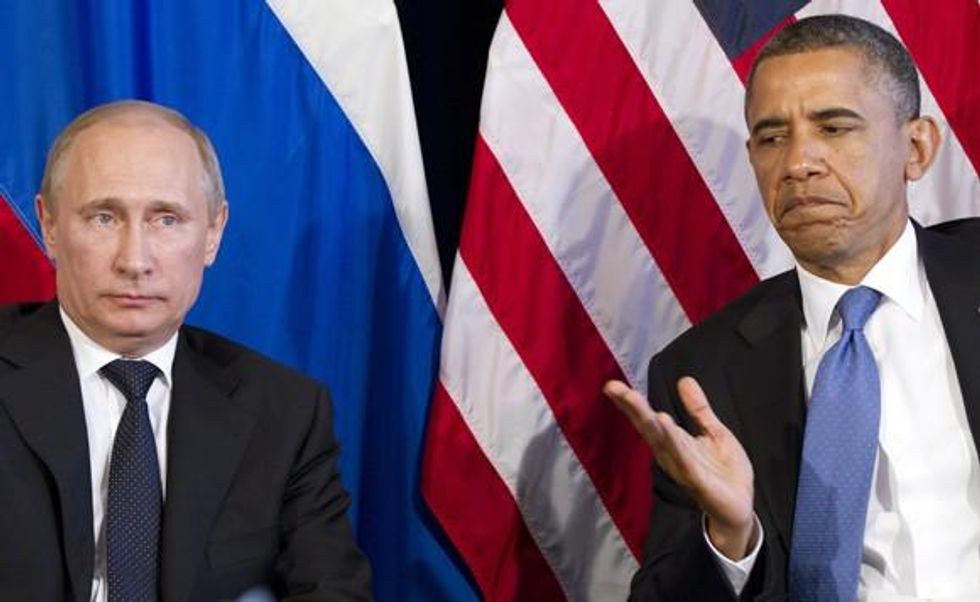
Diplomacy prospects were diminished from the outset, when Obama canceled a planned bilateral meeting with Russian President Vladimir Putin that was to take place immediately after the G-20. Obama was enraged by Russia's decision to grant temporary political asylum to National Security Agency whistle-blower Edward Snowden. This G-20 meeting is the first major gathering of world leaders following Snowden's revelations of massive spying by the United States. Many G-20 members have been targeted by the NSA's myriad spy programs.
Why would the U.S. risk killing innocent Syrian civilians to punish the Syrian regime for killing Syrian civilians?
With the decision by the British Parliament against supporting the military strike (the first time the House of Commons voted against a prime minister's request for military authorization in more than 150 years), Obama will be isolated in his quest. You could say he is up against a wall of "BRICS," as the planned strike is opposed by the five member nations of the BRICS coalition: Brazil, Russia, India, China and South Africa.
On the home front, President Obama surprised many when he said he would seek congressional approval to strike Syria, though he said he is not bound by its decision. Obama's frontman for the effort is Secretary of State John Kerry. Before both the Senate and House Foreign Relations committees, Kerry made the case for a "limited" military authorization. One consistent concern voiced by congressional members of both parties is the possibility that U.S. troops would be drawn into the civil war.
But Kerry undermined his own assurances that there would be no U.S. "boots on the ground" when he reflected, "In the event Syria imploded ... and it was clearly in the interests of our allies and all of us--the British, the French and others--to prevent those weapons of mass destruction falling into the hands of the worst elements, I don't want to take off the table an option that might or might not be available to a president of the United States to secure our country."
But what could happen with a "limited" attack? Earlier this summer in Aspen, Colo., David Shedd, deputy director of the Defense Intelligence Agency (the Pentagon's CIA), made a rare public appearance. Shedd predicts "ongoing civil war for years to come" in Syria. He thinks the conflict could spill over into Iraq and Jordan, and was "most concerned about Lebanon falling."
There are now 2 million Syrian refugees living just beyond its borders, in Turkey, Iraq, Jordan and Lebanon, putting enormous pressure on these countries. More than 4 million Syrians are internally displaced. Many more are fleeing Syria in anticipation of a U.S. attack. After touring the crowded camps this week, Raymond Offenheiser, president of Oxfam America, said on the "Democracy Now!" news hour that he is opposed to a U.S. attack: "Our concern is that a military strike ... offers the potential of widening the conflict, turning it into a wider regional conflict, inflicting the potential for more civilian casualties."
Why would the U.S. risk killing innocent Syrian civilians to punish the Syrian regime for killing Syrian civilians?
What if a military strike was not an option? Obama could spend his time in Russia lobbying the G-20 world leaders to pressure Putin to use his influence to convince Syria to negotiate. Iran, another Syria ally but not a member of the G-20, has a new president, Hassan Rouhani. There are openings. All parties agree that, ultimately, the solution to the Syrian crisis will be political, not military. Why not start now?
Denis Moynihan contributed research to this column.
The distance from St. Peter's Square to St. Petersburg, Russia, parallels the gulf between the pope's hopes and the president's plans. Obama, attending the G-20 meeting in St. Petersburg, will lobby world leaders to support a military strike against Syria so that the U.S. is not acting alone. What a squandered opportunity for doubling down on diplomacy, with this global summit set in Russia, the Syrian regime's main sponsor.
Diplomacy prospects were diminished from the outset, when Obama canceled a planned bilateral meeting with Russian President Vladimir Putin that was to take place immediately after the G-20. Obama was enraged by Russia's decision to grant temporary political asylum to National Security Agency whistle-blower Edward Snowden. This G-20 meeting is the first major gathering of world leaders following Snowden's revelations of massive spying by the United States. Many G-20 members have been targeted by the NSA's myriad spy programs.
Why would the U.S. risk killing innocent Syrian civilians to punish the Syrian regime for killing Syrian civilians?
With the decision by the British Parliament against supporting the military strike (the first time the House of Commons voted against a prime minister's request for military authorization in more than 150 years), Obama will be isolated in his quest. You could say he is up against a wall of "BRICS," as the planned strike is opposed by the five member nations of the BRICS coalition: Brazil, Russia, India, China and South Africa.
On the home front, President Obama surprised many when he said he would seek congressional approval to strike Syria, though he said he is not bound by its decision. Obama's frontman for the effort is Secretary of State John Kerry. Before both the Senate and House Foreign Relations committees, Kerry made the case for a "limited" military authorization. One consistent concern voiced by congressional members of both parties is the possibility that U.S. troops would be drawn into the civil war.
But Kerry undermined his own assurances that there would be no U.S. "boots on the ground" when he reflected, "In the event Syria imploded ... and it was clearly in the interests of our allies and all of us--the British, the French and others--to prevent those weapons of mass destruction falling into the hands of the worst elements, I don't want to take off the table an option that might or might not be available to a president of the United States to secure our country."
But what could happen with a "limited" attack? Earlier this summer in Aspen, Colo., David Shedd, deputy director of the Defense Intelligence Agency (the Pentagon's CIA), made a rare public appearance. Shedd predicts "ongoing civil war for years to come" in Syria. He thinks the conflict could spill over into Iraq and Jordan, and was "most concerned about Lebanon falling."
There are now 2 million Syrian refugees living just beyond its borders, in Turkey, Iraq, Jordan and Lebanon, putting enormous pressure on these countries. More than 4 million Syrians are internally displaced. Many more are fleeing Syria in anticipation of a U.S. attack. After touring the crowded camps this week, Raymond Offenheiser, president of Oxfam America, said on the "Democracy Now!" news hour that he is opposed to a U.S. attack: "Our concern is that a military strike ... offers the potential of widening the conflict, turning it into a wider regional conflict, inflicting the potential for more civilian casualties."
Why would the U.S. risk killing innocent Syrian civilians to punish the Syrian regime for killing Syrian civilians?
What if a military strike was not an option? Obama could spend his time in Russia lobbying the G-20 world leaders to pressure Putin to use his influence to convince Syria to negotiate. Iran, another Syria ally but not a member of the G-20, has a new president, Hassan Rouhani. There are openings. All parties agree that, ultimately, the solution to the Syrian crisis will be political, not military. Why not start now?
Denis Moynihan contributed research to this column.
The distance from St. Peter's Square to St. Petersburg, Russia, parallels the gulf between the pope's hopes and the president's plans. Obama, attending the G-20 meeting in St. Petersburg, will lobby world leaders to support a military strike against Syria so that the U.S. is not acting alone. What a squandered opportunity for doubling down on diplomacy, with this global summit set in Russia, the Syrian regime's main sponsor.
Diplomacy prospects were diminished from the outset, when Obama canceled a planned bilateral meeting with Russian President Vladimir Putin that was to take place immediately after the G-20. Obama was enraged by Russia's decision to grant temporary political asylum to National Security Agency whistle-blower Edward Snowden. This G-20 meeting is the first major gathering of world leaders following Snowden's revelations of massive spying by the United States. Many G-20 members have been targeted by the NSA's myriad spy programs.
Why would the U.S. risk killing innocent Syrian civilians to punish the Syrian regime for killing Syrian civilians?
With the decision by the British Parliament against supporting the military strike (the first time the House of Commons voted against a prime minister's request for military authorization in more than 150 years), Obama will be isolated in his quest. You could say he is up against a wall of "BRICS," as the planned strike is opposed by the five member nations of the BRICS coalition: Brazil, Russia, India, China and South Africa.
On the home front, President Obama surprised many when he said he would seek congressional approval to strike Syria, though he said he is not bound by its decision. Obama's frontman for the effort is Secretary of State John Kerry. Before both the Senate and House Foreign Relations committees, Kerry made the case for a "limited" military authorization. One consistent concern voiced by congressional members of both parties is the possibility that U.S. troops would be drawn into the civil war.
But Kerry undermined his own assurances that there would be no U.S. "boots on the ground" when he reflected, "In the event Syria imploded ... and it was clearly in the interests of our allies and all of us--the British, the French and others--to prevent those weapons of mass destruction falling into the hands of the worst elements, I don't want to take off the table an option that might or might not be available to a president of the United States to secure our country."
But what could happen with a "limited" attack? Earlier this summer in Aspen, Colo., David Shedd, deputy director of the Defense Intelligence Agency (the Pentagon's CIA), made a rare public appearance. Shedd predicts "ongoing civil war for years to come" in Syria. He thinks the conflict could spill over into Iraq and Jordan, and was "most concerned about Lebanon falling."
There are now 2 million Syrian refugees living just beyond its borders, in Turkey, Iraq, Jordan and Lebanon, putting enormous pressure on these countries. More than 4 million Syrians are internally displaced. Many more are fleeing Syria in anticipation of a U.S. attack. After touring the crowded camps this week, Raymond Offenheiser, president of Oxfam America, said on the "Democracy Now!" news hour that he is opposed to a U.S. attack: "Our concern is that a military strike ... offers the potential of widening the conflict, turning it into a wider regional conflict, inflicting the potential for more civilian casualties."
Why would the U.S. risk killing innocent Syrian civilians to punish the Syrian regime for killing Syrian civilians?
What if a military strike was not an option? Obama could spend his time in Russia lobbying the G-20 world leaders to pressure Putin to use his influence to convince Syria to negotiate. Iran, another Syria ally but not a member of the G-20, has a new president, Hassan Rouhani. There are openings. All parties agree that, ultimately, the solution to the Syrian crisis will be political, not military. Why not start now?
Denis Moynihan contributed research to this column.