SUBSCRIBE TO OUR FREE NEWSLETTER
Daily news & progressive opinion—funded by the people, not the corporations—delivered straight to your inbox.
5
#000000
#FFFFFF
To donate by check, phone, or other method, see our More Ways to Give page.
With speculation now centered on how Superstorm Sandy's impact may affect the U.S. election result, the final presidential debate, which focused on foreign policy, might seem like a distant event to American voters. But for the rest of the world, this was an event that mattered
As many pundits have noted, if the rest of the world were voting in the U.S. presidential election, the third presidential debate would probably have proceeded differently.
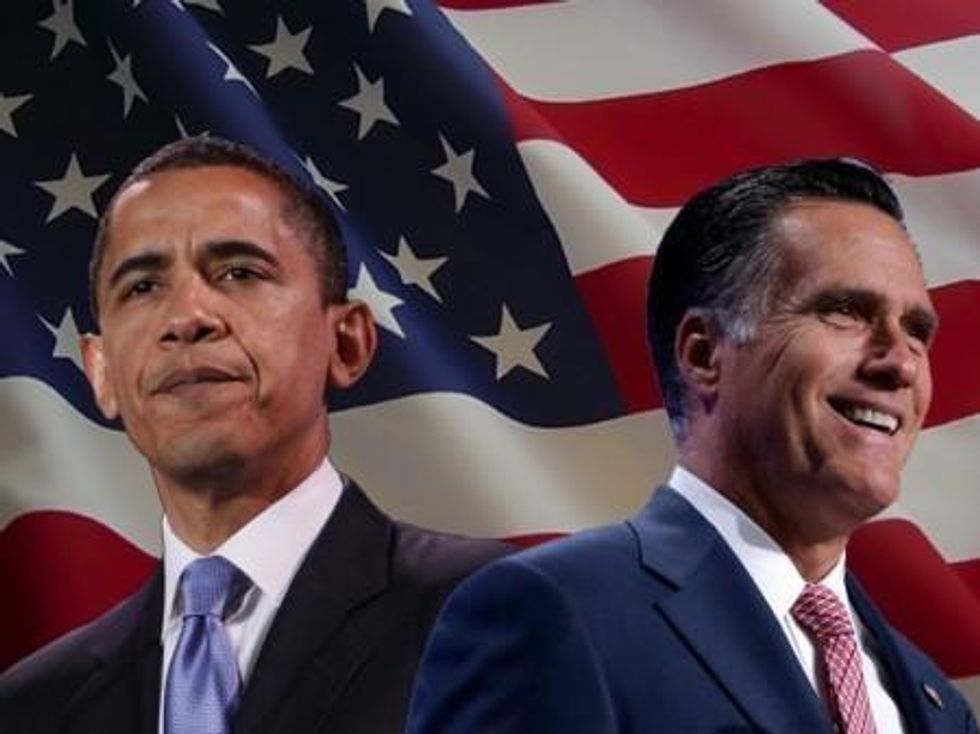
But since only about 200 million people on earth are eligible to vote for the man whose policies will impact all of us, the evening, as expected, turned into an exercise in imperial chest-thumping. President Barack Obama dredged up former Secretary of State Madeline Albright's assertion that "America remains the indispensable nation" to remind American voters of what a great gift to the world their country is. Not to be outdone in extolling American exceptionalism, Republican candidate Mitt Romney told his compatriots, "This nation is the hope of the earth."
Both agreed that, as Obama put it, "We've got to make sure that our economy is strong at home so that we can project military power overseas."
Who Would Better Serve Israel?
As the candidates sought to highlight their differences, pleasing Israel emerged as the cornerstone of each candidate's foreign policy approach. As the progressive Israeli commentator Uri Avnery noted: "Israel was mentioned in the debate 34 times -- 33 times more than Europe, 30 times more than Latin America, five times more than Afghanistan, four times more than China. Only Iran was mentioned more often -- 45 times -- but in the context of the danger it poses to Israel."
Romney said the Middle East was a mess but was short on specifics about how he would manage things there better than Obama. Al Qaeda is on its last legs, said Obama, but Romney claimed it is now stronger than before. It was with respect to Libya that Obama contrasted what he called Romney's "reckless" approach with his own brand of interventionism, one done "in a careful, thoughtful way, making certain that we knew who we were dealing with, that those forces of moderation on the ground were ones that we could work with."
What Obama was not about to admit was that his "thoughtful" interventionism had not prevented post-Gaddafi Libya from becoming a major U.S. foreign policy disaster.
China as Adversary
For those following the debate from East Asia, perhaps the most significant part of the exchange was Obama's Freudian slip when he declared that "China is both an adversary, but also a potential partner," putting the emphasis on the former.
The Navy is the cutting edge of Obama's aggressive "Pivot to Asia" strategy. Romney said, however, that the Navy is ill equipped to carry out its global mission, claiming that the naval brass wanted 313 ships but were down to under 285. This prompted Obama's clever riposte that the military also had fewer horses and bayonets, but that owing to technological advances, U.S. military capabilities were stronger.
The Decisive Issue: the Economy
For all the fireworks, however, the foreign policy debate will not determine the course of the elections. With the polls now placing the candidates at a dead heat--and with some 12-15 percent of registered voters either undecided or open to changing their minds--the election will turn on the economy.
Romney's message, which he has honed in the last days of the campaign, is that four more years of Obama will mean four more years of policies that have failed to reignite the U.S. economy and kept "23 million Americans" without work or "struggling to find a good job." It is a powerful message, though a deceitful one, since Romney did not acknowledge that his own party's obstructionism has been in large part responsible for the dismal state of economic affairs.
Obama says that things are better now than when he took office, claiming that 4.5 million new jobs have been created since then, but adds that "there's more to be done." He asserts that Romney's policies, focused on reducing the deficit and the debt through sharp budget cuts and favoring the wealthy with tax breaks, would bring back the dire situation that existed before Obama assumed office.
What the president does not say is that, as Paul Krugman and others have pointed out, his own lack of resolve in pushing through a massive stimulus program when he could have done it in his first two years in office is a big part of the reason the economy is stuck in neutral. What he also fails to tell voters is how he would be able to get more expansionary policies adopted should he be reelected with a House of Representatives that is likely to be controlled by die-hard anti-spending Republicans.
The Non-rational Factor
An intelligent voter, looking only at their programs, would probably agree with Obama that Romney's approach "does not add up" to an economic recovery program--especially given his preoccupation with reducing the deficit yet refusing to raise taxes on Americans earning over $250,000 a year. But voting behavior is not always determined by rationality.
Especially in times of crisis, voting is often driven by irrational hopes and fears. Many undecided voters could swing to Romney at the last minute simply out of a desperate hope that maybe, just maybe, things will somehow take a turn for the better with a new person at the helm--even if his policies don't make any sense.
The feeling in my bones is that this irrational factor may well swing the elections to Romney. I certainly hope I am wrong.
So let me say it: If I were a progressive American voter, I would probably vote for Obama, not out of enthusiasm for the president but because Romney's bias towards big business, his obsession with reducing the deficit, and his much less nuanced foreign policy approach would make things worse than they are right now both in the United States and globally. In 2008, when Obama ran against John McCain, the choice was clearly between the future and the past. Unfortunately, the choice on November 6 is between the dismal present and the even more dismal past.
With speculation now centered on how Superstorm Sandy's impact may affect the U.S. election result, the final presidential debate, which focused on foreign policy, might seem like a distant event to American voters. But for the rest of the world, this was an event that mattered
As many pundits have noted, if the rest of the world were voting in the U.S. presidential election, the third presidential debate would probably have proceeded differently.
But since only about 200 million people on earth are eligible to vote for the man whose policies will impact all of us, the evening, as expected, turned into an exercise in imperial chest-thumping. President Barack Obama dredged up former Secretary of State Madeline Albright's assertion that "America remains the indispensable nation" to remind American voters of what a great gift to the world their country is. Not to be outdone in extolling American exceptionalism, Republican candidate Mitt Romney told his compatriots, "This nation is the hope of the earth."
Both agreed that, as Obama put it, "We've got to make sure that our economy is strong at home so that we can project military power overseas."
Who Would Better Serve Israel?
As the candidates sought to highlight their differences, pleasing Israel emerged as the cornerstone of each candidate's foreign policy approach. As the progressive Israeli commentator Uri Avnery noted: "Israel was mentioned in the debate 34 times -- 33 times more than Europe, 30 times more than Latin America, five times more than Afghanistan, four times more than China. Only Iran was mentioned more often -- 45 times -- but in the context of the danger it poses to Israel."
Romney said the Middle East was a mess but was short on specifics about how he would manage things there better than Obama. Al Qaeda is on its last legs, said Obama, but Romney claimed it is now stronger than before. It was with respect to Libya that Obama contrasted what he called Romney's "reckless" approach with his own brand of interventionism, one done "in a careful, thoughtful way, making certain that we knew who we were dealing with, that those forces of moderation on the ground were ones that we could work with."
What Obama was not about to admit was that his "thoughtful" interventionism had not prevented post-Gaddafi Libya from becoming a major U.S. foreign policy disaster.
China as Adversary
For those following the debate from East Asia, perhaps the most significant part of the exchange was Obama's Freudian slip when he declared that "China is both an adversary, but also a potential partner," putting the emphasis on the former.
The Navy is the cutting edge of Obama's aggressive "Pivot to Asia" strategy. Romney said, however, that the Navy is ill equipped to carry out its global mission, claiming that the naval brass wanted 313 ships but were down to under 285. This prompted Obama's clever riposte that the military also had fewer horses and bayonets, but that owing to technological advances, U.S. military capabilities were stronger.
The Decisive Issue: the Economy
For all the fireworks, however, the foreign policy debate will not determine the course of the elections. With the polls now placing the candidates at a dead heat--and with some 12-15 percent of registered voters either undecided or open to changing their minds--the election will turn on the economy.
Romney's message, which he has honed in the last days of the campaign, is that four more years of Obama will mean four more years of policies that have failed to reignite the U.S. economy and kept "23 million Americans" without work or "struggling to find a good job." It is a powerful message, though a deceitful one, since Romney did not acknowledge that his own party's obstructionism has been in large part responsible for the dismal state of economic affairs.
Obama says that things are better now than when he took office, claiming that 4.5 million new jobs have been created since then, but adds that "there's more to be done." He asserts that Romney's policies, focused on reducing the deficit and the debt through sharp budget cuts and favoring the wealthy with tax breaks, would bring back the dire situation that existed before Obama assumed office.
What the president does not say is that, as Paul Krugman and others have pointed out, his own lack of resolve in pushing through a massive stimulus program when he could have done it in his first two years in office is a big part of the reason the economy is stuck in neutral. What he also fails to tell voters is how he would be able to get more expansionary policies adopted should he be reelected with a House of Representatives that is likely to be controlled by die-hard anti-spending Republicans.
The Non-rational Factor
An intelligent voter, looking only at their programs, would probably agree with Obama that Romney's approach "does not add up" to an economic recovery program--especially given his preoccupation with reducing the deficit yet refusing to raise taxes on Americans earning over $250,000 a year. But voting behavior is not always determined by rationality.
Especially in times of crisis, voting is often driven by irrational hopes and fears. Many undecided voters could swing to Romney at the last minute simply out of a desperate hope that maybe, just maybe, things will somehow take a turn for the better with a new person at the helm--even if his policies don't make any sense.
The feeling in my bones is that this irrational factor may well swing the elections to Romney. I certainly hope I am wrong.
So let me say it: If I were a progressive American voter, I would probably vote for Obama, not out of enthusiasm for the president but because Romney's bias towards big business, his obsession with reducing the deficit, and his much less nuanced foreign policy approach would make things worse than they are right now both in the United States and globally. In 2008, when Obama ran against John McCain, the choice was clearly between the future and the past. Unfortunately, the choice on November 6 is between the dismal present and the even more dismal past.
With speculation now centered on how Superstorm Sandy's impact may affect the U.S. election result, the final presidential debate, which focused on foreign policy, might seem like a distant event to American voters. But for the rest of the world, this was an event that mattered
As many pundits have noted, if the rest of the world were voting in the U.S. presidential election, the third presidential debate would probably have proceeded differently.
But since only about 200 million people on earth are eligible to vote for the man whose policies will impact all of us, the evening, as expected, turned into an exercise in imperial chest-thumping. President Barack Obama dredged up former Secretary of State Madeline Albright's assertion that "America remains the indispensable nation" to remind American voters of what a great gift to the world their country is. Not to be outdone in extolling American exceptionalism, Republican candidate Mitt Romney told his compatriots, "This nation is the hope of the earth."
Both agreed that, as Obama put it, "We've got to make sure that our economy is strong at home so that we can project military power overseas."
Who Would Better Serve Israel?
As the candidates sought to highlight their differences, pleasing Israel emerged as the cornerstone of each candidate's foreign policy approach. As the progressive Israeli commentator Uri Avnery noted: "Israel was mentioned in the debate 34 times -- 33 times more than Europe, 30 times more than Latin America, five times more than Afghanistan, four times more than China. Only Iran was mentioned more often -- 45 times -- but in the context of the danger it poses to Israel."
Romney said the Middle East was a mess but was short on specifics about how he would manage things there better than Obama. Al Qaeda is on its last legs, said Obama, but Romney claimed it is now stronger than before. It was with respect to Libya that Obama contrasted what he called Romney's "reckless" approach with his own brand of interventionism, one done "in a careful, thoughtful way, making certain that we knew who we were dealing with, that those forces of moderation on the ground were ones that we could work with."
What Obama was not about to admit was that his "thoughtful" interventionism had not prevented post-Gaddafi Libya from becoming a major U.S. foreign policy disaster.
China as Adversary
For those following the debate from East Asia, perhaps the most significant part of the exchange was Obama's Freudian slip when he declared that "China is both an adversary, but also a potential partner," putting the emphasis on the former.
The Navy is the cutting edge of Obama's aggressive "Pivot to Asia" strategy. Romney said, however, that the Navy is ill equipped to carry out its global mission, claiming that the naval brass wanted 313 ships but were down to under 285. This prompted Obama's clever riposte that the military also had fewer horses and bayonets, but that owing to technological advances, U.S. military capabilities were stronger.
The Decisive Issue: the Economy
For all the fireworks, however, the foreign policy debate will not determine the course of the elections. With the polls now placing the candidates at a dead heat--and with some 12-15 percent of registered voters either undecided or open to changing their minds--the election will turn on the economy.
Romney's message, which he has honed in the last days of the campaign, is that four more years of Obama will mean four more years of policies that have failed to reignite the U.S. economy and kept "23 million Americans" without work or "struggling to find a good job." It is a powerful message, though a deceitful one, since Romney did not acknowledge that his own party's obstructionism has been in large part responsible for the dismal state of economic affairs.
Obama says that things are better now than when he took office, claiming that 4.5 million new jobs have been created since then, but adds that "there's more to be done." He asserts that Romney's policies, focused on reducing the deficit and the debt through sharp budget cuts and favoring the wealthy with tax breaks, would bring back the dire situation that existed before Obama assumed office.
What the president does not say is that, as Paul Krugman and others have pointed out, his own lack of resolve in pushing through a massive stimulus program when he could have done it in his first two years in office is a big part of the reason the economy is stuck in neutral. What he also fails to tell voters is how he would be able to get more expansionary policies adopted should he be reelected with a House of Representatives that is likely to be controlled by die-hard anti-spending Republicans.
The Non-rational Factor
An intelligent voter, looking only at their programs, would probably agree with Obama that Romney's approach "does not add up" to an economic recovery program--especially given his preoccupation with reducing the deficit yet refusing to raise taxes on Americans earning over $250,000 a year. But voting behavior is not always determined by rationality.
Especially in times of crisis, voting is often driven by irrational hopes and fears. Many undecided voters could swing to Romney at the last minute simply out of a desperate hope that maybe, just maybe, things will somehow take a turn for the better with a new person at the helm--even if his policies don't make any sense.
The feeling in my bones is that this irrational factor may well swing the elections to Romney. I certainly hope I am wrong.
So let me say it: If I were a progressive American voter, I would probably vote for Obama, not out of enthusiasm for the president but because Romney's bias towards big business, his obsession with reducing the deficit, and his much less nuanced foreign policy approach would make things worse than they are right now both in the United States and globally. In 2008, when Obama ran against John McCain, the choice was clearly between the future and the past. Unfortunately, the choice on November 6 is between the dismal present and the even more dismal past.