SUBSCRIBE TO OUR FREE NEWSLETTER
Daily news & progressive opinion—funded by the people, not the corporations—delivered straight to your inbox.
5
#000000
#FFFFFF
To donate by check, phone, or other method, see our More Ways to Give page.


Daily news & progressive opinion—funded by the people, not the corporations—delivered straight to your inbox.
"Tell me who you cannot criticize and I will tell you who is your master". (Attributed to Voltaire).
Saying anything negative about Israel has long been the third rail of US politics and media. Israel is our nation's most sacred cow. Any questioning of its behavior brings furious charges of anti-Semitism and professional oblivion.
"Tell me who you cannot criticize and I will tell you who is your master". (Attributed to Voltaire).
Saying anything negative about Israel has long been the third rail of US politics and media. Israel is our nation's most sacred cow. Any questioning of its behavior brings furious charges of anti-Semitism and professional oblivion.
I keep in my bookcase a cautionary book, 'They Dared Speak Out' written by US senators and congressmen who all lost their positions after rebuking Israel for its mistreatment of Palestinians or daring to suggest that Israel had far too much influence in the US.
Journalists learn this first commandment very early. Criticize, or even question, Israel at your own peril. Until recently, we journalists were not even allowed to write there was an 'Israel lobby.' It was widely considered Washington's most powerful lobby group but, until lately, mentioning its name was seriously verboten.
Now, young Democratic stars Tulsi Gabbard, Kamala Harris, Alexandria Ocasio-Cortez and a feisty congresswoman from Minnesota, Ilhan Omar, have suddenly broken the taboo and said what dared not be said: there is too much rightwing Israeli influence and there must be justice for Palestine.
Presidential candidates Bernie Sanders and Elizabeth Warren have come to the defense of Ilhan Omar against the usual charges that she is anti-Semitic. So have black groups and smaller liberal Jewish groups. The Democratic Party, that once received half its financial support from Jewish sources, is badly split over the Palestine crisis. Its old guard is retreating and does not know what to do beyond issuing fiery denunciations of the heretical Miss Omar. The Democrat Party split comes just at a time when it is trying to bring down President Donald Trump.
Many people seem unaware that Islam is now America's third largest religion and may soon surpass the number of Jews. In Canada, Muslims are already the second religion.
Ilhan is not anti-Semitic. I grew up in New York and New England where vicious anti-Semitism abounded. I know real anti-Semitism when I see it. But she is quite right in charging that vast amounts of pro-Israel money have bought Congress and the media.
Sheldon Adelson, the pro-Israel casino tycoon, has given well over $100 million to the Republican Party and its leaders. This money comes from legal gambling, a sickness that preys on addicts and the unfortunate.
In the 1700's, Dr. Samuel Johnson well-defined lotteries and gambling as 'a tax on fools.' Such is the source of Adelson's billions and his influence over the US political process. He is also the primary financier of Israel's prime minister, Benyamin Netanyahu, who now faces serious charges of corruption.
Interestingly, Britain faces a similar political storm. Its left-leaning Labour Party, led by Jeremy Corbyn, has called for justice for the Palestinians and a viable state for them. Britain's pro-Israel groups and media have launched furious counterattacks on Corbyn and his allies, barraging them with false accusations of being anti-Semitic. This is utter nonsense. To find real anti-Semitism in Britain you need look into the recesses of the Conservative Party. I've seen its ugly face.
Israel's brutal repression of Palestinians has sparked bitter anti-Israel sentiments across Europe. Not so much in America, where media leans far over to Israel's side and evangelical Christians have been bamboozled into believing that a Greater Israel is somehow necessary for the Second Coming.
But young Americans, and even more so Europeans, are increasingly hearing the call of justice for Palestine. They want no truck with Israel's right-wingers, whom many leftist Israelis, including the late great writer, Uri Avnery, brand 'fascists.'
The prescient and courageous Pat Buchanan said it years ago: the US Congress was 'Israeli occupied territory.' His political career was ruined.
So was my mother's career. She was one of the first American female journalists to cover the Mideast in the early 1950's. After extensively reporting the unknown fact that there were nearly one million Palestinian refugees driven from the new state of Israel, she was silenced by advertisers pulling ads from the papers she wrote for and, finally, threats to throw acid in my face. Her career was ruined.
So I say to Miss Omar and the other brave ladies, full speed ahead. Damn the torpedoes. Do what is good for the world and your country. Break the hold of big money over our republic.
"If you don't get my weekly column, it means I am dead," wrote Israeli writer Uri Avnery to a friend. As I eagerly awaited Uri's column each week, I feared that each new column might be his last.
And so it finally came to be. The renowned 94-year old writer and peace advocate finally succumbed to old age after a stroke and massive heart attack.
The roar of the last Lion of Judah had been silenced.
I always considered Avnery as the wisest voice in the Mideast, and Israel's last prophet. His voice was always rich in wisdom, morality and common sense. Few Israelis and even fewer Arabs attained his level of clarity and logic.
Whenever I grew weary writing columns and felt I could no longer go on, I told myself, "if 94-year old Uri can keep writing brilliant columns each week, then you too can keep writing. Back to your keyboard!"
Uri's story was in good part that of modern Israel. He was born Helmut Osterman to a prosperous German Jewish family near Hanover. When Hitler came to power, they migrated in 1933 to Palestine with the 11-year old Helmut - who changed his name to the Hebrew, Uri Avnery.
In 1948, the young Avnery joined the underground Jewish guerilla force Irgun, fighting British and Palestinians and, later, Arab regular soldiers. Irgun committed numerous notorious terrorist acts and massacres that played a key role in driving the Palestinian population from their ancestral homes. He was seriously wounded and nearly died.
Two years later, he and three friends started a political magazine, "One World."
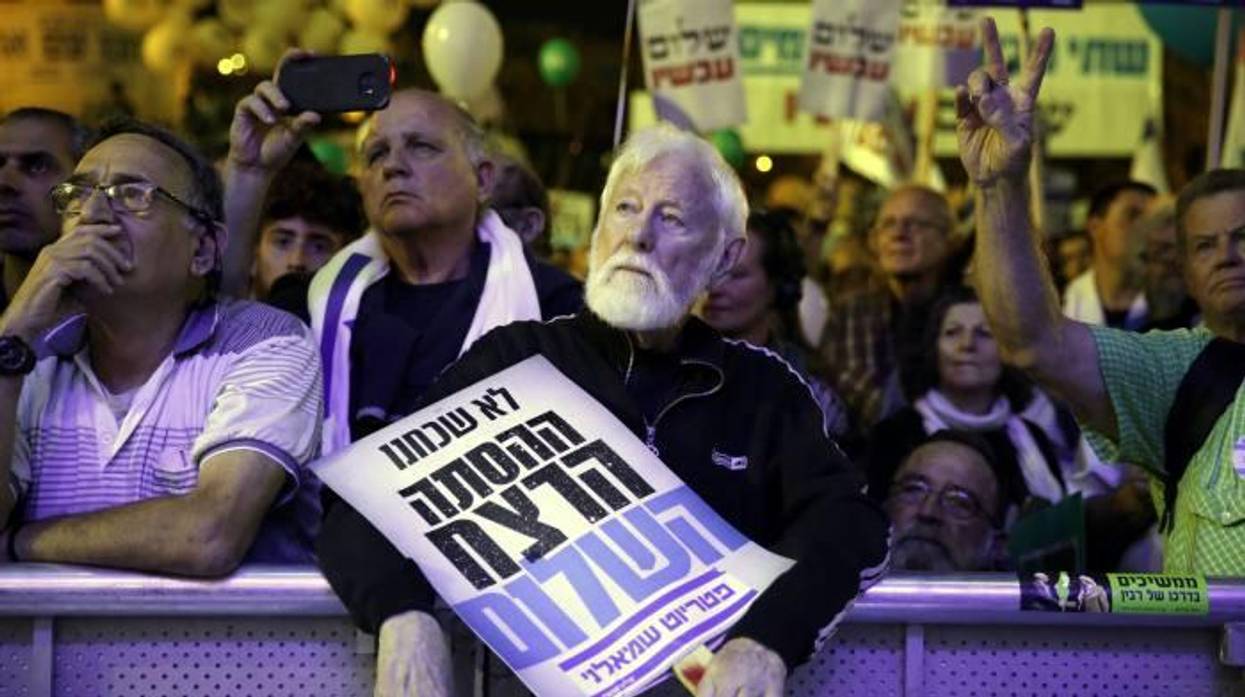
Avnery was increasingly political and sided with Israeli expansionists. But he gradually came to see that peace and cooperation was the only solution for Israel. After Israel's smashing victories over the Arabs in the 1956 and 1967 wars, he formed a leftist pro-peace party and won a seat in Israel's parliament, the Knesset. He helped found the Israeli-Palestinian Peace Council and the renowned Gush Shalom peace movement.
Avnery was one of the first Israelis to call for fair treatment of the Palestinians, over a million who had become refugees in 1948 and 1967. He urged Israel to sign a lasting peace accord with the Palestinians and return to them control of the West Bank, the old city of Jerusalem, Golan and Gaza - all occupied by the Israeli Army and growing waves of Jewish settlers.
Uri became the target of decades of hatred by right-wing Israelis. He was stabbed. He said things that were not said in public. He kept reminding Israelis that their Jewish ethics demanded fair and decent treatment of Palestinians, whom Israeli leaders preferred to call 'cockroaches' and 'wild animals.'
Interestingly, the two men who have best explained the Muslim world to westerners, Uri Avnery and the Austrian-born Leopold Weiss, known as Muhammad Asad, who wrote the great book, "the Road to Mecca," were both Germanic Jews.
There would never be peace in the region, warned prophet Avnery, until Israel returned at least some land taken from Palestinians, and created a viable Palestinian state with full democratic rights and freedoms. Instead, Uri watched as Israel's US-backed far right government arrested ever more Palestinians, grabbed more Arab lands, and prepared to create a full-fledged South African-style apartheid state.
Never one to mince words, Uri called Israel's right, which just enacted a law making Israel an exclusively Jewish state (thus excluding its 21% Muslim and Christian population) 'semi-fascist Jews.' Israel's far right now exercises decisive influence over the Trump White House and the US Congress.
Avnery became fast friends with Palestinian leader Yasser Arafat. The two leaders could have created a viable Jewish-Arab state or federation. Sadly, Arafat was probably murdered and Avnery politically sidelined. In fact, Israel's entire pro-peace left has dwindled to a fringe movement, isolated by its right-wing governments and Washington. Days after Uri died, Israel's Likud coalition announced the expropriation of more Arab land on the West Bank to build 1,000 new homes for Jewish settlers.
Like most Jewish prophets, Avnery was loved or hated. He had no equal in the Arab world. Like Gandhi, his message was too logical and too uncomfortable for nationalist fanatics. His icy skepticism and clear thinking was a godsend in the overheated emotional hothouse of the Mideast.
Israel's last prophet is gone. Rest in peace, Uri.
The curtailing of electricity to Gaza conducted by the Palestinian Authority in Ramallah in connivance with Israeli authorities seriously hurts the people of that region. They have become the victims of the political fighting between the Palestinian Authority ruled by Fatah, and the Palestinian leadership in Gaza ruled by Hamas. The PA pays Israel for the provision of electricity to Gaza. However, the PA has decided to reduce the electricity supply to Gaza from three hours a day to only two hours, thus worsening an already serious situation.
Gazans' health has been particularly affected. "The health sector is able to provide only the absolute minimum standard of care -hospitals are being forced to cancel some operations, are cutting back on maintenance, and are dependent on the UN for emergency fuel to run their generators," stated Michael Lynk, UN Special Rapporteur for human rights in the occupied territories.
With his characteristic nonchalance Avigdor Lieberman, Israel's defense minister, declared, "We are not a side in this issue. They pay, they get electricity. They don't pay, they don't get electricity." He doesn't seem to realize the tremendous cost Israel's Gaza siege is imposing on Gaza's inhabitants.
Haaretz has reported that to punish the Hamas Government in Gaza, the Palestinian Authority has also threatened to stop providing medicines and baby formula to hospitals in Gaza. This move would have terrible consequences for residents of the Strip, particularly the chronically ill and children, warned Dr. Munir al-Bursh, director of the pharmacy department in Gaza's Health Ministry.
These actions were approved by Palestinian President Mahmoud Abbas, as reprisal for Hamas' establishment of its own administrative unit to run Gaza. This decision was preceded by a 30 percent reduction of salaries paid by the PA to its employees in Gaza. Abbas admitted that he would continue taking such strong measures against Hamas in order to pressure the group, and force it to decide if it will govern fully by itself or cooperate with the PA and end the split between them.
Robert Piper, the UN Humanitarian Coordinator in the occupied Palestinian territory, warned in June about the tragic consequences on the health and living situation of two million Palestinians if there is further reduction in electricity to Gaza. He asked the PA, Hamas and the Israeli government to put the welfare of Gaza's residents first and to take the necessary measures to avoid further suffering. "The people in Gaza should not be held hostage to this longstanding internal Palestinian dispute," said Piper.
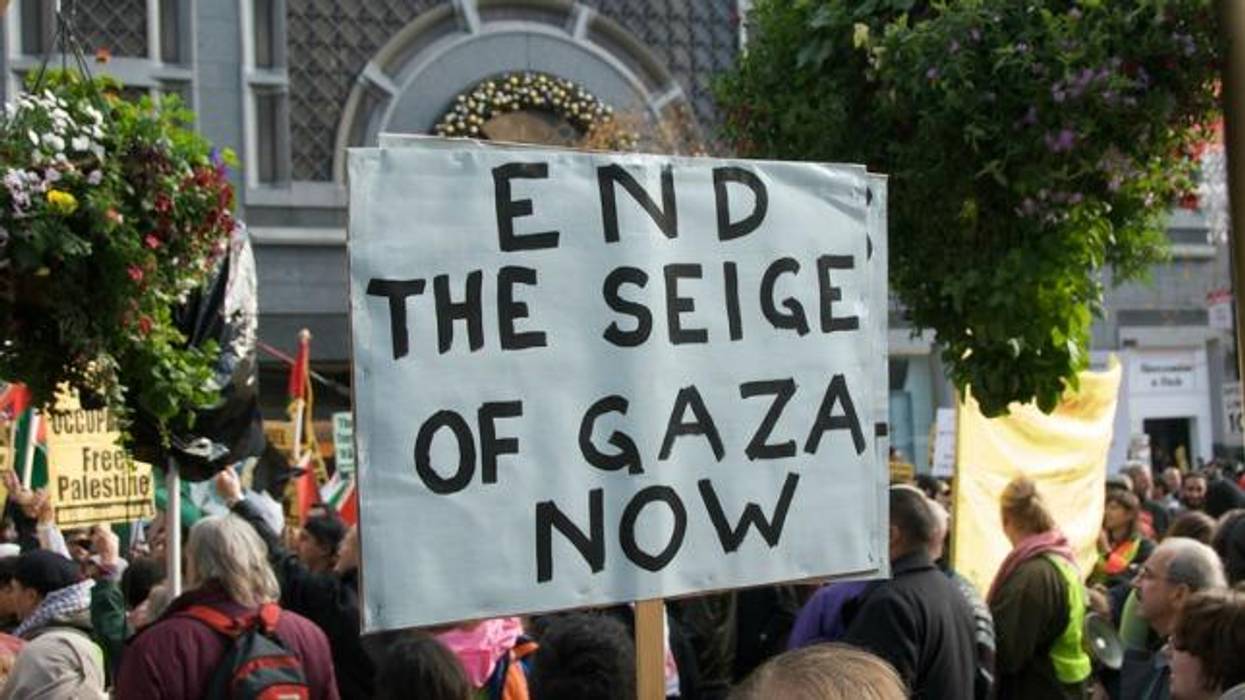
Uri Avnery, a former Israeli soldier and former member of the Knesset, recently wrote, "The uninvolved bystander wonders: how can that be? After all, the entire Palestinian people are in existential danger. The Israeli government tyrannizes all Palestinians, both in the West Bank and in the Gaza Strip. It keeps the Strip under a strangling blockade, on land, in the sea and in the air, and is setting up settlements all over the West Bank, to drive the population out."
Because Israel continues to have effective control of life in Gaza, it is also responsible for the welfare of its residents, as per to the laws of occupation specified in The Hague and Geneva Conventions. In addition, international humanitarian law and human rights conventions require Israel to protect civilians, safeguard wounded and sick persons, and enable the shipment of necessary medicines. Instead, according to Dr. Munir al-Bursh, ninety percent of cancer patients have no drugs today in Gaza.
Siham is a 53-year-old woman from Gaza and a mother of 10 children. She was diagnosed with chronic lymphocytic leukemia in 2013, in what was the start of a painful and expensive journey. She exemplifies the difficulties Gazans are going through. "To be a cancer patient from Gaza is to be at the mercy of the occupation. It is being sentenced to a slow death by the permit regime, the harsh living condition, the poverty, and the blockade. We want to live the little time left for us in dignity."
The Israeli writer and dissident Uri Avnery asked an Egyptian general how the Egyptians managed to surprise the Israelis when they launched the October 1973 war. The general answered: "Instead of reading the intelligence reports, you should have read our poets."
The deep malaise, rage and feelings of betrayal that have enveloped American society are rarely captured and almost never are explained coherently by the press. To grasp the savage economic and emotional cost of deindustrialization, the destruction of our democratic institutions, the dark undercurrent of nihilistic violence that sees us beset with mass shootings, the attraction of opioids, the rise of the militarized state and the concentration of national wealth in a tiny cabal of corrupt bankers and corporations, it is necessary to turn to a handful of poets, writers and other artists. These artists, who often exist on the margins of mass culture, are our unheeded prophets.
"What Kierkegaard, Dostoyevsky, Nietzsche, and most other prophets have in common is a strong ethical outlook and a heightened sensitivity to attitudes and morals--the obvious ones as well as those that lurk beneath the surface," the painter Enrique Martinez Celaya said in an essay. "They also share urgency. Prophets are not inclined to wait for the right time. Their prophetic vision demands action, leaving little room for calculation and diplomacy. Truth, for the prophets, is not merely a belief but a moral imperative that compels them to speak and act with little regard for convenience or gains. But prophets need to do more than speaking and acting, and it is not enough to be apocalyptic. Something must be brought forward."
All despotisms, including our own, make war on culture. They seek to manipulate or erase historical memory. This assault on memory, Martinez Celaya said, is "philosophical violence." It leaves us with a "sense of being a stranger, displaced, a sense of having no way to check where one comes from because something has been cut and removed."
When I recently interviewed Russell Banks, the novelist said, "It's remarkable to me, the speed which memory gets lost in America and perhaps elsewhere. The world has been so decentralized. No one lives with anyone older than they are, generally. It's only through memory that we can compare the present to anything else, to take its measure."
"If you can't take its measure then you can't judge it," he said. "You can't evaluate it. You can't take a moral position with regards to it."
Randall Jarrell in his essay "A Sad Heart at the Supermarket" calls our consumer culture "periodical."
"We believe that all that is deserves to perish and to have something else put in its place," he wrote. This belief, Jarrell said, is "the opposite of the world of the arts, where commercial and scientific progress do not exist; where the bone of Homer and Mozart and Donatello is there, always, under the mere blush of fashion, where the past--the remote past, even--is responsible for the way we understand, value, and act in, the present."
"An artist's work and life presuppose continuing standards, values stretched out over centuries of millennia, a future that is the continuation and modification of the past, not its contradiction or irrelevant replacement," he went on.
"The past's relation to the artist or man of culture is almost the opposite of its relation to the rest of our society," Jarrell wrote. "To him the present is no more than the last ring on the trunk, understandable and valuable only in terms of all the earlier rings. The rest of our society sees only that great last ring, the enveloping surface of the trunk; what's underneath is a disregarded, almost hypothetical foundation."
In his novel "Cloudsplitter," Banks tells the story of John Brown through the eyes of Owen, a son who survived the assault on Harpers Ferry and the aborted slave uprising.
"White Americans always say that John Brown was well intended but insane," he said in the interview. "Black Americans don't think that at all. They think he was heroic. From Malcolm X to Baldwin to whomever you want to ask. W.E.B. Du Bois' biography of Brown was the first biography of Brown that was sympathetic in any way. It's very interesting there's a racial divide on this man that is so extreme, yet no one disagrees about the facts. The facts have been known since 1859. No one has uncovered any new facts. But diametrically two views of history."
"It began in the 15th century with this power grab that required genocidal relations to people who were not white Europeans," he said. "It continues all the way to our present. You think of Shakespeare. The Moor becomes Caliban. The rise of the slave trade coincides exactly with that 10-year period [in which 'Othello' and 'The Tempest' were written]."
The artist makes the invisible visible. He or she shatters the cliches and narratives used to mask reality.
"Whenever they talk about unemployment figures or the state of the economy, you read the comments [about the article]," the poet Linh Dinh said when I interviewed him earlier this year. "The comments are people howling and cursing the article. Most people know these articles are nonsense. If you're not fighting for your livelihood you tend to believe these articles."
"What's most disturbing is the hatred for these people, [the working class]," he told me. "The left always pretends to talk about the masses, the working class, but it really hates the working class. It doesn't pay any attention to the working class. It mocks their values."
Banks, in his novels beginning with "Continental Drift" in 1985, has, like Martinez Celaya and Linh Dinh, relentlessly chronicled the economic and psychological effects of deindustrialization on the working class and the deadening effects of technocratic society.
"If you lift the rock of bourgeois respectability, you see underneath these kinds of realities," Banks said. "It isn't just particular to small towns in upstate New York or New Hampshire or south Florida. It's true across the entire spectrum of humanity. Those just happen to be the worlds I know best personally and longest. So my attention tends to focus there. But I know I'm really writing about humanity at large. Jesus said 'the poor will always be with us.' I think he was really saying there are more of them than there are of us. I think I'm writing about the majority of human beings on this planet, more than the majority. My attention goes out to those people. They are everywhere. Whenever someone says you're writing about the minorities and outcasts, that's not true. There are more people of color than there are people without color on this planet."
Martinez Celaya said, "We need artists more than ever to be the conscience of the moment, to reflect back to us in the mirror what this society and this moment is, so we can see it. We cannot see it because of the creations, fabrications, and reality TV. It makes it so difficult for us to see what we're going through. I keep wishing Dostoevsky could be born again so he can actually write a book of this moment."
The physical decay of towns and cities silences important parts of our past. It allows corporations to create a false history and a false culture that homogenizes our lives into a deadening sameness.
"Stories make a place," Linh Dihn wrote. "Without stories, there is no place, but without place, there can still be stories. If your stories are not organically grown, but imposed on you by those who hate everything about you, then you're virtually dead."
"Everywhere I go, every town I visit, you don't see any industries," he said in the interview. "You don't see any factories. You don't see anything. We don't make anything. We are really the poorest country on earth, but people refuse to see that. We are only surviving. We are only looking good because of our military might, because we are an empire. But this force cannot go on forever. It should be so obvious that we're only chugging along, bullying people into lending us money and sending us stuff that we don't deserve, that we haven't earned. How can we survive? Hundreds of thousands of Americans have been reduced to living like savages in this self-proclaimed greatest country on earth."
The disease of empire, the belief that military power is a virtue, blinds us to the folly of our own hubris, our proclivity for violence and our decline. It leads us, Martinez Celaya said, to create miniature, distorted empires of our own. Donald Trump embodies this yearning for a personal empire as vicious and exploitative as the American empire. Empires create a culture in which people dedicate their lives to building monuments to themselves.
"I'm interested in this fabrication of empires," Martinez Celaya said. "The implication that we're always looking at a place that is better than where we are. We're always insisting on a future that in some ways invalidates our present. Empires are dangerous for many reasons. Empires are dangerous because they ignore the conditions of the present. They are a denial of self. They are a denial of the real conditions of the present. And empires are illusory fabrications, manipulative to one's self as well as to others. They are projections of human vanity. That's what they are. The vanity of imagining ourselves better tomorrow than we are today."
Soren Kierkegaard understood that the fundamental problem of modernity was that people had been deformed by mass culture into non-people. It was the artist-as-prophet who was tasked with exposing the lies embodied in the mindless chants fed to the crowd, he said. Tyrannies always seek to destroy us as distinct, autonomous human beings.
Christ "did not want to form a party, an interest group, a mass movement, but wanted to be what he was, the truth, which is related to the single individual," Kierkegaard wrote. "Therefore everyone who will genuinely serve the truth is by that very fact a martyr. To win a crowd is not art; for that only untruth is needed, nonsense, and a little knowledge of human passions. But no witness to the truth dares to get involved with the crowd."
In his novel "The Lost Memory of Skin," Banks looks at how the alienation and isolation of modernity have been exacerbated by the digital age.
"If you digitalize your erotic life you have a lost memory of skin," Banks told me. "That's really central to this story and to the experience of this boy. He's a 22-year-old boy. That may also be part of it too. Evolution into adult life is made much more difficult through the digitalization of our erotic lives and every other aspect of our lives--our economic lives, our political lives. It is key to that novel. He lives through his screen. Yet it's not in any sense a book that focuses on that fact of life. It's his environment. That's all. I wanted to show what it was like to be immersed in that as an environment. Where you had no point of comparison. Where you had no genuine outside experience that you could compare and see what was going on. I have a 9-year-old grandson. He has no memory of life without it being located on the screen. It's frightening because it alters one's brain and whole perceptual apparatus of the world."
"We have now in place a system that makes a person like Trump not only possible but also probably inevitable as president," he said. "You can tell by surrounding himself with billionaires and generals, it's really an oligarchy that's come into existence. The seeds were there long before Ronald Reagan. Once you no longer have to hide it--because you're so entrenched in power--then it's OK to put someone like that up front. Until now, we've felt with lesser and lesser degree that we've had to hide it. Now we're in trouble. We're in deep trouble."
The Russian poet Anna Akhmatova, at the height of Stalin's terror, was in a visitor line at the prison in Leningrad. A woman came close to her and whispered: "Can you describe this?" Akhmatova answered: "Yes, I can." "And then something like the shadow of a smile crossed what had once been her face," the poet wrote.
Between 1935 and 1961 Akhmatova worked clandestinely on her elegy "Requiem." The 10 numbered poems, which would not be fully published until 1987, chronicled the despair, grief, loss and terror suffered under Stalin's tyranny. She became one of the most eloquent and powerful voices of the oppressed. Her art was wielded against the brutality of power in defense of the sanctity of life. She wrote:
Then I learned how faces fall apart
How fear looks out from under the eyelids,
How deep are the hieroglyphics
Cut by Suffering on people's cheeks.
The artist, if true to his or her vocation, recovers the past and explains the present. The artist is the true chronicler of who we were and where we came from. Culture, in times of distress, is not a luxury but a life raft.

I had been invited to talk next April 3 at the University of Pennsylvania at a peace conference sponsored by the International Affairs Association, but last week after Truthdig published my column "ISIS--the New Israel" the lecture agency that set up the event received this email from Zachary Michael Belnavis, who is part of the student group:
We're sorry to inform you that we don't think that Chris Hedges would be a suitable fit for our upcoming peace conference. We're saying this in light of a recent article he's written in which he compares the organization ISIS to Israel (here's the article in question). In light of this comparison we don't believe he would be suitable to a co-existence speaker based on this stance he's taken.
Being banned from speaking about the conflict between Israel and Palestine, especially at universities, is familiar to anyone who attempts to challenge the narrative of the Israel lobby. This is not the first time one of my speaking offers has been revoked and it will not be the last. However, the charge of Belnavis and the International Affairs Association that I do not believe in coexistence between the Palestinians and Israel is false. I oppose violence by either party. I have condemned Hamas rocket attacks as war crimes. And I support Israel's right to exist within the pre-1967 borders. The charge that I oppose coexistence cannot be substantiated by anything I have said or written. And those of us who call on Israel to withdraw to the pre-1967 borders are, after all, only demanding what is required by international law and numerous U.N. resolutions.
But truth, along with an open and fair debate, is the last thing the Israel lobby and its lackeys seek. The goal is to silence students, faculty members and outside speakers who do not read from the approved script. The decades-long persecution of the courageous scholar Norman Finkelstein, which has included repeatedly successful campaigns by the Israel lobby to get him removed from university teaching positions, is accompanied by efforts to discredit fearless writers on Israel such as Max Blumenthal, the author of "Goliath: Life and Loathing in Greater Israel." Finkelstein, the son of Holocaust survivors, and Blumenthal are Jews. And Jews who demand justice for the Palestinians--Jews often make up sizable parts of college groups such as Students for Justice in Palestine--are attacked with a particular vindictiveness by propagandists for Israel.
Our universities, like our corporate-controlled airwaves, are little more than echo chambers for the elites and the powerful. The bigger and more prestigious the university the more it seems determined to get its students and faculty to chant in unison to please its Zionist donors. Student groups that resist are often banned, as has happened to numerous chapters of Students for Justice in Palestine, including one at Northeastern University. Some are denied meeting spaces, and at times student activists are prohibited from participating in any campus student organizations--even those that have nothing to do with the conflict between Israel and the Palestinians. Many students have been made to attend re-education seminars run by the Anti-Defamation League (ADL). Criticism of Israel is equated with anti-Semitism.
I spent seven years in the Middle East as a foreign correspondent, five of them as the Middle East bureau chief for The New York Times. I speak Arabic. I was frequently in Gaza and lived for two years in Jerusalem. What frightens the Israel lobby is not my critique, but my expertise. It is impossible to spew out the usual Israeli propaganda, half-truths, distortions and lies--as retired Harvard law professor Alan Dershowitz once tried to do when he and I appeared at a Columbia University event--to someone who has spent years in the Middle East reporting on the conflict. What the Israel lobby fears most are facts.
The struggle by students, including some at the University of Pennsylvania, to bolster the nonviolent boycott, divestment and sanctions (BDS) movement, which I support, has been met by fierce internal resistance on campuses across the country. A national BDS conference in 2012 at the University of Pennsylvania, which to the university's credit the school administrators permitted, saw the usual outpouring of venom and character assassination. The attacks included a letter to The Daily Pennsylvanian newspaper from professor Ruben Gur of the departments of psychiatry, radiology and neurology. Gur called the BDS movement a "hateful genocidal organization" and accused it of being anti-Semitic. He said the student organizers were concealing "Hamas and Hizballah daggers" and referred to Omar Barghouti's book "Boycott, Divestment, Sanctions: the Global Struggle for Palestinian Rights" as the organizers' "version of 'Mein Kampf.' " He said groups in the BDS movement were similar to those "organized by the Nazis in the 1930's to boycott, divest and sanction Jews and their businesses." He compared Jewish students who support the movement to "Capos in the extermination camps."
The University of Pennsylvania's Hillel chapter has hosted speakers such as Daniel Pipes and Nonie Darwish who peddle disturbing racist stereotypes of Muslims and justify indiscriminate violence against Muslims. The chapter once organized a university talk by the right-wing extremist Effi Eitam, a former Israeli military commander. Eitam, infamous for personally overseeing and taking part in brutal and sometimes deadly beatings of Palestinians in the occupied territories when he was in the military, declared in a 2004 article in The New Yorker that Palestinians were "creatures who came out of the depths of darkness" and he branded the Palestinian people as "collectively guilty." "We will have to kill them all," he said of those with "the evil in their heads."
The political science department of the University of Pennsylvania, along with Hillel, invited Dershowitz to attack the BDS movement in a 2012 lecture titled "Why Israel Matters to You, Me, and Penn: A Conversation With Alan Dershowitz."
Dershowitz has called on Israel to use bulldozers to demolish entire Palestinian villages, rather than individual houses, in retaliation for Palestinian terrorist attacks, although collective punishment violates international law. In another context he defends the use of torture and proposes methods that include shoving a "sterilized needle underneath the nail." He lambastes as an anti-Semite nearly everyone who has criticized the Israeli state; he once said "there is a special place in hell" for former President Jimmy Carter and that South African Archbishop Desmond Tutu is "one of the most evil men in the world."
When Dershowitz spoke at Penn in 2012, David Cohen, the chairman of the university board of trustees and executive vice president of Comcast Corp., read to the audience a letter written for the occasion by the school's president, Amy Gutmann, who was in California at the time. In the letter Gutmann praised Dershowitz and castigated the BDS movement, saying "Penn is blessed to have one of the largest and most active Hillel chapters in the country. And we are unwavering in our support of the Jewish state. Let me say it in the clearest possible words: we do not support the goals of BDS."
The code word that the Israel lobby and its facilitators at universities use to silence critics is "civility." Israel supporters are permitted to spout hate and calls for indiscriminate violence against Palestinians. Critics of Israel, however, even if they are careful to denounce violence and not to demonize Jews, are banned in the name of "civility." It is the height of academic duplicity.
It was Steven Salaita's lack of "civility" that saw the University of Illinois at Urbana-Champaign "de-hire" him this year after the school invited him to join the faculty as a tenured professor. Salaita had sent tweets at the height of the Israeli bombing of Gaza last summer that left some 2,100 people dead, including 500 children. One reads: "Let's cut to the chase: If you're defending #Israel right now you're an awful human being. 11:46 PM--8 Jul 2014." Chancellor Phyllis Wise, in removing Salaita, said the university would not tolerate "disrespectful words or actions that demean and abuse either viewpoints themselves or those who express them." The board of trustees supported Wise's decision, saying there is no place in a democracy for speech that does not promote "civility." Afterward, 34 administrators at the school wrote a letter to the incoming president of the University of Illinois saying the treatment of Salaita had damaged the institution and their ability to attract top-level scholars to the Urbana-Champaign campus.
The crude attempts to suppress debate will backfire on Israel. It is a sign of Israel's desperation. Israeli leaders, and their supporters in the United States, speak now with naked, unvarnished hatred and racism that are alienating all but the most demented religious fanatics and protofascist Zionists, those who seek to build a nation based on a uniformity of bloodline and religious faith. The old Israel, the one that strove, however imperfectly, to be liberal and democratic, is gone. The new Israel increasingly mirrors the religious extremism of fundamentalist Muslims. The Israeli Cabinet, which has supported a series of discriminatory laws against non-Jews, last month conditionally backed legislative proposals that emphasize Israel's Jewish character and would damage the rights of 20 percent of Israel's citizenry, the nation's Arabs. The new Israel is run by zealots such as Foreign Minister Avigdor Lieberman, Economy Minister Naftali Bennett and Housing Minister Uri Ariel. It is championed by retrograde billionaires such as the casino mogul Sheldon Adelson, an American who bought a newspaper in Israel to spread messages of intolerance, racism and hate.
Even Israeli Jews no longer have democratic rights. There is mounting state repression against human rights advocates, journalists and dissidents. Racist language against Arabs has poisoned public discourse--crowds chant "Death to Arabs" at Israeli soccer matches. Right-wing thugs belonging to groups such as Im Tirtzu beat up dissidents, Palestinians, Israeli Arabs and impoverished African immigrants who live in the slums around Tel Aviv. Israeli Jews who denounce the racist cant and condemn the indiscriminate violence the state routinely employs against Palestinians are labeled terrorists or collaborators with terrorists. The settlers, as the newspaper Haaretz pointed out, are the real government of Israel.
The late Amnon Dankner, a onetime editor of Maariv, denounced "neo-Nazi expressions in the Knesset [the Israeli parliament]" and "entire parties whose tenor and tone arouse feelings of horror and terrifying memories." David Landau, a former editor-in-chief of Haaretz, called on Israelis to boycott the Knesset "to stand against the wave of fascism that has engulfed the Zionist project." And Uri Avnery, a left-wing politician and journalist, argues that "Israel's very existence is threatened by fascism."
" Zionism as a force is dead," the blogger Yossi Gurvitz told Philip Weiss, who co-edits Mondoweiss, in an interview in 2012. "The people who are actually speaking in the name of Zionism are speaking in religious and metaphysical and mystical truths. They are not speaking in the secular Zionist tradition. A poll two weeks ago--about 70 percent consider themselves to be the chosen people. American Jews think we as Jews are chosen to carry out tikkun olam [social justice]. Israeli Jews think something different--we are the chosen people of God, we are chosen to do anything we damn well please. To take people's land. Take people's lives."

All governments lie, as I.F. Stone pointed out, including Israel and Hamas. But Israel engages in the kinds of jaw-dropping lies that characterize despotic and totalitarian regimes. It does not deform the truth; it inverts it. It routinely paints a picture for the outside world that is diametrically opposed to reality. And all of us reporters who have covered the occupied territories have run into Israel's Alice-in-Wonderland narratives, which we dutifully insert into our stories--required under the rules of American journalism--although we know they are untrue.
I saw small boys baited and killed by Israeli soldiers in the Gaza refugee camp of Khan Younis. The soldiers swore at the boys in Arabic over the loudspeakers of their armored jeep. The boys, about 10 years old, then threw stones at an Israeli vehicle and the soldiers opened fire, killing some, wounding others. I was present more than once as Israeli troops drew out and shot Palestinian children in this way. Such incidents, in the Israeli lexicon, become children caught in crossfire. I was in Gaza when F-16 attack jets dropped 1,000-pound iron fragmentation bombs on overcrowded hovels in Gaza City. I saw the corpses of the victims, including children. This became a surgical strike on a bomb-making factory. I have watched Israel demolish homes and entire apartment blocks to create wide buffer zones between the Palestinians and the Israeli troops that ring Gaza. I have interviewed the destitute and homeless families, some camped out in crude shelters erected in the rubble. The destruction becomes the demolition of the homes of terrorists. I have stood in the remains of schools--Israel struck two United Nations schools in the last six days, causing at least 10 fatalities at one in Rafah on Sunday and at least 19 at one in the Jebaliya refugee camp Wednesday--as well as medical clinics and mosques. I have heard Israel claim that errant rockets or mortar fire from the Palestinians caused these and other deaths, or that the attacked spots were being used as arms depots or launching sites. I, along with every other reporter I know who has worked in Gaza, have never seen any evidence that Hamas uses civilians as "human shields."
There is a perverted logic to Israel's repeated use of the Big Lie--Grosse Luge--the lie favored by tyrants from Adolf Hitler and Josef Stalin to Saddam Hussein. The Big Lie feeds the two reactions Israel seeks to elicit--racism among its supporters and terror among its victims.
By painting a picture of an army that never attacks civilians, that indeed goes out of its way to protect them, the Big Lie says Israelis are civilized and humane, and their Palestinian opponents are inhuman monsters. The Big Lie serves the idea that the slaughter in Gaza is a clash of civilizations, a war between democracy, decency and honor on one side and Islamic barbarism on the other. And in the uncommon cases when news of atrocities penetrates to the wider public, Israel blames the destruction and casualties on Hamas.
George Orwell in his novel "Nineteen Eighty-Four" called this form of propaganda doublethink. Doublethink uses "logic against logic" and "repudiate[s] morality while laying claim to it." The Big Lie does not allow for the nuances and contradictions that can plague conscience. It is a state-orchestrated response to the dilemma of cognitive dissonance. The Big Lie permits no gray zones. The world is black and white, good and evil, righteous and unrighteous. The Big Lie allows believers to take comfort--a comfort they are desperately seeking--in their own moral superiority at the very moment they have abrogated all morality.
The Big Lie, as the father of American public relations, Edward Bernays, wrote, is limited only by the propagandist's capacity to fathom and harness the undercurrents of individual and mass psychology. And since most supporters of Israel do not have a desire to know the truth, a truth that would force them to examine their own racism and self-delusions about Zionist and Western moral superiority, like packs of famished dogs they lap up the lies fed to them by the Israeli government. The Big Lie always finds fertile soil in what Bernays called the "logic-proof compartment of dogmatic adherence." All effective propaganda, Bernays wrote, targets and builds upon these irrational "psychological habits."
This is the world Franz Kafka envisioned, a world where the irrational becomes rational. It is one where, as Gustave Le Bon noted in "The Crowd: A Study of the Public Mind," those who supply the masses with the illusions they crave become their master, and "whoever attempts to destroy their illusions is always their victim." This irrationality explains why the reaction of Israeli supporters to those who have the courage to speak the truth--Uri Avnery, Max Blumenthal, Noam Chomsky, Jonathan Cook, Norman Finkelstein, Amira Hass, Gideon Levy, Ilan Pappe, Henry Siegman and Philip Weiss--is so rabid. That so many of these voices are Jewish, and therefore have more credibility than non-Jews who are among Israel's cheerleaders, only ratchets up the level of hate.
But the Big Lie is also consciously designed to send a chilling message to Gaza's Palestinians, who have lost large numbers of their dwellings, clinics, mosques, and power, water and sewage facilities, along with schools and hospitals, who have suffered some 1,650 deaths since this assault began--most of the victims women and children--and who have seen 400,000 people displaced from their homes. The Big Lie makes it clear to the Palestinians that Israel will continue to wage a campaign of state terror and will never admit its atrocities or its intentions. The vast disparity between what Israel says and what Israel does tells the Palestinians that there is no hope. Israel will do and say whatever it wants. International law, like the truth, will always be irrelevant. There will never, the Palestinians understand from the Big Lie, be an acknowledgement of reality by the Israeli leadership.
The Israel Defense Forces website is replete with this black propaganda. "Hamas exploits the IDF's sensitivity towards protecting civilian structures, particularly holy sites, by hiding command centers, weapons caches and tunnel entrances in mosques," the IDF site reads. "In Hamas' world, hospitals are command centers, ambulances are transport vehicles, and medics are human shields," the site insists.
"... [Israeli] officers are tasked with an enormous responsibility: to protect Palestinian civilians on the ground, no matter how difficult that may be," the site assures its viewers. And the IDF site provides this quote from a drone operator identified as Lt. Or. "I have personally seen rockets fired at Israel from hospitals and schools, but we couldn't strike back because of civilians nearby. In one instance, we acquired a target but we saw that there were children in the area. We waited around, and when they didn't leave we were forced to abort a strike on an important target."
Israel's ambassador to the United States, Ron Dermer, in a Big Lie of his own, said last month at a conference of Christians United for Israel that the Israeli army should be given the "Nobel Peace Prize ... a Nobel Peace Prize for fighting with unimaginable restraint."
The Big Lie destroys any possibility of history and therefore any hope for a dialogue between antagonistic parties that can be grounded in truth and reality. While, as Hannah Arendt pointed out, the ancient and modern sophists sought to win an argument at the expense of the truth, those who wield the Big Lie "want a more lasting victory at the expense of reality." The old sophists, she said, "destroyed the dignity of human thought." Those who resort to the Big Lie "destroy the dignity of human action." The result, Arendt warned, is that "history itself is destroyed, and its comprehensibility." And when facts no longer matter, when there is no shared history grounded in the truth, when people foolishly believe their own lies, there can be no useful exchange of information. The Big Lie, used like a bludgeon by Israel, as perhaps it is designed to be, ultimately reduces all problems in the world to the brutish language of violence. And when oppressed people are addressed only through violence they will answer only through violence.
Bombs are falling and people are dying in Gaza. It's headline news in America's mass media. As usual, though, we get only today's events, with no historical context to explain what's really going on and why.
The crucial piece of history our mass media ignore is that one basic principle has always guided Israel's foreign policy: Keep the perceived enemies divided; never let them unite.
That's why Israel aided the creation of Hamas in the 1980s. The Israeli government feared the prospect of all Palestinians uniting under the flag of the Palestinian Liberation Organization, dominated by Yassir Arafat's Fatah party. Hamas seemed to offer a counterweight.
The recent reconciliation of Hamas and Fatah raises that specter again. Israeli leaders want to stop it at all costs, to drive a wedge into the uneasy peace between the rival Palestinian parties. Hence the onslaught against Hamas and Gaza.
Though he's in his 90s, the veteran Israeli politician and commentator Uri Avnery can see it all quite clearly. After three Israeli teenagers were kidnapped in the occupied West Bank, "the Netanyahu government immediately saw in the incident an auspicious opportunity. Without the least evidence (as far as we know) it accused Hamas. The next day," he wrote, the Israelis "started an attempt to eradicate Hamas in the West Bank," with massive arrests of Hamas leaders.
"The main aim," Avnery posits, "is to pressure Mahmoud Abbas to abandon the inter-Palestinian reconciliation and to destroy the new experts-only Palestinian government. Abbas resists. He is already widely denounced in Palestine, because of the ongoing close cooperation between his security forces and the Israeli ones, even while the Israeli operation is continuing."
Avnery wrote that before Israel began bombing Gaza, where Hamas rules. Surely he, and Israeli government strategists, knew that the crackdown on Hamas would provoke some ineffectual rocket fire by splinter groups in Gaza, giving Israel an excuse to blame Hamas for those rockets, too, and begin bombing Gaza.
Now that so many Palestinians have died, the pressure on Abbas to "get tough" is all the greater. So is the pressure on Hamas to fight back, to abandon the nonviolent policy that was so basic to the Fatah-Hamas unity government. The more rockets fly out of Gaza, the harder it will be to patch up the Fatah-Hamas split. And the easier it will be for Israel to go on making its disingenuous case: How can we negotiate a peace with "terrorists" who want to destroy us?
The Israeli government must have predicted all this when it first pinned blame on Hamas for the kidnappings, although it could present no evidence to support the charge. Anyone who has followed the conflict for very long could have predicted it. The logic of Israel's strategy, however deadly, is easy enough to see.
So why is that strategy so glaringly absent from U.S. press coverage of the current conflict? Are American journalists in Jerusalem just too ignorant to get it? That's possible, but it doesn't seem likely.
What's more likely is that their perceptions and the perceptions of their editors are in a sort of tunnel vision. They can only see what long-standing American myths allow them to see. Two myths have dominated the history of American perceptions of the Israel-Palestine -- or what's often called, more broadly and misleadingly, the "Israel-Arab" -- conflict.
From the time that the State of Israel was born in 1948 and immediately plunged into war with neighboring nations, the U.S. news media tended to treat it as a "tit for tat" struggle. It's a story that's been familiar to Americans since colonial times: In the Old World, there's just this inexplicable urge for nations to fight each other. "Inexplicable" means we don't have to try to understand the context, nor the motives of each side. They just hate each other and will go on fighting forever.
That's a widespread view, in this country, of the Israeli-Palestinian struggle. It's showing up once again in headline after headline that all boil down to "Israel and Hamas Trade Bomb Attacks" -- period, as if nothing more need be said.
In the aftermath of the Six-Day War of 1967 a second myth came to the fore in the U.S., one that saw Israel as a permanent victim of constant hatred and attack from its neighbors. It's familiar to Americans from endless hours of watching television: cowboys against Indians, cops against robbers, and any number of other variants on the "good guys against bad guys" myth -- with no doubt allowed, in this case, that Israel is the good guy. Maybe we should call it the "Israel can do no wrong" myth.
That's also a widespread view showing up now in headlines in this country, even in our most influential newspapers, like: "Rockets Hit Israeli Heartland as Offensive Begins." Though the story speaks of Israel's offensive against Gaza, the cursory reader (and aren't most readers cursory?) who sees only headlines would assume that it's Hamas on the offensive -- "as usual," the mythic voice adds subliminally. After all, that voice says, Hamas is a "terrorist organization," isn't it? Israel's just defending itself, isn't it?
Now these two myths are working together to put blinders on American journalism.
The "tit for tat" myth is probably dominant, for historical reasons. Beginning with Israel's 1982 invasion of Lebanon, when its army stood by knowingly while hundreds, perhaps thousands, of Palestinians were massacred in the Sabra and Shatilla refugee camps, American journalists began to back away from the "Israel can do no wrong" myth. Over the years, they've increasingly informed us that some blame must be ascribed to Israeli policies.
In U.S. coverage of the current situation, though, even the rare explicit critique of Israel usually reinforces the mythic perspective.
For example, the New York Times' Isabel Kershner briefly mentioned one criticism: "Israeli experts often describe Israel's periodic campaigns in Gaza in terms of 'mowing the grass,' with the limited goals of curbing rocket fire, destroying as much of the militant groups' infrastructure as possible and restoring deterrence. Critics say the use of such terminology is dehumanizing to Palestinians and tends to minimize the toll on civilians as well as militants."
But anyone reading Kershner's report, or viewing the Times' web video on "Mowing the Grass," is likely to conclude that, even if the terminology is dehumanizing, the practice makes perfect sense, because the war can be understood only as "tit for tat" or "good guys against bad guys." In such a war, the stronger nation would naturally want to "mow the grass" every so often.
There is no place in American mass media coverage for any other viewpoint -- and certainly not for the aim that so obviously motivates Israel's current attack on Hamas and Gaza: destroying the infant rapprochement between the two Palestinian parties and thus easing the international pressures on Israel to end the occupation of the West Bank and the isolation of Gaza. That just doesn't fit into the prevailing mythic framework.
Of course Israel's strategy is shaped by its own long-standing mythology. I've called it the myth of Israel's insecurity -- the story that says Jews will always be under attack from enemies who want to destroy their state simply out of anti-semitic hatred. Avnery calls it "the ghetto reflex, formed by centuries of persecution, for Jews to stand together against the evil goyim [gentiles]." This myth is now powerful enough among Israeli Jews to drive the political policies of their government.
Every political myth has some elements of fact wrapped up in its imaginary structure. Surely there is anti-semitism among some Palestinians. Surely Hamas is under pressure from other militaristic factions in Gaza and therefore uses its rockets to keep its political power. Surely there is now such a long history of animosity that it's a difficult cycle to break.
But in myth the imaginary overwhelms the factual, dictating that many facts -- often the most crucial facts -- be left out.
So the Israeli government, and the vast majority of Israeli Jews, ignored the obvious fact that whoever kidnapped and presumably killed those three Israeli teenagers did not act on behalf of Hamas, much less the Palestinian people as a whole. On the contrary, the kidnappers no doubt intended to break up the reconciliation of Fatah and Hamas. They were able to understand, as clearly as Avnery, that the Israelis would react with violence and thus undermine the reconciliation. Tragically, as so often, the extremists on both sides became partners in pushing toward a common goal.
More basically, the Israelis have ignored for years the Hamas offer of a long-term truce during which the two sides would negotiate a permanent peace, including a de facto recognition of Israel by Hamas.
Here in the U.S., the Hamas offer was beginning to get some notice a couple of years ago; there was a glimmer of possibility that a new myth, more true to the facts, was in the making.
But now it has disappeared. Hamas is routinely described as "committed to Israel's destruction." That, too, is once again part of the prevailing mythology, making it easier for U.S. media to restrict coverage of the current events to the "tit for tat" and "good guys against bad guys" myths.
The combination of these two myths dictates that Americans must be given the Israeli version of events: The kidnappers become not isolated individual criminals but merely "Palestinians," and the mythic tale of Hamas, or perhaps simply "the Palestinians," launching a deadly attack on an innocent Israel now passes for reality. Meanwhile, the obvious strategic purpose of Israel's response is ignored.
Yet the history of the U.S. mass media's reporting on Israel shows that mythic frameworks can change. Another change, bringing myth closer to reality, is always possible. And if not now, as a famous Jew once said, when?
This article also appeared at History News Network.
_____________________
Growing up in Tucuman, a town in the North of Argentina, I had the opportunity to see a small example of peaceful coexistence and collaboration between Arabs and Jews. I was reminded of that experience after reading an article by Uri Avnery, one of the leading peace activists in Israel, on the need for a peace narrative in the Middle East.

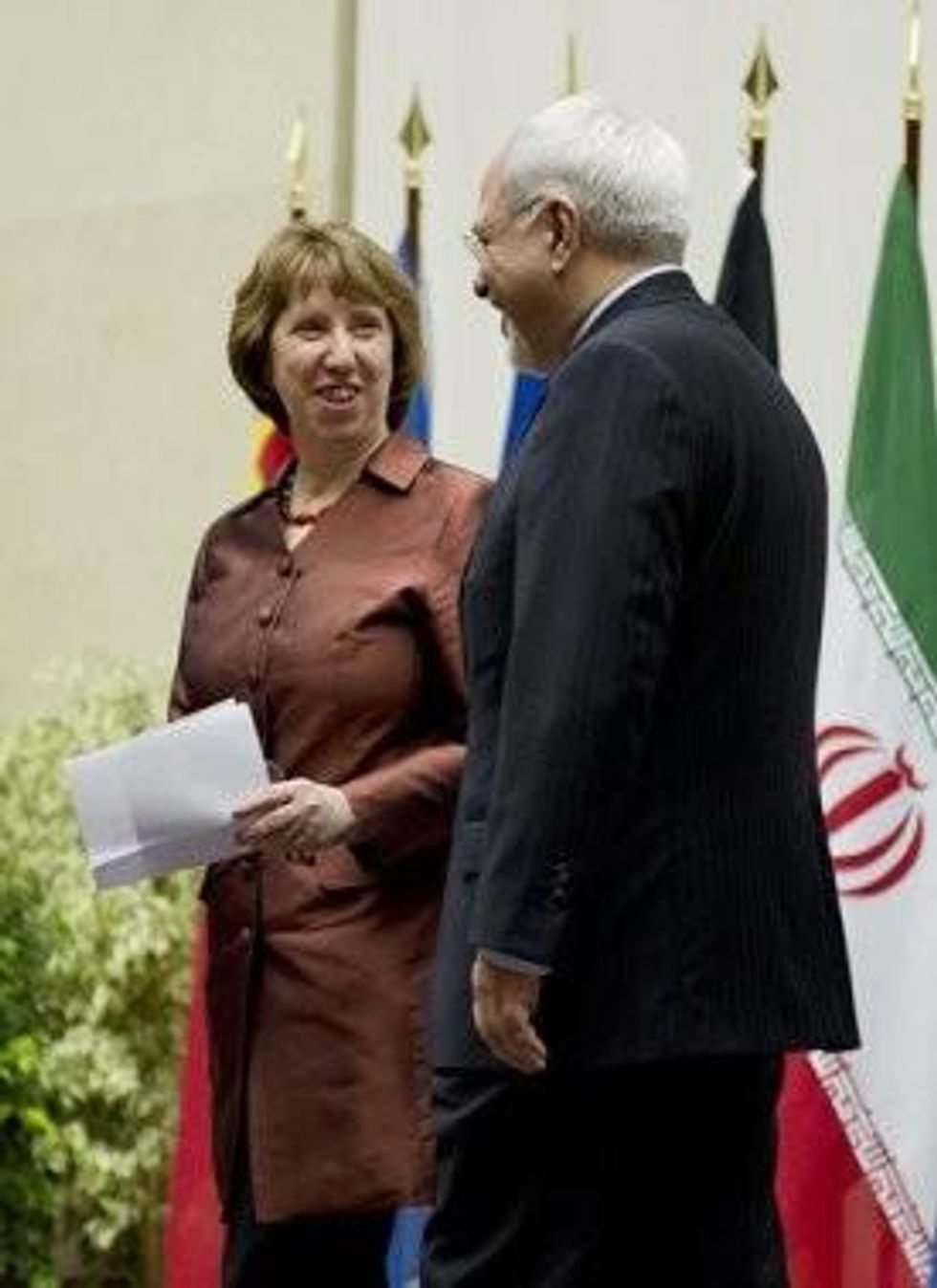
After all the gnashing of teeth, beating of breasts and tearing of hair coming from Israel and its American supporters, you'd think last week's nuclear deal in Geneva has opened the way for Iran to become a mighty nuclear weapons power.

Bowing to intolerable sanctions and economic warfare from the US, Tehran agreed to limit uranium enrichment to only 5% (over 80% is needed to make a nuclear weapon). This low level is sufficiently only for power generation. Iran is to stop enriching to 20%, the level needed for medical isotopes.
Iran further agreed to halt construction of its Arak heavy water reactor that could eventually produce plutonium, a key nuclear weapons fuel. Tehran agreed not to build any new nuclear facilities, including next generation centrifuges, and grant daily access to UN nuclear inspectors at its top-secret Nantaz and Fordow plants. It will provide design plans for its Arak reactor.
In short, Iran freezes its modest nuclear program to the point where it can only be used for civilian energy purposes.
For these major concessions, Iran will be paid $7 billion - of its own money, which has been frozen abroad by US-led sanctions. Some sanctions will be slightly eased. Iran will regain access to some of its gold and cash held abroad. But most of its $ 100 billion in assets frozen abroad will remain blocked. Tehran will be able to sell modest amounts of oil at current restricted levels, and fund some Iranian students abroad. Big deal.
Iran will be finally allowed to buy some parts for its dilapidated civilian airliners that have become flying coffins because of sanctions. But, apparently, not new western aircraft.
The Geneva accord will last for 6 months, then be reviewed.
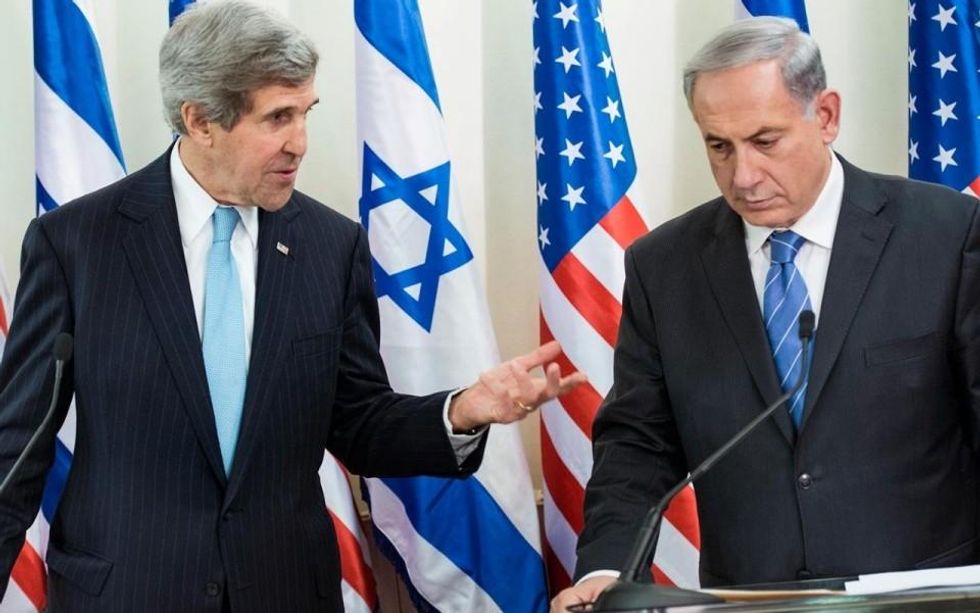
Given all the American and Israeli talk of war against Iran, it represents something of a triumph for US, Russian, EU and Chinese diplomacy. President Barack Obama and Secretary of State John Kerry deserve kudos for engineering the deal - both the open one in Geneva, and the backroom talks run out of Oman.
Russia's deft Foreign Mininster Sergei Lavrov also deserves applause, having contributed much diplomatic skill and intelligent policy to the negotiations.
There appears no way Iran could even come close to making a few nuclear weapons - or, for that matter, delivered them at medium range. But that has not quieted the wailing and threats coming from Israel's Benjamin Netanyahu, who has some 200 nuclear weapons tucked away in his basement. Or from America's pro-Israel lobby and its captive Republican Party.
As the great Israeli writer Uri Avnery observed, the US Congress would jump to repeal the Ten Commandments if so ordered by Israel.
We have been watching the ugly spectacle of Congressmen and Senators backing the harsh criticism of their president by Israel's Netanyahu. The US media has also been very biased against the Geneva deal. Yet in spite of this, a recent Pew poll found 44% of Americans supported the Geneva accords while only a small number opposed them.
While Iran has not benefitted from this deal, it has at least lessened the threat of attack. The Geneva accord may pave the way to a warming of relations with the west and America's final acceptance of the Islamic Republic as a legitimate Mideast presence. This prospect that has driven the Israelis and the Saudis into a towering rage.
The campaign to block the Geneva accords has thrust into the daylight the long-covert alliance between Saudi Arabia and the Gulf emirates on one hand, and Israel. Egypt and Jordan are also members of this anti-Iranian camp. The possible emergence of Iran from US-imposed isolation is already throwing the Mideast into convulsions.
We also witnessed at Geneva another example of the consummate, unblushing hypocrisy that makes France often less than loved. France, which has been selling arms to the Gulf Emirates and has a base in Abu Dhabi, held up the Iran deal claiming it would promote "nuclear proliferation." This is the same France that originally sold nuclear technology, weapons and missiles to Israel in the mid-1950's. Quel nerve!
Back in the US, having seen the full might of the pro-Israel lobby attacking their president and making Congress clap like circus seals, many Americans must be wondering if they have lost control of their nation's Mideast policy.
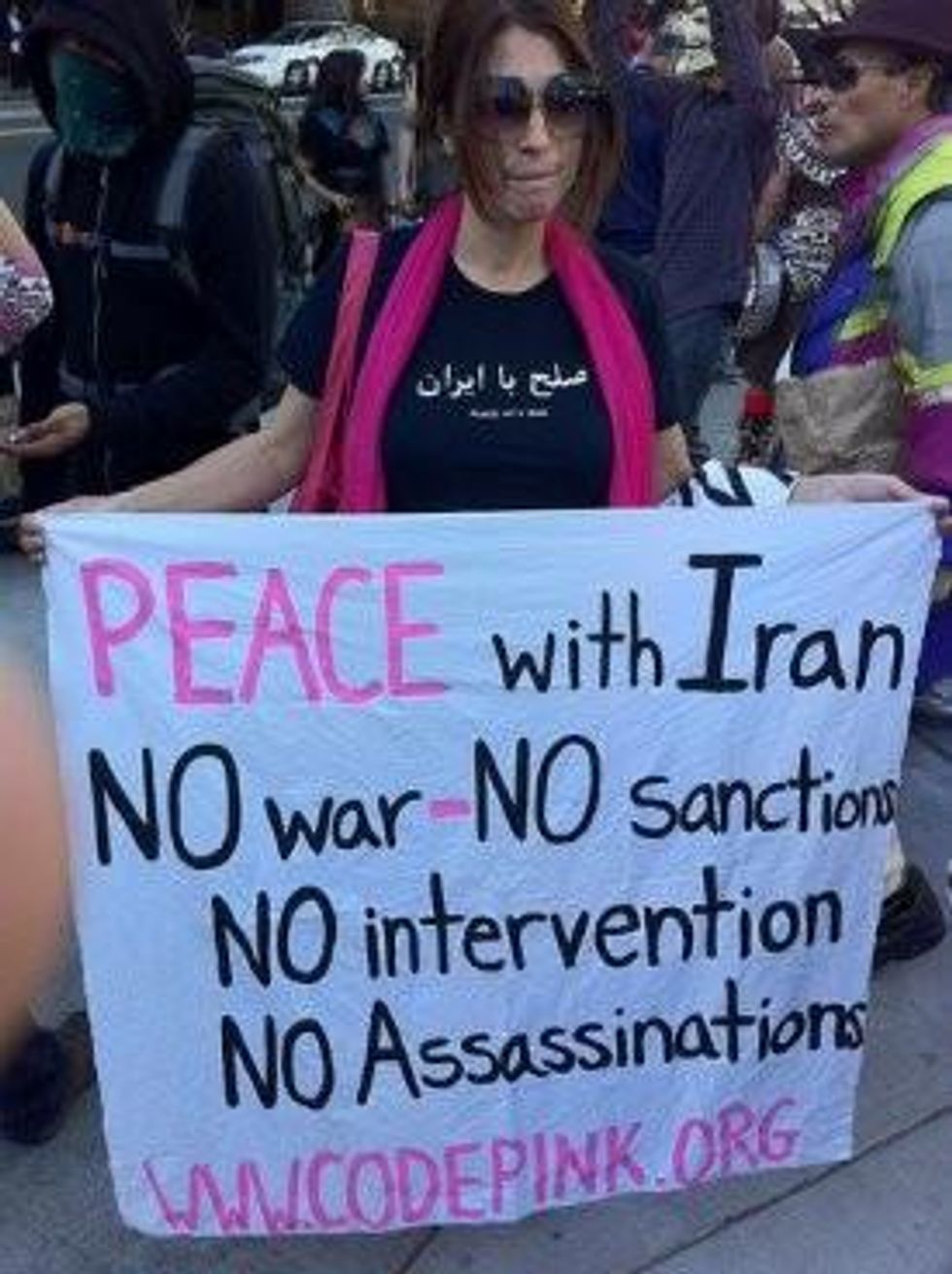
Polls show Americans certainly don't want to fight yet another war for Israel's benefit. PM Netanyahu has gone too far in trying to throw his weight around in America and in humiliated President Barack Obama.
His heavy-handed actions will remind many that the US Congress has been totally corrupted by big money and big media - and needs to be reformed.
As Ben Franklin said, "there is no bad peace; and no good war." So Geneva, however imperfect, is a step forward. Now, we will watch its foes move heaven and earth to sabotage these accords.
In a move consistent with his past positions on international issues, Senator Robert Menendez, the Democratic Chairman of the U.S. Senate Foreign Relations Committee, accused the White House of using "over the top" rhetoric and "fear mongering tactics" to try to stop new sanctions on Iran. These new sanctions were to take effect after the United States brokered an interim deal with Iran over its nuclear program.

Under the deal agreed with Iran, that country will accept restrictions on its nuclear program. In exchange, the U.S. and other world powers will provide limited relief from economic sanctions that have considerably damaged the economy, cut significantly into the country's oil exports and seriously affected the Iranians' quality of life.
Senator Menendez, who often supports President Obama, stated on the National Public Radio program "All Things Considered," "What I don't appreciate is when I hear remarks out of the White House spokesman that...if we're pursuing sanctions we're marching the country off to war. I think that's way over the top, I think that's fear mongering."
Sens. Robert Menendez, D-N.J., and Mark Kirk, R-Ill are preparing a bill to be ready for consideration when the Senate returns Dec. 9 from its two-week recess. The Menendez-Kirk proposal would require the administration to certify every 30 days that Iran is fulfilling the terms of the agreement reached in Geneva and that it hasn't been involved in any act of terrorism against the United States.
Among the reasons the Obama administration has sought a deal with Iran is that limiting U.S. military commitments and resources in the Greater Middle East will allow the U.S. to free them up for use elsewhere or make substantial savings in its military expenditures.
Senator Menendez doesn't seem to see these advantages, and prefers instead to lead an effort to strengthen sanctions and thus increase the animosity with the Iranian government that can only have ominous consequences in any efforts to secure peace with Iran.
Also important to consider is that actions proposed by Senator Menendez hinder the possibility of obtaining Iran's help in solving pressing problems such as the situation in Syria and Afghanistan's rehabilitation efforts. Daud Moradian, the Director of the Afghan Institute of Strategic Studies stated recently that both the U.S. and Iran had started to cooperate in the rehabilitation of Afghanistan's infrastructure.
In spite of that, Senator Robert Menendez said, after the Geneva agreement was announced, "I do not believe we should further reduce our sanctions, nor abstain from preparations to impose new sanctions," something which, if carried out, would again put the region on the path to war.
Regarding these new developments Uri Avnery, one of Israel's leading peace activists stated, "To save itself from the image of utter failure, the American Israel Public Affairs Committee (AIPAC) has started to order its senators and congressmen to work out new sanctions to be instituted in some indefinite future."
New sanctions would destroy the possibility for peaceful coexistence with Iran and would crush Iran's president Hassan Rouhani's efforts to face the hardliners in his country. Trita Parsi, president of the National Iranian American Council and a noted expert on Iranian affairs declared that new sanctions would seriously limit Rouhani's ability to maintain his "soft position" on the negotiations.
A war with Iran would be everybody's loss. This is a fact that American legislators must consider to avoid war or further conflict in the region.
____________________