

SUBSCRIBE TO OUR FREE NEWSLETTER
Daily news & progressive opinion—funded by the people, not the corporations—delivered straight to your inbox.
5
#000000
#FFFFFF
To donate by check, phone, or other method, see our More Ways to Give page.
Daily news & progressive opinion—funded by the people, not the corporations—delivered straight to your inbox.

"While the rich get richer, workers are struggling, and your decision to cut workers' paid vacation is making the problem worse."
Independent US Sen. Bernie Sanders on Tuesday urged the private equity firm that recently acquired Walgreens to reverse its decision to strip hourly workers at the second-largest US pharmacy chain of paid days off on Christmas and other major holidays.
After Sycamore Partners finalized its $10 billion purchase of Walgreens in late August, the pharmacy chain—now headed by CEO Mike Motz—eliminated paid holidays for New Year's Day, Memorial Day, Independence Day, Labor Day, Thanksgiving, and Christmas. Workers were notified of the move, which was first reported by Bloomberg, in October.
The move is typical of what private equity firms—sometimes called vulture capitalists—often do in order to maximize profits. In addition to slashing paid time off and benefits, they often reduce or freeze pay, fire workers, close locations, introduce aggressive sales targets, and reduce job security by replacing full-time positions with hourly or independently contracted workers. Walgreens announced last year that it planned on closing around 1,200 of its roughly 8,000 US stores, citing their struggling performance.
"This Thanksgiving, Walgreens' hourly workers faced the impossible choice between losing pay and spending the holiday with their loved ones," Sanders (Vt.)—who is the ranking member of the Senate Health, Education, Labor, and Pensions (HELP) Committee—wrote Tuesday in a letter to Sycamore Partners founder and managing director Stefan Kaluzny.
"Walgreens employs 220,000 employees, the vast majority of whom are hourly workers... Sycamore Partners' decision to cut paid holidays for these hourly workers is unfortunately not surprising," the senator continued. "The firm follows the private equity playbook of buying businesses and aggressively extracting profit while using and abusing workers."
"For example, just one year after Sycamore Partners purchased Staples, the firm extracted $1 billion from the company as it closed 100 stores and laid off 7,000 workers," Sanders noted. "That same year, Sycamore Partners drove Nine West into bankruptcy and was accused of siphoning off over $1 billion in funds."
"Meanwhile, from 2016-22, companies owned by Sycamore Partners racked up over $3 million in labor violations, including wage-and-hour and workplace safety and health violations," he added.
During the holiday season, we all want to spend time with our loved ones. And yet, just two months after buying Walgreens for $10 billion, the private equity firm Sycamore Partners stripped hourly workers of paid vacation, including Christmas and New Year’s Day. Shameful.
[image or embed]
— Senator Bernie Sanders (@sanders.senate.gov) December 23, 2025 at 9:41 AM
Sanders contrasted a reality in which "60% of Americans are living paycheck to paycheck" with the fact that "more private equity managers make over $100 million annually than investment bankers, top financial executives, and professional athletes combined."
"While the rich get richer, workers are struggling, and your decision to cut workers' paid vacation leave is making the problem worse," he stressed. "Some Walgreens workers make as little as $15 an hour. Cutting their paid leave will make it even more difficult for these workers to pay for housing, childcare, healthcare, and groceries."
"In short," Sanders concluded, "Sycamore Partners is forcing workers to sacrifice their basic needs for private equity profit."
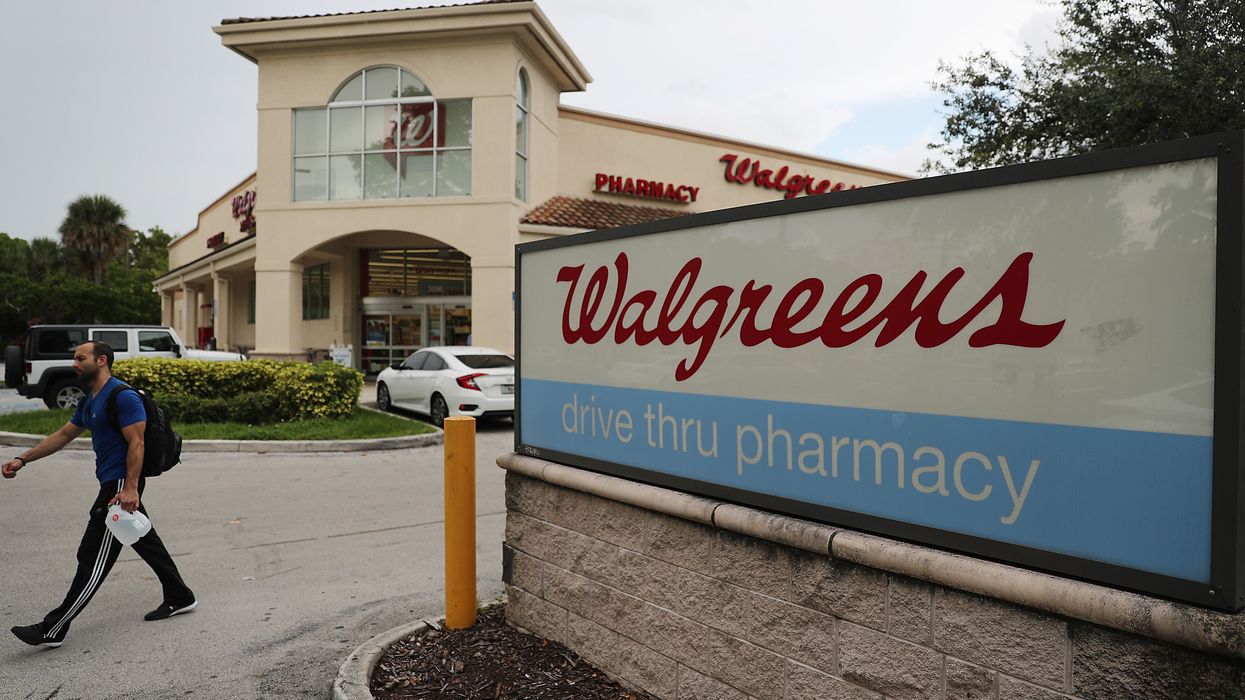
The man who oversaw massive store closures and job cuts at Staples is now in charge of one of America’s most important companies.
Sycamore Partners finalized its $18.8 billion acquisition of Walgreens this summer, relying on a staggering amount of debt to close the deal. However, a more innocuous decision may be the real warning sign that could spell doom for Walgreens and its workers: Sycamore installed Mike Motz, the CEO of Staples US Retail—another company it owns—as Walgreens’ new chief executive.
That appointment should alarm every patient, pharmacist, and community that depends on Walgreens. Motz took over at Staples US Retail in April 2019, the same month that Sycamore Partners added debt to Staples’ balance sheet to extract a $1 billion dividend for itself. Under Sycamore’s ownership, Staples has shuttered a third of its US stores, cutting tens of thousands of jobs. Just this September, Staples subsidiary Essendant announced hundreds of layoffs in Ohio, North Carolina, Florida, Texas, New Jersey. If 33% of Walgreens stores were to close, the fallout could be catastrophic: more than 70,000 layoffs and communities losing access to pharmacies and essential medications.
Sycamore Partners has developed a reputation for squeezing cash out of its acquisitions at the expense of long-term stability. The firm's history already contains documented, high-profile bankruptcies and mass layoffs. Belk and Nine West both went bankrupt while under Sycamore’s control. At Nine West, bankruptcy meant the closure of 70 stores and widespread layoffs. Belk, which Sycamore Partners acquired in a leveraged buyout in 2015, filed for bankruptcy in 2021 with $1.9 billion in funded debt. Aeropostale, meanwhile, claimed that onerous terms from Sycamore’s apparel sourcing arm helped drive it into bankruptcy.
Staples, one of Sycamore’s best-known acquisitions, has endured years of store closures since being taken private in 2017. With Sycamore in control, Staples closed roughly 33% of its stores. The decision to put the Staples CEO in charge of Walgreens signals that the same corporate strategy of mass closures may now be applied to one of America’s most important healthcare access points. The problem is not only who is running Walgreens, but also the strategy that the new executive represents.
The Walgreens acquisition is one of the largest private equity healthcare buyouts in history. That makes its outcome a bellwether for how Wall Street’s debt-fueled model could continue to reshape the healthcare sector.
Sycamore’s portfolio companies have also been cited repeatedly for workplace safety failures. Staples alone has had 37 Occupational Safety and Health Administration violations totaling more than $192,000 in fines since Sycamore acquired it—23 of them classified as serious, meaning hazards that could cause severe injury or death. Across Sycamore’s retail holdings, the absence of significant union representation has left workers without a collective voice to push back against these conditions.
Beyond leadership, the financial engineering behind this deal sets Walgreens up for trouble. Sycamore Partners relied on more than 70% debt ($13.33 billion out of $18.8 billion) to fund its acquisition of Walgreens, which is an unusually high level, compared to recent private equity buyouts. That level of leverage puts Walgreens on unstable footing from day one.
The risks of the usage of high levels of debt in private equity takeovers is well-documented. In the first quarter of this year alone, 70% of large US corporate bankruptcies involved private equity-owned companies. These bankruptcies followed a familiar script: Firms borrowed heavily to finance buyouts, extracted value from their portfolio companies, and left them unable to withstand market pressures or economic downturns. Walgreens now carries those same risks.
Sycamore Partners’ acquisitions have amassed it a portfolio of mostly retail companies, but now the Walgreens buyout brings the firm directly in contact with a public health system that hundreds of millions of Americans rely on daily. Many communities, particularly rural towns, low-income areas, and minority neighborhoods, have limited access to pharmacies.
Store closures in those communities wouldn’t just mean inconvenience; they could mean patients losing access to lifesaving medications, routine vaccinations, and basic health consultations. The potential job losses are equally severe. If tens of thousands more workers are laid off, that kind of shock would ripple across local economies, cutting off benefits and wages for tens of thousands of families.
The Walgreens acquisition is one of the largest private equity healthcare buyouts in history. That makes its outcome a bellwether for how Wall Street’s debt-fueled model could continue to reshape the healthcare sector. Unfortunately, the early warning signs are clear. A heavily indebted company, led by an executive imported from another Sycamore-owned retailer, looks less like a turnaround story and more like the setup for another collapse.
Sycamore Partners insists it can manage Walgreens successfully. But the history of the firm’s operation of its portfolio companies tells a different story. From bankruptcies at Belk and Nine West to sweeping layoffs at Staples, the firm’s track record speaks for itself. Local communities, workers, and patients may once again pay the price for Wall Street’s short-term gains.
Walgreens is more than just a household brand. For millions of Americans, it is a vital link to the healthcare system. By wresting control of Walgreens, and importing the same leadership that oversaw Staples’ store closures and job cuts, Sycamore Partners has put that link at risk. Unless something changes, the consequences could be measured not just in balance sheets, but in lost jobs, shuttered stores, and diminished access to care.
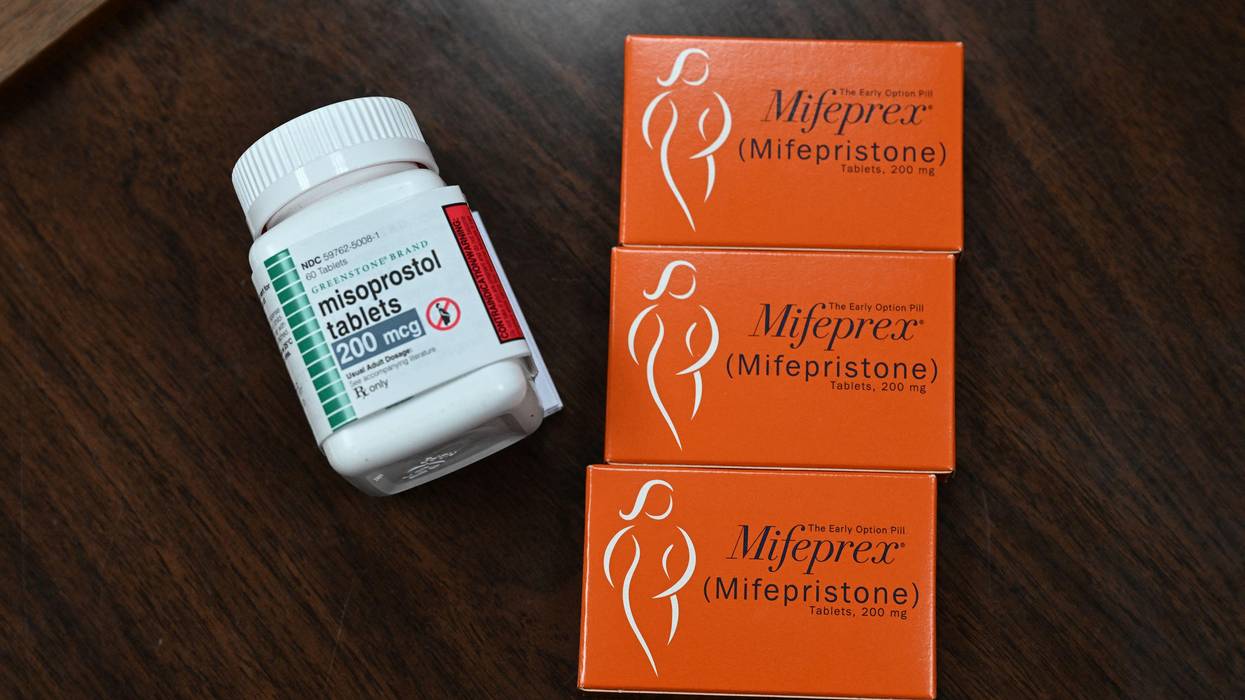
"I encourage all pharmacies that want to pursue this option to seek certification," said President Joe Biden.
CVS and Walgreens will soon start offering the abortion pill mifepristone in certain states, including New York, Pennsylvania, Massachusetts, California, and Illinois.
It's not yet clear how many pharmacies in those states will sell the drug. Walgreens is considering expanding this offering to Kansas, Montana, and Wyoming.
The U.S. Food and Drug Administration announced a rule change in January of last year that made it so retail pharmacies like CVS and Walgreens would be permitted to sell the abortion pill. Retail pharmacies that would like to be able to sell mifepristone have to certify that they know how to treat abortion patients and require that patients fill out a consent form before obtaining the drug.
🥳 Huge W for abortion access 🎉
CVS and Walgreens can now offer #mifepristone - one of the pills used in medication abortion - in states where abortion is legal!
This is ✨great news✨, but let's be clear - everyone deserves access to abortion care, no matter where they live. https://t.co/aieNA4PAO5
— Planned Parenthood (@PPFA) March 1, 2024
"With major retail pharmacy chains newly certified to dispense medication abortion, many women will soon have the option to pick up their prescription at a local, certified pharmacy—just as they would for any other medication. I encourage all pharmacies that want to pursue this option to seek certification," President Joe Biden said in a statement.
Mifepristone is the subject of an upcoming Supreme Court case that could see access to the drug limited. U.S. District Judge Matthew Kacsmaryk, a former anti-abortion activist, issued a nationwide ban on the sale of mifepristone in April of last year in response to a lawsuit in his district that was brought by right-wing activists.
Kacsmaryk argued the FDA was wrong to approve the drug in 2000—which is very safe and has been used for decades. The Supreme Court put a hold on the ban in late April and then agreed to take the case in December.
It remains to be seen what the Supreme Court will do, but it could very well affect retail pharmacies' ability to sell mifepristone. Considering this is the court that overturned Roe, pro-choice voters are very worried about what the outcome might be. A ruling is expected in late June.
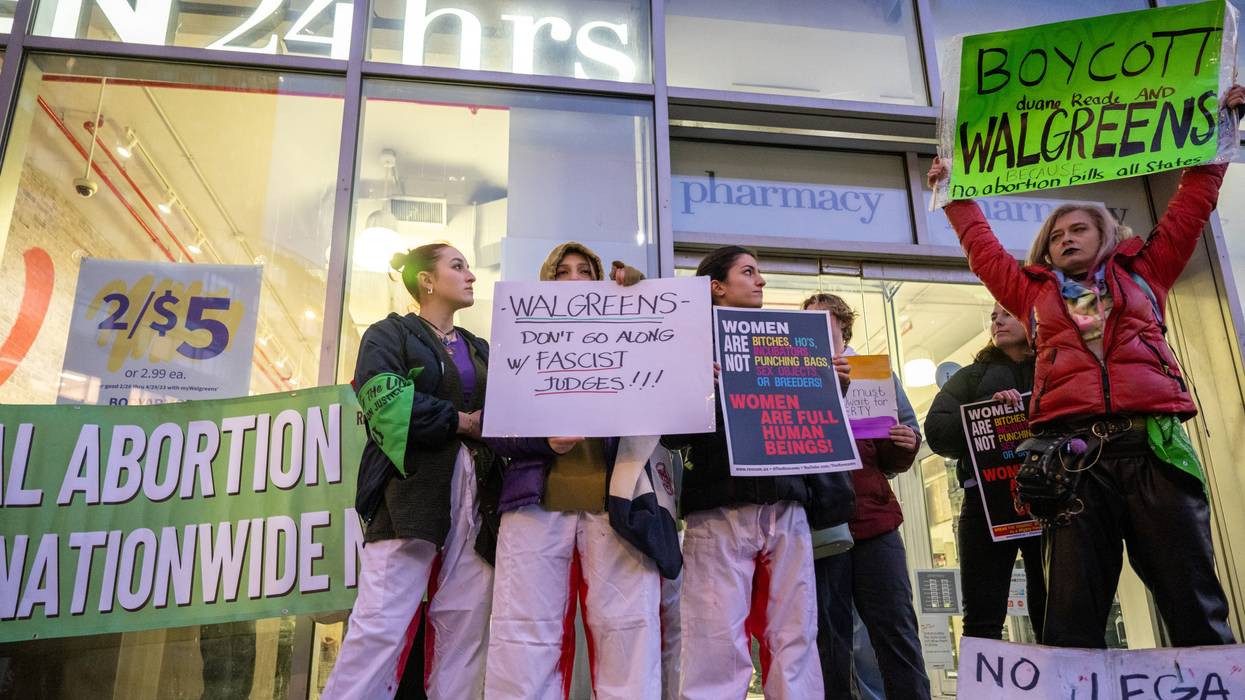
"As companies that dispense critical, lifesaving medications, we urge that your decisions continue to be guided by well-established science and medical evidence and a commitment to the health and well-being of patients—not politics or litigation threats," wrote 14 governors.
With Walgreens under fire for its new abortion pill policy, 14 Democratic U.S. governors on Tuesday asked the corporate leaders of seven other major pharmacies to clarify their plans to lawfully distribute abortion medication like mifepristone.
The Food and Drug Administration (FDA) in January announced a regulatory change to allow retail pharmacies to dispense mifepristone, one of two medications commonly taken in tandem to induce abortion. The move came after the U.S. Supreme Court last summer reversed Roe v. Wade with its 6-3 ruling in Dobbs v. Jackson Women's Health Organization.
In the wake of the high court decision, patients have had to contend with trigger laws, new efforts to enact abortion bans, and other attempts by right-wing political leaders to cut off access to healthcare, including 20 GOP state attorneys general who last month threatened legal action against Walgreens and CVS if they dispense abortion medication by mail.
While shortly after the FDA announcement both pharmacy giants confirmed they planned to seek certification to distribute mifepristone, Walgreens later clarified it won't offer the drug in states where Republican AGs have threatened legal action—prompting California Gov. Gavin Newsom last week to not renew his state's $54 million contract with Walgreens.
Newsom is spearheading the Reproductive Freedom Alliance and on Tuesday joined the Democratic governors of Illinois, Maine, Maryland, Massachusetts, Michigan, Minnesota, North Carolina, New Jersey, New Mexico, New York, Oregon, Washington, and Wisconsin in sending letters to the leaders of Costco, CVS, Health Mart, Kroger, Rite Aid, Safeway, and Walmart.
As the governors wrote:
We are deeply committed to protecting and expanding reproductive freedom and the health and well-being of all of our residents. As governors of 14 states, we not only represent over 141 million residents with a combined economy of over $11 trillion, but we are also direct customers who have partnered with many of your companies for years on a variety of issues and initiatives. We understand you are carefully reviewing the new mifepristone certification process. We look forward to receiving your plans for dispensing mifepristone in states where such care is legal, as well as any other actions you plan to take to safeguard access to reproductive healthcare.
"As companies that dispense critical, lifesaving medications, we urge that your decisions continue to be guided by well-established science and medical evidence and a commitment to the health and well-being of patients—not politics or litigation threats," the governors added.
Meanwhile, Sens. Patty Murray (D-Wash. ) and Debbie Stabenow (D-Mich.) revealed a series of letters—backed by several Senate Democrats—sent to various pharmacy leaders in recent days. They wrote to Walgreens' chief executive officer "with grave concerns about the misunderstanding and confusion your company has created with regard to patients' access to mifepristone from retail pharmacies."
Walgreens' response to Republican attorney generals' pressure "was unacceptable and appeared to yield to these threats—ignoring the critical need to ensure patients can get this essential healthcare wherever possible," the senators continued. "As you work through the FDA certification process, we urge you to fully assess the laws in each state and ensure your policies provide the strongest possible legal access to this critical patient care."
Stabenow told NBC News, which first reported on the senators' letters Tuesday, that "in no way, shape, or form should businesses deny legal healthcare to women who have the right to access this vital medication. All businesses should follow the FDA certification process and fully comply with applicable state and federal law."
The Senate Democrats wrote to the CEOs of Albertsons, Costco, Kroger, and Walmart "with great frustration" that none of them has publicly indicated whether they plan to allow customers to access mifepristone through their pharmacies across the country.
After expressing concern that GOP intimidation tactics could "lead companies like yours to continue to sit on the sidelines and undermine critical care for your customers," the senators urged those four chains "to pursue policies that provide the strongest possible access to the full range of essential healthcare they need, including mifepristone, and to communicate clearly to your customers about how they can access this care."
"We look forward to hearing back from you by March 21, 2023 about your intentions to ensure access to this critical FDA-approved product," the lawmakers added.
In letters to CVS and Rite Aid leadership, the Senate Democrats expressed appreciation for both chains' ongoing efforts to become distributors of mifepristone while also stressing that "at a time of great confusion about abortion access, it is imperative that no company adds to it."
The senators asked both companies' leaders to respond to three questions by March 21:
"Medication abortion is how most women across our country get abortion care," Murray told NBC, "and it's absolutely critical patients can access this safe, FDA-approved drug without being forced to jump through medically unnecessary hoops or drain their bank accounts to travel hundreds of miles."
The questions and concerns about accessing mifepristone at retail pharmacies come as patients and providers nationwide prepare for a secretive Wednesday hearing before right-wing U.S. District Court Judge Matthew Kacsmaryk regarding an anti-choice group's effort to limit abortion access by arguing that the FDA never should have approved the drug over two decades ago.

"This willful corporate choice will prevent so many women from choosing the healthcare they need and have a legal right to," said Sen. Tammy Duckworth.
Calls to "boycott Walgreens" grew on social media after the United States' second-largest pharmacy chain confirmed Thursday that it will not sell abortion pills in nearly two dozen GOP-controlled states, including several where such medication remains legal.
Walgreens' decision came after 20 Republican state attorneys generals in February threatened the company with legal action if it began distributing mifepristone by mail.
The AGs wrote that federal law and many state laws prohibit "using the mail to send or receive any drug that will 'be used or applied for producing abortion,'" adding that "the text, not the Biden administration's view, is what governs."
After a yearslong study by the U.S. Food and Drug Administration (FDA) found that mifepristone is safe and effective to use without a doctor's visit, the agency in January updated a rule allowing retail pharmacies to sell the drug—part of the Biden administration's attempt to protect abortion access in the wake of the U.S. Supreme Court's June 2022 decision overturning Roe v. Wade, which unleashed a right-wing assault on reproductive freedom that experts say violates international human rights law.
As Politico first reported Thursday, Walgreens recently informed the AGs that it will not dispense mifepristone either by mail or at its physical stores in the 20 states where those officials are the top law enforcement officers.
Abortion in general, and medication abortion in particular, are still legal in some of the affected states, including Alaska, Iowa, and Montana.
Ashley Fairbanks wrote that "the only way to end corporate compliance with fascism is to impact their profits."
"Looks like it's time to boycott Walgreens," tweeted Corinne Blalock of Yale Law School. "I really can't get over how disgusted I am by... private corporations unilaterally denying millions of women's access to reproductive healthcare."
Calling Walgreens' move "absolutely awful," Sen. Tammy Duckworth (D-Ill.) warned that "this willful corporate choice will prevent so many women from choosing the healthcare they need and have a legal right to," and implored the company to "reverse course—immediately."
The FDA approved the use of mifepristone, taken in conjunction with misoprostol, for abortion within the first 10 weeks of pregnancy in 2000. Medication abortion became the most common method in the U.S. for terminating a pregnancy in 2020.
Walgreens' decision, meanwhile, underscores the extent to which abortion access varies in the post-Roe U.S., including in states where the GOP has not outlawed the healthcare procedure.
According to The Associated Press:
Nineteen U.S. states have imposed restrictions on abortion pills, but there's a court battle over whether they have the power to do so in defiance of U.S. Food and Drug Administration policy. A physician and a company that makes the pill mifepristone filed separate lawsuits earlier this year seeking to strike down bans in North Carolina and West Virginia.
The FDA for more than 20 years limited dispensing of the drug to a subset of specialty offices and clinics because of safety concerns. But it eased restrictions since the start of the Covid-19 pandemic by eliminating the in-person requirement for the pill and allowing brick-and-mortar pharmacies to dispense it. At least one lawsuit filed by abortion opponents argues that the FDA has overstepped its authority in approving the abortion drugs.
A Walgreens spokesperson said Thursday that the company is not yet selling abortion pills anywhere in the country but is working to become eligible through the FDA's certification process, after which it "will dispense only in those jurisdictions where it is legal to do so."
E. Michael Murphy, the adviser for state government affairs for the American Pharmacists Association, told Politico that members of the group are struggling to navigate "blatant contradictions between state and federal law that make it very challenging to identify what is legal and what is not legal."
"We are very concerned with those reports," he said, "because we as pharmacists want to ensure the patients have access to the best possible care that's informed by evidence."
As Bloomberg reported:
The nation's biggest pharmacy chains announced in January that they planned to seek U.S. certification to sell the pills used in medication abortion, after the U.S. Food and Drug Administration loosened restrictions on where the drugs could be dispensed.
The attorney generals' February 1 letter was sent after the companies stated their intention. A rival missive was sent to executives at Walgreens and CVS by 23 Democratic state attorneys general two weeks later, urging them to ignore the legal threats from the GOP states.
According to Politico, "The group of Republican attorneys general, who argue that the Biden administration is misinterpreting the laws around mailing and dispensing abortion pills, also wrote to CVS, Albertsons, Rite Aid, Costco, Walmart, and Kroger demanding they, too, refuse to dispense the medication."
While "some independent and online pharmacies say they will seek certification to provide the drugs in these states, advocates warn that the impact of Walgreens' decision could significantly limit access," Politico noted.
Elizabeth Nash, a state policy expert at the Guttmacher Institute, told the outlet that forced pregnancy advocates and the pharmacy chain are "denying people agency over their lives."
"When we're thinking about states that have a lot of their population in rural areas, it's much more likely that a pharmacy is nearby than a provider's office," said Nash, "so these pharmacies play an outsized role in patient health and access to healthcare."

"In a time when reproductive healthcare is under attack, our group of 23 attorneys general strongly believe we should be encouraging companies and providers to offer easily accessible, safe, and confidential healthcare as broadly as possible."
Warning that Republican-led states have launched an effort to keep millions of people from accessing lifesaving medications, 23 Democratic state attorneys general on Thursday sent a letter to officials at CVS and Walgreens to assure the pharmacies that they can legally dispense and mail mifepristone and misoprostol, the pills used in medication abortions.
The attorneys general of Oregon, California, and Washington spearheaded the letter two weeks after their Republican counterparts in 20 states
told the pharmacies that they could be in violation of the Comstock Act, dating back to the 1870s, if they deliver the pills to patients by mail.
"This claim is misguided and disregards over a century's worth of legal precedent," wrote the Democratic attorneys general. "As extensively detailed in the [Food and Drug Administration] Office of Legal Counsel's recent memorandum opinion, since the early 20th century, federal courts have repeatedly and consistently held that the Comstock Act does not categorically prohibit mailing items that can be used to terminate a pregnancy, and does not apply unless the sender intends the recipient to use them unlawfully."
The Republican attorneys general, led by Andrew Bailey of Missouri, issued their warning to the two largest pharmacy chains in the U.S. a month after the FDA announced that certified retail drugstores can dispense misoprostol and mifepristone, reversing longtime regulations that required patients to obtain the latter pill only at health clinics. Health professionals had long advocated for the change, saying the restrictions unnecessarily reduced access to the medications.
Both CVS and Walgreens announced shortly after the rule was changed that they intended to apply for certification to dispense the pills.
Oregon Attorney General Ellen Rosenblum denounced Republican states for attempting "to scare retail pharmacy chains away from offering these critical medications," which are used to treat miscarriages, ectopic pregnancies, and gastric ulcers as well as inducing abortions.
"Mifepristone and misoprostol are safe, effective medications that are prescribed by doctors for many purposes, including abortion," said Rosenblum. "In a time when reproductive healthcare is under attack, our group of 23 attorneys general strongly believe we should be encouraging companies and providers to offer easily accessible, safe, and confidential healthcare as broadly as possible."
In addition to highlighting the safety and effectiveness of the pills, the attorneys general emphasized that:
Medication abortions accounted for 51% of all abortions in the U.S. in 2020, according to the Centers for Disease Control and Prevention. Misoprostol and mifepristone have been approved for use in abortion care through 10 weeks of gestation since 2000.
"Increasing access to safe and affordable reproductive healthcare is critically important to the health and well-being of millions of people across the country," said New York Attorney General Letitia James. "The evidence is clear: Medication abortion is safe and effective, and decades of clinical research back that up. Pharmacies that offer this lifesaving medication have the full support of my office."
The attorneys general sent the letter as reproductive rights advocates brace for a ruling on abortion pills by U.S. District Judge Matthew Kacsmaryk in Texas. The judge, who was appointed by former Republican President Donald Trump, has given attorneys arguing a case brought by an anti-abortion group until February 24 to finish filing legal briefs, indicating that a ruling could come soon.
The plaintiffs have asked Kacsmaryk to reverse the FDA's approval of mifepristone, which would cut off access to the drug across the nation.
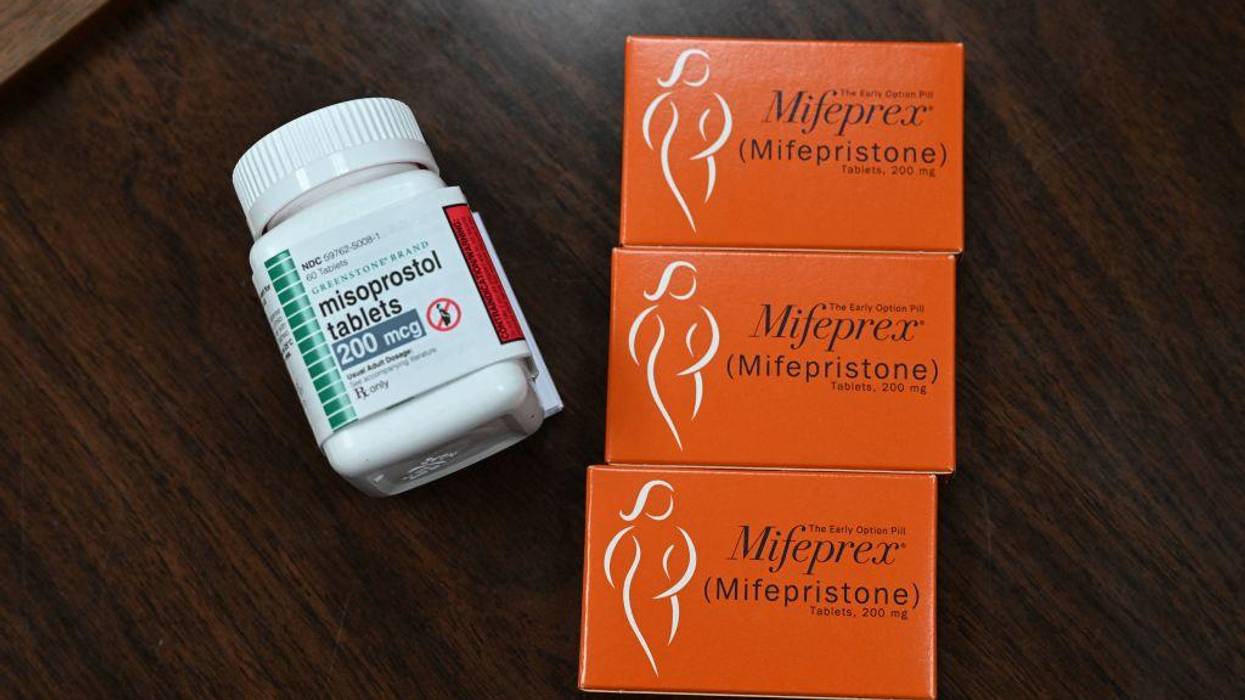
"This is the most important government action today and it didn't involve Kevin McCarthy," said one journalist.
The Food and Drug Administration late Tuesday formalized a regulatory change that will allow retail pharmacies in the U.S. to dispense abortion pills for the first time, removing a major barrier to access as Republican lawmakers wage all-out war on abortion throughout the country.
Prior to the newly finalized change, the provision of mifepristone was heavily restricted, with only certified doctors or clinics allowed to offer the drug—one of two medications that can be taken in tandem to induce an abortion. In 2020, medication abortion accounted for more than half of all abortions in the U.S.
The New York Times, which first reported the FDA's move Tuesday, noted that "in December 2021, the FDA said it would permanently lift the requirement that patients obtain mifepristone in person from a health provider, a step that paved the way for telemedicine abortion services which conduct medical consultations with patients by video, phone or online questionnaires and then arrange for them to receive the prescribed pills by mail."
"On Tuesday, the FDA officially removed the in-person requirement from its regulatory rule book for mifepristone, leaving in place the remaining two requirements: that health providers be certified to show they have the knowledge and ability to treat abortion patients and that patients complete a consent form," the Times added.
Patients will still need a prescription to obtain abortion pills from CVS, Walgreens, and other retail pharmacies.
Mini Timmaraju, the president of NARAL Pro-Choice America, applauded the FDA for "following the science and taking this much-welcome step to permanently lift the in-person dispensing requirement for medication abortion care and expand access through pharmacies."
"For more than 20 years, millions of people have used medication abortion," Timmaraju said in a statement. "It is a safe, effective option. With abortion access being more restricted now than ever before, it is all the more important that we continue expanding access to care. This was a science-based decision that will empower folks to get the care they need in the way that best works for them. We look forward to continuing our work with the Biden administration to restore the right to abortion and expand abortion access for all."
The regulatory move was made public by the FDA with little fanfare amid the absurd spectacle of Republicans trying—and repeatedly failing—to decide who will lead their narrow majority in the House of Representatives.
"This is the most important government action today and it didn't involve Kevin McCarthy," The American Prospect's David Dayen wrote of the FDA news.
"With abortion access being more restricted now than ever before, it is all the more important that we continue expanding access to care."
Despite the FDA's change, retail pharmacies located in Republican-controlled states where abortion is heavily restricted or illegal will likely still be unable to offer abortion pills.
"State laws that ban or restrict abortion apply to medication abortion just as they apply to abortion procedures," the Kaiser Family Foundation (KFF) explains. "Even though the federal FDA has approved mifepristone as safe and effective, following the Dobbs decision, the availability of medication abortion today depends on state laws. Even before the Dobbs decision, however, some states restricted access to medication abortion either by blocking the use of telehealth abortions by mandating in-person visits for abortions, imposing requirements for in-person dispensing, or limiting the kinds of clinicians who could dispense the pills (only permitting MDs to dispense). In many states, these laws are now superseded by state laws that ban abortion."
The reproductive rights group UltraViolet lamented that fact Tuesday, writing on Twitter that "in abortion-hostile states, retail pharmacies may not be able to dispense mifepristone due to abortion bans like Texas' S.B. 8, which criminalizes and punishes those who help others access abortion."
In a separate decision Tuesday, the Justice Department's Office of Legal Counsel said federal law "does not prohibit the mailing, or the delivery, or receipt by mail of mifepristone or misoprostol where the sender lacks the intent that the recipient of the drugs will use them unlawfully"—a legal opinion that will allow the U.S. Postal Service to carry abortion pills into red states.
"There are manifold ways in which recipients in every state may use these drugs, including to produce an abortion, without violating state law," the OCL opinion reads. "Therefore, the mere mailing of such drugs to a particular jurisdiction is an insufficient basis for concluding that the sender intends them to be used unlawfully."
Kirsten Moore, director of the Expanding Medication Abortion Access Project, told Politico on Tuesday that "in a post-Roe world, patients need all available options to get the care they need, whether in-person, by mail, or at the local pharmacy."
"Millions of people still live in states where abortion care is banned entirely," said Moore. "The kind of care you get shouldn't depend on where you live, but that's the reality anti-abortion politicians have created."
This story has been updated to correct the spelling of NARAL Pro-Choice America's president.