From Teapot Dome to Corruption 2.0
While US presidential history isn't short on scandals, self-enrichment corruption under Trump 2.0 is—to borrow his pet refrain—“like nothing we’ve ever seen before.”
Does Teapot Dome ring a bell?
Generations of high school history teachers taught Teapot Dome as an outrageous episode of unprecedented and still unsurpassed corruption. A 1960s US history textbook is typical:
Death mercifully claimed [President Warren G.] Harding on August 2, 1923, before the worst of the scandals came to light, that involving the naval oil reserves at Teapot Dome, Wyoming, and Elk Hills, California. These reserves had been transferred to private control on noncompetitive bidding by Secretary of the Interior [Albert B.] Fall, after Harding had moved control of them from the Navy Department to the Interior Department. Fall’s transfer of the reserves, which had raised suspicions, created a furor when it was discovered that Fall had obtained a $100,000 interest-free loan, $233,000 in Liberty Bonds, and a herd of blooded cattle in the transaction. Fall was indicted, prosecuted, and sentenced to a year in prison and a fine of $100,000. The Secretary of the Navy, who was guilty of stupidity in permitting the original transfer, was forced to resign.
“The worst of the scandals”? One hundred thousand dollars in 1923 would be worth about $2 million today. Those Liberty Bonds would be worth $4.5 million. Measured against the Trump 2.0 regime, the scale of this corruption is small potatoes.
A Century of Corruption
To be sure, in the century between Teapot Dome and Trump 2.0 other presidents engaged in less-than-upright behavior. The Internal Revenue Service (IRS) found that Nixon owed substantial back taxes, leading to his famous "I am not a crook" speech (and the Watergate burglary led him to resign). Lyndon Johnson ordered the Federal Communications Commission (FCC) to give preferential treatment to his wife’s radio and TV stations. Over 120 of Ronald Reagan’s appointees resigned because of indictments, convictions, or being under a cloud, until then the largest number of corruption cases of any administration in US history (though nothing stuck to the original “Teflon President”). Bill Clinton invited political donors to sleep in the White House’s Lincoln Bedroom. Republican allegations that Joe Biden engaged in “egregious” corruption never panned out, though his son Hunter did parlay family connections into profitable business partnerships abroad. During Trump 1.0, the president’s main self-enrichment schemes involved millions that government agencies, public officials from Congress, the executive branch, and state and foreign governments, lobbyists, corporate bigwigs, and political campaigns spent at his hotels and golf courses and some modest pay-for-access schemes like hiking Mar-A-Lago membership dues.
“Like Nothing We’ve Ever Seen Before”
Self-enrichment corruption under Trump 2.0, however, is—to borrow his pet refrain—“like nothing we’ve ever seen before.” Here’s a non-exhaustive catalog, limited to self-enrichment schemes involving the president and his family and cronies (many machinations occur behind the scenes). A full treatment of corruption that did not involve direct self-enrichment would include partisan gerrymandering; voter suppression measures; gutting regulation and oversight mechanisms; extorting universities, law firms, and news media; no-bid contracts for campaign donors’ companies; destroying the government registry of anonymous shell companies; and bogus investigations of political opponents and voting rights and civil rights organizations. Such a list would require not an opinion column, but an encyclopedia or a new wing of the Museum of Political Corruption. Some of the bullying efforts did end up enriching President Donald Trump, as when Paramount paid him $16 million (plus $20 million of additional advertising commitments) for the supposedly deceptive editing of a 2024 Kamala Harris interview. Shortly thereafter, the FCC approved Paramount’s $8 billion merger with Skydance, bringing CBS News into the right-wing media ecosystem (A subsequent merger with Warner Brothers is on hold, but could do the same with CNN).
As during Trump 1.0, under 2.0 foreign entities and political groups directed funds to Trump-owned properties. Events like the Saudi-backed LIV Golf tournament held at one of Trump's Florida clubs resulted in massive payouts. Trump continues to rake in millions in name licensing. He leaned on Amazon founder Jeff Bezos to pay tens of millions for a documentary about Melania that bombed at the box office.
When the Trump 2.0 administration facilitates the use of offshore financial paradises to shield corporate profits from taxation, services get cut and the rest of us must pay higher taxes to make up the difference.
Government watchdogs tracked hundreds of major donors who funneled money into inaugural and political action committees, vanity projects like the White House ballroom, and Trump family cryptocurrency ventures. Many received ambassadorial, cabinet, and other high-level appointments. The crypto initiatives—which generated an estimated $2.3 billion for the family and at least $3.8 billion in losses for retail investors—are vehicles for foreign and corporate interests to buy favors, such as regulatory rollbacks, tariff relief, and government contracts. Days before Trump’s second inauguration, the Emirati royal family took a 49% stake—$500 million—in World Liberty Financial. Not long after, the Trump administration green-lit the sale to the UAE of Nvidia AI chips, a deal that netted $187 million for the Trumps and $31 million for the family of Trump's Middle East envoy Steve Witkoff. Shortly before the Trump administration eased sanctions on his family’s businesses, Indian billionaire Mukesh Ambani invested at least $100 million in a struggling Texas startup, America First Refining, which had secretly given Donald Trump Jr. a financial stake.
Emblematic of the mixing of business with Middle East policy—directed by Witkoff and Trump son-in-law, Jared Kushner—himself from a notoriously corrupt family—was Qatar’s “donation” of a pimped-out 747 jet worth $400 million as a new, fancier Air Force One and eventual exhibit at Trump’s planned presidential library. Since 2025, Trump’s adult sons raked in millions from war industry start-ups. A Washington Post investigation found these firms generated “at least $3.2 billion in direct government business since the sons invested and an additional $3.1 billion in future contract options. Some have gained coveted spots on shortlists of preapproved contractors that can bid exclusively on up to nearly $200 billion in future work.”
The Trump Organization pursued over 20 overseas projects, many tied to foreign state investments. A $1.5 billion golf resort in Vietnam that may throw 4,000 farmers off their land drew scrutiny when the US lowered threatened tariffs shortly after the project broke ground. Kushner’s plans to build a multibillion-dollar resort in a protected natural reserve in Albania have backfired in the face of massive public resistance and accusations that the Miami-based businessman who sold Kushner the land may have acquired it with laundered drug money and forged deeds.
Pardons and Profits
Corrupt pardons are another way Trump 2.0 benefits and normalizes bribery. Beneficiaries include money launderer Changpeng Zhou of Binance, who cut a deal with World Liberty Financial (which this month received conditional approval to become a bank); narco and former Honduran President Juan Orlando Hernández, whose pardon likely buttressed a pro-Trump candidate in that country’s election; and New York Mayor Eric Adams, who received various emoluments from the Turkish government and promised to cooperate with Trump on immigration enforcement. Court decisions and public outrage may have killed the proposed $1.776 billion "anti-weaponization" fund to compensate political allies. But the resolution of Trump’s $10 billion IRS lawsuit—clear collusion between the plaintiff and the government he runs—granted him and his family members and companies immunity from all federal tax audits and liabilities for returns filed prior to May 19, 2026, a gift likely worth between $100 and $600 million. While a court struck this down, Trump is appealing.
Under Trump 2.0, insider trading and pump-and-dump schemes proliferated. Trump purchased more than $1 million in Dell stock not long before the Pentagon awarded a $9.7 billion contract to the Texas-based computer company. Three months before White House advisers pressed the Pentagon to loan $620 million to Vulcan Elements, Donald Trump Jr.’s venture capital firm took an undisclosed stake in the North Carolina-based rare earths start-up. Another federally financed rare earths deal that Commerce Secretary Howard Lutnick negotiated with Kazakhstan netted Lutnick and Trump businesses millions in fees and profits. Trump Jr. also invested in a drone manufacturer, Unusual Machines, and received an additional 200,000 shares for serving as an adviser. The day the company announced his appointment, its stock nearly doubled, making him millions of dollars.
During the on-again off-again war against Iran and the on-again off-again trade wars, Trump’s comments and social media messages about impending “deals,” attacks, or tariffs provided ample opportunities for insiders to speculate on oil futures, stocks, and prediction markets. Trump has reportedly traded individual stocks on which he possibly had insider information. Trump Media even pitched a $100,000-per-month data feed —“Truth API” —to deliver banks and trading outfits “the fastest” access to influential Truth Social posts, a bargain for large-scale market cheaters.
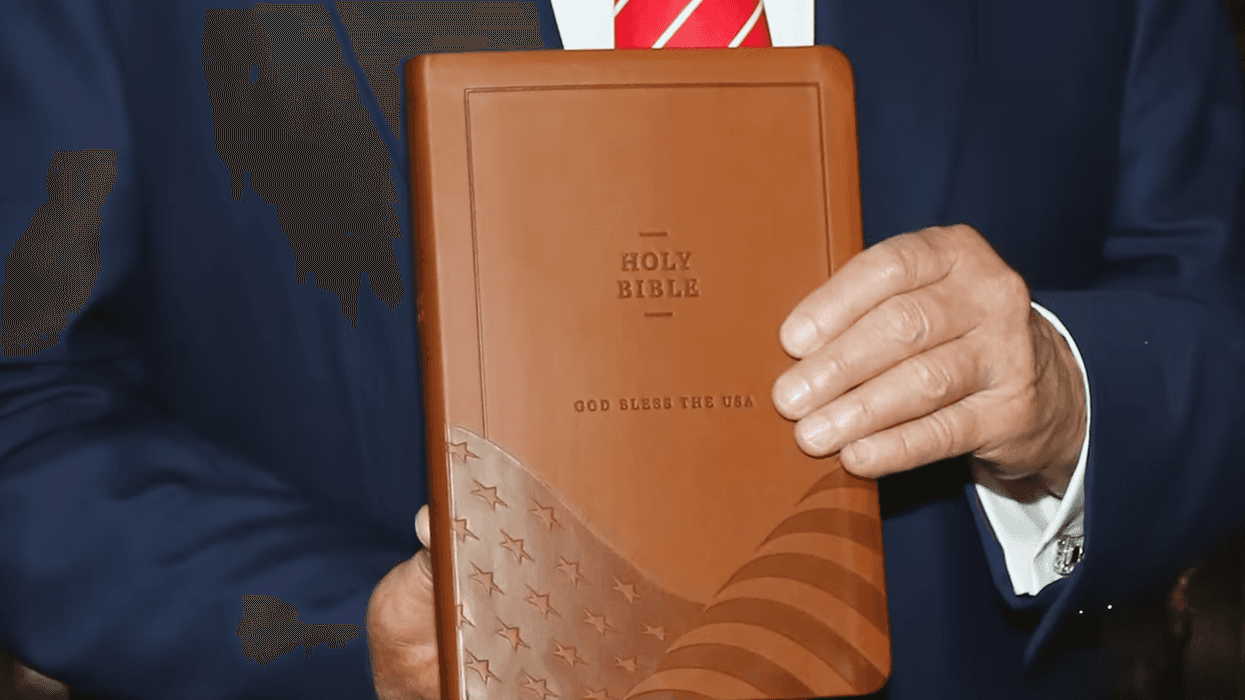
And since all that grift doesn’t sate Trump’s infinite need for more wealth, he ratcheted up sales of overpriced caps, watches, gold-colored cell phones, autographed Bibles, gold sneakers, bathrobes, fragrances, pickleball paddles, keychains, fake gold playing cards, and assorted other branded merch, trashing all previous norms about tasteful, dignified, and ethical presidential behavior.
How It Impacts Americans
The New York Times, The Wall Street Journal, The New Yorker, and books such as Barbara McQuade’s The Fix: Saving America from the Corruption of a Mob-Style Government have covered the Trump 2.0 grift in greater detail than is possible here. What they often fail to emphasize sufficiently, however, are the myriad connections between this thievery and harms that average Americans experience.
When the Trump 2.0 administration facilitates the use of offshore financial paradises to shield corporate profits from taxation, services get cut and the rest of us must pay higher taxes to make up the difference. The same is true for billionaires who don’t pay taxes. Tariffs hit Americans in their pocketbooks, as have skyrocketing energy prices resulting from the Iran War and demand from new data centers and crypto farms.
When the Trump regime finally ends —as it inevitably will—how many of us will remember the details of its record-breaking corruption? How many of us will demand accountability?
When Meta’s Mark Zuckerberg agreed to pay Trump $25 million to settle a dispute over the suspension of his Facebook page in the aftermath of January 6, to reinstate the page and eschew fact-checking on the platform, and to donate $1 million to Trump’s 2025 inaugural bash, it exposed Americans to increased disinformation, while depriving them of the tools needed to detect it.
When the president illegally refuses to spend funds Congress appropriated, it undermines government programs, including those that serve the most vulnerable Americans, such as Medicaid and Supplemental Nutrition Assistance Program recipients, veterans, and Social Security disability and retirement beneficiaries.
Probably the worst aspect of Trump 2.0 is the restructuring of government institutions and the entire economy to serve private interests, whether by scrapping regulations that expose us to toxins, financial predators, and dangerous workplaces or by rewriting history to erase painful aspects of our history and the contributions of minorities, women, immigrants, and other groups the regime detests. Elevating loyalty over competence facilitates this reengineering of governance to favor the mega rich and exacerbates domestic and geopolitical tensions.
In 2018, Steve Bannon famously articulated a key Trump stratagem, “to flood the zone with shit.” The intention was to deploy spectacle and disinformation to overwhelm and exhaust the media and citizenry, sow chaos and confusion, deflect and distract from real problems, erase memory, and assure that nobody would hold the powerful to account. Bannon is out, though still bloviating in the manosphere, but the shit flood continues. When the Trump regime finally ends —as it inevitably will—how many of us will remember the details of its record-breaking corruption? How many of us will demand accountability?
Maybe Teapot Dome didn’t ring a bell. How many of us recall our high school history courses, anyway? The New Republic recently summed up the contemporary significance of that ancient scandal: “For a long time, Harding’s administration had a serious claim to the title of ‘most corrupt’... Harding’s ghost must be grateful to Team Trump.”