

SUBSCRIBE TO OUR FREE NEWSLETTER
Daily news & progressive opinion—funded by the people, not the corporations—delivered straight to your inbox.
5
#000000
#FFFFFF
To donate by check, phone, or other method, see our More Ways to Give page.
Daily news & progressive opinion—funded by the people, not the corporations—delivered straight to your inbox.
"We all—all the nations—have to sit down at the table and see what we can do so that we don't lose any more lives at sea," said Cabo Verde's health minister.
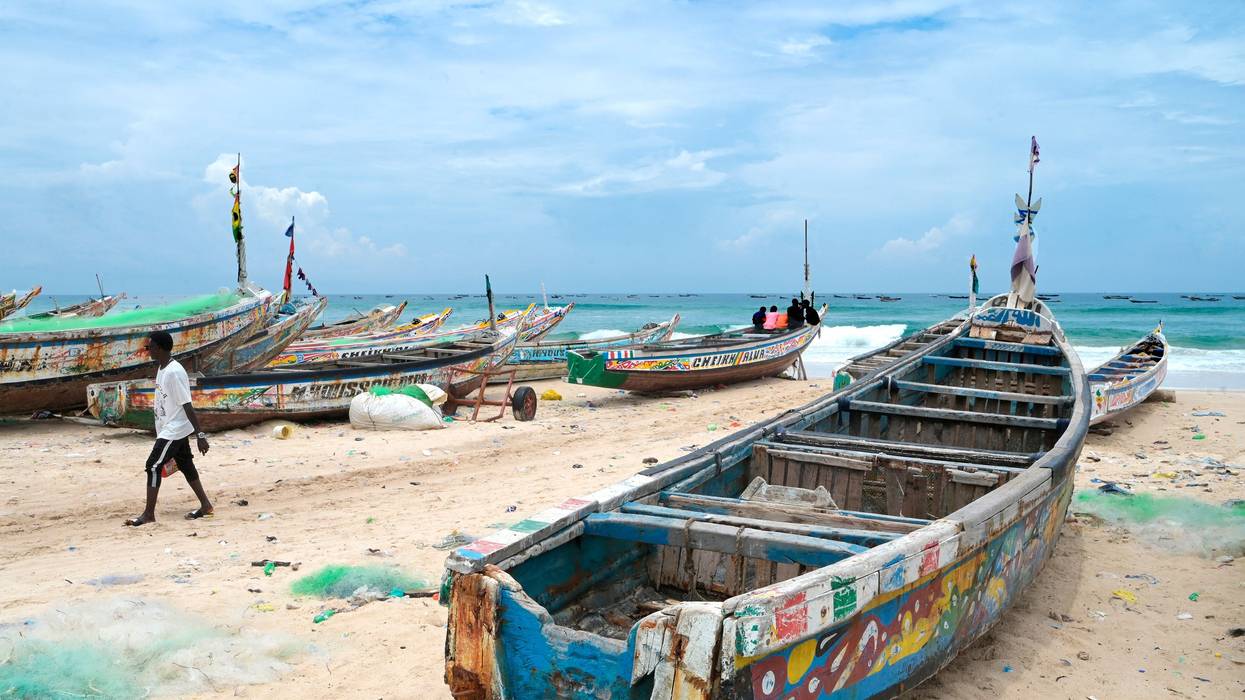
Human rights defenders on Thursday called on the international community to work together to better protect migrants making the perilous journey from Africa to Europe amid reports that scores of people likely drowned after the boat on which they were traveling was found adfrit in the Atlantic Ocean near Cabo Verde.
At least 63 migrants are believed to have died at sea after their pirogue, or wooden Senegalese fishing boat, was found floating approximately 150 nautical miles off the island of Sala in the West African archipelago nation, the United Nations' International Office for Migration (IOM) said Wednesday. Seven bodies were found aboard the boat, while an estimated 56 people are missing.
"Generally, when people are reported missing following a shipwreck, they are presumed dead," IOM spokesperson Safa Msehli told Agence France-Presse.
Msehli said that 38 survivors from the boat, including four children, were rescued earlier this week by a Spanish fishing boat near Cabo Verde. Almost all of the rescued migrants were from Senegal, where the boat reportedly set sail more than a month ago. Others hailed from Guinea-Bissau and Sierra Leone.
Cabo Verde, located nearly 400 miles off the West African coast, lies along a major migration route to the Spanish Canary Islands, considered a gateway to mainland Europe. At least 67,000 migrants landed in the Canary Islands between 2020 and 2023, according to BBC News.
Over that same period, nearly 2,500 people are known to have died trying to reach the islands—although experts say many migrant deaths are not registered, so the actual toll is likely much higher. In June, the IOM said that nearly 3,800 people died on all Middle East and North Africa migration routes last year, the highest annual total since 2017, when 4,255 deaths were recorded.
"It's absolutely devastating what's happened, because we know that these deaths are entirely avoidable," Natasha Tsangarides, associated director of advocacy at the U.K.-based advocacy group Freedom From Torture, told BBC News in response to the Cabo Verde tragedy. "No one gets in a boat like that unless they're absolutely desperate."
Cabo Verdean Health Minister Filomena Gonçalves said that "we know that migration issues are global issues, which require international cooperation, a lot of discussions, and global strategy."
"We all—all the nations—have to sit down at the table and see what we can do so that we don't lose any more lives at sea, above all," she added.
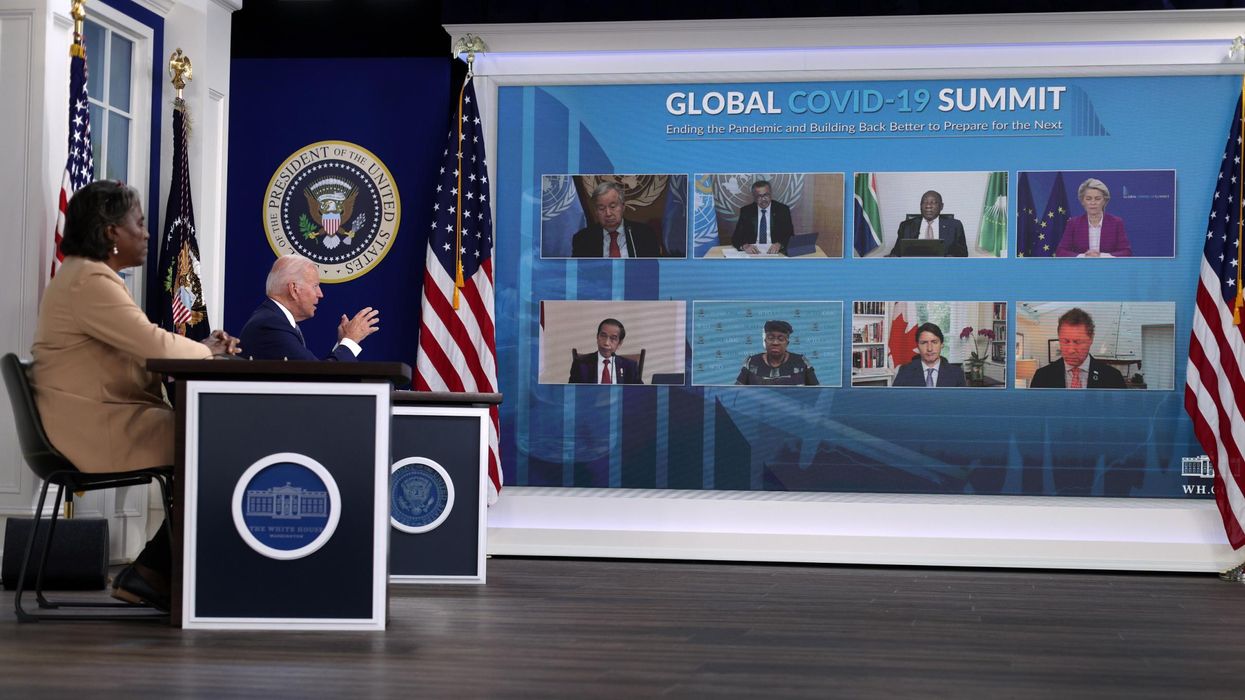
As the White House on Monday announced the convening of a Second Global Covid-19 Summit next month, a leading public health advocate called U.S. President Joe Biden's response to the crisis "late and anemic," while urging his administration to "fight like hell" for congressionally imperiled funding to combat the ongoing pandemic.
"Five billion dollars is the bare minimum; far less than what is needed. The White House needs to fight like hell for that money and much more."
The governments hosting the summit--the United States, Belize, Germany, Indonesia, and Senegal--said in a joint statement that the May 12 virtual conference "will redouble our collective efforts to end the acute phase of the Covid-19 pandemic and prepare for future health threats."
The co-hosts said the conference will "build on the themes and commitments" made at the first Global Covid-19 Summit, which was hosted virtually by Biden last September. Top agenda items include "getting shots in arms," as well as increasing testing and treatment, expanding and protecting health workers, boosting local manufacturing of "medical countermeasures," and funding preparedness for future pandemics.
At last year's summit, Biden promised the United States would become the world's "arsenal for vaccines" and would donate 1.1 billion Covid-19 doses of the inoculations to the developing world by 2023. An analysis published last month by the consumer advocacy group Public Citizen warned that the administration was likely to miss even that modest goal unless it increased donations by 50%.
Peter Maybarduk, director of Public Citizen's Access to Medicines program, asserted Monday that the summit is "late and necessary."
"The U.S. could show up empty-handed to its own summit, making it harder to summon commitments, unless Congress funds the global fight," he warned.
Last month, the House of Representatives slashed $5 billion in proposed global pandemic response funding from an omnibus spending bill, money the administration had requested to carry out its National Covid-19 Preparedness Plan. Without that funding, the administration's program to combat the pandemic around the world is in danger of stalling.
At the time Maybarduk called the cut "a choice to extend the pandemic."
"Five billion dollars is the bare minimum; far less than what is needed," he warned on Monday. "The White House needs to fight like hell for that money and much more."
News of the second summit comes as the World Health Organization reportedly prepares to release an estimate based on more than a year of research that around 15 million people worldwide have died during the pandemic.
Related Content

At last year's summit, Biden called upon the world's nations to work toward vaccinating 70% of the world's population within a year. Experts warned that the summit's goals fell far short of what was needed to end the pandemic and downplayed the obligations of wealthy nations to end vaccine, testing, and treatment apartheid caused by government policies more aligned with the interests of the pharmaceutical industry than with global public health.
According to the Johns Hopkins University Coronavirus Resource Center, 4.4 billion people, or 57.8% of the world's population, have been fully vaccinated against the coronavirus. However, inoculation rates are far lower in much of the Global South. In 16 nations--13 of them in sub-Saharan Africa--less than 10% of the population has been fully vaccinated. In Haiti, the rate is 1.02%. In Burundi, it's less than one-tenth of one percent.
A February 22 Lancet article noted:
Widening gaps in global vaccine equity have led to a two-track pandemic with booster Covid-19 vaccinations proliferating in high-income countries... and first doses not yet reaching all populations in low-income countries. Early in the pandemic, the Covid-19 Vaccines Global Access Facility (COVAX) promised equitable vaccine supplies for all countries. However, with insufficient funds and donations, COVAX has faltered, failing to meet even half of its 2021 target of delivering two billion doses.
"As we enter the third year of the pandemic and the new Omicron variant emerges, we recognize that the pandemic has been prolonged by corporate greed and vaccine inequity endorsed by many of our world leaders," Rhiannon Osborne and Dr. Marie-Claire Wangari wrote in a report published last month.
"The pandemic has been prolonged by corporate greed and vaccine inequity endorsed by many of our world leaders."
"To date, the insufficient vaccine supply to countries in the Global South has led to many preventable deaths," they continued." Rich countries have hoarded vaccine doses, leaving other countries without the protection they need and having to rely on donations. Despite public funding of vaccine research and development, pharma monopolies are still not waiving intellectual property rights for the Covid-19 vaccine, which would save lives."
While more than 100 countries--including a handful of wealthy nations like the United States and France--support a proposal by India and South Africa to waive parts of the Agreement on Trade-Related Aspects of Intellectual Property Rights (TRIPS), the European Union, as well as rich countries such as the United Kingdom, Norway, Singapore, and Switzerland, have fought to block its adoption.
Every morning for the last two months, I've checked the news in my home state of Florida with growing concern.
First came the photos of unemployed people lining up to file for benefits in person, denied access to an overburdened system. Then came the news that only a tiny percentage of unemployment claims were paid out by late April.
Now, barber shops and nail salons are reopening, even as the state saw its deadliest week yet. Altogether, the news paints a horrifying picture of a government cruelly uninterested in protecting human life.
The overwhelming majority of Americans continue to support social distancing and stay at home orders. But right-wing forces across the country are demanding an end to life-saving lockdowns, cheered on by a White House well aware of how devastating the loss of life could be.
The government estimates a death count as high as 3,000 people a day. Despite those horrifying numbers, some states are encouraging employers to report workers who are afraid that returning to their jobs could amount to a death sentence, kicking them off unemployment.
As other countries have shown with far more grace, the alternative isn't shutting down forever -- it's investing in testing and social safety nets.
Every level of the U.S. government has shown, time and again, that the default setting is to leave the vulnerable behind. But Americans themselves are challenging that approach.
Senegal, which has 50 ventilators for its population of 16 million, is building more through 3D printing, all while it trials a $1 testing kit. The world took note of South Korea's quick and vigorous testing system. Countries across Europe have relied on existing social safety nets to prevent the mass layoffs we've seen here in the U.S.
Ghanaian President Nana Akufo-Addo provided necessary perspective: "We know how to bring the economy back to life," he said. "What we do not know is how to bring people back to life."
By contrast, the Trump administration's callousness has become more evident than ever.
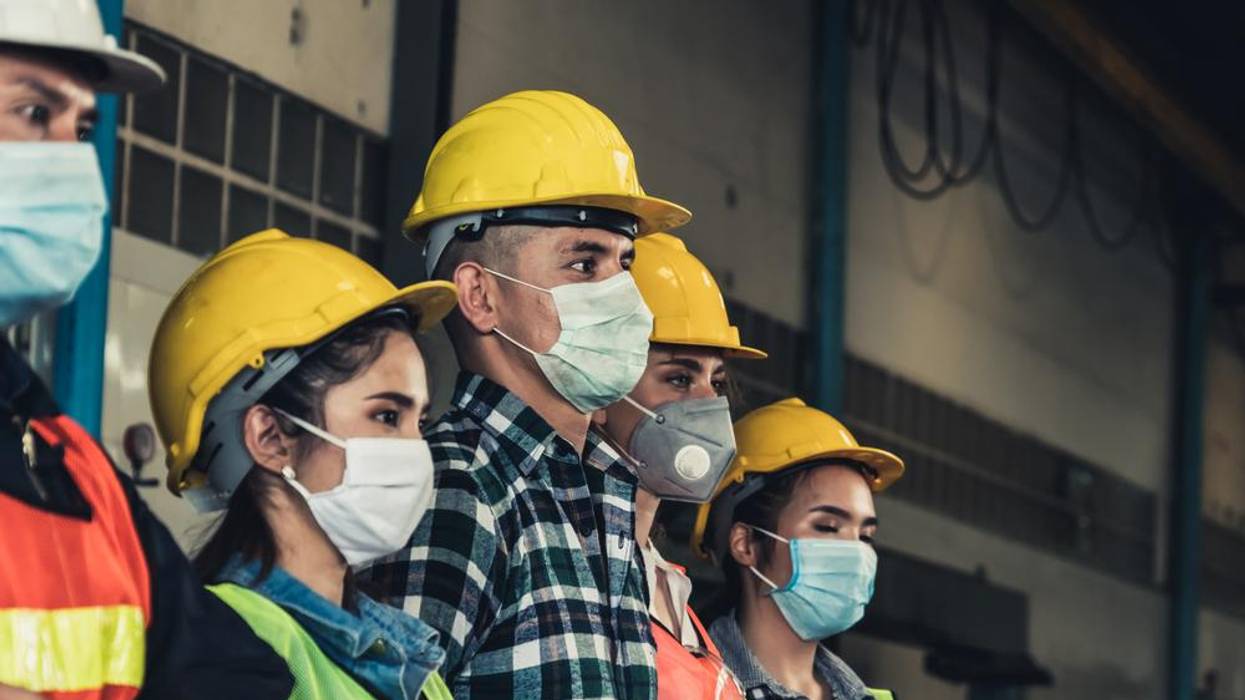
Experts have been sidelined in favor of fumbling volunteers from private equity and venture capital firms, who botched the procurement of medical supplies. And when Trump finally invoked the Defense Production Act, it was to force meatpacking workers -- who are mostly Latinx and Black -- to work through unsafe conditions at the very plants that have emerged as outbreak hotspots.
Indeed, those demographics may help explain the government's willingness to risk lives.
It seems like no coincidence that the far-right pushback became stronger as evidence mounted showing the virus disproportionately killing already marginalized people of color, especially black Americans. And it was hard to miss the Nazi slogan prominently displayed at a "re-open" protest in Illinois, or the Confederate flags featured as far north as Wisconsin.
Government disregard for vulnerable lives is hardly new. Who can forget the New Orleans residents stranded on their rooftops after Hurricane Katrina? Or the disabled New Yorkers left stranded for days after Hurricane Sandy?
Every level of the U.S. government has shown, time and again, that the default setting is to leave the vulnerable behind. But Americans themselves are challenging that approach.
Workers at General Electric protested to switch production to ventilators, a move that could save jobs and lives. Teachers have promised more strikes if schools open against medical advice.
Nurses, in addition to treating the sick, have faced "re-open" protesters head on. And they've stood outside the White House, reading the names of their colleagues killed by government inaction and demanding more protections.
Add these actions to the wave of strikes and sickouts from essential workers across the country, and a clear picture emerges: The wealthy may be fine with sacrificing the vulnerable. But workers understand the sanctity of human life, and will fight for it.
It is certainly too soon to draw some lessons on the effects of the Covid-19 pandemic, since it continues to dramatically affect significant segments of the world population and still remains a puzzle--an enigma--for the world scientific community.
Still, based on certain observations, we can make some preliminary remarks for the African continent.
The phenomenon of globalization, described by its advocates as cast-in stone, a sui-generis universal construct, is quickly turning into a self-encapsulation of nations states left to their own devices. Unseen in the recent history of humanity, this house of cards is on the verge of collapsing on a global scale.
The quasi-universal closing of borders, the massive repatriation of expatriates to their countries of origin, and the stoppage of nearly all international airline transportation around the globe today severely undermines the myth of a unified global village. That myth, brought by the dynamics of globalization and the inevitable centralizing mechanisms of world production and development, led to seemingly unstoppable trends of geo-spatial markets and trade mobilities.
But the sad reality is that Covid-19 has revealed a dark side of this dialectic of globalization. Beyond the celebrated allure of robustness, integration, and interdependency of its constituent part, we discover that globalization is genuinely devoid of those essential virtues of solidarity and subsidiarity.
For more than a month, African countries have been obliged to remain confined withing their own borders. They have had to stoutly explore their own sustainable responses to this global sanitary crisis, a crisis unforeseen just three months ago.
African governments at different levels mobilized their resources and expertise, elaborate innovative strategies, and carry out bold and novel policies to contain the spread of the virus. In this fashion they have eviscerated the afro-pessimist naysayers, who predicted an upcoming African cataclysm.
The earlier apocalyptic forecast predicted for Africans during the first stages of the AIDS pandemic did not gain traction with the reality of health in the continent. A swift and efficiently well-coordinated partnership between African governments and the international community cogently prioritized the fight against AIDS/HIV, despite daunting numerous development challenges which were confronted on a daily basis.
The same efforts allow African governments to handle major health crises efficiently.
They significantly curtail maternal and child mortality rates, even though other pressing sanitary challenges remain to be dealt with.
It is important to acknowledge that when governments embark in solving pressing and major predicaments, successful management requires fostering a patriotic stance. Only in this way can one bring about successful development.
An emphasis on patriotism nurtures and reinforces a climate of collective citizenship, a trust and approval of the political initiatives set in motion by the nations' respective governments: this fosters social and political stability.
This is the case of African countries which underwent through long-standing periods of sustainable economic evolution. Inclusive growth and equity in the continent began with concepts of nationhood.
International cooperation--no matter how valuable and it is--can only assist African governments in their policy initiatives to carry out their development prospects.
Within the current context, one of the first victims of the Covid-19, is undoubtedly multilateralism. The multiple mechanisms and institutional agencies operating in Africa, so far have been basically inept in swiftly handling this major health crisis.
International cooperation has been conspicuously missing in action, or slow to react--despite the advocacy and commitment of the U.N. General Secretary.
More than ever, Africa is conscious that it can only rely on its own forces to protect itself from the devastating effects of the Covid-19.
For instance, in Senegal, at the Dakar Fann Hospital--within a department in charge of handling the severe Covid-19 cases--there are only local physicians, nurses, medical assistants and health care providers. These, and only these, exclusively Senegalese citizens, are fighting on a daily basis against this pandemic.
Here are the current facts: As of April 14, Senegal, has accounted for 299 confirmed cases of Covid-19. Of these, so far, 183 have been cured and two people have died.
Everywhere in the continent, governments are on the task, fighting to work out endogenous solutions with their own means to protect their populations.
Africa is searching for solutions, armed with its past proven resilience in the face of adversity, and its scientific proficiency in the fight against pandemics.
About scientific proficiency: 25 years ago, in 1985, Professor Souleymane Mboup, in his modest laboratory of the Aristide le Dantec Hospital, discovered the HIV 2. HIV 2 is a variant of the HIV 1, a more widely known virus known and studied by his European and American colleagues.
Covid 19 reminds us of an African proverb: "When your house is on fire, you should at first rely on your neighbors to extinguish the fire and then, rebuild your home."
The African Union must, more than ever, reinforce the scientific cooperation among its member states in order to insure our common health sovereignty.
This is urgent, today: To put in place a genuine scientific partnership between our African universities so that we can identify anticipatory and preventive therapeutic and pharmaceutical solutions to human suffering. Only in this way can we be ready to bring quick concerted efforts to deal with unexpected upcoming sanitary crises.
We must actively encourage the scientific African diaspora to build solid cooperation. We must exchange network systems with our counterparts from the continent in order to erect African centers of Research and Laboratory Excellence. Only these will be capable of helping uplift widely recognized African initiatives on the cutting edge of research and development for medicinal and vaccine cures.
This is the true path to our health sovereignty.
From now on, the urgent mission of the African Union and its sub regional commissions must be to unify the fight of Africa against the Covid 19. We must blend and systematize, in concrete form, our intellect and know-how. In this way we can mutualize our resources and galvanize the exceptional resiliency of our people.
When the Texas Health Presbyterian Hospital missed a crucial diagnosis of the Ebola virus and released Liberian Thomas Eric Duncan to go home, it unleashed a sequence of events that is still unfolding rapidly.
As in the great AIDS panic, the introduction of the Ebola infection into the American populace has resulted in confusion, speculation, and hysteria. Even perfectly healthy individuals, such as American reporters who have been to the West African region, find themselves being shunned because of irrational fears.
For better or worse, the response of the authorities to this crisis will go down in history. Certain categorical declarations will particularly stand out--and in some cases return as painful ironies. As an example, in late July, Stephen Monroe--the deputy director of the CDC's National Center for Zoonotic Infectious Disease--stated, "Ebola poses little risk to the U.S. general population," adding that, "the likelihood of the outbreak spreading outside of West Africa is very low."
In an effort to tamp down fears over Ebola, CDC director Thomas Frieden asserted in October that "Ebola is scary. It's a deadly disease. But we know how to stop it." It is unclear whether the "we" refers to the CDC, health facilities more generally, or some other entity, but this firm and sweeping assertion was called into question as news broke of the first and then a second case of Ebola transmission to Thomas Duncan's caregivers at Texas Presbyterian Hospital.
Earlier this month, David Lakey, commissioner of the Texas Department of State Health Services, famously said of Dallas, "This is not West Africa. This is a very sophisticated city." Still not sophisticated enough, apparently, to prevent one fumble after another.
U.S. Lapses
The supposed "mystery" as to how these caregivers contracted Ebola when they were supposedly shielded from transmission by their personal protective equipment (PPE) is actually no mystery at all.
As a physician at a wound care center in Southern California, I go through 10 to 20 units of protective gear every day, one for each patient. A quick, self-administered test on removing my PPE revealed that I did it with less than 100 percent safety. It is, quite frankly, not easy.
With Ebola, even 99 percent safety is not good enough. Many hospitals in the United States use PPE for procedures such as wound repair and colonoscopies. And in many wards and intensive care units, healthcare staff don PPE for cases of MRSA or VRE. But not only does the care required in such "ordinary" protection pale beside the vigilance involved in Ebola exposure, the PPE itself is quite different.
So the answer to whether "we," as Frieden put it, know how to stop the virus here in the United States might well be a "no" at worst and a "sort of" at best.
Indeed, National Nurses United Executive Director RoseAnn DeMoro has claimed that there is an absence of any protocol at the Texas Presbyterian hospital on how to deal with the deadly virus. Other hospitals have opted for the World Health Organization's Ebola protocol instead of the CDC's because of its extra guidelines for hand sanitation.
The CDC poster for removal of PPE shows the use of only a single pair of gloves and appears highly lacking compared to the painstaking measures described by Australian nurse Sue Ellen Kovack at a Sierra Leonean Ebola treatment center. Of note in her account is the liberal dousing with a chlorine (or bleach) spray from head to toe, a chlorine hand rinse, hand washing at least eight times during the procedure, and the use of two pairs of gloves instead of just one as recommended by the CDC. On October 16, the CDC effectively admitted that its own guidelines were lax and has moved to the more exacting guidelines.
Ironically, rough-and-ready Ebola treatment centers like the tents constructed by agencies like Doctors Without Borders are much better equipped for safety procedures like the chlorine bath than many modern Western facilities. To do this in a technologically advanced U.S. hospital, separate alcoves would need to be built in designated spaces to accommodate a "spraying area." That could be extremely complicated in the average intensive care unit.
Learning from Africa
Perhaps we in the United States are learning a small lesson in humility.
Is it possible, for example, that Nigeria, of all places, might have some wisdom to convey to the United States? Both Nigeria and Senegal moved quickly to quell an Ebola outbreak through meticulous contact tracing, coordinated national action, exhaustive interviews, and activation of an Ebola Incident Management Center. Both countries are now reportedly free of the disease.
Although the story is not yet over, the U.S. government has lauded Nigeria's initial management of the outbreak. Indeed, the CDC has now ordered dozens of high-tech, infrared, no-touch thermometers to be used in screening procedures at U.S. gateway airports--the same ones that are already being used in West Africa.
David Lakey is right: Texas is not West Africa. But every once in a while, the West African example is worth following.