SUBSCRIBE TO OUR FREE NEWSLETTER
Daily news & progressive opinion—funded by the people, not the corporations—delivered straight to your inbox.
5
#000000
#FFFFFF
To donate by check, phone, or other method, see our More Ways to Give page.


Daily news & progressive opinion—funded by the people, not the corporations—delivered straight to your inbox.
Elected officials, civil society, and our communities must band together to resist the current assaults on asylum, and push for humane and welcoming border policies.
On January 20, the fate of asylum seekers at the U.S.-Mexico border was abruptly changed as U.S. President Donald Trump announced new executive orders further dismantling the right to asylum.
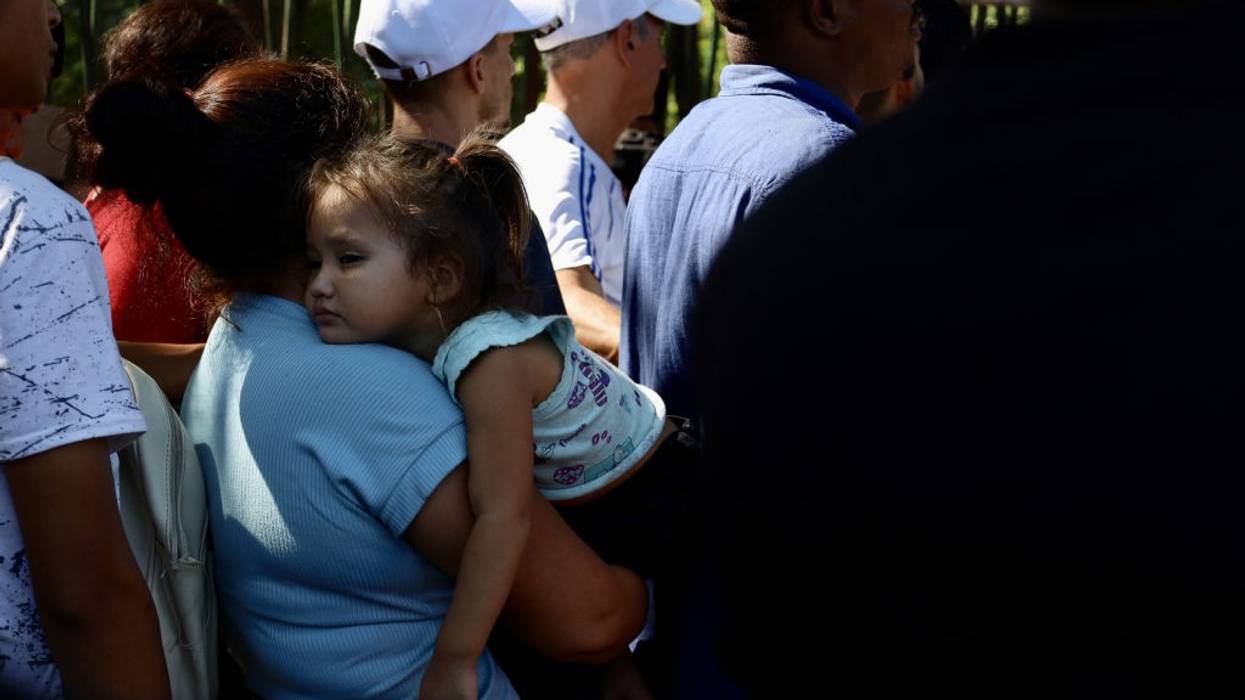
That morning, the patients I saw in our pop-up clinic at a migrant shelter were full of apprehension about the threatened Trump policies, but a sense of hope remained. One young man told me he was so excited he could barely sleep because his CBP One appointment, which would allow him and his family to request parole to enter the U.S. while they applied for asylum, was scheduled for the following day.
By noon, the tone had changed. People tried desperately to log in to the CBP One app but were given error messages. Cancelation notices arrived in the email inboxes of those who had already been granted appointments. One patient who had left his country fleeing political violence and had been waiting for eight months at the border for the appointment, frantically held his phone up to show me the email. “Now what are we supposed to do?” he lamented, “We have nowhere safe to go.”
There is much work to be done now to uphold human rights in the U.S. But we must not forget the people who are desperate for relief at our borders.
Indeed, the end of the CBP One appointment program has effectively closed the door on asylum seekers at the U.S.’ southern border. With the ongoing restrictions of the asylum ban and border closure rules put in place during the Biden administration, there are now no viable legal pathways to entry for the hundreds of thousands of migrants seeking safety at the border.
The effect on our patients waiting in Mexico has been devastating, and it’s only going to get worse. Patients came into the clinic reporting depression, panic attacks, and despair. Some had just narrowly survived being kidnapped, beaten, or raped, and were petrified about being targeted again by the organized crime groups that prey on migrants in Mexican border cities.
Over the years in our clinics, we have seen that increased restrictions in border policies—such as Trump’s Remain in Mexico—increase danger, injuries, mental health problems, childhood developmental problems, and untimely death for asylum seekers trying to make it to the U.S. Most recently, these issues had still been occurring given the long waiting periods of the CBP One system, but now they will undoubtedly worsen.
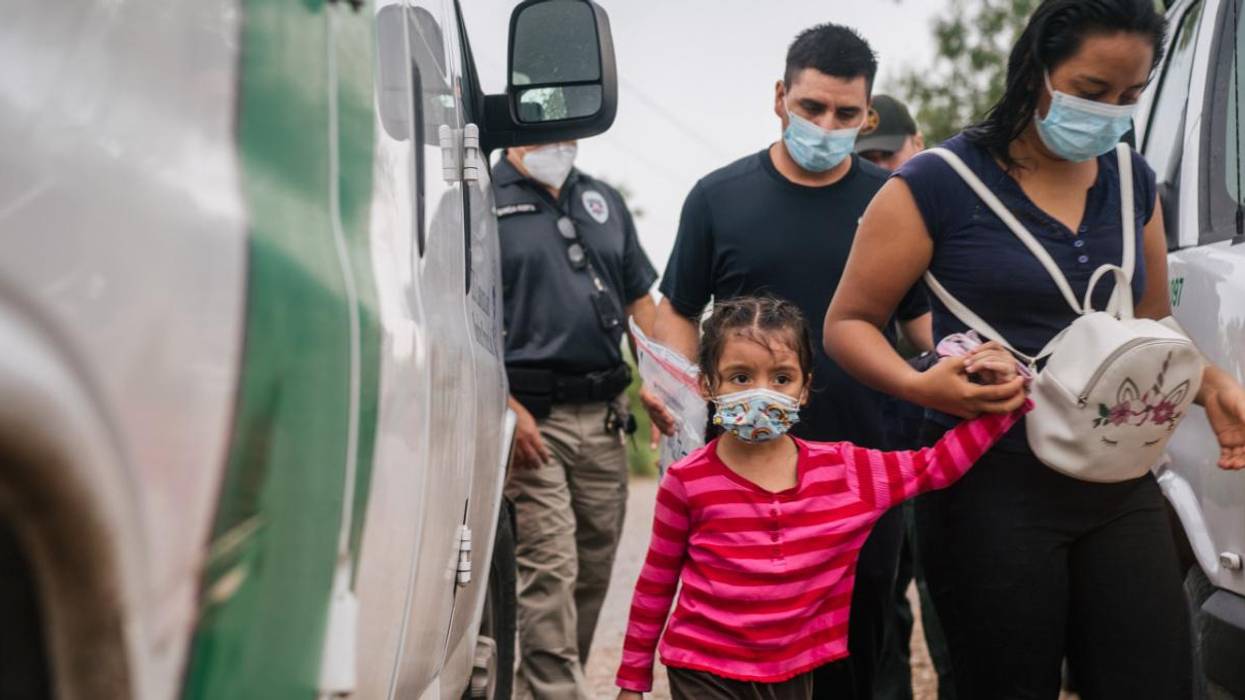
Being stranded leads people to make impossible choices. Some families will risk (and some lose) their lives trying to cross the swift currents of the Rio Grande or the harsh landscape of the desert. Some families choose to send their children over the border unaccompanied, taking on the trauma of family separation because they see no other way for their child to escape from danger and have a better life.
President Trump says we shouldn’t care about the plight of immigrants and should instead focus on American citizens’ needs—of which, undoubtedly, there are many. But such perspectives miss the bigger picture, and are, in fact, woefully inaccurate. Not only are we able to support immigrants, we desperately need to, for the sake of all of us. Without immigrants, we’d be facing a home care crisis, an agricultural crisis, and our economy would suffer. What’s more, the plight of migrants in transit impacts our communities in the U.S. I have patients at my primary care clinic in Massachusetts who have fallen into a deep depression or whose blood pressure has skyrocketed when a loved one of theirs is lost along the migrant route or is assaulted on the journey. Let alone our international and domestic legal obligations that require us to recognize and honor the right to seek asylum.
As our patients at the migrant shelter reeled from the news of the cancelation of CBP One, one man was still smiling. “I believe the new president will have compassion for us,” he said, standing outside his tent and nodding toward his wife and small children inside. “He has a family too. I pray that he will be able to understand that we need safety for our kids.”
It would be nice. But in the absence of that change of heart, our communities need to take action. Elected officials, civil society, and our communities must band together to resist the current assaults on asylum, and push for humane and welcoming border policies. There is much work to be done now to uphold human rights in the U.S. But we must not forget the people who are desperate for relief at our borders—it’s our obligation, and it’s a matter of life and death.
"President Trump will only be able to implement his harmful policies if countries in the Americas agree to play along."
Ten days into U.S. President Donald Trump's second term, Amnesty International Americas director Ana Piquer on Wednesday urged the Canadian and Mexican governments to refuse to participate in the Republican's attacks on migrants seeking safety.
Since returning to the White House, Trump has taken various executive actions to
advance his far-right immigration agenda, including declaring a national emergency, attempting to end birthright citizenship, enabling U.S. Immigration and Customs Enforcement agents to arrest people in sensitive locations like schools and churches, reinstating the Migrant Protection Protocols—also known as the "Remain in Mexico" policy—and effectively halting asylum by shutting down CBP One, a mobile application that migrants used to schedule appointments with Customs and Border Protection at ports of entry.
"The executive actions adopted by President Trump severely impact the rights of people seeking safety and place countless lives at risk, fabricating nonexisting threats to expand militarization, externalization of borders, generalized use of immigration detention, expedited removals, and criminalization of migrant rights defenders," said Piquer. "These policies make it near impossible for individuals to seek asylum in the United States and will result in thousands of people being forcibly returned to places where their lives or safety are at risk."
"President Trump is also calling for the use of criminal prosecutions for people crossing irregularly into the United States, a policy that resulted in the mass separations of families during Trump's first term," she noted. "To this day, there are families—mostly from Central America—who have still not been reunited from the first iteration of this cruel policy."
Lee Gelernt, deputy director of the ACLU's Immigrants' Rights Project, told The Guardian earlier this month that "given the lack of records, it's impossible to know precisely how many families remain separated" due to the policy from Trump's first term, but "we think there may be around a thousand families or more that we can't confirm have been reunited."
Nodding to a weekend dispute between the Trump administration and Colombia, Piquer said that "the United States is also pressuring countries to accept deportation flights with individuals that are not nationals of those countries and threatening sanctions on those countries that refuse. All these policies have implications for countries throughout the Americas, continuing the troubling trend of the United States entering into bilateral agreements aimed at deterring migration."
The Amnesty leader specifically took aim at the Canada-United States Safe Third Country Agreement, which requires most people seeking refugee protection to do so in whichever of the two nations they enter first. The treaty has been in effect since 2004.
"The agreement has forced individuals to attempt dangerous border crossings and has pushed people underground in order to seek safety," Piquer stressed. "As the United States becomes increasingly unsafe for asylum-seekers, the Canadian government must withdraw from the agreement immediately."
The treaty has withstood legal challenges in Canada, but the global human rights group isn't alone in continuing to call on the Canadian government to ditch the deal. After Trump's inauguration, Jon Milton wrote for the Canadian Center for Policy Alternatives, a progressive think tank, that the U.S. president had "declared war on migrants."
"The situation is bleak, and Canada has responsibilities—both moral and legal—to act. The first thing it should do is immediately withdraw from the Safe Third Country Agreement with the United States," Milton argued. "If Trump actually does even half the things he has promised to do to migrants in the United States, it will trigger a humanitarian crisis—and Canada has the responsibility to act to protect people fleeing persecution."
While Trump's return to power may impact Canadian immigration policy, most migrants enter the United States at the southern border. Amnesty is pressuring the Mexican government to refuse to participate in any reiteration of the Remain in Mexico policy. Piquer pointed out that the version imposed during Trump's first term "trapped asylum-seekers in camps along the U.S.-Mexico border where they were at serious risk of human rights violations, with thousands of reports of people being assaulted, raped, kidnapped, and extorted."
Already, she said, "the shutdown of the CBP One application has created an insurmountable barrier for approximately 270,000 vulnerable individuals attempting to seek safety in the United States. They are now stranded in Mexico with no clear pathway to protection."
According to Doctors Without Borders, also known as Médecins Sans Frontières (MSF), the app shutdown "triggered a wave of despair and uncertainty." Ramón Márquez, coordinator for the group's Comprehensive Care Center in Mexico City, said that "a patient we treated this week suffered an acute anxiety attack after her previously approved asylum appointment in early February was canceled... Our therapeutic teams are ramping up interventions to support those in emotional crisis."
Adriana Palomares, general coordinator for MSF in Mexico, said last week that "migration and seeking asylum are rights, not crimes. Governments across the region, including the U.S. and Mexico, must urgently implement migration policies that prioritize people and their protection."
Similarly demanding swift action, Piquer said Wednesday that "following the termination of CBP One, the Mexican government must urgently adopt measures to ensure the safety and security of those who had been waiting in Mexico for CPB One appointments, including allowing them to apply for international protection in Mexico and travel freely throughout the country."
"President Trump will only be able to implement his harmful policies if countries in the Americas agree to play along," she emphasized. "Amnesty International urgently calls on the governments of the region to refrain from participating in policies that undermine the rights and dignity of those seeking safety."
Piquer also called on the U.S. government to "respond to this moment of global displacement with funding and policies of welcome, to respond to the crisis with policies that are humane rather than those that hurt." However, such calls seem unlikely to be heard by Trump—who has threatened both Canada and Mexico with tariffs—or the Republican-controlled Congress.
Trump on Wednesday afternoon is set to sign the first bill of his second term—the Laken Riley Act—which congressional Republicans recently passed with help from a
dozen Democratic senators and 46 Democrats in the House of Representatives. The legislation will expand mandatory federal detention of undocumented immigrants who are accused of even relatively minor crimes.
That includes locking up "undocumented children who have never been charged with or convicted of a crime," Sen. Jeff Merkley (D-Ore.) noted after voting against the bill. "We've seen time and again the damage the federal government can cause our children with dangerous immigration policies like this."
"It's laughable that the party that once prided themselves on being champions of state and local government are now trampling state and local authority," said Democratic Rep. Jamie Raskin (D-Md.).
The top Democrat on the U.S. House Judiciary Committee issued a statement Thursday condemning the Trump administration's threat that state and local officials could be criminally prosecuted for refusing to cooperate with the president's planned immigration crackdown, which is already drawing legal action and vows of opposition from advocacy groups and communities across the country.
"This policy will lead to chaos, division, and protracted litigation that will unnecessarily cost both state and federal taxpayers huge amounts of money that could be used to keep America safe," wrote Rep. Jamie Raskin (D-Md.), who also argued that the "federal government doesn't own the states."
Raskin's comments were in response to a Tuesday memo from Acting Deputy Attorney General Emil Bove to Justice Department employees that was obtained by The Washington Post.
"Federal law prohibits state and local actors from resisting, obstructing, and otherwise failing to comply with lawful immigration-related commands," wrote Bove, who stated that the supremacy clause of the Constitution and other legal authorities "require state and local actors to comply with the executive branch's immigration enforcement initiatives."
The memo also makes mention of a "Sanctuary Cities Enforcement Working Group" which will identify state and local policies and laws that are inconsistent with White House immigration initiatives.
On Monday, his first day in office, Trump announced sweeping changes to U.S. immigration enforcement via executive actions, including attempting to end birthright citizenship, reinstating his "Remain in Mexico" policy, suspending refugee resettlement, and moving to restrict federal funds to so-called sanctuary cities.
In response to the memo, California Attorney General Rob Bonta said that the move is a "scare tactic," according to The Los Angeles Times. Bonta said that his team is reviewing the memo and will be "prepared to take legal action if the Trump administration's vague threats turn to illegal action."
Raskin challenged the memo for its "failure to cite any authority for this proposition."
"The Constitution and Supreme Court precedents make clear that the 10th Amendment and constitutional federalism protect state and local government and their officials from being 'commandeered' by the federal government as instrumentalities to carry out its policies," he wrote.
"It's laughable that the party that once prided themselves on being champions of state and local government are now trampling state and local authority by commandeering state and local governments to serve a federal agenda," he added.
"Decent people all over the world will hate this country... and they should," said one critic.
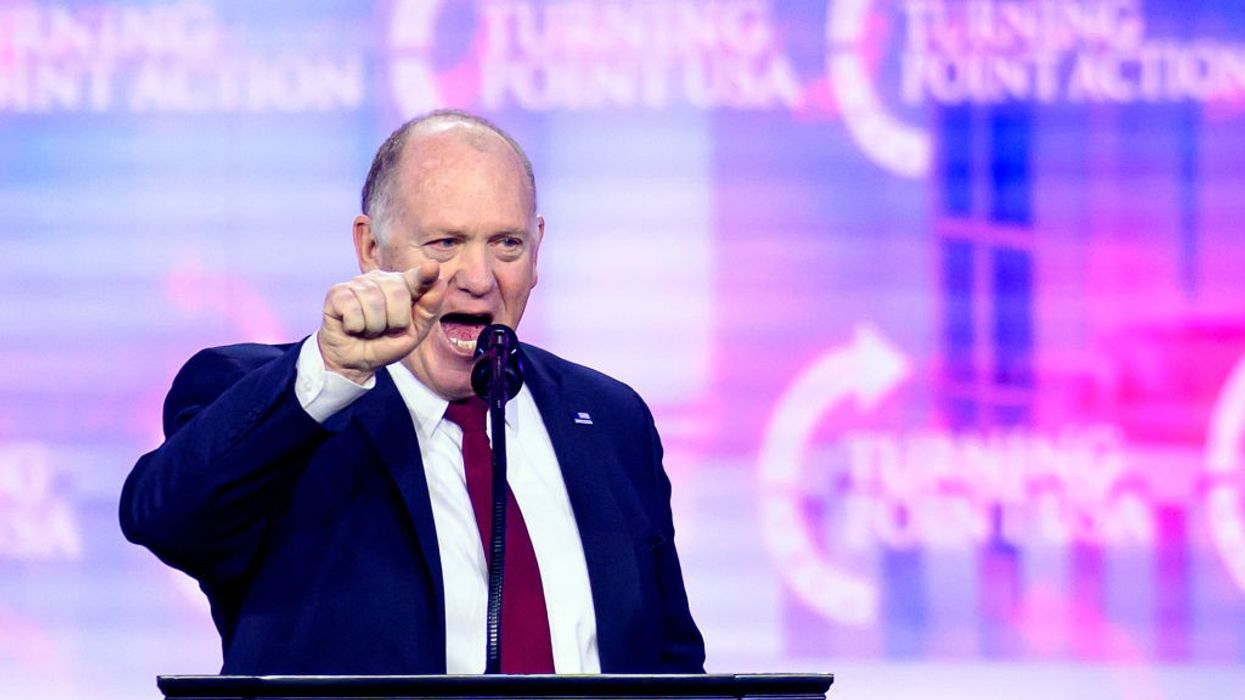
Adding to alarm over U.S. President-elect Donald Trump's immigration plans, his "border czar" told The Washington Post in an interview published Thursday that the administration plans to return to detaining migrant families with children.
Tom Homan, who served as acting director of U.S. Immigration and Customs Enforcement during Trump's first term, said that ICE "will look to hold parents with children in 'soft-sided' tent structures similar to those used by U.S. border officials to handle immigration surges," the Post summarized. "The government will not hesitate to deport parents who are in the country illegally, even if they have young U.S.-born children, he added, leaving it to those families to decide whether to exit together or be split up."
Since Trump beat Democratic Vice President Kamala Harris last month, migrant rights advocates have reiterated concerns about the Republican's first-term policies—such as forced separation of families—and his 2024 campaign pledges, from mass deportations to attempting to end birthright citizenship, despite the guarantees of the 14th Amendment to the U.S. Constitution.
Homan—who oversaw the so-called "zero tolerance" policy that separated thousands of migrant kids from their parents—said: "Here's the issue... You knew you were in the country illegally and chose to have a child. So you put your family in that position."
Incoming "border czar" Tom Homan on shipping U.S.-born children out of the country with their undocumented parents: “You knew you were in the country illegally and chose to have a child.” "Chose"? That's an odd word choice. The right wants to force women to give birth, not give them a choice.
[image or embed]
— Mark Jacob ( @markjacob.bsky.social) December 26, 2024 at 9:30 AM
Harris and President Joe Biden have come under fire for various immigration policies, but their administration did stop family detention—and when it was reported last year that the White House was weighing a revival of the practice, 383 groups urged the president to keep the pledge he made when he took office "to pursue just, compassionate, and humane immigration policies."
Under Biden, the government ended mass worksite immigration raids and—eventually—the "Remain in Mexico" policy that stopped asylum-seekers from entering the United States. Homan told the Post that the next Trump administration should bring them back.
Less than a month before Trump's inauguration, Biden is now facing pressure to "use the power of the pen to protect those seeking sanctuary from the coming deportation machine that will crush the human rights of our immigrant neighbors and those who have dreams of finding refuge here," as Amnesty International USA executive director Paul O'Brien put it earlier this month.
The Post reported that "of all the border hard-liners in the incoming administration, Homan is perhaps the most cognizant of the limits of the government's ability to deliver on promises of mass deportation—and the potential for a political backlash."
Those hard-liners include dog-killing Republican South Dakota Gov. Kristi Noem, Trump's pick to lead the Department of Homeland Security; family separation architect Stephen Miller, the president-elect's homeland security adviser and deputy chief of staff for policy; and Caleb Vitello, the next acting ICE director whom Miller previously
tried to install at the Office of Refugee Resettlement.
"We're going to need to construct family facilities," Homan told the newspaper. However, he also said: "We need to show the American people we can do this and not be inhumane about it... We can't lose the faith of the American people."
Critics of the next administration have suggested that—although Trump won the Electoral College and the popular vote last month—pursuing the GOP immigration policies, including "concentration camps" for migrant families, will anger the public.
Maximum cruelty is the goal https://www.washingtonpost.com/immigration/2024/12/26/immigration-border-tom-homan-trump/
[image or embed]
— Ric Steinberger (@ricst.bsky.social) December 26, 2024 at 9:29 AM
"Decent people all over the world will hate this country... and they should," media columnist and Brooklyn College professor Eric Alterman said on social media in response to the Post's reporting.
Author and New York University adjunct associate professor Helio Fred Garcia said: "Trump's next border czar previews performative cruelty. In the first term it included kidnapping of children from their parents and returning the parents to their home countries, with no record of which kids came from which parents. A crime against humanity."
Lee Gelernt, an ACLU attorney who has argued many major immigration cases, told the Post that "the incoming administration has refused to acknowledge the horrific damage it did to families and little children the first time around and seems determined to once again target families for gratuitous suffering."
"The public may have voted in the abstract for mass deportations," he added, referring to the November election, "but I don't think they voted for more family separation or unnecessary cruelty to children."
Agreeing with Trump that immigrants are the enemy to be detained at the border, and then only disagreeing on the numbers and methods, contradicts any commitment to a fact-based policy, while making immigrant communities scapegoats.
On August 17, a group of committed migrant activists set forth on a three-day march from Silicon Valley to San Francisco, highlighting the choices for progressive candidates in the coming November election. Should their campaigns amplify the hysteria about an immigration “crisis,” or should they speak the truth to the American people about the border and the roots of migration? Even more important, these marchers are providing a practical way for activists and political leaders to advocate for rights as they work to defeat the threat of MAGA racism.
The question at hand is whether to support the compromise immigration enforcement bill negotiated between centrist Democrats and Republicans last year, and to campaign against former U.S. President Donald Trump from the right, attacking him for undermining Republican support for the enforcement measures it contained.
In that bill, President Joe Biden agreed that he would close the border to asylum applicants if their number rose beyond 5,000 per day, while making it much harder to gain legal status for those even allowed to apply. Biden said he would cut short the time for screening asylum applicants by asylum officers, which would make winning permission to stay much more difficult.
Winning public understanding of immigration is the only way to decisively defeat this anti-immigrant hysteria, rather than caving into its illogic, and to the media frenzy and the onslaught of Republicans and MAGA acolytes.
To keep people imprisoned while their cases are in process, instead of releasing them, Biden proposed an additional $3 billion for more detention centers, a euphemism for immigrant prisons. There are already over 200, according to the group Freedom for Immigrants. Under a law signed by former President Barack Obama, Congress required that 34,000 detention beds be filled every night. At the end of 2023, those beds held 36,263 people, and another 194,427 were in “Alternatives to Detention,” which required wearing the hated ankle bracelets that bar travel for more than a few blocks. Over 90% of these jails are run for profit by private companies like the Geo Group, (formerly the Pinkerton Detective Agency).
These proposals respond to a media-driven frenzy that constantly refers to an immigration “crisis” and calls the border “broken.” That media coverage, and the response by centrist Democrats and Republicans, treats migrants as criminals, as an enemy. Political operatives in Washington then take polls, announce that the public wants draconian enforcement, and advise candidates that going against this tide will lead to election losses.
Yet this accepted political “wisdom” in Washington is not actually based on facts.
Department of Homeland Security statistics show that over the decades the number of people crossing the border, and subject to deportation, rises and falls, while displacement and forced migration remain constant. In 2022, about 1.1 million people were expelled after trying to cross, and another 350,000 deported. In 1992, about 1.2 million were stopped at the border and 1.1 million deported. Over a million people were deported in 1954 during the infamous “Operation Wetback.” Arrests at the border have totaled over a million in 29 of the last 46 years.
Last year the number arrested at the border was higher: about 2.5 million. But the reality is that the migration flow has not stopped and will not stop anytime soon. What, then, is the “crisis”? New York Times reporter Miriam Jordan says, “In December alone, more than 300,000 people crossed the southern border, a record number.” They all believe, she says, that “once they make it into the United States they will be able to stay. Forever. And by and large, they are not wrong.”
In fact, the number of refugee admissions in 2022 was 60,000. In 1992, it was 132,000. According to Jordan, applicants are simply released to live normal lives until their date before an immigration judge. That will certainly be news to families facing separation and the constant threat of deportation. But this is what Republicans and anti-immigrant Democrats call an “invasion” and threaten to “shut the border.”
Should Trump win election in November, he promises to reinstitute the notorious family separation policy. Children who survive the crossing might easily be lost, as so many were, in the huge detention system. Senator James Lankford (R-Okla.) wants to reintroduce the “Remain in Mexico” policy, under which people wanting asylum were not allowed to enter the United States at all, to file their applications. The Mexican government was forced to set up detention centers just south of the border to house them while they waited.
Trump and other Republicans would imprison all migrants who face a court proceeding that allows them to apply to stay or stop a deportation. Pending cases now number in the millions, because the immigration court system is starved for the resources for processing them.
Texas Gov. Greg Abbott has pushed through a law that makes being undocumented a state crime. Republicans in Congress last year proposed to build more border walls, create barriers to asylum, force the firing of millions of undocumented workers, and permit children to be held in detention prisons with their parents. Centrist Democrats are very willing to agree to modified proposals like these.
No money, running from something or someone, trying to keep a family together and give it a future, or just needing a job at whatever wage—these are the commonalities of the thousands who arrive at the U.S. border every year. Winning public understanding of immigration is the only way to decisively defeat this anti-immigrant hysteria, rather than caving into its illogic, and to the media frenzy and the onslaught of Republicans and MAGA acolytes.
President Obama made some acknowledgement of the poverty and violence that impels people to come but drew the line at recognizing this migration’s historical roots, much less any culpability on the part of the U.S. government. President Biden sent Vice President Kamala Harris, now the Democratic candidate for president, to Central America in his first year in office with a similar message—don’t come.
So far, the new presidential campaign of Vice President Kamala Harris has not taken a different direction. In Arizona she gave a speech recommitting to the Biden-brokered compromise and criticizing Trump for killing it. In a new TV ad, she promised to hire thousands of additional border patrol agents. The three enforcement arms of the Department of Homeland Security—the Border Patrol, Customs and Border Protection, and Immigration and Customs Enforcement today account for 52,300 officers, making it the largest law enforcement agency in the country. The numbers mushroomed by 22,000 in the past 20 years; the Border Patrol alone tripled from 2,700 to 8,200.
The rationale for this huge increase is that immigrants must be met with deterrence and enforcement to stop them from coming. Today an unwillingness to look at U.S. responsibility for producing displacement and migration is starkest in relation to Haitians and Venezuelans, who have made up a large percentage of the migrants arriving at the Rio Grande in the last two years.
No matter how many walls and migrant prisons the government builds, people will come.
After Haitians finally rid themselves of the U.S.-supported Duvalier regime and elected Jean Bertrand Aristide president, the United States put him on an outbound plane in 2004, as it did with Miguel Zelaya in Honduras. A string of U.S.-backed corrupt but business-friendly governments followed, which pocketed millions while Haitians went hungry and homeless by the tens of thousands after earthquakes and other disasters. The treatment of Haitian migrants is a form of institutionalized racism.
Survival in Venezuela became impossible for many as its economy suffered body blows from U.S. political intervention and economic sanctions. If the United States moves further to increase sanctions in response to the recent elections, it will produce even more migration.
These interventions produce migrants and then criminalize them. In 2023, the Border Patrol took 334,914 Venezuelans into custody, along with 163,701 Haitians. And while promoting military intervention in Haiti and regime change in Venezuela, the Biden administration put people on deportation flights back home, in the hope that this would discourage others from starting the journey north.
The disconnect is obvious to anyone born south of the Mexican border. Sergio Sosa, a Guatemalan exile who heads the Heartland Workers Center in Omaha, observes: “People from Europe and the U.S. crossed borders to come to us, and took over our land and economy. Migration is a form of fighting back. We’re in our situation, not because we decided to be, but because we’re in the U.S.’s backyard.” While former President Bill Clinton was the author of many anti-immigrant measures, he did recognize this historic truth, and apologized to the Guatemalan people for the U.S. support of the military dictatorships that massacred thousands.
The Democrats have to tell people the truth, and political campaigns are the times when this is most important. Agreeing with Trump that immigrants are the enemy to be detained at the border, and then only disagreeing on the numbers and methods, contradicts any commitment to a fact-based policy, while making immigrant communities scapegoats.
As they march from Silicon Valley, immigrant rights campaigners are reminding the Democratic Party of this truth and are calling for a commitment to the welfare of the 11 million people already in the United States who lack legal immigration status. That commitment has been all but lost in the border “crisis” hype.
The goal of these marchers is to win support for a bill that could make a profound difference in the lives of millions of people. Today, anyone who entered the United States without a visa before January 1, 1972 can apply for legal permanent residence. From 2015 to 2019, however, only 305 people received legal status this way because over 90% of undocumented immigrants came after that date. As the years go by, ever fewer numbers qualify.
Known as the Registry Bill, HR 1511 would allow anyone in the country for seven years to apply for legal status. Emma Delgado, a leader of Mujeres Unidas y Activas (United and Active Women) in San Francisco says, “I haven’t seen my children in many years because there is currently no way for me to apply for legal residency.” She called the family separation produced by current immigration law “immoral.”
Angelica Salas, director of the Coalition for Humane Immigration Reform in Los Angeles, challenges the idea that Democrats can’t campaign for it during an election year, and that a Republican majority in the House dooms it. “Think of all the millions of U.S. citizens who have immigrant parents,” she urges, “and how many have had their fathers or mothers deported. All over the country. Immigrant workers are a big part of the workforce. They’re all part of a base that can force change. We can’t depend on political winds or what people tell us is possible.”
No matter how many walls and migrant prisons the government builds, people will come. Over the years they will become part of communities here, and with progressive immigration policies, eventually voting citizens. Democrats need a long-term vision that sees the future in organizing and defending them, in turning those old anti-immigrant arguments around, rather than reinforcing them.
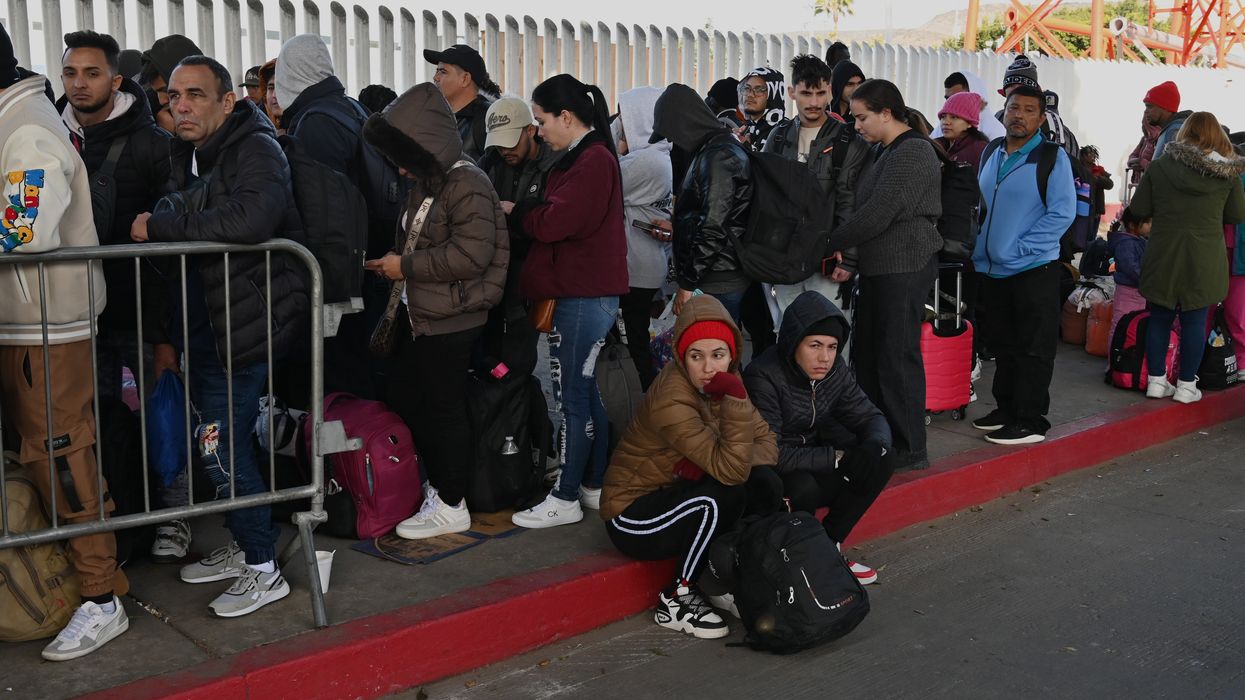
"The U.S. and Mexican governments must work together to ensure that migrants receive access to asylum and to fair and efficient processing at the border and are given humanitarian support when forced to wait in Mexico," said one advocate.
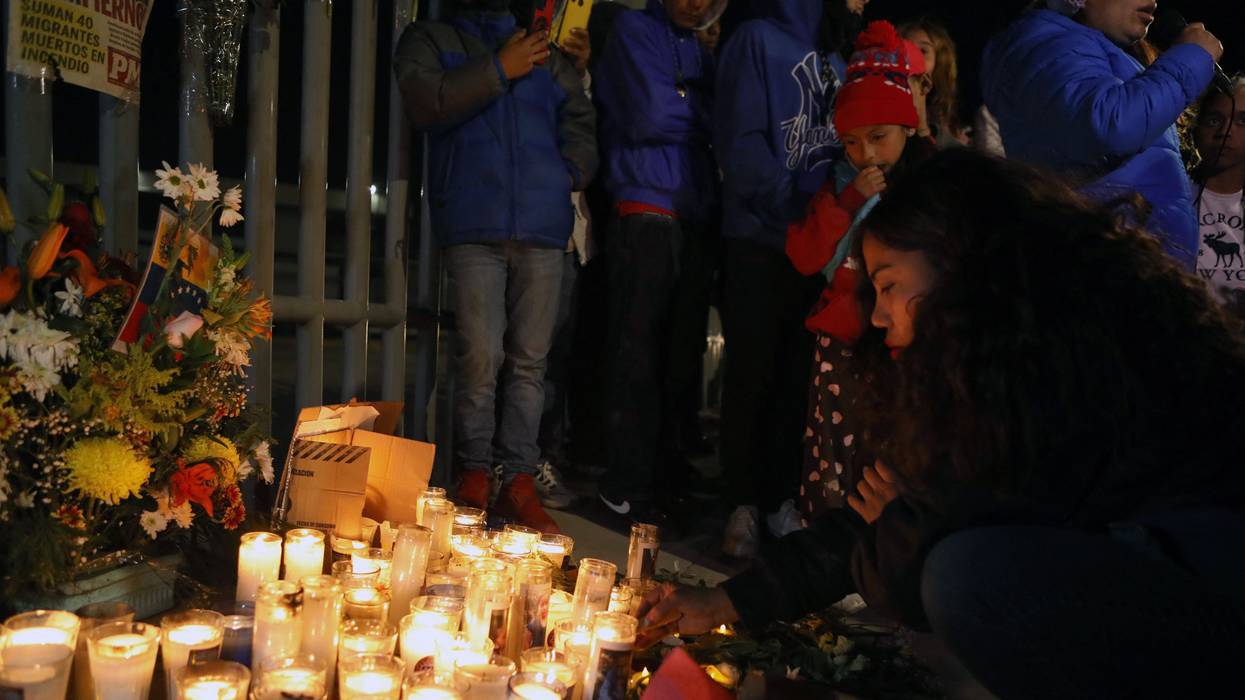
Calling for a full investigation into the fire that killed at least 38 people at a migrant detention center in Ciudad Juarez, Mexico this week, United Nations officials on Tuesday joined human rights groups in calling for an end to the U.S. and Mexican migration policies which led to the detention of dozens of men at the facility.
A spokesperson for the U.N. said all member states must "live up to the commitments they have made as signatories to the U.N.-led Global Compact for Migration," which "intends to reduce the risks and vulnerabilities migrants face at different stages of migration by respecting, protecting, and fulfilling their human rights and providing them with care and assistance."
"We, again, urge all states to adopt alternatives to immigration detention," said the U.N. human rights office.
The 68 men who were being held at the migration facility were mainly from Guatemala, Honduras, Venezuela, and El Salvador originally, and Reuters reported Wednesday that many migrants had been "rounded up off the streets of Ciudad Juarez on Monday" and taken to the center, which is run by Mexico's National Migration Institute (NMI).
A woman named Viangly Infante told the outlet that her husband was among those detained and that the couple had traveled from their home country of Venezuela last fall with their three children, crossing the U.S.-Mexico border in December into Eagle Pass, Texas.
They were then sent back to Mexico by U.S. immigration authorities and bused to Ciudad Juarez.
"We cannot ignore that many of these migrants continue to wait in border cities like Ciudad Juarez without documentation so they can enter the United States to seek protection—a situation created by successive U.S. administrations' undue restrictions on asylum access," said Rachel Schmidtke, senior advocate for Latin America at Refugees International. "The U.S. and Mexican governments must work together to ensure that migrants receive access to asylum and to fair and efficient processing at the border and are given humanitarian support when forced to wait in Mexico."
The U.N. Refugee Agency in January warned the Biden administration that its expansion of former President Donald Trump's Title 42 policy—under which the White House is expelling up to 30,000 migrants per month unless they arrive in the U.S. via a humanitarian parole program—is "not in line with refugee law standards" by which the U.S. is obligated to abide.
Like the U.S. Department of Homeland Security, the NMI in Mexico has long been denounced by migrant rights advocates over its treatment of people in its detention facilities, including overcrowding and lack of medical care. Protests broke out last year in detention centers in Tijuana and the southern city of Tapachula, near the border of Guatemala.
The fire that broke out early Tuesday was reportedly started by migrants who were protesting their confinement in a cell intended for a maximum of 50 people in which 68 people were being detained, and the guards' refusal to provide them with drinking water.
Outrage over the fire, in which at least 29 people have been hospitalized in addition to those who were killed, was compounded Wednesday after newly released surveillance footage footage showed guards quickly walking away from the cell where the men were protesting, while smoke filled the room.
The men were trapped behind padlocked doors as they yelled for help, NBC News reported.
"How could they not get them out?" Katiuska Márquez, a Venezuelan woman who was looking for her half-brother, asked the Associated Press.
The deaths of more than three dozen people in the fire "lay bare a truly inhumane system of immigration enforcement," said Erika Guevara-Rosas, Americas director at Amnesty International. "How is it possible that the Mexican authorities left human beings locked up with no way to escape the fire? These facilities are not 'shelters,' but detention centers, and people are not 'housed' there, but deprived of their freedom."
Amnesty called on Mexican officials to adhere to a recent ruling by the country's Supreme Court of Justice (SCJN), which said on March 15 that people should not be held in migrant detention facilities for more than 36 hours.
"Amnesty International urges the Mexican state to comply with the ruling of the SCJN and to establish protocols to act in fires, as well as evacuation routes in such situations," said the group. "It also calls on the state to investigate the human rights violations, especially the allegations that the migrants were left locked up while the fire occurred, as well as to recognize that the migrants were in its custody and, therefore, it was its obligation both to prevent the fire and to act diligently during the fire to avoid fatal consequences."
The court ruling made clear, said Edith Olivares Ferreto, executive director of Amnesty International Mexico, that the country must "put an end to the practices that have caused untold damage, including torture and cruel, inhuman, and degrading treatment, to thousands of migrants who have passed through these centers."
"The U.S. bears responsibility for pushing these migrants back into Mexico to face unsafe conditions," argued one immigrant rights advocate.
At least 39 migrants were declared dead Tuesday after a fire was started overnight at a detention facility in Ciudad Juárez, close to the U.S.-Mexico border.
Mexico's National Institute of Migration said in a statement that the detention center held 68 men from Central and South America.
"The National Institute of Migration strongly rejects the acts that led to this tragedy," the agency said, without elaborating.
In an address on Tuesday, Mexican President Andrés Manuel López Obrador said the fire was sparked by migrants in protest of their looming deportation.
"They never imagined that this would cause this terrible misfortune," said López Obrador, who noted that most of those killed in the fire were from Central America and some were from Venezuela.
Photos taken at the detention center in the wake of the deadly fire showed emergency workers on the scene and numerous bodies covered by sheets. Dozens who were injured in the fire are reportedly in serious condition.
The disaster is likely to intensify criticism of the immigration policies of the U.S. and Mexico, both of which have been accused of systematically violating the rights of asylum seekers.
The Associated Press noted that "in recent years, as Mexico has stepped up efforts to stem the flow migration to the U.S. border under pressure from the American government, its National Immigration Institute has struggled with overcrowding in its facilities."
Kerri Talbot, deputy director at the Immigration Hub, argued Tuesday that "the U.S. bears responsibility for pushing these migrants back into Mexico to face unsafe conditions"—a reference to the Trump-era "Remain in Mexico" policy.
In December, a Trump-appointed federal judge blocked President Joe Biden's attempt to end the policy, which rights groups say is illegal.
Meanwhile, Biden has been under heavy criticism from advocates for his asylum proposals.
On Monday, the United Nations High Commissioner for Refugees urged the Biden administration to rescind its proposed anti-asylum rule, which critics have compared Trump's "transit ban" that denied asylum to anyone who had traveled to the United States through a third country.
Key portions of the Biden proposal, said the agency, "are incompatible with principles of international refugee law."
This piece has been updated with new information from the Mexican government.