SUBSCRIBE TO OUR FREE NEWSLETTER
Daily news & progressive opinion—funded by the people, not the corporations—delivered straight to your inbox.
5
#000000
#FFFFFF
To donate by check, phone, or other method, see our More Ways to Give page.
Daily news & progressive opinion—funded by the people, not the corporations—delivered straight to your inbox.
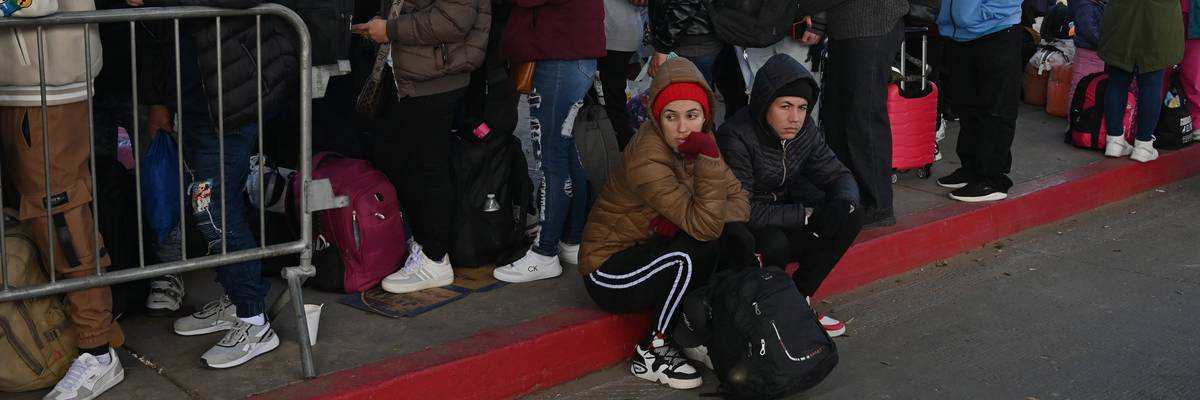
Asylum seekers wait for their CBP One appointments before crossing through El Chaparral border port in Tijuana, Mexico, on January 20, 2025, when the Trump administration shut down the CBP One app for migrants.
Elected officials, civil society, and our communities must band together to resist the current assaults on asylum, and push for humane and welcoming border policies.
On January 20, the fate of asylum seekers at the U.S.-Mexico border was abruptly changed as U.S. President Donald Trump announced new executive orders further dismantling the right to asylum.
That morning, the patients I saw in our pop-up clinic at a migrant shelter were full of apprehension about the threatened Trump policies, but a sense of hope remained. One young man told me he was so excited he could barely sleep because his CBP One appointment, which would allow him and his family to request parole to enter the U.S. while they applied for asylum, was scheduled for the following day.
By noon, the tone had changed. People tried desperately to log in to the CBP One app but were given error messages. Cancelation notices arrived in the email inboxes of those who had already been granted appointments. One patient who had left his country fleeing political violence and had been waiting for eight months at the border for the appointment, frantically held his phone up to show me the email. “Now what are we supposed to do?” he lamented, “We have nowhere safe to go.”
There is much work to be done now to uphold human rights in the U.S. But we must not forget the people who are desperate for relief at our borders.
Indeed, the end of the CBP One appointment program has effectively closed the door on asylum seekers at the U.S.’ southern border. With the ongoing restrictions of the asylum ban and border closure rules put in place during the Biden administration, there are now no viable legal pathways to entry for the hundreds of thousands of migrants seeking safety at the border.
The effect on our patients waiting in Mexico has been devastating, and it’s only going to get worse. Patients came into the clinic reporting depression, panic attacks, and despair. Some had just narrowly survived being kidnapped, beaten, or raped, and were petrified about being targeted again by the organized crime groups that prey on migrants in Mexican border cities.
Over the years in our clinics, we have seen that increased restrictions in border policies—such as Trump’s Remain in Mexico—increase danger, injuries, mental health problems, childhood developmental problems, and untimely death for asylum seekers trying to make it to the U.S. Most recently, these issues had still been occurring given the long waiting periods of the CBP One system, but now they will undoubtedly worsen.
Being stranded leads people to make impossible choices. Some families will risk (and some lose) their lives trying to cross the swift currents of the Rio Grande or the harsh landscape of the desert. Some families choose to send their children over the border unaccompanied, taking on the trauma of family separation because they see no other way for their child to escape from danger and have a better life.
President Trump says we shouldn’t care about the plight of immigrants and should instead focus on American citizens’ needs—of which, undoubtedly, there are many. But such perspectives miss the bigger picture, and are, in fact, woefully inaccurate. Not only are we able to support immigrants, we desperately need to, for the sake of all of us. Without immigrants, we’d be facing a home care crisis, an agricultural crisis, and our economy would suffer. What’s more, the plight of migrants in transit impacts our communities in the U.S. I have patients at my primary care clinic in Massachusetts who have fallen into a deep depression or whose blood pressure has skyrocketed when a loved one of theirs is lost along the migrant route or is assaulted on the journey. Let alone our international and domestic legal obligations that require us to recognize and honor the right to seek asylum.
As our patients at the migrant shelter reeled from the news of the cancelation of CBP One, one man was still smiling. “I believe the new president will have compassion for us,” he said, standing outside his tent and nodding toward his wife and small children inside. “He has a family too. I pray that he will be able to understand that we need safety for our kids.”
It would be nice. But in the absence of that change of heart, our communities need to take action. Elected officials, civil society, and our communities must band together to resist the current assaults on asylum, and push for humane and welcoming border policies. There is much work to be done now to uphold human rights in the U.S. But we must not forget the people who are desperate for relief at our borders—it’s our obligation, and it’s a matter of life and death.
Dear Common Dreams reader, It’s been nearly 30 years since I co-founded Common Dreams with my late wife, Lina Newhouser. We had the radical notion that journalism should serve the public good, not corporate profits. It was clear to us from the outset what it would take to build such a project. No paid advertisements. No corporate sponsors. No millionaire publisher telling us what to think or do. Many people said we wouldn't last a year, but we proved those doubters wrong. Together with a tremendous team of journalists and dedicated staff, we built an independent media outlet free from the constraints of profits and corporate control. Our mission has always been simple: To inform. To inspire. To ignite change for the common good. Building Common Dreams was not easy. Our survival was never guaranteed. When you take on the most powerful forces—Wall Street greed, fossil fuel industry destruction, Big Tech lobbyists, and uber-rich oligarchs who have spent billions upon billions rigging the economy and democracy in their favor—the only bulwark you have is supporters who believe in your work. But here’s the urgent message from me today. It's never been this bad out there. And it's never been this hard to keep us going. At the very moment Common Dreams is most needed, the threats we face are intensifying. We need your support now more than ever. We don't accept corporate advertising and never will. We don't have a paywall because we don't think people should be blocked from critical news based on their ability to pay. Everything we do is funded by the donations of readers like you. When everyone does the little they can afford, we are strong. But if that support retreats or dries up, so do we. Will you donate now to make sure Common Dreams not only survives but thrives? —Craig Brown, Co-founder |
On January 20, the fate of asylum seekers at the U.S.-Mexico border was abruptly changed as U.S. President Donald Trump announced new executive orders further dismantling the right to asylum.
That morning, the patients I saw in our pop-up clinic at a migrant shelter were full of apprehension about the threatened Trump policies, but a sense of hope remained. One young man told me he was so excited he could barely sleep because his CBP One appointment, which would allow him and his family to request parole to enter the U.S. while they applied for asylum, was scheduled for the following day.
By noon, the tone had changed. People tried desperately to log in to the CBP One app but were given error messages. Cancelation notices arrived in the email inboxes of those who had already been granted appointments. One patient who had left his country fleeing political violence and had been waiting for eight months at the border for the appointment, frantically held his phone up to show me the email. “Now what are we supposed to do?” he lamented, “We have nowhere safe to go.”
There is much work to be done now to uphold human rights in the U.S. But we must not forget the people who are desperate for relief at our borders.
Indeed, the end of the CBP One appointment program has effectively closed the door on asylum seekers at the U.S.’ southern border. With the ongoing restrictions of the asylum ban and border closure rules put in place during the Biden administration, there are now no viable legal pathways to entry for the hundreds of thousands of migrants seeking safety at the border.
The effect on our patients waiting in Mexico has been devastating, and it’s only going to get worse. Patients came into the clinic reporting depression, panic attacks, and despair. Some had just narrowly survived being kidnapped, beaten, or raped, and were petrified about being targeted again by the organized crime groups that prey on migrants in Mexican border cities.
Over the years in our clinics, we have seen that increased restrictions in border policies—such as Trump’s Remain in Mexico—increase danger, injuries, mental health problems, childhood developmental problems, and untimely death for asylum seekers trying to make it to the U.S. Most recently, these issues had still been occurring given the long waiting periods of the CBP One system, but now they will undoubtedly worsen.
Being stranded leads people to make impossible choices. Some families will risk (and some lose) their lives trying to cross the swift currents of the Rio Grande or the harsh landscape of the desert. Some families choose to send their children over the border unaccompanied, taking on the trauma of family separation because they see no other way for their child to escape from danger and have a better life.
President Trump says we shouldn’t care about the plight of immigrants and should instead focus on American citizens’ needs—of which, undoubtedly, there are many. But such perspectives miss the bigger picture, and are, in fact, woefully inaccurate. Not only are we able to support immigrants, we desperately need to, for the sake of all of us. Without immigrants, we’d be facing a home care crisis, an agricultural crisis, and our economy would suffer. What’s more, the plight of migrants in transit impacts our communities in the U.S. I have patients at my primary care clinic in Massachusetts who have fallen into a deep depression or whose blood pressure has skyrocketed when a loved one of theirs is lost along the migrant route or is assaulted on the journey. Let alone our international and domestic legal obligations that require us to recognize and honor the right to seek asylum.
As our patients at the migrant shelter reeled from the news of the cancelation of CBP One, one man was still smiling. “I believe the new president will have compassion for us,” he said, standing outside his tent and nodding toward his wife and small children inside. “He has a family too. I pray that he will be able to understand that we need safety for our kids.”
It would be nice. But in the absence of that change of heart, our communities need to take action. Elected officials, civil society, and our communities must band together to resist the current assaults on asylum, and push for humane and welcoming border policies. There is much work to be done now to uphold human rights in the U.S. But we must not forget the people who are desperate for relief at our borders—it’s our obligation, and it’s a matter of life and death.
On January 20, the fate of asylum seekers at the U.S.-Mexico border was abruptly changed as U.S. President Donald Trump announced new executive orders further dismantling the right to asylum.
That morning, the patients I saw in our pop-up clinic at a migrant shelter were full of apprehension about the threatened Trump policies, but a sense of hope remained. One young man told me he was so excited he could barely sleep because his CBP One appointment, which would allow him and his family to request parole to enter the U.S. while they applied for asylum, was scheduled for the following day.
By noon, the tone had changed. People tried desperately to log in to the CBP One app but were given error messages. Cancelation notices arrived in the email inboxes of those who had already been granted appointments. One patient who had left his country fleeing political violence and had been waiting for eight months at the border for the appointment, frantically held his phone up to show me the email. “Now what are we supposed to do?” he lamented, “We have nowhere safe to go.”
There is much work to be done now to uphold human rights in the U.S. But we must not forget the people who are desperate for relief at our borders.
Indeed, the end of the CBP One appointment program has effectively closed the door on asylum seekers at the U.S.’ southern border. With the ongoing restrictions of the asylum ban and border closure rules put in place during the Biden administration, there are now no viable legal pathways to entry for the hundreds of thousands of migrants seeking safety at the border.
The effect on our patients waiting in Mexico has been devastating, and it’s only going to get worse. Patients came into the clinic reporting depression, panic attacks, and despair. Some had just narrowly survived being kidnapped, beaten, or raped, and were petrified about being targeted again by the organized crime groups that prey on migrants in Mexican border cities.
Over the years in our clinics, we have seen that increased restrictions in border policies—such as Trump’s Remain in Mexico—increase danger, injuries, mental health problems, childhood developmental problems, and untimely death for asylum seekers trying to make it to the U.S. Most recently, these issues had still been occurring given the long waiting periods of the CBP One system, but now they will undoubtedly worsen.
Being stranded leads people to make impossible choices. Some families will risk (and some lose) their lives trying to cross the swift currents of the Rio Grande or the harsh landscape of the desert. Some families choose to send their children over the border unaccompanied, taking on the trauma of family separation because they see no other way for their child to escape from danger and have a better life.
President Trump says we shouldn’t care about the plight of immigrants and should instead focus on American citizens’ needs—of which, undoubtedly, there are many. But such perspectives miss the bigger picture, and are, in fact, woefully inaccurate. Not only are we able to support immigrants, we desperately need to, for the sake of all of us. Without immigrants, we’d be facing a home care crisis, an agricultural crisis, and our economy would suffer. What’s more, the plight of migrants in transit impacts our communities in the U.S. I have patients at my primary care clinic in Massachusetts who have fallen into a deep depression or whose blood pressure has skyrocketed when a loved one of theirs is lost along the migrant route or is assaulted on the journey. Let alone our international and domestic legal obligations that require us to recognize and honor the right to seek asylum.
As our patients at the migrant shelter reeled from the news of the cancelation of CBP One, one man was still smiling. “I believe the new president will have compassion for us,” he said, standing outside his tent and nodding toward his wife and small children inside. “He has a family too. I pray that he will be able to understand that we need safety for our kids.”
It would be nice. But in the absence of that change of heart, our communities need to take action. Elected officials, civil society, and our communities must band together to resist the current assaults on asylum, and push for humane and welcoming border policies. There is much work to be done now to uphold human rights in the U.S. But we must not forget the people who are desperate for relief at our borders—it’s our obligation, and it’s a matter of life and death.