

SUBSCRIBE TO OUR FREE NEWSLETTER
Daily news & progressive opinion—funded by the people, not the corporations—delivered straight to your inbox.
5
#000000
#FFFFFF
To donate by check, phone, or other method, see our More Ways to Give page.
Daily news & progressive opinion—funded by the people, not the corporations—delivered straight to your inbox.
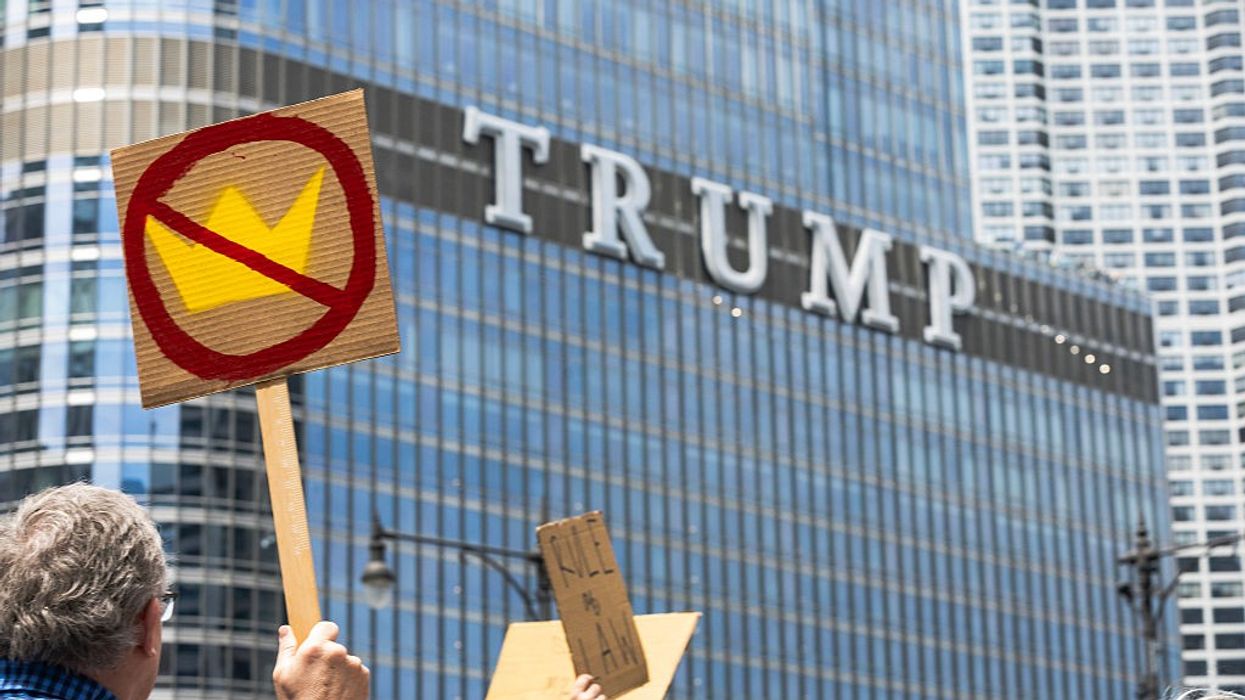
"If Trump wants to take his ego trip on tour, he picked the wrong city," said one senior Illinois official. "Chicago doesn't bow down to kings or roll out the red carpet for dictators."
US President Donald Trump said Friday that Chicago is the next city in his crosshairs for the kind of federal invasion and occupation currently underway in Washington, DC—a threat that sparked defiant pushback from officials in the Windy City and beyond.
"After we do this, we'll go to another location, and we'll make it safe also," Trump told reporters in the Oval Office, referring to his federalization of Washington's Metropolitan Police Department and deployment of National Guard troops from the district and five Republican-controlled states.
"We're going to make our cities very, very safe. Chicago's a mess. You have an incompetent mayor. Grossly incompetent and we'll straighten that one out probably next," the president said, referring to progressive Brandon Johnson. "That will be our next one after this. And it won't even be tough."
On August 11, Trump dubiously declared a public safety emergency in Washington, DC, despite violent crime being down 26% from a year ago, when it was at its second-lowest level since 1966, according to official statistics. Critics have noted that Trump's crackdown isn't just targeting criminals, but also unhoused and mentally ill people, who have had their homes destroyed and property taken.
On Friday, Trump threatened to completely take over Washington and oust Mayor Muriel Bowser if she does not stop pointing out that crime has decreased in the city, which the president called a "crime-infested rat hole."
In addition to Chicago, Trump has threatened to send federal forces into cities including Baltimore, Los Angeles, New York, Oakland, and San Francisco. Violent crime is trending downward in all of those cities—with some registering historically low levels.
Unlike in Washington, DC, where home rule laws allow the federal government to take control of local police, Trump would face greater obstacles to intervention in other cities.
"President Trump can't seize control of the Chicago police or any other local department outside of DC," Congressman Raja Krishnamoorthi (D-Ill.) noted on social media Friday. "The military cannot and will not patrol the streets of Chicago, and I will work with state and local officials to ensure that doesn't happen."
Mayor Johnson said in a statement that "the problem with the president's approach is that it is uncoordinated, uncalled for, and unsound."
"If the Trump administration is serious about driving down violence in Chicago, or anywhere else in America, then he should not have taken over $800 million away from violence prevention," he added.
Other elected officials in Illinois also expressed anger and alarm at the prospect of a Trump intervention in Chicago.
Illinois Attorney General Kwame Raoul issued the following statement in response to comments President Trump made today threatening to deploy federal law enforcement to perform civilian law enforcement duties in the city of Chicago: tinyurl.com/5n89nt86
[image or embed]
— Illinois Attorney General Kwame Raoul (@ilattygeneral.bsky.social) August 22, 2025 at 5:01 PM
"After using Los Angeles and Washington, DC as his testing ground for authoritarian overreach, Trump is now openly flirting with the idea of taking over other states and cities," Democratic Illinois Gov. JB Pritzker said on X.
"Trump's goal is to incite fear in our communities and destabilize existing public safety efforts—all to create a justification to further abuse his power," the governor continued. "He's playing a game and creating a spectacle for the press to play along with."
"We don't play those games," Pritzker added. "Our commitment to law and order is delivering results. Crime rates are improving. Homicides are down by more than 30% in Chicago in the last year alone. Our progress in lowering crime has been made possible with [community violence intervention] programs that they’re defunding."
Lt. Gov. Juliana Stratton, a Democrat running for US Senate, said that "if Trump wants to take his ego trip on tour, he picked the wrong city."
"Chicago doesn't bow down to kings or roll out the red carpet for dictators," she added. "As a Black woman from the South Side, I can assure you... your political circus isn't welcome here."
Congresswoman Robin Kelly (D-Ill.) wrote on social media, "President Trump: You are not welcome in Chicago."
"Sending the National Guard endangers Black communities already overpoliced and under-invested in," she added. "If you cared about saving lives, you'd pass gun safety laws and fund community violence intervention."
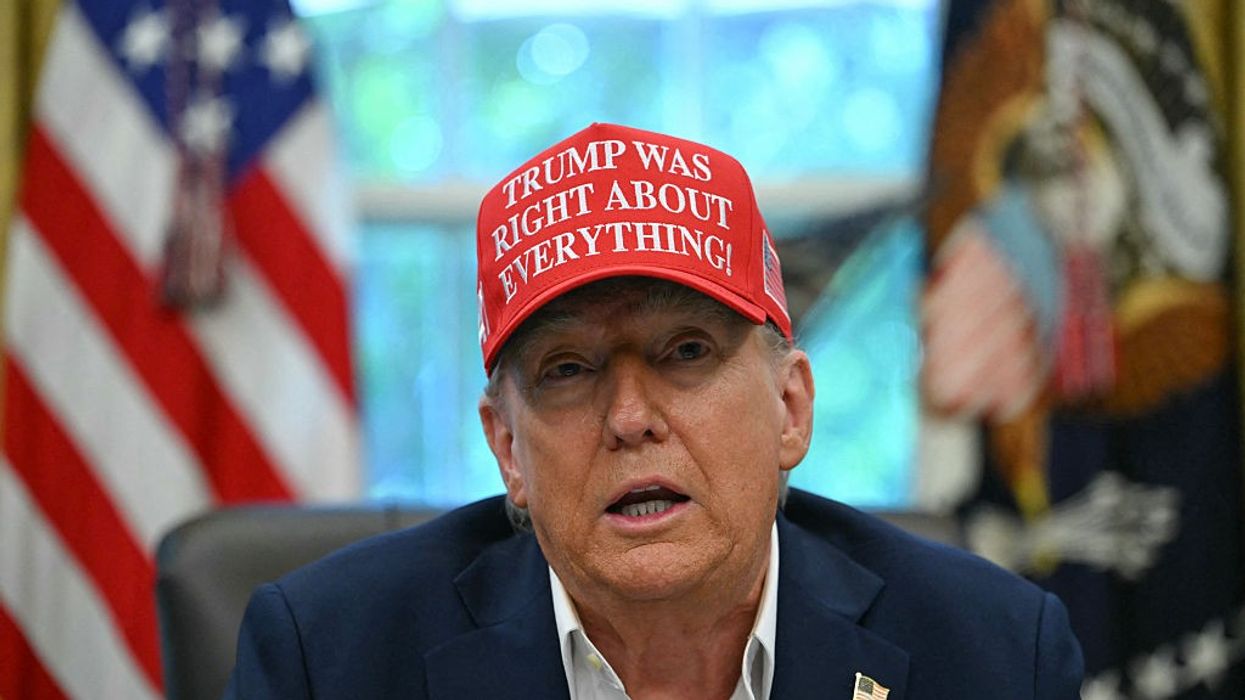
The attorney general of Washington, DC said recently that contrary to the president's claims, "violent crime in DC reached historic 30-year lows last year, and is down another 26% so far this year."
US President Donald Trump on Friday threatened to oust Washington, DC Mayor Muriel Bowser and to have the federal government fully assume control of the nation's capital.
While speaking to reporters in the Oval Office, Trump said that Washington, DC under Bowser's leadership has been "unsafe" and "horrible."
"Mayor Bowser better get her act straight, or she won't be mayor very long, because we'll take it over with the federal government, running it like it's supposed to be run," said Trump. "It was a crime-infested rat hole, and they do have a lot of rats, and we're getting rid of them too, and we've made a lot of progress."
Trump: "Mayor Bowser better get her act straight or she won't be mayor very long because we'll take it over with the federal government and run it like it's supposed to be run ... it was a crime-invested rat hole." pic.twitter.com/6Pngwy0esr
— Aaron Rupar (@atrupar) August 22, 2025
In reality, crime in Washington, DC had been falling before Trump decided to deploy the National Guard and other federal agents into the city. As Washington, DC Attorney General Brian Schwalb recently recounted, "Violent crime in DC reached historic 30-year lows last year, and is down another 26% so far this year."
Shortly after attacking Washington, DC, the president said he was pushing for the National Guard to be deployed across other American cities.
"After we do [Washington, DC], we'll go to another location and make it safe also," he said. "We're going to make our cities very, very safe. Chicago's a mess. You have an incompetent mayor, grossly incompetent, and we'll straighten that one out probably next, that'll be our next one after this, and it won't even be tough."
Trump then suggested sending the National Guard to New York.
Trump says he's willing to deploy the "regular military" to American cities, the adds that "Chicago is next and then we'll help with New York" pic.twitter.com/w0stIFzYEr
— Aaron Rupar (@atrupar) August 22, 2025
Illinois Lt. Gov. Juliana Stratton, who is currently running for the United States Senate, warned Trump against sending the National Guard to her state's biggest city.
"If Trump wants to take his ego trip on tour, he picked the wrong city," she said. "Chicago doesn't bow down to kings or roll out the red carpet for dictators. As a Black woman from the South Side, I can assure you... your political circus isn't welcome here."
Polling released this week by The Washington Post showed that Trump's National Guard deployment is massively unpopular with DC residents, as 79% of residents surveyed said they disapproved of the deployments, including 69% who said they strongly disapproved.
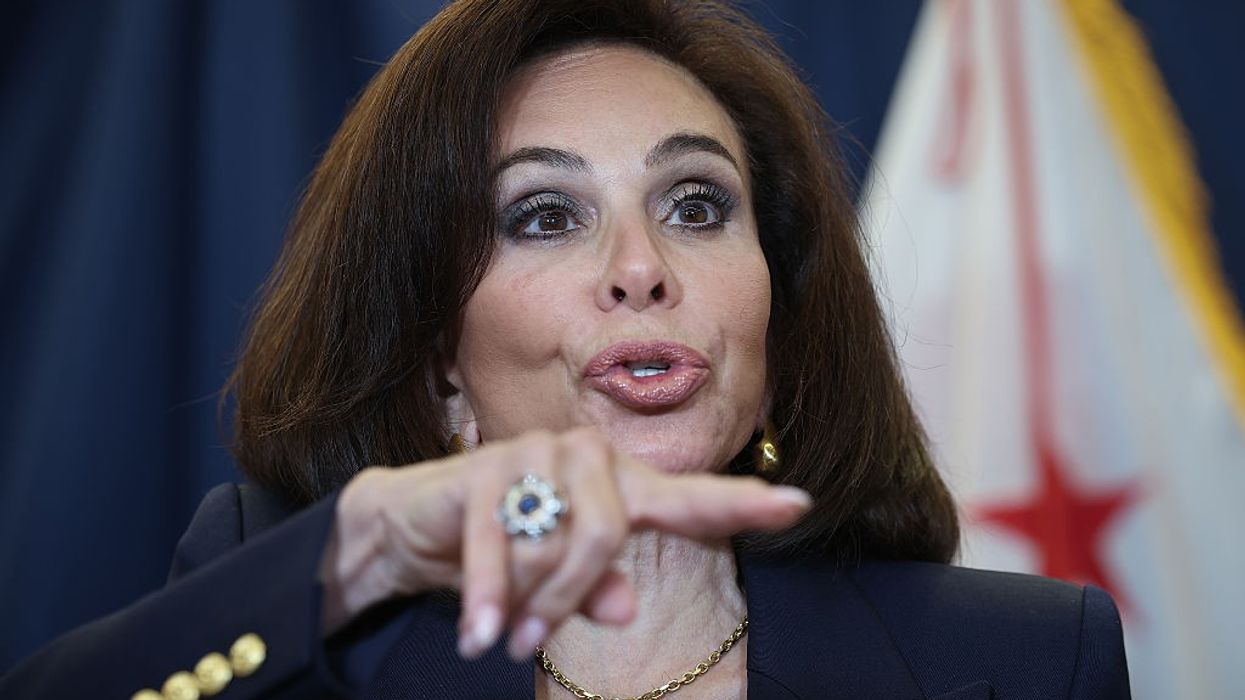
The move comes amid the president's military occupation of the nation's capital, despite an official drop in violent crime.
He didn't like the latest jobs numbers, so he fired the head of the Bureau of Labor Statistics and tapped a notorious yes-man to replace her.
He doesn't like "woke" history, so he ordered federal agencies and institutions to whitewash official accounts of the nation's troubled past.
Now US President Donald Trump's Department of Justice is investigating whether police officials in Washington, DC manipulated crime data as the president, a proven prolific liar, tries to justify his federal takeover of a city where violent crime is officially at historic lows.
"DC gave Fake Crime numbers in order to create a false illusion of safety. This is a very bad and dangerous thing to do, and they are under serious investigation for so doing!" Trump wrote Tuesday on his Truth Social network. "Until four days ago, Washington, DC was the most unsafe 'city' in the United States, and perhaps the World. Now, in just a short period of time, it is perhaps the safest, and getting better every single hour! People are flocking to DC again, and soon, the beautification will begin!"
According to Federal Bureau of Investigation Uniform Crime Report data from 2024, Trump's statement wildly diverges from reality, as 28 cities had higher violent crime rates than Washington, DC.
Now, the same US Attorney's office that just this April lauded the drop in crime in the capital is probing the Metropolitan Police Department (MPD) amid pushback against Trump's federalization of the force and deployment of National Guard troops from five jurisdictions and other federal agents onto the streets of the city. The DOJ criminal probe will be led by the office of US Attorney Jeanine Pirro.
There have been multiple internal allegations that MPD manipulated crime data. In 2020, former MPD Sergeant Charlotte Djossou filed a lawsuit alleging that senior department officials routinely misclassified more serious crimes to artificially reduce their reported rate. The DC Police Union, led by Gregg Pemberton, has also accused MPD supervisors of ordering officers to downgrade violent crimes to lesser offenses.
Last month, MPD suspended Michael Pulliam, a senior officer who allegedly altered crime statistics in his district. However, Washington, DC Mayor Muriel Bowser, a Democrat, told The Washington Post Tuesday that MPD Chief Pamela Smith had investigated all seven of the city's police districts for possible crime data manipulation and found problems only in Pulliam's jurisdiction.
"We are not experiencing a spike in crime," Bowser insisted in a recent interview with MSNBC. "In fact, we're watching our crime numbers go down."
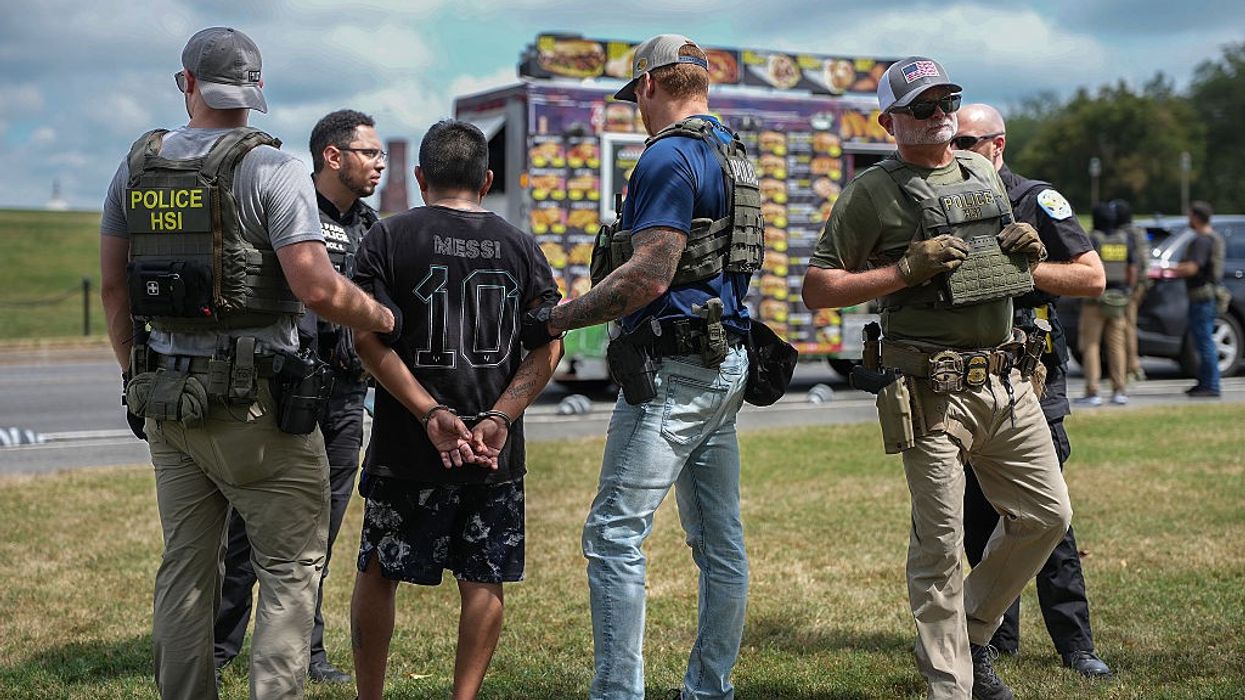
"The very institution that is supposed to keep district residents safe is now allowing ICE to jeopardize the safety and lives of hardworking immigrants and their families," said one local labor leader.
The ACLU and a local branch of one of the nation's largest labor unions were among those who condemned Thursday's order by Washington, DC's police chief authorizing greater cooperation with federal forces sent by President Donald Trump to target and arrest undocumented immigrants in the sanctuary city.
Metropolitan Police Department Chief Pamela Smith issued an executive order directing MPD officers to assist federal forces including Immigration and Customs Enforcement (ICE) in sharing information about people in situations including traffic stops. The directive does not apply to people already in MPD custody. The order also allows MPD to provide transportation for federal immigration agencies and people they've detained.
While Trump called the order a "great step," immigrant defenders slammed the move.
"Now our police department is going to be complicit and be reporting our own people to ICE?" DC Councilmember Janeese Lewis George (D-Ward 4) said. "We have values in this city. Coordination and cooperation means we become a part of the regime."
ACLU DC executive director Monica Hopkins said in a statement that "DC police chief's new order inviting collaboration with ICE is dangerous and unnecessary."
"Immigration enforcement is not the role of local police—and when law enforcement aligns itself with ICE, it fosters fear among DC residents, regardless of citizenship status," Hopkins continued. "Our police should serve the people of DC, not ICE's deportation machine."
"As the federal government scales up Immigration and Customs Enforcement operations, including mass deportations, we see how local law enforcement face pressure to participate," she added. "Federal courts across the country have found both ICE and local agencies liable for unconstitutional detentions under ICE detainers. Police departments that choose to carry out the federal government's business risk losing the trust they need to keep communities safe."
Understanding your rights can help you stay calm and advocate for yourself if approached by U.S. Immigration and Customs Enforcement (ICE) or police. 🧵
[image or embed]
— ACLU of the District of Columbia (@aclu-dc.bsky.social) August 11, 2025 at 7:30 AM
Jaime Contreras, executive vice president and Latino caucus chair of 32BJ SEIU, a local Service Employees International Union branch, said, "It should horrify everyone that DC's police chief has just laid out the welcoming mat for the Trump administration to continue its wave of terror throughout our city."
"The very institution that is supposed to keep district residents safe is now allowing ICE to jeopardize the safety and lives of hardworking immigrants and their families," Contreras continued. "Their complicity is dangerous enough but helping to enforce Trump's tactics and procedures are a violation of the values of DC residents."
"DC needs a chief who will not cave to this administration's fear tactics aimed at silencing anyone who speaks out against injustice," Contreras added. "We call for an immediate end to these rogue attacks that deny basic due process, separates families, and wrongly deports hardworking immigrants and their families."
The condemnation—and local protests—came as dozens of immigrants have been detained this week as government forces occupy and fan out across the city following Trump's deployment of National Guard troops and federalization of the MPD. The president dubiously declared a public safety emergency on Monday, invoking Section 740 of the District of Columbia Self-Government and Governmental Reorganization Act. Trump also said that he would ask the Republican-controlled Congress to authorize an extension of his federal takeover beyond the 30 days allowed under Section 740.
Washington, DC Mayor Muriel Bowser—a Democrat who calls the occupying agencies "our federal partners"—has quietly sought to overturn the capital's Sanctuary Values Amendment Act of 2020, which prohibits MPD from releasing detained individuals to ICE or inquiring about their legal status. The law also limits city officials' cooperation with immigration agencies, including by restricting information sharing regarding individuals in MPD custody.
While the DC Council recently blocked Bowser's attempt to slip legislation repealing the sanctuary policy into her proposed 2026 budget, Congress has the power to modify or even overturn Washington laws under the District of Columbia Home Rule Act of 1973. In June, the Republican-controlled U.S. House of Representatives passed Rep. Clay Higgins' (R-La.) District of Columbia Federal Immigration Compliance Act, which would repeal Washington's sanctuary policies and compel compliance with requests from the Department of Homeland Security, which includes ICE. The Senate is currently considering the bill.
Trump's crackdown has also targeted Washington's unhoused population, with MPD conducting sweeps of encampments around the city.
"There's definitely a lot of chaos, fear, and confusion," Amber Harding, executive director of the Washington Legal Clinic for the Homeless, told CNN Thursday.
David Beatty, an unhoused man living in an encampment near the Kennedy Center that Trump threateningly singled out last week, was among the victims of a Thursday sweep.
Beatty told USA Today that Trump "is targeting and persecuting us," adding that "he wants to take our freedom away."
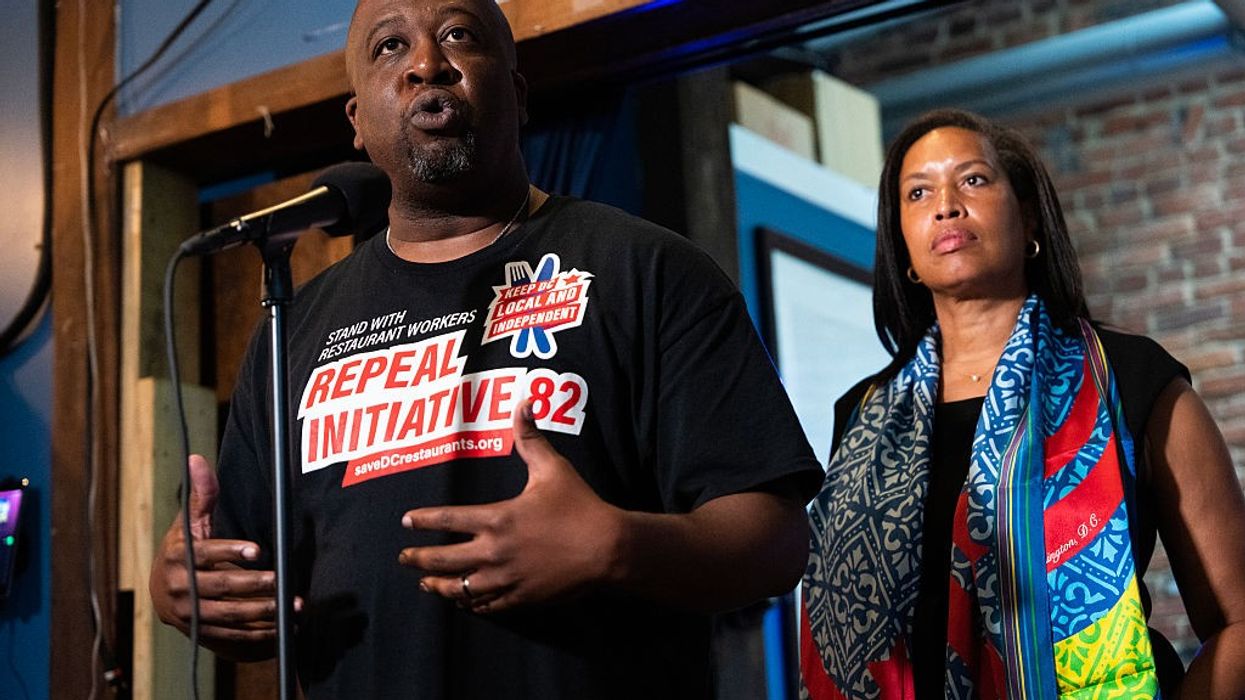
"Call it what it is: a pay cut and a betrayal of the working people," said One Fair Wage.
With backing from the restaurant lobby, the Washington, D.C. city council voted Monday to gut plans to raise wages for tipped workers, which had already been approved by the public.
It's the second time the council has overturned a wage increase for tipped workers that the public voted for, having already done so once in 2018.
Under federal law, tipped workers are allowed to be paid a much lower minimum wage—just $2.13 per hour compared with $7.25 for nontipped workers. Tipped workers are, consequentially, more likely to live in poverty.
This is the case in Washington, D.C., where, according to data from the Bureau of Labor Statistics analyzed by the Economic Policy Institute, 7.7% of tipped workers live in poverty compared to 2.6% of nontipped workers.
In 2022, D.C. voters overwhelmingly voted to address this problem, supporting Initiative 82, which would have gradually raised the minimum wage for tipped workers—just over $5.35 an hour at the time—to match what other workers receive by 2027.
In 2022, D.C.'s standard minimum wage—which increases each year pegged to inflation—was $16.10. As of 2025, it has increased to $17.95.
As the initiative to raise the tipped minimum wage began, restaurant industry lobbying groups like the Restaurant Association of Metropolitan Washington (RAMW) fought tooth-and-nail to roll it back.
In Jacobin, Raeghn Draper wrote that this group, and others like it around the country, "claim to speak on behalf of restaurant workers, but they are not worker organizations."
Instead, Draper wrote, "They are extensions of the National Restaurant Association (NRA), an industry group historically aligned with large corporate chains like McDonald's, Taco Bell, and Olive Garden—none exactly known for their commitment to workers' rights or well-being."
These groups waged an aggressive disinformation campaign, claiming that by phasing out the subminimum wage, restaurants, crushed by their increasing operating costs, would be forced to close en masse.
The RAMW even touted a survey of its own member restaurants purporting to show that 44% of full-service casual restaurants would have no choice but to close their doors by the end of 2025 due to the policy.
As Draper points out, citing data from an independent investigation by D.C.'s Office of the Budget Director, "the number of D.C. restaurant closures in 2024 did rise slightly compared to the previous year, but restaurant openings also increased, outpacing closures by a margin of two to one."
A study by the EPI likewise found that—despite industry claims that the higher wage requirements were forcing restaurants to lay off their employees—D.C. was seeing more employment growth than other towns in the region without requirements to raise wages.
But media outlets uncritically reported the restaurant industry's narrative about mass closures, and their attempts to "manufacture a crisis," as Draper says, paid off.
While making public appearances with restaurant industry lobbyists, Democratic Mayor Muriel Bowser signed legislation halting the wage increases in June—freezing the tipped minimum wage at $10 an hour. She pushed for a full repeal, which would have knocked the tipped wage back down to $8 an hour. But the city council voted it down.
On Monday, despite fierce protests from workers and unions, the city council voted 7-5 to freeze the tipped wage at $10 until July 2026, when it will increase by a measly five cents. They also voted to dramatically slow the tipped wage increases to just 5% each year until 2034, when it will be capped at 75% of the standard minimum wage.
Members of the council, as well as many media outlets, including Axios and The Washington Post, described the decision as a "compromise" between employers and workers. RAMW, which lamented that it was "not a full repeal," has portrayed it that way, though it nevertheless described it as a "win for the industry."
Fair wage activists, however, described it not as a compromise, but an assault on a hard-won democratic victory.
"In what world is this a compromise?" asked One Fair Wage, one of the groups that campaigned for the initiative. "Call it what it is: a pay cut and a betrayal of the working people."
"D.C. Council just voted to overturn the will of the people and freeze wages for tipped workers," said the Fair Budget Coalition in a post on X following the vote. "As rents and other costs rise, it is a CHOICE to maintain a subminimum wage for struggling D.C. residents."
According to EPI, a person living in Washington, D.C. needs to earn just under $31 an hour to afford the cost of living. The average wage paid to tipped workers like bartenders, waiters, and waitresses falls several dollars short of this.
"The voters told us what they wanted when they voted overwhelmingly for I-82—twice—and this is not it," said Brianne Nadeau, one of the council members who voted against reversing the wage hikes. "Restaurant workers and the organizations that represent them have been fighting this battle for wage protections for years, and they shouldn't have to keep fighting it. And this council should not keep on telling the voters they don't know what's best for themselves."
"The council chose corporate lobbyists over tipped workers," said One Fair Wage. To the council members who voted for it, they said: "We see you. We won't forget."
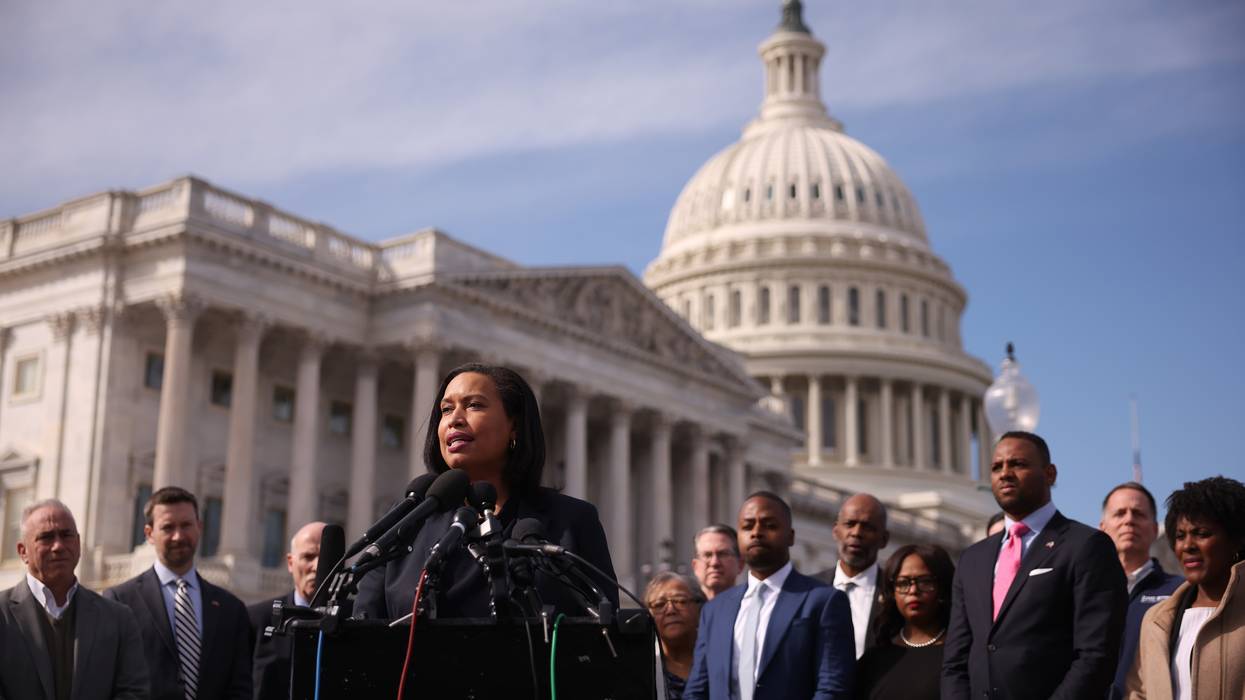
One D.C.-based observer accused the GOP of "attempting to casually cut the budget of a major city simply because they hate us and they can."
The government spending bill passed by the Republican-controlled House of Representatives on Tuesday that aims to avert a government shutdown would effectively cut Washington, D.C.'s budget by almost $1.1 billion dollars, a move that city leaders warned would be devastating for city services, schools, and more.
"The proposed one billion [dollar] cut to D.C.'s budget is senseless, reckless, and would have devastating consequences for our nation’s capital," a spokeswoman for Democratic D.C. Mayor Muriel Bowser's office said in a statement that was sent to multiple outlets.
The dilemma stems from the fact that Congress has the final word over D.C.'s budget.
The Republican spending bill is a continuing resolution and largely freezes federal spending at levels approved in the prior fiscal year, with $13 billion in cuts to non-military spending. Generally, Congress includes language in the continuing resolution that allows D.C. to spend its locally generated revenue at spending levels it has separately approved, but did not include that provision this time. In 2024, D.C. passed a 2025 budget of $21 billion, funded largely with local tax revenues.
" Republicans opted instead to treat D.C. the same as a federal agency, freezing funds and thus forcing the city to revert to its fiscal year 2024 budget—even as the city has been operating under its larger fiscal year 2025 budget since last October," explained the local D.C. outlet The 51st.
Delegate Eleanor Holmes Norton (D-D.C.) released a statement Monday blasting the text of the bill.
"With this bill, House Republicans have intentionally committed nothing short of fiscal sabotage against D.C.," said Norton. "D.C. has not been treated as a federal agency for funding purposes in more than 20 years precisely because doing so can force dramatic overnight cuts to essential services, including police, sanitation, and schools. Cuts to these services would work against Republicans' stated goal of improving public safety and order in D.C."
A memo from D.C. officials explains that reducing local spending by over $1 billion would force a 16% cut to all remaining funds that are not expended. A cut that large would result in layoffs of direct services workers and a reduction or elimination of direct services, per the memo.
The Washington Post reported that it's hard to predict exactly how the cuts will play out, but budget officials believe the reduction could cause $200 million in cuts to D.C. Public Schools and $166 million in cuts to charter schools.
D.C. Water, which distributes drinking water and provides regional wastewater treatment services, could see $51 million in cuts.
"The federal government saves no money from reducing D.C.'s locally funded expenditures," according to the memo from the District, which also noted that the cuts could cause D.C.'s bond rating to be downgraded.
"This is all completely pointless," wrote one observer on X. "There should not be a single vote in Congress in favor of these catastrophic cuts."
Another D.C. resident shared the Post's story and wrote the GOP is "attempting to casually cut the budget of a major city simply because they hate us and they can."
The spending bill now heads to the Senate. Democrats can try to block the measure, though that carries the risk of being blamed for a government shutdown, which would go into effect if no spending bill is passed by Friday.
"Big vote upcoming for Senate Democrats," wrote Post reporter Jeff Stein on Wednesday. "The Trump administration is asserting massive new powers to control federal spending unilaterally, and many Dems view the shutdown bill as their only possible point of leverage. We'll see what they do soon."