

SUBSCRIBE TO OUR FREE NEWSLETTER
Daily news & progressive opinion—funded by the people, not the corporations—delivered straight to your inbox.
5
#000000
#FFFFFF
To donate by check, phone, or other method, see our More Ways to Give page.
Daily news & progressive opinion—funded by the people, not the corporations—delivered straight to your inbox.
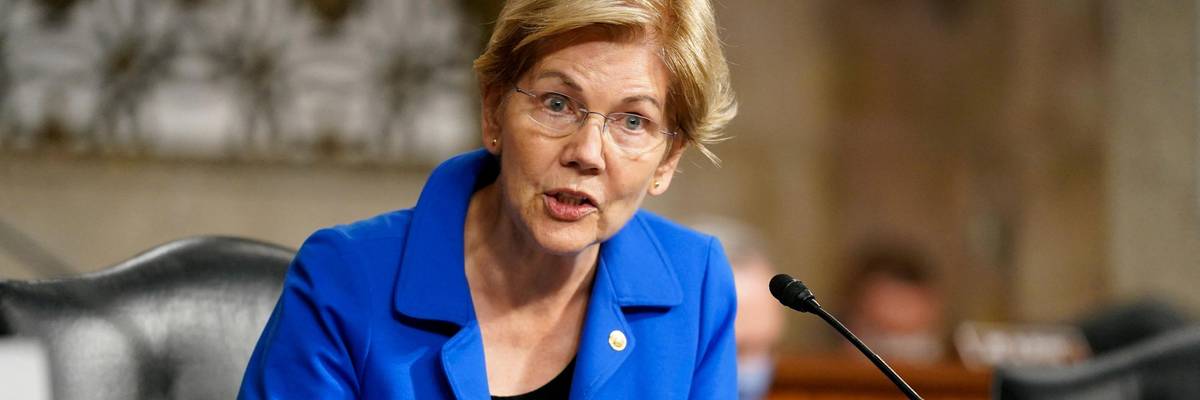
Sen. Elizabeth Warren (D-Mass.) called for an end to investor-state dispute settlements following a Sierra Club report released on May 29, 2024.
"Giant corporations have and continue to weaponize ISDS—a secretive and rigged arbitration system," said Sen. Elizabeth Warren. "It's time to shut the door and eliminate ISDS from all existing trade agreements once and for all."
Prominent Democrats on Wednesday called for ending corporate-backed arbitration provisions in trade agreements as the Sierra Club issued a report showing that fossil fuel companies use the provisions to block climate action.
The report calls for the U.S. government to not only stop signing trade agreements with Investor-State Dispute Settlement (ISDS) provisions, as President Joe Biden has already done since taking office, but also end or modify existing agreements that have them. ISDS provisions allow companies to protect their investments in a foreign country and seek compensation from an ad hoc arbitration tribunal, rather than the country's courts, if they are threatened by legislation, regulation, or the cancellation of a project.
"While it has correctly rejected ISDS for future trade agreements, the Biden administration has made no effort to remove these egregious provisions from existing agreements," Rep. Lloyd Doggett (D-Texas) said in a Sierra Club statement. "Powerful multinational corporations continue abusing ISDS to intimidate countries from strengthening environmental and human rights protections."
Many ISDS cases pit powerful corporations against low- and middle-income countries, but wealthy nations are also liable to be sued. TC Energy, a multinational fossil fuel company, sued the US for $15 billion following the discontinuation of the Keystone XL pipeline project, and Canada faces a $20 billion suit over a canceled liquefied natural gas project in Québec. Overall, nearly 20% of the world's 1,206 known ISDS arbitration cases have been brought by fossil fuel companies, according to the Sierra Club report.
The investor-state dispute settlement (ISDS) regime gives polluters license to sue governments for their public interest policies, including those that would reduce the production of fossil fuels.
Now is the time to end ISDS for good.
— Iliana Paul (@iliana_m_paul) May 29, 2024
"ISDS mechanisms corruptly advance the power of big corporate polluters over the interests of the public and the planet. This new report from the Sierra Club makes it clear that ISDS's time is up," Sen. Sheldon Whitehouse (D-R.I.) said in the group's statement. He, too, is pushing the Biden administration to remove ISDS provisions from existing agreements.
While the Sierra Club report focuses on ISDS's climate impacts, the authors argue that the effects of the provisions, which give corporations extraordinary power, are much broader. "The dangers of ISDS are stark not just for climate change, but for a broad swath of public interest policies including ones related to public health, labor protections and workers' rights, green jobs policies, and more," they wrote.
Democrats voiced agreement about the broad consequences of the provisions, which have been the subject of a growing chorus of criticism by politicians and public interests groups.
"Giant corporations have and continue to weaponize ISDS—a secretive and rigged arbitration system that multinational companies use to bypass domestic courts and challenge protections for the environment, workers, and consumers around the world. It's time to shut the door and eliminate ISDS from all existing trade agreements once and for all," said Sen. Elizabeth Warren (D-Mass.) in the Sierra Club statement.
In November, Sierra Club, Public Citizen, the AFL-CIO and more than 200 other organizations called on the Biden administration to dismantle ISDS provisions between the U.S. and countries in the Americas, saying that the president should "free public interest policies from the shadow of ISDS."
That followed an April letter to Biden in which more than 300 law and economics professors, including Nobel laureate and Columbia University professor Joseph Stiglitz, called for an end to ISDS in existing trade agreements, arguing that there's a "bipartisan consensus" for such reform.
Dear Common Dreams reader, It’s been nearly 30 years since I co-founded Common Dreams with my late wife, Lina Newhouser. We had the radical notion that journalism should serve the public good, not corporate profits. It was clear to us from the outset what it would take to build such a project. No paid advertisements. No corporate sponsors. No millionaire publisher telling us what to think or do. Many people said we wouldn't last a year, but we proved those doubters wrong. Together with a tremendous team of journalists and dedicated staff, we built an independent media outlet free from the constraints of profits and corporate control. Our mission has always been simple: To inform. To inspire. To ignite change for the common good. Building Common Dreams was not easy. Our survival was never guaranteed. When you take on the most powerful forces—Wall Street greed, fossil fuel industry destruction, Big Tech lobbyists, and uber-rich oligarchs who have spent billions upon billions rigging the economy and democracy in their favor—the only bulwark you have is supporters who believe in your work. But here’s the urgent message from me today. It's never been this bad out there. And it's never been this hard to keep us going. At the very moment Common Dreams is most needed, the threats we face are intensifying. We need your support now more than ever. We don't accept corporate advertising and never will. We don't have a paywall because we don't think people should be blocked from critical news based on their ability to pay. Everything we do is funded by the donations of readers like you. When everyone does the little they can afford, we are strong. But if that support retreats or dries up, so do we. Will you donate now to make sure Common Dreams not only survives but thrives? —Craig Brown, Co-founder |
Prominent Democrats on Wednesday called for ending corporate-backed arbitration provisions in trade agreements as the Sierra Club issued a report showing that fossil fuel companies use the provisions to block climate action.
The report calls for the U.S. government to not only stop signing trade agreements with Investor-State Dispute Settlement (ISDS) provisions, as President Joe Biden has already done since taking office, but also end or modify existing agreements that have them. ISDS provisions allow companies to protect their investments in a foreign country and seek compensation from an ad hoc arbitration tribunal, rather than the country's courts, if they are threatened by legislation, regulation, or the cancellation of a project.
"While it has correctly rejected ISDS for future trade agreements, the Biden administration has made no effort to remove these egregious provisions from existing agreements," Rep. Lloyd Doggett (D-Texas) said in a Sierra Club statement. "Powerful multinational corporations continue abusing ISDS to intimidate countries from strengthening environmental and human rights protections."
Many ISDS cases pit powerful corporations against low- and middle-income countries, but wealthy nations are also liable to be sued. TC Energy, a multinational fossil fuel company, sued the US for $15 billion following the discontinuation of the Keystone XL pipeline project, and Canada faces a $20 billion suit over a canceled liquefied natural gas project in Québec. Overall, nearly 20% of the world's 1,206 known ISDS arbitration cases have been brought by fossil fuel companies, according to the Sierra Club report.
The investor-state dispute settlement (ISDS) regime gives polluters license to sue governments for their public interest policies, including those that would reduce the production of fossil fuels.
Now is the time to end ISDS for good.
— Iliana Paul (@iliana_m_paul) May 29, 2024
"ISDS mechanisms corruptly advance the power of big corporate polluters over the interests of the public and the planet. This new report from the Sierra Club makes it clear that ISDS's time is up," Sen. Sheldon Whitehouse (D-R.I.) said in the group's statement. He, too, is pushing the Biden administration to remove ISDS provisions from existing agreements.
While the Sierra Club report focuses on ISDS's climate impacts, the authors argue that the effects of the provisions, which give corporations extraordinary power, are much broader. "The dangers of ISDS are stark not just for climate change, but for a broad swath of public interest policies including ones related to public health, labor protections and workers' rights, green jobs policies, and more," they wrote.
Democrats voiced agreement about the broad consequences of the provisions, which have been the subject of a growing chorus of criticism by politicians and public interests groups.
"Giant corporations have and continue to weaponize ISDS—a secretive and rigged arbitration system that multinational companies use to bypass domestic courts and challenge protections for the environment, workers, and consumers around the world. It's time to shut the door and eliminate ISDS from all existing trade agreements once and for all," said Sen. Elizabeth Warren (D-Mass.) in the Sierra Club statement.
In November, Sierra Club, Public Citizen, the AFL-CIO and more than 200 other organizations called on the Biden administration to dismantle ISDS provisions between the U.S. and countries in the Americas, saying that the president should "free public interest policies from the shadow of ISDS."
That followed an April letter to Biden in which more than 300 law and economics professors, including Nobel laureate and Columbia University professor Joseph Stiglitz, called for an end to ISDS in existing trade agreements, arguing that there's a "bipartisan consensus" for such reform.
Prominent Democrats on Wednesday called for ending corporate-backed arbitration provisions in trade agreements as the Sierra Club issued a report showing that fossil fuel companies use the provisions to block climate action.
The report calls for the U.S. government to not only stop signing trade agreements with Investor-State Dispute Settlement (ISDS) provisions, as President Joe Biden has already done since taking office, but also end or modify existing agreements that have them. ISDS provisions allow companies to protect their investments in a foreign country and seek compensation from an ad hoc arbitration tribunal, rather than the country's courts, if they are threatened by legislation, regulation, or the cancellation of a project.
"While it has correctly rejected ISDS for future trade agreements, the Biden administration has made no effort to remove these egregious provisions from existing agreements," Rep. Lloyd Doggett (D-Texas) said in a Sierra Club statement. "Powerful multinational corporations continue abusing ISDS to intimidate countries from strengthening environmental and human rights protections."
Many ISDS cases pit powerful corporations against low- and middle-income countries, but wealthy nations are also liable to be sued. TC Energy, a multinational fossil fuel company, sued the US for $15 billion following the discontinuation of the Keystone XL pipeline project, and Canada faces a $20 billion suit over a canceled liquefied natural gas project in Québec. Overall, nearly 20% of the world's 1,206 known ISDS arbitration cases have been brought by fossil fuel companies, according to the Sierra Club report.
The investor-state dispute settlement (ISDS) regime gives polluters license to sue governments for their public interest policies, including those that would reduce the production of fossil fuels.
Now is the time to end ISDS for good.
— Iliana Paul (@iliana_m_paul) May 29, 2024
"ISDS mechanisms corruptly advance the power of big corporate polluters over the interests of the public and the planet. This new report from the Sierra Club makes it clear that ISDS's time is up," Sen. Sheldon Whitehouse (D-R.I.) said in the group's statement. He, too, is pushing the Biden administration to remove ISDS provisions from existing agreements.
While the Sierra Club report focuses on ISDS's climate impacts, the authors argue that the effects of the provisions, which give corporations extraordinary power, are much broader. "The dangers of ISDS are stark not just for climate change, but for a broad swath of public interest policies including ones related to public health, labor protections and workers' rights, green jobs policies, and more," they wrote.
Democrats voiced agreement about the broad consequences of the provisions, which have been the subject of a growing chorus of criticism by politicians and public interests groups.
"Giant corporations have and continue to weaponize ISDS—a secretive and rigged arbitration system that multinational companies use to bypass domestic courts and challenge protections for the environment, workers, and consumers around the world. It's time to shut the door and eliminate ISDS from all existing trade agreements once and for all," said Sen. Elizabeth Warren (D-Mass.) in the Sierra Club statement.
In November, Sierra Club, Public Citizen, the AFL-CIO and more than 200 other organizations called on the Biden administration to dismantle ISDS provisions between the U.S. and countries in the Americas, saying that the president should "free public interest policies from the shadow of ISDS."
That followed an April letter to Biden in which more than 300 law and economics professors, including Nobel laureate and Columbia University professor Joseph Stiglitz, called for an end to ISDS in existing trade agreements, arguing that there's a "bipartisan consensus" for such reform.

