

SUBSCRIBE TO OUR FREE NEWSLETTER
Daily news & progressive opinion—funded by the people, not the corporations—delivered straight to your inbox.
5
#000000
#FFFFFF
To donate by check, phone, or other method, see our More Ways to Give page.
Daily news & progressive opinion—funded by the people, not the corporations—delivered straight to your inbox.
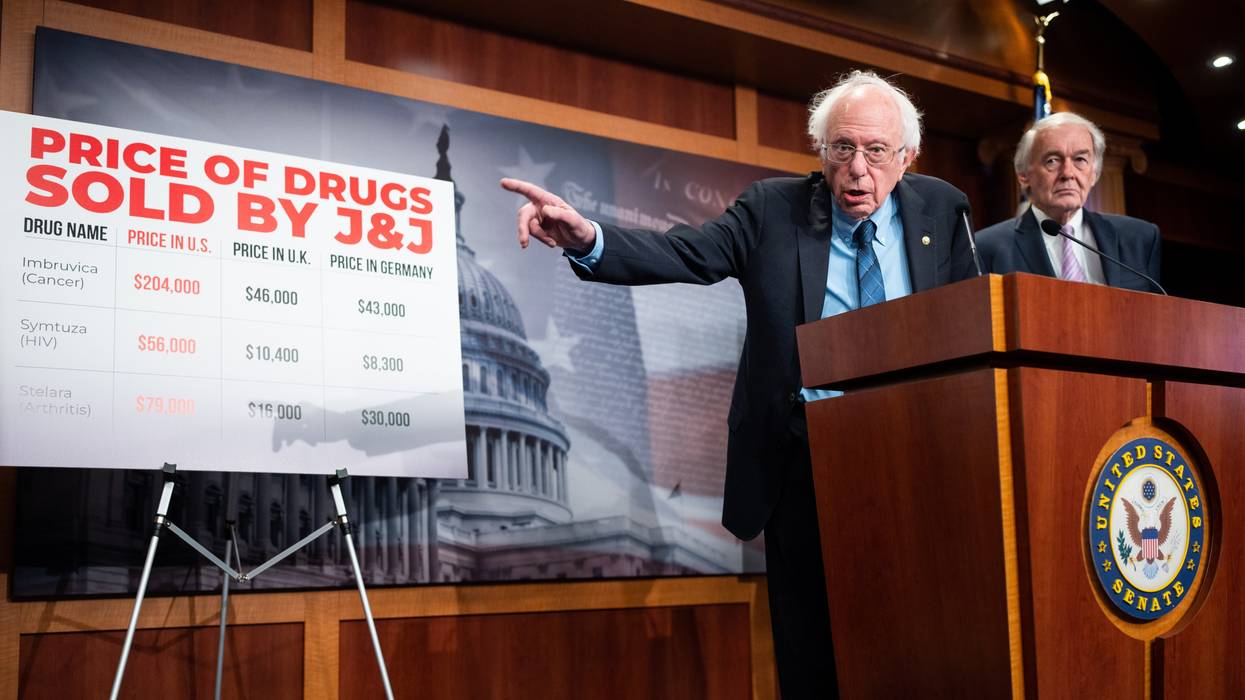
"We are aware of the many important, lifesaving drugs that your companies have produced," said Sen. Bernie Sanders. "But I think as all of you know, those drugs mean nothing to anybody who cannot afford it."
The CEOs of major pharmaceutical companies refused Thursday to commit to lowering the prices of some of their top-selling drugs when pressed by Sen. Bernie Sanders, who noted that the same medicines are available in other countries for a fraction of the cost that Americans pay.
"We are aware of the many important, lifesaving drugs that your companies have produced. And that's extraordinarily important," Sanders (I-Vt.) said in his opening remarks during a Senate Health, Education, Labor, and Pensions Committee hearing. "But I think as all of you know, those drugs mean nothing to anybody who cannot afford it. And that's what we're dealing with today."
Sanders asked the chief executives of Merck and Bristol Myers Squibb whether they would pledge to reduce the sky-high U.S. list prices of their cancer and blood clot medications to levels that patients pay for those drugs in Japan and Canada.
Neither agreed to make the commitment, even after they acknowledged that they still make a profit in those countries despite selling their products at much lower prices than in the U.S.
When Bristol Myers Squibb CEO Chris Boerner claimed that medicines are cheaper in Canada because they are "generally made less available" and more difficult for patients to obtain, Sanders—who has famously traveled across the U.S.-Canada border with patients seeking affordable medications—countered that "life expectancy in Canada is six years longer than it is in the United States."
Three CEOs in total—Boerner of Bristol Myers Squibb, Robert Davis of Merck, and Joaquin Duato of Johnson & Johnson—testified at Thursday's hearing, which was titled, "Why Does the United States Pay, by Far, the Highest Prices in the World for Prescription Drugs?"
Boerner voluntarily agreed to testify in early January, but Davis and Duato only agreed to appear before the Senate HELP Committee after Sanders threatened subpoenas. The committee votes to approve the subpoenas were canceled after Davis and Duato dropped their opposition to testifying.
All three of the companies represented at Thursday's hearing are currently suing the Biden administration in an effort to kill the Medicare price negotiation program established under the Inflation Reduction Act.
Before questioning the executives, Sanders noted that a growing number of patients in the U.S. have been forced to resort to the crowdfunding platform GoFundMe to help pay for their medications. GoFundMe's website notes that "thousands of individuals in need use GoFundMe each month to raise funds for lifesaving prescription drugs."
Sanders asked Davis, who made $52 million in total compensation in 2022, whether he would "commit to not accepting a single dollar more in compensation until there is not a single GoFundMe page for Keytruda," a Merck cancer drug that carries a list price of $191,000 a year in the U.S.
Davis said Merck is "very much sensitive to what's happening with patients" but would not make the commitment.
Davis told Sanders that he has never searched GoFundMe for campaigns launched by cancer patients struggling to afford Keytruda. Sanders noted in response that his staff found over 500 stories of people trying to raise funds for the cancer medication, which brought in $6.61 billion in sales worldwide for Merck last year.
"One of those stories is a woman named Rebecca, a school lunch lady from Nebraska with two kids who died of cancer after setting up a GoFundMe page because she could not afford to pay for Keytruda," Sanders said. "Rebecca had raised $4,000 on her GoFundMe page, but said the cost of Keytruda and her cancer treatment was $25,000 for an infusion every three weeks."
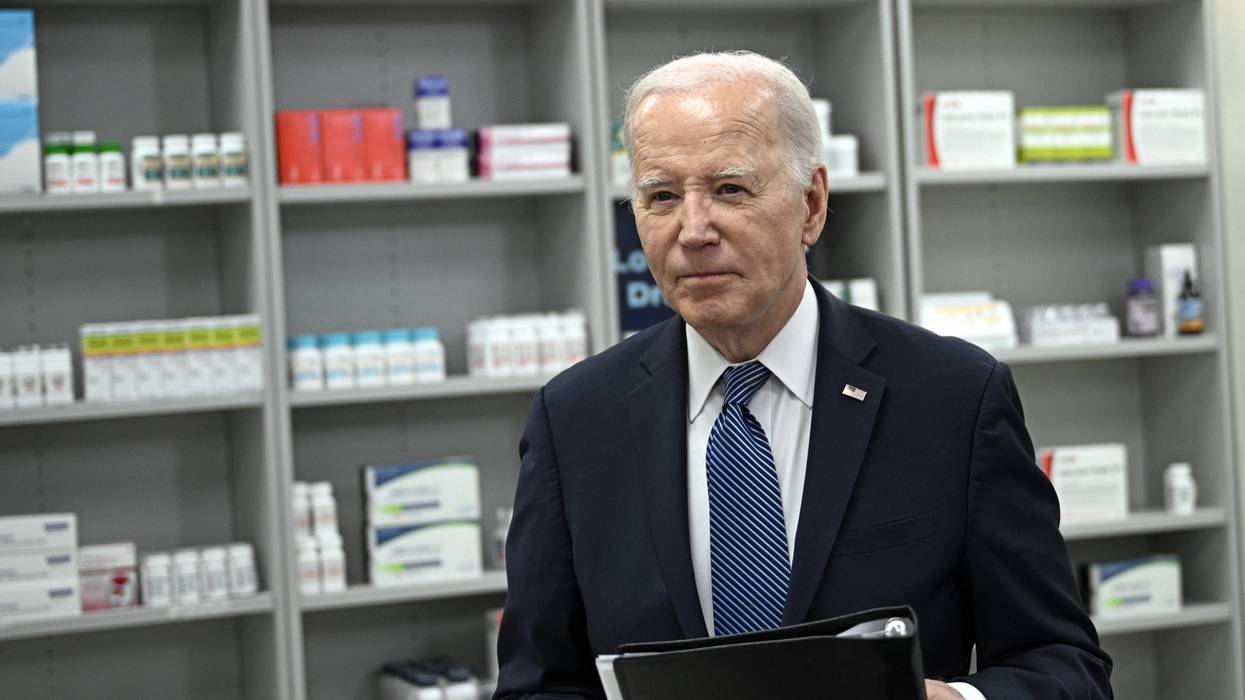
"For the first time, Medicare isn't just accepting whatever prices the drug corporations set for expensive and widely used drugs," said one campaigner.
The Biden administration announced Thursday that it made its opening bids as part of Medicare's historic drug price negotiation program, which major pharmaceutical companies are working hard to kill in court.
The initial offers, which were not made public, were sent to the manufacturers of the 10 drugs that the Biden administration selected for the initial round of price negotiations. Additional medicines will be subject to price negotiations in later years.
The companies—including Merck, Johnson & Johnson, Pfizer, and Amgen—have 30 days to either accept Medicare's proposed maximum fair price for the selected medicines or put forth a counteroffer. Over the coming spring and summer, Biden administration officials will hold negotiation meetings with drug company representatives to resolve price disputes if the government doesn't accept the drugmakers' counters.
In September, the Centers for Medicare and Medicaid Services (CMS) will publish the negotiated prices, which won't take effect until 2026.
Margarida Jorge, the head of Lower Drug Prices Now, said in a statement Thursday that "for the first time, Medicare isn't just accepting whatever prices the drug corporations set for expensive and widely used drugs in Part D like Xarelto and Eliquis—instead, the agency, newly empowered under the new Medicare negotiations law, will propose lower prices for 10 of the most expensive drugs in Medicare Part D to kick off the negotiations process."
Jorge noted that around 9 million seniors on Medicare "spent an estimated $3.4 billion out-of-pocket on these ten drugs in 2022 to treat blood clots, cancer, diabetes, arthritis and other common conditions."
"Big Pharma made record profits by using their monopoly power to set prices and keep them high, forcing many Medicare patients to forgo other necessities, incur debt, or go without medicine because the prescriptions were not affordable," Jorge added. "Now, despite a barrage of lawsuits, paid ads, and threatening prognostications from the drug corporations, Medicare is on track to implement the new reforms that will lower prices, make costs affordable, and save taxpayers billions over the next decade."
"We are moving ahead to help people in spite of pharma's efforts to block negotiation in the courts."
The list prices of the drugs chosen for the initial round of negotiations range from around $7,000 a year in the case of Johnson & Johnson's Xarelto to over $133,000 annually for AbbVie and Johnson & Johnson's Imbruvica.
Lawrence Gostin, faculty director of the O'Neill Institute for National and Global Health Law at Georgetown University, said he expects the price negotiations to be "tense and hostile" given that the "stakes are huge for industry and the administration."
"It'll end up at SCOTUS and become a central issue in the 2024 presidential election," Gostin predicted.
A majority of the initial 10 drugs are made by companies that are currently suing the Biden administration in an effort to strike down the price negotiation program, which represents a serious challenge to the industry's ability to drive up prices at will.
According to government data, the selected drugs accounted for roughly 20% of total Medicare Part D spending between June 1, 2022 and May 31 of last year.
An analysis released earlier this month by the Commonwealth Fund found that list prices for the 10 drugs are three times higher on average in the U.S. than in other rich countries.
David Mitchell, founder of Patients for Affordable Drugs, said Thursday that the Biden administration's opening offers mark a "big step forward to lower drug prices."
"We are moving ahead to help people in spite of pharma's efforts to block negotiation in the courts," Mitchell added. "A good day for America."
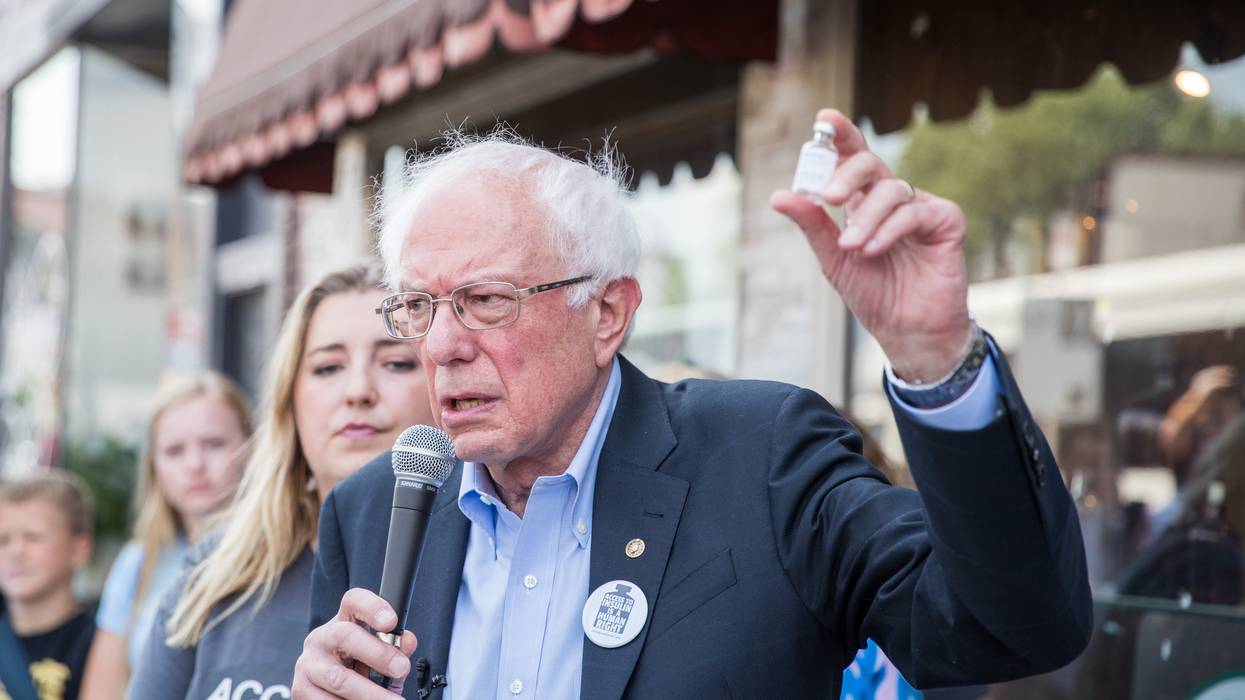
"The pharmaceutical companies they run may make billions in profits," says HELP Committee Chair Bernie Sanders. "But that does not give them a right to evade congressional oversight."
U.S. Sen. Bernie Sanders announced Thursday that the Senate Committee on Health, Education, Labor, and Pensions—which he chairs—will vote later this month on subpoenas to force two pharmaceutical CEOs to explain "why their companies charge substantially higher prices for medicine in the U.S. compared to other countries."
Last November, Sanders and HELP Committee Democrats asked the CEOs of Johnson & Johnson, Merck, and Bristol Myers Squibb to testify at a hearing on drug prices. Bristol Myers Squibb CEO Chris Boerner agreed to testify. The January 31 vote will decide whether to compel Johnson & Johnson CEO Joaquin Duato and Merck CEO Robert Davis to do so.
"It is absolutely unacceptable that the CEOs of Johnson & Johnson and Merck have refused an invitation by a majority of members on the HELP Committee to appear before Congress about the outrageously high price of prescription drugs," Sanders—who has previously grilled Big Pharma executives about their price gouging—said in a statement.
"It is time to hold these pharmaceutical companies accountable for charging the American people the highest prices in the world for the medicine they need."
"These CEOs may make tens of millions of dollars in compensation. The pharmaceutical companies they run may make billions in profits. But that does not give them a right to evade congressional oversight," the senator continued. "It is time to hold these pharmaceutical companies accountable for charging the American people the highest prices in the world for the medicine they need."
"As the HELP Committee considers legislation to lower prescription drug prices, it is critical that these CEOs explain how they determine the price of medicine in the United States," Sanders added.
An affirmative vote would be the committee's first approval of subpoenas since 1981. Consumer advocates welcomed the prospect of such action.
"Time's up for the prescription drug price gougers," Public Citizen president Robert Weissman said in a statement. "For too long, Big Pharma executives have behaved as if they are immune from accountability. They take publicly funded research; skyrocket prices to the moon, forcing patients to ration or skip medications they need; and then laugh as the very government that paid for the original research accepts without negotiation their outrageous prices, paying multiples of what other countries pay."
Weissman continued:
Merck charges 30 times more for a diabetes drug in the United States than it does in France. Johnson & Johnson charges almost five times more for a blood cancer drug in the United States than it does in Germany.
Meanwhile, Johnson & Johnson is paying out more in stock buybacks, dividends, and executive compensation than they are spending on research and development, even though R&D is the only claimed rationale for high prices.
"The pharma profiteers know exactly what they are doing," Weissman asserted. "They know how they are forcing rationing. They know they are ripping off the government and taxpayers. And they know they are getting rich."
"What's different now is that they can no longer escape public accountability," he added. "The hearings at which they will be forced to testify are another key marker in the process of rationalizing prescription drug pricing policy in the United States."
That process, Weissman said, includes the federal government negotiating drug prices thanks to a provision in the Inflation Reduction Act signed into law by U.S. President Joe Biden in 2022. Last August, the Biden administration announced the first 10 drugs subject to price negotiations. The makers of those drugs—and Republican U.S. lawmakers—have challenged the policy.
However, as Weissman put it on Thursday: "It's a new day, Big Pharma. Get used to it."
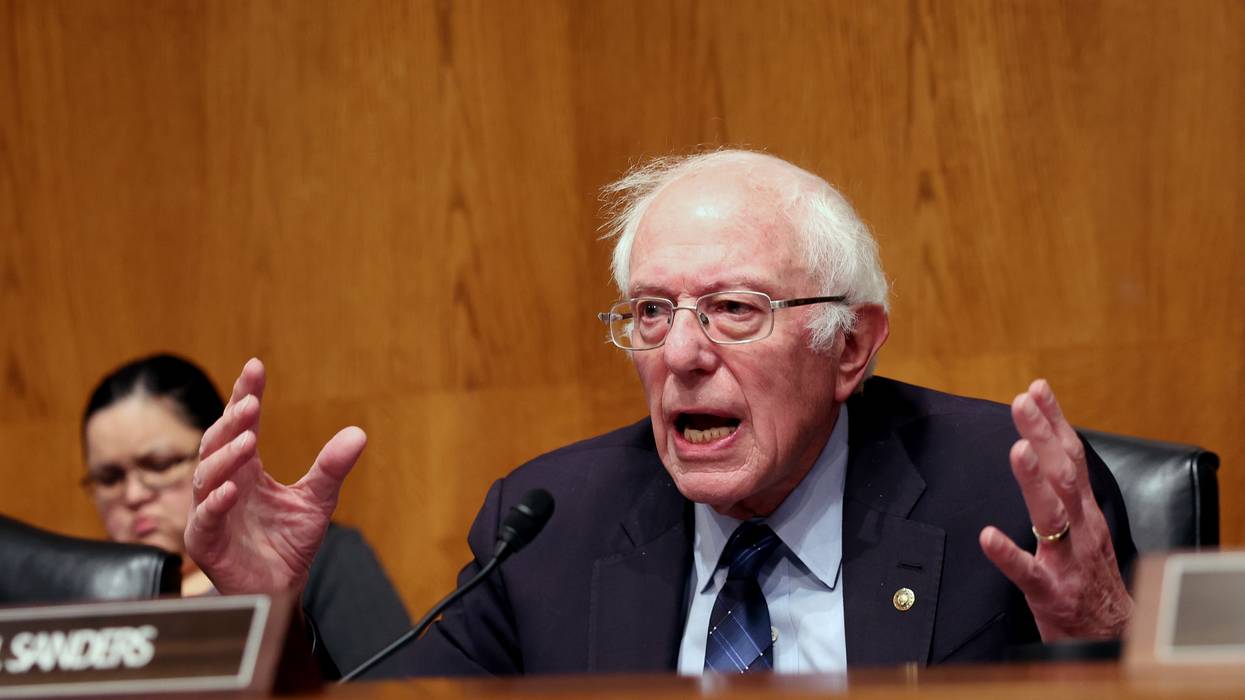
"The American people have a right to know why it is that they pay, by far, the highest prices in the world for prescription drugs," said the Vermont senator.
U.S. Sen. Bernie Sanders and every Democratic member of the committee he chairs sent letters on Tuesday inviting the CEOs of three major pharmaceutical companies to testify at an upcoming hearing on the nation's prescription drug costs, which are so high that millions of Americans are forced to ration their medications to save money.
"The American people have a right to know why it is that they pay, by far, the highest prices in the world for prescription drugs while the pharmaceutical industry in the U.S. makes hundreds of billions in profits and pays their CEOs tens of millions of dollars in compensation," Sanders (I-Vt.), chair of the Senate Health, Education, Labor, and Pensions (HELP) Committee, said in a statement.
In letters to the top executives of Johnson & Johnson, Merck, and Bristol Myers Squibb, Sanders and his Democratic colleagues asked, "How does it happen that one out of four Americans cannot afford to take the medicine their doctors prescribe while prescription drug companies make billions in profits and pay their executives exorbitant compensation packages?"
"How does it happen," the letters continue, "that the median price of new prescription drugs in the United States was over $220,000 last year, while the pharmaceutical industry spent billions on stock buybacks and dividends?"
Johnson & Johnson, Merck, and Bristol Myers Squibb are some of the U.S. pharmaceutical industry's biggest offenders when it comes to charging Americans exorbitant prices for medications that can be purchased at a fraction of the cost in other countries.
In a statement, Sanders' office pointed to Johnson & Johnson and AbbVie's Imbruvica, a blood cancer drug that carries a list price of roughly $204,000 for an annual supply in the U.S. The drug sells for $46,000 annually in the United Kingdom and $43,000 in Germany.
Imbruvica is one of the 10 drugs that the Biden administration selected for an initial round of price negotiations with Medicare, which was empowered to directly negotiate prescription medicine costs with pharmaceutical companies under the Inflation Reduction Act.
The three companies run by the invited executives have all sued the Biden administration over the Medicare price negotiations. In September, a federal judge in Ohio rejected an effort by the U.S. Chamber of Commerce to halt the negotiations.
Sanders said Tuesday that he looks forward to "hearing from the CEOs of large pharmaceutical companies directly on this critical issue."
"I also look forward to working with my colleagues in the Senate to lower the outrageously high price of prescription drugs," the senator added. "A lifesaving drug is not effective if the patient who needs that drug cannot afford it."
The hearing—titled "Why Does the United States Pay, By Far, the Highest Prices in the World for Prescription Drugs?"—is set to take place on January 25, 2024.

The California Democrat accused Johnson & Johnson—makers of the $160,000-per-year leukemia drug Imbruvica—of floating a "flimsy legal theory" in a "desperate attempt to protect profits."
U.S. Rep. Ro Khanna on Wednesday ripped a senior Johnson & Johnson attorney after she repeatedly dodged questions regarding the legal justification for the pharmaceutical giant's lawsuit alleging government efforts to negotiate lower drug prices are "unjust taking."
At a House Oversight Committee hearing, Khanna (D-Calif.) grilled J&J assistant general counsel Aviva Weis over the company's federal lawsuit, which argues that Medicare drug price negotiations—an overwhelmingly popular provision of the Inflation Reduction Act (IRA)—violate the First and Fifth amendments of the U.S. Constitution.
The J&J suit—and litigation separately initiated by Merck, Bristol Myers Squibb, Astellas, the U.S. Chamber of Commerce, and the industry lobby Pharmaceutical Research and Manufacturers of America (PhRMA)—alleges in part that the IRA mandate runs afoul of the takings clause, which states, "Nor shall private property be taken for public use, without just compensation."
Referring to Imbruvica—one of the first 10 drugs tapped by the Biden administration for Medicare price negotiations—Khanna told Weis that "you've got a pill for leukemia patients, you sell it for $484 per capsule, that's $160,000 a year, you make $22 billion over that over the last 10 years, and you're making $65 billion in profit."
"Now, we have passed, as a Congress, and the president has signed a bill, saying: 'You know what? Let Medicare negotiate to try to bring that price down,'" the congressman continued. "And you, in your department—'cause you're assistant general counsel—have filed a lawsuit saying that negotiation would be an 'unjust taking.'"
When Weis tried to avoid saying whether she believes that federal agencies negotiating drug prices with pharmaceutical companies constitutes "taking," Khanna said:
I guess I don't understand how, being the assistant general counsel, you can come before the United States Congress when you're suing the United States government, saying that we are taking your property. Now, that's a very serious charge... and you don't know whether it's a taking?
Khanna asserted that it's necessary for federal agencies to negotiate drug prices so that pharmaceutical firms "don't make $65 billion in profits every year and so leukemia patients don't pay $160,000" for a year's supply of Imbruvica.
"I think it is shameful what you and the pharmaceutical companies have done in suing the United States government to protect those profits," he added, "and you are totally unprepared to answer a single question about what the takings clause is and the justification for that lawsuit."
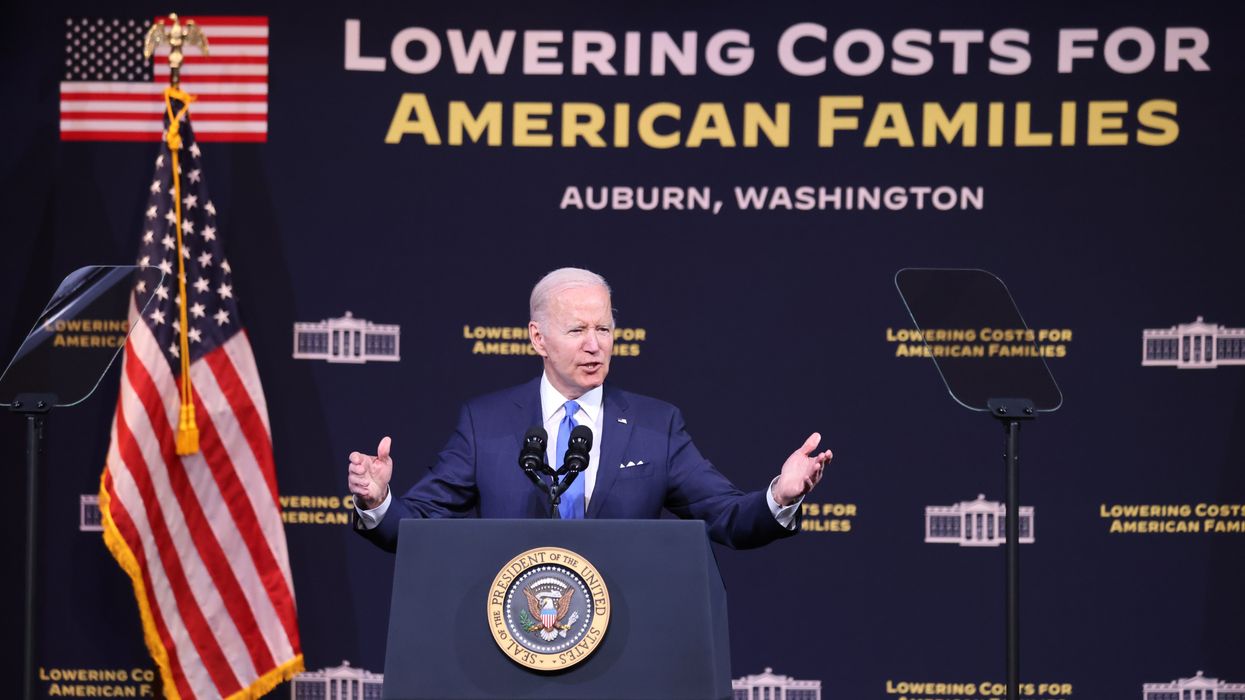
Under the president’s anti-inflation policy passed last year, our Medicare program can now negotiate drug prices on our behalf, which will drastically lower what we are now forced to pay to the profiteers for certain drugs.
We human beings sometimes do some terrible things in pursuit of the almighty dollar. But to our credit, one moral line most humans don’t cross is to gouge sick people on the price of medicines their lives depend on.
Unless, of course, you count executives of giant pharmaceutical corporations as human beings. Gouging patients is their preferred business model.
It’s a scream, then, to watch Big Pharma fall into a sky-is-falling fit over our government’s long-overdue move to give patients some bargaining power over this monopolistic industry. Under President Joe Biden’s anti-inflation policy passed last year, our Medicare program can now negotiate drug prices on our behalf.
Mega-drug outfits like Johnson & Johnson, Merck, and Bristol Myers spend more on advertising, exorbitant executive salaries, lobbying, and big stockholder payouts than on research.
This will drastically lower what you and I are now forced to pay to the profiteers for certain drugs.
For decades, Congress has coddled the corporate gougers who maintain by far the biggest lobbying army in Washington, allowing them to manipulate patent laws and rig the system. As a result, we Americans pay two-to-three times more than people in other countries for the exact same medicines.
“Oh,” wail drug executives, “bloated profits give us the incentive to keep developing innovative new cures.” Hold it right there, Slick—most basic drug development is done by tax-funded medical researchers, not brand-name market hucksters.
Mega-drug outfits like Johnson & Johnson, Merck, and Bristol Myers spend more on advertising, exorbitant executive salaries, lobbying, and big stockholder payouts than on research. Still, these same greedhounds are suing Biden, howling that making them negotiate is an unconstitutional “taking” of their income.
But hello—these scoundrels have been taking our income, health, and lives for years.
I’m with Biden on this—as is 80% of the public (including 77% of Republicans) who favor making the gougers negotiate. To stay informed and involved, connect with Public Citizen at citizen.org.

"It is unacceptable that half of new prescription drugs invented with the help of NIH scientists now cost more than $111,000," said the HELP Committee chair, urging action by the Biden administration to cut prices.
"What makes the greed of the pharmaceutical industry so reprehensible is the fact that the American people are paying twice for some of the most expensive prescription drugs on the market: First through their taxes and a second time at the pharmacy counter."
That's according to U.S. Sen. Bernie Sanders (I-Vt.), who chairs the Senate Health, Education, Labor, and Pension (HELP) Committee and on Monday released a report revealing how Big Pharma is "ripping off" Americans with medical treatments that publicly funded experts helped create.
Sanders' staff tracked the prices—generally set by private corporations—of medical treatments developed with the help of scientists from the U.S. National Institutes of Health (NIH) over the past two decades.
"It is unacceptable that half of new prescription drugs invented with the help of NIH scientists now cost more than $111,000," said Sanders, a longtime advocate of policies to reduce healthcare costs, including a nationwide shift to Medicare for All—the focus of a bill that the senator introduced last month with Reps. Pramila Jayapal (D-Wash.) and Debbie Dingell (D-Mich.).
The new report states that "U.S. taxpayers virtually always pay more than people in other countries for treatments that NIH scientists helped invent."
For example, a trio of Johnson and Johson's HIV treatments—Prezcobix, Prezista, and Symtuza—cost from $25,000 to $56,000 annually in the U.S., while patients in various other countries can get them for $4,000 to $10,000 per year.
"The price of some of these taxpayer-funded drugs is now over $1.9 million," Sanders highlighted, referring to Myalept, which is manufactured by Amryt Pharma to treat leptin deficiency and costs $580,000 a year in France.
Tecartus and Yescarta, manufactured by Gilead Sciences to treat cancer, both cost $424,000 in the United States, while the price for Tecartus in Germany is $306,000 and Yescarta is $212,000 in Japan.
Yescarta is one of two case studies included in the report. The other is Hemgenix, used to treat hemophilia B. As the document details:
The world's most expensive medicine—with a $3.5 million price tag—is the culmination of major scientific breakthroughs led by researchers at St. Jude Children's Research Hospital and NIH. However, NIH appears to have handed over taxpayer technology while obtaining vanishingly little in return. Licensing agreements reveal that NIH negotiated royalties of around 1% on sales, without any pricing constraints. Meanwhile, the company behind Hemgenix, uniQure, quietly disclosed that the price was "significant" and "most patients and their families will not be capable of paying for our products themselves."
"Congress provided nearly $54 billion for biomedical research across the U.S. government this year" and NIH alone has a $47.5 billion budget, "making it the largest biomedical research funder in the world," the report notes, stressing that "the federal government sets the stage for new medicines with its substantial investments."
"At the earliest stage, the federal government plays a role in pushing forward research for virtually all new medicines," the publication explains. The U.S. government also "directly funds the invention of some medicines," and sometimes helps with testing.
There are even cases in which the government financially backs getting medicines through the Food and Drug Administration approval process and scaling up manufacturing, the report adds, pointing out that "many Covid-19 products developed as part of Operation Warp Speed benefited from this kind of support."
The report draws from U.S. history to offer a solution, highlighting that "after a pharmaceutical company launched an AIDS drug developed with the help of NIH scientists at $10,000 per year, NIH responded in 1989 by inserting a 'reasonable pricing clause' into contracts when taxpayers supported new drugs. The clause was withdrawn six years later after industry pressure."
"The average price of new treatments that NIH scientists helped invent over the past 20 years is now more than 10 times the price that led NIH to first introduce a reasonable pricing clause in 1989," the document continues. "The federal government should reinstate and strengthen a 'reasonable pricing clause' in all future collaboration, funding, and licensing agreements for medical research."
Sanders argued Monday that "now is the time for the Biden administration to take executive action to substantially lower the price of prescription drugs and to take on the unacceptable corporate greed of the pharmaceutical industry."
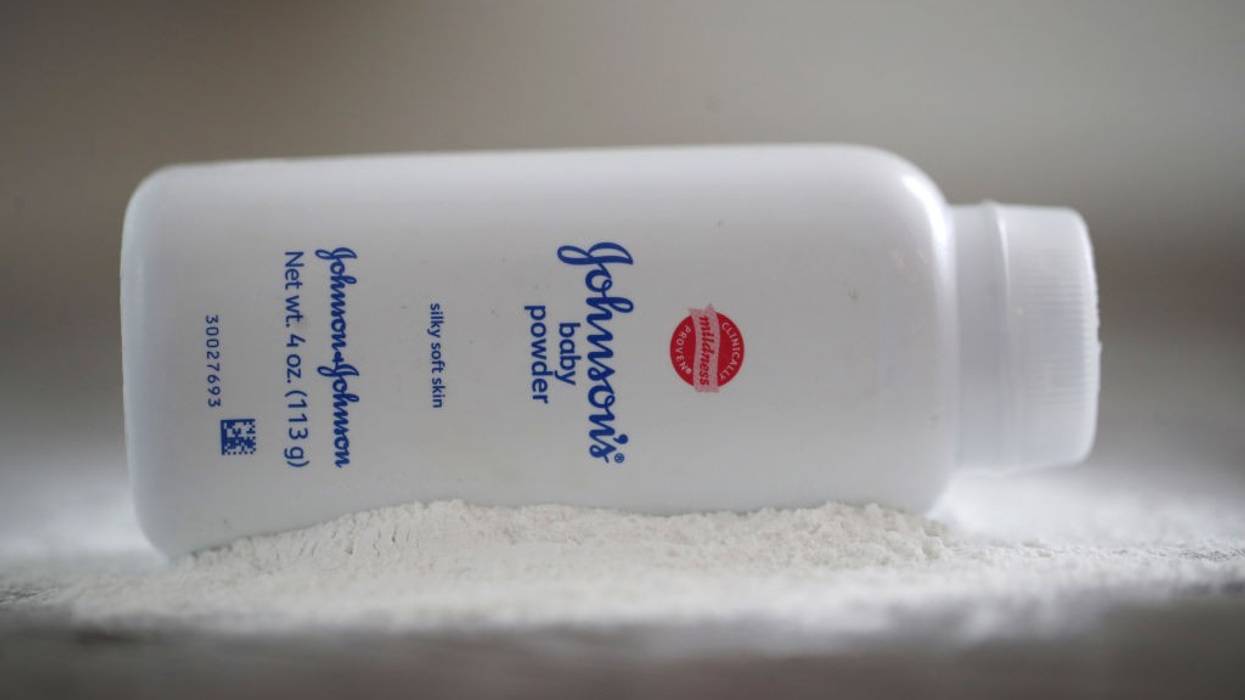
Bankruptcy was never meant as a panacea for profitable companies to shirk liability claims—especially on an issue as serious as this.
A recent legal decision in a case involving Johnson & Johnson (J&J) may ultimately impact the massive profits Koch Industries and its Georgia-Pacific subsidiary have been raking in while sidestepping asbestos liability claims. At the end of January, a federal appeals court ruled that J&J could not shield itself from pending lawsuits arising from exposure to its now off-the-market baby powder by transferring them to a new subsidiary and then declaring that company bankrupt.
Koch Industries was the first conglomerate to use the bankruptcy maneuver—known as “the Texas two-step”—in 2017. It involves a “divisive merger,” allowed under Texas law, in which a company splits in two in order to transfer all of its liability claims to a subsidiary that then declares Chapter 11 bankruptcy while the parent company retains all corporate assets and profits.
In the J&J case, a three-judge federal appeals court panel in Philadelphia sided with the plaintiffs—cancer victims who argued that J&J had established a subsidiary called LTL Management with the specific intent of limiting liability payments that would be made due to the parent company’s harmful product. “The ruling means J&J will most likely need to defend itself against claims that tainted talc in its baby powder causes cancer,” according to Bloomberg Law.
A similar lawsuit has been pending in a North Carolina bankruptcy court due to Georgia-Pacific’s Texas two-step transfer of thousands of asbestos claims to its subsidiary, Bestwall, Inc., six years ago.
On Feb. 17, in the wake of the J&J decision, a Georgia-Pacific mesothelioma victim filed a motion with the North Carolina court to dismiss the company’s bankruptcy claim, noting that since Georgia-Pacific paid $2.5 billion in dividends to its parent company Koch Industries last year, the company is clearly not in financial distress. Even in bankruptcy, Bestwall itself has continued to generate more than $5 billion in profits for its parent companies, Georgia-Pacific and Koch Industries.
“The courts are going to look at the full circumstances” behind Georgia-Pacific’s move to shift its claims to a subsidiary and then declare that subsidiary bankrupt, explains John Seligman, a personal injury lawyer in Coral Gables, Florida who has dealt with defendant companies that threaten bankruptcy. “The courts will determine if this is an arms-length transaction, or [whether] the subsidiary [was] created just for the purpose of reducing the total liability.”
“Plaintiffs’ lawyers have called the two-step a fraud in court actions seeking dismissals or other remedies,” according to a 2022 Reuters investigation. “They argue the subsidiaries are essentially corporate shells, with no purpose beyond aiding their parent companies in abusing the bankruptcy system to escape accountability for wrongdoing.”
When Koch Industries bought Georgia-Pacific in 2005, the company already faced almost $1 billion in liability claims arising from a hazardous product it hadn’t manufactured in three decades.
The claims—more than 64,000 of them by 2017—are from individuals who developed mesothelioma, an aggressive type of lung cancer caused by exposure to asbestos in the plaster, joint compound, and other products Georgia-Pacific manufactured for years—until the 1970s. Even though the dangers of asbestos had been known for well over a century, the industry initially worked very hard to hide all evidence of harm to those exposed to it. And given the long latency period, with symptoms generally not surfacing until 10–50 years after exposure, the claims didn’t start mounting until the early 2000s.
Now, roughly 3,000 people in the U.S. are diagnosed with mesothelioma every year, and two-thirds of them die within 6–12 months. Victims include public servants, veterans, firefighters, and teachers who were exposed to asbestos in public schools.
As the claims began to mount, Georgia-Pacific paid selected scientists $6 million to conduct studies to disprove that asbestos causes mesothelioma. According to the Center for Public Integrity, it was a flawed attempt to “rewrite history,” as Linda Reinstein, co-founder of the Asbestos Disease Awareness Organization, put it. “Georgia-Pacific funded junk science in an attempt to contest the known facts about asbestos and negate its culpability in this manmade disaster.”
Despite the attempt to use these suspect studies in defending itself against litigation, by 2017 Georgia-Pacific was paying approximately $160 million a year in asbestos-related settlements and legal fees. So it did the Texas two-step, creating Bestwall as a subsidiary that filed for Chapter 11 bankruptcy less than 100 days later. Once a company with outstanding claims goes into bankruptcy, it sets up a trust fund to cover existing claims but is then protected from new lawsuits once it emerges from bankruptcy.
In the J&J ruling, the appeals court judges point out that the purpose of bankruptcy protections is to assist a “putative debtor in financial distress.” Since LTL clearly isn’t hurting financially, they opted to “dismiss its petition (for bankruptcy).”
Although the decision is not binding in the Georgia-Pacific case, the message—that bankruptcy was never meant as a panacea for profitable companies to shirk liability claims—may influence the judges overseeing the Bestwall bankruptcy. As a private company, Koch Industries does not reveal its profits, but its 2022 revenue was $125 billion.
“The Texas two-step mires victims in protracted proceedings, robbing them of precious time,” noted Senator Sheldon Whitehouse (D-RI) during a Senate Judiciary subcommittee hearing last year. “Asbestos victims can die of mesothelioma and other types of cancers before their claims are heard. That is a blot on our legal system.”
Koch continues to challenge asbestos claims in other ways. Koch Industries is a major funder of the American Legislative Exchange Council (ALEC) and serves on the corporate pay-to-play group’s private enterprise advisory council. One of ALEC’s model bills, the Asbestos Claims Transparency Act, forces victims to take legal action against bankrupt companies that produced asbestos decades ago as opposed to companies still in business.
For those with serious claims, the problem is that many companies involved in making asbestos or asbestos-related products have sought bankruptcy protection and are now in trusts. These trusts are more difficult to sue, their assets are harder to determine, and, as Whitehouse points out, the victims often die before their cases are heard. The bill also limits the amount of time victims have to file a case after diagnosis, even though it takes more time to prepare a suit against a bankrupt company.
In 2018, Missouri state representative and ALEC member Bruce DeGroot (R) introduced the model asbestos bill in the Missouri House, where it passed on a party-line vote but was then not taken up by the Senate. A similar bill was introduced in Nebraska’s single-chamber legislature in January of this year.

Eager to capitalize on the lasting presence of the coronavirus, executives at Johnson & Johnson, Moderna, and Pfizer--the pharmaceutical corporations that supplied the Covid-19 vaccines approved for use in the U.S.--are quietly planning to hike prices on doses "in the near future," once they decide the pandemic is over, The Intercept's Lee Fang reported Thursday.
"Companies like Pfizer, which has not made the vaccine available to 85% of the world's population... are now waiting for the opportune time to raise prices once enough people have been vaccinated."
--Achal Prabhala, Access IBSA
Although the rapid development of coronavirus vaccines--made possible by large infusions of public resources--has given Big Pharma companies "a boost in goodwill... the public is still sensitive to drug pricing and the reputational risk has, so far, curtailed their ability to reap large financial rewards," Fang noted. "But that environment, they hope, will change once the pandemic ends: a date that drugmakers themselves reserve the right to declare."
Many epidemiologists expect the coronavirus to become endemic, "and as Covid-19 mutations continue to spread and booster shots may be required on a regular basis, leaders from the three companies are enthusiastic about cashing in," wrote Fang.
"As this shifts from pandemic to endemic, we think there's an opportunity here for us," Pfizer's Chief Financial Officer Frank D'Amelio said during a recent healthcare conference sponsored by Barclays Bank. The potential need for booster shots, D'Amelio added, provides "a significant opportunity for our vaccine from a demand perspective, from a pricing perspective, given the clinical profile of our vaccine."
According to Fang, "Moderna and Johnson & Johnson have also pledged affordability for their vaccines for the duration of the pandemic but have indicated to investors that they plan to return to more 'commercial' pricing as early as later this year."
The three companies behind the approved Covid-19 vaccines, which are "already poised to be some of the most lucrative drugs of all time," expect to "bring in billions in profit this year alone," Fang noted.
That's true, Fang added, even though "the U.S. government has fully financed the research and development" of Moderna and Johnson & Johnson's vaccines, while Pfizer's vaccine "was developed in partnership with BioNTech, a company that received nearly $500 million in development assistance from the German government."
According to Fang:
Pfizer, one of the early global leaders in the vaccine race, is very clear about the enormous moneymaking opportunity they see in the vaccines. D'Amelio, the company's CFO, spoke on a Zoom call last Thursday at the Barclays Global Healthcare Conference, to discuss the issue.
Carter Lewis Gould, an analyst with Barclays Bank, noted that Pfizer faced the particular challenges with "optics" but asked when the company could "pursue higher pricing down the road."
The current pricing, said D'Amelio, is "clearly not being driven by what I'll call normal market conditions, normal market forces," but rather the "pandemic state that we've been in and the needs of governments to really secure doses from the various vaccine suppliers." Once the pandemic ends, he continued, there will be "significant opportunity" for Pfizer.
Pfizer has agreed to prices of $19.50 per coronavirus vaccine dose in the U.S. and almost $64 per dose in the European Union, leading to projections that the company would bring in "$15 billion this year alone from sales, of which $4 billion would be purely profit," Fang wrote. But "those revenue projections are based on prices largely negotiated with governments under pandemic conditions, which could soon change."
As Common Dreams has reported, drugmakers have faced pressure from dozens of lawmakers and hundreds of civil society groups who are demanding that vaccine recipes be shared with manufacturers in developing countries, where inoculation rates are far lower. A failure to boost global vaccine production, experts say, will prolong the pandemic--exacerbating needless economic suffering and preventable deaths and possibly undermining the efficacy of vaccines as variants emerge.
Through its massive army of lobbyists, Big Pharma has been fighting calls to regulate drug prices as well as the India and South Africa-led proposal--supported by 70% of the U.S. public but opposed by President Joe Biden and the leaders of other wealthy nations--to temporarily waive the World Trade Organization's patent protections, which currently enable a handful of private companies to monopolize knowledge and technology related to coronavirus tests, treatments, and vaccines.
Fang wrote that Pfizer's Chief Executive Officer Albert Bourla told investors during a call that "the company had little to worry about in terms of political opposition."
"We believe the industry has generated a great deal of goodwill with Congress and public opinion through our Covid-19 treatment and vaccine efforts," said Bourla.
During last week's Barclays Bank-hosted healthcare conference, Fang wrote, Moderna President Stephen Hoge said that "post-pandemic, as we get into those what I will call seasonal epidemics that you would expect to happen with a SARS-CoV-2 virus, we would expect more normal pricing based on value."
And at the Raymond James Institutional Investors Conference earlier this month, Fang noted, Johnson & Johnson's Executive Vice President Joseph Wolk told investors that the company would "reevaluate the vaccine for 'pricing that's much more in line with a commercial opportunity' when the pandemic is over."
As Fang reported:
Wolk noted that the end of the pandemic is a "fluid" question. The announcement, Wolk said, would come down to a percentage of people vaccinated, though he did not give any specific figures. The "pandemic period will be in place for the majority of this year, if not the entire piece of this year," he continued, before making it clear that the declaration would be left to Johnson & Johnson.
"I think when we look at it, it's not going to be something that's dictated to us," said Wolk.
The end of the pandemic may be declared by the World Health Organization or other international bodies. Drug firms, however, are not under a legal requirement to make prices based on the WHO's determination.
Achal Prabhala, coordinator for the AccessIBSA project, which advocates for access to medicines, told Fang that "Americans are amazed that they're getting vaccines for free. And of course they're not because they've already paid for them once and now they're amazed that they're not paying for them twice."
"Companies like Pfizer, which has not made the vaccine available to 85% of the world's population, are enjoying immense popularity in the U.S. and Europe because of the fact that they got the vaccines done fast, and they seem to work well," Prabhala continued. "That's an unusually good position for pharma, they're not used to being thought of as saviors."
"It's pretty interesting," he added, "that they are now waiting for the opportune time to raise prices once enough people have been vaccinated."
Big Pharma's profit-maximizing behavior, as documented in The Intercept's new reporting, is part of a long-standing pattern.
For instance, hospitalizations skyrocketed last year, but routine visits to the doctor's office and demand for new prescription medications fell sharply as a result of the pandemic. As Common Dreams reported at the time, the pharmaceutical industry planned to make up for lost revenue by raising prices on more than 300 drugs in the U.S. on January 1.
"Big Pharma's greed is a danger to public health," Reps. Pramila Jayapal (D-Wash.) and Mark Pocan (D-Wis.) said last summer, when Gilead announced that it would charge U.S. hospitals $3,120 per privately insured patient for a treatment course of remdesivir, a Covid-19 drug whose development was financed in large part by taxpayers.
Last week, before the latest reporting on Big Pharma's plans to raise Covid-19 vaccine prices in the coming months, Sen. Bernie Sanders (I-Vt.) urged Biden to join the more than 100 countries that support an emergency waiver of the WTO's restrictive intellectual property rights agreement.
"It is unconscionable," said Sanders, "that amid a global health crisis, huge multibillion dollar pharmaceutical companies continue to prioritize profits by protecting their monopolies and driving up prices rather than prioritizing the lives of people everywhere, including in the Global South."
Johnson & Johnson must pay $72 million in damages to the family of a woman whose death from ovarian cancer was linked to decades of use of the company's baby powder and Shower to Shower body powder, a Missouri jury said late Monday.
According to Alexandra Scranton, director of science and research at advocacy group Women's Voices for the Earth, this case exemplifies the "great extent that industry will go" to sell its product even in the face of evidence of the harm it causes.
Jacqueline Fox of Birmingham, Ala., died in October 2015 at the age of 62, 35 years after regularly using the products for feminine hygiene. As the Washington Post reports, she was "among more than 1,200 women from across the country who were suing Johnson & Johnson for failing to warn consumers of the dangers associated with talc, the mineral used in baby powder."
At the end of the three-week trial, FairWarning reports, jurors in the circuit court of St. Louis "found Johnson & Johnson and a subsidiary, Johnson & Johnson Consumer Companies Inc., guilty of negligence, failure to warn and conspiracy to conceal the risks of its products."
The jury awarded Fox's family $10 million in actual damages and $62 million in punitive damages. One of the lead attorneys, Jim Onder, said that roughly $31 million would go toward the Missouri Crime Victim Compensation Fund, the St. Louis Post-Dispatch reports.
Among the evidence seen by jurors, according to the Associated Press, was a 1997 internal memo from a medical consultant to the company,
suggesting that "anybody who denies (the) risks" between "hygenic" talc use and ovarian cancer will be publicly perceived in the same light as those who denied a link between smoking cigarettes and cancer: "denying the obvious in the face of all evidence to the contrary."
Onder also said that:
the company spent 30 years preparing for litigation over the risk. He said one company internal document talks about declining product use because of increased awareness of the health risk, and how to grow the franchise by targeting blacks and Hispanics as the highest users of talcum powder. Fox was black.
Juror Jerome Kendrick said his decision was primarily based on internal memos. He said the company "tried to cover up and influence the boards that regulate cosmetics."
Scranton told Common Dreams that the company was trying to take advantage of the uncertainty regarding talc and its links to cancer and risks from vaginal exposure to chemicals. Yet, rather than taking the "clearly more ethical role, to take a precautionary approach," Johnson & Johnson "made the decision to defend the product" and risk women's health, and even "poured money over the years into defending talc," she said.
It also shows, Scranton said, how much research is needed into women's health, as many other products may pose similar risks.
The company is expected to appeal the verdict, news agencies report.