

SUBSCRIBE TO OUR FREE NEWSLETTER
Daily news & progressive opinion—funded by the people, not the corporations—delivered straight to your inbox.
5
#000000
#FFFFFF
To donate by check, phone, or other method, see our More Ways to Give page.
Daily news & progressive opinion—funded by the people, not the corporations—delivered straight to your inbox.
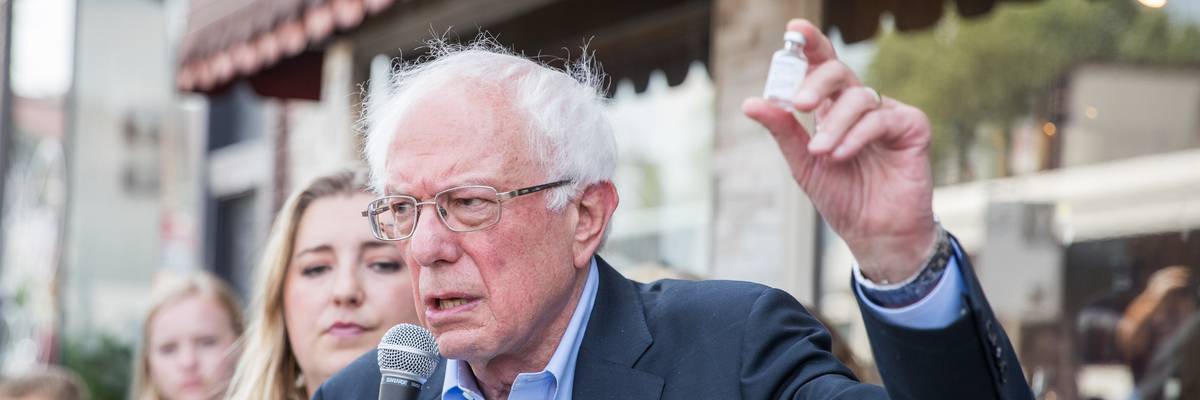
U.S. Sen. Bernie Sanders (I-Vt.) holds up a vial of insulin as he compares the cost of the lifesaving diabetes drug in the U.S. versus Canada on July 28, 2019 in Windsor, Canada.
"The pharmaceutical companies they run may make billions in profits," says HELP Committee Chair Bernie Sanders. "But that does not give them a right to evade congressional oversight."
U.S. Sen. Bernie Sanders announced Thursday that the Senate Committee on Health, Education, Labor, and Pensions—which he chairs—will vote later this month on subpoenas to force two pharmaceutical CEOs to explain "why their companies charge substantially higher prices for medicine in the U.S. compared to other countries."
Last November, Sanders and HELP Committee Democrats asked the CEOs of Johnson & Johnson, Merck, and Bristol Myers Squibb to testify at a hearing on drug prices. Bristol Myers Squibb CEO Chris Boerner agreed to testify. The January 31 vote will decide whether to compel Johnson & Johnson CEO Joaquin Duato and Merck CEO Robert Davis to do so.
"It is absolutely unacceptable that the CEOs of Johnson & Johnson and Merck have refused an invitation by a majority of members on the HELP Committee to appear before Congress about the outrageously high price of prescription drugs," Sanders—who has previously grilled Big Pharma executives about their price gouging—said in a statement.
"It is time to hold these pharmaceutical companies accountable for charging the American people the highest prices in the world for the medicine they need."
"These CEOs may make tens of millions of dollars in compensation. The pharmaceutical companies they run may make billions in profits. But that does not give them a right to evade congressional oversight," the senator continued. "It is time to hold these pharmaceutical companies accountable for charging the American people the highest prices in the world for the medicine they need."
"As the HELP Committee considers legislation to lower prescription drug prices, it is critical that these CEOs explain how they determine the price of medicine in the United States," Sanders added.
An affirmative vote would be the committee's first approval of subpoenas since 1981. Consumer advocates welcomed the prospect of such action.
"Time's up for the prescription drug price gougers," Public Citizen president Robert Weissman said in a statement. "For too long, Big Pharma executives have behaved as if they are immune from accountability. They take publicly funded research; skyrocket prices to the moon, forcing patients to ration or skip medications they need; and then laugh as the very government that paid for the original research accepts without negotiation their outrageous prices, paying multiples of what other countries pay."
Weissman continued:
Merck charges 30 times more for a diabetes drug in the United States than it does in France. Johnson & Johnson charges almost five times more for a blood cancer drug in the United States than it does in Germany.
Meanwhile, Johnson & Johnson is paying out more in stock buybacks, dividends, and executive compensation than they are spending on research and development, even though R&D is the only claimed rationale for high prices.
"The pharma profiteers know exactly what they are doing," Weissman asserted. "They know how they are forcing rationing. They know they are ripping off the government and taxpayers. And they know they are getting rich."
"What's different now is that they can no longer escape public accountability," he added. "The hearings at which they will be forced to testify are another key marker in the process of rationalizing prescription drug pricing policy in the United States."
That process, Weissman said, includes the federal government negotiating drug prices thanks to a provision in the Inflation Reduction Act signed into law by U.S. President Joe Biden in 2022. Last August, the Biden administration announced the first 10 drugs subject to price negotiations. The makers of those drugs—and Republican U.S. lawmakers—have challenged the policy.
However, as Weissman put it on Thursday: "It's a new day, Big Pharma. Get used to it."
Dear Common Dreams reader, It’s been nearly 30 years since I co-founded Common Dreams with my late wife, Lina Newhouser. We had the radical notion that journalism should serve the public good, not corporate profits. It was clear to us from the outset what it would take to build such a project. No paid advertisements. No corporate sponsors. No millionaire publisher telling us what to think or do. Many people said we wouldn't last a year, but we proved those doubters wrong. Together with a tremendous team of journalists and dedicated staff, we built an independent media outlet free from the constraints of profits and corporate control. Our mission has always been simple: To inform. To inspire. To ignite change for the common good. Building Common Dreams was not easy. Our survival was never guaranteed. When you take on the most powerful forces—Wall Street greed, fossil fuel industry destruction, Big Tech lobbyists, and uber-rich oligarchs who have spent billions upon billions rigging the economy and democracy in their favor—the only bulwark you have is supporters who believe in your work. But here’s the urgent message from me today. It's never been this bad out there. And it's never been this hard to keep us going. At the very moment Common Dreams is most needed, the threats we face are intensifying. We need your support now more than ever. We don't accept corporate advertising and never will. We don't have a paywall because we don't think people should be blocked from critical news based on their ability to pay. Everything we do is funded by the donations of readers like you. When everyone does the little they can afford, we are strong. But if that support retreats or dries up, so do we. Will you donate now to make sure Common Dreams not only survives but thrives? —Craig Brown, Co-founder |
U.S. Sen. Bernie Sanders announced Thursday that the Senate Committee on Health, Education, Labor, and Pensions—which he chairs—will vote later this month on subpoenas to force two pharmaceutical CEOs to explain "why their companies charge substantially higher prices for medicine in the U.S. compared to other countries."
Last November, Sanders and HELP Committee Democrats asked the CEOs of Johnson & Johnson, Merck, and Bristol Myers Squibb to testify at a hearing on drug prices. Bristol Myers Squibb CEO Chris Boerner agreed to testify. The January 31 vote will decide whether to compel Johnson & Johnson CEO Joaquin Duato and Merck CEO Robert Davis to do so.
"It is absolutely unacceptable that the CEOs of Johnson & Johnson and Merck have refused an invitation by a majority of members on the HELP Committee to appear before Congress about the outrageously high price of prescription drugs," Sanders—who has previously grilled Big Pharma executives about their price gouging—said in a statement.
"It is time to hold these pharmaceutical companies accountable for charging the American people the highest prices in the world for the medicine they need."
"These CEOs may make tens of millions of dollars in compensation. The pharmaceutical companies they run may make billions in profits. But that does not give them a right to evade congressional oversight," the senator continued. "It is time to hold these pharmaceutical companies accountable for charging the American people the highest prices in the world for the medicine they need."
"As the HELP Committee considers legislation to lower prescription drug prices, it is critical that these CEOs explain how they determine the price of medicine in the United States," Sanders added.
An affirmative vote would be the committee's first approval of subpoenas since 1981. Consumer advocates welcomed the prospect of such action.
"Time's up for the prescription drug price gougers," Public Citizen president Robert Weissman said in a statement. "For too long, Big Pharma executives have behaved as if they are immune from accountability. They take publicly funded research; skyrocket prices to the moon, forcing patients to ration or skip medications they need; and then laugh as the very government that paid for the original research accepts without negotiation their outrageous prices, paying multiples of what other countries pay."
Weissman continued:
Merck charges 30 times more for a diabetes drug in the United States than it does in France. Johnson & Johnson charges almost five times more for a blood cancer drug in the United States than it does in Germany.
Meanwhile, Johnson & Johnson is paying out more in stock buybacks, dividends, and executive compensation than they are spending on research and development, even though R&D is the only claimed rationale for high prices.
"The pharma profiteers know exactly what they are doing," Weissman asserted. "They know how they are forcing rationing. They know they are ripping off the government and taxpayers. And they know they are getting rich."
"What's different now is that they can no longer escape public accountability," he added. "The hearings at which they will be forced to testify are another key marker in the process of rationalizing prescription drug pricing policy in the United States."
That process, Weissman said, includes the federal government negotiating drug prices thanks to a provision in the Inflation Reduction Act signed into law by U.S. President Joe Biden in 2022. Last August, the Biden administration announced the first 10 drugs subject to price negotiations. The makers of those drugs—and Republican U.S. lawmakers—have challenged the policy.
However, as Weissman put it on Thursday: "It's a new day, Big Pharma. Get used to it."
U.S. Sen. Bernie Sanders announced Thursday that the Senate Committee on Health, Education, Labor, and Pensions—which he chairs—will vote later this month on subpoenas to force two pharmaceutical CEOs to explain "why their companies charge substantially higher prices for medicine in the U.S. compared to other countries."
Last November, Sanders and HELP Committee Democrats asked the CEOs of Johnson & Johnson, Merck, and Bristol Myers Squibb to testify at a hearing on drug prices. Bristol Myers Squibb CEO Chris Boerner agreed to testify. The January 31 vote will decide whether to compel Johnson & Johnson CEO Joaquin Duato and Merck CEO Robert Davis to do so.
"It is absolutely unacceptable that the CEOs of Johnson & Johnson and Merck have refused an invitation by a majority of members on the HELP Committee to appear before Congress about the outrageously high price of prescription drugs," Sanders—who has previously grilled Big Pharma executives about their price gouging—said in a statement.
"It is time to hold these pharmaceutical companies accountable for charging the American people the highest prices in the world for the medicine they need."
"These CEOs may make tens of millions of dollars in compensation. The pharmaceutical companies they run may make billions in profits. But that does not give them a right to evade congressional oversight," the senator continued. "It is time to hold these pharmaceutical companies accountable for charging the American people the highest prices in the world for the medicine they need."
"As the HELP Committee considers legislation to lower prescription drug prices, it is critical that these CEOs explain how they determine the price of medicine in the United States," Sanders added.
An affirmative vote would be the committee's first approval of subpoenas since 1981. Consumer advocates welcomed the prospect of such action.
"Time's up for the prescription drug price gougers," Public Citizen president Robert Weissman said in a statement. "For too long, Big Pharma executives have behaved as if they are immune from accountability. They take publicly funded research; skyrocket prices to the moon, forcing patients to ration or skip medications they need; and then laugh as the very government that paid for the original research accepts without negotiation their outrageous prices, paying multiples of what other countries pay."
Weissman continued:
Merck charges 30 times more for a diabetes drug in the United States than it does in France. Johnson & Johnson charges almost five times more for a blood cancer drug in the United States than it does in Germany.
Meanwhile, Johnson & Johnson is paying out more in stock buybacks, dividends, and executive compensation than they are spending on research and development, even though R&D is the only claimed rationale for high prices.
"The pharma profiteers know exactly what they are doing," Weissman asserted. "They know how they are forcing rationing. They know they are ripping off the government and taxpayers. And they know they are getting rich."
"What's different now is that they can no longer escape public accountability," he added. "The hearings at which they will be forced to testify are another key marker in the process of rationalizing prescription drug pricing policy in the United States."
That process, Weissman said, includes the federal government negotiating drug prices thanks to a provision in the Inflation Reduction Act signed into law by U.S. President Joe Biden in 2022. Last August, the Biden administration announced the first 10 drugs subject to price negotiations. The makers of those drugs—and Republican U.S. lawmakers—have challenged the policy.
However, as Weissman put it on Thursday: "It's a new day, Big Pharma. Get used to it."

