

SUBSCRIBE TO OUR FREE NEWSLETTER
Daily news & progressive opinion—funded by the people, not the corporations—delivered straight to your inbox.
5
#000000
#FFFFFF
To donate by check, phone, or other method, see our More Ways to Give page.
Daily news & progressive opinion—funded by the people, not the corporations—delivered straight to your inbox.
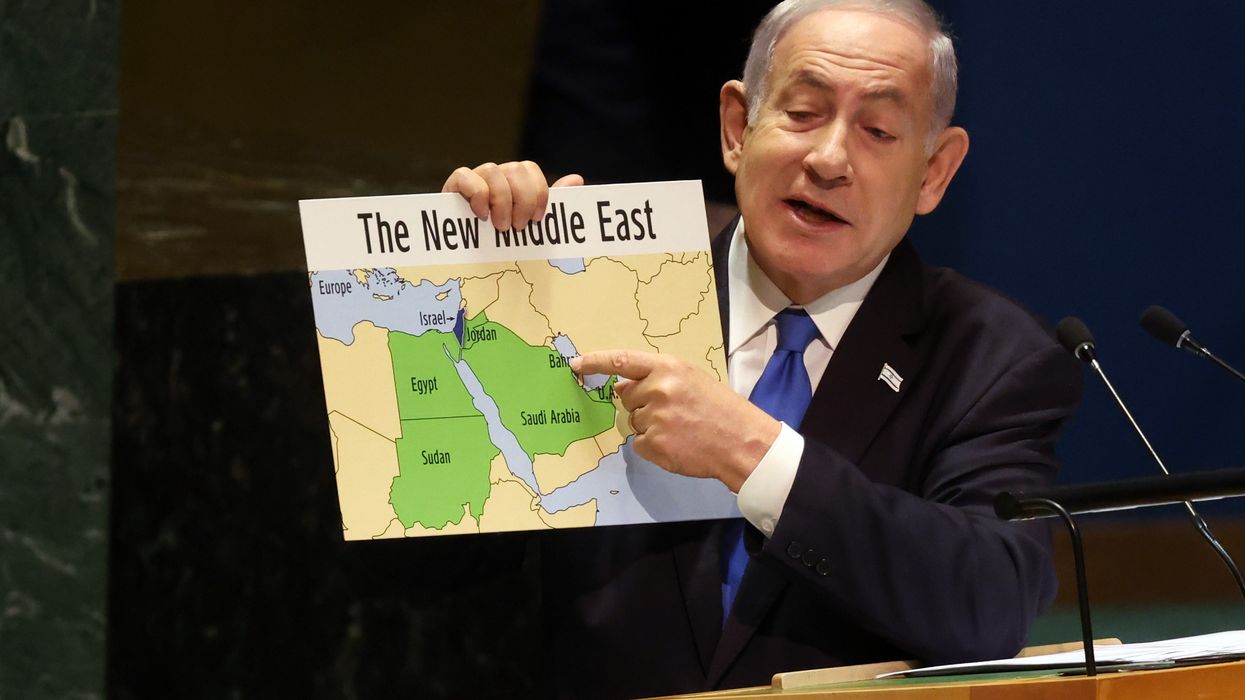
Religious nationalism may be soaring in Israel, but that’s not the trend in America.
“You must ‘remember what Amalek has done to you,” Israeli Prime Minister Benjamin Netanyahu admonished on October 28, announcing the “second phase,” a ground invasion, of Israel’s war in Gaza.
Amalek, in the Tanakh (Hebrew Bible), is a nation that ambushed the Israelites making their way to the Promised Land. Following the attack, which the Israelites were able to beat back, God instructed that they must never forget and must wage an eternal war until no trace of Amalek’s existence remains. Generations later, King Saul killed all but the Amalekite king, whose descendent, Haman, generations after that, in the story of Purim, plotted to kill all the Jews in Persia.
Netanyahu is notoriously secular in his private life. But, ever the shrewd politician, scripture is his language of choice to sell his war to Jewish supremacists in Israel and right-wing Evangelicals in the United States.
The victims of Hamas’ vile October 7 attack come from what is referred to as the “Gaza envelope.” Heavy with kibbutzim (intentional collectives, traditionally based around agriculture), its residents are known for being secular and left-leaning.
Asked if losing his parents in Hamas’s terror attack had affected his political views, Maoz Inon, pleaded not for revenge but a reassessment of basing security “on military might.”
Netanyahu is notoriously secular in his private life. But, ever the shrewd politician, scripture is his language of choice to sell his war to Jewish supremacists in Israel and right-wing Evangelicals in the United States.
Likewise, Yotam Kipnis, in eulogizing for his father, said “We will not stay silent while the cannons roar, and we won’t forget that Dad loved peace. He wasn’t willing to serve in the territories. Do not write my father’s name on a missile, he wouldn’t have wanted that.”
Tom Godo, whose son lived and died in Kibbutz Kissufim, blamed the Netanyahu administration: “The fingers that pulled the trigger and murdered, the hands that held the knives that stabbed and beheaded and slashed were the loyal and determined emissaries of the accursed, messianic and corrupt government [of Israel].”
Even after spending 16 days as a hostage in Gaza, eighty-five-year-old peace activist Yocheved Lifshitz retained her belief in reconciliation. Upon being transferred to the Red Cross, she took the hand of her Hamas handler and bade him “Shalom,” (peace).
It’s not the families of those murdered on October 7, nor the families of the hostages who have been sleeping in tents outside the military headquarters in Tel Aviv demanding all Palestinian political prisoners be released in exchange for their loved ones Netanyahu is invoking Amalek to, but the ideological descendants of Kach.
The religious-nationalist Kach party was founded in 1971 by Brooklyn-born Rabbi Meir Kahane who argued for “the immediate transfer of the Arabs,” whom he referred to as “dogs.” In 1984, the one time his party secured a single seat in the Knesset, Kahane introduced legislation to ban all Jewish-Gentile marriages and sexual relations and revoke the Israeli citizenship of non-Jews.
The Kach party was so violently racist that it was prohibited from running in Israel’s next election, banned entirely in 1994, and defined as a terrorist organization by the U.S. State Department.
In what could be perceived as another iteration of Amalek, in 2019, Kahane follower Itamar Ben Gvir formed the Jewish Power party, an ideological offshoot of Kach. Merging with other far-right fundamentalist parties to form Religious Zionism in 2022, they won the third-largest share of Israel’s parliament seats. This is the audience Netanyahu is addressing, but not only them.
On October 8, the International Christian Embassy Jerusalem (ICEJ), which claims to represent millions, sent out an email stating that Hamas’ attack, “was not launched due to grievances over the Israeli ‘occupation’ or any real dangers to the al-Aqsa mosque.” Rather, it was driven by the ancient “Spirit of Amalek.”
On October 24, Christians United for Israel, which boasts a membership of over 10 million, raised $25 million in a single night in support of Israel (they raised and donated $100 million over the week). Standing beside CUFI’s Pastor John Hagee, who in 2008 referred to Hitler as a “hunter” sent by God “to help Jews reach the promised land,” was Israeli Ambassador to Israel Gilan Erdad.
Given their belief that when enough Jews have populated their modern state, the apocalypse will come, and “a sea of [Jewish and Muslim] human blood" will fill the land, it’s hard to think of Evangelical Zionist support for Israel as a heartfelt commitment to the protection of the Jewish people. Despite that, amid declining Jewish-American support for Israel, especially among young Jews, Israel has for years been courting Evangelical support. However, polls are finding the support of young Evangelicals is also rapidly declining, dropping from 75% to 34% between 2018 and 2021.
Religious nationalism may be soaring in Israel, but that’s not the trend in America. Some people of faith, like Adam Strater, the senior Jewish educator for Georgia Hillels, are even reclaiming the story of Amalek as a model for Jews to reject “the evil impulse,” described in the Zohar (3:160a) and “make the moral choice to reorient the tradition towards a shared sense of solidarity, and ultimately, liberation.” Given the rapidly climbing toll of death in Gaza—over 10,000 people killed already—these changes could not be more welcome or come soon enough.

'Nothing about today is "unprovoked"'
Horrific. Unjustified. Morally wrong. But 'unprovoked'?
After the Palestinian group Hamas launched the biggest attack on Israel in years--with many killed, hostages taken, and fighting raging--many US elected officials released statements Saturday condemning the "unprovoked" attacks.
But many others took to Twitter Saturday to ask incredulously how Israel’s continued brutal occupation of the Palestinian people cannot be considered a provocation.
75 years of ethnic cleansing
15 years of blockade
Confiscation of Palestinian lands
Pogroms on Palestinian towns
Desecration of Palestinian sacred sites
Daily raids into Palestinian homes
Constant humiliation of a entire people
Nothing about today is "unprovoked."
Writer Caitlin Johnstone tweeted: "It's clear now that whenever the western political/media class starts bleating the word "unprovoked" in unison, you know with absolute certainty that whatever they're talking about was massively provoked."
*. *. *
And here are a sampling of statements released Saturday by US elected officials and politicians calling the attacks "unprovoked":

"It is an exhibition of unadulterated hate and racism," said one Palestinian activist. "Beyond inflammatory."
Israeli government officials including far-right National Security Minister Itamar Ben-Gvir joined tens of thousands of ultra-nationalists participating in Thursday's inflammatory "Flag March" in occupied East Jerusalem, an event at which police and demonstrators attacked Palestinians and journalists while chanting slogans including "death to Arabs" and "your village will be burned."
Ben-Gvir, Finance Minister Bezalel Smotrich, and Transport Minister Miri Regev were among the Israeli officials who took part in the annual march, which celebrates Israel's conquest and illegal occupation of East Jerusalem in 1967.
Marcher Limor Son Har-Melech, a lawmaker from Ben Gvir's far-right Otzma Yehudit (Jewish Power) party, told The Times of Israel that she was participating to celebrate "our victory over the Arabs."
In Gaza, Israeli forces used live and "less lethal" munitions to break up a Palestinian demonstration that took place along the besieged strip's border with Israel, according to Al Jazeera.
"We will not surrender and we will continue to demand our rights and defend our occupied lands and our sanctities in Jerusalem," Palestinian protester Osama Abu Qamar told the Qatar-based news network.
The Jerusalem-based NGO Ir Amim called the Israeli demonstrations a "display of incitement, Jewish dominance, and racism."
Israeli marchers threw rocks at journalists, hitting at least two reporters in the head and wounding them, Middle East Eye reports.
Middle East Eye said that marchers in Jerusalem's Old City beat Palestinian residents, and when Israeli police intervened, they assaulted Palestinian victims under attack instead of protecting them.
March participants stormed the Al-Aqsa Mosque—one of the holiest sites to both Muslims and Jews—and insulted the prophet Mohammed, who Muslims believe was the messenger of God.
Ofer Cassif, an Israeli lawmaker from the left-wing Hadash coalition, called the flag march a "violent parade presented as a joyous dance."
"Rioting gangs backed by Ben-Gvir and the fascist government are bullying Arabs to show them who's in charge, "Cassif told Haaretz. "This is disgusting Kahanism in its peak."
Cassif was referring to the Jewish supremacist movement once led by Meir Kahane, the Orthodox rabbi convicted of terrorism before being assassinated in 1990. Ben-Gvir was convicted in 2007 of incitement to racism and supporting the Kahanist terror group Kach after he advocated the ethnic cleansing of Palestinians.
There were other Israeli marches in cities and towns including Lod—known to Palestinians as Lydda—site of a 1948 massacre and death march as Jewish militias seized control of the area.
Thursday's marches came three days after, and stood in stark contrast with, Palestinians' commemoration of Nakba Day, a remembrance of the ethnic cleansing of more than 750,000 Arabs from over 400 villages—sometimes by massacres—during the foundation of the modern Israeli state in 1948. For the first time ever, the United Nations officially commemorated the Nakba.
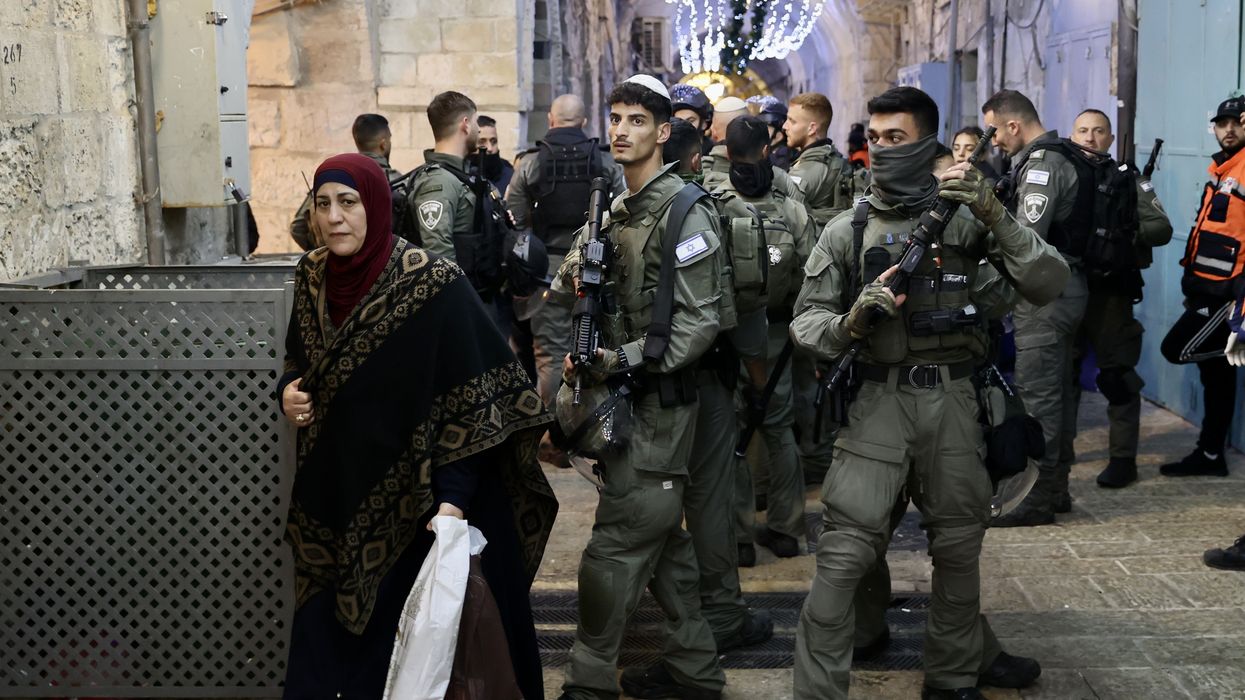
"They want to create a new reality," said one eyewitness. "They want to empty Al-Aqsa Mosque of Palestinians."
Israeli police assaulted Palestinians inside the Al-Aqsa Mosque compound in occupied East Jerusalem on Wednesday evening for the second consecutive night during the Muslim holy month of Ramadan, just hours after being widely condemned for an earlier attack.
"Dozens of armed Israeli officers entered the courtyards of the mosque while nearly 20,000 Palestinian worshipers were still performing the Ramadan Taraweeh night prayer," Middle East Eye reported. "Israeli forces fired rubber-coated bullets, tear gas, and stun grenades at worshipers just before the prayer ended to disperse them and clear the mosque... They also chased after people, beating them with batons and wounding some."
Israeli forces injured at least six people during their latest storming of the Al-Aqsa Mosque compound, according to the Palestine Red Crescent Society. On Thursday morning, Israeli officers prevented Palestinians from entering the mosque for the Fajr prayer while allowing Israeli settlers to enter the compound.
"They want to create a new reality," eyewitness Firas al-Dibbs told Middle East Eye. "They want to empty Al-Aqsa Mosque of Palestinians."
"What happened, especially yesterday, was catastrophic," said al-Dibbs, referring to the preceding overnight raid. "The scale of violence was shocking."
During the first attack of the week, which began late Tuesday night and stretched into Wednesday morning, Israeli police officers injured at least a dozen peaceful worshipers and arrested more than 400.
Of the 450 Palestinian men taken into custody, 397 have been released with a one-week ban from entering the Al-Aqsa Mosque, according to the Palestinian Commission of Detainees' Affairs. Forty-seven of the prisoners who live in the occupied West Bank have been transferred to the Ofer military prison and six remain incarcerated in Jerusalem.
Al Jazeera reported Thursday that Israeli police have shut down access to the Al-Aqsa Mosque for Palestinian men under the age of 40. This restriction comes after Israel reportedly reduced the number of people allowed to attend the Taraweeh prayer from 80,000 on Tuesday to 20,000 on Wednesday.
Tuesday night's "barbaric" raid, which eyewitnesses say was far worse in person than what is shown in disturbing video footage, elicited denunciations from around the world, as Common Dreams reported Wednesday.
Leaders from Hamas and the Palestinian Authority described the attack as criminal and called on people to defend the mosque.
Jordan, Egypt, Saudi Arabia, the United Arab Emirates, Qatar, Turkey, Germany, and Canada all issued statements either condemning or expressing concerns about the assault. The United States also expressed concern even as it continues to provide $3.8 billion in annual military support to Israel, an anti-democratic regime that numerous human rights groups have characterized as an apartheid state.
Following its emergency meeting in Cairo on Wednesday, the Arab League issued a statement urging the United Nations Security Council to intervene to halt Israeli violence.
"These crimes escalated dangerously in the past days of Ramadan," the League said, "and led to hundreds of injuries and arrests of worshipers, incursions and deliberate desecration of the sanctity of Al-Aqsa Mosque by extremist Israeli officials and settlers under the protection of the occupation forces."
The Al-Aqsa Mosque compound is Islam's third-holiest site "where unsolicited visits, prayers, and rituals by non-Muslims are forbidden, according to decadeslong international agreements," Middle East Eye explained. "Israeli groups, in coordination with authorities, have long violated the delicate arrangement and facilitated raids of the site and performed prayers and religious rituals."
Malaysia and neighboring Indonesia—the largest Muslim-majority country in the world—on Wednesday joined the Arab League in demanding an international response. The U.N. Security Council, said Malaysia, should "hold the Israeli regime accountable and responsible for the heinous crimes, and for them to release immediately all Palestinian detainees."
U.N. Middle East envoy Tor Wennesland, for his part, said Wednesday that "this holy period and places of worship should be for safe and peaceful religious reflection." The diplomat implored all parties to "act responsibly and refrain from steps that could escalate tensions."
However, just hours after people across the globe expressed outrage and called for restraint, Israeli forces renewed their attack on the Al-Aqsa Mosque compound.
As Middle East Eye reported: "The raid on Wednesday started slightly earlier than the previous one on Tuesday, apparently in an attempt by Israeli forces to prevent worshipers from locking themselves inside the Qibli prayer hall. [Tuesday] night, hundreds of Palestinians barricaded themselves inside the Qibli hall—the building with the silver dome—to perform the contemplative prayer of Itikaf and avoid attempts by police to remove them. Itikaf is a non-mandatory religious practice that is common during Ramadan, when worshipers stay inside mosques overnight to pray, reflect, and recite the Quran."
Following Tuesday night's intensification of anti-Palestinian brutality, protests erupted in the occupied West Bank, Gaza, and Umm al-Fahm, a Palestinian town in Israel. Demonstrations have since spread to other cities, but Israeli police have violently dispersed them and arrested several people.
Rockets were fired from the Gaza Strip toward Israel early Wednesday morning. In response, the Israeli military launched a series of airstrikes on the besieged enclave. More rockets were fired from Gaza on Thursday after Wednesday night's storming of the Al-Aqsa Mosque.
Also in the wake of Wednesday night's attack, several rockets were fired into Israel from southern Lebanon on Thursday. The Israeli military responded to its northern neighbor with artillery fire, raising fears of a broader regional conflagration.
The final two weeks of Ramadan coincide with Passover—a weeklong Jewish holiday that started on Wednesday—prompting concerns about further violence in the Occupied Palestinian Territories and beyond.
The raids on Tuesday and Wednesday "come ahead of planned mass incursions into Al-Aqsa Mosque by Israeli settlers set to start on Thursday and last a week," according to Middle East Eye. "Israeli forces regularly empty the mosque of Palestinians outside the five Muslim prayers, especially overnight and after dawn prayers to ensure a smooth incursion of Israeli settlers that takes place daily around 7:30 am local time. Temple Movement groups, which facilitate the settler incursions and advocate for the destruction of Al-Aqsa, have called for mass stormings throughout the weeklong Passover holiday."
"They have also called for conducting ritual animal slaughter at the site which could trigger anger from Palestinians and Muslims worldwide," the outlet noted. "Palestinian groups have urged mass presence at the site this week to prevent the planned animal slaughter and mass incursions."
Israeli attacks on the Al-Aqsa Mosque compound in May 2021 preceded a deadly 11-day offensive on the Gaza Strip. Some commentators have argued that Israel is seeking to heighten anti-Arab violence now as a way to blunt internal opposition to the far-right's attempted judicial coup.
"What we see today is a very serious provocation that will definitely lead to an escalation, and maybe this is exactly what the Israeli government wants," Mustafa Barghouti of the Palestinian National Initiative told Al Jazeera. "They want to distract attention from their internal division, from the demonstrations that are taking place inside Israel against this government, and they want to drag the whole region into a total explosion."
Speaking with journalists on Wednesday, U.N. spokesperson Stéphane Dujarric said that the body's secretary-general, António Guterres, had been "shocked and appalled by the images" he had seen from inside the Al-Aqsa Mosque.
"At a time of the calendar which is holy to Jews, Christians, and Muslims, this should be a time for peace and not violence," said Dujarric. "Places of worship should only be used for peaceful religious observances."
The U.N. Security Council is set to hold a closed-door emergency session on Thursday to discuss recent Israeli assaults on peaceful Palestinian worshipers at the Al-Aqsa Mosque compound.
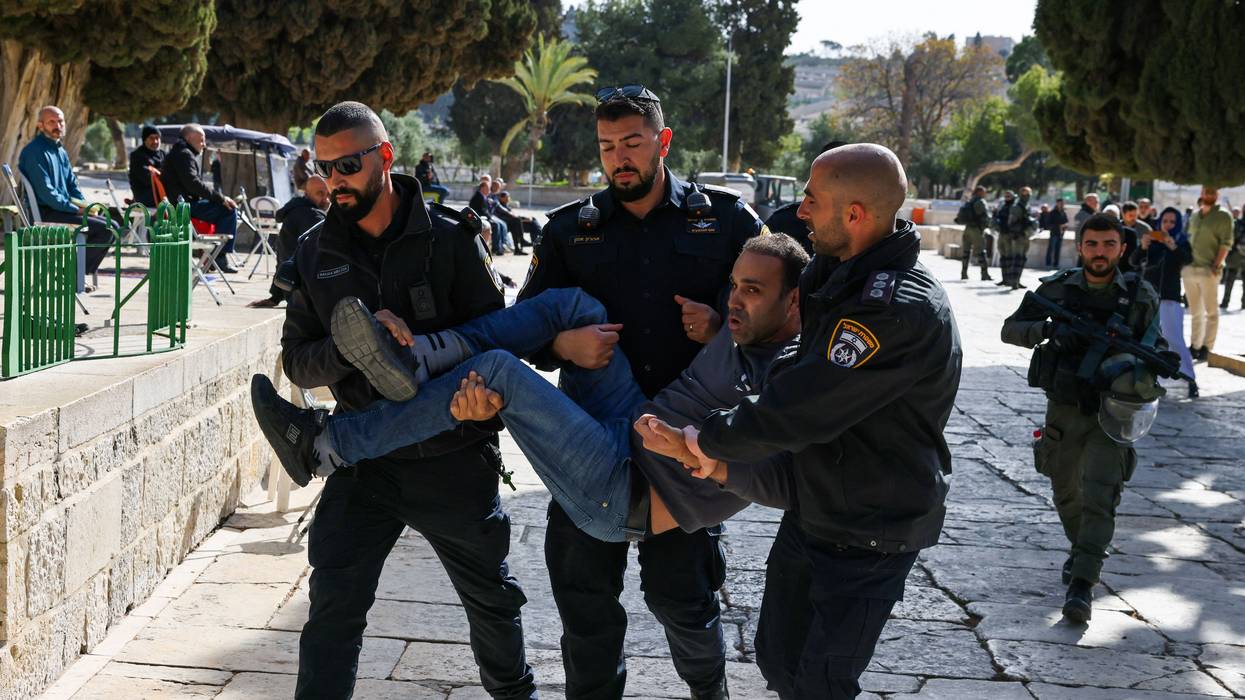
"The army broke the upper windows of the mosque and began throwing stun grenades at us," said one Palestinian worshiper who was arrested alongside hundreds of others.
Israeli police brutally attacked Palestinians inside the Al-Aqsa Mosque compound in occupied East Jerusalem on Tuesday night, injuring at least a dozen peaceful worshipers and arresting more than 400 during the Muslim holy month of Ramadan.
"Dozens of heavily armed officers stormed the site, used stun grenades, and fired tear gas into the Qibli prayer hall—the building with the silver dome—where hundreds of men, women, elderly people, and children were staying overnight to pray," Middle East Eye reported. "Some eyewitnesses said rubber-coated steel bullets were also fired."
"Israeli officers then beat worshipers with batons and riot guns, wounding many, before arresting them," the outlet noted. "Videos from inside the mosque showed Israeli officers repeatedly hitting people with batons while they appeared to lie on the floor. Meanwhile, the cries for help from women and children could be heard in the background."
The violent raid "continued into the morning when Israeli forces were once again seen assaulting and pushing Palestinians out of the compound and preventing them from praying–before Israelis were allowed in under police protection," Al Jazeera reported. "At least 400 Palestinians were arrested on Wednesday and remain in Israeli custody... at a police station in Atarot."
Bakr Owais, a 24-year-old student who was detained, told the outlet: "The army broke the upper windows of the mosque and began throwing stun grenades at us... They made us lay on the ground and they handcuffed us one by one and took us all out. They kept swearing at us during this time. It was very barbaric."
The Palestinian Commission of Detainees' Affairs estimates that between 400 and 500 men have been taken into custody.
According to Middle East Eye: "The Palestine Red Crescent Society (PRCS) said it received multiple reports of injuries at Al-Aqsa Mosque but was unable to estimate the number of casualties as Israeli forces blocked medics from reaching the wounded. One medic was attacked by an Israeli police officer and wounded outside one of the mosque's gates."
Al Jazeera reported that at least 12 Palestinians have suffered injuries—including bruises, fractures, and breathing problems caused by tear gas inhalation—at the hands of Israeli police officers. At least three of the victims have been transported to a hospital.
"As we approach Passover—a celebration of freedom—the Israeli military is beating Palestinians inside Al-Aqsa Mosque... The contradiction speaks volumes."
The Israeli crackdown, which one observer described as a premeditated attack intended "to send a message to the Palestinians that Israel is the sole sovereign over Al-Aqsa that can decide who can enter the site and when," was widely condemned.
Hamas leader Ismail Haniyeh denounced the latest assault on Islam's third holiest site as "an unprecedented crime" and urged Palestinians "to go en masse to the Al-Aqsa Mosque to defend it."
Palestinian Authority (PA) Prime Minister Mohammad Shtayyeh said that "what happened in Jerusalem is a major crime against the worshipers."
"Prayer in Al-Aqsa Mosque is not with the permission of the [Israeli] occupation, but rather it is our right," said Shtayyeh. "Al-Aqsa is for the Palestinians and for all Arabs and Muslims, and the raiding of it is a spark of revolution against the occupation."
PA presidential spokesperson Nabil Abu Rudeineh added that "what the occupation is doing right now at holy sites such as in Al-Aqsa, and the attacking of worshipers is an example of the relentless war against Palestinian people and Arab nations, which will ignite fires across the region."
Following the raid, "local mosques around Jerusalem called on people through speaker phones to rally in support of those assaulted," Middle East Eye reported. "Confrontations between residents and police broke out in several locations across the city."
The outlet continued:
In the occupied West Bank, hundreds of Palestinians took to the streets to condemn the assault and confront Israeli troops at checkpoints and army posts. Rallies also took place in Gaza, Umm al-Fahm (a Palestinian town in Israel), and the Jordanian capital Amman.
Rockets were later fired from the Gaza Strip toward Israel. At least one rocket landed inside the country and caused damage to a food factory, according to Israeli media.
This was followed by air strikes from the Israeli military targeting several locations in the besieged strip. No casualties were recorded from either side.
The final two weeks of Ramadan overlap with Passover—a weeklong Jewish holiday that begins Wednesday—sparking fears of additional violence in and around the Al-Aqsa Mosque compound.
According to Middle East Eye: "Israeli authorities have been removing worshippers from Al-Aqsa Mosque every night since the start of Ramadan after the Taraweeh prayer ends around 9:00 pm local time, albeit without this widespread use of violence. They have also been restricting who can enter the site and when, in what Palestinians say is an infringement on their freedom of religious practice. Itikaf at Al-Aqsa Mosque is not allowed by Israeli authorities outside of the last ten days of Ramadan, a ban that Palestinians refuse to comply with."
"Israeli forces regularly empty the mosque of Palestinians outside the five Muslim prayers, especially overnight and after dawn prayer to ensure a smooth incursion of Israeli settlers which takes place daily around 7:30 am local time," the outlet noted. "Temple Movement groups, which facilitate the settler incursions and advocate for the destruction of Al-Aqsa, have called for mass stormings throughout the week... They have also called for conducting ritual animal slaughter at the site which could trigger anger from Palestinians and Muslims worldwide. Palestinian groups have urged mass presence at the site this week to prevent the planned animal slaughter and mass incursions."
"Israel has murdered over 90 Palestinians, including at least 17 children, so far this year, and it is only April."
On Tuesday night, Jewish Voice for Peace tweeted: "As we approach Passover—a celebration of freedom—the Israeli military is beating Palestinians inside Al-Aqsa Mosque and blockading Palestinian cities across the occupied West Bank. The contradiction speaks volumes. Liberation cannot come at the cost of another people's freedom."
Alluding to recent protests against a far-right takeover of Israel's judiciary, Palestinian journalist Rula Jebreal similarly argued that "there cannot be a movement for an exclusive liberal democracy for Jews, and apartheid for Palestinians."
Numerous human rights groups around the world have condemned Israel as an apartheid state and called on the United States to cease providing $3.8 billion in annual military support to the anti-democratic regime.
According to the Palestinian national committee of the global Boycott, Divestment, and Sanctions (BDS) movement, "Israel has murdered over 90 Palestinians, including at least 17 children, so far this year, and it is only April."
"The BDS movement calls particularly on our brothers and sisters in the Arab world and on supporters in countries that reject diplomatic relations with Israel to intensify pressure against normalization of any relations with apartheid," the committee continued. "What ties with Israel normalize is unmasked Islamophobia, colonial violence, and apartheid brutality."
"Globally we call for pressure on states to impose an immediate military embargo and lawful targeted sanctions on apartheid," it added. "We call on our supporters worldwide to escalate all BDS campaigns! The time is now to end Israeli apartheid."
As Haaretz reported: "Jordan and Egypt, both involved in recent U.S.-backed efforts to de-escalate tensions between Israel and the Palestinians, issued separate statements condemning the incident. Saudi Arabia also condemned the Israeli police's actions, with its foreign ministry putting out a statement saying it undermines peace efforts."
Arab League Secretary-General Ahmed Aboul Gheit, meanwhile, said in a statement that "the extremist approaches that control the policy of the Israeli government will lead to widespread confrontations with the Palestinians if they are not put to an end."
Officials from Jordan, Egypt, and Palestine have called for an emergency meeting of the League in the wake of Israel's latest assault on the Al-Aqsa Mosque compound.
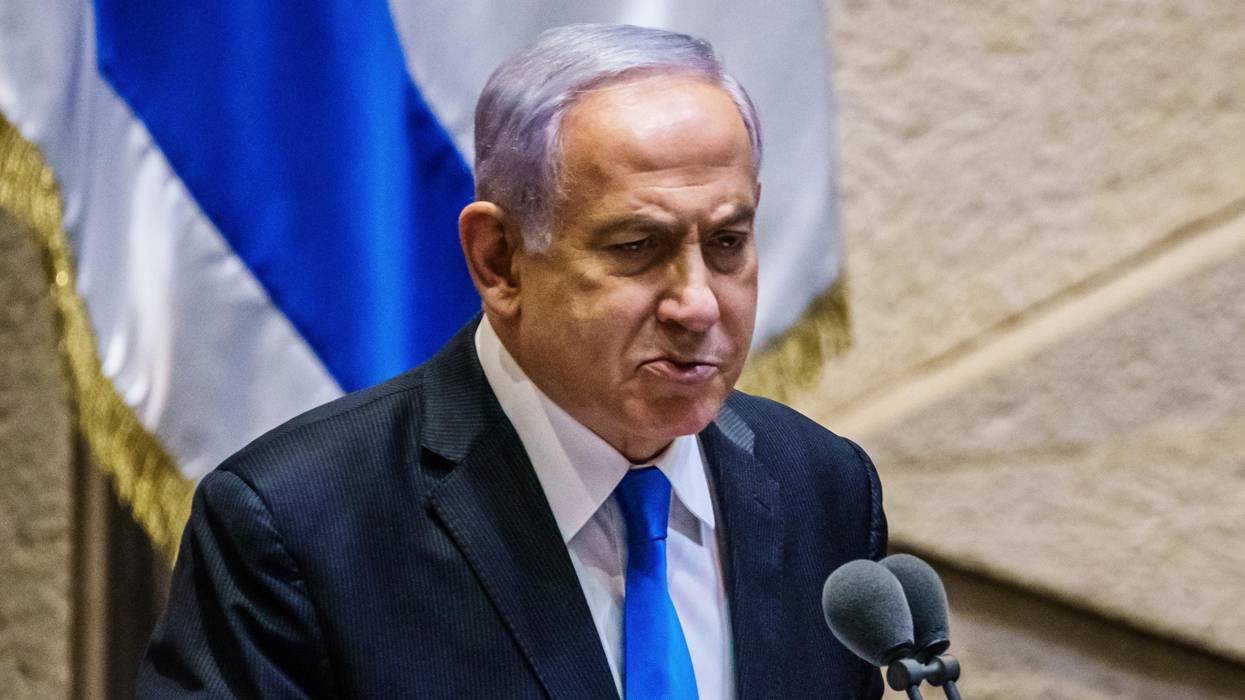
"We can see right now many laws being advocated for against LGBTQ, against Palestinians, against larger minorities in Israel," said one organizer.
Carrying signs reading, "Together against fascism and apartheid" and "Democracy in danger," thousands of Israelis on Saturday marched in protest of Prime Minister Benjamin Netanyahu's far-right coalition government, which less than a week after being sworn in has already threatened to strip the country's judiciary of power and announced punitive measures against Palestinian people and leaders.
According to Haaretz, about 20,000 people attended two different marches—one organized by the grassroots group Standing Together and calling for equality and partnership between Palestinians and Israelis, and another focusing on Netanyahu's threats to the Israeli justice system.
The protests came days after Netanyahu's new national security minister, Itamar Ben Gvir, angered Palestinians and the Israeli opposition by entering the Al-Aqsa mosque compound in East Jerusalem, which was seen as a provocation and an escalation of Israel's attacks on Palestine.
"Extremists are starting to deploy their forces and it's not the majority," a protester named Omer told France24 at a march in Tel Aviv.
Netanyahu's government, which has been called the most right-wing in Israel's history, also announced that it would expand settlements in the occupied West Bank. The prime minister's office indicated on Friday the punitive measures are being taken in retaliation for Palestinians' call for the International Court of Justice to render a legal opinion on Israeli's policies in the West Bank and East Jerusalem. Despite the opposition of Israel and the U.S., the United Nations General Assembly voted last week in favor of a resolution calling for an opinion.
One U.S.-based observer noted that language describing Israeli's violent anti-Palestinian policies as "apartheid" was prevalent at Saturday's demonstration. The term has long been rejected by supporters of Israel and used by human rights advocates and experts.
The protests were held days after Netanyahu's newly appointed justice minister, Yariv Levin, announced reforms that would allow lawmakers to override Supreme Court decisions. Members of Netanyahu's Cabinet have also made derogatory claims about LGBTQ+ people and reportedly plan to roll back laws allowing gay couples to adopt children.
"We can see right now many laws being advocated for against LGBTQ, against Palestinians, against larger minorities in Israel," Rula Daood of Standing Together told ABC News. "We are here to say loud and clear that all of us, Arabs and Jews and different various communities inside of Israel, demand peace, equality, and justice."
In addition to the expansion of illegal settlements, Netanyahu's government announced last week that it would withhold $39 million from the Palestinian Authority and use the funds to compensate the families of Israeli victims of the conflict and said on Sunday that it had revoked Palestinian Foreign Minister Riad Malki's travel permit.

The Palestinian foreign ministry said Israeli National Security Minister Itamar Ben-Gvir's "storming" of the Al-Aqsa mosque compound was "a dangerous escalation of the conflict."
Palestinians reacted with fury on Tuesday after far-right Israeli National Security Minister Itamar Ben-Gvir entered the Al-Aqsa mosque compound in occupied East Jerusalem, a move seen as a deliberate provocation by an official with a long history of extremism and racist incitement.
In a statement, the Palestinian Foreign Ministry called Ben-Gvir's "storming" of Al-Aqsa—Islam's third-holiest site—an "unprecedented provocation and a dangerous escalation of the conflict."
Despite vocal warnings from Palestinians as well as Israeli opposition leader Yair Lapid, Ben-Gvir—a top member of Israeli Prime Minister Benjamin Netanyahu's newly formed extremist government—visited the site for roughly 15 minutes Tuesday morning under heavy security, declaring that "our government will not surrender to the threats of Hamas."
In response, Hamas spokesperson Hazem Qassem told Al Jazeera that Ben-Gvir's move represents "a continuation of the Zionist occupation's aggression against our sanctities and its war on its Arab identity."
The outlet noted that "Ben-Gvir has long called for greater Jewish access to the holy site, which is viewed by Palestinians as provocative and as a potential precursor to Israel taking complete control over the compound."
"Leading rabbis forbid Jews from praying on the site," Al Jazeera added. "Former Israeli Prime Minister Ariel Sharon's entrance to the site in 2000 sparked the second Palestinian Intifada or uprising."
Middle East Eye observed that "since Israel occupied the site following the 1967 Middle East war, Jewish prayer at the site has been forbidden, though far-right settlers such as Ben-Gvir (some of whom want to demolish Al-Aqsa and replace it with a third Jewish temple) have frequently prayed there under strict security in recent years."
Israeli forces have repeatedly launched attacks on Palestinian worshipers at the compound in recent years. In 2021, Israeli forces' violent raids at Al-Aqsa and Hamas' response spurred a deadly 11-day Israeli assault on the occupied Gaza Strip.
Zvika Fogel, a far-right Israeli Knesset member, told an Israeli news outlet that if Hamas responds to Ben-Gvir's move with rocket fire, "If it's up to me, Gaza burns."
Officials from Jordan and the United Arab Emirates joined Palestinians in condemning Ben-Gvir's decision to enter the Al-Aqsa compound.
"Jordan condemns in the severest of terms the storming of the Aqsa mosque and violating its sanctity," the Jordanian Foreign Ministry said in a statement.
Netanyahu reportedly postponed a trip to the UAE that was planned for next week following Ben-Gvir's appearance at the Al-Aqsa compound on Tuesday.
"This is not the first time that Ben-Gvir has stormed Al-Aqsa," Middle East Eye reported. "In May last year, accompanied by his wife and son, Ben-Gvir posted a picture calling for the destruction of the site to 'establish a synagogue on the mountain.'"
Edward Ahmed Mitchell, executive director of the Council on American-Islamic Relations (CAIR), called on the Biden administration to "strongly condemn the Netanyahu government's attempts to incite racial and religious conflict at one of the most sacred and sensitive places in the world."
"Netanyahu's national security minister, Itamar Ben-Gvir, is a far-right extremist, a genocidal racist, and a terrorist sympathizer," Mitchell said in a statement Tuesday.